Film Review: Icahn: The Restless Billionaire (dir by Bruce David Klein)


Before I actually talk about Icahn: The Restless Billionaire, I should probably confess something.  Well, actually, this is a reconfession because I explain this every time that I review any movie or documentary the deals with stocks and investments and big shorts and corporate takeovers and all the rest.  The Stock Market confuses the heck out of me.

Seriously, I have no idea how it works.  Everything that I hear about it just confuses me.  How can you invest money that you don’t have in order to make or lose money that might not actually exist?  How can people keep buying stock in the same company?  It just seems like a company should eventually run out of stock.  And what is stock anyways?  And don’t even get me started on this whole thing where people can apparently secretly buy everyone’s stock and then force a company’s founder to resign or sell the company itself.  That’s just weird to me.

I will also admit that I actually do own stock.  I didn’t buy any of it.  Some of it, I inherited.  Some of it was gifted to me.  Some of it, I got through work.  Off the top of my head, I really couldn’t tell you much about any of the stock that I own.  I’ve been told that my stock’s doing well, which is fine with me.  Nobody ever tells me if my stocks aren’t doing well, which is also fine with me.  I don’t really need that pressure.

Some people, however, love the pressure.  Carl Icahn, for instance, has made billions by playing with the stock market and by taking over struggling companies and then selling them for a profit.  Icahn’s detractors call him a pirate or a raider.  Icahn claims that he’s an activist, taking over poorly managed companies and then selling them for a profit so that people, like me, who have no idea how any of this works can also make a profit.  (And, of course, Icahn makes a huge amount of money off of it as well.)  Carl Icahn is thought to have been one of the role models for Wall Street’s Gordon Gekko.  Consider that Wall Street was released in 1987 and you can see just how long Carl Icahn has been doing this.

Icahn: The Restless Billionaire is a documentary about both the man and his controversial career.  It delves a little into his childhood and features plenty of scenes of Icahn at his mansions and in his ornate office.  For the most part, though, it’s a collection of scenes of Icahn and some of his associates discussing the various takeovers and battles that Icahn has been involved with over the years.  The documentary is unapologetically pro-Icahn.  If you’re expecting to see AOC or Bernie pop up and start going on about taxing the rich or condemning billionaires, you’re out of luck.  In fact, the documentary is so pro-Icahn that it almost feels like a relic from a different era.  For that matter, so does Carl Icahn.  Icahn is happily pro-capitalism and he makes no apologies for that.  A lot of viewers aren’t going to be used to seeing that in a contemporary documentary, especially not one produced by HBO.  Myself, I’m a fan of capitalism and free enterprise so it didn’t bother me and the documentary, at the very least, worked as a change of pace.  Still, I can’t help but imagine that a lot of my friends would have ended up throwing something at the TV.

Carl Icahn is obviously a smart guy and he’s made a lot of money.  I enjoyed looking at the house.  At the same time, he’s not exactly the most charismatic billionaire in the world and the scenes that attempt humanize him come across as being stiff and staged.  The documentary is probably at its best when its just Icahn and his associates talking about the battles that he’s fought.  I honestly couldn’t follow what they were talking about but I also couldn’t deny that they all seemed to be having fun.

Scene That I Love: The Opening of Mulholland Drive (Happy Birthday, Angelo Badalamenti)


Happy birthday, Angelo Badalamenti!

This great composer is probably best known for his dream-like and haunting work for the films of David Lynch.  Among the many songs and musical pieces that he’s done for Lynch, he composed the jitterbug music that opened David Lynch’s 2001 film, Mulholland Drive.  The scene below features the perfect mix of Lynch’s visual vision and Badalamenti’s musical ear.  What I especially like about this scene is that the music starts out as a very cheerful and vaguely generic but then it grows steadily more ominous as the scene plays out.

Here it is.  The haunting opening of one of the best films of the current century:

4 Shots From 4 Films: Special Stardom Edition


4 Or More Shots From 4 Or More Films is just what it says it is, 4 shots from 4 of our favorite films. As opposed to the reviews and recaps that we usually post, 4 Shots From 4 Films lets the visuals do the talking!

With the Oscars approaching, it seems appropriate to pay tribute to stardom with 4 shots from 4 films!

4 Shots From 4 Films About Being A Star

Mulholland Drive (2001, dir by David Lynch, DP: Peter Deming)

Chicago (2002, dir by Rob Marshall, DP: Dion Beebe)

Maps to the Stars (2014, dir by David Cronenberg, DP: Peter Suschitzky)

The Neon Demon (2016, dir by Nicolas Winding Refn, DP: Natasha Braier)

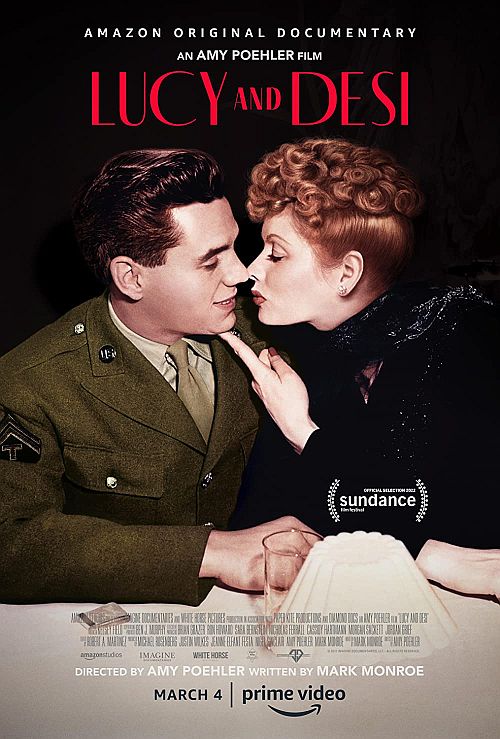
Film Review: Lucy and Desi (dir by Amy Poehler)


If you were as disappointed with Being the Ricardos as I was but you still want to learn something about the lives and the marriage of Lucille Ball and Desi Arnaz, might I suggest checking out Lucy and Desi?

Directed by Amy Poehler, Lucy and Desi covers much of the same material as Being the Ricardos but it does so in a far more authentic way.  This is because Lucy and Desi is a documentary, one featuring actual interviews and recordings from Lucy, Desi, and the people who worked with them through the years.  As a result, we get to hear the story in their own words as opposed to Aaron Sorkin’s words.  I’m hardly the first person to point out that Aaron Sorkin is incapable of writing dialogue that doesn’t sound like something that Aaron Sorkin himself would say.  In Being the Ricardos, Lucy and her writers all spoke in Sorkinese and it all felt rather false.  Watching Lucy and Desi, you quickly realize that both Lucy and Desi were intelligent and articulate people.  Their own words are strong enough, without needing a polish from a screenwriter who, by his own admission, never found I Love Lucy to be all that funny.

Lucy and Desi covers the early lives of both Lucy and Desi as well as detailing how they first met, how they married, and how they went on to revolutionize television with I Love Lucy.  More than just being portrayed as being a talented but somewhat volatile couple, both Lucy and Desi emerges as fascinating individuals in their own right.  Both of them survived childhood difficulties, both of them remade themselves in Hollywood, and, most importantly, both of them had an instinctive understanding of what audiences wanted to see.

They were also very much in love, even after their divorce.  That love was missing from Being the Ricardos but it’s very much present in Lucy and Desi.  It was that love that led to the marriage that led to the partnership that made them a success but it was that same success that eventually led to the end of their marriage.  And yet, even after divorcing, Lucy and Desi remained close.  Their daughter, Lucie Arnaz, talks about the last few times that Lucy saw Desi before Desi’s succumbed to lung cancer.  They watched old episodes of I Love Lucy and they laughed together.  It’s an incredibly touching moment.

And if sentimentality isn’t your thing, Lucy and Desi also explores just how important their partnership was to the development of modern television.  I Love Lucy was the first “modern” sitcom but their company, Desilu Productions, had a hand in producing several other classic shows as well.  Star Trek was a Desilu production.  So were Mission Impossible and The Untouchables.  So much of what we take for granted about pop culture started with Lucy and Desi.

Perhaps the most shocking revelation in the Lucy and Desi documentary is that the J. Edgar Hoover story was true!  You may remember that, when I reviewed Being the Ricardos, I scoffed at the scene where Hoover called the studio and personally cleared Lucy of being a communist.  But apparently, this actually did happen!  I’m as stunned as anyone.

Lucy and Desi is a good and heartfelt tribute to Lucy and Desi, their talent and their love and their lasting influence.  It can be viewed on Prime.

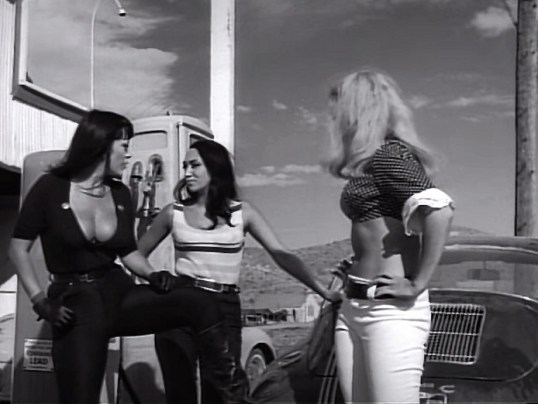
4 Shots From 4 Films: Special Russ Meyer Edition


4 Or More Shots From 4 Or More Films is just what it says it is, 4 shots from 4 of our favorite films. As opposed to the reviews and recaps that we usually post, 4 Shots From 4 Films lets the visuals do the talking!

100 years ago, on the very day, Russ Meyer was born in San Leandro, California.  Meyer would get his start filming newsreels during World War II (many of his newsreel footage were used in the 1970 Oscar winner, Patton).  When he returned to the United States, he continued to make films.  Meyer was one of the pioneers of the adult film industry, though his films seem rather quaint and innocent when compared to the industry’s later films.  Meyer’s strong visual sense and his intentionally over-the-top plots made him a favorite amongst underground critics.  In the 70s, he was briefly embraced by mainstream Hollywood but, unhappy with having to deal with studio bosses, Meyer returned to making the type of independent, grindhouse films that made him famous.

Russ Meyer was 82 years old when he died in 2004.  He was acclaimed as one of America’s first and greatest independent filmmakers.

Here are 4 Safe-For-Work Shots From 4 Russ Meyer Films.

4 Shots From 4 Films

Faster, Pussycat! Kill! Kill! (1965, dir by Russ Meyer, DP: Walter Schenk)

Motorpsycho (1965, dir by Russ Meyer, DP: Russ Meyer)

Cherry, Harry, & Raquel! (1970, dir by Russ Meyer, DP: Russ Meyer)

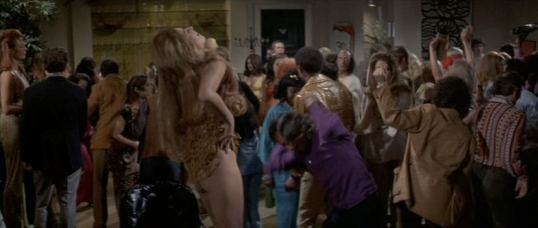
Beyond The Valley Of The Dolls (1970, dir by Russ Meyer, DP: Fred J. Koenekamp)

The PGA Names CODA The Best of 2021


I’m a little late in reporting this but last night, the Producers Guild of America announced their picks for the best of 2021 and they promptly threw the Oscar race into chaos by selecting CODA, instead of the Power of the Dog.  Today, there’s a lot of people talking about the possibility of DGA winner Jane Campion taking Best Director while CODA, which also won the SAG Ensemble Award, takes Best Picture.

It could happen.  We’ll find out for sure next Sunday!

The Award for Outstanding Producer of a Feature Theatrical Motion Picture
Being The Ricardos
Belfast
CODA
Don’t Look Up
Dune
King Richard
Licorice Pizza
The Power Of The Dog
Tick, Tick…Boom!
West Side Story

The Award for Outstanding Producer of Animated Theatrical Motion Pictures
Encanto
Luca
The Mitchells vs. The Machines
Raya And The Last Dragon
Sing 2
 
The Award for Outstanding Producer of Documentary Motion Pictures 
Ascension
The First Wave
Flee
In The Same Breath
The Rescue
Simple As Water
Summer Of Soul (…Or, When The Revolution Could Not Be Televised)
Writing With Fire

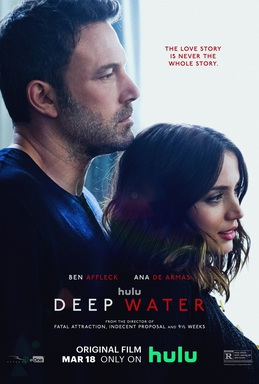
Film Review: Deep Water (dir by Adrian Lyne)


Just released on Hulu, Deep Water is the funniest film of the year so far.

Ben Affleck stars as Vic Van Allen.  (Even his name is funny!)  Vic made a fortune by inventing a computer chip that is used to help drones track people down and blow them up.  Now, Vic is retired, living in a nice and small town, and publishing a photography/poetry magazine.  He enjoys going to parties with his friends, joking about committing murder, and riding the heck out of his bike.  Seriously, the shots of Affleck riding that bike are comparable to Will Ferrell playing the flute in Anchorman.

Ana de Armas plays Vic’s wife, Melinda.  Everyone, including Vic, knows that Melinda cheats on Vic with almost every man that she meets.  Vic accepts Melina’s infidelities on the condition that she not leave him and their daughter, Trixie (Grace Jenkins).  Of course, Vic does still get upset.  When Melinda’s former lover vanishes, Vic jokes to Melinda’s current lover that he killed the previous lover.  Everyone in town gets a good laugh out of that one.  Everyone, that is, but for Melinda and local busybody Don Wilson (Tracy Letts).

Both Melinda and Don think that Vic is capable of murder.  As far as Don is concerned, Vic is responsible for the death of every single person who has ever been blown by a drone.  Meanwhile, Melinda knows that there’s something strange about the way that Vic spends all of his time taking care of the hundreds of snails that he keeps in the basement.  Vic, of course, insists that he was just making a joke when he said that he was a murderer.  But then Vic actually does murder someone and things get complicated….

From what I understand, Deep Water is supposed to be a serious thriller but I absolutely refuse to believe that it’s not actually meant to be a parody of the genre.  It’s director Adrian Lyne’s first film in 20 years.  Lyne is best know for directing movies like 9 1/2 Weeks, Fatal Attraction. Indecent Proposal, and Unfaithful and so many of the scenes in Deep Water feel as if they’ve been specifically designed as a way to poke fun at Lyne’s previous films that one can’t help but suspect that at least a few of the film’s laughs are meant to be intentional.  This is a film that features Ben Affleck, on a bicycle, chasing a car while the driver rants about how autocorrect is always ruining his text messages.  I absolutely refuse to accept that this was truly meant to be taken seriously.

That said, Affleck wanders through the film with a glum expression on his face, one that suggests that he wasn’t let in on the joke ahead of time.  Ana de Armas is ultimately defeated by a script that refuses to allow her character to behave with any consistency but she’s still smart enough to play Melinda as being a character who is at least partially aware that she’s in a movie.  As for Tracy Letts, I have never seen any reputable actor overact quite as much as Tracy Letts does towards the end of Deep Water.  It’s a sight to behold.

Adrian Lyne makes sure that the film looks good but he never manages to strike a consistent tone and the film’s plot is full of holes.  Affleck spends a lot of time gazing at snails while Ana de Armas throws a fit when her daughter keeps insisting that Alexa play Old MacDonald.  Tracy Letts, at one point, sees Affleck riding his bicycle and starts cursing like Linda Blair in The ExorcistDeep Water doesn’t really work as a thriller but, as a comedy, it’s a lot of fun.

Scenes that I Love: Marlon Brando as Mark Antony in Julius Caesar


Beware the Ides of March!

The scene below is from the 1953 film, Julius Caesar.  This Oscar-nominated Shakespearean adaptation had a cast that was full of distinguished actors.  James Mason played Brutus.  The great John Gielgud played Cassius.  Louis Calhern was Caesar while other roles were filled by Deborah Kerr, Greer Garson, Edmond O’Brien, George Macready, John Hoyt, Edmund Purdom. and a host of other distinguished thespians.  And yet, the best performance in the film came from an actor who, at the time, no one considered to be a Shakespearean.  Marlon Brando brought his method intensity to the role of Mark Antony and the result was a performance that is still electrifying today.

On YouTube, someone referred to this as being “the world’s greatest speech delivered by the world’s greatest actor.”  Sounds good to me!

Here is Marlon Brando in Julius Caesar:

Spring Break on the Lens: Laserblast (dir by Michael Rae)


Before I say anything else, I should admit that I fully understand why some of you are going to say that the 1978 science fiction film, Laserblast, is not a spring break film.

First off, it takes place not on the beach but in the desert.  There is a scene that takes place at a pool but it’s one of those cheap pools that all of the desert towns have.

Secondly, the film itself doesn’t take place during the spring.  It takes place during the summer, when the sun is bright and harsh.  The teenagers in the film might not be in school but that’s just because it’s their summer vacation.

I get it.

But, as far as I’m concerned, Laserblast is spiritually a spring break film, even if it isn’t technically one.  I mean, just look at the film’s hero, Billy.  As played by the very handsome Kim Milford, Billy is a mellow guy with blonde hair, stoned eyes, and the attitude of someone who can say, “Right on!” and make you believe that everything will be right and on.  Billy even drives a totally 70s van.  Everything about Billy and his girlfriend, Kathy Farley (Rainbeaux Smith), screams Malibu.  Even in the desert and in the summer, they are the ideal spring break couple.

Billy, of course, gets in some trouble over the course of the film.  He stumbles across a space gun in the desert.  Billy doesn’t know what we know, that the space gun was accidentally left there by two adorable claymation aliens who previously visited Earth so that they could kill the gun’s owner.  Billy just thinks it’s a cool gun.  Soon, Billy is blowing up the town and turning into a green-skinned monster.  Billy even blows up a sign that’s advertising Star Wars, which is made doubly interesting by how much Kim Milford resembles Mark Hamill.  (The same year that Laserblast came out, Hamill and Milford acted opposite each other in Corvette Summer, with Milford’s mellow confidence providing a nice counter to Hamill’s somewhat hyperactive earnestness.)  Much like a drunk spring breaker who ends up vomiting into the ocean, Billy has found something that he enjoys and he’s allowing it to take over his life.  The space gun represents every vice and addiction that’s out there to tempt people into risking their lives and their sanity and their totally 70s van.  (We don’t see much of the inside of the van but I’m willing to bet that it has shag carpeting and a strobe light.)  The spring breakers in The Real Cancun spent their week drinking themselves into a stupor.  Billy, on the other hand, spends a week blowing stuff up and turning into a monster.  Of course, that’s the great thing about spring break.  How you spend your time is your business.

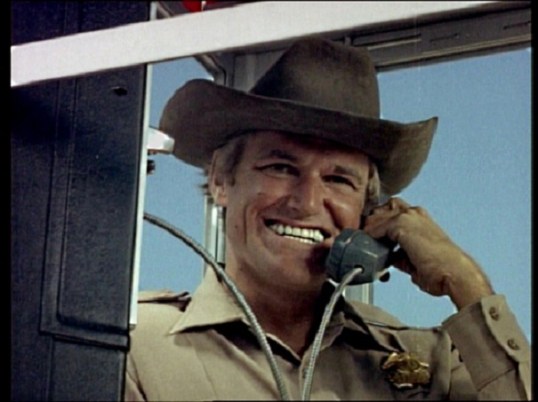
Laserblast is a low-budget film, one that is often listed as being one of the worst films ever made.  Myself, I love the film because I think the aliens are cute and I enjoy Kim Milford’s performance as Billy.  Actually, for a film that didn’t cost much to make, Laserblast has a surprisingly impressive cast.  Technically, it’s not a shock to see Roddy McDowall in the film, since McDowall apparently accepted every role that he was offered in the 70s.  But Roddy’s trademark neurotic eccentricity is still welcome in the small role of Billy’s doctor.  The great character actor Dennis Burkley shows up as a fascist deputy.  Gianni Russo, who played Carlo Rizzi in The Godfather, plays a government agent who shows up from out of nowhere and who wears a cream-colored suit that makes him look like a wedding DJ.  Keenan Wynn, who also apparently accepted any role he was offered in the 70s, plays Rainbeaux Smith’s drunk grandfather.  Best of all, Eddie Deezen, who was best known for playing stereotypical nerd characters in films like Grease, shows up as a bully named Froggy!  After getting bullied by Eddie Deezen, who wouldn’t pick up the first space gun they found and start blasting rocks?

Laserblast is fun, just like spring break.  I like it, just like spring break.  So does Arleigh so be sure to check out his review, as well!

The DGA Honors Jane Campion


Last night, the Directors Guild of America awarded their top prize to Jane Campion and The Power of the Dog.  This is definitely good news for the film, as far as the Oscars are concerned.  With West Side Story now on HBO and so many people rediscovering how important a director Steven Spielberg really is, it seemed as if the momentum may have been shifting.  But, thanks to the DGA and the recent controversy over Sam Elliott’s comments about the film, The Power of the Dog is once again the front runner.

(To be honest, as far as Spielberg is concerned, it wouldn’t surprise me if a lot of Academy voters are currently of the “In just a few month, he’s going to get another chance with The Fabelmans” mindset.)

Here are the film winners from the DGA:

NARRATIVE FEATURE FILM
Paul Thomas Anderson – Licorice Pizza
Kenneth Branagh – Belfast
Jane Campion – The Power of the Dog
Steven Spielberg – West Side Story
Denis Villeneuve – Dune

FIRST TIME NARRATIVE FEATURE FILM
Maggie Gyllenhaal – The Lost Daughter
Rebecca Hall – Passing
Tatiana Huezo – Prayers For The Stolen
Lin Manuel-Miranda – Tick, Tick…BOOM!
​Michael Sarnoski – Pig
Emma Seligman – Shiva Baby

DOCUMENTARY
Jessica Kingdon – Ascension
Stanley Nelson – Attica
Raoul Peck – Exterminate All The Brutes
Questlove – Summer of Soul
Elizabeth Chai Vasarhelyi & Jimmy Chin – The Rescue