Lisa Marie Reviews An Oscar Nominee: In Old Chicago (dir by Henry King)


One of the ten films to be nominated for Best Picture of 1937, In Old Chicago tells the story of the O’Leary family.

When we first meet the O’Learys, they’re riding across the Illinois frontier in a covered wagon.  After patriarch Patrick O’Leary (J. Anthony Hughes) is killed in a freak accident, Hazel O’Leary (Alice Brady) decides to settle in the bustling town of Chicago.  Hazel and her three sons build a life for themselves in a poor, largely Irish neighborhood known as the Patch.  Hazel makes a living as a laundress and soon, her home is big enough for her to take in a cow named Daisy.  Better not put that lantern too close to Daisy, Mrs. O’Leary….

As for the O’Leary boys, they all build a life of their own in 19th century Chicago.

Free-spirited Dion (Tyrone Power) hangs out in the saloon owned by sinister Gil Warren (Brian Donlevy) and, to his mother’s consternation, he falls for a singer named Belle (Alice Faye).  Eventually, Dion and Belle open up their own saloon and go into competition with Warren.  Dion soon emerges as one of the leaders of the Patch, a rogue with a charming smile and zero ethics but a total love for his family.

The youngest, Bob (Tom Brown), falls in love with a German immigrant named Gretchen (June Storey).  Bob asks Gretchen to marry him while Mrs. O’Leary’s cow stares straight at camera.

Finally, the oldest of the O’Leary boys is Jack (Don Ameche).  Jack become a crusading lawyer and eventually, he runs for mayor on a reform ticket.  With Dion’s help, Jack is able to defeat Gil Warren.  But now that Jack is mayor, he immediately sets his sights on tearing down the Patch and, in his words, “starting over.”

In Old Chicago has a two-hour running time and a lot happens in those two hours.  Not only is there all the drama between the brothers but also there’s a handful of production numbers featuring Alice Faye.  (Considering that she’s performing at a saloon in the slums of Chicago, it’s impressive that Belle can put on such an elaborate show.)  Of course, anyone with a knowledge of history knows that every minute of In Old Chicago is building up to the moment when Mrs. O’Leary’s cow kicks over that lantern and all the wooden buildings in Chicago go up in flames.  In Old Chicago is an early disaster movie and, talented cast aside, the main reason that anyone will be watching will be for the recreation of the Great Chicago Fire.  As flames roar around them and cattle stampede through the streets, hundreds of extras run for their lives.  As Alice Brady, Tom Brown, and Alice Faye stare off to the horizon, the city of Chicago explodes in front of them.  Even today, the scenes of the city on fire are impressive.

As for the rest of the film, I enjoyed the melodramatic excess of it all.  The stars weren’t exactly the most dynamic actors of the 1930s but Tyrone Power and Don Ameche were both handsome and likable enough to carry the film and it’s easy to see why In Old Chicago was, at the time of its production, the most expensive film ever made.  It’s a big film, with ornate sets, hundreds of extras, and elaborate production numbers.  It’s entertaining, even though I did occasionally find myself growing impatient as I waited for the fire to finally start burning.

One thing this film is not is historically accurate.  Not only is it now generally agreed that Mrs. O’Leary’s cow was innocent of starting the fire but Mrs. O’Leary’s son was never mayor of Chicago.  It is true that Chicago caught fire in 1871 and that the mayor turned to General Philip Sheridan (played here by Sidney Blackmer) for help in both putting out the fire and keeping order in the streets.  For the most part, though, In Old Chicago is total fiction.  That didn’t bother me but then again, I don’t live in Chicago.

In Old Chicago was nominated for Best Picture of the Year but lost to The Life of Emile Zola.  However, Alice Brady won the Oscar for Best Supporting Actress.
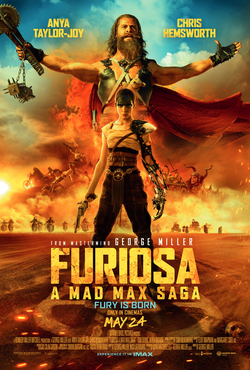
Catching Up With The Films of 2024: Furiosa: A Mad Max Saga (dir by George Miller)


Furiosa: A Mad Max Saga opens with the sound of nervous Australian citizens and commentators, narrating us through the collapse of civilization.  We hear about riots.  We hear about the breakdown of civilization.  We hear that people are literally running out of water.

It’s an effective opening but, for those of us who have seen the other movies set in the Mad Max universe, it also feels a bit redundant.  We already know the story of how our world came to an end.  Mad Max opened with society in its death throes.  The Road Warrior and Mad Max: Beyond Thunderdome both took place a few years after the apocalypse, with the majority of humanity reduced back to a feral existence of scrounging and fighting to survive.  Finally, Mad Max: Fury Road took place so far in the future that the only thing that really remained of the old ways were the cars and the guns that were obsessively cared for by the inhabitants of what was once Australia.  (Not even the collapse of civilization could halt car culture.)

Furiosa opens 45 years after the apocalypse, with young Furiosa (Alyla Brown) living in the Green Place, one of the few areas of Australia not to be reduced to a waterless desert.  When she’s kidnapped by Dementus (Chris Hemsworth) and the Biker Horde, she can only watch in horror as her mother (Charlee Fraser) is crucified by the Horde.  Dementus, who was driven mad by the death of his own family, adopts Furiosa as his own and spends years hoping that she will lead him to the Green Place.  Instead, Furiosa is eventually “traded” to Dementus’s rival, Immortan Joe (Lachy Hulme), and, under the tutelage of Praetorian Jack (Tom Burke), she eventually grows up to become both Anya Taylor-Joy and the fierce warrior who was at the center of Mad Max: Fury Road.

Like that opening montage of panicky voices describing the apocalypse, Furiosa is well-made but, narratively, it can feel a bit redundant.  There’s really nothing major about Furiosa’s backstory that wasn’t previously revealed in Mad Max: Fury Road.  Yes, we learn the exact circumstances of how she lost her arm and it’s a scene that definitely establishes Furiosa as a badass but it’s also reveals that she lost her arm in the way that I imagine 99% of Fury Road‘s audience assumed it happened the first place.  That’s the problem with both prequels and sequels.  If the first movie is effective, that usually means that the audience has been given all of the information that they needed to understand a character’s past and motivation.  As a result, prequels often feel narratively unnecessary.  Furiosa spends the majority of this movie plotting her escape from Immortan Joe but we already know that it’s not going to happen because Furiosa still has to be at the Citadel for Fury Road.

Compared to Fury Road (in which the action took place over a handful of days as opposed to the decade that is covered in the prequel), Furiosa can feel a little slow.  At times, it can even seem a bit draggy.  Furiosa devotes as much time to exploring post-apocalyptic society as it does to action sequences.  (It has more in common with Mad Max: Beyond Thunderdome than The Road Warrior.)  That said, there’s a lot about Furiosa that works wonderfully.  No one directs a chase or a battle as well as George Miller.  Chris Hemsworth gives a good performance as Dementus, playing him as a tyrant who learned how to lead from watching the Marvel movies that made Hemsworth famous.  Hemsworth is particularly strong in his final scene with Furiosa.   Dementus may be hateful but, in a strange way, he can be understood.  Having lost everything he once cherished in life, Dementus’s actions are as much about his own self-destructive impulses as his own thirst for pwoer.  Though she doesn’t take over the role until fairly late in the film, Anya Taylor-Joy gives a fierce performance as Furiosa.  Furiosa doesn’t speak much in the film but, when she does, both Anya Taylor-Joy and Alyla Brown make those words count.

Furiosa is an uneven film that falls victim to the same trap that has hindered many prequels.  But, ultimately, it’s still a watchable and frequently compelling vision of a disturbing future.


Song of the Day: Moonraker by Shirley Bassey


In honor of National Science Fiction Day, today’s song of the day comes from the film that sent James Bond into space!

Released in 1979, Moonraker may not get as much respect as some of the Bond films but I’ve always liked it.  The theme song was the third and final Bond song to be performed by Shirley Bassey.  The song was originally written for Frank Sinatra but he turned it down.  Johnny Mathis then agreed to perform the song but he backed out at the last minute.  Shirley Bassey came in to record the song just weeks before the film was due to premiere.

Because this is a 70s film, there were two versions of this song, the original and the disco.  Because I’m the one writing this post, we’re going with the disco version.

Where are you, why do you hide
Where is that moonlight trail that leads to your side?
Just like the moonraker goes in search of his dream of gold
I search for love, for someone to have and hold

I’ve seen your smile in a thousand dreams
Felt your touch, and it always seems
You love me, you love me

Where are you, when will we meet?
Take my unfinished life and make it complete
Just like the moonraker knows
His dream will come true someday
I know that you are only a kiss away

I’ve seen your smile in a thousand dreams
Felt your touch, and it always seems
You love me, you love me

Songwriters: John Barry / Hal David

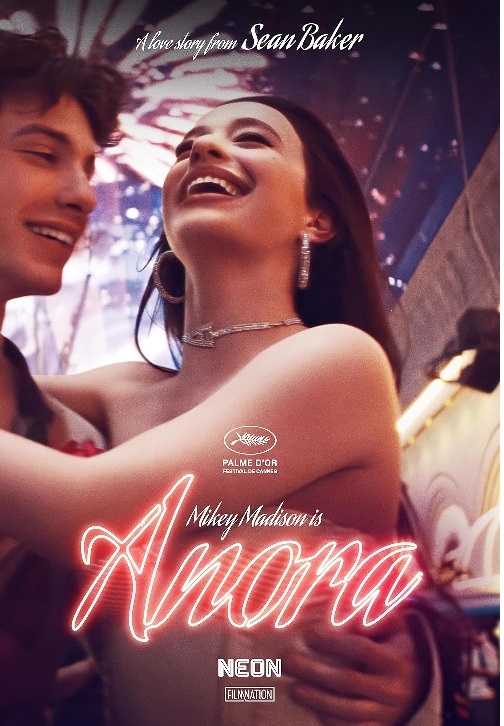
Anora Wins In Central Florida


The Critics Association of Central Florida has announced its picks for the best of 2024!

Best Picture
Winner: Anora
Runner-up: Wicked

Best Director
Winner: Denis Villeneuve – Dune: Part Two
Runner-up: Jon M. Chu – Wicked

Best Actor
Winner: Colman Domingo – Sing Sing
Runner-up: Timothée Chalamet – A Complete Unknown

Best Actress
Winner: Mikey Madison – Anora
Runner-up: Cynthia Erivo – Wicked

Best Supporting Actor
Winner: Kieran Culkin – A Real Pain
Runner-up: Clarence Maclin – Sing Sing

Best Supporting Actress
Winner: Zoe Saldaña – Emilia Pérez
Runner-up: Ariana Grande – Wicked

Best Cast
Winner: Wicked
Runner-up: Sing Sing

Best Documentary
Winner: The Remarkable Life of Ibelin
Runner-up: Will & Harper

Best International Film
Winner: Flow
Runners-up (TIE): Kneecap / Emilia Pérez

Best Animated Film
Winner: The Wild Robot
Runner-up: Flow

Best Screenplay
Winner: Anora
Runner-up: A Real Pain

Best Cinematography
Winner: Dune: Part Two
Runner-up: Nosferatu

Best Score
Winner: Challengers
Runner-up: Dune: Part Two

Best Original Song
Winner: “Kiss the Sky” – The Wild Robot
Runner-up: “Compress, Repress” – Challengers

Best Sound Design
Winner: Dune: Part Two
Runner-up: Wicked

Best Editing
Winner: Challengers
Runner-up: Dune: Part Two

Best Make-Up and Hairstyling
Winner: The Substance
Runner-up: Wicked

Best Production Design
Winner: Wicked
Runner-up: Dune: Part Two

Best Visual Effects
Winner: Dune: Part Two
Runner-up: Kingdom of the Planet of the Apes

Best Costume Design
Winner: Wicked
Runner-up: Dune: Part Two

Best Stunt Coordination
Winner: The Fall Guy
Runner-up: Furiosa: A Mad Max Saga

Best Hybrid Performance
Winner: Lupita Nyong’o – The Wild Robot
Runner-Up: Jonno Davies and Robbie Williams – Better Man

Best First Feature
Winner: Dev Patel – Monkey Man
Runner-Up: Julio Torres – Problemista

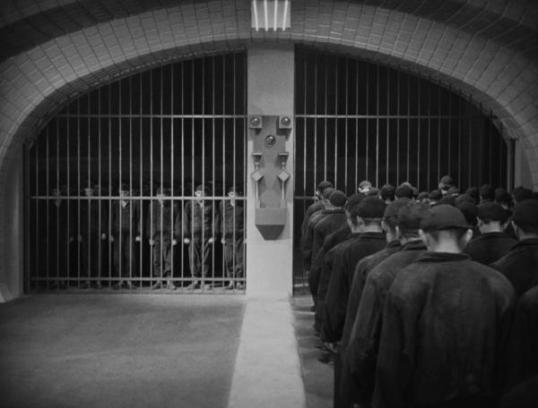
Scenes That I Love: The Future, as imagined by Fritz Lang’s Metropolis


Metropolis (1927, dir by Fritz Lang, DP: Karl Freund and Gunther Rittau)

Since today is National Science Fiction Day, it seems appropriate that today’s scene that I love should come from one of the first great science fiction films!  In this scene from Fritz Lang’s Metropolis, we get a look at how the future was imagined in 1927.  Lang really was not that far off!

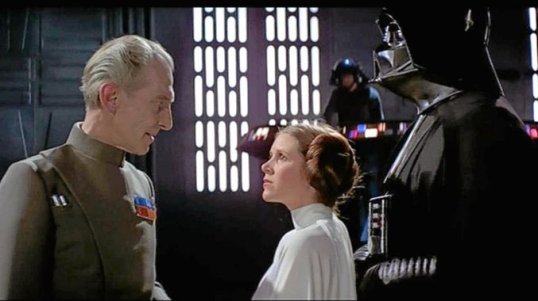
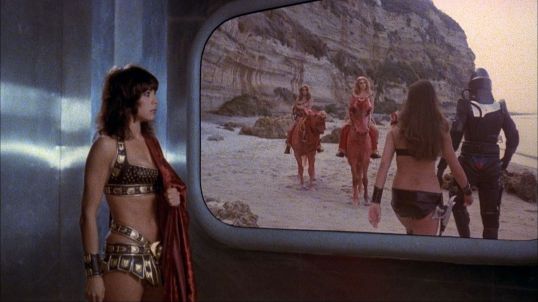
4 Shots From 4 Films: Special Science Fiction Edition


4 Shots From 4 Films is just what it says it is, 4 shots from 4 of our favorite films. As opposed to the reviews and recaps that we usually post, 4 Shots From 4 Films lets the visuals do the talking.

Today, in honor of National Science Fiction Day, it’s time for….

4 Shots From 4 Science Fiction Films

2001: A Space Odyssey (1968, dir by Stanley Kubrick, DP: Geoffrey Unsworth)

Star Wars Episode IV: A New Hope (1977, dir by George Lucas, DP: Gilbert Talyor)

Starcrash (1978, dir by Luigi Cozzi, DP: Paul Beeson and Roberto D’Ettorre Piazzoli)

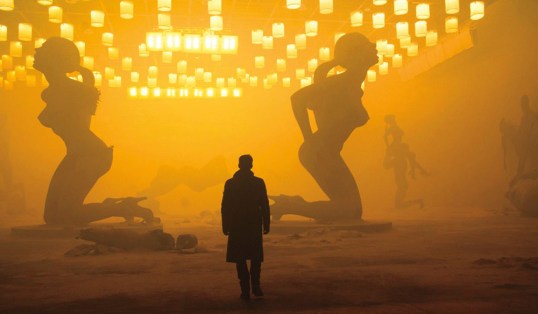
Blade Runner 2049 (2017, dir by Denis Villeneuve, DP: Roger Deakins)

Film Review: Save The Tiger (dir by John G. Avildsen)


1973’s Save The Tiger tells the story of Harry Stoner (Jack Lemmon).

When Harry was a young man, he loved baseball and he felt like he could conquer the world.  He saw combat in World War II and spent the final part of the war on the Island of Capri, recuperating after being wounded in battle.  Harry went on to partner up with Phil Greene (Jack Gilford) and they started a clothing company in Los Angeles, Capri Casuals.

Now, Harry is a middle-aged man who is still haunted by nightmares about the war.  He’s married.  He has a daughter attending school in Switzerland.  He’s respected in the industry.  He lives in a nice house in Beverly Hills.  And he’s totally miserable.  He wakes up every day and wonders what is happening to the country.  He talks about witnessing a wild pitch at a baseball game, missing the days when something like that could seem like the most important thing in his life.  He spends all of his time at work, cheating to balance the books and keeping clients happy by setting them up with a sophisticated prostitute named Margo (played, with a weary cynicism, by Lara Parker).

Save The Tiger covers just a few days in the life of Harry Stoner, as he searches for some sort of meaning in his life.  He gives a ride to a free-spirited hippie (Laurie Heineman) who offers to have sex with him.  (Harry replies that he’s late for work.)  He accepts an award at an industry dinner and, as he tries to give his acceptance speech, he is haunted by the sight of dead soldiers sitting in the audience.  With Phil, he debates whether or not to balance the books by setting fire to one of their warehouses in order to collect the insurance.  Harry sees a poster imploring him to “Save the Tigers.”  Who can save Harry as he finds himself increasingly overwhelmed by the realities of his life?

As I watched Save the Tiger, I found myself thinking about two other films of the era that featured a middle-aged man dealing with a midlife crisis while searching for meaning in the counterculture.  In Petulia and Breezy, George C. Scott and William Holden each found meaning in a relationship with a younger woman.  And while Petulia and Breezy are both good films, Save The Tiger is far more realistic in its portrayal of Harry’s ennui.  There is no easy solution for Harry.  Even if he accepted the hippie’s offer to “ball” or if he acted on the obvious attraction between himself and Margo, one gets the feeling that Harry would still feel lost.  Harry’s problem isn’t that he’s merely bored with his life.  Harry’s problem is that he yearns for a past that can never be recaptured and which may only exist in his imagination.  If George C. Scott and William Holden were two actors who excelled at playing characters who refused to yield to the world’s demands, Jack Lemmon was an actor who played characters who often seemed to be desperate in their search for happiness.  Save The Tiger features Lemmon at his most desperate, playing a character who has yielded so often and compromised so much that he now has nowhere left to go.

It’s not exactly a cheerful film but it is one that sticks with you.  Jack Lemmon won his second Oscar for his performance as Harry and he certainly deserved it.  Lemmon does a wonderful job generating some sympathy for a character who is not always particularly likable.  Many of Harry’s problems are due to his own bad decisions.  No one forced him to use “ballet with the books” to keep his business open and no one is forcing him to hire arsonist Charlie Robbins (Thayer David, giving a performance that is both witty and sinister at the same time) to burn down not only his warehouse but also an adjoining business that belongs to an acquaintance.  Harry could admit the truth and shut down his business but then how would he afford the home in Beverly Hills and all the other symbols of his success?  Harry yearns for a time when he was young and his decisions didn’t have consequences but that time has passed.

This isn’t exactly the type of film that many would expect from the director of Rocky but director John G. Avildsen does a good job of putting the viewer into Harry’s seedy world.  I especially liked Avilden’s handling of the scene where Harry hallucinates a platoon of wounded soldiers listening to his awards speech.  Instead of lingering on the soldiers, Avildsen instead uses a series of a quick cuts that initially leave the audience as confused as Harry as to what Harry is seeing.  Both Rocky and Save The Tiger are about a man who refuses to give up.  The difference is that perhaps Harry Stoner should.

“You can’t play with us, mister!” a kid yells at Harry when he attempts to recreate the wild pitch that so impressed him as a youth.  In the end, Harry is a man trapped by his memories of the past and his dissatisfaction with the present.  He’s made his decisions and he’ll have to live with the consequences but one is left with the knowledge that, no matter what happens, Harry will be never find the happiness or the satisfaction that he desires.  The tigers can be saved but Harry might be a lost cause.

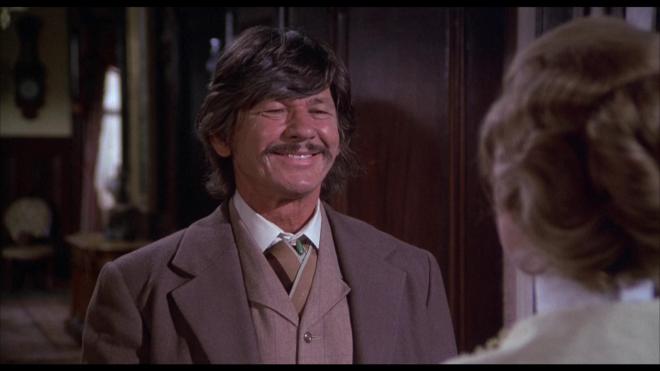
FROM NOON TILL THREE (1976) – Charles Bronson, the comedian??!


During the height of his popularity in 1976, Charles Bronson tried something quite different with this romantic comedy costarring his wife Jill Ireland. And to be honest, he’s darn funny in the role.  This movie has grown on me over the years. 

Bronson plays Graham Dorsey, a bank robber who spends an afternoon with the lonely widow Amanda Starbuck (Ireland) while his gang is robbing a bank in town.  After his gang is all killed during the robbery, Dorsey must take off and go into hiding, eventually being arrested for impersonating a quack dentist. While he’s in jail, and through a variety of circumstances, a book is written about their afternoon together and it becomes an international sensation.  As soon as Dorsey gets out of jail, he goes back to Starbuck’s home to rekindle their affair. Unfortunately for Dorsey, the book has created such a legend of him and their affair that Ms. Starbuck doesn’t even recognize the man he really is.  His method of convincing her that he’s the “real” Graham Dorsey is the funniest moment in Bronson’s entire filmography. 

Charles Bronson & Jill Ireland are clearly having a wonderful time making this movie together, which is one of the main reasons I enjoy the film.  He may not have done it often, but Bronson could play comedy and he’s excellent in this film cast completely against his normal type.  Jill Ireland is also very good as the widow Starbuck and her rendition of the song “Hello and Goodbye” was even nominated for a Golden Globe for Best Song.  We had the privilege of interviewing Jill Ireland’s niece, Lindsay Ireland, and she told us of singing this song with her aunt Jill and her cousin when she would spend summers with them in Vermont in the 70’s. It’s so fun for me to hear firsthand about those times when the Bronson’s were one of the biggest celebrity couples of the world!  The best part, Bronson valued his time with his family over anything else. They were everything to him.

**BONUS CONTENT** – I’ve included a link to the “This Week in Charles Bronson” podcast episode where Lindsay Ireland describes her time with her aunt Jill Ireland, and how they would sing “Hello & Goodbye,” the song that was in FROM NOON TILL THREE, while they were driving down the roads in Vermont. It’s a really nice insight into Jill Ireland.

Film Review: The Don Is Dead (dir by Richard Fleischer)


“The Don is Dead!” shouts the title of this 1973 film and it’s not lying.

After the powerful and respect leader of the Regalbuto crime family dies, the Mafia’s governing body meets in Las Vegas to debate who should be allowed to take over the family’s operations.  Frank Regalbuto (a smoldering Robert Forster) wants to take over the family but it’s agreed that he’s still too young and hot-headed.  Instead, control of the family is given Don Angelo DiMorra (Anthony Quinn), an old school Mafia chieftain who everyone agrees is a man of respect.  Don DiMorra will serve as a mentor to Frank while Frank’s main enforcers, The Fargo Brothers, will be allowed to operate independently with the understanding that they will still respond if the mob needs them to do a job.  Tony Fargo (Forrest) wants to get out of the rackets all together while his older brother, Vince (Al Lettieri), remains loyal to the old ways of doing things.

Frank is not happy with the arrangement but he has other things to worry about.  He knows that there’s a traitor in his family.  While he and the Fargo brothers work to uncover the man’s identity so that they can take their revenge, Don Angelo falls in love with a Vegas showgirl named Ruby Dunne (Angel Tompkins).  However, Ruby is engaged to marry Frank and, when Frank returns from taking care of the traitor, he is tipped off as to what has been happening in his absence.  Frank goes crazy, nearly beating Ruby to death.  Don Angelo declares war on Frank and the Fargo brothers are forced to decide which side they’ll serve.

In the 1970s, almost every crime film was either a rip-off of The French Connection or The Godfather.  The Don Is Dead is unique in that it attempts to rip off both of them at the same time.  The film opens French Connection-style with a couple of hoods trying to double-cross Frank during a drug deal, leading to shoot-out.  (Keep an eye out for Sid Haig as one of Frank’s men.)   The film is full of scenes that are meant to duplicate the gritty feel of The French Connection though, needless to say, none of them are directed with the cinema verité intensity that William Friedkin brought to that classic film.  Meanwhile, Anthony Quinn plays a character who is very much reminiscent of Don Vito Corleone, even pausing at one point to tell Frank that “drugs are a dirty business.”  The Godfather‘s Abe Vigoda and Al Lettieri show up in supporting roles and Robert Forster gives a performance that owes more than a little to James Caan’s Oscar-nominated turn as Sonny Corleone.  (Interestingly enough, both Quinn and Forster were among the many actors considered for roles in The Godfather.)

Unfortunately, the film itself is slowly-paced and never really draws us into the plot.  Director Richard Fleischer, who directed a lot of films without ever developing a signature style, brings none of the intensity that William Friedkin brough to The French Connection nor can he duplicate Francis Ford Coppola’s operatic grandeur.  The Don is Dead plays out like a particularly violent made-for-TV movie.  There’s a lot of talented people in the cast but they’re defeated by thinly drawn characters.  Robert Evans often said that Coppola was hired to direct The Godfather because, as an Italian-American, he would bring an authenticity to the material that a non-Italian director would not be able to do.  The Don Is Dead would seem to indicate that Evans knew what he was talking about.

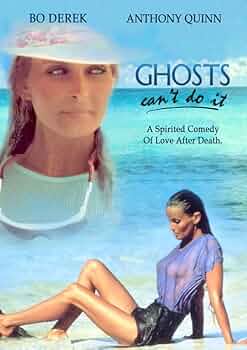
Insomnia File #66: Ghosts Can’t Do It (dir by John Derek)


What’s an Insomnia File? You know how some times you just can’t get any sleep and, at about three in the morning, you’ll find yourself watching whatever you can find on cable or streaming? This feature is all about those insomnia-inspired discoveries!

If you find yourself having trouble getting to sleep tonight or tomorrow, you may want to try watching 1989’s Ghosts Can’t Do It.  It won’t necessarily put you to sleep but it will give you something to ponder while you lie in bed and stare up at the ceiling.  For instance, how exactly did this movie get produced without anyone coming up with a better title than Ghosts Can’t Do It?

Bo Derek plays Kate, the wife of elderly billionaire Scott (played by Anthony Quinn, who appears to be drunk in the majority of his scenes).  Despite their age difference, Kate and Scott are deeply in love.  When they’re not playing in the snow and riding horses around the ranch, they’re having sex.  “Sex, sex, sex, sex!” the movie seems to chant in almost every scene.  But then Anthony Quinn has a heart attack, which in this film means that he spends what appears to be hours lying in the snow while trading jokes with Kate.  (It’s important to be able to joke with your partner but if my man had a heart attack, my first reaction would be to get a doctor.)

Scott survives his heart attack but he’s told that, in his weakened state, he can no longer have sex.  Also, he can’t get a new heart because he’s too old.  Facing a future without sex, Scott shoots himself.  Fortunately, Scott’s guardian angel (Julie Newmar) takes sympathy on him and sends his spirt back down to Earth.  Only Kate can see and hear him and, while she’s happy to be reunited with him, they are both upset to discover that ghosts can’t do it.

Scott comes up with a plan.  Kate needs to find a young, virile lover and then murder him so that Scott can possess his body and then he and Kate can have sex whenever they feel like it.  Because that plan makes total sense and there’s no way that it could lead to Kate’s soul being damned to an eternity in Hell, Kate agrees.  Kate travels the world, having sex and looking for a man who will be able to please her after she has murdered him.  Eventually, Kate meets a charming young criminal named Fausto (Leo Damian) and decides that he’ll do.  Scott can’t wait to inhabit Fausto’s body but Kate suddenly realizes that she might not have it in her to be a murderer!  Well, she’ll never know unless she tries.  (I never thought that I would be able to shoot down a drone but then, one night in December….)

While all of this is going on, Kate is handling Scott’s business affairs.  This leads to a meeting with a famous and ruthless businessman named Donald Trump.  Yes, the 45 and 47th President of the United States plays himself in this film.  Kate and Trump meet in a conference room to discuss a deal.  Kate mentions that she read Trump’s book.  Trump smiles and nods.  They have hard-boiled business dialogue.  Kate tells Trump that he’s “too pretty” to be as ruthless as he is.  ‘You noticed,” Trump says.  It’s a pretty dumb scene but, from a historical point-of-view, it’s a reminder of the fact that, long before he was elected President, Trump was already a ubiquitous figure on the American pop cultural scene.

Ghosts Can’t Do It is definitely a misfire, albeit one that is such a huge misfire that it become interesting in the same way that trainwrecks are often interesting.  Almost everything about it, from the dialogue to the attempts at humor to the nearly unreadable font that is used for the opening credits, feels wrong.  There is one brief moment that works, in which Kate dances with her ghost husband and, for the first and only time in the film, we see a flicker of genuine chemistry between Bo Derek and Anthony Quinn.  (Bo Derek, I will mention, is not quite as bad an actress as her reputation suggests.  It’s just that she should have been playing campy soap opera villainesses on late night television as opposed to starring in her husband’s crackpot films.)  Otherwise, this movie is perhaps the worst movie to ever feature both a two-time Oscar winner and a future President.  And, for that reason, it’s a watchable curiosity.  It’s just what insomnia demands.

Previous Insomnia Files:

  1. Story of Mankind
  2. Stag
  3. Love Is A Gun
  4. Nina Takes A Lover
  5. Black Ice
  6. Frogs For Snakes
  7. Fair Game
  8. From The Hip
  9. Born Killers
  10. Eye For An Eye
  11. Summer Catch
  12. Beyond the Law
  13. Spring Broke
  14. Promise
  15. George Wallace
  16. Kill The Messenger
  17. The Suburbans
  18. Only The Strong
  19. Great Expectations
  20. Casual Sex?
  21. Truth
  22. Insomina
  23. Death Do Us Part
  24. A Star is Born
  25. The Winning Season
  26. Rabbit Run
  27. Remember My Name
  28. The Arrangement
  29. Day of the Animals
  30. Still of The Night
  31. Arsenal
  32. Smooth Talk
  33. The Comedian
  34. The Minus Man
  35. Donnie Brasco
  36. Punchline
  37. Evita
  38. Six: The Mark Unleashed
  39. Disclosure
  40. The Spanish Prisoner
  41. Elektra
  42. Revenge
  43. Legend
  44. Cat Run
  45. The Pyramid
  46. Enter the Ninja
  47. Downhill
  48. Malice
  49. Mystery Date
  50. Zola
  51. Ira & Abby
  52. The Next Karate Kid
  53. A Nightmare on Drug Street
  54. Jud
  55. FTA
  56. Exterminators of the Year 3000
  57. Boris Karloff: The Man Behind The Monster
  58. The Haunting of Helen Walker
  59. True Spirit
  60. Project Kill
  61. Replica
  62. Rollergator
  63. Hillbillys In A Haunted House
  64. Once Upon A Midnight Scary
  65. Girl Lost