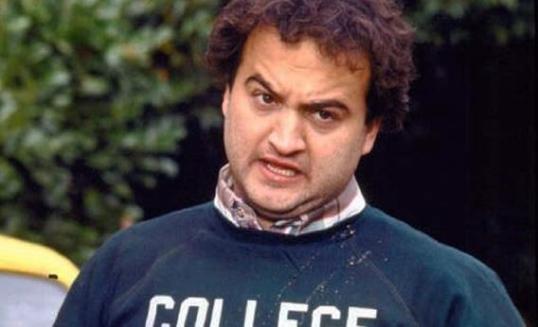
Dr. Sam Loomis
Like a lot of people, I enjoy browsing the trivia sections of the IMDb. While it’s true that a lot of the items are stuff like, “This movie features two people who appeared on a television series set in the Star Trek Universe!,” you still occasionally came across an interesting fact or two.
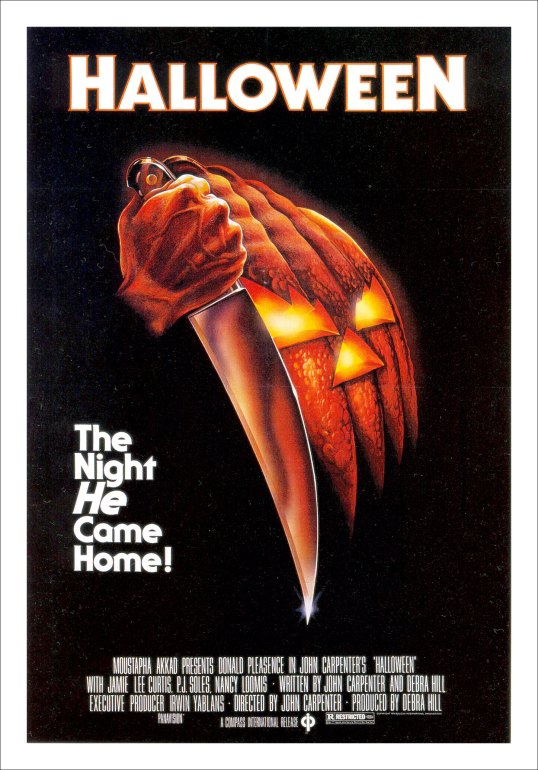
Of course, sometimes, you just come across something that makes so little sense that you can only assume that it was posted as a joke. For instance, I was reading the IMDb’s trivia for the original 1978 Halloween and I came across this:
Peter O’Toole, Mel Brooks, Steven Hill, Walter Matthau, Jerry Van Dyke, Lawrence Tierney, Kirk Douglas, John Belushi, Lloyd Bridges, Abe Vigoda, Kris Kristofferson, Sterling Hayden, David Carradine, Dennis Hopper, Charles Napier, Yul Brynner and Edward Bunker were considered for the role of Dr. Sam Loomis.
Now, some of these names make sense. Despite the fact that Sam Loomis became Donald Pleasence’s signature role, it is still possible to imagine other actors taking the role and perhaps bringing a less neurotic interpretation to the character.
Peter O’Toole as Dr. Loomis? Okay, I can see that.
Kirk Douglas, Sterling Hayden, Charles Napier, Steve Hill, or Lloyd Bridges as Dr. Loomis? Actually, I can imagine all of them grimacing through the role.
Walter Matthau? Well, I guess if you wanted Dr. Loomis to be kind of schlubby….
Abe Vigoda? Uhmmm, okay.
Dennis Hopper? That would be interesting.
Mel Brooks? What? Wait….
John Belushi? Okay, stop it!
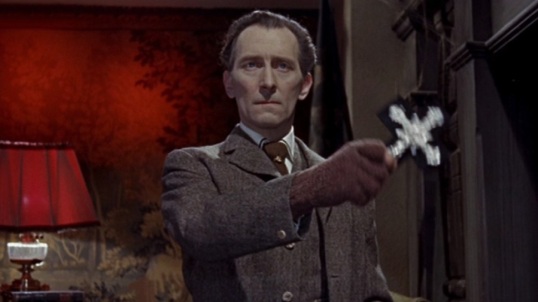
Dr. Sam Loomis
My point is that I doubt any of these people were considered for the role of Dr. Loomis. Both director John Carpenter and producer Debra Hill have said that they wanted to cast an English horror actor in the role, as a bit of an homage to the Hammer films of the 60s. Christopher Lee was offered the role but turned it down, saying that he didn’t care for the script or the low salary. (Lee later said this was one of the biggest mistakes of his career.) Peter Cushing’s agent turned down the role, again because of the money. It’s not clear whether Cushing himself ever saw the script.
To be honest, I could easily Peter Cushing in the role and I could see him making a brilliant Dr. Loomis. But, ultimately, Donald Pleasence was the perfect (if not the first) choice for the role. Of course, Pleasence nearly turned down the role as well. Apparently, it was his daughter, Angela, who changed his mind. She was an admirer of John Carpenter’s previous film, Assault on Precint 13. Carpenter has said that he was originally intimidated by Donald Pleasence (the man had played Blofeld, after all) but that Pleasence turned out to be a professional and a gentleman.
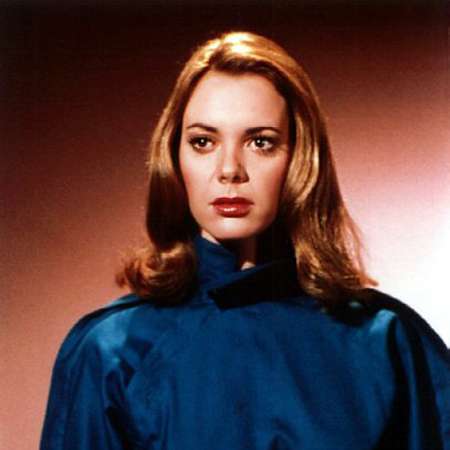
Laurie Strode
Of course, Halloween is best known for being the first starring role of Jamie Lee Curtis. Curtis was actually not Carpenter’s first choice for the role of Laurie Strode. His first choice was an actress named Annie Lockhart, who was the daughter of June Lockhart. Carpenter changed his mind when he learned that Jamie was the daughter of Janet Leigh. Like any great showman, Carpenter understood the importance of publicity and he knew nothing would bring his horror movie more publicity then casting the daughter of the woman whose onscreen death in Psycho left moviegoers nervous about taking a shower.
There was also another future big name who came close to appearing in Halloween. At the time that she was cast as Lynda, P.J. Soles was dating an up-and-coming actor from Texas named Dennis Quaid. Quaid was offered the role of Lynda’s doomed boyfriend, Bob but he was already committed to another film.
Not considered for a role was Robert Englund, though the future Freddy Krueger still spent some time on set. He was hired by Carpenter to help spread around the leaves that would make it appear as if his film was taking place in the October, even though it was filmed in May.
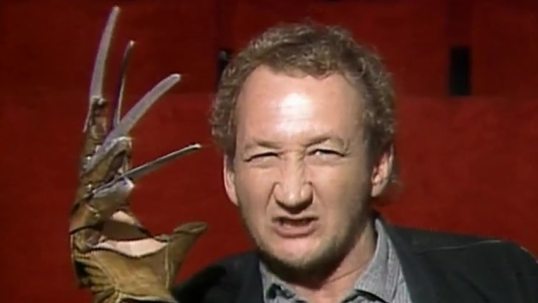
Robert Englund, making May look like October
Interestingly enough, Englund nearly wasn’t need for that job because Halloween was not originally envisioned as taking place on Halloween or any other specific holiday. When producer Irwin Yablans and financier Moustapha Akkad originally approached Carpenter and Hill to make a movie for them about a psycho stalking three babysitters, they didn’t care when the film was set. It was only after Carpenter and Hill wrote a script called The Babysitter Muders that it occurred to Yablans that setting the film during Halloween would be good from a marketing standpoint. Plus Halloween made for a better title than The Babysitter Murders.
And, of course, the rest is history. Carpenter’s film came to define Halloween and it still remains the standard by which every subsequent slasher movie has been judged. Would that have happened if the film had been known as The Babysitter Murders and had starred John Belushi?
Sadly, we may never know.


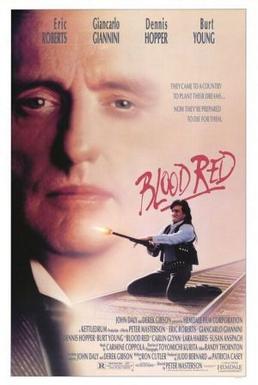 The time is the 1890s. The place is California. Sicilian immigrant Sebastian Collogero (Giancarlo Giannini) has just been sworn in as an American citizen and owns his own vineyard. When Irish immigrant William Bradford Berrigan (Dennis Hopper) demands that Sebastian give up his land so Berrigan run a railroad through it, Sebastian refuses. Berrigan hires a group of thugs led by Andrews (Burt Young) to make Sebastian see the error of his ways. When Sebastian ends up dead, his wayward son, Marco (Eric Roberts), takes up arms and seeks revenge.


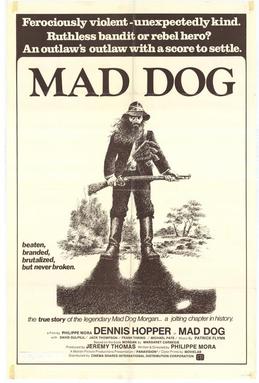 Though he may not be as internationally well-known as Ned Kelly, Dan “Mad Dog” Morgan was one of the most infamous bushrangers in 19th century Australia. Much as with the outlaws of American west, it is sometimes difficult to separate the fact from the legend when it comes to Mad Dog Morgan but it is agreed with Morgan has one of the most violent and bloodiest careers of the bushrangers. Whether Morgan was a folk hero or just a ruthless criminal depends on which source you choose to believe.
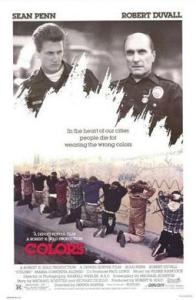 Los Angeles in the 80s. Beneath the California glamour that the rest of America thinks about when they think about L.A., a war is brewing. Bloods vs Crips vs the 21st Street Gang. For those living in the poorest sections of the city, gangs provide everything that mainstream society refuses to provide: money, a chance to belong, a chance to advance. The only drawback is that you’ll probably die before you turn thirty. Two cops — veteran Hodges (Robert Duvall) and rookie McGavin (Sean Penn) — spend their days patrolling a potential war zone. Hodges tries to maintain the peace, encouraging the gangs to stay in their own territory and treat each other with respect. McGavin is aggressive and cocky, the type of cop who seems to be destined to end up on the evening news. With only a year to go before his retirement, Hodges tries to teach McGavin how to be a better cop while the gangs continue to target and kill each other. The cycle continues.
 Through the Shattered Lens