Brains, Laughs, and Decline: The Uneven Legacy of Return of the Living Dead


Subverting the Zombie Canon: Satire, Genre-Bending, and Decay in the Return of the Living Dead Series

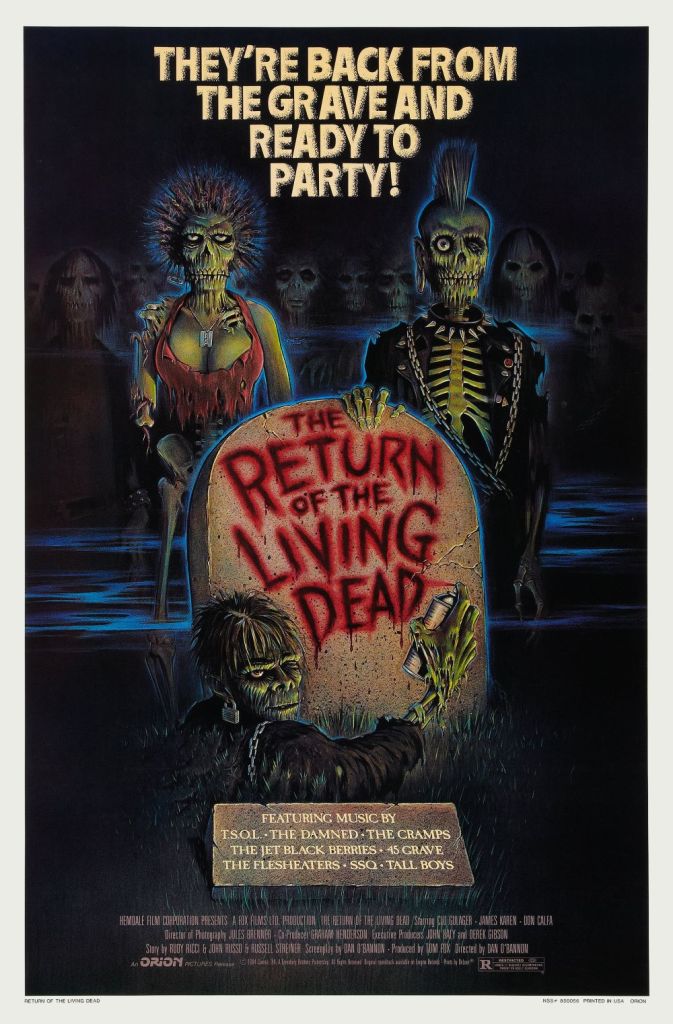
When talking about cult horror films, the Return of the Living Dead series holds a special place—not only as a spin-off from George A. Romero’s seminal Night of the Living Dead, but as a unique creative force in its own right. Thanks to a legal split between Romero and co-writer John Russo over rights to the “Living Dead” name, Russo and director Dan O’Bannon got to imagine a parallel zombie universe. This franchise quickly carved out its own identity, mixing horror, black comedy, and punk spirit in a way that both paid tribute to and upended zombie tropes.

Reinventing Zombie Lore with a Wink

The original Return of the Living Dead (1985) starts with a clever “what if” twist: what if Romero’s Night wasn’t just a movie, but a dramatized cover-up of a real government disaster? This meta idea instantly frames the film as self-referential and playful, setting a tone unlike anything out at the time.

Central to the film’s identity is the invention of 2-4-5 Trioxin, a fictional military chemical designed to clear marijuana crops which instead raises the dead—zombies with surprising new abilities. Unlike the slow, drooling zombies Romero popularized, these ghouls sprint, talk, and set traps. Their hunger is peculiar as well: they crave brains exclusively, as it eases the pain of being undead. And the old rules of zombie combat? Forget shooting them in the head. These zombies resist it, raising the stakes and scare factor.

This refreshing rewrite of zombie rules allowed the movie to be both frightening and fun. The zombies were smart but still monstrous, turning classic horror expectations on their head in a way that invited both laughter and fear—a tricky balance that few horror comedies manage.

Playing with Comedy, Panic, and Punk Rock

One of the greatest strengths of the original film is how it embraces horror-comedy so naturally. It doesn’t shy away from being funny while still delivering tension. James Karen and Thom Mathews excel as the main pair—Karen’s frantic, over-the-top panicked man paired with Mathews’ straight, slowly succumbing counterpart create a perfect comedic rhythm. Their slow transformation into zombies adds a tragic dimension to what could have been simple slapstick. Meanwhile, Don Calfa’s mortician character and Clu Gulager’s warehouse owner provide a grounded center amidst chaos.

The punk subculture flavor adds another unique texture. Linnea Quigley’s famous graveyard striptease encapsulates the 1980s’ blend of irreverence, sexuality, and horror obsession. The scene is shocking, hilarious, and iconic—one of those moments that encapsulates everything this film is about: having fun with taboos while not losing the darker undercurrents of mortality and decay.

Beyond laughs, there’s biting satire here. The film skewers the government and military’s hubris—scientists create a superweapon they can’t control, leading to chaos and destruction. This reflects 1980s American anxieties about bioweapons, government cover-ups, and nuclear fears. Horror and comedy collide to reflect cultural distrust and paranoia.

The Problem of the Sequel: Part II’s Familiar Ground

When Return of the Living Dead Part II came out in 1988, it felt like the franchise was stuck in a loop. With much of the original cast returning in near-identical roles, and lines and situations seemingly recycled, the film circles back to the same story. This self-copying invites a mix of amusement and disappointment: it seems the filmmakers didn’t believe they could improve on the original and decided to replicate it instead.

While it has its moments—good practical effects and a rollicking tone reminiscent of the first film—it leans harder into comedy, sometimes at the expense of the horror. The suburban setting and clearer military lockdown raise the action stakes, but the humor feels broader and less sharp, which can make the movie seem a bit cartoonish.

In a way, Part II comments on the pitfalls of horror franchises: once you’ve struck gold with an unexpected idea, sequels often struggle to regain that freshness. This installment is entertaining, but signals the beginning of the franchise’s creative plateau.

Much Darker Territory: Part III’s Horror and Romance

With Return of the Living Dead 3 in 1993, things take a major tonal shift. Brian Yuzna’s direction removes much of the comedy and replaces it with body horror, gore, and a genuinely tragic romance. The story centers on Curt and Julie, two teenagers tragically pulled into the military’s secret zombie experiments. After Julie is accidentally killed and resurrected, she becomes a zombie who feeds on brains but manages her hunger through extreme self-inflicted pain.

This grim take pushes the franchise into more serious, intense horror territory, with heavy themes of love, loss, and bodily autonomy threaded throughout. Julie’s tortured transformation is both tragic and unsettling, symbolizing not only the loss of life but also the torment of trying to hold onto humanity while losing it from within.

Yuzna’s effects are grisly in the finest tradition of ‘90s practical SFX. The film revives the franchise’s sense of danger and stakes by mixing romance with horror, delivering something emotionally resonant and viscerally impactful. While it diverges sharply from the earlier comedic tone, Part III proves the series’ flexibility and capacity for reinvention.

Creative Collapse: Parts IV and V’s Direct-to-Cable Downfall

Sadly, the wheels come off with Return of the Living Dead 4: Necropolis and 5: Rave to the Grave, both made in 2005 and directed by Ellory Elkayem. Shot back-to-back and released direct-to-cable, these films are pale shadows of the earlier entries.

They ditch the original’s clever mix of horror and humor entirely. Instead, we get generic corporate conspiracies, confusing Eastern European settings, weak scripts, and inconsistent zombie characterizations. The zombies lose their unique “brains only” horror and instead act like run-of-the-mill undead. Even the acting is amateurish, with only Peter Coyote standing out briefly as a sinister scientist.

Part 5 further muddies continuity by introducing Trioxin as a rave drug, leading to a chaotic rave/zombie apocalypse scenario that is both baffling and poorly paced. The low-budget effects and uneven pacing betray the exhaustion and lack of passion behind these entries.

These final two films underscore a common fate for franchises that outlive their creative spark—once inventive mythology becomes shallow cliché, and attempts to cash in feel uninspired. Instead of honoring their roots, they become muddled and forgettable.

Why the Series Matters

Despite its uneven legacy, Return of the Living Dead remains important for what it dared to do in horror cinema. The first film’s originality influenced countless horror comedies and redefined how zombies could be portrayed. Its self-awareness and invention paved the way for postmodern horror, where genre is as much about commentary as it is fear.

The third film’s daring shift to tragic body horror further demonstrated the potential for zombie films to explore complex emotional and societal themes beyond gore or giggles.

While the later sequels falter, their failure serves as a cautionary tale about the dangers of diluting distinct voices and creative risks in franchise filmmaking.

Ultimately, Return of the Living Dead survives in cultural memory as a zombie series that captured the spirit of its time—punk rebellion, Cold War paranoia, and genre self-mockery—with flashes of brilliance that continue to entertain and inspire.

Retro Television Review: The Glass House (dir by Tom Gries)


Welcome to Retro Television Reviews, a feature where we review some of our favorite and least favorite shows of the past!  On Sundays, I will be reviewing the made-for-television movies that used to be a primetime mainstay.  Today’s film is 1972’s The Glass House!  It  can be viewed on YouTube.

The Glass House starts with three men arriving at a location that will define the next few months of their lives.

Brian Courtland (Clu Gulager) is a veteran of the Vietnam War.  He spent part of his service working as a guard in the brig.  Now that he’s back in the United States and in need of a regular paycheck, he has gotten a job working as a prison guard.  Courtland is not naive about where he’s going to be working or who he is going to be working with.  But he is an idealist, one who tries to treat everyone fairly and who hopes that he will be able to do some sort of good in his new position.

Alan (Kristoffer Tabori) is a young man who has been arrested for selling marijuana.  He is quiet and just hoping to serve his time and then get on with his life.  His fellow prisoners have different plans for him.

Finally, Jonathan Paige (Alan Alda) is a liberal professor who, in a moment of rage, accidentally killed a man in a fight.  Convicted of manslaughter, Paige enters the prison in a daze and cannot stop flashing back to the one moment that changed his life forever.  Paige is assigned to work in the pharmacy, where he meets a prisoner-turned-activist named Lennox (Billy Dee Williams).  Paige struggles to retain his humanity despite the harsh conditions.

All three of the men find themselves having to deal with the attentions of Hugo Slocum (Vic Morrow), the predatory “king” of the prison.  Slocum expects Paige to help him run drugs though the the pharmacy.  Slocum preys on Alan and sends his gang to punish him when Alan refuses Slocum’s advances.  And Slocum expects that Courtland will just be another corrupt guard who agrees to look the other way when it comes to Slocum’s activities.  Courtland, however, turns out to have more integrity than anyone was expecting.

The Glass House opens with a title card, informing the viewer that the film was shot at an actual prison and that the majority of the people in the film were actual prisoners.  Not surprisingly, The Glass House does feel authentic in a way that a lot of other films about incarceration does not.  The prison is claustrophobic and dirty, with every crack in the wall reminding the prisoners and the viewer that no one cares about what happens there.  The extras have the blank look of men who understand that showing any emotion will be taken a sign of a weakness.  Made in 1972, at a time when America was still struggling to integrate, The Glass House takes place in an almost totally segregated world.  The black prisoners stick together.  The white prisoners stick together.  Everyone understands that’s the way that it will always be and, as we see by the end of the film, that’s the way the guards and the warden (Dean Jagger) prefer it because that means almost any incident can be written off as a being “a race riot.”

The real actors amongst the population do a good job of blending into the surroundings.  Alda, Williams, and Tabori all give good performance while Vic Morrow is truly menacing in the role of the vicious Slocum.  Slocum may not be particularly bright but, because he has no conscience, he is uniquely suited to thrive in a world with no morality.  The film’s best performance comes from Clu Gulager, who does a great job of portraying Courtland’s growing disgust with how the system works.

Though it’s over 50 years old, The Glass House is a still a powerful look at life on the fringes.  Society, for the most part, doesn’t really care much about what happens to the incarcerated.  This film makes a strong case that we probably should.  One is left with little doubt that, even if relatively harmless prisoners like Paige and Campbell survive being locked up with men like Slocum, they’ll still be incapable of returning to the “real world” afterwards.  The viewer, like Brian Courtland, is left to wonder how much corruption can be tolerated before enough is enough.

Retro Television Reviews: Houston, We’ve Got A Problem (dir by Lawrence Doheny)


Welcome to Retro Television Reviews, a feature where we review some of our favorite and least favorite shows of the past!  On Sundays, I will be reviewing the made-for-television movies that used to be a primetime mainstay.  Today’s film is 1974’s Houston, We’ve Got A Problem!  It  can be viewed on YouTube!

The year is 1970 and Apollo 13 is the latest manned NASA mission into space.  The head of the mission of Jim Lovell and the destination is the Moon.  Unfortunately, the American public has gotten so used to the idea of men going to the Moon that hardly anyone is paying attention to Apollo 13.  That changes when Lovell contacts mission control in Houston and utters those famous words, “Houston …. we’ve had a problem.”  An oxygen tank has exploded, crippling the spacecraft and leaving the three men in danger.  If Houston can’t figure out how to bring them home, Apollo 13 could turn into an orbiting tomb.

Yes, this film tells the story of the same crisis that Ron Howard recreated in Apollo 13.  The difference between Houston, We’ve Got A Problem and Apollo 13 (beyond the fact that one was a big budget Hollywood production and the other a low-budget made-for-TV movie), is that Apollo 13 largely focused on the men trapped in space while Houston, We’ve Got A Problem is totally Earthbound.  In fact, Jim Lovell does not even appear in the ’74 film, though his voice is heard.  (The film features the actual communications between the crew and Mission Control.)  Instead, the entire film follows the men on the ground as, under the leadership of Gene Kranz (Ed Nelson), they try to figure out how to bring the crew of Apollo 13 home.  Houston, We’ve Got A Problem is a far more low-key film than Apollo 13, one that features narration from Eli Wallach to give it an effective documentary feel but one that also lacks the moments of wit and emotion that distinguished Apollo 13.  

NASA cooperated with the making of the film and it works best when it focuses on the men brainstorming on how to solve the biggest crisis that the American space program had ever faced to that date.  The film is less effective when it tries to portray the effects of the men’s work on their home lives.  Sandra Dee is wasted as the wife who can’t understand why her engineer husband (reliably bland Gary Collins) can’t spend more time at home.  Clu Gulager plays the guy who fears he’s missing out on time with his son.  Robert Culp plays the man with a heart condition who places his hand over his chest whenever anything stressful happens.  Steve Franken has to choose between his religious obligations and his obligation to NASA.  The melodrama of those fictional moments are awkwardly mixed with the based-in-fact moments of everyone calmly and rationally discussing the best way to save the crew.  Jim Lovell, as a matter of fact, complained that Houston, We’ve Got A Problem did a disservice to the flight controllers by presenting them all as being hopelessly inept in their lives outside of mission control.  (Lovell was reportedly much happier with Apollo 13.)

Because it features the actual conversations between the crew and Mission Control, Houston, We’ve Got A Problem is interesting as a historical document but it never escapes the shadow of Ron Howard’s better-known film.

Retro Television Reviews: The Master 1.1 “Max”


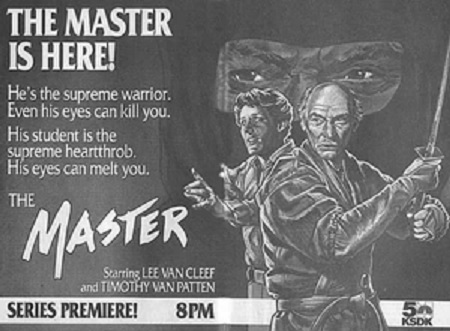
Welcome to Retro Television Reviews, a new feature where we review some of our favorite and least favorite shows of the past! On Fridays, I will be reviewing The Master, which ran on NBC from January to August of 1984. Almost all nine of the show’s episodes can be found on Tubi!

My original plan was to follow-up Half Nelson by reviewing Freddy’s Nightmares.  Unfortunately, Freddy’s Nightmares has been removed from Tubi and it’s not currently streaming anywhere else.  Hopefully, some other site will soon feature it or it will eventually return to Tubi and I’ll be able to review the show in the future.

While I was looking for another show to review, I came across The Master.  The Master ran for 13 episodes in 1984.  It featured Lee Van Cleef as John Peter McAllister, a ninja traveling across America and searching for his daughter.  Helping out McAllister is Max Keller, a young drifter who owns a groovy van and who is played by Timothy Van Patten.  (Van Patten, who has since become a much in-demand director, is probably best known for playing Stegman in Class of 1984.)  Since The Master had a short run and everyone loves ninjas, I decided to add it to our retro television schedule!

Episode 1.1 “Max”

(Dir by Robert Clouse, originally aired on January 20th, 1984)

“My name’s Max Keller and this is how I usually leave a bar.”

So opens the first episode of The Master.  The voice over is courtesy Max Keller (Timothy Van Patten), a young drifter who drives across America in a van with a pet hamster named Henry as his main companion.  And the way that Max usually leaves a bar is through the front window.  In this case, Max is tossed through a window by a bunch of bikers.  Max responds by sabotaging all of their bikes so, when they try to chase after him as he drives off in his van, all of the bikers are thrown from their bike and onto the hard pavement of the road.  I would think that this would kill most of the bikers but Max doesn’t seem to be too concerned about that.  Instead, he just has a good laugh as he drives away.  Oh, Max!

Meanwhile, in Japan, John Peter McAllister (Lee Van Cleef), “the man who would change my life,” (to quote Max’s voiceover) is preparing to return to America for the first time in years.  McAllister moved to Japan after World War II and is the only American to have been trained in the ninja arts.  (Why the ninjas would be so eager to train an American after the way World War II ended is not explained.)  McAllister has just found out that he has a daughter who he has never met.  (How did he find out?  Again, it’s not explained.)  He wants to return home so that he can find her.  However, Osaka (Sho Kosugi), a former student of McAllister’s, is determined to kill him for breaking the ninja code.  McAllister manages to escape Japan with only a slight wound courtesy of a throwing star.  Osaka decides to follow him.

Back in America, a young woman named Holly Trumbull (a very young Demi Moore) runs out into the middle of a country highway and is nearly run over by Max.  Max stops his van just in time and offers Holly a ride.  It turns out that Holly is being pursued by the evil Sheriff Kyle (Bill McKinney).  She explains that Sheriff Kyle tried to rape her, which is information that Max just kind of shrugs off.  He manages to outrun the Sheriff and takes Holly back to the airport that is managed by her father, Mr. Trumbull (Claude Akins).

Max apparently (I say apparently because the episode’s editing is so ragged that it’s often difficult to tell how much time has passed from one scene to the next) spends a few days working at the airport and trying to date Holly.  When he attempts to give Holly a kiss, she backs away from him and explains that she’s still not comfortable with being kissed after nearly being raped the town’s sheriff.  “I’m sorry,” she says. Max, being a bit of a jerk, gets annoyed and says, “That makes three of us.  Henry was just starting to like you.”  After saying that he’s going to go somewhere to see if “my luck improves,” he goes to the local bar to unwind.

Also at the bar is John Peter McAllister!  McAllister knows that his daughter came through Mr. Trumbull’s airport and he wants to show her picture to the people in the bar.  For some reason, the bartender doesn’t want him to do that.  When Sheriff Kyle, who is also in the bar, discovers that McAllister is carrying a samurai sword in his suitcase, the sheriff tries to arrest him.  When a bar fight breaks out, Max fights alongside McAllister and they even manage to steal the sword back from the sheriff.  Bonded by combat, Max and McAllister become fast friends.  Before you know it, Max is agreeing to drive McAllister across the country as long as McAllister trains Max how to be a ninja.

But first, an evil developer named Mr. Christensen (Clu Gulager) is determined to run the Turnbulls off their land.  After Christensen is not moved by an impassioned speech by Max and instead tries to blow up the airport, it’s time for Max and McAllister to invade Christensen’s office and fight a bunch of guards.  Osaka also shows up at the office so we get a lengthy fight scene between Sho Kosugi and Lee Van Cleef’s stunt double.  (McAllister dons his head-to-do ninja costume before doing any fighting, so we don’t actually see his face while he’s doing in any of his amazing ninja moves.)  While Osaka and McAllister are fighting, Max defeats Christensen by throwing a ninja star at him and hitting him in the chest.  I would think that would be murder but who knows.  Maybe the blade narrowly missed Christensen’s heart and he was just unconscious.  Or maybe Max’s just a sociopath.

Somehow, this leads to the Turnbulls getting to keep the airport.  McAllister and Max drive off together, in search of America.

What a messy episode!  Obviously, this episode had to get a lot done in just 48 minutes.  It had to introduce Max and McAllister, it had to explain why they were traveling together, and it also had to give them an adventure.  I guess I shouldn’t feel surprised that the episode felt a bit rushed but still, there were so many unanswered questions.  For instance, why is Max driving across the country in a van?  How did McAllister find out that he had a daughter?  Why didn’t he know that he had a daughter before hand?  Did McAllister’s daughter actually come through the town or not?  How did Osaka track down McAllister?  Where did Max learn to fight before he met McAllister?  Why is McAllister so quick to agree to take Max under his wing?  Why is Max so quick to drive a strange old man across the country?

As for the cast, Lee Van Cleef appears to be a bit frail in the role of McAllister.  (He would died 5 years after The Master went off the air.)  Timothy Van Patten comes across as being bit manic as Max.  Personally, I would be worried about getting into a van with Max because he doesn’t really seem to have much impulse control.  As for the guest cast, Demi Moore gives a strong performance as Holly but the character vanishes from the episode after finally giving Max a kiss.  Claude Akins and Clu Gulager only get a few minutes of screentime and are both stuck with stock roles.  Akin is the honest working man while Gulager is the corrupt businessman.  Billl McKinny is properly hissable as the bully of a sheriff.  And Sho Kosugi looks annoyed with the whole thing.

The first episode was not that promising but who knows!  Maybe the show will improve as it goes along.  We’ll find out next week!

Horror Film Review: Terror at London Bridge (dir by E.W. Swackhamer)


On a foggy London night in 1888, the shadowy killer known as Jack the Ripper is pursued by a combination of police and citizens.  Cornered and facing certain execution if captured, Jack jumps off of London Bridge and disappears into the murky waters of the Thames.

Jump forward to the late 80s.  London Bridge has been transported, brick-by-brick, to a town in Arizona and it now serves as a somewhat tacky tourist attraction.  Unfortunately, it turns out that Jack the Ripper’s spirt is inside in the bricks and transporting the bridge has also transported Jack.  Considering that Jack died in the Thames, I’m not really sure why his spirit will still be trapped in the bricks of the bridge.  It seems like his spirit should still be in the river but whatever.  Let’s just go with it.  One tourist accidentally cuts her finger while walking across the bridge.  Her blood hits the wrong brick and suddenly, Jack the Ripper is alive and killing in Arizona!  Can the murders be stopped before they interfere with the tourist season!?

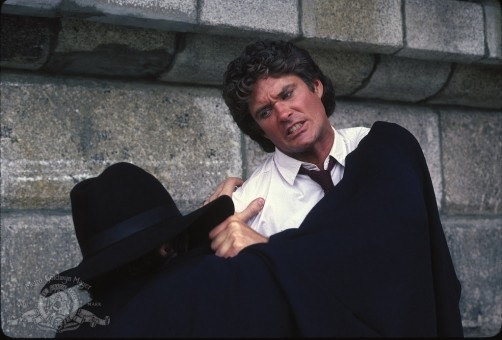
Only Detective Don Gregory (David “The Hoff” Hasselhoff) thinks that Jack the Ripper has returned to life.  His captain (Clu Gulager) doesn’t believe him.  The sleazy city councilamn (Lane Smith) doesn’t believe him.  His potential girlfriend, Angie (Stepfanie Kramer), has doubts about Don’s theory.  His own partner (Randolph Mantooth) doesn’t buy it.  Even Angie’s best friend, a librarian named Lynn (Adrienne Barbeau), doesn’t think that there’s any connection between Jack the Ripper and the handsome Englishman (Paul Rossilli) who has recently been stopping by the library and flirting with her.

And really, why would anyone believe Don?  His theory makes no sense, even if it does turn out to be true.  Indeed, Don is remarkably quick to accept the idea of Jack the Ripper traveling through time.  Of course, what also doesn’t make sense is the city council’s refusal to shut down the bridge until the killer’s been caught.  It’s the tourist season but seriously, it seems like a serial killer — whether he’s Jack the Ripper or not — would be bad for business!

This 1985 movie was made for television.  The premise is intriguing but the execution is a real let-down.  It’s a 90 minute film and the Hoff doesn’t really seem to get serious about trying to hunt down Jack the Ripper until 60 minutes in.  This is the odd Jack the Ripper film in which the Ripper is often treated as an afterthought.  Instead, the majority of the film is taken up with Don flirting with Angie and trying to come to terms with an accidental shooting that occurred when Don was a cop in Chicago.  The whole Jack the Ripper subplot is almost treated like a red herring, which is an odd way to treat a 19 century villain who can travel through time.  I mean, sometimes, romance has to wait until the time-traveling serial killer has been taken care of.  It’s all about priorities.

In the end, this one is for hardcore Hasselhoff fans only.  Those who want to watch a Jack the Ripper time traveling movie would be better served by watching Time After Time, featuring David Warner as the Ripper and Malcolm McDowell as H.G. Wells.

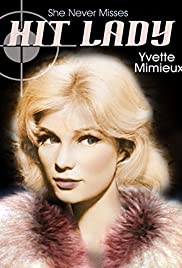
Hit Lady (1974, directed by Tracy Keenan Wynn)


Beautiful blonde Angela de Vries (Yvette Mimieux) shows up at a Texas barbecue and starts to chat up over-the-hill but very wealthy cowboy Buddy McCormick (Keenan Wynn).  Buddy thinks that he has hit the jackpot and when Angela suggests that they go off together for some alone time, he doesn’t turn her down.  Unfortunately for Buddy, the only reason Angela was talking to him was so she could get him alone and kill him with no witnesses!

(Buddy is played by Keenan Wynn because his son, screenwriter Tracy Keenan Wynn, directed this made-for-TV movie.  Angela is played by Yvette Mimieux because she got tired of only being cast in bland roles so she wrote a script with a juicy lead role for herself.)

Angela is a contract killer but she wants to get out of the business so that she can settle down with her seemingly oblivious boyfriend, a photographer named Doug (Dack Rambo).  Angela’s boss, Roarke (Clu Gulager), insists that Angela carry out one last hit.  He wants her to take down labor leader Jeffrey Baine (Joseph Campanella).  Angela really needs the money so she eventually accepts the job.  Roarke wants Baine’s death to look like an accident so that means Angela is going to have to learn everything that she can about Baine and his life.  When she learns that Baine loves Mozart, she decides to arrange an “accidental” meeting with him at a concert.  Is Angela the only contract killer in Los Angeles?  Couldn’t Roarke have found someone willing to do the job without so many preconditions?

Angela does meet Baine and, of course, the two of them start to fall in love.  Is Angela willing to both betray her boss and her boyfriend or will she carry out the hit?

Hit Lady is very much a product of the 70s, with one scene actually taking place at a disco.  Mimieux gives a good performance in a part that she wrote for herself and I’m sure many viewers will appreciate the lengthy amount of time she spends wearing just a bikini.  Mimieux gets to do most of the action movie things that, at the time, only men were usually allowed to do and she looks both good and convincing doing them.  Unfortunately, the love story with Jeffrey Baine does not work because the rough-hewn Campanella is not convincing as a Mozart-loving romantic lead and he and Mimieux never seem as if they really have any deep feelings for each other.  It’s easier to understand why Campanella would be attracted to Mimieux but than why she would be attracted to him.  That storyline probably would have worked better if Campanella had switched roles with Clu Gulager.  Hit Lady ends with an obvious twist but fans of 70s cheese and Yvette Mimieux should enjoy it.

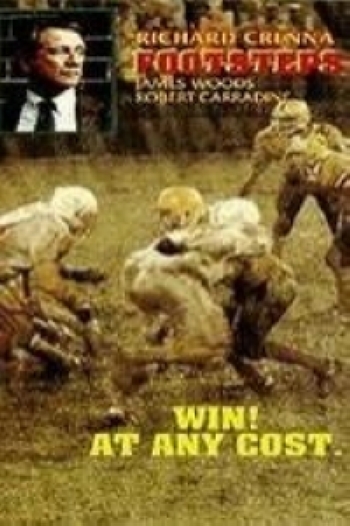
Footsteps (1972, directed by Paul Wendkos)


Paddy O’Connor (Richard Crenna) is a former football player-turned-coach whose record of success has been overshadowed by his own arrogance and heavy drinking.  O’Connor has such a bad personal reputation that he’s found himself unemployable.  Only one man is willing to give him a chance.  Jonas Kane (Clu Gulager) played football with Paddy and he’s now coaches for a small college.  Kane may not like O’Connor but he knows that O’Connor might be the key to turning around his team’s fortunes and, at the same time, saving Kane’s job.  Kane hires O’Connor to serve as a his defensive coordinator.

At first, O’Connor’s cockiness rubs people the wrong way.  It’s not until O’Connor moves offensive player J.J. Blake (Bill Overton) to defense that the team starts to win.  And once the team stars to win, everyone’s problems with O’Connor disappear.  Kane can only watch helplessly as O’Connor moves in on his girlfriend (Joanna Pettet), knowing that he owes his job to O’Connor remaining at the school.

However, when Blake gets a concussion, O’Connor is forced to decide whether or not to let him play.  Boosters like Bradford Emmons (Forrest Tucker) want Blake to play, regardless the risk.  The NFL scouts, who are looking for the next number one pick, want to see Blake on the field.  Blake says he wants to play but O’Connor can tell that he’s lying about the extent of his injury.  With everyone breathing down his neck and a syndicate of gamblers pressuring O’Connor to shave points so that the spread pays off, O’Connor has to decide what to do.

Though this made-for-TV movie may not be as well-known as some other films, it’s one of the best movies ever made about college football.  Though it may be short (only 74 minutes), it still examines all of the issues that have always surrounded college football.  Despite not getting paid for their efforts, the players risk serious and permanent injury during every game, just on the slight hope that they might someday make it to the NFL.  The coaches, who are supposed to be looking after the players, are more interested in padding out their win-loss record and hopefully moving onto bigger and better-paying jobs.  Meanwhile, aging alumni and boosters demand that the team win at all costs, regardless of what happens to the men on the field.  Footsteps intelligently explores all of those issues and suggests that the risks are ultimately not worth the rewards.

Along with an intelligent script, Footsteps is helped by a talented cast.  Crenna and especially Gulager both give excellent performance as the two rival coaches.  Al Lettieri (Sollozzo from The Godfather) plays one of the gamblers.  Beah Richards plays Blake’s mother, who makes the mistake of believing O’Connor when he says that he’s going to always have Blake’s best interests at heart.  Ned Beatty has a small role as another assistant coach who is forced to make an important decision of his own.  Keep an eye out for Robert Carradine and James Woods, both of whom have tiny roles.

As far as I know, Footsteps has never officially been released on DVD.  I saw it late one night on the Fox Movie Channel.

A Force of One (1979, directed by Paul Aaron)


Someone is targeting a squad of undercover narcotics detectives, killing them by taking them by surprise and breaking their necks before they even have a chance fight back.  Lt. Dunne (Clu Gulager) doesn’t like seeing his best detectives getting murdered so he orders all of them — including Mandy Rust (Jennifer O’Niell) and Rollins (Superfly himself, Ron O’Neal) — to take martial arts training so that they can defend themselves.  And who better to train them than karate champ and dojo owner, Matt Logan (Chuck Norris)?  The no-nonsense Logan teaches the detectives a few moves and even starts a tentative romance with Mandy.  But when his adopted son (played by future director Eric Laneuville) is murdered by the drug dealers, Logan goes from being a teacher to being an avenger.

Since today is Chuck Norris’s 80th birthday, it only seems appropriate to review one of Chuck Norris’s better films.  A Force of One was made at a time when Chuck was still trying to make the transition from being the karate instructor to the star to being a star himself.  Norris had been disappointed by his previous few starring vehicles, all of which strangely played down Norris’s martial arts skills.  After his friend and student, Steve McQueen, told Chuck that he needed to specialize in playing strong, silent types, Norris followed his advise with A Force Of One, which features considerably less dialogue than Norris’s previous films but also a lot more fighting.

Though the character may be named Matt Logan, Chuck Norris is basically playing himself in A Force of One.  In the scenes where he’s training the detectives and talking about why he’s personally so opposed to drugs, Chuck comes across as so earnest that it doesn’t matter that he’s not much of an actor.  What he’s always lacked in range, Chuck makes up for in general badassery and A Force Of One features him at his most badass.  Chuck’s final fight with the ninja assassin is one of his best.

Jennifer O’Neill got top billing in A Force Of One and she and Chuck actually have decent romantic chemistry.  She seems to bring him a little bit out of his shell and she’s also actually believable as a tough cop.  Because this was early in Chuck’s career and the script was co-written by police procedural specialist Ernest Tidyman, A Force Of One spends as much time following round the other cops as it does with Chuck and the squad’s camaraderie is believable.  The cops are all played by good character actors like Ron O’Neal, Clu Gulager, Pepe Serna, and James Whitmore Jr. and they all give pretty good performance while, at the same time, not upstaging Chuck.

One final note: There’s a scene where Chuck and Jennifer O’Neill are in an evidence room.  Keep an eye out for a box that is labeled K. Reeves.  That’s a reference to director Paul Aaron’s stepson, Keanu Reeves, who worked as a production assistant on this film.

The German version of A Force Of One

A Movie A Day #143: The Bull of the West (1972, directed by Jerry Hopper and Paul Stanley)


Welcome to the American frontier.  The time is the 1880s and men and women everywhere are heading out west in search of their fortune.  While stowing away on a train, veteran cowboy Johnny Wade (Brian Keith) meets the naive Steve Hill (Gary Clarke) and becomes a mentor to the younger man.  Johnny teaches Steve how to shoot a gun and, when they get off the train at Medicine Bow, Wyoming, they get jobs working on the ranch of Georgia Price (Geraldine Brooks).  When Georgia and Johnny plot to overgraze the land, Steve must decide whether he’s with them or with a rival rancher, Judge Garth (Lee J. Cobb).

At the same time, Ben Justin (Charles Bronson) has arrived in town with his son, Will (Robert Random), and his new wife (Lois Nettleton).  Ben is determined to start his own ranch but, because of his taciturn and stubborn personality, he alienates the Cattleman’s Association, which led by Judge Garth and Bear Suchette (George Kennedy).  Will wants to help his father but Ben keeps pushing him away.  It’s up to Judge Garth’s foreman, the Virginian (James Drury), to bring the family together.

Just like The Meanest Men In The West, The Bull of the West was created by editing together footage from two unrelated episodes of The Virginian.  It works better for the Bull of the West because the two episodes had similar themes and the footage mixes together less awkwardly than it did in The Meanest Men In The West.  But Bull of the West is still just a TV show edited into a movie.  The main reason to see it is because of all the familiar western faces in the cast.  Along with Bronson, Keith, Cobb, and Kennedy, keep an eye out for Ben Johnson, DeForest Kelley, and Clu Gulager.

Out of the Saddle: John Wayne in MCQ (Warner Bros, 1974)


mcq1

John Wayne didn’t get off his horse very often in the latter part of his career. The Duke hadn’t done a non-Western since 1969’s HELLFIGHTERS, but cop pictures were in style in the early 70s due to the success of movies like THE FRENCH CONNECTION and DIRTY HARRY. Wayne was actually offered the part of Dirty Harry Callahan and turned it down. But in 1974, Big John traded in his horse for a Pontiac Firebird in the action packed MCQ, directed by veteran John Sturges (GUNFIGHT AT THE OK CORRAL, THE MAGNIFICENT SEVEN, THE GREAT ESCAPE).

mcq2

Wayne plays tough cop Lon McQ, who quits the force to investigate the murder of his former partner. He gets tangled up with drug dealers and corrupt officials, car chases and shootouts. Sound formulaic? It is, but the action scenes make up for a lame script. Duke basically plays the same character he did in most all his films, tough but tender, fair but firm. It’s kind of jarring to see Wayne in his (pretty bad) hairpiece instead of the usual cowboy hat, and tooling around the streets of Seattle in a muscle car rather than the dusty trail on his horse. He’s surrounded by a supporting cast full of familiar faces (Eddie Albert, Diana Muldaur, Colleen Dewhurst, Al Lettieri, David Huttleston, Clu Gulager), all of whom do their best with the clichéd script. MCQ plays like a TV movie of the week, which isn’t necessarily a bad thing, and fans of 70s action flicks will dig it.

John Wayne only made three more films after MCQ, including another cop movie, BRANNIGAN, and his swan song, 1976’s THE SHOOTIST, before succumbing to cancer in 1979. The Duke made much better movies then MCQ, but for a look at the star without his spurs and six-gun,  it’s definitely worth watching.

(This post originally appeared, in slightly altered form, on the 2015 TCM Summer of the Stars Blogathon, hosted by Journeys in Classic Film)