When architect Theo (Benedict Cumberbatch) and aspiring chef Ivy (Olivia Colman) meet in London, it is love at first sight. Ivy wants to move to America so that she can pursue her dream of opening a restaurant. Theo impulsively decides that he wants to move with her. (Take that, Britain!) They marry and the film follows them as they settle in California and pursue success in their respective fields while raising precocious twins. At first, Theo has more success than Ivy but that changes when a freak storm causes one of Theo’s buildings to collapse on the same night that it also causes hundreds of stranded tourists to suddenly show up at Ivy’s restaurant. Ivy becomes a success while Theo, who is now basically unemployable, becomes a stay-at-home dad. Theo starts to resent Ivy’s success. Ivy starts to resent the amount of time that Theo spends with their daughters. Looking to fix their fraying marriage, Theo design an ultra-modern and chic home for them. Needless to say, by the end of the movie, Theo is being chased through the house by a gun-wielding Ivy.
Oh, Benedict Cumberbatch and Olivia Colman. They’re both good actors and I’ve appreciated many of their past performances but, watching them in The Roses, I do have to admit that I realized that I’ve started to get a bit bored with both of them. Their performances here all about technique. Cumberbatch does his barely repressed anger thing until eventually he explodes into a frantic fury. Colman does her cutting barb followed by a goofy smile thing. Neither performance really has much emotional depth and, even when they’re supposed to be happy, you don’t really buy them as a couple for a second. Even when they blow up at each other and fully embrace their growing hatred, it doesn’t have much of an emotional impact because they never really seemed to like each other to begin with. Every line that Colman delivers sounds like a sarcastic attempt at a bon mot, even she’s supposed to be sincere. There’s nothing shocking about either one of their cruel comments to each other. It just feels like two actors doing their thing.
At its heart, The Roses is meant to be a satire. Theo and Ivy grow to hate each other but neither one is willing to give up their rather tacky house. Unfortunately, Jay Roach is exactly the wrong director for this material. Roach has gone from directing broad but genuinely funny comedies to becoming something of a second-rate Adam McKay. Perhaps even more so than McKay, he’s a prime example of what happens when a director decides that he can’t just be happy making movies that people actually enjoy. (Trumbo and Bombshell may have gotten mildly good reviews from critics who are sympathetic to Roach’s liberal politics but, in the end, Austin Powers is the film for which audiences will remember Jay Roach.) There’s not a subtle moment to be found in The Roses and, as a result, there’s not really much genuine emotion to be found either. Towards the end of the film, we get a montage of Theo and Ivy escalating their attacks on one another. It’s one thing for Ivy to create an AI video of Theo smoking crack. It’s another thing for Theo to spike the food at Ivy’s restaurant with hallucinogenic shrooms, leading to an slow motion orgy involving a bunch of middle-aged tourists. It all becomes so cartoonish that the film loses sight of whatever it was trying to say about marriage.
Touted as an Oscar nominee before it was released and subsequently forgotten about, The Roses was one of the many disappointing films of 2025.
“We are not so very different, you and I.” — George Smiley
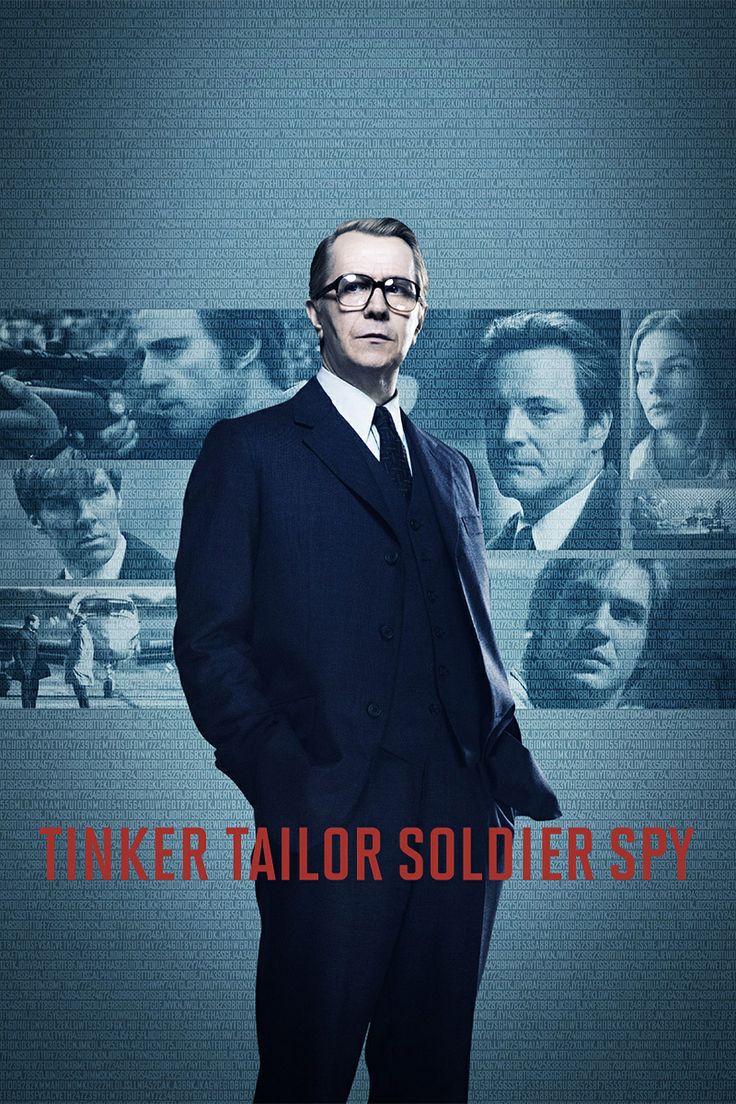
Tomas Alfredson’s Tinker Tailor Soldier Spy (2011) is a cold, coiled, and relentless march into the gray, rain-lashed corridors of British espionage—a film that exchanges Bond’s swagger for bureaucratic unease, where information is traded like poison and every conversation feels weaponized. The film is sheer confidence: so sure of itself, it expects you to keep up, get lost, and piece the puzzle together from the hushed fragments left in close-up reactions and glances across smoke-filled rooms. This is spy cinema not as spectacle, but as slow-burning existential puzzle.
A key element of the film’s mood is its distinctive brutalist aesthetic, which powerfully evokes the Cold War mentality not only behind the Iron Curtain but also in the West. Alfredson and cinematographer Hoyte van Hoytema immerse viewers in a London setting defined by greying, tired walls, bleak drizzle, and decaying interiors that feel as cold and institutional as the very espionage world they depict. This use of brutalism—with its bare concrete textures, utilitarian spaces, and sense of institutional decay—does more than create atmosphere; it visually projects the emotional and material exhaustion of a Britain entrenched in paranoia and internal rot. The characters seem physically and emotionally hemmed in by these spaces, reinforcing the film’s themes of secrecy, alienation, and moral corrosion.
There are no car chases or shootouts to speak of—just a masterclass in stillness where tension arises from precisely what remains unspoken. The film is closer to an autopsy than a thriller, dissecting the social and emotional costs of lives devoted to deception. It begins with a botched operation in Budapest—Jim Prideaux (Mark Strong), one of “the Circus’s” best agents, is captured in a tense, almost wordless scene that sets a tone of brooding unease. The fallout leads to a purge of the leadership, with Control (John Hurt) forced out and George Smiley (Gary Oldman), his quietly watchful confidant, retired—though soon to return for an unofficial mole hunt.
From there, the narrative unfolds elliptically, like a mosaic of recollections and betrayals, requiring viewers to assemble the truth from fractured glimpses. Gary Oldman’s Smiley is the film’s anchor—his performance a masterclass in minimalism and subtext. He’s the ultimate observer, haunted by decades of institutional compromises and personal betrayals.
The supporting cast is nothing short of exceptional, elevating the film through richly textured performances that bring vibrant life to an otherwise reserved script. Colin Firth as Bill Haydon delivers a quietly magnetic portrayal, his charm barely concealing the complexity beneath. Tom Hardy’s Ricki Tarr injects raw energy and restlessness, perfectly contrasting the film’s restrained atmosphere. Benedict Cumberbatch’s Peter Guillam is adept at conveying subtle shifts in allegiance and tension, his nuanced portrayal deepening the intrigue. John Hurt’s brief but potent presence as Control exudes weary gravitas, setting the tone for the murky world of espionage. Mark Strong as Jim Prideaux balances stoicism with vulnerable humanity, particularly in moments laden with pain and regret. Other supporting actors such as Ciarán Hinds, Toby Jones, and Kathy Burke contribute layered, compelling portrayals of individuals trapped within the machinery of the Circus. What binds these performances is a reliance on subtlety—expressing volumes through nuanced gestures and lingering silences, the cast anchors the complex narrative in a palpable human reality.
At its core, Tinker Tailor Soldier Spy is less a whodunnit than an exploration of institutional decay and emotional repression. The brutalist aesthetic mirrors this decline: just as the concrete and ochre walls close in on the agents, so too does the film reveal a Britain worn down by secrets and internal contradiction. Love and loyalty are liabilities in this world where everyone is alienated. The story’s emotional heart revolves around the search for a deeply embedded mole within the Circus—an elusive betrayal that shakes the organization to its core. The film carefully avoids easy reveals, maintaining a deliberate tension and exemplifying the emotional cost that the espionage game of the era had on everyone involved.
The film also explores themes of repressed queerness, class stratification, and misogyny, linking these to the numbing demands of espionage. The gloomy visuals and tightly controlled dialogue echo the emotional constraints on these men, underscoring that beneath the seemingly impenetrable exterior lies a fragile, fragile human cost.
This film is not an easy watch. Its elliptical storytelling, coded conversations, and subtle body language demand patience and multiple viewings. Yet that opacity is part of its power—uncertainty and not-knowing become central to the experience, enhanced by Alberto Iglesias’s restrained score and the claustrophobic mise-en-scène. Unlike many spy films, Tinker Tailor Soldier Spy is about process and detection, not action or glamour. Its cold, meticulous pacing trades on the cerebral seduction of uncovering hidden truths rather than adrenaline-fueled confrontations.
Ultimately, the film refuses easy resolutions. Though Smiley uncovers the mole and the Circus is superficially restored, there’s no real victory—only the acknowledgment of profound damage, both personal and institutional. The brutalist setting, with its unyielding, somber lines, stands as a perfect metaphor for this unresolved tension. Tinker Tailor Soldier Spy is a masterclass in unease and ambiguity, a film that stays with you because it reveals what you’ll never fully know about loyalty, betrayal, and the cost of secrets in a world where the line between friend and enemy is always blurred.
59 years ago today, the first episode of Star Trek aired in America.
There’s been a lot of different StarTrek shows and crews over the decades. I have to admit that I’ve always preferred the Original Series, with Kirk sleeping with every alien he met, McCoy and Spock bickering about logic, and Scotty warning that the engines can’t take much more. The Next Generation was strong as well, especially in the later seasons. The subsequent series have been hit-and-miss for me.
I was born long after the Original Series went off the air so, like a lot of people, my real introduction to Star Trek came through watching the films. This weekend, I sat down and watched all fourteen of the Star Trek films in order, from The Motion Picture to Section 31. Here are my thoughts.
Star Trek: The Motion Picture (1979, directed by Robert Wise)
In the first Star Trek film, Voyager returns to Earth, now known as V’ger. James T. Kirk (William Shatner) returns to the Enterprise with his old crew and takes command from Decker (Stephen Collins). Spock (Leonard Nimoy) returns from Vulcan is not happy about it.
Directed by Robert Wise, the first Star Trek film feels out-of-place amongst the films that followed it. It’s long and slowly paced and it doesn’t have the sense of humor that runs through the best of the films featuring the original cast. The film favors Kirk and Spock, with the rest of the original cast being largely used as bit players. Even the costumes are different from the uniforms worn in the later films, making Star Trek: The Motion Picture feel like an entry from an alternate universe.
Despite mixed review, Star Trek: The Motion Picture made the most money of any of the pre-reboot films at the box office. Because the film itself was so expensive, it was still judged to be a box office disappointment. The Star Trek films would continue but in a new direction.
Star Trek II: The Wrath of Khan (1982, directed by Nicholas Meyer)
Featuring a character-driven script, exciting action, the best villain in the history of the franchise, and an ending that will bring tears to the eyes of the most cynical viewer, The Wrath of Khan is the film that set the standard for the Star Trek films that would follow.
Ricardo Montalban, recreating a character that he originally played in the television series, is a compelling villain as the vengeance-driven Khan. Montalban and William Shatner make for perfect rivals, two sides of the same coin. At the same time, the other members of the original cast all get their moments to shine, especially Walter Koenig as Chekhov. Kirstie Alley is the sexist Vulcan to ever appear in the franchise and even the revelation that Kirk has a son is handled effectively. Kirstie Alley, Bibi Besch, and Merritt Butrick all fit in with the original crew.
But the thing everyone remembers about The Wrath of Khan is the death of Spock. Even though the movie features plenty of hints that Spock will return (including his command of “Remember” to McCoy), it’s impossible not to get emotional when Spock sacrifices himself for the crew. “I have always been your friend.” To quote George Costanza, that was hell of a thing when Spock died. In that scene, Leonard Nimoy shows that he was the (logical) heart of the franchise. Just as Spock brought out the best in the rest of the crew, Nimoy brought out the best in his co-stars. Shatner was never better than when he was mourning Spock.
Star Trek III: The Search For Spock (1984, directed by Leonard Nimoy)
Spock’s back! It’s not a surprise. I think everyone knew, at the end of Wrath of Khan, that the Genesis Project would bring back Spock. Star Trek III isn’t bad. Christopher Lloyd reminds us of how brutal the Klingons were before their Next Generation makeover. The self-destruction of the Enterprise is a powerful moment. I just wish that a film about Spock being given a new life hadn’t featured so much death. Both the revelation that David Marcus tampered with the Genesis Project and his subsequent death feel like missteps. Robin Curtis takes over the role of Saavik and Kirstie Alley is very much missed. DeForest Kelley playing McCoy possessed by Spock was, for me, the highlight of the film.
Star Trek IV: The Voyage Home (1986, directed by Leonard Nimoy)
Returning home after rescuing Spock from the Genesis Planet, the Enterprise crew is instead sent back into the past so that they can bring two whales into the future. The Voyage Home might not be the best Star Trek film (that honor belongs to Wrath of Khan) but it is the most likable and the most entertaining. Every member of the cast gets something to do in 20th Century San Francisco. The film is full of classic moments, from Chekhov looking for the “nuclear wessels” to Scotty trying to speak to the computer. The moment with the punk on the bus is a crowd-pleaser. I always laugh at Spock’s “One damn minute, Admiral.” After the violence in The Search for Spock, The Voyage Home‘s humor, gentle sincerity, and emphasis on the efforts of the entire ensemble is a welcome development.
Star Trek V: The Final Frontier (1989, directed by William Shatner)
Leonard Nimoy got his chance to shine as the director of the previous two Star Trek films so William Shatner was allowed to direct The Final Frontier. The Enterprise crew is brainwashed by a religious fanatic (Laurence Luckinbill) who is also, improbably, Spock’s brother. Only Kirk is able to resist and confront the entity claiming to be God. “What does God need with a starship!?” Kirk demands. It’s such an obvious question that I can’t believe the entity didn’t already have an answer worked out.
The Final Frontier gets no respect and it was probably doomed as soon as Shatner was announced as director. Shatner also developed the story and it’s probably not surprising that the main theme is that Kirk was the only person on the Enterprise strong enough to not be brainwashed by the film’s fake God. Laurence Luckinbill gave a good performance as Sybok but this film really does feel like an unfortunate episode of the original television series.
Star Trek VI: The Undiscovered Country (1991, directed by Nicholas Meyer)
Star Trek VI featured the final appearance of the Original Series cast as a group and they get a send-off worthy of their legacy. Having been previously established as the Federation’s greatest enemies, the Klingons finally pursue peace. Just as only Nixon could go to China, only Kirk and the original Enterprise crew can go to the Klingons. This movie is what Star Trek was all about, with enough world-building and continuity for the hardcore fans and a story that was interesting enough to hold the attention of the casual viewers. By featuring the start of the era of peace between the Federation and the Klingons, this film also filled in some of the Next Generation‘s backstory. The Final Frontier was meant to be the final Star Trek film featuring any of the original cast and it would have been the perfect entry for Captain Kirk to go out on. Unfortunately, that didn’t happen.
Star Trek Generations (1994, directed by David Cason)
William Shatner meets Patrick Stewart as one Star Trek crew passes the torch to the new Star Trek crew. Malcolm McDowell is the latest villain with an ill-defined plan. Picard and Kirk team up to stop McDowell’s villain. They succeed but at the cost of Kirk’s life. As opposed to Spock’s death in Wrath of Khan, Kirk’s death feels pointless and tacked on for no reason other than to signify the arrival of The Next Generation to the films. Seeing Shatner and Stewart together is interesting. Stewart may have been the better actor but Shatner still dominates their scenes together. Not giving Kirk a better send-off was one of the franchise’s biggest sins.
Star Trek: First Contact (1996, directed by Jonathan Frakes)
After the disappointing Generations, Picard and his crew finally got a film worthy of them with First Contact. Not only do the Borg return but the crew goes back into their past and experience a key date in the history of the Federation. After being outshone by Shatner in Generations, Patrick Stewart takes control in this film, giving a multi-layered and commanding performance that still gives the rest of the cast room to shine. Director Jonathan Frakes not only handles the action well but he also shows that he understands what makes the characters click. This was, without a doubt, the best of the Next Generation films and one the best of the Star Trek films overall.
Star Trek: Insurrection (1998, directed by Jonathan Frakes)
Entertaining but forgettable, Insurrection features Picard pulling a Kirk and defying orders from from a superior officer (played by Anthony Zerbe) and going out of his way to save Data from being decommissioned. Insurrection feels like an extended episodes of the Next Generation television series and lacks the epic scale of First Contact. Under the direction of Jonathan Frakes, the ensemble is strong and watching them interact feels like spending time with a group of old friends. F. Murray Abraham and Anthony Zerbe make for effective villains.
Star Trek: Nemesis (2002, directed by Stuart Baird)
Just as the Original Series crew sought peace with the Klingons in The Undiscovered Country, the final Next Generation film finds Picard, Riker, and the rest seeking peace with the Romulan Empire. Tom Hardy plays a clone of Picard who is now the leader of the Romulans. Data sacrifices himself in a move that tries too hard to duplicate the death of Spock. Picard retires. Director Stuart Baird emphasizes action over the chemistry of the Next Generation cast and the end result is a disappointing finale that left critics and audiences underwhelmed.
Star Trek (2009, directed by J.J. Abrams)
I think people forget about what a big deal this Star Trek reboot was when it first came out. Today, people focus on things like Kirk being a Beastie Boys fan and they forget how exciting it was to see Chris Pine, Zachary Quinto, Karl Urban, Simon Pegg, Anton Yelchin, John Cho, and Zoe Saldana all effortlessly stepping into the roles of the younger versions of the original cast. The storyline is predictable and Eric Bana’s a bland villain but the scenes between Leonard Nimoy and Zachary Quinto were a reminder of how important Spock was and is to Star Trek.
Star Trek wasn’t perfect, of course. In retrospect, I think creating an alternate timeline was a mistake because it created a situation where, even if someone died, it was just an alternate version dying and not the version that audiences knew and cared about. The alternate timeline would also lead to one of the biggest missteps in the history of the franchise.
Star Trek Into The Darkness (2013, directed by J.J. Abrams)
After the surprising success, both critically and commercially, of his Star Trek reboot, J.J. Abrams. Robert Orci, Alex Kurtzman, and Damon Lindelof wasted most of that good will by messing around with one of the franchise’s most memorable characters.
There are some good things to be said about Star Trek Into The Darkness. I like the action sequences and the climatic battle in the film’s futuristic version of San Francisco. But casting Benedict Cumberbatch, of all people, as Khan is a misstep that can’t be overcome. That the movie brought back Khan instead of exploring “strange new worlds” exposed the weakness of Abrams entire reboot. For all the hype, did the Star Trek reboot actually have anything new or original to offer? The answer here seemed to be no.
Star Trek Beyond (2016, directed by Justin Linn)
The final (for now) Star Trek theatrical film featured a memorable villain in the form of Idris Elba and a plot that felt like it could have just as easily been an episode of the original series. In retrospect, the film is mostly memorable for featuring the announcement of the death of Ambassador Spock. (The film was released a year after the death of Leonard Nimoy.) The death of Spock, this time with no Genesis Project around to bring him back, makes this installment feel like right place to end the films. For many of us, Nimoy was Star Trek.
Stark Trek: Section 31 (2025, directed by Olatunde Osunsanmi)
Though there have been many subsequent televisions shows, there hasn’t been a Star Trek theatrical release since 2016. The next installment has been in pre-production limbo for nearly ten years. (Quentin Tarantino was supposedly attached at one time.) Instead of coming to theaters, the latest Star Trek movie came to Paramount Plus.
I debated whether or not to include Section 31 in this list, both because it was a “made-for-TV” movie and also because it was so bad that I think most Star Trek fans would rather forget about it. A mediocre heist film that wastes star Michelle Yeoh and which doesn’t feel like it belongs in the Star Trek universe, Section31 may still represent the way forward for the franchise. With theaters having never recovered from the COVID shut-downs and more and more people preferring to stream their entertainment at home, the future of the Star Trek films could very well be a collection of assembly line Paramount Plus movies.
Finally, Case turned me onto this short film:
765874: Unification (2024, directed by Carlos Baena)
A collaboration between Otoy, a VFX company, and The Roddenberry Archive, with support from Paramount, 765874: Unification is a 10-minute short film that imagines Kirk meeting Spock in the afterlife. Shatner returns as Kirk, de-aged with CGI. Just as Kirk and Spock were friends in the film, the same was true of Shatner and Nimoy in real life. (You only have to compare Nimoy’s comments about Shatner with George Takei’s endlessly bitter takes to see what true class actually is.) This short film gives both characters the finale that they deserved.
It’s possible that we may never see another true Star Trek film. Most of the original cast is gone now. Patrick Stewart will always be Picard but even he is now approaching 90. But whatever the future may hold, I’m happy for the films that Star Trek gave us.
It’s interesting how quickly a film can be forgotten.
Based on a novel by Thomas Savage, The Power of the Dog was one of the most anticipated films of 2021. It was considered to be a front runner for Best Picture even before it was released. Even though everyone knew 2021 was going to be the year that the Academy finally got around to giving Will Smith the Oscar, there was still a lot of excitement about the idea of Benedict Cumberbatch playing a sinister and closeted cowboy named Phil Burbank. The first teaser featured Cumberbatch being wonderfully creepy. I remember that I was certainly looking forward to it.
When it finally showed up in theaters and then premiered on Netflix, the reviews were …. respectful. They were positive but they weren’t exactly enthusiastic. This was the type of film where people noted that it was well-made and well-acted but it seemed to just be missing a little something. The film was nominated for a lot of Oscars but, in the end, it only won one, for Jane Campion’s direction. (And Campion, unfortunately, had to spend the days leading up to the ceremony dealing with a stupid controversy over a very mild joke she made to Serena and Venus Williams about how making a movie was more difficult than playing tennis.) People admired the skill that went into The Power of the Dog but, in the end, it was CODAthat captured the hearts of the Academy. CODA may not have been as technically well-made as Power of the Dog but CODA was a film that made people cry. And, in 2021, voters who had spent an entire year being told that they would die a horrible death if they even dared to leave their house without putting on a mask, decided to vote with their hearts.
Taking place in 1925 Montana, The Power of the Dog centers on two prominent ranchers, the Burbank brothers. Phil Burbank is a man’s man, a bluff and hearty type who lives to conquer the land and who doesn’t have much use for women. Phil looks down on anything that he considers to be a sign of weakness, like showing emotion or making paper flowers. And yet, Phil is also fiercely intelligent and Ivy League-educated, a man who is capable of playing beautiful music but who has decided not to. Phil is cruel and manipulative. Perhaps the only person that he’s ever respected is his mentor, Bronco Henry. Phil’s admiration for Henry and his collection of gay pornography tells us all we need to know about why Phil is so obsessed with maintaining his “manly” image.
His brother, George (Jesse Plemons), is a much more sensitive soul than Phil and yet, he allows himself to be dominated by his brother. It’s not until George meets and marries a widow named Rose (Kirsten Dunst) that he starts to come out of his shell. Angry that Rose seems to be freeing George from his domination, Phil goes out of his way to make her life miserable, even preventing Rose from playing the piano. In her loneliness, Rose starts to drink. Phil, meanwhile, sets himself up as a mentor (and potentially more) for Rose’s sensitive and introverted son (Kodi Smit-McPhee), who does like to make paper flowers but who also has an obsession with his late father’s medical books….
The Power of the Dog is a film that I had mixed feelings about. On the one hand, I did respect the craft that went into making the film. The Montana scenery was both beautiful and ominous. And I thought that both Jesse Plemons and Kirsten Dunst gave award-worthy performances. Dunst, especially, really captured the pain of Rose’s life on the ranch. Plemons, meanwhile, made George’s gentle nature compelling, which is not always the easiest thing for an actor to do. At the same time, Benedict Cumberbatch was miscast as Phil and Kodi Smit-McPhee’s performance was a bit too cartoonishly creepy for the film’s ending to really be as shocking as it was obviously meant to be. Ultimately, the main problem with the film was that Campion, as a director, kept the audience from really connecting with the characters. The film was well-made but almost as emotionally remote as Phil Burbank and it left the audience feeling as if they were on the outside looking in. While the book leaves you feeling as if you’re actually in Montana and allows you into the hearts of all of the characters, even Phil, the movie leaves you feeling as if you’ve just watched a really carefully-made film that ultimately treated you as scornfully as Phil treated Rose.
Because it is such a well-made film, The Power of the Dog is a film worth watching but it’s not necessarily a film that leaves you with any desire to watch a second time. For all the excitement that the film generated before it was released, it was largely forgotten after it lost the Oscar for Best Picture to CODA.
Well, here we are. Another awards season is wrapping up. Almost all of the regional critic groups have announced their picks for the best of 2021. The Guilds have spoken. The front runners have emerged. Both Don’t Look Up and Being the Ricardos have weathered bad reviews and become probable Oscar nominees. If nothing else, I’ll have something to complain about for the next three or four months. At the same time, Power of the Dog has emerged as the critical favorite. Belfast seems to be the populist favorite. West Side Story is the big production that has to be nominated, even though no one seems to feel particularly strongly about it one way or the other. Dune is the blockbuster that the Academy is hoping will cause people to tune into the ceremony, especially now that it appears that the Spider-Man Oscar campaign has fizzled. Don’t Look Up is the “Let’s piss off the cons” nominee. Being the Ricardos is this year’s “Wow, our industry really is the best” nominee. Personally, I’m going to view tick, tick….Boom! as being the most likely dark horse to pull off an upset.
So, with all that in mind, here’s my last set of 2021 Oscar predictions.
Looking at the list below, I have to say that we certainly have a good race this year. It’s interesting that, this year, only films that were released between March and the end of December were eligible for the Oscars. 2021 was a very good year for movies! Not only do we have the nominees below but we also had films like The Father and Judas and the Black Messiah, both of which are 2021 films as far as I’m concerned.
(Consider this. If the Oscars had kept the eligibility window the same last year instead of extending it to accommodate films delayed by the pandemic, Anthony Hopkins would probably be the Best Actor front runner right now and the Academy probably would have given Chadwick Boseman a posthumous Best Actor award last April. I also imagine that Jesse Plemons would have a better chance of picking up a supporting actor nomination if the members of the Academy were currently screening both The Power of the Dog and Judas and the Black Messiah at the same time.)
Well, the year’s nearly over and that means that it is time for me to post my final Oscar predictions for 2021. The race has gotten much clearer with the start of the precursor season. The critics love The Power of the Dog. However, it’s perhaps a bit too early to declare it the front runner. I want to see how things go with the Guilds in January before I bestow that title on any film.
A few thoughts:
There are ten Best Picture nominees this year so we won’t have any of that, “Here’s a random number of nominees” crap. In theory, that should open the door for some unconventional nominees that might have missed the cut-off in previous years. Again, I said, “In theory.” They tried this 10 nominee thing before and it didn’t really lead to the results that a lot of people were expecting.
Still, I’m going to swing out on a web and predict a Best Picture nomination for Spider-Man: No Way Home. It’s got Disney and Sony behind it. It’s making a ton of money despite not playing in China. It’ the film that’s currently giving the industry hope that there’s a future outside of the streaming sites. Plus, after the nominations of Black Panther and Joker, it might be time to give the whole “They’ll never nominate a comic book movie!” argument a rest.
I’m also going to predict a Best Picture nomination for Drive My Car, which has been getting a lot of attention from the critics.
The critics also loved West Side Story but now, it’s probably best known for being a bust at the box office. I still think the movie will be nominated but I don’t think it’ll win. And I think it’s a lot less likely that Rita Moreno will pick up a nomination. People seem to have moved on from the movie. Again, this could all change once the Guilds start announcing their nominations.
The critics are split on Don’t Look Up. I personally think it’s one of the worst films of 2021. But the film will be nominated for much the same reason that The Big Short and Vice were nominated. There’s a lot of Academy members who agree with McKay’s politics. And the people who do like Don’t Look Up really, really like it. And I also think there’s probably enough people annoyed with Elon Musk that Mark Rylance will sneak into the supporting actor race.
Belfast has not been dominating the early part of awards season but I think it will come on strong once the Guilds start announce their nominations.
Anywya, these are just my guesses, for better or worse. To see how my thinking has evolved, check out my predictions for March and April and May and June and July and August and September and October and November!
If you haven’t seen a film on the Thursday preview night, chances are every online publisher is going to share spoilers by Friday Evening. I get it. It’s the Nature of the Beast. It makes for news, and there are people out there who either don’t mind being spoiled or need to know what they’re seeing going into a film. It’s partially why sites like Movie Pooper, and Does The Dog Die are popular. I usually try not to say anything about a movie on Twitter because of this. Everyone deserves to feel that sense of awe and surprise when the lights come down in their cinema.
These are as spoiler free as I can make them. I may write something else to focus on my thoughts with spoilers down the road.
If you managed to stay off the Internet and avoid any spoilers to Spider-Man: No Way Home (outside of the trailers themselves), then you are in for some grand fun that is almost on the level of Avengers: Endgame. I’ve been to the theatres a few times during the pandemic. Perhaps because it was an After-Midnight showing, but the audience was fantastic. The film comes full circle, with an adventure that celebrates Spider-Man’s guest appearance in the MCU for Disney/Marvel, while still building on the character for Sony’s purposes in the future. As a Trilogy, Jon Watts and the team deserve a round of applause for sticking the landing so very well here. The third film in a series is never easy, and even Sam Raimi found that out with Spider-Man 3. By the time the movie was done, I was soaking up the applause like Colin Robinson in What We Do In the Shadows.
The film picks up right at the last end credit from Spider-Man: Far From Home with Quentin Beck’s Mysterio (Jake Gyllenhaal) proclaiming to the world (through J. Jonah Jameson, played by J.K. Simmons as usual) that Spider-Man was in control of the Stark Drones and that he is really Peter Parker. Normally, my first thought here would be to own it – like Stark did. However, with murders tied in, it’s a bad rap for our webbed hero and anyone associated with him. Peter decides to make things right by visiting Doctor Strange (Benedict Cumberbatch, Power of the Dog) to make everyone forget that Spider-Man is Peter Parker. This gets botched and pulls through some villains that our Peter (Tom Holland) isn’t quite ready for.
As you’ve seen in the posters and trailers, Dr. Otto Octavius (Alfred Molina, Spider-Man 2), and Norman Osborn (Willem Dafoe, Spider-Man) along with a few others are pulled from their universe into Peter’s. When Peter discovers their fates in their own universes, he makes an attempt to save them, which puts him at odds with Doctor Strange. Can Peter find a way to change their futures, and clear his name in the process?
Of course, the gang’s all here. Zendaya, Jacob Batalon, Tony Revolori, Angourie Rice, Marisa Tomei, and Jon Favreau are all on hand for this third one. Everyone has something to offer, with Zendaya, Batalon, and Tomei carrying the most weight. The only awkward character in the whole bunch is Favreau’s Happy Hogan, who is regulated into kind of a silly comic relief here. I don’t know. I just remember Happy being a bit more capable than they way they have him this time around.
From a writing standpoint, it’s somewhat innovative. If we didn’t already have the 2019’s Academy Award winning Spider-Man: Into the Spider Verse, I’d say No Way Home was walking into uncharted territory. The film makes up for this by allowing our Peter to choose differently, compared to what we historically know about Spider-Man and these villains. I honestly enjoyed that angle and thought it helped to drive home the whole “With Great Power, Comes Great Responsibility” motto that defines Spider-Man.
Musically, Michael Giacchino weaves his own form of magic here. Pulling themes both from Doctor Strange and what he’s done with the previous films, there are a number of great sequences. When all is said and done, the score for this film may very well rival Shirley Walker’s Batman: Mask of the Phantasm score for me.
At the time of this writing, it sounds like NYC is headed for another lockdown. I’m hoping that’s not the case. If this is the last movie I get to see in a theatre for a while, I’m thankful for it. Spider-Man: No Way Home completes a great handoff from Disney/Marvel to Sony. The character did what he needed for Disney/Marvel’s MCU, and Sony still holds the movie rights to the character for where they want to take him. I’m hopeful for Spider-Man’s cinematic future.
Our Friendly Neighborhood Spider-Man’s going to be okay.
The Washington D.C. Area Film Critics have announced their nominees for the best of 2021! The winners will be announced tomorrow so that means you have exactly one day to see all the nominees. GET TO IT!
Best Film
Belfast
The Green Knight
The Power of the Dog
tick, tick…BOOM!
West Side Story
Best Director
Kenneth Branagh – Belfast
Jane Campion – The Power of the Dog
David Lowery – The Green Knight
Steven Spielberg – West Side Story
Denis Villeneuve – Dune
Best Actor
Nicolas Cage – Pig
Benedict Cumberbatch – The Power of the Dog
Andrew Garfield – tick, tick…BOOM!
Will Smith – King Richard
Denzel Washington – The Tragedy of Macbeth
Best Actress
Olivia Colman – The Lost Daughter
Nicole Kidman – Being the Ricardos
Lady Gaga – House of Gucci
Kristen Stewart – Spencer
Tessa Thompson – Passing
Best Supporting Actor
Jamie Dornan – Belfast
Ciarán Hinds – Belfast
Troy Kotsur – CODA
Jesse Plemons – The Power of the Dog
Kodi Smit-McPhee – The Power of the Dog
Best Supporting Actress
Caitríona Balfe – Belfast
Ariana DeBose – West Side Story
Ann Dowd – Mass
Kirsten Dunst – The Power of the Dog
Aunjanue Ellis – King Richard
Best Acting Ensemble
Belfast
The French Dispatch
The Harder They Fall
Mass
The Power of the Dog
Best Youth Performance
Jude Hill – Belfast
Emilia Jones – CODA
Woody Norman – C’mon, C’mon
Saniyya Sidney – King Richard
Rachel Zegler – West Side Story
Best Voice Performance
Awkwafina – Raya and the Last Dragon
Stephanie Beatriz – Encanto
Abbi Jacobson – The Mitchells vs. the Machines
Kelly Marie Tran – Raya and the Last Dragon
Jacob Tremblay – Luca
Best Original Screenplay
Kenneth Branagh – Belfast
Mike Mills – C’mon, C’mon
Zach Baylin – King Richard
Paul Thomas Anderson – Licorice Pizza
Fran Kranz – Mass
Best Adapted Screenplay
Siân Heder – CODA
Jon Spaihts and Denis Villeneuve and Eric Roth – Dune
Jane Campion – The Power of the Dog
Steven Levenson – tick, tick…BOOM!
Tony Kushner – West Side Story
Best Animated Feature
Encanto
Flee
Luca
The Mitchells vs. the Machines
Raya and the Last Dragon
Best Documentary
The First Wave
Flee
The Rescue
Summer of Soul (…Or, When the Revolution Could Not Be Televised)
Val
Best International/Foreign Language Film
Drive My Car
A Hero
Lamb
Titane
The Worst Person in the World
Best Production Design
Jim Clay, Production Designer; Claire Nia Richards, Set Decorator – Belfast
Patrice Vermette, Production Designer; Richard Roberts and Zsuzsanna Sipos, Set Decorators – Dune
Adam Stockhausen, Production Designer; Rena DeAngelo, Set Decorator – The French Dispatch
Tamara Deverell, Production Designer; Shane Vieau, Set Decorator – Nightmare Alley
Adam Stockhausen, Production Designer; Rena DeAngelo, Set Decorator – West Side Story
Best Cinematography
Haris Zambarloukos – Belfast
Greig Fraser – Dune
Andrew Droz Palermo – The Green Knight
Ari Wegner – The Power of the Dog
Bruno Delbonnel – The Tragedy of Macbeth
Best Editing
Úna Ní Dhonghaíle – Belfast
Joe Walker – Dune
Andrew Weisblum – The French Dispatch
Peter Sciberras – The Power of the Dog
Myron Kerstein & Andrew Weisblum – tick, tick…BOOM!
Best Original Score
Bryce Dessner & Aaron Dessner – Cyrano
Hans Zimmer – Dune
Alexandre Desplat – The French Dispatch
Jonny Greenwood – The Power of the Dog
Jonny Greenwood – Spencer
The New York Film Critics Circle announced their picks for the best of 2021 today and there were some surprises. I don’t think anyone was predicting that Drive My Car would win Best Film. But that’s part of the fun of an unpredictable awards season. Occasionally, there’s a surprise or two.
Here are the winners in New York:
Best Film
Drive My Car
Best Director
Jane Campion – The Power Of The Dog
Best Screenplay
Paul Thomas Anderson – Licorice Pizza
Best Actress
Lady Gaga – House Of Gucci
Best Actor
Benedict Cumberbatch – The Power Of The Dog
Best Supporting Actress
Kathryn Hunter – The Tragedy Of Macbeth
Best Supporting Actor
Kodi Smit-McPhee – The Power Of The Dog
Best Cinematography
West Side Story
Best Animated Feature
The Mitchells vs. The Machines
Best Non-Fiction Film
Flee
Best Foreign Language Film
The Worst Person In The World
Best First Film
The Lost Daughter
Special Awards – Maya Cade for the creation of the Black Film Archive
– Diane Weyermann, posthumous award for supporting daring and impactful filmmaking at Sundance and Participant
– Marshall Fine for his years of service as NYFCC’s General Manager and decades on the NY film scene
It’s time for my monthly Oscar predictions! Awards Season is going to begin in just another two days and the Oscar picture has become a lot more clearer.
Last month, I was ready to write off West Side Story as a contender. However, following both the film’s recent screening and the death of Stephen Sondheim, it’s now once again very much a contender. If nothing else, Rita Moreno seems like the clear front runner for Supporting Actress. This would be her first nomination since she won an Oscar for appearing in the original West Side Story. Who can resist that narrative?
I’ve also added Licorice Pizza back to my list of nominees. At first, I thought it sounded too slight to be a contender but the enthusiasm that I’m seeing for the film would seem to indicate that I was incorrect.
As always, keep in mind that I don’t claim to be an expert. The picture is a bit clearer but I don’t claim to have any inside information or anything like that. These are just my guesses, for better or worse. To see how my thinking has evolved, check out my predictions for March and April and May and June and July and August and September and October!




 Through the Shattered Lens