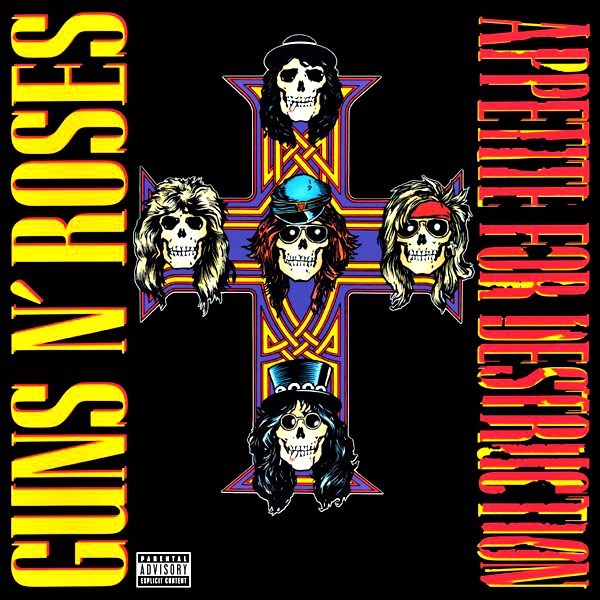
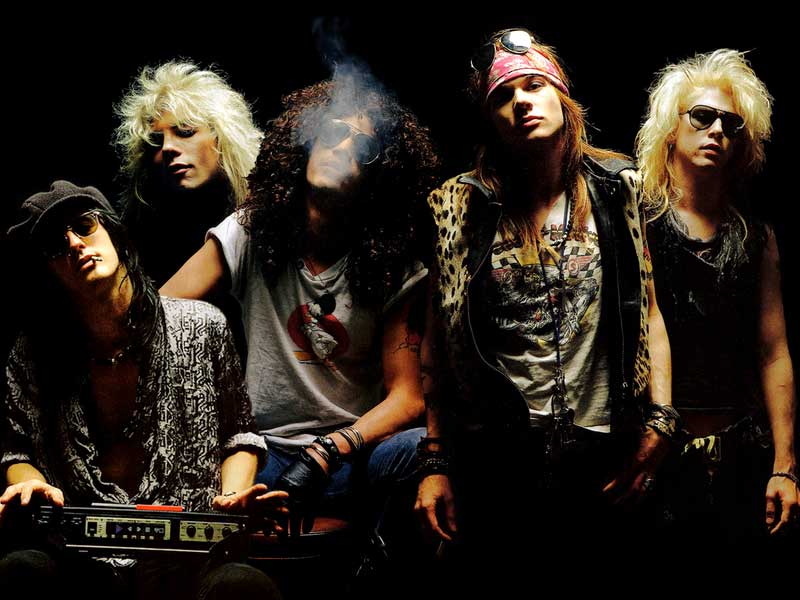
There are certain albums that feel less like recordings and more like seismic events, cultural detonations that change the very fabric of rock music overnight. Appetite for Destruction by Guns N’ Roses is exactly that kind of artifact. Dropped in the sweltering summer of 1987, it didn’t just arrive on the scene; it crash-landed with a leather-jacketed sneer, a bottle of Jack in one hand, and a middle finger permanently extended toward the polished, synth-pop wasteland of the mid-eighties. To talk about this record is to talk about a perfect storm of sleaze, desperation, genius, and raw, unadulterated fury. It’s an album that sounds like it was recorded in a dumpster behind a strip club, and I mean that as the highest possible compliment. From the opening rev of a motorcycle engine to the final, fading feedback, Appetite doesn’t ask for your permission—it takes your ears hostage and doesn’t let go for fifty-three glorious, grimy minutes.
Let’s get the obvious out of the way first: the opening one-two punch of Welcome to the Jungle and It’s So Easy is arguably the most ferocious start to any debut album in rock history. Welcome to the Jungle isn’t just a song; it’s a thesis statement, a mission brief, and a warning siren all rolled into one. That iconic, descending guitar riff from Slash, paired with Duff McKagan’s pulsating bass, creates this atmosphere of predatory tension that practically drips with sweat. And then Axl Rose comes in with that whisper-to-a-shriek delivery, painting a picture of Los Angeles as a concrete zoo where you’re either the hunter or the prey. The way the track builds, drops, and explodes is pure cinematic chaos. It’s easy to forget now, after it’s been played in a million stadiums and movie trailers, just how genuinely threatening and unhinged that song felt in 1987. It didn’t sound like a band trying to make it; it sounded like a band that had already survived the jungle and was now documenting the scars for the rest of us.
But what makes Appetite truly immortal isn’t just the aggression—it’s the staggering versatility that the band displays without ever losing their core identity. Take Sweet Child O’ Mine, for instance. That song is the ultimate bait-and-switch. It opens with that ridiculously beautiful, arpeggiated guitar line that Slash famously wrote as a joke, a warm-up exercise that accidentally became one of the most recognizable riffs on the planet. It’s a power ballad, sure, but it’s a power ballad with fangs. Axl’s vocal performance is nothing short of otherworldly; he goes from a fragile, almost pleading croon to that shattering, high-octane wail in the bridge, all while the rhythm section of McKagan and Steven Adler locks into a groove that’s as tender as it is thunderous. It’s the song that got the girls into the band, but it never feels like a sellout because the raw emotion is so palpable. It’s not a calculated radio hit; it’s a genuine love letter that happens to have a guitar solo that sounds like a soul ascending to heaven.
Then, just when you think you’ve got them figured out, they hit you with Nightrain. This is the dirty, drunk, punk-rock heart of the album. It’s a tribute to a cheap fortified wine, and it grooves with a swagger that the Rolling Stones would kill for in their prime. The chorus is pure, fist-pumping nihilism, and Slash’s solo is a molten, bluesy meltdown that feels like the last call at the end of the world. The production, handled brilliantly by Mike Clink, is key here. It’s raw and live-sounding, but it’s not muddy. Every instrument has its own filthy space, from Izzy Stradlin’s rhythm guitar chug to Duff’s melodic, punky bass lines. You can practically smell the stale beer and cigarette smoke bleeding out of the speakers. The album never loses that bar-band energy, even when the songwriting gets incredibly sophisticated.
And this is where the band’s secret weapon really shines: they somehow managed to attract every single rock subculture under the sun without alienating a single one. Think about the landscape of 1987—you had the hair-metal posers with their teased manes and lipstick on one side, the thrash-metal heads in their battle vests on another, the punk purists sneering from the dive bars, the hard-rock traditionalists worshipping at the altar of Led Zeppelin, and the blues-rock nerds obsessing over every bend of a B.B. King string. Guns N’ Roses walked into that fractured scene and said, “We’re all of you.” The hair-metal crowd heard It’s So Easy and Rocket Queen and latched onto the sleazy, glam-adjacent swagger, the gutter-sex appeal, and Axl’s pirouetting, bandana-flailing stage presence that fit right in with the Sunset Strip circus. But then the punks heard the raw, breakneck fury of Out ta Get Me and the sneering, three-chord nihilism of Anything Goes, and they recognized kindred spirits who’d rather spit on the floor than bow to radio executives. The heavy-metal contingent got their fix from the galloping, double-bass-driven assault of Paradise City’s thrashy finale and the down-tuned, Sabbath-esque crush of My Michelle, which rumbles with a darkness that made Bon Jovi sound like a children’s choir. Hard-rock traditionalists, meanwhile, found their holy grail in the swaggering, arena-filling anthems like Welcome to the Jungle and the grooving, fist-in-the-air defiance of Nightrain, tracks that could have sat comfortably beside Aerosmith’s Rocks or AC/DC’s Highway to Hell. And the blues-rock purists? They got Slash. That man plays like he sold his soul at a Mississippi crossroads, and nowhere is that more evident than in the extended, crying, bottleneck-inspired solos on Sweet Child O’ Mine and the achingly slow, gospel-tinged breakdown in Rocket Queen, where his Les Paul weeps and moans with a feel that’s pure Delta mud mixed with L.A. smog. The band was a living, breathing jukebox of rock’s entire lineage, and they wore those influences on their ripped sleeves without ever sounding like a tribute act. They synthesized punk’s attitude, metal’s power, blues’s soul, hard rock’s hooks, and even hair metal’s theatricality into something that felt wholly original—a grimy, beautiful mongrel that refused to be boxed in.
Lyrically, Axl Rose was operating on a level that most of his contemporaries—especially the hair-metal frontmen—couldn’t even comprehend. While the posers were writing about partying and chicks in a cartoonish, bubblegum way, Axl was penning dark, psychological character studies and social commentaries that appealed to the punk and metal crowds’ appetite for grit. Mr. Brownstone is a prime example—a track about heroin addiction that somehow manages to be both deeply sinister and weirdly funky. The riff is a slinky, rolling groove that hooks you immediately, but the lyrics are a stark, unflinching look at dependency and apathy. Lines like “I used to do a little but a little wouldn’t do it, so the little got more and more” are delivered with a grim, knowing smirk that makes the whole thing chilling. It’s not glorifying the drug; it’s just stating the bleak reality of the Sunset Strip scene with brutal honesty, a rawness that appealed as much to punk’s confessional nihilism as to metal’s fascination with darkness. That kind of authenticity was their secret weapon. They weren’t posers; they were survivors, and every track felt like a page from a very tattered diary.
Of course, we have to talk about the elephant in the room—or rather, the monster in the alley: Rocket Queen. This is the epic, the magnum opus, the sprawling, seven-minute closer that ties the whole chaotic experience together with a dirty bow. It starts with a swaggering, funky riff that’s pure rock and roll sleaze, the kind of groove that hair-metal bands would kill for, complete with the infamous, uh, “studio ambiance” that Axl recorded with Adriana Smith. It’s shocking and provocative, sure, but the real genius is how the song completely transforms halfway through. It drops into a slow, soulful, almost gospel-tinged breakdown, with Slash laying down one of the most emotional, heart-wrenching guitar solos of his career—a solo that owes everything to blues-rock legends like Eric Clapton and Joe Perry. Axl’s vocals shift from lustful grunts to a pleading, vulnerable cry, and the outro is pure catharsis, building into a heavy-metal crescendo that would make Judas Priest nod in approval. It’s the sound of a band laying every single card on the table—the filth, the tenderness, the rage, the longing—all in one track, pulling from every corner of rock’s spectrum without breaking a sweat. It’s audacious and slightly perverse, but it’s also breathtakingly ambitious, and it’s the perfect end to a record that refuses to be pigeonholed.
Looking at the deep cuts, Out ta Get Me is a paranoid, thrashy anthem about persecution that still hits with the force of a sledgehammer, its punk-rock speed and metal crunch making it a mosh-pit favorite, while My Michelle is a brutal, harrowing portrait of a real friend of the band’s tragic life, set to a riff that sounds like a carnival from hell—pure hard-rock horror with a bluesy underbelly. Even Anything Goes, which is probably the weakest track on the album, still has a nasty, infectious groove that would be a career highlight for most other bands, with a sleazy, hair-metal vibe that’s impossible to resist. The secret sauce isn’t just Axl’s incredible vocal range or Slash’s iconic top hat; it’s the rhythm section of Duff and Adler. Duff’s punk-rock bass lines are the melodic anchor, giving the heavier tracks a propulsive, Ramones-like energy, while Adler’s swing—often overlooked in favor of flashier drummers—is what gives these songs their hips. He plays with a loose, almost jazz-meets-blues feel that keeps the music from becoming too stiff, which is why you can actually dance to Paradise City despite its breakneck speed. That rhythmic foundation allowed the band to flirt with thrash tempos, blues shuffles, and hard-rock stomps all within the same album, making it a unifying force for fans who normally wouldn’t share a beer.
And Paradise City, what a monster that is. It’s the ultimate showstopper, starting with a slow, country-tinged blues-rock intro that sounds like it belongs in a dusty roadside bar, then building into a galloping, thrash-metal finale that’s pure adrenaline. The juxtaposition of the sweet, nostalgic chorus with the ferocious, double-time verses is pure genius, seamlessly bridging the gap between the melodic hooks of hair metal and the raw aggression of underground punk and heavy metal. When Axl screams “Take me down” at the end, it’s not just a vocal performance; it’s a primal exorcism that could only come from a band that digested every riff and every attitude that came before them. The album ends with Rocket Queen, but in a way, Paradise City is the grand finale, the song that encapsulates everything great about this record: the beauty, the ugliness, the speed, and the sheer, unapologetic volume.
What’s truly remarkable about Appetite for Destruction is its timelessness and its role as a great unifier. Sure, the production has a distinctly 80s reverb on the snare, and the lyrical content is deeply rooted in the hedonism of that specific era, but the emotion is universal. It’s the sound of young, hungry, and dangerous men who had nothing to lose and everything to prove. They were the antidote to the fluffy pop-metal that dominated the radio, injecting a dose of raw, dangerous rock that owed as much to Aerosmith and the Rolling Stones as it did to the Sex Pistols and the New York Dolls, while simultaneously delivering the crushing weight of Black Sabbath and the theatrical flair of Mötley Crüe. It was a melting pot of punk, blues, hard rock, heavy metal, and hair-metal sleaze, and it never felt forced because those genres weren’t costumes for them—they were the very fabric of their upbringing. In the decades since, Guns N’ Roses imploded, reformed, and became a nostalgia act, but Appetite remains untouchable. It’s not just a great debut; it’s a great album, full stop, precisely because it gave every tribe within rock music a reason to nod their heads. It’s one of those rare records where the hype is not only justified but perhaps undersold. Every single track contributes to a cohesive, nasty, beautiful whole, and it stands as a testament to the fact that sometimes, the most dangerous bands—the ones that refuse to pick a lane—make the most enduring art. So crank it up, pour a drink, and let the jungle swallow you whole. It’s a ride you won’t forget, and honestly, you won’t want to.