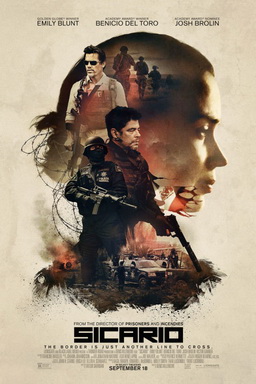
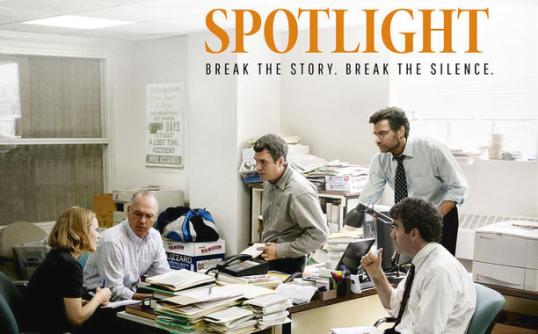
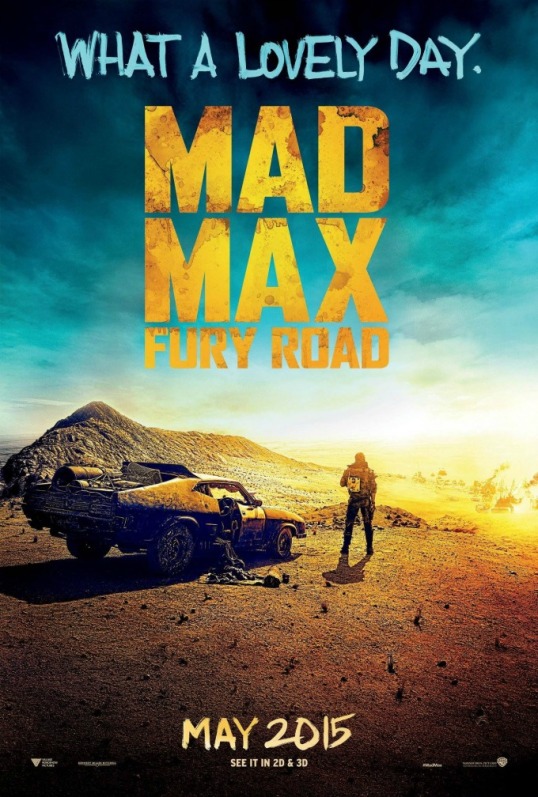
I love the Online Film Critics Society, I really do. Every year, when they announce the nominees for their end-of-the-year awards, they always seem to honor the films that truly deserve to be honored. For instance, this year, they found room to not only nominate the Academy front runners — like Spotlight, The Martian, Carol, Brooklyn, and Mad Max — but they also gave nominations to Ex Machina, Sicario, and Inside Out. Ex Machina, Sicario, and Inside Out all deserve to be in the Oscar conversation and hopefully, these nominations will help them stay there.
Here are the nominations from the Online Film Critics Society!
Best Supporting Actress:
Rooney Mara (Carol)
Cynthia Nixon (James White)
Kristen Stewart (Clouds of Sils Maria)
Alicia Vikander (The Danish Girl)
Kate Winslet (Steve Jobs)
Best Original Screenplay: Ex Machina (Alex Garland) Inside Out (Pete Docter, Ronnie Del Carmen, Meg LeFauve, Josh Cooley)
Mistress America (Greta Gerwig, Noah Baumbach) Sicario (Taylor Sheridan) Spotlight (Josh Singer, Tom McCarthy)
I really don’t know much about the New York Film Critics Online but, for whatever reason, the people at Awards Daily seem to hate them. And that’s more than enough reason for me to like them! Anyway, the NYFCO met today and announced their picks for the best of 2015.
And the big winner was Mad Ma…oh wait. No, sorry. The big winner was Spotlight. Check out the rest of the winners below:
Best Picture: Spotlight
Best Director: Tom McCarthy – Spotlight
Best Actress: Brie Larson – Room
Best Actor: Paul Dano – Love & Mercy
Best Supporting Actress: Rooney Mara – Carol
Best Supporting Actor: Mark Rylance – Bridge of Spies
Breakthrough Performance: Alicia Vikander – The Danish Girl
Best Screenplay: Tom McCarthy and Josh Singer – Spotlight
Best Use of Music: Love & Mercy
Best Debut Director: Alex Garland – Ex Machina
Best Ensemble Cast: Spotlight
Best Foreign Language Film: Son of Saul
Best Documentary Feature: Amy
Best Animated Feature: Inside Out
With three major groups of critics scheduled to announce their picks for the best of 2015, today is a big day for those of us who love Awards Season. First off, here are the picks of the Boston Society of Film Critics! While the awards are nicely spread around, it’s not surprising that the Boston Society of Film Critics picked a Boston film for best picture.
One good thing about Mad Max: Fury Road doing so well during award seasion is that it gives me an excuse to say that “So-and-so Is Mad About Max!” Thank you, film critics, for making my job a lot easier.
Anyway, yesterday, the Washington D.C. Area Film Critics announced their nominees for the best of 2015! And, once again, a lot of love was shown to Fury Road. However, I am even happier to see that they also gave some attention to one of my favorite films of the year, Ex Machina.
Best Original Screenplay:
Matt Charman and Ethan Coen & Joel Coen (Bridge of Spies)
Alex Garland (Ex Machina)
Pete Docter, Meg LeFauve and Josh Cooley (Original Story by Pete Docter and Ronnie Del Carmen) (Inside Out)
Tom McCarthy and Josh Singer (Spotlight)
Amy Schumer (Trainwreck)
I can still remember, back in the year 2010, when I first saw Never Let Me Go at the Dallas Angelika. Going into the film, I didn’t really know what was waiting for me. I hadn’t read the novel that it was based on. All I knew was that it had a cool trailer and it starred two of my favorite actresses, Carey Mulligan and Keira Knightley. Before I watched Never Let Me Go, I didn’t even know who Andrew Garfield was but that changed quickly. Never Let Me Go took me by surprise. I figured it would be a sad movie, based on the melancholy trailer and title. But I had no idea how sad or effective it would be. By the end of the movie, I was in tears.
And, even though I was already writing for this site at the time, I somehow never wrote up a review of Never Let Me Go. Oh, I certainly meant to. I went out of my way to recommend the movie on twitter. I included it on my list of films that deserved Oscar consideration. But I never actually got around to writing that full review. The emotions were just too overwhelming.
Well, I’m going to use this opportunity to recommend that, if you haven’t already, you make an effort to see Never Let Me Go. It’s a beautifully done film, one that confirms that director Mark Romanek is a major talent who really should have more than just three feature films to his credit. (True, he does have a lot of music videos…) As well, the film was written by Alex Garland, which should interest those of you who fell in love with Ex Machina earlier this year.
As for the film itself, it takes place in a world where, we’re told, a medical breakthrough was discovered in 1952 that allows people to live to be over 100 years old. The details of that medical breakthrough are slowly revealed to us over the course of the film. Unfortunately, it’s impossible to really talk about this film without revealing those details so consider this to be your SPOILER WARNING.
Basically — much as in Clonus — life has been extended through the use of cloning. Cloned children are raised outside of the view of “normal” society. They go to special schools. And when they turn 18, they are harvested for their organs. Clones are told that their ultimate goal is to “complete,” which is a polite way to say that most of them die before they ever reach 30. A few lucky ones are allowed to be “carers.” They take care of and comfort dying clones and, as a result, they get to put off their first organ donation for a few years.
Unlike Clonus, where the cloning was clandestine and done only to benefit the very rich, the clones are not a secret in Never Let Me Go. Everyone knows why they exist and everyone knows what is going to ultimately happen to them. Whenever the clones are allowed to leave their schools and explore the real world, they are greeted with a mix of hostility, fear, and guilt. Because they are due to be sacrificed, society chooses to believe that the clones are somehow less than human.
As for the clones, the majority of them accept their fate. You watch Never Let Me Go and you keep waiting for some sort of revolution and it never comes. Some of the clones are angry. Many of them desperately believe that there’s some way that they can avoid having to give up their organs. A good deal of the film is spent listening to people you’ve come to love talk about getting a “deferral” that the audience knows does not exist. For the most part, though, the clones passively accept their fate because that’s what they’ve been raised to do.
The film itself follows three clones from their childhood to their completion. Kathy (Carey Mulligan) is a carer. Ruth (Keira Knightley) starts out as a snob but softens as her fate becomes more and more inevitable. And, lastly, there’s Tommy (Andrew Garfield). Tommy starts out as an awkward young boy and he grows up to be an awkward young man. Of all of them, Tommy is the most convinced that, as a result of the artwork he innocently drew as a boy, he will somehow be given a deferment. Garfield is so heartbreaking in this role. When he finally snaps and screams in frustration, you scream with him.
Never Let Me Go is not an easy film to watch but it’s one that I highly recommend. It’ll make you think and it’ll make you cry. And after you watch the movie, read Kazuo Ishiguro’s wonderful novel. It’s even more heart-breaking than the movie.
So, this looks like it might be good. Ex Machina is the directorial debut of novelist and screenwriter Alex Garland. Judging from the trailer, it appears to be another film about humans getting too close to a machine. If nothing else, it has a great cast: Domhnall Gleeson, Oscar Isaac, and Alicia Vikander.
“Only one thing fighting for order in the chaos: The men and women of the Hall of Justice. Juries… Executioners… Judges.” — Judge Dredd
In 1995 there was a little sci-fi/action film called Judge Dredd that was one very anticipated film by fans of the title character. Judge Dredd was one of those comic book characters who was beloved by the hardcore comic book fans (and British readers worldwide). When news broke that the character was going to get his own film adaptation there was rejoicing but then the first shoe dropped. Sylvester Stallone will play the title character and worse yet he will have a sidekick in the form of one Rob Schneider. Even with this casting news there was still hope the film will at least do the property justice. I mean how can one fuck up an ultra-violent comic book that was tailor-made to become an action film. Well, let’s just say that the filmmakers involved and everyone from Stallone to Schneider all the way to the veteran Max Von Sydow failed to deliver a bloodsoak look into a dystopian future with a no, nonsense lawman to police the streets of Mega-City One.
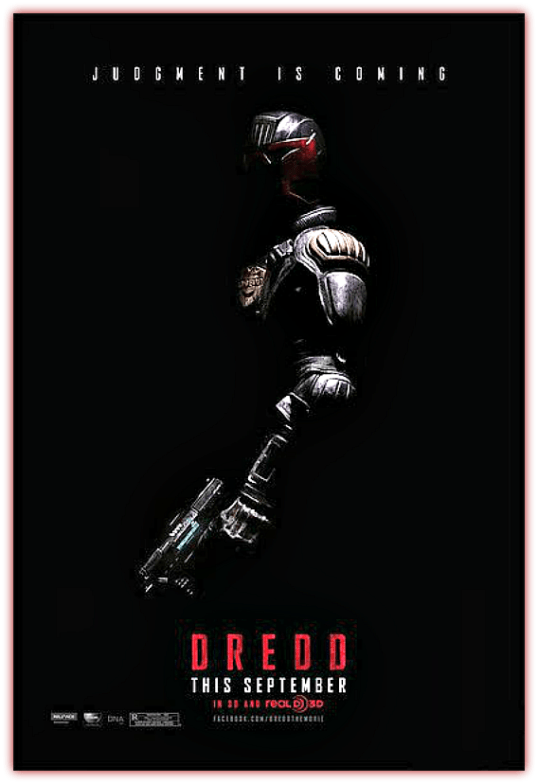
So, it was a surprise when there was an announcement that the character will get another film but a reboot instead of a sequel. It seems everyone who had a stake in the Judge Dredd property wanted to forget the 1995 Stallone version. I couldn’t blame them for this decision. Out goes Stallone in the title role and in his place is Eomer himself, Karl Urban to don the iconic Judge helm. He would have a partner in the form of Judge Anderson (who’s a rookie in this reboot and it’s through her eyes that we get to learn the rules of the Dredd world) as played by Olivia Thirlby. The reboot was to be helmed by British filmmaker Pete Travis using a screenplay by Alex Garland (28 Days Later and Sunshine) and was simply titled Dreddand would be filmed in 3-D.
There was trepidation about the film and rumored on-the-set differences between Pete Travis and Alex Garland marked the reboot as a troubled film at best and a dead-on-arrival at it’s worst. When the film finally made it’s premiere at San Diego Comic-Con 2012 the reaction from attendees who saw the film was a near-unanimous praise for it. The same could be said for the reaction of those who saw it two months later at the Toronto International Film Festival. It was being called a film that was a throwback and homage to the violent action films of the 80’s and early 90’s. This was high praie and one reason I decided to go see it.
I was very glad that I made the decision to see it when it made it’s worldwide release. Dredd 3-D was exactly as those who praised it turned out to be.
The film opens up with a fly-over of Mega-City One (looking like the location shoot of Johannesburg expanded to a 1000x through the judicious use of CGI and matte backgrounds effects) and the world which created the massive hive city of 800 million whose borders stretched from Boston in the north to Washington, D.C. in the south. It’s Karl Urban’s voice as Judge Dredd who we learn all this from right before the film segues into a fast-paced and violent action scene. One that shows just how violent Mega-City One is (people in malls and on the streets who get gunned down by stray fire get collected by automated garbage droids who also clean the pools of blood) and just how good Judge Dredd really is at his job.
Dredd 3-D is a simple story of a veteran cop who must evaluate a rookie whose psychic abilities would make her an invaluable member of the law enforcement group known as the Judges. The story brings these two disparate individuals into a massive apartment complex called The Peach Trees to investigate a triple homicide which brings them into conflict with the film’s villain in the form of Lena Headey as the brutal head of the gang called the Ma-Ma Clan. The film moves from one violent set-piece action to the next as Dredd and Anderson must find a way to escape the lockdowned Peach Trees and take out the Ma-Ma Clan in the process.
Yes, Dredd 3-D was a very good film and despite the story being so barebones that at times it resembled a video game with the way each sequence was a way to move from one floor to the next with the danger getting worst by the floor. It was the simplicity of the story that was also it’s major advantage. We got to know Dredd and Anderson (more of the latter than the former) and their actions throughout the film made for some very good character development. Even the tough, nigh-indestructible Dredd gained a semblance of sympathy for those he was very used to executing on-sight if the law deems it not whether it’s true justice.
Even the use of 3-D in the film was one of the better uses for what many still call a gimmick and a way for theater-owners to charge a higher ticket price for. The film was done in native 3-D and when it was paired with the super slo-mo sequences when characters where under the effects of the reality-altering drug Slo-Mo it literally created scenes of art. I suspect that we might see more films which uses this 3-D slo-mo effect in years to come. It was just that well done.
Now the big question is whether Karl Urban has erased the abomination that was Stallone’s performance in the same role 17 years past. The answer to that question would be a resounding yes. Urban never once takes off the iconic Judge helm and must act through his body language, dialogue delivery and, literally, the lower half of his exposed face. He made for a convincing Judge Dredd and not once did he go against character with one-liners and witty quips to punctuate an action scene. Not to be outdone would be Lena Headey as Madeleine Madrigal (hence Ma-Ma Clan) as the clan boss who was a mixture of reined in violence and psychopathy who was also going through a level of ennui that she made for a great villain. This was a woman who was so feared by the vicious and violent men in her command yet we never doubt that she was still the scariest of the whole bunch. There’s also Olivia Thirlby as the rookie Judge Anderson who brings a semblance of compassion and sympathy to the proceedings yet still able to kickass and take names not just with her psychic abilities but also with the Lawgiver (as the Judge’s firearms were called).
Dredd 3-D doesn’t try to explore the nature of violence that’s inherent in man or some other philosophical bullshit some filmmakers nowadays try to put into their action films. This film just decided to tell the proper Judge Dredd story and knew that ultra-violence would be a necessary component if the story was to remain true to the source material. In the end, the film did it’s job well and, even though it was by accident, it was still able to lend a level of thought-provoking themes and ideas about violence and its use.
One of the things which seem to have gone over well over at this year’s San Diego Comic-Con was the screening of the upcoming British sci-fi film Dredd. This film looks to reboot the 1995 travesty that was Judge Dreddand fix everything Stallone screwed up with that version.
The response from the audience during the screening of this reboot (directed by Peter Travis from a screenplay by Alex Garland) was very positive. Some called it a very violent fun time to be had with others describing the film as a throwback to the violent action films of the 80’s with emphasis on the Verhoeven-style of over-the-top violence. From the clip which premiered a couple days ago the description of the film’s violence wasn’t just normal Comic-Con attendee hyperbole.
Dredd 3Dmay just be a fine way to end the summer blockbuster season of 2012 if this clip is any indication.
In 1995 Sylvester Stallone put up on the big-screen a film adaptation of a sci-fi property that has a fan following as rabid as any sci-fi franchise there is. I am talking about the character of Judge Dredd which calls the British comic book anthology series 2000 A.D. it’s home for the past 35 years and counting. The Stallone production was just awful from start to finish.
It’s now 2012 and we have what one can only call a reboot of the Judge Dredd film from 1995 but with screenwriter Alex Garland (28 Days Later, The Beach) writer the script and Pete Travis behind the director’s chair. Instead of Stallone reprising the role of the iconic Judge Dredd the job goes to genre vet Karl Urban (Lord of the Rings trilogy, Bourne Supremacy, Star Trek). We even get Lena Headey as the film’s main antagonist in drug crimelord of Mega-City One called simply by the moniker of Ma-Ma.
The first trailer shows some interesting design choices that veers away from the neogothic dystopian look of the comics and the overly comic book feel of the Stallone production. The look of Mega-City One and the film in general seems to be more akin to District 9. Another good thing the trailer shows and hopefully the film will follow through on is Urban never once taking off the Judge helmet his character wears in the film. Never once has Judge Dredd removed his helmet in the comics and if there was ever one heresy fans of the property would cry foul over it’s the character being seen helmet-less.
Here’s to hoping that this grittier take on the Judge Dredd property goes a long way in erasing the abomination that was the Stallone production.
Dredd 3Dis set for a September 21, 2012 release in the UK and soon after everywhere else.
Danny Boyle and Alex Garland’s 28 Days Later was made in such a way that any sequel was almost destined to struggle in its shadow. Their film was not only one of the most influential horror films of the early 2000s, but also an exercise in experimental filmmaking and cinematic reinvention. It fused realism and terror through its digital photography, unconventional pacing, and minimalist score. Any follow-up would have to contend not just with its fresh twist on the zombie mythos (despite the infected not technically being zombies) but also its unique atmosphere, music, and stripped-down aesthetic. Against those odds, 28 Weeks Later manages to stand as an impressive and worthy successor—one that in some respects even surpasses the original.
Spanish director Juan Carlos Fresnadillo approaches the material with a clear reverence for Boyle and Garland’s vision while imprinting his own stylistic and emotional signature on the sequel. From the very first scene, Fresnadillo establishes a tone that blends despair and dread with human frailty. The film opens on a stunningly tense prologue in which Don (a gaunt and haunted Robert Carlyle) and Alice (Catherine McCormack) are living with several others in a rural cottage outside London during the first weeks of the Rage virus outbreak. In this sequence, Fresnadillo distills the central moral dilemma that runs through both films: whether to preserve one’s humanity through compassion or to surrender to pure survival instinct. When Don is forced to choose between rescuing his wife and saving himself, his decision—while horrifying to watch—feels horribly plausible. The following chase through open fields as he flees dozens of Rage-infected attackers captures the raw panic that made Boyle’s original so memorable, yet Fresnadillo shoots it with a sharper sense of chaos and movement. It sets the tone for a story that is both intimate in its human tragedy and apocalyptic in its reach.
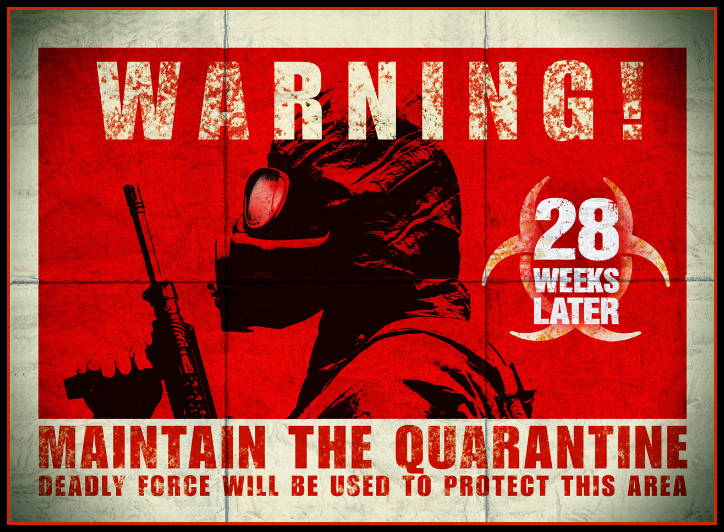
Following this intense opening, the film transitions through an introductory credits montage that fills in the aftermath. Don’s escape was not the end of the story but the beginning of a grim reconstruction effort. The British Isles, we are told, were swiftly quarantined when it became clear the infection could not be contained. Twenty-eight weeks later, with the infected population presumed dead from starvation, a U.S.-led NATO force spearheads an ambitious effort to repopulate and rebuild. Led by General Stone (played with austere calm by Idris Elba), the military has converted London’s Isle of Dogs into a heavily fortified safe zone. This enclave represents both restoration and repression—a fragile bubble of civilization built atop the bones of horror.
Within this environment lives Don, now employed as a maintenance manager and struggling to suppress the guilt from his past. The arrival of his two children, Tammy (Imogen Poots) and Andy (Mackintosh Muggleton), who were abroad in Spain during the initial outbreak, reopens emotional wounds he had hoped were sealed. Their reunion, though heartfelt, carries an undercurrent of deception. Don’s explanation of their mother’s fate does not align with what the audience has already witnessed. This dishonesty propels the children into dangerous territory when they decide to sneak out of the Green Zone to retrieve personal belongings from their old cottage. While this act of recklessness fits with youthful impulses and emotional longing, it also feels like the film’s only contrived lapse in logic—an inevitable but frustrating horror trope that sets off the story’s next catastrophe.
What the children discover at the cottage reintroduces the virus in a shocking way. Without realizing it, they bring the Rage infection back into the supposedly secure refuge of London. As soon as containment is broken, the military response escalates with brutal efficiency. General Stone declares a “Code Red,” authorizing the use of extreme measures to eradicate the infected—including indiscriminate firebombing of civilian areas. These scenes echo not only classic apocalyptic tropes but also resonate as a grim reflection of post-9/11 militarism. Many viewers and critics interpreted this act of mass destruction as allegory for the United States’ War on Terror and the ethical corruption of occupation forces. Fresnadillo’s direction, while hinting at this reading, avoids heavy-handed political critique. His portrayal of military overreaction feels less ideological than tragic—a manifestation of fear, confusion, and the blunt-force nature of institutional power. The armed forces are not villains so much as desperate men trapped in an impossible moral quagmire. As in George A. Romero’s The Crazies, which 28 Weeks Later strongly recalls, the destructive consequences stem not from malice but from the futility of trying to maintain order amid chaos.
Where 28 Days Later focused on a small group of survivors and the intimate erosion of morality under crisis, 28 Weeks Later expands the scale dramatically. Fresnadillo transforms Boyle’s compact nightmare into a large-scale urban apocalypse. The sweeping aerial shots of a deserted London—bridges empty, streets silent—hammer home the desolation. When the city is engulfed in flames and gas clouds during the firebombing sequence, the imagery becomes both terrifying and grimly beautiful, a vision of civilization consuming itself. The sequel’s tone is darker and more nihilistic than Boyle’s film, which allowed a trace of optimism in its ending. Here, even innocence becomes a catalyst for doom: it is the children’s actions, driven by love and loss, that inadvertently reignite the infection and condemn the survivors to another wave of horror. This subversion of the “innocent child” trope underscores Fresnadillo’s bleak worldview—where sentiment and humanity, however noble, can still create destruction.
In several ways, 28 Weeks Later aligns more closely with Romero’s Living Dead films than with Boyle’s original. Though Boyle borrowed some of Romero’s thematic DNA, Fresnadillo fully embraces it. The infected may not be reanimated corpses, but the societal collapse, moral ambiguity, and recurring cycles of violence all trace back to Romero’s legacy. One of the sequel’s most striking qualities is its unflinching pessimism: even individuals acting out of love or duty become agents of devastation. The so-called survivors are reduced to primal instincts—running, hiding, killing—in a landscape where institutional power and human decency dissolve together. Fresnadillo makes the action kinetic without glamorizing it. His camera work, switching between chaotic handheld intensity and precise, panoramic destruction, keeps the viewer off balance, mirroring the unpredictability of the apocalypse itself.
The performances elevate the material beyond genre expectations. Robert Carlyle’s portrayal of Don is both gut-wrenching and terrifying. His character’s transformation—from remorseful father to infected embodiment of pure rage—serves as the film’s emotional and thematic anchor. Imogen Poots, in an early standout role, conveys resilience and vulnerability in equal measure, while Jeremy Renner delivers a strong supporting turn as Sergeant Doyle, the soldier torn between obedience and morality. Their performances, though sometimes confined within the film’s relentless pace, enrich its exploration of guilt, loyalty, and the futility of control.
Despite sacrificing some character depth for momentum, the film’s taut editing and grim atmosphere sustain tension throughout. Fresnadillo’s direction never loses sight of his central message: that humanity’s efforts to rebuild are perpetually haunted by its capacity for self-destruction. Even as the few surviving characters reach supposed safety, the final scenes undermine any hope of resolution. The closing image—infected sprinting through the streets of Paris—reminds viewers that, although the city itself appears intact and bustling in daylight, the Rage virus has now breached mainland Europe. This ending shifts the scale of threat from the quarantined British Isles to the broader continent, making containment and redemption feel like dangerous illusions.
As a sequel, 28 Weeks Later earns its place alongside 28 Days Later by honoring the original’s DNA while pushing its boundaries. It retains the visceral dread and societal commentary but broadens the lens to encompass collective failure rather than individual struggle. Fresnadillo’s approach feels colder and more apocalyptic, transforming the story into a study of fear’s infectious nature—social, political, and biological. While his film might not achieve the same creative purity as Boyle’s indie landmark, it succeeds in redefining the tone, expanding the mythology, and pushing the series toward a darker, more cinematic landscape.
In the end, 28 Weeks Later is both a continuation and an escalation—a relentless, despairing study of human fragility under crisis. Its pacing, performances, and imagery combine to create an experience that’s not only horrifying but profoundly unsettling in its realism. If 28 Days Later showed us the collapse of civilization, its sequel reveals the hopeless struggle to rebuild it. Few horror sequels accomplish that much, and fewer still end with such haunting inevitability.



 Through the Shattered Lens