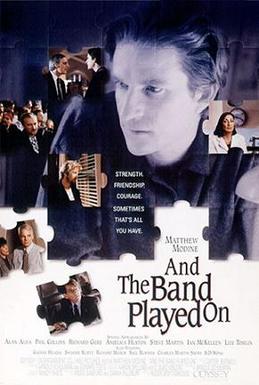
Film Review: And The Band Played On (dir by Roger Spottiswoode)


I live in a very cynical time.

That was one of my main thoughts as I watched 1993’s And The Band Played On.

Directed by Roger Spottiswoode and featuring an all-star cast, And The Band Played On deals with the early days of the AIDS epidemic.  It’s a film that features many different characters and storylines but holding it all together is the character of Dr. Don Francis (Matthew Modine), an epidemiologist who is haunted by what he witnessed during the Ebola epidemic in Africa and who fears that the same thing is going to happen in America unless the government gets serious about the mysterious ailment that is initially called “gay cancer” before then being known as “GRID” before finally being named AIDS.  Dr. Francis is outspoken and passionate about fighting disease.  He’s the type who has no fear of yelling if he feels that people aren’t taking his words seriously enough.  In his office, he keeps a track of the number of HIV infections on a whiteboard.  “Butchers’ Bill” is written across the top of the board.

Throughout the film, quite a few people are dismissive of Dr. Francis and his warnings.  But we, the audience, know that he’s right.  We know this because we know about AIDS and but the film also expects us to trust Dr. Francis because it’s specifically stated that he worked for the World Health Organization before joining the Center For Disease Control in Atlanta, Georgia.  As far as the film is concerned, that’s enough to establish his credentials.  Of course, today, after living through the excesses of the COVID pandemic and the attempts to censor anyone who suggested that it may have begun due to a lab leak as opposed to some random guy eating a bat, many people tend to view both the WHO and the CDC with a lot more distrust than they did when this film was made.  As I said, we live in a cynical time and people are now a lot less inclined to “trust” the experts.  To a large extent, the experts have only themselves to blame for that.  I consider myself to be a fairly pragmatic person but even I now find myself rolling my eyes whenever a new health advisory is issued.

This new sense of automatic distrust is, in many ways, unfortunate.  Because, as And The Band Played On demonstrates, the experts occasionally know what they’re talking about.  Throughout the film, people refuse to listen to the warnings coming from the experts and, as a result, many lives are lost.  The government refuses to take action while the search for a possible cure is hindered by a rivalry between international researchers.  Alan Alda gives one of the best performances in the film, playing a biomedical researcher who throws a fit when he discovers that Dr. Francis has been sharing information with French scientists.

It’s a big, sprawling film.  While Dr. Francis and his fellow researchers (played by Saul Rubinek, Glenne Headly, Richard Masur, Charles Martin Smith, Lily Tomlin, and Christian Clemenson) try to determine how exactly the disease is spread, gay activists like Bobbi Campbell (Donal Logue) and Bill Kraus (Ian McKellen) struggle to get the government and the media to take AIDS seriously.  Famous faces pop up in small rolls, occasionally to the film’s detriment.  Richard Gere, Steve Martin, Anjelica Huston, and even Phil Collins all give good performances but their fame also distracts the viewer from the film’s story.  There’s a sense of noblesse oblige to the celebrity cameos that detracts from their effectiveness.  All of them are out-acted by actor Lawrence Monoson, who may not have been a huge star (his two best-known films are The Last American Virgin and Friday the 13 — The Final Chapter) but who is still heart-breakingly effective as a young man who is dying of AIDS.

Based on a 600-page, non-fiction book by Randy Shilts, And The Band Played On is a flawed film but still undeniably effective and a valuable piece of history.  Director Roger Spottiswoode does a good job of bringing and holding the many different elements of the narrative together and Carter Burwell’s haunting score is appropriately mournful.  The film ends on a somber but touching note.  At its best, it’s a moving portrait of the end of one era and the beginning of another.
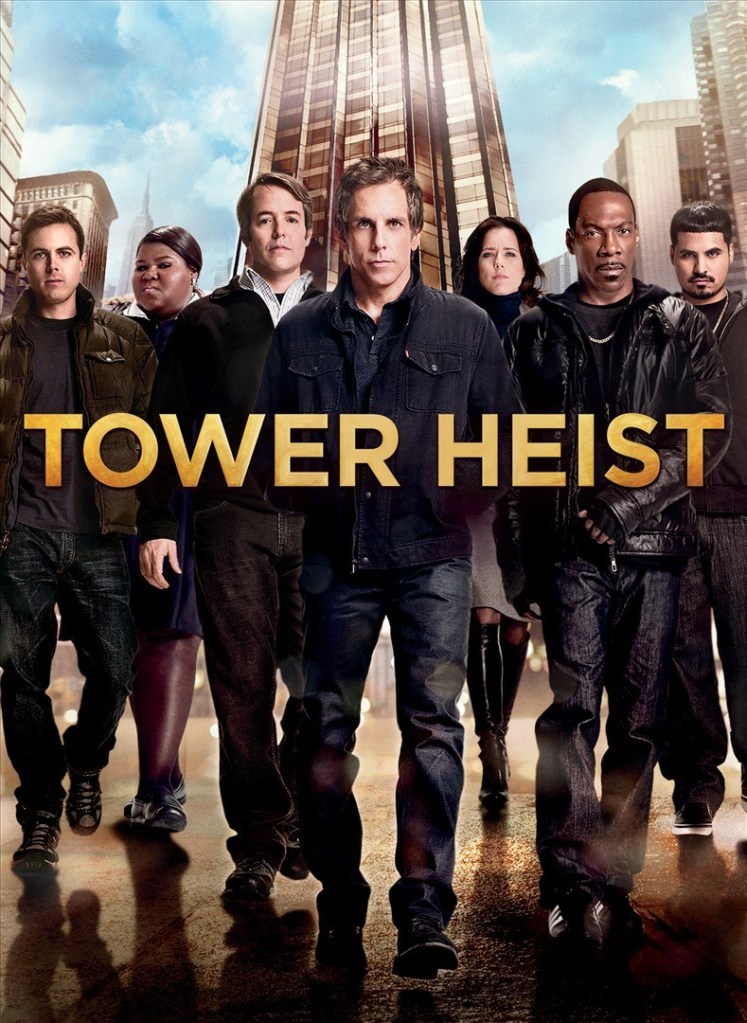
#MondayMuggers – Why TOWER HEIST?


Every Monday night at 9:00 Central Time, my wife Sierra and I host a “Live Movie Tweet” event on X using the hashtag #MondayMuggers. We rotate movie picks each week, and our tastes are quite different. Tonight, Monday November 25th, we’re watching TOWER HEIST starring Ben Stiller, Eddie Murphy, Casey Affleck, Alan Alda, and Matthew Broderick.

So why did Sierra pick TOWER HEIST, you might ask? It’s simple. It’s a Thanksgiving movie. The Macy’s Thanksgiving Day Parade is even used as a key part of the heist strategy! Sierra and I love the holidays and we’re getting in the spirit. We hope watching this movie will enhance your Thanksgiving week!

It’s on Amazon Prime, and we’ll be following along the theatrical edition (NOT the Extended Edition). Join us if you’d like!

Retro Television Review: The Glass House (dir by Tom Gries)


Welcome to Retro Television Reviews, a feature where we review some of our favorite and least favorite shows of the past!  On Sundays, I will be reviewing the made-for-television movies that used to be a primetime mainstay.  Today’s film is 1972’s The Glass House!  It  can be viewed on YouTube.

The Glass House starts with three men arriving at a location that will define the next few months of their lives.

Brian Courtland (Clu Gulager) is a veteran of the Vietnam War.  He spent part of his service working as a guard in the brig.  Now that he’s back in the United States and in need of a regular paycheck, he has gotten a job working as a prison guard.  Courtland is not naive about where he’s going to be working or who he is going to be working with.  But he is an idealist, one who tries to treat everyone fairly and who hopes that he will be able to do some sort of good in his new position.

Alan (Kristoffer Tabori) is a young man who has been arrested for selling marijuana.  He is quiet and just hoping to serve his time and then get on with his life.  His fellow prisoners have different plans for him.

Finally, Jonathan Paige (Alan Alda) is a liberal professor who, in a moment of rage, accidentally killed a man in a fight.  Convicted of manslaughter, Paige enters the prison in a daze and cannot stop flashing back to the one moment that changed his life forever.  Paige is assigned to work in the pharmacy, where he meets a prisoner-turned-activist named Lennox (Billy Dee Williams).  Paige struggles to retain his humanity despite the harsh conditions.

All three of the men find themselves having to deal with the attentions of Hugo Slocum (Vic Morrow), the predatory “king” of the prison.  Slocum expects Paige to help him run drugs though the the pharmacy.  Slocum preys on Alan and sends his gang to punish him when Alan refuses Slocum’s advances.  And Slocum expects that Courtland will just be another corrupt guard who agrees to look the other way when it comes to Slocum’s activities.  Courtland, however, turns out to have more integrity than anyone was expecting.

The Glass House opens with a title card, informing the viewer that the film was shot at an actual prison and that the majority of the people in the film were actual prisoners.  Not surprisingly, The Glass House does feel authentic in a way that a lot of other films about incarceration does not.  The prison is claustrophobic and dirty, with every crack in the wall reminding the prisoners and the viewer that no one cares about what happens there.  The extras have the blank look of men who understand that showing any emotion will be taken a sign of a weakness.  Made in 1972, at a time when America was still struggling to integrate, The Glass House takes place in an almost totally segregated world.  The black prisoners stick together.  The white prisoners stick together.  Everyone understands that’s the way that it will always be and, as we see by the end of the film, that’s the way the guards and the warden (Dean Jagger) prefer it because that means almost any incident can be written off as a being “a race riot.”

The real actors amongst the population do a good job of blending into the surroundings.  Alda, Williams, and Tabori all give good performance while Vic Morrow is truly menacing in the role of the vicious Slocum.  Slocum may not be particularly bright but, because he has no conscience, he is uniquely suited to thrive in a world with no morality.  The film’s best performance comes from Clu Gulager, who does a great job of portraying Courtland’s growing disgust with how the system works.

Though it’s over 50 years old, The Glass House is a still a powerful look at life on the fringes.  Society, for the most part, doesn’t really care much about what happens to the incarcerated.  This film makes a strong case that we probably should.  One is left with little doubt that, even if relatively harmless prisoners like Paige and Campbell survive being locked up with men like Slocum, they’ll still be incapable of returning to the “real world” afterwards.  The viewer, like Brian Courtland, is left to wonder how much corruption can be tolerated before enough is enough.

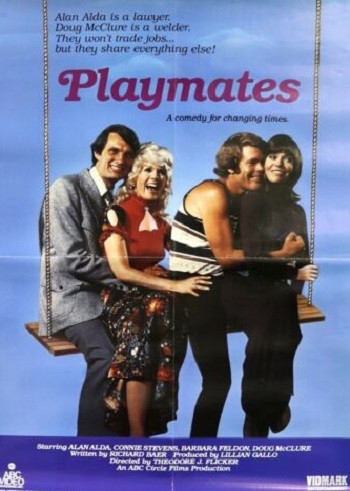
Retro Television Review: Playmates (dir by Theodore J. Flicker)


Welcome to Retro Television Reviews, a feature where we review some of our favorite and least favorite shows of the past!  On Sundays, I will be reviewing the made-for-television movies that used to be a primetime mainstay.  Today’s film is 1972’s Playmates!  It  can be viewed on YouTube.

Playmates tells the story of two divorces.

Marshall Barnett (Alan Alda) is an attorney.  He went to Yale and Harvard.  He has a successful career.  He has rich and educated friends.  He has a nice bachelor pad.  He also pays hundreds of dollars in alimony.  He and Lois (Barbara Feldon) got divorced 3 years ago and Marshall is still bitter.  He’s bitter that he has to pay her so much money.  He’s bitter that he only gets to see his son on the weekends.  He’s bitter that he can’t seem to start a new, meaningful relationship with anyone.  He’s bitter that his wife still asks him to critique her modernist paintings.

Kermit Holvey (Doug McClure) is a blue collar welder.  He has only been divorced for a few months and his relationship with ex-wife Patti (Connie Stevens) is nowhere near as contentious as Marshall’s relationship with Lois.  Still, Kermit is struggling to adjust to being single and to only seeing his son on the weekends.

Marshall and Kermit meet one weekend while they are both taking their sons to the Kiddieland Amusement Park.  Marshall is so overjoyed to meet someone else who is dealing with divorce that he comes on a bit strong in trying to get to know Kermit.  Kermit, however, does eventually get over his initial weariness and soon, he and Marshall are best friends.  It doesn’t matter that Marshall has a tendency to be a little bit condescending and that Kermit often can’t follow what Marshall is talking about.  They spend most of their time talking about their ex-wives.

But then Kermit meets Lois and he discovers that her paintings really aren’t as bad as Marshall made them out to be.  And Marshall meets Patti and he discovers that she’s not as dumb as Kermit made her out to be.  Soon, Kermit is secretly dating Lois and Marshall is secretly dating Patti and anyone who has ever watched a comedy before knows that there is a big mess waiting in the future.

Playmates was one of those films that pretended to be a lot naughtier than it actually was.  For all the winking and the occasional sly smiles, all that happens is that Kermit and Marshall both end up going out with women with whom they really don’t have much in common.  And while it’s tempting to read a lot into how quickly Kermit and Marshall become friends and how they both end up dating the other’s female equivalent, I think that might be giving this film too much credit.  (If it were made today, things might be different.)  In the end, the film really has more to say about class than it does marriage, as both Marshall and Lois obviously view spending time with Kermit and Patti as being a way of slumming and building up some working class bona fides without actually having to be working class.  Patti, to her credit, calls Marshall out on this.  Marshall admits that she has a point but he still come across as if he’s talking down to her, largely because he’s played by Alan Alda, an actor who is a master at being somehow both likable and condescending at the same time.

Playmates is a well-acted film and there are some funny lines.  The four main characters are all ultimately likable, even if they all have their moments where you can tell why they would be difficult to live with.  It deserves some credit for following its story through to its natural conclusion, with one couple realizing that they still love each other while the other realize that they are better off divorced.  The film may not be as radical as it pretends to be but it still doesn’t cop out on the ending.  In the end, Playmates is probably best watched as a time capsule.  It’s here if you ever want to experience 1972 firsthand.

Paper Lion (1968, directed by Alex March)


Writer George Plimpton (Alan Alda) is a Park Avenue sophisticate who practices “participatory” journalism.  He has already written about pitching in an exhibition all-star game and getting knocked out by Sugar Ray Robinson.  He is having trouble coming up with his next stunt until he goes to Central Park and plays a touch football game with his girlfriend Kate (Lauren Hutton) and his editor, Oscar (David Doyle).  Oscar sees George throwing the ball and decides that George should write about going to a professional football team’s training camp as a player.

George, who fantasizes about throwing the game-winning touchdown, is enthusiastic.  Most of the teams that George approaches are less enthusiastic but finally, the Detroit Lions agree to sign him as a quarterback.  Once the other players realize that George is a writer and not a professional athlete, there’s a lot of resentment.  As Guard John Gordy (playing himself) puts it, he could easily get injured while protecting an inexperienced quarterback like George.  George can always go back to Park Avenue but, for the rest of the players, the game is their life and they don’t like the idea of some outsider coming in and treating it all like a joke.  At first, only the fearsome defender Alex Karras (also playing himself) is willing to support George but eventually, George’s refusal to give up wins over the rest of the team.  They even let him score a touchdown during practice.

When the preseason begins, George waits for his opportunity to take the field.  How many yards can he lose in three plays?

Paper Lion is based on a true story.  In 1963, George Plimpton did attending training camp and play a scrimmage for the Lions and he later wrote a book about the experience.  The movie changes the time period from ’63 to ’67 so that all of the then-members of the Lions could play themselves.  (Though Karras was a friend of Plimpton’s, he was actually suspended during the 1963 season and, unlike in the movie, never joined Plimpton on the practice field.)  The film plays Plimpton’s football career largely for laughs, celebrating every guy’s fantasy of being a sports star while also showing why it’s probably best to leave the actual game to the professionals.  Alan Alda doesn’t imitate Plimpton’s famous Mid-Atlantic accent but he does capture the excitement of a man getting to live out his fantasy.

Paper Lion was made with the full cooperation of the NFL and a good deal of the film’s final third is made up footage that was shot for an actual game.  Seen today, it’s interesting to see how positively Paper Lion portrays both the game and its players and to contrast it with how the game is usually portrayed today.  There’s no talk of steroids or fears of multiple concussions.  All of the players are clean-cut, friendly, witty, and helpful.  Even the training camp hazing is all done is good fun.  Paper Lion introduces us to the nicest people in the world and they’re all football players!

Lisa Reviews An Oscar Nominee: Marriage Story (dir by Noah Baumbach)


The Oscar nominations were announced earlier today and, as happens every year, some of the nominations were met with acclaim while others left observers scratching their heads.  Right now, on twitter, there’s a fierce debate going on between those who think Joker deserved all of its nominations and those who believe that the Academy has once again deliberately snubbed women and people of color.

As for me, I’m just shaking my head at all the nominations for Marriage Story.  I get the feeling that, out of all of the recently unveiled best picture nominees, Marriage Story is the one that we will have forgotten about within the next year.  It’s an acclaimed film and I’m happy that Scarlett Johansson finally got a nominations (two nominations, as a matter of fact, as she was also nominated for Best Supporting Actress for Jojo Rabbit) but, in the end, Marriage Story feels rather hollow.

Marriage Story is about the end of a marriage.  Charlie Barber (Adam Driver) is a New York-based theatrical director.  Nicole Barber (Scarlett Johansson) is his wife.  Nicole is an actress who, before she married Charlie, was best known for appearing topless in a teen comedy.  Charlie is often credited with having resurrected her career.  On the surface, they’re the perfect New York couple.  However, when we first meet them, their marriage is coming to an end.  Charlie, we learn, cheated on Nicole with a production assistant.  Nicole wants to go to Los Angeles so that she can star in a television series and have a career that’s not dependent upon her husband.  Caught in the middle of all this is their son, Henry (Azhy Robertson).

At first, Charlie and Nicole agree to an amicable split, one with no lawyers and no accusations.  That doesn’t last.  Nicole hires the cheerfully ruthless Nora Fanshaw (Laura Dern).  Charlie, after moving out to Los Angeles, finds himself torn between hiring either the the kindly (but ineffectual) Bert Spitz (Alan Alda, in a role he was born to play) or the somewhat sinister (but definitely effective) Jay Marotta (Ray Liotta, also in a role that he was born to play).  While both Charlie and Nicole try (and often) fail to maintain a civil relationship for Henry’s sake, their attorneys go to war.

There’s a lot of good things to be said about Marriage Story.  Though I think that his truly award-worthy work for 2019 was not in this film but instead in The Report, Adam Driver does a good job with role of Charlie.  Scarlett Johansson, who has so often been unfairly overlooked at awards time, again proves herself to be one of the best actresses around.  Dern, Alda, and Liotta are well-cast as three very different (but very recognizable) attorneys.  Noah Baumbach’s script has several good lines.  The scene where Nicole’s sister is awkwardly recruited to serve Charlie with the divorce papers is both funny and cringey.  The much-acclaimed scene where Charlie and Nicole go from having a polite (if awkward) conversation to yelling at each other is definitely effective even if it’s power has been diluted by it’s subsequent reinvention as a twitter meme.

That said, Marriage Story ultimately left me feeling dissatisfied.  It’s pretty much an open secret that the film is based on Noah Baumbach’s divorce from Jennifer Jason Leigh and, watching the film, you can’t help but feel that you’re only getting one side of a very complex story.  My first warning sign came when Nicole left for Los Angeles and the film cut to her on the set for her new television series.  Marriage Story goes so overboard in portraying Nicole’s show as being vapid and silly that you can’t help but feel that we’re meant to look down on Nicole for abandoning Charlie’s avant-garde theater productions to star in it.  We’re meant to say, “She gave up Broadway so she could star in some second-rate Marvel show!?”  From the claim that no one took Nicole seriously until Charlie married her to it’s portrayal of her being easily manipulated by her attorney, there’s a pettiness to the film’s portrayal of Nicole.

As for Charlie, he’s presented as being flawed but, as the film progresses, it’s hard not to notice that almost all of his flaws can also serve as a humble brag.  He’s a little dorky,  He’s too intense.  He works too hard.  Sometimes, he has a hard time not being the director.  Almost all of Charlie’s flaws are the type of stuff that people mention in job interviews whenever they’re asked to name their biggest weakness.  “Well, I guess I am a bit of a perfectionist, sometimes….” It’s hard not to feel that, despite a few scenes where Nicole gets to open up, the film is really only interested in Charlie’s perspective.  By the end of the film, Marriage Story reduces Nicole to merely being an obstacle standing in the way of Charlie and his son and it’s hard not to feel that both the character and the actress who plays her deserves better than that.  The film goes from being Marriage Story to simply being Charlie’s Story.

While you’re watching the film, it’s easy to get swept up in Driver and Johansson’s performances.  It’s only afterwards, when you really think about it, that you come to realize that Marriage Story doesn’t really add up to much.  It’s a good acting exercise and I’m sure that it will be popular among community theater actors who have been asked to prepare a monologue for their next audition.  But the whole is ultimately far less than the sum of its parts.

White Mile (1994, Directed by Robert Butler)


In this HBO movie, Alan Alda plays the biggest asshole in the world.

Alda is cast as Dan Cutler, an ad exec who books a corporate retreat to Canada’s White Mile.  He tells the nine men who accompany him, some of whom are clients and some of whom work for him, that it’s going to be a weekend of fishing and male bonding.  What he doesn’t reveal is that the trip is also going to require whitewater rafting.  Despite the fact that the majority of the men are out-of-shape and hardly any of them have any rafting experience, Dan insists that they all take part.  When their guide says that they’re going to need to take two boats, Dan refuses.  He wants everyone in one boat, the better so they can all work together to prove their manhood by conquering the river.

The trip starts out well but, when the raft hits a rock and turns over, five of the men end up dead.  Despite injuring his leg, Dan survives and, when he returns to work, he’s hailed as a hero.  However, one of the widows of the men who didn’t survive is now suing the company.  While Dan tries to cover his own ass, one of the survivors — Jack Robbins (Peter Gallagher) — is faced with a dilemma of his own.  As one of the few people who knows that Dan demanded that the guide only use one boat, will Jack testify to the truth at the trial or will he follow Dan’s orders and keep quiet about what really happened?

Based on a true story, White Mile features some brief but exciting (and harrowing) rafting scenes but the film is less about what happened in the wilderness and instead about what’s happening behind the closed doors of corporate America.  White Mile does a good job of taking Alda’s sensitive male persona and pushing it through the looking glass.  As played by Alda, Dan is the type of tyrannical boss who we’ve all had to deal with.  His friendly smile barely disguises a bullying streak.  Even after the accident leaves five of his colleagues dead, Dan is still convinced that the trip was a good idea and that everyone was having the best day of their lives until they hit that rock.  When the river guide initially finds Dan stranded on a rock, Dan makes a show of telling the guide to come back for him later and to find the others.  When Dan later comes across one of the dead men, he says, “He must have had a bad heart,” as he grasps at any way to avoid taking responsibility.  Though White Mile is dominated by Alda’s villainy, it also features good performances from Gallagher, Robert Loggia, Bruce Altman, and Jack Gilipin.  When Gilpin demands to know if anyone at the ad agency has shown any true remorse for what happened, he is speaking for the entire audience.

White Mile was an early HBO film and, because it was released before HBO became known for its original programming, it’s often unfairly overlooked.  When it was released on DVD, it was advertised as being an action-adventure film, which it definitely is not.  Instead, it’s a look at the type of head games that far too often act as a substitute for responsible and ethical management in corporate America.  It’s a good movie and you’ll never look at Alan Alda the same way again.

Here Are The 2019 Independent Spirit Award Nominees!


Here are the 2019 Indie Spirit Award nominations!  These nominations are meant to honor the best independent films of 2019 and their announcement marks the official beginning of awards season (at least as far as this sight is concerned!)  I hate to say it but I still need to see quite a few of the films nominated below so, for now, I’ll hold off on any editorial commentary.

For those looking for some sort of evidence of how the Oscar nominations can go, the Independent Spirit Awards can be an iffy precursor, just because several of the expensive, major studio contenders aren’t eligible to nominated.  (For instance, neither The Irishman nor Once Upon A Time In Hollywood were eligible.)  That said, for the record, the two biggest Spirit nominees are The Lighthouse and Uncut Gems.  Waves and The Farewell, which have been the center of considerable Oscar speculation, did not do as strongly in the nominations as many people apparently expected.  Make of that what you will!

Here are the nominees!

Best Supporting Female

  • Jennifer Lopez – HUSTLERS
  • Taylor Russell – WAVES
  • Zhao Shuzhen – THE FAREWELL
  • Lauren “Lolo” Spencer – GIVE ME LIBERTY
  • Octavia Spencer – LUCE
  • Best Supporting Male
  • Willem Dafoe – THE LIGHTHOUSE
  • Noah Jupe – HONEY BOY
  • Shia Labeouf – HONEY BOY
  • Jonathan Majors – THE LAST BLACK MAN IN SAN FRANCISCO
  • Wendell Pierce – BURNING CANE

Best Screenplay

  • Noah Baumbach – MARRIAGE STORY
  • Jason Begue, Shawn Snyder – TO DUST
  • Ronald Bronstein, Benny Safdie, Josh Safdie – UNCUT GEMS
  • Chinonye Chukwu – CLEMENCY
  • Tarell Alvin Mccraney – HIGH FLYING BIRD

Best First Screenplay

  • Fredrica Bailey, Stefon Bristol – SEE YOU YESTERDAY
  • Hannah Bos, Paul Thureen – DRIVEWAYS
  • Bridget Savage Cole, Danielle Krudy – BLOW THE MAN DOWN
  • Jocelyn Deboer, Dawn Luebbe – GREENER GRASS
  • James Montague, Craig W. Sanger – THE VAST OF NIGHT

Best Cinematography

  • Todd Banhazl – HUSTLERS
  • Jarin Blaschke – THE LIGHTHOUSE
  • Natasha Braier – HONEY BOY
  • Chananun Chotrungroj – THE THIRD WIFE
  • Pawel Pogorzelski – MIDSOMMAR

Best Editing

  • Julie Béziau – THE THIRD WIFE
  • Ronald Bronstein, Benny Safdie – UNCUT GEMS
  • Tyler L. Cook – SWORD OF TRUST
  • Louise Ford – THE LIGHTHOUSE
  • Kirill Mikhanovsky – GIVE ME LIBERTY

Best International Film

  • INVISIBLE LIFE, Brazil
  • LES MISERABLES, France
  • PARASITE, South Korea
  • PORTRAIT OF A LADY ON FIRE, France
  • RETABLO, Peru
  • THE SOUVENIR, United Kingdom

Best Documentary (Award given to the director and producer)

  • AMERICAN FACTORY
  • APOLLO 11
  • FOR SAMA
  • HONEYLAND
  • ISLAND OF THE HUNGRY GHOSTS

The John Cassavetes Award is presented to the best feature made for under $500,000 and is given to the writer, director, and producer. 2020 #SpiritAwards Nominees are:

  • BURNING CANE
  • COLEWELL
  • GIVE ME LIBERTY
  • PREMATURE
  • WILD NIGHTS WITH EMILY

Best Female Lead

  • Karen Allen – COLEWELL
  • Hong Chau – DRIVEWAYS
  • Elisabeth Moss – HER SMELL
  • Mary Kay Place – DIANE
  • Alfre Woodard – CLEMENCY
  • Renée Zellweger – JUDY

Best Male Lead 

  • Chris Galust – GIVE ME LIBERTY
  • Kelvin Harrison  Jr., – LUCE
  • Robert Pattinson – THE LIGHTHOUSE
  • Adam Sandler – UNCUT GEMS
  • Matthias Schoenaerts – THE MUSTANG

Best First Feature (Award given to the director and producer)

  • BOOKSMART
  • THE CLIMB
  • DIANE
  • THE LAST BLACK MAN IN SAN FRANCISCO
  • THE MUSTANG
  • SEE YOU YESTERDAY

Best Feature [award given to the producer(s)]

  • A HIDDEN LIFE
  • CLEMENCY
  • THE FAREWELL
  • MARRIAGE STORY
  • UNCUT GEMS

Best Director

  • Robert Eggers – THE LIGHTHOUSE
  • Alma Har’el – HONEY BOY
  • Julius Onah – LUCE
  • Benny Safdie, Josh Safdie – UNCUT GEMS
  • Lorene Scafaria – HUSTLERS

The Robert Altman Award is given to the ensemble cast, director & casting director of one film: MARRIAGE STORY – Noah Baumbach, Douglas Aibel, Francine Maisler, Alan Alda, Laura Dern, Adam Driver, Julie Hagerty, Scarlett Johansson, Ray Liotta, Azhy Robertson, Merritt Wever

The Truer Than Fiction Award, in its 25th year, is for emerging directors of non-fiction features and includes an unrestricted grant. Finalists:
Khalik Allah – BLACK MOTHER
Davy Rothbart – 17 BLOCKS
Nadia Shihab – JADDOLAND
Erick Stoll & Chase Whiteside – AMÉRICA

The Producers Award, now in its 23rd year, honors emerging producers who demonstrate creativity, tenacity and vision, despite highly limited resources. The award includes an unrestricted grant. These are the finalists:
Mollye Asher
Krista Parris
Ryan Zacarias

The Someone To Watch Award, in its 26th year, recognizes a talented filmmaker of singular vision and includes an unrestricted grant. The finalists are:
Rashaad Ernesto Green – PREMATURE
Ash Mayfair – THE THIRD WIFE
Joe Talbot – THE LAST BLACK MAN IN SAN FRANCISCO

The Bonnie Award will recognize a mid-career female director with a $50,000 unrestricted grant. The 2020 Film Independent #SpiritAwards Bonnie Award finalists are:
MarielleHeller
KellyReichardt
LuluWang

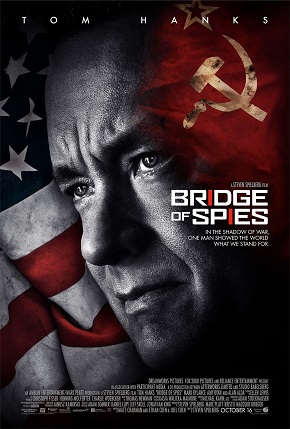
Film Review: Bridge of Spies (dir by Steven Spielberg)


Bridge_of_Spies_poster

I saw Bridge of Spies last weekend and I’m a little bit surprised that I haven’t gotten around to writing a review until now.  After all, this is not only the latest film from Steven Spielberg but it also stars the universally beloved Tom Hanks and it’s currently being touted as a possible best picture nominee.  (Mark Rylance, who plays an imprisoned spy in this film, is also emerging as a front runner for best supporting actor.)  The screenplay was written by the Coen Brothers.  (Oddly enough, films scripted by the Coens — like Unbroken, for instance — tend to be far more conventional and far less snarky than films actually directed by the Coens.)  Even beyond its impressive pedigree, Bridge of Spies is a historical drama and by now, everyone should know how much I love historical dramas.

And the thing is, I enjoyed Bridge of Spies.  I thought it was a well-made film.  I thought that Tom Hanks was well-cast as an idealistic lawyer who stands up for truth, justice, and the Constitution.  I agreed with the pundits who thought Mark Rylance was award-worthy.  It’s become a bit of a cliché for Amy Ryan to show up as an understanding wife but it’s a role she plays well and she made the most of her scenes with Tom Hanks.  Steven Spielberg knows how to put a good film together.  This really should have been a film about which I rushed home to rave.

And yet, at the same time, I just could not work up that much enthusiasm for Bridge of Spies.  It’s a good film but there’s nothing unexpected about it.  There’s nothing surprising about the film.  Steven Spielberg is one of the most commercially successful directors in history and the American film establishment pretty much orbits around him.  He’s good at what he does and he deserves his success.  Unfortunately, he doesn’t have a subversive bone in his body.  Bridge of Spies is a lot like his previous Oscar contender, Lincoln.  It’s very well-made.  It’s the epitome of competence.  But there’s not a truly surprising or unexpected moment to be found in the film.

And I have to admit that, even as I enjoyed Bridge of Spies, I still found myself frustrated by just how risk-adverse a film it truly was.  After all, we’re living in the age of Ex Machina, Upstream Color, and Sicario.  Bridge of Spies is a good movie and, in many ways, it provides a very valuable history lesson.  (The film’s best moments were the one that contrasted the U.S. with the cold desolation of communist-controlled East Germany.)  But, overall, it just didn’t make a huge impression on me.  It was just a a little bit too safe in its approach.

The Cold War Relived Through Bridge of Spies


BridgeofSpies

Lisa Marie is not the only history nerd in this here place. I don’t think it was a coincidence that TSL’s co-founders ended up being both history nerds. We both love films the depict historical events. Some of them turn out to be great while some end up on the trash heap.

One filmmaker who has made a career late in his life of making historical films is Steven Spielberg. The same one who gave us great blockbusters in the scifi, thriller and fantasy genres has also given us some excellent historical films such as Saving Private Ryan, Schindler’s List, Munich and Lincoln.

We have the first trailer for Spielberg’s latest film which is based on the real-life events surrounding the 1960 U-2 spy plane incident where American pilot Francis Gary Powers was shot down while on a mission over the Soviet Union and was subsequently swapped back into US custody for a Soviet spy that the Americans were holding.

Bridge of Spies showcases the events which led to that swap and how contentious the negotiations had been before it finally came about. Everyone knows the Cuban Missile Crisis put the world very close to nuclear annihilation, but what many don’t know is how the Gary Powers Incident also pushed the two nuclear powers very close to the brink.

Bridge of Spies is set for an OCt. 16, 2015 release date…just in time for the start of Lisa Marie’s favorite film season: Awards Season.