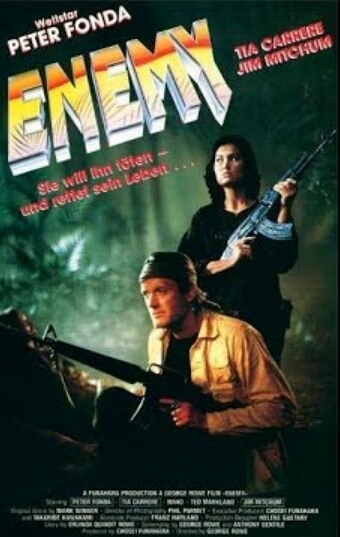
Enemy (1990, directed by George Rowe)


At the height of the Vietnam War, CIA agent Ken Andrews (Peter Fonda) disguises himself as a French journalist, slips into North Vietnam, assassinates a VC general, and then makes his escape into the jungle.  Unfortunately, the helicopter that was meant to take Ken to safety is blown up, leaving Ken stranded in the jungle with a beautiful Chinese spy named Mai Chang (Tia Carrere).

With the VC after both of them, Ken and Mai will have to set aside their initial enmity and work together to make it out of North Vietnam.  In between endless scenes of the two of them making their way through the jungle, there are battle scenes where the VC manage to shoot everything except for the two people that they’re after.

This cheap film was shot in 1988 but it sat on the shelf for two years.  The script, which attempts to be a rumination on the nature of war, feels as if it was written even earlier.  It will always be strange to me how Peter Fonda went from starring as bikers and aging hippies in films like Easy Rider and The Wild Angels to playing CIA agents and military officers in films like this one.  Peter Fonda was a stiff actor but, in this case, it works for his character, who, after all, is meant to be a man who has to keep his emotions under control.  Tia Carrere is beautiful and seems to be trying really hard to give a convincing performance despite being miscast as a grim spy.  Fonda and Carrere do have a surprising amount of chemistry together.  The romance that develops between them actually feels believable.

Enemy suffers from too much padding.  It’s a two-person show and those two people spend a lot of time walking through the jungle.  Some of the action scenes are exciting and the idea of an American spy falling in love with a Chinese spy is interesting but the ending, while action-packed, still feels like a cop out that’s designed to give Ken an easy out.  You can almost hear Ken thinking to himself, “I really dodged a bullet there.”

Retro Television Review: Malibu, CA 1.2 “Surf Sale”


Welcome to Retro Television Reviews, a feature where we review some of our favorite and least favorite shows of the past!  On Thursdays, I will be reviewing Malibu CA, which aired in Syndication in 1998 and 1999.  The entire show is currently streaming on YouTube!
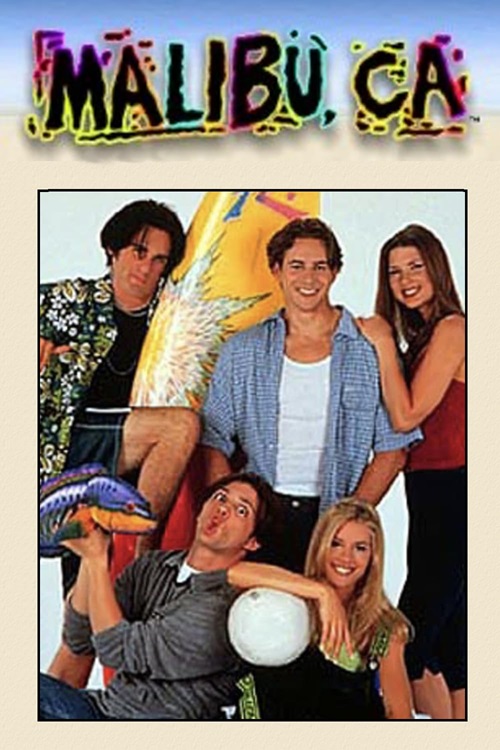
As my friend Mark tried to warn me, this show sucks!

Episode 1.2 “Surf Sale”

(Dir by Gary Shimokawa, originally aired on October 18th, 1998)

Why am I doing this to myself?

That’s the question that I asked myself as I watched the second episode of Malibu, CA.  Why do I always decide to review the worst shows that I can find?  And when I call Malibu, CA the worst, that’s not an exaggeration.  The second episode, which I just watched, is 21 minutes of pure pain.  Producing bad television was, admittedly, Peter Engel’s trademark but not Malibu, CA goes beyond just being bad.  I mean, this is the first show that I’ve ever seen that makes One World seem brilliant by comparison.

The second episode finds Murray upset because a land developer is planning on tearing down The Surf Shack and replacing it with a luxury condo.  The Surf Shack is exactly what it sounds like.  It’s a shack that sells surfing equipment.  Murray appears to be the Surf Shack’s only employee.  Murray says that Surf Shack is his life.  The Surf Shack must be saved and Scott and Jason are going to help Murray because they think helping Murray will impress their next-door neighbor, Samantha.  Samantha is into causes and stuff.  Plus, Murray has been her friend since kindergarten.

Murray is also the son of a wealthy man so Jason and Scott suggest that Murray ask his father to buy the Surf Shack.  Murray says that he can’t because his father would then demand that Murray go to school, wear socks, and comb his hair.  With the Surf Shack doomed, Murray gets a job working as a dishwasher at Peter’s restaurant but then he nearly burns the place down after he accidentally knocks out the chef by throwing a dish in his direction.

Murray finally agrees to ask his father to buy the Surf Shack.  Murray is prepared to sell out.  But then Peter, to make his sons happy, buys the Surf Shack from Murray’s dad and then makes Murray the manager.  If Peter had the money to buy the Surf Shack, why didn’t they just go to him to begin with?

Meanwhile, Stats the Lifeguard, who desperately wants Scott to notice her, is harassed by Haji (Maulik Pancholy), a guy whose life she saved from drowning.  Haj is Indian so the whole joke here is that Haj has an accent and tends to say stuff like, “In my country, if you save someone’s life, you are destined to be together.”  However, Stats is in love with Scott and Haj isn’t willing to fight for her love because “It looks like he goes to the gym.”  Haj trips over another girl on the beach and decides that she is the one who saved his life.  I’m not sure why.

This was bad.  It’s hard to put into words how bad this episode was.  The storyline was stupid but that’s to be expected from a show produced by Peter Engel.  Instead, this episode was bad because 1) there wasn’t a single likable person in the episode (even Stats ended up being pretty rude to Haj) and 2) there did not appear to be a single person in the cast capable of reciting their dialogue without sounding like they were reading it off of a cue card.  The episode was bad because Murray’s issue with his dad seems to be that his dad expects his teenage son to actually go to school and not be a brain-dead washout.  The episode was bad because the Surf Shack itself sits on the ugliest and smallest part of the beach and it’s hard to understand why anyone would want to put a condo in that location.  (With mountains on either side, there’s really not any room for a condo.)  Finally, the episode was dumb because it had the same plot as the pilot: Developers want build something on the beach so Scott and Jason pretend to care in an effort to impress Sam.  Just as the pilot featured a disaster at Peter’s restaurant, this episode features a disaster at Peter’s restaurant.  It’s only the second episode and this show is already repeating itself.

Oh well!  At least there’s only 50 episode left….
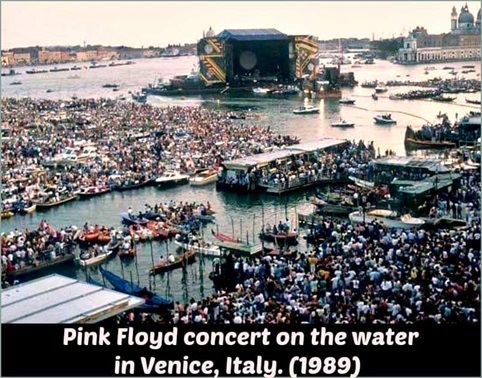
Concert Film Review: Pink Floyd: Live in Venice (dir by Wayne Isham and Egbert van Hees)


I’m actually a bit embarrassed to say that Venice is my favorite city in Italy.

I mean, it’s such a cliché, isn’t it?  Tourists always fall in love with Venice, even though the majority of us really don’t know much about the city beyond the canals and the gondolas.  I spent a summer in Italy and Venice was definitely the city that had the most American visitors.  Sadly, the majority of them didn’t do a very good job representing the U.S. in Europe.  I’ll never forget the drunk frat boys who approached me one night, all wearing University of Texas t-shirts.  One of them asked, “Are you from Texas?”

“No, sweetie, ah’m from up north.” I lied.

“You sound like you’re from Texas!” his friend said.

“No, ah’m not from Texas,” I said, “Sorry, y’all.”

I mean, that’s not something that would have happened in Florence or even Naples!  In Rome, handsome men on motor scooters gave me flowers.  In Venice, on the other hand, I had to deal with the same jerks that I dealt with back home!

That said, I still fell in love with Venice.  And yes, it did happen while I was riding in a gondola.  At that moment, I felt like I was living in a work of art.  I can still remember looking over the side of the gondola and watching as a small crab ran across someone’s front porch.  That’s when I realized that, by its very existence, Venice proved that anything was possible.

I’ve often heard that Venice is slowly sinking.  That Venice has a reputation as being a dying city would probably have come to a surprise to the drunk Americans who were just looking for a girl from Texas that summer.  And it would certainly come as a surprise to anyone who watched the 1989 concert film, Pink Floyd Live In Venice.

Just as with last week’s Pink Floyd concert in Pompeii, this was something that I watched more because of where it took place than who was performing.  There are some very good Pink Floyd songs and there are others that are just silly and overly portentous.  As well, I’ll always have mixed feelings about Pink Floyd due to the fact that — bleh! — Roger Waters was a founding member.  Whenever I hear any of their songs, I automatically find myself looking for coded moments of anti-Semitism.  Fortunately, by the time the band played in Venice, Waters had left the group.  As a result, I didn’t feel quite as conflicted over watching the Venice concert as I did the Pompeii concert.

As for the show, the band performed while floating on a barge while some members of the audience sat in gondolas.  It was a lovely sight that captured the otherworldly romance of Venice.  The concert itself was a bit uneven, with the first half in particular dominated by songs that just seemed to go on and on and which often exposed the limits of lead singer David Gilmour’s vocal range.  The second half was a greatest hits collection and it was a notable improvement.  If Gilmour’s raspy vocals seemed limited during the first half of the concert, they were perfect for songs like Comfortably Numb and Money.  The highlight of the concert and the film was undoubtedly the performance of The Great Gig In The Sky, which created a feeling of the heavens descending upon Venice.

In the end, Venice was the true star of the concert.  For a dying city, it looked beautiful and vibrant.  I can’t wait to return.

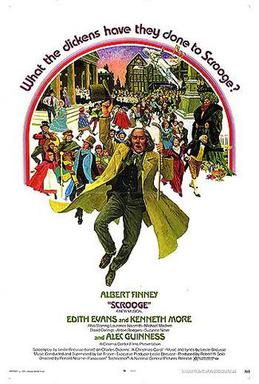
Scenes That I Love: Albert Finney Hates People In Scrooge


Today would have been the 88th birthday of the great British actor, Albert Finney!

And today’s scene that I love features Albert Finney in the role of history’s most famous miser.  In 1970’s Scrooge, Finney played the title role and, early on, his worldview was perfectly captured by a song called I Hate People.  Finny was only 34 when he played Ebenezer Scrooge but he does a wonderful job of bringing the character to life and he’s just as convincing when he’s being good as he is when he’s being bad.  Finney is the main reason why Scrooge is my personal favorite of all of the versions of A Christmas Carol.

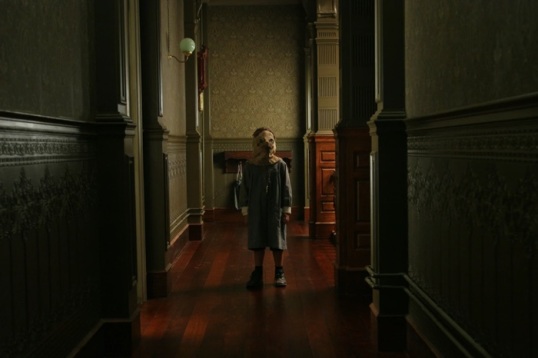
4 Shots From 4 Films: Special J.A. Bayona Edition


4 Shots From 4 Films is just what it says it is, 4 shots from 4 of our favorite films. As opposed to the reviews and recaps that we usually post, 4 Shots From 4 Films lets the visuals do the talking!

Today, we wish a happy birthday to the great Spanish director, J.A. Bayona!  It’s time for….

4 Shots From 4 J.A. Bayona Films

The Orphanage (2007, dir by J.A. Bayona, DP: Oscar Faura)

The Impossible (2012, dir by J.A. Bayona, DP: Oscar Faura)

A Monster Calls (2016, dir by J.A. Bayona, DP: Oscar Faura)

Society of the Snow (2023, dir by J.A. Bayona, DP: Pedro Luque)

Music Video of the Day: Jet City Woman by Queensryche (1991, directed by ????)


This song is straight forward by Queensryche standards.  Jet City is a nickname for the band’s then-hometown of Seattle and, at the time this song was written and recorded, Geoff Tate was married to a flight attendant.

The video is also straight forward, focusing on the band performing in front of a crowd of appreciative fans.

Enjoy!

Late Night Retro Television Review: Monsters 2.7 “Jar”


Welcome to Late Night Retro Television Reviews, a feature where we review some of our favorite and least favorite shows of the past! On Wednesdays, I will be reviewing Monsters, which aired in syndication from 1988 to 1991. The entire series is streaming on YouTube.

This week, Monsters brings together horror and noir!

Episode 2.7 “Jar”

(Dir by Bette Gordon, originally aired on November 1st, 1989)

Having been hired to find a missing woman, cynical private investigator Jack Bateman (Richard Edson) begins his investigation at the seedy bayou motel where the woman was last seen.  However, Mr. Hallet and Jack are not the only people at the hotel.  Ann Spiros (Gina Gershon) arrives with her loutish husband, the wealthy George (Ed Kovens).  Ann wants to get rid of her husband and she and Jack seem to share an immediate attraction to each other.  Does Mr. Hallet have something hidden away in all of his mason jars that could help Ann with that?  Of course, he does.  The show is called Monsters.  This episode is called Jar.  One doesn’t have to be a genius to figure out that something pretty extreme is about to happen in that isolated hotel and that it’s going involve something in a jar.

(Someday, remind me to write a post about all of the historical figures who had certain body parts preserved in a jar.  I don’t know why that would happen but no matter.  You can still see a few inches of Napoleon if you want to, though it might not be the part of him that you want to see.)

From the sultry saxophone on the soundtrack to the shadow visual style, this episode announces itself from the start as being an homage to film noir.  It works far better than I think anyone would have any reason to expect.  The bayou hotel is wonderfully atmospheric and steamy location.  One can literally feel the humidity that runs through this episode.  Though he was a bit young for the role, Richard Edson is a convincing hard-boiled detective.  Gina Gershon, as always, is a perfect femme fatale and seems to relish the opportunity to keep the audience guessing as to he motivations.  Ed Kovens is properly unsympathetic as the wealthy husband.  (Can you imagine how unpleasant noirs like this would be if the husbands were decent guys who just minded their own business?  It’s a good thing that they’re always louts.)  Finally, Fritz Weaver gives a nicely eccentric performance as old Mr. Hallet.  This episode is full of schemes and forbidden passions.  Fans of noir will appreciate the episode.

What’s especially surprising is just how well the supernatural and the monsters are all integrated into the noir format.  The monsters feel as if they belong in the story just as much as the hard-boiled detective and the sultry wife.  It takes a while for the monsters to do their thing but when they do, they definitely make an impression.

Monsters can be a bit of uneven show.  But Jar is definitely a triumph.

The Films of 2024: One More Shot (dir by James Nunn)


It’s the night of the President’s State of the Union address and it appears that someone is planning to blow up the capital and spare everyone from having to sit through it.  (Personally, I’ve always found the pomp and circumstance surrounding the State of the Union address to be the opposite of what the Founding Fathers probably envisioned.  Presidents should go back to just sending Congress a note at the start of the year.)  Unfortunately, the bomb itself is radioactive so, though Americans will be spared the speech, Washington D.C. will still be reduced to an atomic wasteland.  Canceling the speech and the special Congressional session seems like an obvious solution but the President’s approval ratings are tanking and he’s hoping a good State of the Union will energize his reelection campaign.

Navy SEAL Jake Harris (Scott Adkins) has been tasked with escorting terrorist suspect Amin Mansur  (Waleed Elgadi) from Poland to Washington so that CIA director Mike Marshall (Tom Berenger, looking generally annoyed) can interrogate Mansur about the location of the bomb.  A Baltimore airport has been cleared out so that Mansur can be transferred to FBI custody with as little attention as possible.  Marshall takes a few minutes to yell at Jake, because this is an action film and action heroes always get yelled at by their superiors.  No sooner has Jake been yelled at then a bunch of mercenaries attack the airport.  It turns out that they also want Mansur and they’re willing to kill everyone in the airport to both get him and to make sure that the bomb is properly delivered.

Jake finds himself fighting for his life and also in the position of having to protect the terrorist that he brought to America.  However, as the night progresses, Jake discovers that Mansur is not the terrorist mastermind that he assumed and that the mercenaries are working for an enemy who is very close to home.

One More Shot is a sequel to 2021’s One Shot and, like that film, it’s shot and edited to make it appear as if the action is playing out in one continuous take.  The camera never seems to stop roaming through the airport, occasionally catching a mercenary or sometimes even Jake hiding in the shadows and waiting for a chance to attack.  It’s a gimmick but it’s an undeniably effective gimmick, one that is especially well-used in the film’s many battle scenes and which keeps the audience on its toes.  One More Shot has some of the most effective gunfights that I’ve recently seen and a lengthy sequence where Jake, Mansur, and a few others attempts to drive their way through a gauntlet of mercenaries is as genuinely exciting as anything you’d expect to find in an action film with bigger budget.

In the end, One More Shot feels like a video game come to life, with everything that implies.  One More Shot is an unapologetic action film, which is to say that this is not the film to watch if you’re looking for extensive character development or a nuanced debate about terrorism and American foreign policy.  We don’t really find out much about Jake Harris, other than the fact that he’s a good shot and he’s not easily intimidated.  Of course, that’s all we really need to know.  It’s an exiting 100 minutes and that’s all that it really needs to be.

Real Men (1987, directed by Dennis Feldman)


Due to a chemical spill that is spreading through the ocean, life on Earth is going to end in five years unless something is done.  A group of friendly alien offer to give Earth either the “Good Package” or the “Big Gun.”  The Good Package can clean up the ocean.  The Big Gun is a big gun.  They both sound good to me!  The aliens only want a glass of water in return and they want that glass to be delivered by CIA Agent Pillbox.

Unfortunately, Pillbox has been killed in the field so the government tracks down a meek office worker named Bob Wilson (John Ritter) who looks just like Pillbox.  Tough and streetwise Nick Pirandello (Jim Belushi) is sent to recruit Bob and take him to the aliens.  Trying to stop Nick and Bob are a group of rogue CIA agents who would rather get the Big Gun than the Good Package.  Nick teaches Bob how to be a “real man” and Bob teaches Nick how to be a real friend.  They also beat up clowns.

A box office failure that did even worse with the critics, Real Men is a movie that was saved by cable.  When I was a kid, Real Men used to show up on HBO all the time.  Whatever flaws the film may have had, the mix of John Ritter’s physical comedy, Jim Belushi’s wiseguy attitude, and the action scenes made it the type of movie that was ideal for home viewing, especially if you had just gotten out of school and wanted to watch something before your parents came home and asked if you had done your homework.  Real Men was fun enough to hold up to repeat viewings but it was also slight enough that it wasn’t a huge tragedy if the channel got changed before the movie ended.

When I rewatched Real Men, I thought the film’s storytelling could have been tighter but it still turned out to be better than I was expecting.  There were a lot of classic buddy movies released in the 80s and while Real Men may not be the equivalent of a 48 Hours or a Midnight Run, John Ritter and Jim Belushi are still an entertainingly mismatched team.  Ritter again shows that he was a master at physical comedy while Belushi provides sarcastic commentary from the side.  A lot of the odd couple-style banter is predictable (Bob doesn’t smoke but Nick does) but Ritter and Belushi deliver their lines with enough conviction to still make it work.  Nick teaches Bob to believe in himself and Bob is able to both save the world and tell off the neighborhood bullies.  The film’s mix of action, science fiction, and broad comedy confounded critics in 1987 but it holds up today.