The Films of 2024: Bob Marley: One Love (dir by Reinaldo Marcus Green)


Bob Marley: One Love opens in 1976.  With Jamaica torn by political violence, Reggae superstar and devout Rastafari Bob Marley (Kingsley Ben-Adir) announces that he will be holding a concert for peace.  When Marley, his wife Rita (Lashana Lynch), and several members of the band are shot in a home invasion, a disillusioned Marley sends his wife and children to stay with his mother in Delaware and then heads to London with his band.

The majority of Bob Marley: One Love centers around the years that Marley spent outside of Jamaica.  In London, Marley struggles to come up with a concept his new album, finally finding inspiration in the soundtrack for Otto Preminger’s Exodus.  Marley explains his philosophy and Rastafari beliefs to journalists and listeners, many of whom are shocked by Marley’s claim to not care about money.  With more and more countries declaring their independence and freeing themselves from colonialism, Marley makes plans to perform in Africa and to spread his message of love and freedom.  Rita, who eventually rejoins Bob when he tells her that he cannot create his music without her presence, tells Bob that he needs to return to Jamaica and perform his peace concert.  Bob remains stubborn but when he’s diagnosed with a rare-form of cancer, he realizes that it’s time for him to return to his home and not just preach about peace and forgiveness but to extend it as well.

Musical biopics have been all the rage since the release of Bohemian Rhapsody and Bob Marley: One Love features enough of Marley’s music that it’s not surprising that the film was a crowd-pleaser when it was released in February.  The film was clearly made by people who loved Marley’s music.  Kingsley Ben-Adir has a strong screen presence and gives a charismatic performance as Bob but, for whatever reason, Bob Marley remains something of a distant figure throughout the film.  We learn a bit about what motivated Bob Marley as a musician and as an activist but we still don’t really feel that we get to know him as a person.  (Nor does the film delve too deeply into the details of Marley’s Rastafari beliefs, presenting it as being more about good vibes than a belief in the divinity of Ethiopia’s emperor, Haile Selassie I.)  The film hits all of the expected biopic plot points like clockwork.  It’s almost too efficient for its own good, lacking any of the spontaneity that makes real life so memorable.  It leaves the viewer very much aware that they’re watching a well-made film.

But, one might be justified in dismissing that as just being nit-picking.  The film is full of Marley’s music and it ends with a good deal of archival footage that allows the viewer to see both Bob Marley’s real-life charisma and the joy that he took in performing.  As I said, the film is a crowd pleaser.  While it doesn’t quite provide the insight into Marley’s life that Rocketman did for Elton John, it’s still a better-made and less cynical production than Bohemian Rhapsody.  Even if the film is a bit too conventional for its own good, the love of the music still comes through.

The Rough Tough West (1952, directed by Ray Nazarro)


Steve Holden (Charles Starrett) is hired by an old friend, Jack Mahoney (played by Jock Mahoney), to serve as the sheriff of a frontier town.  Steve soon discovers that his old friend has been corrupted by power and is plotting to cheat the locals out of their land and the gold that the land holds.  Despite their friendship, Steve knows that Jack has to be stopped and made to see the errors of his way.  It’s a good thing that Steve is secretly the Durango Kid and that his old sidekick, Smiley Burnette, is the town’s police chief.  But even if Jack Mahoney does eventually see the error of his ways, will it be soon enough to stop his out-of-control henchmen?

This was one of the last of the Durango Kid films and it’s heavy on stock footage and Smiley Burnette musical numbers.  It has all of the usual horse chases and gunfights but making the villain an old friend of the Durango Kid adds a little more emotional weight to this entry than some of the other Durango Kid films.  As always, Charles Starrett is a strong western hero and Smiley Burnette’s antics are nowhere nearly as annoying as the antics of some of the other western sidekicks who were populating matinee movie screens in 1952.  Western fans should enjoy this fast-paced and undemanding film.

This is not the first time that Jock Mahoney played a friend of the Durango Kid who is named Jack Mahoney, though I think the Jack Mahoney who appeared in Pecos River, Junction City, Smokey Canyon, The Hawk of Wild River, and The Kid From Broken Gun was meant to be a different character than the one who appeared in The Rough, Tough West.  If Smiley Burnette could have a rotating cast of musicians who followed him from town-to-town, then the Durango Kid could very well have known multiple Jack Mahoneys.


Retro Television Review: T and T 3.8 “The Mysterious Mauler”


Welcome to Retro Television Reviews, a new feature where we review some of our favorite and least favorite shows of the past! On Fridays, I will be reviewing T. and T., a Canadian show which ran in syndication from 1987 to 1990.  The show can be found on Tubi!

This week, Mr. T enters the wrestling ring and we all wonder what took so long.  Seriously, T and T, do you not realize who is starring on your show?

Episode 3.8 “The Mysterious Mauler”

(Dir by Alan Simmonds, originally aired on February 24th, 1990)

Teri and T.S. Turner are hired to investigate a series of accidents that have afflicted the wrestlers of the Galactis Wrestling Federation.  With the GWF royal championship coming up, all of the contenders are being taken out of contention before they even step into the ring!  Teri and T.S. think that a wrestler known as the Masked Mauler may be involved but the head of GWF, Mr. Barnum (Elias Zarou, chewing every available piece of scenery), refuses to reveal the Mauler’s true identity.  Instead, Mr. Barnum is more interested in putting a “hood” on T.S. Turner and sending him into the ring.

From the start, this episode confused me.  It opened with Terri excitedly telling T.S. that their money woes were over because they had been hired by an insurance company to investigate all of the accidents that have been taking place in the GWF.  Now, I could understand the company hiring Turner because he’s an established detective but this episode seems to suggest that Terri is now a private investigator as well.  But, in every previous episode, Terri has been portrayed as being an attorney who is almost as prominent and as successful as her sister Amy.  Terri suddenly working for an insurance company as an investigator doesn’t really make sense.  Aren’t the Taler sisters supposed to be crusading attorneys who have dedicated their practice to defending the little guy from heartless corporations?  But now, Terri is suddenly an enthusiastic insurance investigator.  Terri sold out!

And yet, this episode actually isn’t that bad, at least not by the usual standards of T and T.  From the minute I learned this episode was set in the world of professional wrestling, I knew that Mr. T would eventually end up in the ring while wearing a sparkly uniform and that’s exactly what happened.  Mr. T perfectly fits into the flamboyant world of pro-wrestling and he certainly does seem to be in a good mood in this episode.  From the second season on, T and T has often failed to take advantage of the fact that half of their duo was Mr. T.  This episode allows Mr. T to be himself.

As for the Mauler, his identity is eventually revealed.  He owns a pizzeria and wears a mask so that his wife won’t discover that he’s a wrestler.  The Mauler may be fearsome in the ring but, outside of it, he’s just trying to live a peaceful life and make an appetizing pizza.  Good for him!

Scene That I Love: Fred Astaire Dances With A Hat Rack In Royal Wedding


Fred Astaire was born 125 years ago, on this date, in Omaha, Nebraska.

Today’s scene that I love comes from 1951’s Royal Wedding.  Just consider that Astaire was in his fifties when he performed this scene.

4 Shots From 4 Films: Special David MacKenzie Edition


4 Shots From 4 Films is just what it says it is, 4 shots from 4 of our favorite films. As opposed to the reviews and recaps that we usually post, 4 Shots From 4 Films lets the visuals do the talking!

Today, the Shattered Lens wishes a happy birthday to Scottish director, David MacKenzie!  It’s time for….

4 Shots From 4 David MacKenzie Films

Young Adam (2003, dir by David MacKenzie, DP: Giles Nuttgens)

Starred Up (2014, dir by David MacKenzie, DP; Michael McDonough)

Hell or High Water (2016, dir by David MacKenzie, DP: Giles Nuttgens)

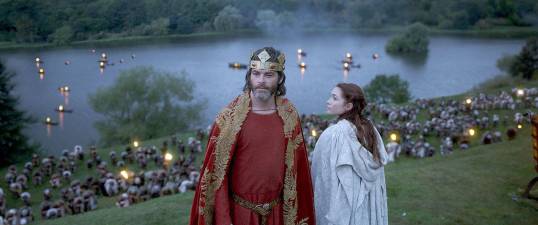
Outlaw King (2018, dir by David MacKenzie, DP: Barry Ackroyd)

Live Tweet Alert: Join #FridayNightFlix For Double Trouble!


As some of our regular readers undoubtedly know, I am involved in a few weekly live tweets on Twitter and Mastodon.  I host #FridayNightFlix every Friday, I co-host #ScarySocial on Saturday, and I am one of the five hosts of #MondayActionMovie!  Every week, we get together.  We watch a movie.  We tweet our way through it.

Tonight, at 10 pm et, we’ve got 1992’s Double Trouble, starring David Carradine, Roddy McDowall and The Barbarian Brothers!

If you want to join us this Friday, just hop onto twitter, start the movie at 10 pm et, and use the #FridayNightFlix hashtag!  It’s a friendly group and welcoming of newcomers so don’t be shy.

Double Trouble is available on Prime and Tubi!  See you there!

Late Night Retro Television Review: Highway to Heaven 2.9 “The Secret”


Welcome to Late Night Retro Television Reviews, a feature where we review some of our favorite and least favorite shows of the past!  On Thursdays, I will be reviewing Highway to Heaven, which aired on NBC from 1984 to 1989.  The entire show is currently streaming on Freevee and several other services!

This week, Jonathan’s in trouble and so is the audience.

Episode 2.9 “The Secret”

(Directed by William Claxton, originally aired on November 27th, 1985)

This is an odd episode.

While heading to visit yet another one of Mark’s former cop buddies, Jonathan stops the car at a country store.  He spots a young man being bullied by three rednecks.  Jonathan politely asks the rednecks to back off.  When the main redneck tries to attack Jonathan, Jonathan responds by punching the guy out.

UH-OH, JONATHAN’S BROKEN A RULE!  He immediately gets summoned back to Heaven for a disciplinary hearing and, as a result, he’s not in the majority of this episode.

I’m going to assume that Landon had something else going on that caused him to skip out on the majority of this episode.  (This was also the first episode of the series to be directed by someone either than Landon or Victor French.)  Still, having Jonathan throw a punch seems out-of-character.  Over the course of the first two seasons, Jonathan has dealt with a lot of bullies and usually, he just uses his powers to make their car break down or to make them trip over a branch.  The Boss has never had a problem with that so you have to wonder why Jonathan didn’t just make the bully’s car radiator start to overheat or something.  As well, it seems like Jonathan was acting in self-defense and to protect the guy who was being bullied.

Anyway, the important thing is that Mark has to visit his friend on his own.  Wes Fowler (Barry Jenner) has been married to Carol Fowler (Linda Miller) for nearly 18 years.  When they first married, Carol told Wes that she couldn’t have children and, as a result, they decided to adopt a young girl that they named Heather.  Shortly after adopting Heather, Carol did get pregnant and gave birth to Shelley.  Having recently turned 18, Heather (played by Leslie Bega) is now curious about who her birth mother was.  A little research leads to her discovering that her birth mother is …. CAROL!

Carol explains that Heather’s father was an ex-boyfriend who left town as soon as he discovered that Carol was pregnant.  When Carol married Wes, she wanted to adopt the daughter she abandoned so she lied about not being able to get pregnant so that Wes would agree to the adoption.  When Wes finds out about this, he gets angry and, along with Shelley (played by a young Shannen Doherty), he moves out of the house.

Can Mark put this family back together again?  Of course, he can.  And you better believe Jonathan returns to Earth during the show’s final moments.  This is Highway to Heaven, after all.

This episode felt off to me.  Some of it was the absence of Jonathan.  Some of it was the fact that, even when working solo, Mark didn’t really do that much other than stand in a corner and observe.  Both the soap opera dramatic and the performances were so over-the-top that they were impossible to take seriously.  This almost felt like a parody of Highway to Heaven as opposed to an actual episode.

Oh well.  So much for this episode.  Hopefully, next week’s episode, which apparently involves a man being mistaken for a monster, will be a bit better.  We’ll find out soon!

The Films of 2024: The Beautiful Game (dir by Thea Sharrock)


When we first see Vinny (Michael Ward), he is watching a group of children play soccer.  (Yes, I know that both this movie and the rest of the world calls it football.  I grew up calling it soccer.)  He looks at the jerseys of the players and provides a running commentary as they play.  “We’ve got David Beckham, we’ve got a big Messi, we’ve got a little Messi, we’ve got a classic Brazilian Messi….”  Finally, Vinny runs out onto the field and kicks the ball himself until the parents of the children tell him to go away.

Watching Vinny is a legendary scout named Mal Bradley (Bill Nighy).  Mal approaches Vinny and convinces to come meet his “dream team,” a collection of homeless men who all play soccer.  Mal explains that the men are going to be representing England at the annual Homeless World Cup tournament in Rome.  Teams made up of homeless from all over the world will be competing.  Mal explains that it’s not all about winning.  It’s about giving the players a chance to prove something to themselves.  Mal reveals that he wants Vinny to join the team.  Vinny announces that he’s not homeless.  He has a job.  He has a family.  Vinny then goes to the car in which he is currently living.

Eventually, Vinny changes his mind and agrees to accompany the team to Rome.  The team is welcoming but Vinny still struggles to open up to them.  Some of it is due to his pride.  Unlike his teammates, Vinny actually did once play professional soccer, though not for long.  Some of it is due to Vinny being in denial about his status as a homeless person.  When a teammate opens up about being a recovering heroin addict, Vinny leaves the room.  When one player reveals that he’s a compulsive gambler and another talks about his own failures as a father, Vinny tries to change the subject.  What Vinny doesn’t know is that he and Mal have a past connection, one that has left Mal wracked with guilt.

There’s a lot going on in The Beautiful Game.  The film focuses on Vinny, Mal, and England’s team but it also finds room for subplots involving the Italian team, the South African team, the American team, and the Japanese team.  Adlar (Robin Nazari), a Kurdish refugee who plays for England, has to decide whether to play against a team led by a player who was on the opposite side of the Syrian Civil War.  Sister Protasia (Susan Wokoma), coach of the South African team, struggles to get a visa for one of her players.  Rosita (Christina Rodlo) of the American team hopes to play well enough to receive a college scholarship.  Mika (Aoi Okuyama), the young coach of the Japanese team, struggles to inspire her older players.  It can sometimes be difficult to keep track of it all but, at the same time, it does capture the idea of the Homeless World Cup being a truly international event, one that gives hope and opportunity to people across the world.  For Rosita and Vinny, the competition is a way to change the direction of their lives.  For the Japanese team, the competition is way to see the world and enjoy themselves.  And for Mal, the competition is a chance to give something back to the game that he loves.

The Beautiful Game is overlong and a bit overstuffed but it still occasionally brought tears to my mismatched eyes.  It’s a film with a big heart but enough of an edge that it avoids the trap of being overly sentimental.  It’s a well-acted film, especially by Michael Ward and Bill Nighy.  In the end, I think my favorite performances came from Aoi Okuyama and the members of the Japanese team.  Early on, they say that all they want to do is score one goal against another team.  When they do, their joy is infectious.  One might even say it’s beautiful.