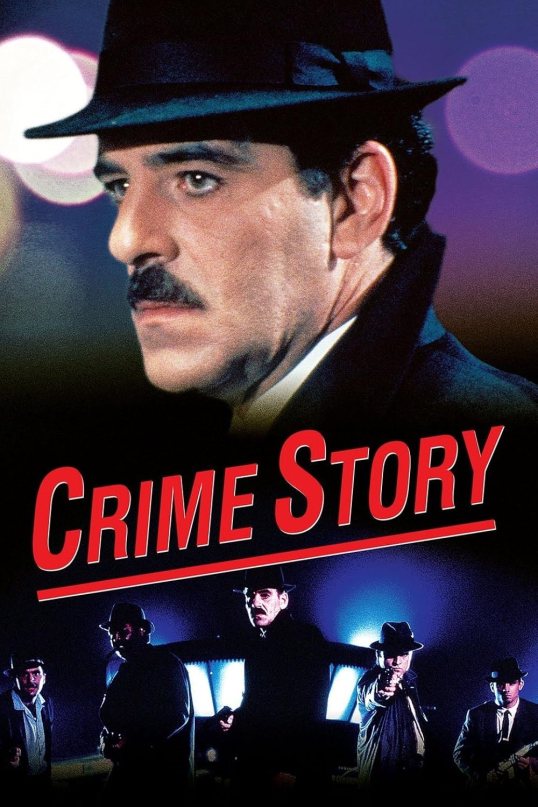
Welcome to Retro Television Reviews, a feature where we review some of our favorite and least favorite shows of the past! On Mondays, I will be reviewing Crime Story, which ran on NBC from 1986 to 1988. The entire show can be found on Tubi!
Today, we start the second season of Crime Story!
Episode 2.1 “The Senator, The Movie Star, and the Mob”
(Dir by John Nicolella, originally aired on September 22nd, 1987)
The second season of Crime Story opens with Torello, Abrams, and the Task Force still in Las Vegas. With Luca and Pauli apparently dead as a result of that nuclear blast at the end of the first season, various gangsters are trying to position themselves as Manny Weisbord’s new man in Vegas. Carlo Mastrangelo (Stephen McHattie) is the latest contender.
(And yet, it’s hard not to notice that, during the opening credits, both Tony Denison and John Santucci are listed. Neither appears in this episode other than in the pictures displayed at their funeral. But the credits don’t seem quite convinced that Luca and Pauli are dead.)
Crusading Senator Rourke (Kevin Spacey, in his first major television role) comes to Vegas. Rourke—the son of a former bootlegger and a presidential contender who speaks with a slightly abrasive Boston accent—is holding hearings on the Mob. Also arriving in Vegas is Pamela Palmer (Jenny Wright), a platinum-blonde movie star known for her glamorous sex appeal but who spends almost the entire episode hiding a black eye behind her sunglasses. As Torello discovers, Pamela is Mastrangelo’s occasional girlfriend, but she’s also having an affair with Senator Rourke.
Anyone who has studied history or who has an interest in conspiracy theories will be able to see the obvious real-world parallels. Rourke, with his bootlegger father and his less-than-ideal private life, is an obvious stand-in for both John and Robert F. Kennedy. (Of course, when seen today, the casting of Kevin Spacey in the role brings a whole other dimension to it. Now we instinctively distrust Rourke as soon as we see him, despite the fact that the show portrays him as sincere in his crusade against the Mob.) Pamela is Marilyn Monroe. Mastrangelo and his second-in-command Bobby Meeker (Michael Wincott) bring to mind Sam Giancana and Johnny Roselli, two of the mobsters whose names regularly turn up in JFK assassination lore.
In real life, a heartbroken Marilyn Monroe overdosed and both Kennedy brothers were assassinated. On Crime Story, Torello is able to prevent Mastrangelo from assassinating Rourke, and an emotionally strengthened Pamela is able to leave Las Vegas for what will hopefully be a brighter future than the one that awaited Marilyn. This episode feels like a work of alternative history, one in which the Kennedys lived up to their promise and one determined man like Mike Torello could prevent a nation from being traumatized.
For a history nerd like me, this episode was enjoyable. It held my interest. I liked seeing how the show reimagined history. At the same time, Luca and Pauli were definitely missed. A format in which Torello deals with a villain-a-week doesn’t carry the same emotional punch as watching Torello obsess, episode after episode, on just one particularly nasty villain. Because Luca and Torello were opposite sides of the same driven coin, not having Luca around makes it feel as if Torello is incomplete as well.
That said, this episode ended with a shot of a bandaged man sitting on a beach in Mexico. Could that man be Luca? Hopefully, we’ll find out soon!
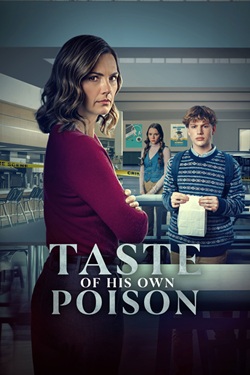
The 2025 Lifetime film Taste of His Own Poison opens with nerdy high school student Dylan (Nolen Dubuc) being attacked in the school bathroom by his nemesis, Sawyer (Dylan Kingwell). Sawyer, who comes from a broken home and looks up to his delinquent older brother, has a bizarre obsession with harassing Dylan. For some reason, he likes to eat half of Dylan’s lunch before tossing it on the floor and forcing Dylan to eat what’s left. This time, Dylan is saved by his best friend, Meredith (Juliette Hawk). Meredith tells Sawyer to leave Dylan alone, and Sawyer backs off. Later, in their chemistry class, Dylan attacks Sawyer.
Dylan’s mother, Courtenay (Rhonda Dent), is stunned to hear that Dylan has been getting into fights at school. Like all Lifetime mothers, Courtenay owns her own restaurant and has tried to raise her son to know better than to try to solve his problems with his fists. Her husband, Ben (Jonathan Purvis), is impressed that Dylan stood up for himself. As Ben explains it, he would do anything to protect his son. Courtenay doesn’t believe in rewarding violent behavior, even if father and son both claim that it was justified. Perhaps that explains why she and Ben are in the process of separating.
The next day, Sawyer once again grabs Dylan’s sandwich and eats it. Sawyer then has a seizure and promptly dies in the middle of the cafeteria. When it becomes apparent that someone poisoned Dylan’s sandwich, Courtenay finds herself considering what she would have previously thought to be impossible. Did Dylan murder Sawyer? Or was it Ben, who has already said that he would literally kill to protect his son? Both Dylan and Ben deny having anything to do with murdering Sawyer, but Sawyer’s violent older brother disagrees and wants revenge…
I really enjoyed Taste of His Own Poison, which felt like a throwback to the days when Lifetime was all about embracing the melodrama and seeing how many implausible twists could be pushed into one 90-minute story. This Lifetime film actually featured convincing high school students, as opposed to the 20-something actors who usually roam the halls. (I always notice that Lifetime high schools only seem to have about 20 students enrolled. I always have to laugh when I see the sparsely populated hallways of a Lifetime high school.) I have to admit that Taste of His Own Poison had a few plot developments that took me by surprise. A lot of that was because they often didn’t seem to make much sense, but with a film like this, it’s a bit pointless to get caught up in whether or not the story itself is realistic or if everyone is acting in a logical way. There are so many false leads and red herrings that I lost count. This is one of those films where you just follow the story to wherever it leads you. It’s the type of film that is designed to make you shake your head and say, “Oh my God,” every few minutes or so. It’s a fun movie. Just go with it.
I may be contributing to our annual Horrorthon here at TSL, but I’ll be the first to admit that I’m not as knowledgeable about the horror genre as the rest of the crew. Most of the horror films I watched growing up were the edited versions that would play on my favorite local channel, Fox-16 out of Little Rock. If not there, I’d see scary movies at my friend’s bunking parties when I was in grade school or junior high. That’s how I first saw the FRIDAY THE 13TH series, and I even remember seeing Fulci’s HOUSE BY THE CEMETERY (1981) at one such party. I didn’t have a clue who Fulci was at the time, but I do remember a victim’s throat being ripped out! I’d go home and have a hard time sleeping. I’ve never been good with gore, and I’ve always preferred action films. With that said, I’ve been trying to up my horror game over the last few years. I try to take part in the weekly #ScarySocial live tweet event, and I’ll watch horror films periodically that my friends tell me about or that seem interesting for some reason. I’ve still got a large backlog to get through, and I’ll never watch the classic gorefests, but I know way more now than I did a few years ago. Horrorthon is an amazing place to learn more.
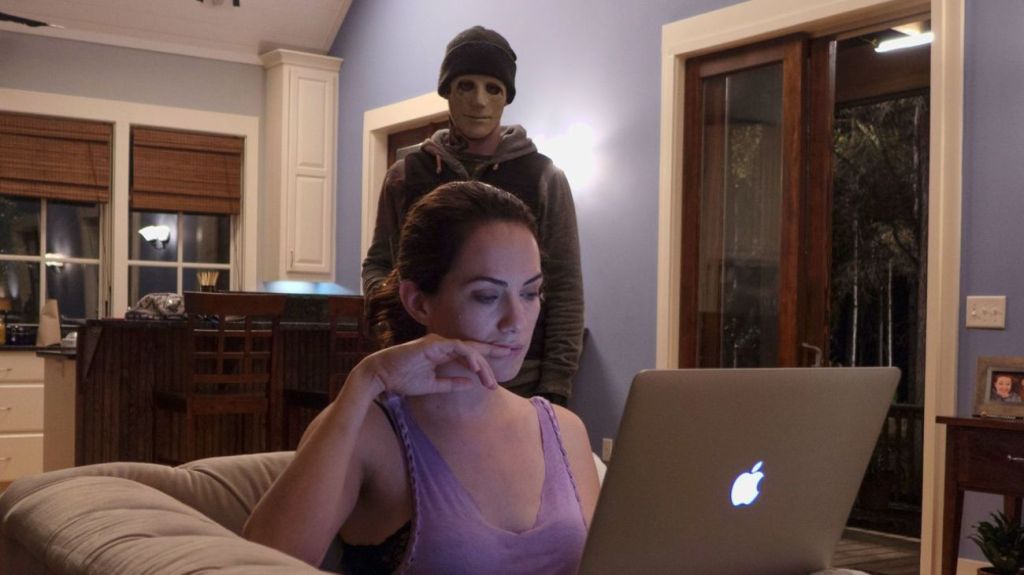
I came across a horror movie ten years ago that I loved, and I still watch it every year. That film is HUSH, which I see as more like a nightmarish thriller than a straight on horror film. The setup is incredible as our lead character Maddie, who’s both deaf and unable to speak, finds herself being stalked at her remote home. There are some early visuals that illustrate the psychopathic evil of “The Man” (John Gallagher, Jr.) as he turns his attention towards Maddie, while also showing us how vulnerable her inability to hear or speak make her in this situation. There’s also a sequence involving the Man sending current pictures to our heroine’s laptop that show her being watched. It’s here that she first realizes something horrific is going on, and it’s a truly chilling scene. The movie hooked me right there, and I was completely invested as the psycho played his cruel games with her.
I thought Kate Siegel was exceptional in the lead role. I didn’t know a thing about the actress going into the film all those years ago, and I’m not sure I’ve watched any of her work since, but I still don’t think anyone could have been better. She proves herself to be smart, resourceful, and not near the fun, easy target our killer thinks she’s going to be. After being put through hell both physically and mentally over the first couple of acts, I can only describe her character as a total bad-ass as the film races towards its conclusion! She also co-wrote the film with its director, Mike Flanagan, which helped me appreciate her work even more as she helped craft the amazing character. John Gallagher, Jr. is effectively creepy as the killer. This character could have walked straight out of an 80’s horror film, as we never understand why he’s so evil, which makes him more terrifying as far as I’m concerned. I don’t have to understand his motives to want him to die by the end.
As a warning for the more squeamish viewers like me, some of the violence is extremely difficult to watch, with various hands and necks being the most susceptible to extreme harm. The violence is realistic and personal, and I still look away because I know it’s coming and can’t really handle it. It also is one of the reasons the movie stays with me year after year. Just writing about it now is making my toes curl up a bit.
If you’ve seen HUSH before, I hope this makes you want to watch it again. If you’ve never seen it, I’ll let this serve as my recommendation that it’s a movie I love and think you probably will too. And if you want to know even more about the film, check out Lisa’s REVIEW from when it first came out back in 2016. It has more detail about her own personal reactions to the film, as well as her unique critical insight.
In 1974’s The Mutations, Donald Pleasence stars as Professor Nolter. A genetic scientist, Nolter is convinced that plants are the greatest examples of evolution. During the classes he teaches at the local university, Nolter raves about the wonders of the Venus flytrap. Is there anything better than a plant specifically developed to eat bugs? When we see Nolter’s students listening to him, the majority of them appear kind of bored with the whole thing. Only Brian Redford (Brad Harris) is really that interested in anything Nolter has to say.
What no one knows is that Nolter has been conducting experiments of his own. Nolter has hired the deformed Lynch (Tom Baker) to abduct young women and eventually young men so that Nolter can try to speed up their evolution by injecting them with plant DNA… or something. To be honest, I’m not totally sure what Nolter was doing in that laboratory, and I kind of suspect the same was true for the screenwriter. What I can say for sure is that there were a lot of close-ups of the hypodermic needle Nolter was holding in his hand. Unfortunately, all of Nolter’s experiments have failed, and his victims have been transformed into strange creatures. One girl becomes a lizard woman. One guy is turned into a crab-like plant monster.
Fortunately for Nolter, Lynch owns a carnival, and Nolter’s victims just become the latest attractions. Lynch was himself once a carnival “freak.” He was known as “the ugliest man in the world,” and he’s never recovered from the shame and the trauma of being taunted for years. Nolter has promised to cure Lynch of his disfigurement in return for Lynch continuing to abduct new subjects for him. However, when a group of Nolter’s students come to suspect that a classmate has been transformed into a reptile, everything starts to come crashing down.
The Mutations is an odd film. On the one hand, the carnival setting and Donald Pleasence’s mad scientist definitely feel like they could have been lifted from any number of old, black-and-white horror films. At the same time, the nudity, the gore, and the clear implication that Lynch is a pervert, along with everything else, clearly establish that this film was made in the ’70s. Indeed, there’s a scene in which some students talk about dropping acid that practically seems to be shouting, “See? This film is modern and hip!” The film works best when it pays homage to the older films that inspired it. As always, Donald Pleasence seems as if he was born to play an obsessive and quite mad scientist. Tom Baker is brutish as Lynch, but he also communicates the pain that Lynch carries in his heart. (Baker especially deserves credit for managing to give such an expressive performance despite acting underneath a ton of makeup.) Michael Dunn also gives a good performance as the sympathetic leader of the freaks. Unfortunately, the college students are never as interesting. Our heroes are duds. Luckily, the villains are entertaining.
This film was directed by cinematographer Jack Cardiff and, not surprisingly, it looks great. This was Cardiff’s final film as a director. After this film, he returned to working as a cinematographer. One of his last credits was for Rambo: First Blood Part II. No matter what you may think of that film, it looks good! The same can be said of The Mutations.
When I was growing up, my family moved around a lot. When it came to school, it wasn’t unusual for me to finish the fall semester in one state and then start the spring semester at a totally different school in another state. By the time I was 12, I had attended schools in Texas, Arkansas, Oklahoma, New Mexico, Colorado, and Louisiana. Whenever I mention that to people, they always express some sympathy that I didn’t have more stability in my life when I was younger. While I appreciate the thought, it didn’t really bother me that much at the time. It all seemed perfectly normal.
There was one thing that always remained consistent. No matter what state I was in or what school I was attending, there was always at least one person in my class who (1) had a food allergy and (2) would freak out about it at the most inopportune times. “Does this have peanuts in it?” they would ask while looking down at the pepperoni pizza that had been ordered as a reward for the class. “I’ll die if there are peanuts in it.” And, of course, there were never any peanuts in it. But just hearing that someone could die if they ate a peanut, a banana, or a mango had a way of really ruining the mood. Often, it felt as if I was expected to feel guilty because I could actually eat food that they couldn’t.
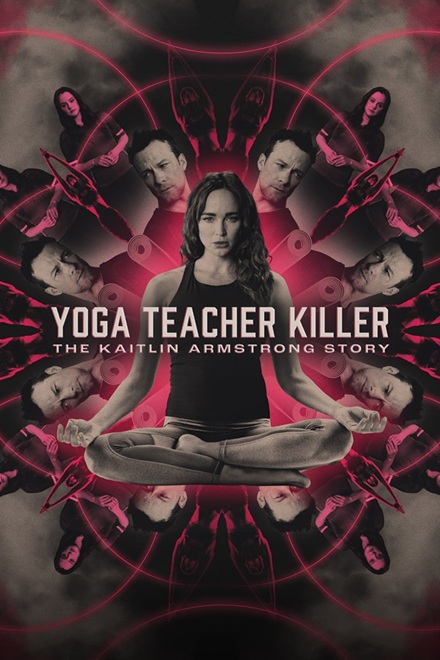
The 2024 Lifetime film Yoga Teacher Killer: The Kaitlin Armstrong Story features a scene in which Kaitlin (Caity Lotz) is attending a yoga class. She tells everyone that she’s currently the business manager for the best “gravel rider” in the country, Colin Strickland (Kyle Schmid). No one in the class has heard of Colin, and it also appears that they don’t know that gravel riding is a type of competitive bicycle racing. Kaitlin reacts to this news by suddenly freaking out about finding a mango in a fruit cup. She claims to be allergic to them and then starts to breathe extremely rapidly while clutching at her throat. Someone asks if she has an EpiPen. Kaitlin shakes her head and then gasps that she needs some Benadryl. The interesting thing about this scene is that Kaitlin is obviously faking, and everyone in the class knows that she’s faking, but they’re also scared to point that out. So everyone has to sit there politely while Kaitlin pretends to be having a life-threatening allergic reaction.
As the scene shows, Kaitlin has an obsessive need to be the center of attention and, when she’s not, she’ll create drama to make sure that she is. When Colin briefly breaks up with her, Kaitlin makes up a story about being chased by an unknown man to win him back. Unfortunately, when Kaitlin learns that Colin briefly dates Moriah Wilson (Larissa Dias) during the time they were separated, Kaitlin loses it. Moriah is younger and more successful than Kaitlin, and Kaitlin’s obsession with her leads first to threatening phone calls before moving on to murder.
Yoga Teacher Killer is based on a real-life 2022 murder that occurred down here in Texas. The film plays up the fact that Kaitlin Armstrong was a yoga instructor even though yoga really didn’t have much to do with the actual crime. It’s pretty much a standard Lifetime true crime film, one that is distinguished by Caity Lotz’s memorably unhinged performance as Kaitlin Armstrong. The film ends with a title card informing us that Kaitlin now teaches yoga in prison. One can only assume that she’s being accommodated with a mango-free diet.
In the 1987 Italian film Specters, Donald Pleasence plays Professor Lasky. Lasky is investigating the catacombs underneath Rome. When he discovers a previously unknown tomb, he speculates that it may be the final resting place of a Roman emperor who was sacrificed to a pagan god by his own subjects. Lasky says that Roman historians tried to cover up the existence of the emperor because it was simply too scandalous to admit that he had been killed by the very people over whom he ruled. Now Lasky might have proof of his existence. But at what cost?
The main reason I watched Specters was the presence of Donald Pleasence. Unfortunately, as was often the case with Pleasence’s post-Halloween films, he doesn’t really get to do much in Specters. He appears in a handful of scenes, and he’s just as intense as always. Rather than being excited about the possibility of having made a major discovery, he seems rather worried about why the tomb was so well hidden in the first place. Pleasence brings his trademark intensity to the role. As always, it’s a joy to listen to the slightly unhinged timbre of his voice. That said, it’s hard not to wish that Pleasence had been given a bigger and more active role. John Carpenter’s Prince of Darkness, which was released the same year, showed that Pleasence was still capable of being a compelling actor when given the opportunity.
Instead, Specters is largely about Professor Lasky’s assistant, Marcus (John R. Pepper), and his girlfriend, Alice (Trine Michelsen). Alice is an actress shooting a horror movie in Rome, and Specters actually has a fairly clever sequence in which a scene of Alice being chased turns out to be a scene from the movie she’s shooting. For the most part, Alice just wants Marcus to stay home so they can have sex. Unfortunately, Marcus keeps getting called back to the catacombs. The one time they do have sex, we discover that Marcus has an incredibly hairy back, and it kind of ruined the mood for me. I will say that, as someone who owns over a hundred nightshirts, I was jealous of Alice’s collection. The nightshirt with all the months listed on it was to die for.
Opening the tomb releases an evil force in Rome. Lasky and his assistants are targeted, but occasionally the evil force seems to go after anyone who happens to be around. It’s not a particularly well-defined evil force, which occasionally makes the film effective. There’s a scene involving a suddenly erudite beggar that’s actually rather creepy. The film makes frequent use of a wind machine. Whenever the evil force is floating around, a big wind starts up and doors and windows are thrown open or slammed shut. At one point, Alice sinks into a bed, and we’re left to wonder if Freddy Krueger was sealed up in the tomb.
It’s a confusing film, one made up of multiple set pieces that don’t always seem to go together. The incoherence is not necessarily a bad thing. Fulci’s Beyond trilogy and Argento’s Inferno both showed that Italian horror cinema often benefits from dream logic. The main problem is that, with the exception of the underused Donald Pleasence, none of the characters are really interesting enough to hold our attention. The Beyond trilogy benefited from the presence of likable actors like Catriona MacColl and David Warbeck. Inferno may not have always made sense, but Argento was smart enough to populate his dreamscape with people like Daria Nicolodi, Irene Miracle, and Leigh McCloskey. (McCloskey may not have been the greatest actor, but his stolid presence grounded the film.) Specters just feels like a random assemblage of scenes that don’t really belong together. There are a few effective moments, but they don’t add up to much.
That said, it is always good to see Donald Pleasence. And Rome, as always, is lovely.
As some of our regular readers undoubtedly know, I am involved in hosting a few weekly live tweets on twitter and occasionally Mastodon. I host #FridayNightFlix every Friday, I co-host #ScarySocial on Saturday, and I am one of the five hosts of Mastodon’s #MondayActionMovie! Every week, we get together. We watch a movie. We snark our way through it.
Tonight, for #MondayActionMovie, the film will be Short Time!
If you want to join this watch party, just hop onto Mastodon, pull up Short Time on YouTube, start the movie at 8 pm et, and use the #MondayActionMovie hashtag!
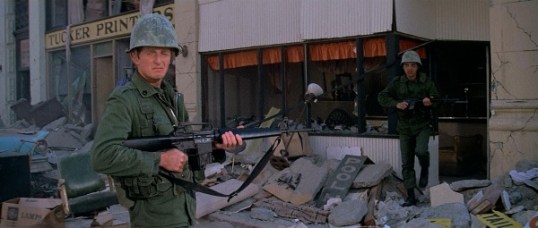
Yesterday, when it was announced that child evangelist-turned-actor Marjoe Gortner had passed away at the age of 82, nearly every article mentioned his role as Jody Joad, the homicidal National Guardsman from 1974’s Earthquake. Now, personally, I think Marjoe’s best role was playing himself in the creepy but compelling 1972 documentary Marjoe. My second-favorite Marjoe Gortner performance was his turn as Akton, Stella Starr’s partner in crime in Starcrash.
That said, Earthquake was apparently the most commercially successful film in which he appeared. And it must be said that Jody is an absolutely horrifying villain. When we first meet Jody, he’s the guy no one respects. He’s a grocery-store manager who takes a good deal of pride in being a member of the National Guard. His three housemates make constant fun of him, both for being so uptight and for all of the posters of male bodybuilders that decorate the walls of his room. From the first minute we see him, it’s obvious that Jody is someone who has been waiting his entire life for a chance to be in charge and to put everyone else in their place. Jody gets that chance when an earthquake hits Los Angeles and the National Guard is called out to maintain order. In his uniform, Jody has no hesitation about executing his former roommates for looting. He also has no hesitation about kidnapping Rosa (Victoria Principal), the model who used to shop at his grocery store.
What makes Jody such an effective villain is that he’s thoroughly plausible. Everyone probably knows someone like Jody. He’s the guy who has a big opinion of himself and who is upset that others don’t seem to share it. He’s someone who feels that he deserves more than he’s gotten in life and who spends most of his time trying to hide the resentment that burns within him. He’s exactly the type of person who lets the least amount of power go to his head. In Earthquake, he assumes the role of judge, jury, and executioner toward anyone he feels is failing to respect his authority. In the real world, he would have been the guy searching through your old tweets to find examples of wrongthink. He would have been one of the people who spent his time snitching on neighbors who stepped outside without wearing a mask during the COVID era. Indeed, the last few years have revealed that there are many Jodys among us.
Marjoe Gortner brought Jody to terrifying life. In the documentary about his life, Marjoe Gortner famously said that he was “bad, but not evil.” Jody Joad, on the other hand, is a very recognizable evil.
I know that AI films aren’t for everyone, but I’m convinced now that they are the future. To my actor, writer, director, and producer friends, you need to get on board or be left behind. Yes, they are aggressively mediocre today, but they didn’t even exist three years ago. Three years from now, there will be feature films written and self-distributed in a weekend. AI film is evolving and will soon surpass current film. The difference between the films I reviewed last year to this year is a quantum leap.
“Don’t Go to Wolf 1069” is actually pretty good. It has a beginning, middle, and an end. It has a clear story with distinct characters and, most importantly, suspense. Worth noting, Wolf 1069 is an actual star that likely has an planet in the habitable zone. Also, I actually cared that the protagonists were in peril- that is new for an AI film.
“Don’t Go to Wolf 1069” has an “Alien” vibe. It’s a group of surveyors going to an alien planet to find minerals for corporations to exploit and they discover murderous creatures. Okay, that is the exact plot of “Alien”, but this is a little different because the aliens are …. wait for it…. HUMANS… sorta. I give credit to the writer because using an actual star and planet helps anchor the story with some realism. The film is flawed- the characters don’t use each others names enough and there isn’t a lot of character development, but that could be resolved if it were a feature length film. The leader, Xu, is the only character with a clear personality and the only other memorable character who has a personality, in that he is horny and English, goes missing almost immediately.
Back to the plot. the group goes around the alien planet and finds evidence of cities, roads, and worship sites. They get separated and the remaining crew investigate the ruins, but discover that the bones are human-lite. They are, in fact, Neanderthals’ who we are to believe 1) ate us (not true), 2) were more advanced (unlikely), and 3) fled earth ages ago using their awesome spaceships (really?). The crew searches for their lost horny comrade and finds him – well, what’s left of him. His flesh was ripped from his bones and the remains were crucified; so, that’s bad. Therefore, the crew decides to flee for their lives and hopefully not lead the Neanderthals’ back to Earth.
With some work, this could be a feature length film. Producers need to figure out how to co-opt this creativity or they will be obsolete.
“We are not enemies. We are the agents of change. To that end we are bound together.” — Hecate
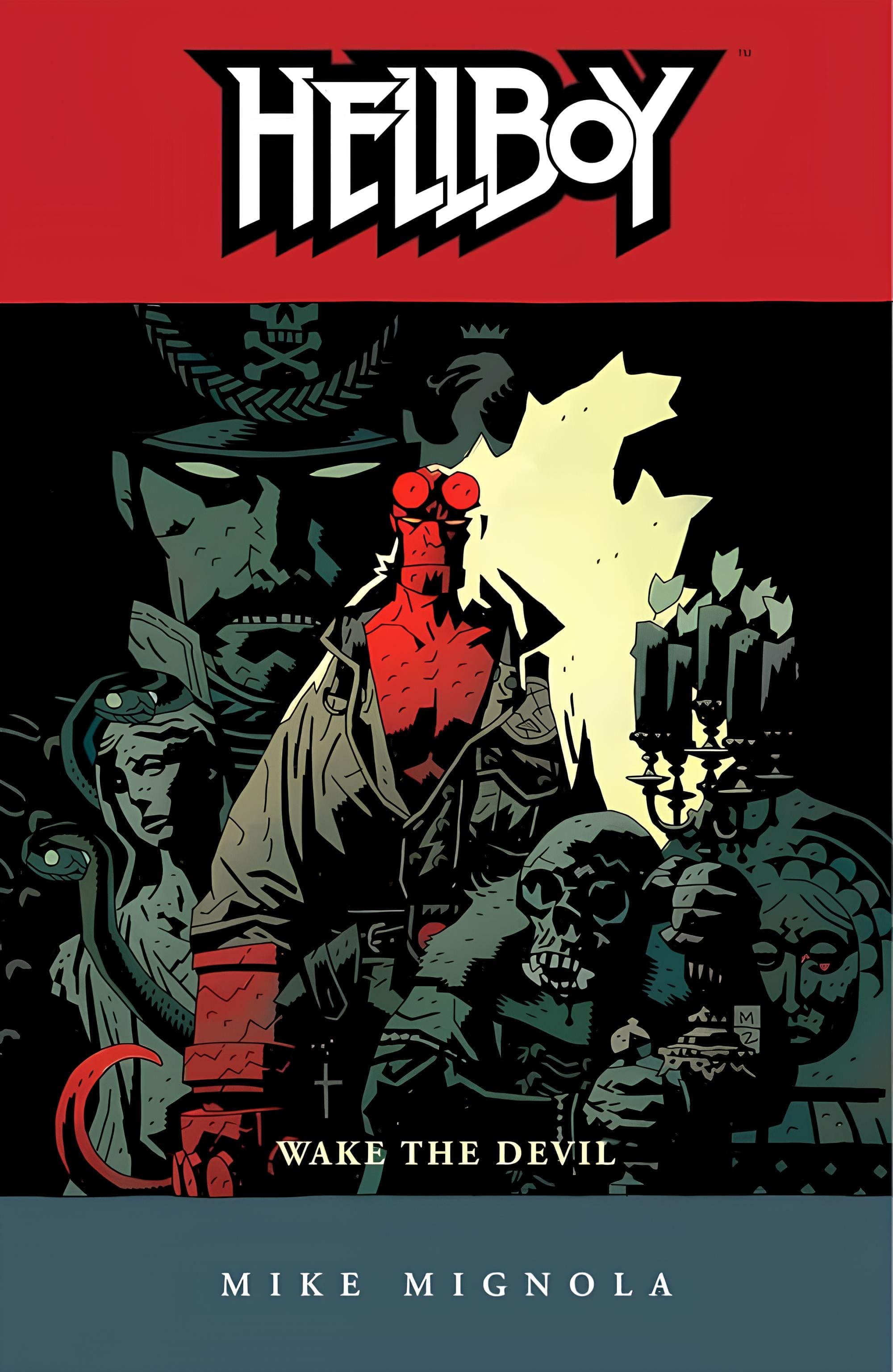
By the time Hellboy: Wake the Devil begins, Mike Mignola has already made clear that Hellboy’s world is not one where the dead stay buried or where ancient evils remain confined to history. Building on the groundwork established in Hellboy: Seed of Destruction, this graphic novel moves deeper into the peculiar mixture of pulp adventure, Gothic horror, occult conspiracy, folklore, and apocalyptic myth that makes Hellboy so distinctive. It is a darker, stranger, and more confident continuation, one that expands Hellboy’s world through vampires, witches, ancient ruins, Russian legends, Nazi occultists, and the ever-present suggestion that the past is not buried so much as waiting to rise again.
Where Hellboy: Seed of Destruction had to introduce readers to Hellboy, the B.P.R.D., Rasputin, and the ominous question of the hero’s intended destiny, Hellboy: Wake the Devil benefits from being able to assume some familiarity with the larger premise. It does not waste time reintroducing every concept or explaining Hellboy’s origin in exhaustive detail. Instead, Mignola plunges directly into another supernatural crisis, trusting the reader to follow the fragments of history, prophecy, and folklore that emerge along the way. That confidence gives the book a more distinctive identity than the first graphic novel, which was highly entertaining but still carried some of the structure of a traditional early-1990s superhero adventure.
This difference also reflects Mignola’s greater control over the material. While Hellboy: Seed of Destruction was co-plotted and scripted by John Byrne, Wake the Devil feels more purely shaped by Mignola’s own creative instincts. The writing is leaner, stranger, and more willing to leave mysteries partially unresolved. The plot remains accessible, but it is not interested in handing readers a complete guidebook to its mythology. Rather than explaining every occult reference, historical figure, or supernatural artifact, Mignola presents them as pieces of a much larger hidden world. That approach gives the story a dreamlike quality, as if Hellboy has stumbled into a folktale that has been unfolding for centuries without him.
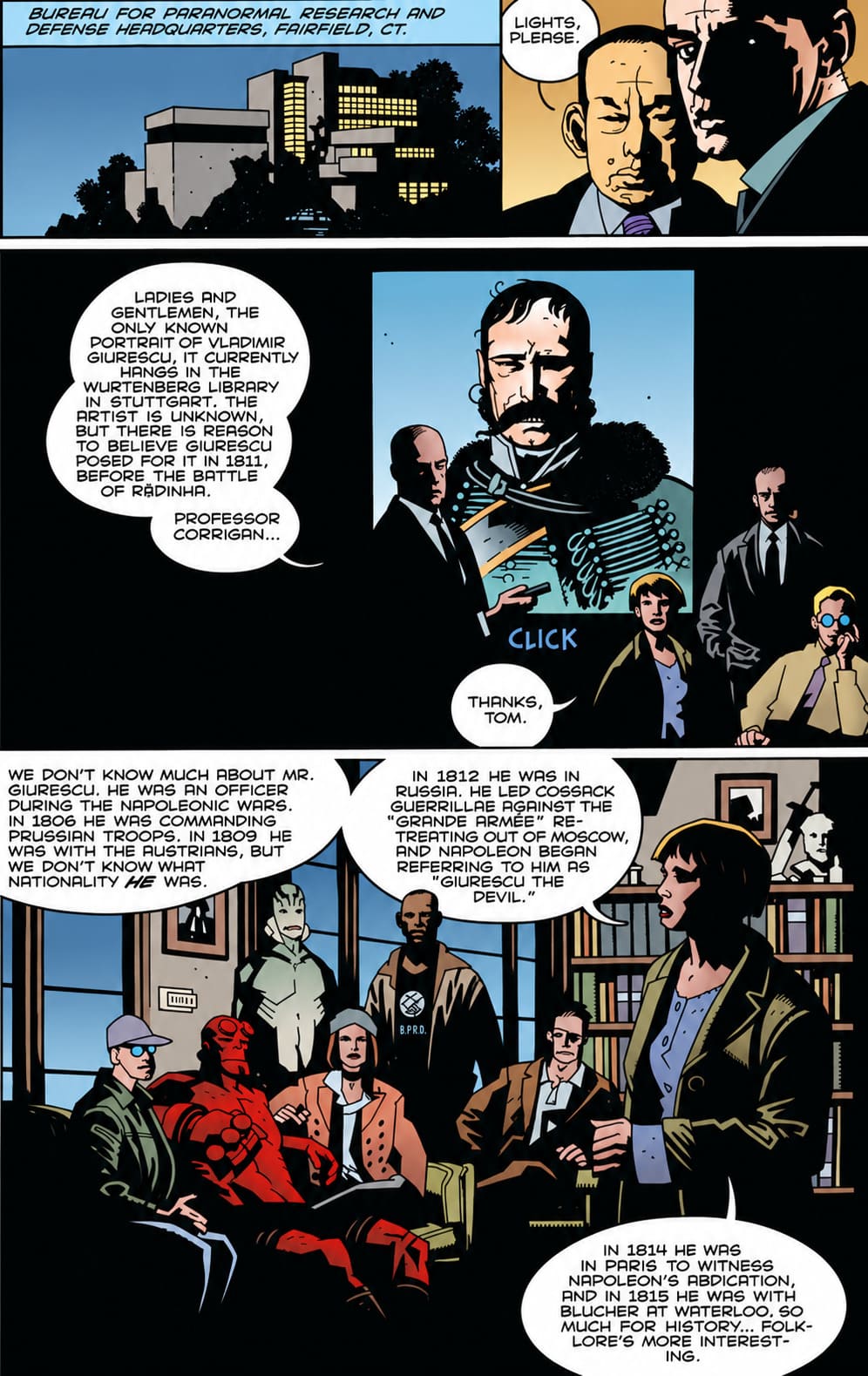
The story begins with a stolen corpse, an opening that immediately establishes the book’s grim tone. This theft is connected to Vladimir Giurescu, an ancient vampire whose resurrection becomes the central threat of the graphic novel. Giurescu is not presented as a familiar, romantic version of Dracula, nor is he simply another monster for Hellboy to punch through a wall. He is an old-world figure tied to European violence, occult ritual, aristocratic power, witchcraft, and death. Mignola makes him feel ancient in the best sense: not merely old, but connected to a past so deep and cruel that modern people cannot fully comprehend it.
Giurescu’s presence is one of the book’s greatest strengths because he embodies the kind of villain Mignola handles especially well. He is frightening not because he constantly performs elaborate acts of violence, although the story has no shortage of monstrous imagery, but because he carries the weight of history with him. His return does not feel like the arrival of a single antagonist. It feels like a buried nightmare opening its eyes. Mignola’s supernatural villains often possess this quality. They are dangerous as individuals, but they are even more dangerous as evidence that Hellboy’s world is built over ancient horrors that have never truly disappeared.
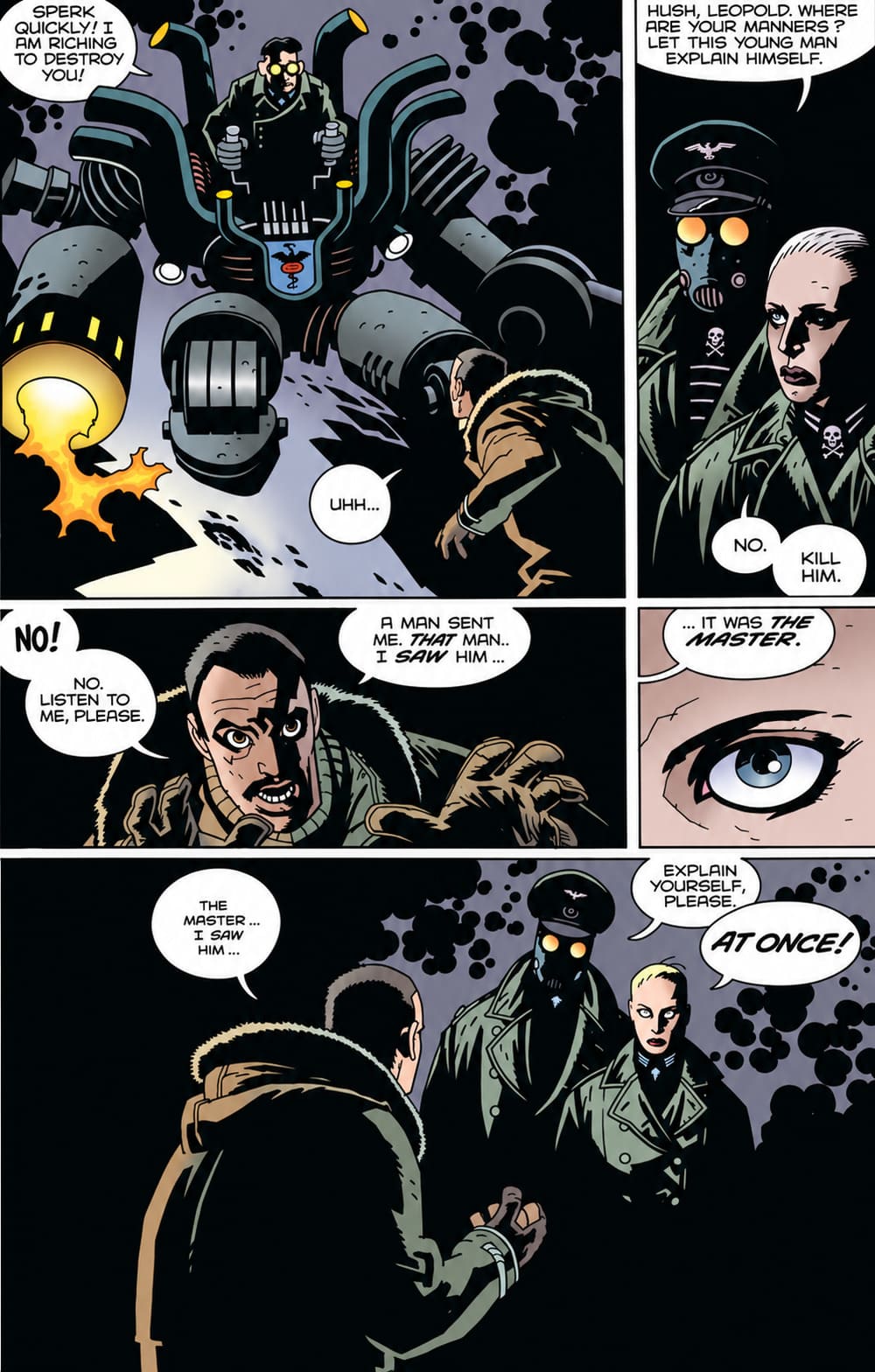
The plot also brings back Ilsa Haupstein, one of the Nazi occultists introduced in Hellboy: Seed of Destruction. Her involvement gives Wake the Devil a direct link to the previous story without making the book feel like a repetitive sequel. The Nazi occult material remains important, but Mignola wisely expands the scope beyond it. The conspirators and occultists are no longer the entire center of the story. They become one part of a wider mythology involving vampires, witches, old relics, secret histories, and supernatural forces that existed long before the twentieth century. The result is a story that feels more expansive without becoming bloated.
The title carries an interesting irony, since Hellboy himself is constantly associated with the devil because of his red skin, horns, tail, and demonic appearance. People who encounter him often assume that he must be monstrous, dangerous, or connected to evil. Yet Wake the Devil again makes clear that Hellboy’s appearance has little to do with his moral character. He may look like a demon, but he is still the person trying to stop the resurrection of an ancient vampire and the spread of occult evil. The real devils in the story are the people and creatures who seek power through murder, ritual, resurrection, and the exploitation of forbidden knowledge.
Hellboy’s moral simplicity is one of the series’ most enduring strengths. He is not simple in the sense of being a shallow character, but he is direct about what matters. He does not spend pages agonizing over whether monsters should be stopped. If something evil is threatening innocent people, he goes after it. He complains, gets irritated, takes a beating, delivers a dry joke, and keeps moving. That makes him an ideal protagonist for Mignola’s world. The setting is filled with cryptic prophecies, ancient names, hidden archives, and supernatural mysteries, but Hellboy gives the reader someone grounded to follow through it all.
His humor remains especially important. Wake the Devil is a dark book, full of graves, corpses, ruined buildings, occult rites, and creatures whose existence seems to violate the natural order. Without Hellboy’s blunt attitude, the material could become overly solemn. He does not make light of the danger, but his presence keeps the graphic novel from collapsing under the weight of its own mythology. Hellboy has the energy of a hardboiled detective dropped into a nightmare, even though his methods usually involve a massive stone fist rather than a revolver and a fedora.
The B.P.R.D. supporting cast also becomes more meaningful in this story. Abe Sapien and Liz Sherman are not merely background teammates, even if Hellboy remains the main focus. Abe’s intelligence and aquatic strangeness make him a natural fit for a universe filled with lost civilizations, secret knowledge, and evolutionary mysteries. Liz, meanwhile, carries a more tragic and dangerous presence because of her pyrokinetic powers. She is not simply a character who can shoot fire at monsters. Her abilities are tied to fear, isolation, and trauma, which gives her a vulnerability that contrasts sharply with Hellboy’s more durable and outwardly confident persona.
The relationship between these characters reinforces the unusual nature of the B.P.R.D. It is not a brightly polished superhero team assembled to save the world in matching costumes. It is an organization of people who have been pushed outside ordinary society, whether by their appearance, their powers, or the bizarre things they have experienced. Hellboy, Abe, and Liz are united less by traditional comic-book camaraderie than by shared alienation. They understand dangers that ordinary people would struggle to believe, and that creates a quieter emotional bond beneath the monster fights and supernatural investigations.
Visually, Hellboy: Wake the Devil is a major achievement. Mignola’s artwork is not built around realism or dense anatomical detail. Instead, it relies on dramatic shapes, bold shadows, exaggerated silhouettes, and a masterful sense of composition. His pages can make a single doorway, tomb, hallway, or distant figure feel ominous. A black shape against a pale background becomes threatening because Mignola knows precisely how much information to withhold. His art frequently suggests that the real terror is not necessarily what readers can see, but what might be waiting inside the darkness beyond the panel.
The book’s use of architecture is especially striking. Castles, crypts, underground chambers, cemeteries, churches, and ruined interiors are not just places where the action happens. They feel like extensions of the story’s ancient dread. Heavy stone walls, towering doorframes, deep corridors, and massive areas of black create the impression that Hellboy is moving through a physical landscape built by history itself. The settings seem to contain memories. Every abandoned room and buried chamber implies that something dreadful once happened there, and perhaps never truly stopped happening.
Matt Hollingsworth’s color work adds enormously to this atmosphere. The palette is often muted and moody, dominated by dark blues, sickly greens, faded browns, purples, and deep black shadows. This restraint makes the bursts of red more powerful, whether the red comes from Hellboy himself, blood, fire, or supernatural violence. The colors give the pages an aged, almost storybook texture. It can feel as though the reader is looking at a collection of old illustrations from some forbidden European folktale rather than a conventional comic book.
Mignola’s pacing is equally important. Wake the Devil knows when to pause and let the mood settle. There are moments where a character simply stands before an open grave, explores a silent corridor, or confronts an object that hints at a terrible history. Those quieter scenes make the action scenes more forceful. Hellboy does not fight with the slick agility of a typical superhero. He crashes through doors, falls through floors, gets thrown into walls, and responds to impossible threats with the stubborn endurance of someone who has spent his whole life being sent into terrible places.
That physicality helps make Hellboy feel vulnerable even when he is clearly superhuman. He is powerful, but he is not untouchable. He gets hurt, overwhelmed, deceived, and placed in situations where brute strength alone is not enough. The Right Hand of Doom is visually iconic, but it is not a solution to every problem. Hellboy survives because he is resilient, practical, and unwilling to give up when the supernatural situation becomes more complicated than expected.
The story’s deeper theme is the danger of seeking power through forbidden knowledge. Nearly every major threat in Wake the Devil grows out of someone trying to revive, exploit, or control something that should have remained lost. Characters pursue immortality, occult strength, revenge, or access to secret history, only to discover that ancient evil does not become manageable merely because someone has learned its name. Mignola draws heavily from Gothic vampire fiction, but the story also has the broader cosmic unease that defined Seed of Destruction. The horrors here are not merely monsters with weaknesses. They are fragments of a much bigger darkness.
At times, the book can seem deliberately cryptic, particularly for readers unfamiliar with the expanding mythology of Hellboy. Mignola introduces artifacts, historical references, mystical forces, and supernatural figures without always providing a detailed explanation. Yet that ambiguity is largely part of the appeal. The comic does not make its world feel small enough to be completely explained in a few captions. Instead, it invites readers to feel the weight of a hidden history that Hellboy can only partially understand.
Ultimately, Hellboy: Wake the Devil is an essential chapter in Mike Mignola’s larger saga. It confirms that Hellboy is not merely a clever premise about a demon who fights monsters for a government agency. It is a singular world of pulp adventure, folklore, Gothic horror, vampire mythology, wartime conspiracy, and dark fantasy, all filtered through Mignola’s unmistakable visual imagination. The graphic novel deepens the mythology while preserving the straightforward pleasure of watching Hellboy enter a supernatural disaster, trade a sarcastic remark with a monster, and refuse to let ancient evil dictate his fate.
If Hellboy: Seed of Destruction introduced a hero resisting the destiny imposed upon him, Hellboy: Wake the Devilreveals the scale of the haunted world surrounding that struggle. It is eerie, violent, funny, mysterious, and visually beautiful. Most importantly, it shows that Hellboy’s greatest strength is not the Right Hand of Doom or his ability to survive battles with creatures from nightmare. His true strength is his refusal to let monsters, prophecies, occult conspiracies, or his own infernal appearance determine who he is.