Hider In The House (1989, directed by Matthew Patrick)


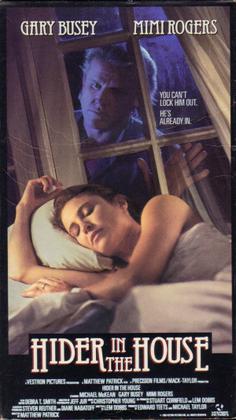
After spending years in a mental hospital for murdering his abusive parents, Tom Dreyer (Gary Busey) is released and told to find somewhere else to live.  He ends up secretly living in the crawl space of the new home Julie (Mimi Rogers) and Phil Dreyer (Michael McKean).  Obsessed with Julie, he’ll do anything to be with her, including breaking up her marriage to Phil and killing anyone who comes to close to discovering him in the crawlspace, whether it’s the family dog, an exterminator, or Julie’s best friend.

Due to the distributor having financial issues, Hider In The House never got a theatrical release but it used to show up on HBO frequently in the late 80s and 90s.  I can also remember that our local video store had the film’s poster hanging on the wall near the cash register, creating the impression that Gary Busy was not only staring at Mimi Rogers but also judging whatever you decided to rent for the weekend.  Hider In The House was very popular amongst those of us who had a crush on Mimi Rogers, which was basically every guy on the planet back in the day.

It’s not a bad movie, even if it is predictable.  Both Mimi Rogers and a pre-motorcycle accident Gary Busey give good performance and it’s interesting to see Michael McKean playing a dramatic role for once.  The main problem with the movie is that it’s impossible to believe that big and hulking Busey could possibly live in someone’s attic and move around between the walls without everyone immediately noticing.  A Clydesdale would have more luck going unnoticed than Gary Busey.

Shortly after he completed filming on Hider In The House, Gary Busey was in a motorcycle accident that nearly killed him.  He fractured his skull and suffered permanent brain damage.  It’s always interesting to compare the Gary Busey of the 70s and 80s with the Gary Busey of today.  People are so used to the Busey who yells and speaks in riddles that it’s easy to forget that he was once a very good actor, even when he was appearing in something like Hider In The House.
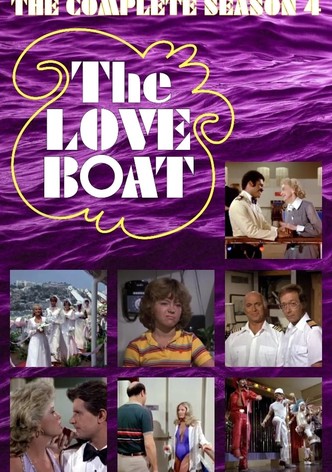
Retro Television Review: The Love Boat 4.27 “Maid for Each Other/Lost and Found/Then There Were Two”


Welcome to Retro Television Reviews, a feature where we review some of our favorite and least favorite shows of the past!  On Wednesdays, I will be reviewing the original Love Boat, which aired on ABC from 1977 to 1986!  The series can be streamed on Paramount Plus!

This week, a baby is abandoned, an aunt visits, and for some reason, Joe Namath is on the boat.

Episode 4.27 “Maid for Each Other/Lost and Found/Then There Were Two”

(Dir by Howard Morris, originally aired on May 9th, 1981)

Ted Harper (Joe Namath) boards the boat with his best friend, Richard Henderson (Fred Willard).  Ted and Richard were fraternity brothers.  While in college, the members of the frat decided that, whenever one of them got married, some money would be contributed to a pot.  The last single member of the frat would end up getting all of the cash, which is now up to $60,000.  Ted and Richard are the last two single members of the frat and they’re competing to see who can hold out the longest.

(Can we just agree that guys are weird?)

Ted has a plan to get the money. He’s gotten his ex-girlfriend, Paula (Karen Grassle), to agree to trick Richard into falling in love with and marrying her, in exchange for some of the money.  However, Richard is smarter than Ted realizes and instead offers Paula even more of the money to get Ted to marry her.  However, Karen falls for Ted for real.  Karen and Ted do get married when the ship docks in Mexico.  When Richard announces that he paid Karen to marry Ted, Ted is hurt at first but then he realizes that he was willing to do the same thing to Richard and nothing matters more than love.  Awwww!

Now, it may seem strange to cast Joe Namath and Fred Willard as friends.  To me, it’s even stranger that this was not the first time that Joe Namath, who was not much of actor, appeared on The Love Boat.  Just as he did the last time he was on the boat (and also just as he did when he last visited Fantasy Island), Namath wanders through the story with a goofy grin on his face.

Speaking of goofy, Gopher is super-excited when his wealthy aunt Loretta (Jane Powell) boards the boat.  Loretta, however, is scared to tell Gopher that she has lost all of her money and is now working as a maid.  Loretta need not have worried.  I mean, it’s not as if Gopher has a particularly glamorous job.  Plus, Loretta’s not going to be poor for long, not after she meets and falls in love with wealthy Duncan Harlow (Howard Keel).

Finally, Eddie Martin (Gary Burghoff) is a mechanic on the Love Boat who decides to abandon his baby with the captain.  The captain, who apparently doesn’t know much about the people who work for him, has no idea who the baby’s father is.  But when the baby is taken ill and needs a transfusion of super-rare AB blood, Eddie is forced to stand up and accept the responsibility of being a father.  Good for him, I guess.  Personally, I like fathers who don’t abandon their babies in the first place.

This was a fairly bland episode.  The fourth season is nearly over and, with this cruise, everyone seemed to mostly be going through the motions.  This episode seemed like a collection of stories that the show had already handled (and handled better) in the past.

Next week …. season 4 comes to an end!

Horror Scenes That I Love: Damien Puts A Teacher In His Place in Damien: Omen II


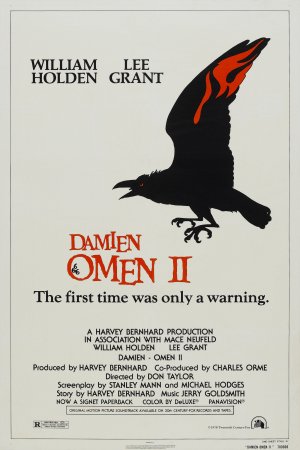
1978’s Damien: Omen II is a perfectly ludicrous film that mixes soapy melodrama with apocalyptic horror.  It’s a fascinating mismash that doesn’t really work and often, the most dramatic scenes are also the ones most likely to draw a chuckle from the viewer.  That said, there are a few good moments.

For instance, I’ve always liked this scene where young Damien (Jonathan Scott-Taylor) shows up one of his teachers.  It’s a good thing that Lance Henriksen stepped in when he did!


“Ring Camera”, Short Film Review, (Dir. Alex Magana), Case Wright


Happy Horrorthon, I suppose. Why am I hedging? I’m hedging because I’m reviewing an Alex Magana short. Yes, I’m watching this on purpose.

Ring camera begins with a woman in an apartment, I think the apartment is actually Alex’s residence.

At least, I hope it’s Alex’s apartment because it’s kind of a dump and I don’t think he should live in a very nice place. I’m not saying his apartment should be infested with Camel Spiders like this one:

Or 1,000 Camel Spiders that are like this breed:

This one looks feisty. I don’t want his apartment to have Camel Spiders like this one above because he makes terrible terrible art, but what about Cicadas…Cicadae? Anyway, they are pretty gross.
They don’t have teeth, but they’re annoying and terrible like his films. So, Cicadae…go forth and meet your new roomie!

Honestly Cicadae, he’ll probably cast you. How are you with terrible acting?

Back to my misery, the lady has a “Unfamiliar Face” on her ring camera. I wonder if he films these with his iPhone. The creeper approaches her apartment and starts knocking. She opens the door and it’s a delivery guy.
Ma’am, I’m not judging too hard, but that’s a large bag of food for one person. Look:

This is too much food. You should not eat your weight in food. Ma’am, the bag is half your size. Did you get fired? Is Alex making you do a 3 film deal? You can’t fill the pain Alex has created with Door Dash!
Then, she looks around and she gets killed by the evil ghost.
I know that watching this short will make you sad, but remember- maybe you’re not that good? I mean, how many good things have you actually done today? Maybe, you deserve this film more than you know? Maybe, this film will be like a Scared Straight and put you on a better path? Maybe, you just need the pain that this film provides- you weirdo! In any case, this film is for you. You know what you did!

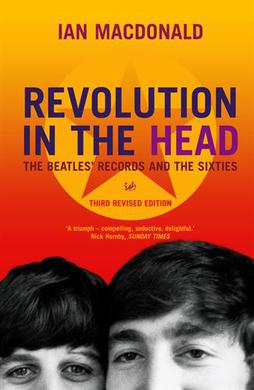
Book Review: Revolution In The Head by Ian MacDonald


Since today would have been the 84th birthday of John Lennon, I want to take a minute to recommend a book called Revolution In The Head.

First published in 1994 and subsequently revised two more times, Revolution In The Head is both a chronological history of the songs that the Beatles recorded and a cultural history of the 60s.  By examining the recording of each song, Ian MacDonald not only describes how each song reflects (or doesn’t reflect) what was happening in the group at the time but also how the Beatles’s changing sound reflected what was happening in the world at the time.  Author Ian MacDonald was clearly a Beatles fan but, more importantly, he was not an apologist and, in the book, he’s just as quick to criticize as he is to praise.  While he praises the majority of the band’s recordings, there’s more than a few that he totally dismisses.  It’s a well-researched and passionately argued book, one that makes interesting reading for both fans of the group and history nerds like myself.

As for the Beatles themselves, they come across as fully developed people.  MacDonald neither idealizes nor demonizes the group and instead focuses on the idea of them as working musicians who usually collaborated well together as a group but sometimes feared and resented that they were losing their individual identities.  Neither Lennon nor Paul McCartney are presented as being saints and MacDonald doesn’t shy away from showing how frayed their relationship had become by the time the group split up.  (They’re portrayed as developing a classic love/hate relationship with each other.)  But both are also presented as being talented artists who were capable of creating beautiful music that would survive the test of time.  For all the conflict and for all the times that Lennon complained about McCartney’s commercial sensibilities and for all the times that McCartney complained that Lennon was not committed to keeping the Beatles going, they were still capable of creating songs like Eleanor Rigby and A Day In The Life.

A lot of Beatles fans will probably disagree with MacDonald’s opinions.  He’s surprisingly dismissive of a lot of George Harrison’s songs, including the wonderful While My Guitar Gently Weeps.  But that’s okay!  There’s nothing wrong with having differing opinions.  It’s actually a good thing.

6 Shots From 6 Films: Jess Franco Edition


4 Shots From 4 Films is just what it says it is, 4 shots from 4 of our favorite films. As opposed to the reviews and recaps that we usually post, 4 Shots From 4 Films lets the visuals do the talking!  (And yes, sometimes we do more than just 4 shots!)

Today, we honor the one and only Jesus “Jess” Franco!

6 Shots From 6 Jess Franco Films

The Awful Dr. Orloff (1962, dir by Jess Franco, DP: Godofredo Pacheco)

Count Dracula (1970, dir by Jess Franco, DPs: Manuel Merino and Luciano Trasatti)

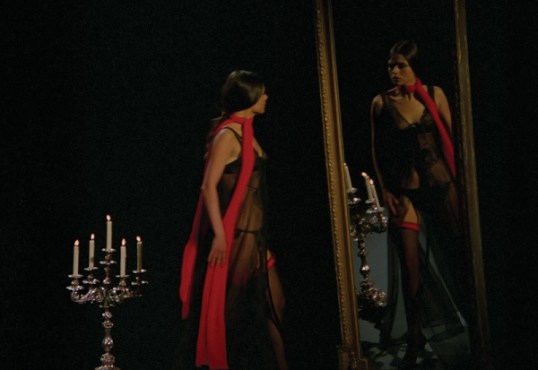
Vampyros Lesbos (1970, dir by Jess Franco, DP: Manuel Merino)

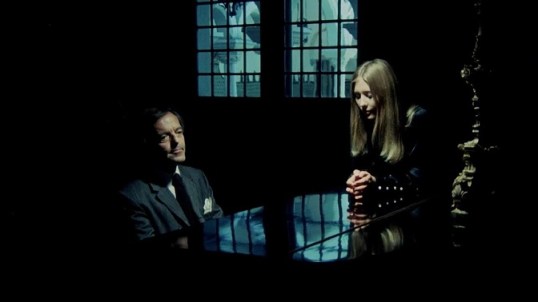
A Virgin Among The Living Dead (1970, dir by Jess Franco, DP: anyone’s guess)

Female Vampire (1973, dir by Jess Franco, DP: Jess Franco)

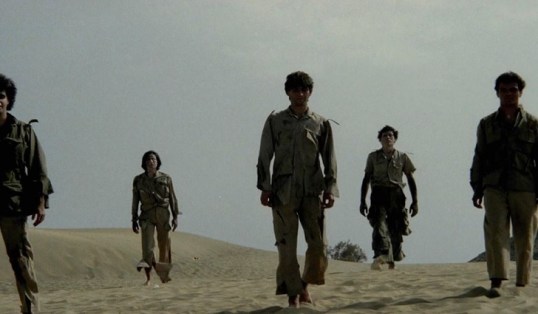
Oasis of the Zombies (1981, dir by Jess Franco, DP: Max Monteillet)

Horror on the Lens: Bride of the Monster (dir by Edward D. Wood, Jr.)


Bride of The Monster (1955, dir by Ed Wood)

Since tomorrow will be the great man’s birthday, it seems appropriate that today’s horror film on the lens is Edward D. Wood’s 1955 epic, Bride of the Monster.

(Much like Plan 9 From Outer Space, around here, it is a tradition to watch Bride of the Monster in October.)

The film itself doesn’t feature a bride but it does feature a monster, a giant octopus who guards the mansion of the mysterious Dr. Vornoff (Bela Lugosi).  Vornoff and his hulking henchman Lobo (Tor Johnson) have been kidnapping men and using nuclear power to try to create a race of super soldiers.  Or something like that.  The plot has a make-it-up-as-you-go-along feel to it.  That’s actually a huge part of the film’s appeal.

Bride of the Monster is regularly described as being one of the worst films ever made but I think that’s rather unfair.   Appearing in his last speaking role, Lugosi actually gives a pretty good performance, bringing a wounded dignity to the role of Vornoff.  If judged solely against other movies directed by Ed Wood, this is actually one of the best films ever made.

(For a longer review, click here!)

Music Video of the Day: Trouble by Ghost Cop (2024, directed by Sean Dack and Lucy Swope)


This song is off of Ghost Cop’s 2nd album, Trouble, which was released on October 4th.  For those who may not have heard of them before (and they’re new to me as well), Ghost Cop is based in New York and is comprised of Sean Dack and Lucy Swope.  I like Ghost Cop’s sound and I look forward to discovering more of their music.

Dack and Swope are not only Ghost Cop but they also directed this video.

Enjoy!

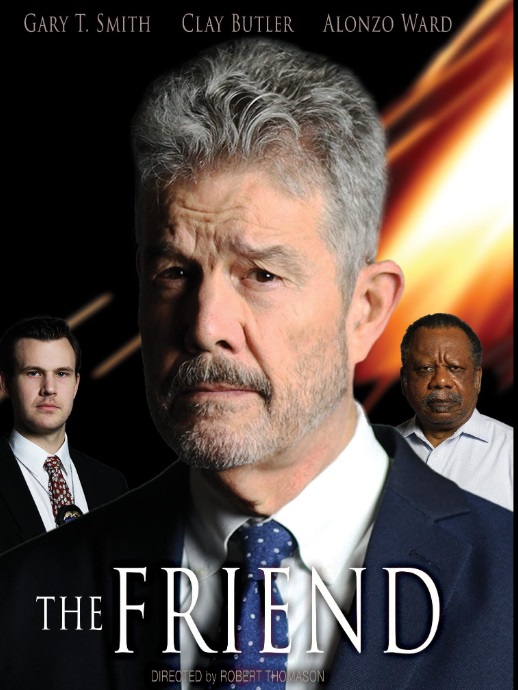
October Positivity: The Friend (dir by Robert Thomason and Gary T. Smith)


Having been recently diagnosed with serious heart problems and having also recently lost his wife in a car accident, James Bragg (Gary T. Smith) collapses when he’s informed that he has been fired from his job.  When he opens his eyes, he discovers that his office is on fire.  A man in a suit (Clay Butler) claims to be an agent with the Department of Homeland Security and he explains that the building has been bombed.

“By who?” James asks.

“Al Qaeda.  Boko Haram.  Mexican drug cartels,” the man replies.

James asks for the man for his name.  The man smiles and says that must people call him Bub.

Bub leads James through the burning building, explaining that he’s taking James to safety.  However, as the flames grow higher, James hears a voice saying, “Don’t follow him.”  Bub says that the voice is just a ploy of the terrorists but James isn’t quite so sure….

As soon as I tell you that 2023’s The Friend is faith-based film, you’ll probably be able to guess where this story is going.  Will James follow Bub onto the elevator going down or will he listen to the voice telling him not to follow.  Will James remember that Bub is a nickname for Beezlebub, one of the more fearsome of the demons that are said to populate Hell?  Will James make peace with the death of his wife and find the strength to continue?  Who will James’s new friend be?  Will it be Bub or will it be the older man who always seems to be showing up in the background?

Again, you can probably guess where all this is heading but The Friend is still a well-made and surprisingly well-acted meditation on life, death, and faith and, with the exception of two scenes, it’s a film that does a good job of avoiding the preachiness that one expects to find in films like this.  Along with co-directing and co-writing the script, Gary T. Smith starts in the film and he gives a good performance as a man overwhelmed by both his mortality and the loss of the person who gave his life meaning.  Smith does a good job of showing how it’s the little things that hurt us the most when we’re missing someone.  Even an act of kindness, like a co-worker expressing sincere sympathy, can cause the pain of a recent loss to flare up.  Of course, for many viewers, the film will work because it makes Bub a government agent.  The implication, whether deliberate or not, is that an authoritarian like Bub is right at home working as a federal agent and that he has no problem using James’s understandable fear of a terrorist attack as a way to convince James to give up everything that was previously important to him.  Obviously, I don’t know that the filmmaker had any sort of political statement in mind when they made Bub an agent of Homeland Security but it does certainly provide an interesting subtext to the film.

Actually, I’m a bit surprised that Bub didn’t apply for a job with TSA.  Imagine the pain and misery he could spread there!