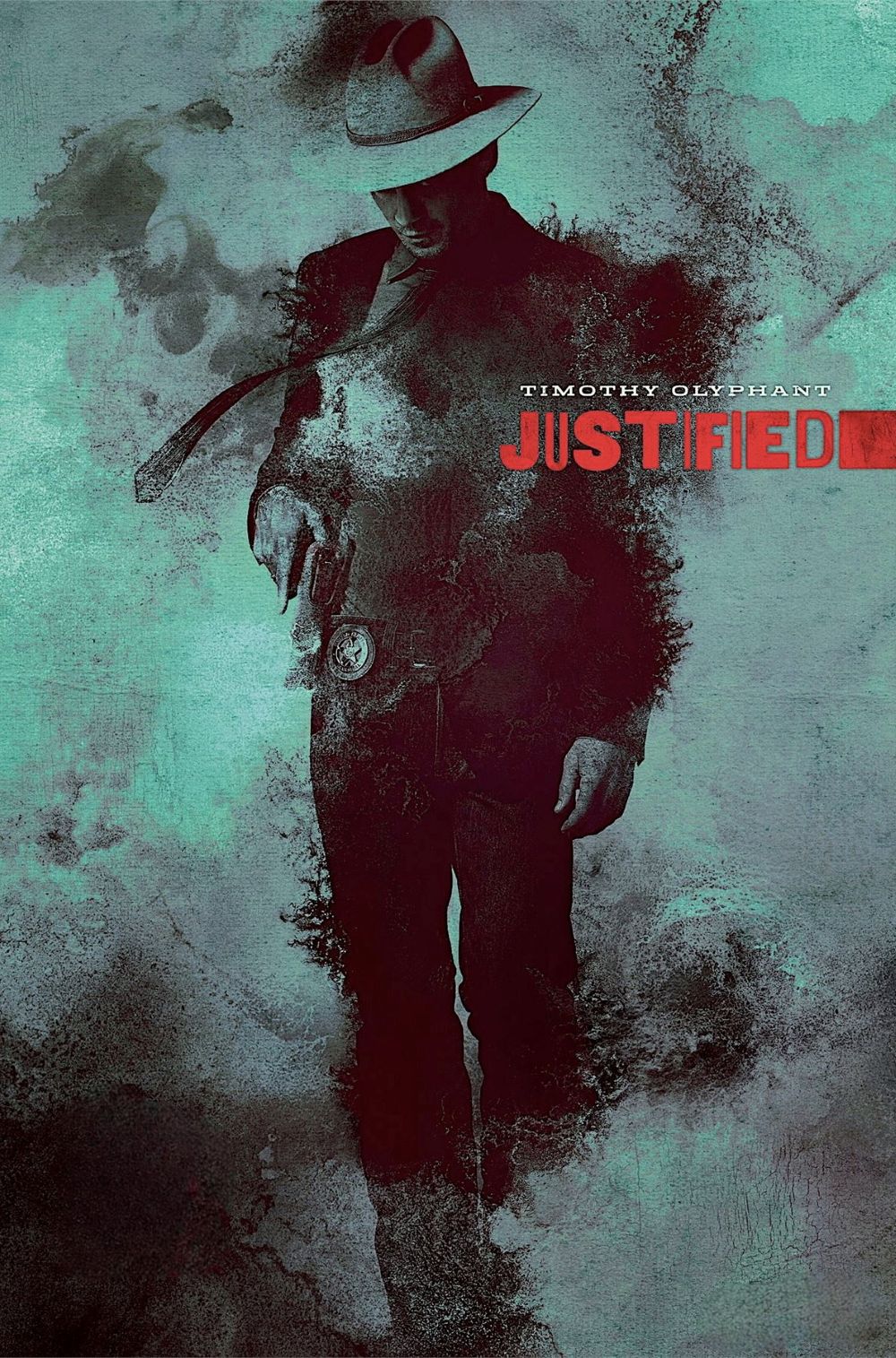
Review: Justified (by Graham Yost)


“You do a good job of hiding it. And I suppose most folks don’t see it. But honestly? You’re the angriest man I have ever known.” — Winona Hawkins (describing Raylan Givens)

Justified is one of those rare TV shows that feels like a perfectly aged whiskey—smooth, rich, and with a kick that lingers long after you’ve finished a glass. Adapted from Elmore Leonard’s stories featuring the sharp-shooting, quick-witted U.S. Marshal Raylan Givens, the FX series is a masterclass in character-driven storytelling, sharp dialogue, and the kind of moral ambiguity that makes you question who you’re really rooting for. At the heart of it all is Timothy Olyphant as Raylan, a man who carries the weight of his past like a well-worn leather jacket, and Walton Goggins as Boyd Crowder, the charismatic, Bible-quoting criminal who might just be the most compelling villain—or antihero—you’ve ever seen on screen.

What makes Justified stand out in a sea of crime dramas is its refusal to take itself too seriously, even when the stakes are life-or-death. The show thrives on its dialogue, which crackles with the kind of wit and rhythm you’d expect from Leonard’s work. Raylan’s dry, understated humor is a constant delight, whether he’s trading barbs with a suspect, outsmarting a room full of criminals, or just trying to keep his cool in the face of his own family’s dysfunction. Olyphant delivers every line with a mix of charm and menace, making Raylan feel like a man who’s seen it all but hasn’t lost his sense of humor—or his moral compass, however bent it might be. There’s a scene early in the series where Raylan gives a criminal 24 hours to leave town, and the way Olyphant sells the quiet intensity of that moment is a testament to his ability to command the screen without raising his voice. He’s the kind of hero who doesn’t need to shout to be heard.

But as good as Olyphant is, Justified might just belong to Walton Goggins as Boyd Crowder. Boyd is the kind of character who could’ve been a cartoonish villain in lesser hands, but Goggins turns him into something far more fascinating. A former coal miner turned criminal mastermind, Boyd is equal parts philosopher, showman, and cold-blooded killer. He quotes the Bible one minute and pulls a trigger the next, all while delivering monologues that somehow make his twisted logic sound almost reasonable. Goggins’ performance is electric, and his chemistry with Olyphant is the kind of alchemy that elevates the entire series. Their dynamic is a dance—sometimes a waltz, sometimes a knife fight—where neither man is entirely sure who’s leading. Boyd isn’t just a thorn in Raylan’s side; he’s a dark reflection of him, a man who also grew up in the same rough-and-tumble world of Harlan County, Kentucky, but chose a different path. Their rivalry is the backbone of the show, and every scene they share is a masterclass in tension and subtext.

Then there’s Ava Crowder, Boyd’s sister-in-law and a force of nature in her own right, portrayed with fierce intelligence by Joelle Carter. Ava’s relationship with Boyd is a rollercoaster of love, hate, and everything in between. Their dynamic is just as compelling as the one between Raylan and Boyd, filled with a volatile mix of loyalty, betrayal, and an undeniable connection that neither can fully shake. Ava’s journey from a woman trying to escape her family’s criminal past to a power player in her own right is one of the show’s most compelling arcs. She’s tough, resourceful, and just as morally complex as the men around her, and her interactions with Boyd crackle with the same energy and tension as his showdowns with Raylan. Whether they’re working together, scheming against each other, or caught in some messy in-between, their relationship adds another layer of depth to the show’s already rich tapestry of characters.

The supporting cast is just as strong, filled with characters who feel like they’ve been lifted straight out of a Leonard novel. There’s Art Mullen, Raylan’s boss and the closest thing he has to a father figure, played with gruff warmth by Nick Searcy. And let’s not forget the various criminals, informants, and eccentric locals who populate Harlan County, each one memorable in their own right. Whether it’s the hilariously unhinged Dickie Bennett or the stoic, loyal Limehouse, the show’s roster of side characters ensures that every episode is packed with personality.

What’s so refreshing about Justified is that it never feels the need to over-explain itself. The dialogue is sharp and efficient, often delivering character development and plot twists in the same breath. The show trusts its audience to keep up, and it rewards that trust with some of the most satisfying writing on television. The banter isn’t just clever—it’s purposeful, revealing layers of the characters and their relationships without ever feeling like exposition. And the action? It’s as tight and precise as Raylan’s aim. The shootouts are sudden and brutal, but they’re never gratuitous. Every pull of the trigger feels earned, and the tension leading up to those moments is often as gripping as the violence itself.

The setting of Harlan County is almost a character in itself. The show paints a vivid picture of a place where the law is more of a suggestion than a rule, and where family loyalty often trumps justice. The rugged, coal-dusted landscape mirrors the moral grayness of the stories being told. This isn’t a world of clear-cut heroes and villains; it’s a world where everyone has their own code, and where the line between right and wrong is as blurry as the smoke from a freshly fired revolver. Raylan himself is a product of this environment, and his struggle to reconcile his past with his present is one of the show’s most compelling threads. He’s a man who left Harlan to become a marshal, but Harlan—and its ghosts—never really left him.

One of the show’s greatest strengths is its ability to balance humor and darkness. Even in its grimmest moments, Justified never loses its sense of fun. The writers have a knack for undercutting tension with a well-placed joke or a bit of absurdity, and the result is a show that’s as entertaining as it is thought-provoking. Whether it’s Raylan’s deadpan reactions to the chaos around him or Boyd’s theatrical antics, there’s always a moment to lighten the mood, even when the stakes are at their highest. This balance keeps the show from ever feeling too heavy, and it makes the darker moments hit even harder when they do arrive.

If there’s one thing Justified doesn’t get enough credit for, it’s its consistency. Over six seasons, the show rarely misfires. The writing remains sharp, the performances stay top-notch, and the stories continue to surprise. Even when it dips into more serialized storytelling in its later seasons, it never loses sight of what makes it special: the characters and their relationships. And when the series finally reaches its conclusion, it does so in a way that feels both satisfying and true to everything that came before. There are no easy answers in Justified, no neat bows tied around its themes. Instead, it leaves you with the sense that life—and justice—is messy, complicated, and often unfair.

At its core, Justified is a show about men and women shaped by their pasts, trying to carve out a future in a world that doesn’t always make it easy. Raylan Givens is a hero, but he’s not a saint. Boyd Crowder is a villain, but he’s not without his own twisted sense of honor. Ava Crowder is a survivor, navigating a world where loyalty is a currency and trust is a luxury. The beauty of the show is that it lets these characters exist in all their complexity, never forcing them into boxes they don’t fit into. And with dialogue that snaps like a twig underfoot and performances that bring every word to life, it’s a series that’s as rewarding to revisit as it is to experience for the first time. If you’re a fan of stories where the characters are as rich as the plot, and where every line of dialogue feels like it’s been polished to a shine, then Justified is the kind of show you’ll want to savor. It’s a modern classic, plain and simple.
Join #TubiThursday For Pretty In Pink!


Hi, everyone!  Tonight, on Mastodon, I will be hosting the #TubiThursday watch party!  Join us for a true classic, 1986’s Pretty In Pink!

You can find the movie on Tubi and YouTube and you can join us on Mastodon at 9 pm central time!  (That’s 10 pm for you folks on the East Coast.)  We will be using #TubiThursday hashtag!  See you then!

Scenes That I Love: Amy Adams In Arrival


Today, the Shattered Lens wishes a happy birthday to my fellow redhead, Amy Adams!

Amy gave one of the best performances to not be nominated for an Oscar in 2016’s Arrival.  Today, my scene that I love is the poignant and thought-provoking ending of that film.

4 Shots From 4 Films: Special H.P. Lovecraft Edition


4 Shots From 4 Films is just what it says it is, 4 shots from 4 of our favorite films.  As opposed to the reviews and recaps that we usually post, 4 Shots From 4 Films is all about letting the visuals do the talking.

This edition of 4 Shots From 4 Films is dedicated to H.P. Lovecraft, on the occasion of his 136th birthday.

4 Shots From 4 Films

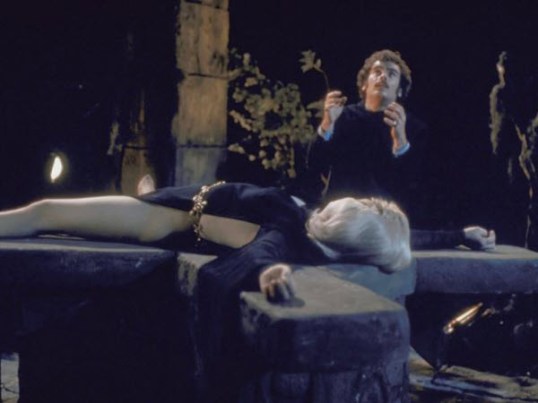
The Dunwich Horror (1970, directed by Daniel Haller)

The Dunwich Horror (1970, directed by Daniel Haller)

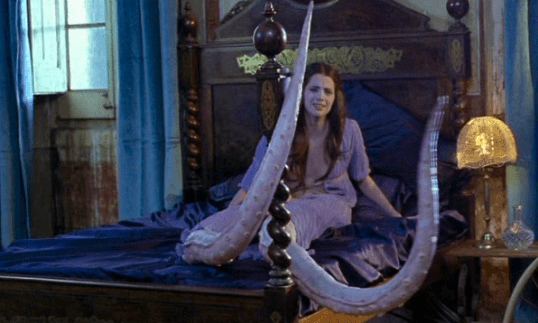
Dagon (2001, directed by Stuart Gordon)

Dagon (2001, directed by Stuart Gordon)

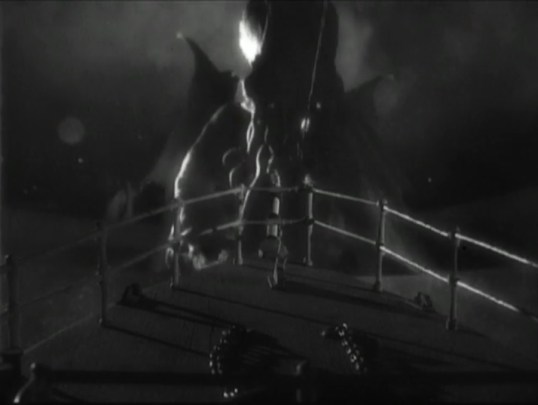
The Call of Cthulhu (2005, directed by Andrew Leman)

The Call of Cthulhu (2005, directed by Andrew Leman)

The Whisperer in Darkness (2011, directed by Sean Branney)

The Whisperer in Darkness (2011, directed by Sean Branney)

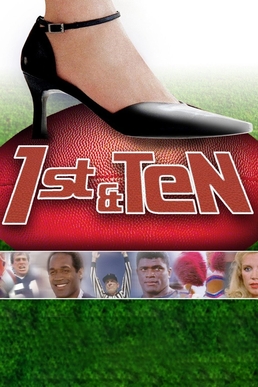
Late Night Retro Television Review: 1st & Ten 4.13 “The High and Mighty”


Welcome to Late Night Retro Television Reviews, a feature where we review some of our favorite and least favorite shows of the past! On Wednesdays, I will be reviewing 1st and Ten, which aired in syndication from 1984 to 1991. The entire series is streaming on Tubi.

The undefeated season continues!

Episode 4.13 “The High and Mighty”

(Dir by Stan Lathan, originally aired on December 28th, 1988)

In this week’s episode, we watch as the Bulls fly to and then from their latest game.

On the flight to the game, Denardo worries about whether or not he has what it takes to eventually win the Championship game.  (That’s this show’s equivalent of the Super Bowl.)  On the flight back, Denardo’s confidence has been restored and he can’t wait to start planning for the big game.

TD Parker (played by OJ Simpson) spends the flight back flirting with a flight attendant.  OJ Simpson’s performance in this episode is perhaps the worst that he’s given since he first joined the cast.  I think the problem is that Parker is supposed to be drunk and Simpson was incapable of playing any emotion or condition beyond bland amiability.

Bubba is terrified of flying and has a nightmare that Mad Dog is flying the plane.

Zagrib and a ringer (James Hampton) hustle all of the players in a poker game on the first flight.  On the return flight, Zagrib loses all of the money he won and then begs Mad Dog not to kill him.  Mad Dog says that he won’t hurt Zagrib because the team needs a good kicker.

Executives Gail (Shanna Reed) and Michael (Paul Tuerpe) argue over where the new Bulls Stadium should be located.  Michael thinks that he has found the perfect spot but, on the flight back, Gail lies to him and tells him that the spot used to be a toxic waste dump.  Michael calls the head of the Dodds Corporation and tries to take credit for finding the location where Gail wants to put the stadium.  This storyline would have been more effective if Michael and Gail were interesting characters.

Finally, Doug falls for an obsessive flight attendant who later tells him that she poisoned his coffee.  Doug panics, though he doesn’t actually die or anything so I think she was just lying to him.

I actually kind of liked this episode because I thought it was interesting to see how the members of the team distracted themselves before the game and how they celebrated after they won.  This episode was all about big personalities in a confined location and, with the exception of OJ, it featured some fine ensemble work from the cast.  Considering how much this show has struggled with finding a consistent tone from not only episode-to-episode but also from scene-to-scene, this was an unusually disciplined episode.

Next week, we finish up the fourth season!

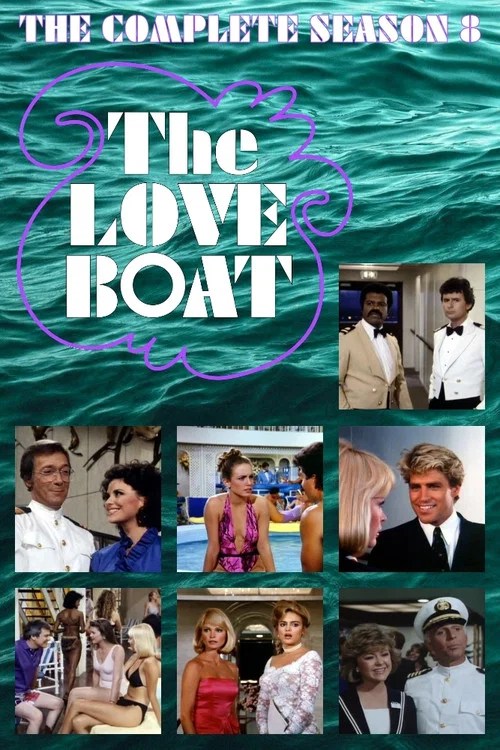
Retro Television Review: The Love Boat 8.7 “And One to Grow On/Seems Like Old Times/I’ll Never Forget What’s Her Name”


Welcome to Retro Television Reviews, a feature where we review some of our favorite and least favorite shows of the past!  On Wednesdays, I will be reviewing the original Love Boat, which aired on ABC from 1977 to 1986!  The series can be streamed on Paramount Plus!

It’s love!  Welcome aboard, it’s love!

Episode 8.7 “And One to Grow On/Seems Like Old Times/I’ll Never Forget What’s Her Name”

(Dir by Jack Arnold, originally aired on October 27th, 1984)

Ruth Justin (Morgan Brittany) boards the ship with her ex-fiancée, Arthur (Richard Kline).  Arthur has been suffering from amnesia ever since Ruth ended their engagement and Ruth hopes that she can help cure his condition by taking a cruise with him.  But what if Arthur is just faking his condition because he wants to get back together with Ruth?

Private detective Johnny Bonilla (Alex Rocco) boards the ship with his client, Deborah Marshall (Joan Van Ark).  Deborah hired Johnny to help her tack down Larry Peters (Robert Reed), a man who she once had a crush on.  But what if Larry is just an overage playboy and Johnny is the one who truly loves Deborah?

Those two stories, while handled competently, were pretty much just standard Love Boat plotlines.  The story that one truly remembers from this episode belongs to Vicki and Captain Stubing.  Vicki is finally turning 18 and the Captain throws her a big surprise party on the boat.  Vicki is happy and the Captain is proud …. or, at least, he is until he catches Vicki with a bottle of champagne.  The Captain ends up yelling at Vicki.  Vicki runs off, with tears in her eyes.  Doc Bricker suggests that it’s time that the Captain tell Vicki the truth about his alcoholism.

Captain Stubing is scared to do so.   He fears that, if he tells Vicki that he was an angry drunk who once nearly hit a kid while driving while intoxicated, she’ll lose all respect for him.  But, in a wonderfully-acted scene, Stubing does tell her.  And, once the shock wears off, Vicki comes to see her father as being more of a hero than ever.  She now understands why the Captain doesn’t drink and, importantly, the Captain himself understands why he overreacted to seeing Vicki tipsy.

In the past, I’ve always wondered about whether or not Vicki had a life outside of the ship and, to be honest, I still wonder that.  Even when she celebrates her 18th birthday, there’s no one her own age around.  Instead, she celebrates with the much older crew and a bunch of elderly passengers.  That doesn’t seem quite fair to Vicki.  Because The Love Boat is …. well, the Love Boat, it’s easy to ignore the fact that Vicki pretty much gave up her childhood to work on a cruise ship.

That said, Captain Stubing and Vicki’s father-daughter relationship has always, somewhat surprisingly, been one of the strongest elements of The Love Boat and that’s almost entirely due to the performances of Gavin MacLeod and Jill Whelan.  One sees that in this episode.  Gavin MacLeod was a recovering alcoholic in real life and his performance the scene in which he talks to Vicki about his struggles has an authenticity to it that keeps it from getting mawkish or preachy.

(I cried as I watched.  I’m missing my dad today.)

This was a good cruise, even if Ace was strangely not on the boat this week.  Where were you Ace?

Brad’s “Song of the Day” – CHARLIE’S COAL by Val McCallum!


It was such an honor getting to meet Val McCallum this summer in Vermont. He wrote this beautiful song about Charles Bronson called “Charlie’s Coal” that he included on his 2019 album Chateauguay. It’s a moving tribute to his dad. I still can’t believe that I had the good fortune to be able hear him perform this live at the Skunk Hollow Tavern. His cousin Lindsay told me later that he wasn’t going to sing that night but decided to when he met me and my wife and found out we were visiting the area there to pay tribute to Bronson. What a great guy!

I thought I would share it with you today! I hope you enjoy!

Charlie’s Coal

Follow the highway, follow the heart, to the green hills of ScoopTown, where my daddy grew up. Working down in the darkness, hauling out the coal. Stays on your skin, never leaves your soul.

Digging coal, black coal, from down in that hole. Digging coal, black coal, makes the engines roll.

He dreamed of a woman, so blonde and so fair. So, he had to go find her, climbing up out of there. Together they handled, any twist in the road. It strengthens your life, when you share the load.

When daddy wasn’t well, she knew just what to do. Held him in her arms, ‘til the night turned blue. Made a fire in the fireplace from some of his coal. Power from so long ago.

I live by the ocean, California dream. He lives under the earth now, what he left isn’t seen. He gave me my first guitar. I still remember that day. I still see him smile, every time I play. It gets into your heart, never goes away.

Digging coal, black coal, down in that hole. Digging coal, pure gold, makes the engines roll. Daddy’s coal, pure gold. May the cameras roll.