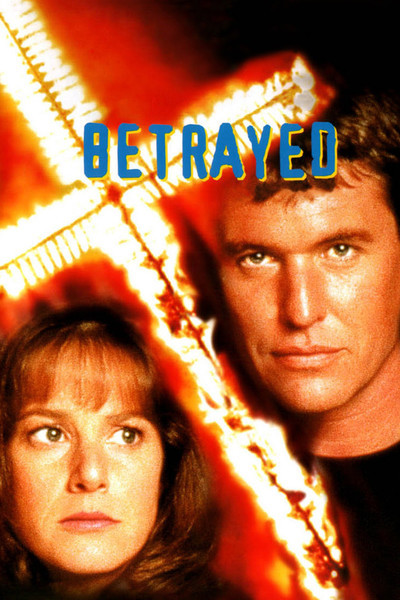
18 Days of Paranoia #11: Betrayed (dir by Costa-Gavras)


The 1988 film, Betrayed, starts out on a strong note but then quickly becomes annoying as Hell.

It opens with shots of a radio talk show host, an outspoken liberal named Sam Kraus (Richard Libertini).  Kraus berates his callers.  Kraus ridicules anyone who is to the left of Bernie Sanders.  When a man with a rural-accent calls in and attacks Karus for being Jewish, Kraus calls the man an idiot.  After he gets off the air, Kraus walks through a parking garage and stops in front of his car.  Another car pulls up beside Kraus and suddenly, a masked man with a gun opens fire on Kraus, killing him.  The gunman gets out of the car and spray paints, “ZOG” on Kraus’s car before then fleeing the garage.

(ZOG stands for Zionist Occupational Government.  It’s a term used by the type of anti-Semitic dipshits who thinks that the Protocols of Elder Zion are real.)

From this shockingly brutal opening, we cut to panoramic shots of beautiful farmland and crops being harvested in the American midwest, the heartland.  Gary Simmons (Tom Berenger) owns a farm.  He’s a Vietnam vet who nearly received the medal of honor.  He lives with his mother and he has two children.  (He’s divorced and his ex-wife died as the result of a mysterious hit-and-run in California.)  Almost everyone in his small hometown seems to worship Gary.  They’re certainly curious about his new girlfriend, Katie Phillips (Debra Winger).

And really, they probably should be.  Katie Phillips isn’t Katie Phillips at all.  She’s actually an FBI agent named Cathy Weaver and she’s been sent undercover to investigate whether or not Gary was involved in the murder of Kraus.  Cathy, who comes from a broken family and who we’re told has always been seeking some sort of deeper meaning in her life, is charmed by both Gary and his family.  In fact, she falls in love with Gary.  She tells her superior, Mike Carnes (John Heard), that there’s no way Gary is dangerous.  Mike doesn’t believe her but, of course, Mike has a personal stake in this because he and Cathy used to be romantically involved.

(That’s right, everyone.  Betrayed is so narratively lazy that it resorts to making Mike a scorned lover, even though the film’s plot would have worked just as well if he wasn’t.)

As I said, the first part of the movie works.  Debra Wingers gives a strong performance and Tom Berenger is a charming roughneck.  For the first half-hour or so, the film does a good job of showing why men like Gary and his friends are susceptible to conspiracy theories and why they feel that the entire world is stacked against them.  You can understand why Cathy is so troubled by her assignment because Gary’s friends are hardly master criminals.  For the most part, they’re farmers who feel like their entire way of life has been taken away from them.

Unfortunately, almost immediately after Mike refuses to allow her to end her investigation, Cathy returns to the farm and sleeps with Gary.  Not only is this a plot development a disservice to everything that has previously been established about Cathy as a character but it also marks the point where the movie entirely falls apart.  Immediately after sleeping with Cathy, Gary suddenly goes from being a complex but troubled character to being a cartoonish super villain.  And listen — we’ve all been there.  You meet a guy.  He’s handsome.  He says all the right things.  He seems like he’s sensitive.  He makes you feel safe.  You let down your defenses for one night and the next morning, he’s yelling at you for wearing a short skirt in public.  It happens.  Of course, in Gary’s case, it means that he’s not only criticizing the way that Cathy dresses but he’s also taking her on a hunt where the prey is terrified person of color who Gary and his friends have kidnapped.  It also means that Gary drags Cathy along on a bank robbery and then expects her to join him when he wants to assassinate a presidential candidate.  Even after all that, Cathy remains conflicted about what to do with Gary.  The problem is that it’s not like Gary’s a guy who needs sensitivity training or who spends too much time watching ESPN.  Gary is a guy who is carting around weapons and talking about how he wants to kill “mud people.”  That Cathy still has mixed emotions after all of that goes against everything that the film previously asked us to believe about her.  Gary becomes too cartoonish to be plausible and, as a result, he drags down Cathy’s character as well.

Unfortunately, as the film’s narrative falls apart, so do the majority of the performances.  While Debra Winger struggles to make her character’s motivations plausible, Tom Berenger is reduced to doing a lot of glaring.  (Poor John Heard spends most of the movie shouting and bugging his eyes.)  About the only actor who comes out Betrayed unscathed is John Mahoney, who plays Shorty.  Shorty is one of Gary’s friends.  He’s a friendly and personable guy who seems to sincerely care about everyone and who has a charmingly gentle smile.  He’s also a total racist and the contrast between Shorty’s amiable nature and his hateful thoughts provide the latter half of Betrayed with its only powerful moments.  Mahoney gets one big scene, where he talks to Cathy about how much he hates violence but, at the same time, he feels that the world has left him no other choice.  Mahoney does a great job with his small role.  It’s unfortunate that the rest of Betrayed couldn’t live up to his performance.

Other Entries In The 18 Days Of Paranoia:

  1. The Flight That Disappeared
  2. The Humanity Bureau
  3. The Private Files of J. Edgar Hoover
  4. The Falcon and the Snowman
  5. New World Order
  6. Scandal Sheet
  7. Cuban Rebel Girls
  8. The French Connection II
  9. Blunt: The Fourth Man 
  10. The Quiller Memorandum

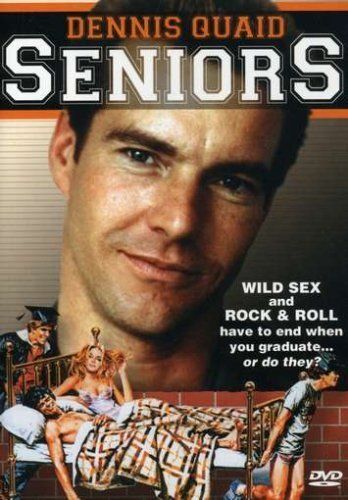
The Seniors (1978, directed by Rod Amateau)


Four college seniors (including one played by Dennis Quaid) are upset at the prospect of graduating, having to get real job, and losing Sylvia (Priscilla Barnes), the mute nymphomaniac who lives in their house with them and does all the cleaning and cooking.  They decide that the best way to avoid getting a real job is by setting up a fake company called Phantom Research.  They apply for and get a grant to study female sexuality, which essentially means that they pay the girls on campus to have sex with them.  Before you can say Risky Business (which was actually released years after this film), they expand their operations, get involved with some crooked businessmen, and nearly lose their lives.  It’s a comedy.

The Seniors is one of those films that used to come on television frequently when I was a kid.  I remember watching it when I was 12 and enjoying it, mostly because I was a stupid kid and I was at that age where any film about sex seemed clever and hilarious.  I recently rewatched it and discovered that there was only one funny bit and that was about a nerdy research assistant named Arnold (Rocky Flintermann) who helps out the seniors in return for them setting him up with Sylvia.  Throughout the film, the formerly virginal Arnold gets laid so often that he loses the ability to walk and then he dies.  Ha ha.  The rest of the film is just dumb.  The problem is that the film wants to be a raunchy, Animal House-style comedy but it was written by Stanley Shapiro (who previously wrote Doris Day comedies) and directed by Rod Amateau, who had previously directed several episodes of Gilligan’s Island.  Their style is all wrong for the material.

The film’s opening credits announce that it stars, among others, Ryan O’Neal, Clint Eastwood, and Charles Bronson.  A cartoon professor then walks out and announces that, “All of these big stars!  None of them are in this film!”  That’s too bad.  I would have liked to have seen some of those stars in this movie.  I think Eastwood would have told the seniors to get jobs and stop exploiting Sylvia.  Bronson would have blown away the entire operation but Ryan O’Neal probably would have been cool with it all.

O’Neal, Eastwood, and Bronson are not in the film.  Dennis Quaid is, though he probably doesn’t brag about.  Edward Andrews and Ian Wolfe both have minor roles as corrupt businessmen who help fund Phantom Research.  Alan Reed, the voice of Fred Flinstone, plays a professor.  This was his last performance before his death.

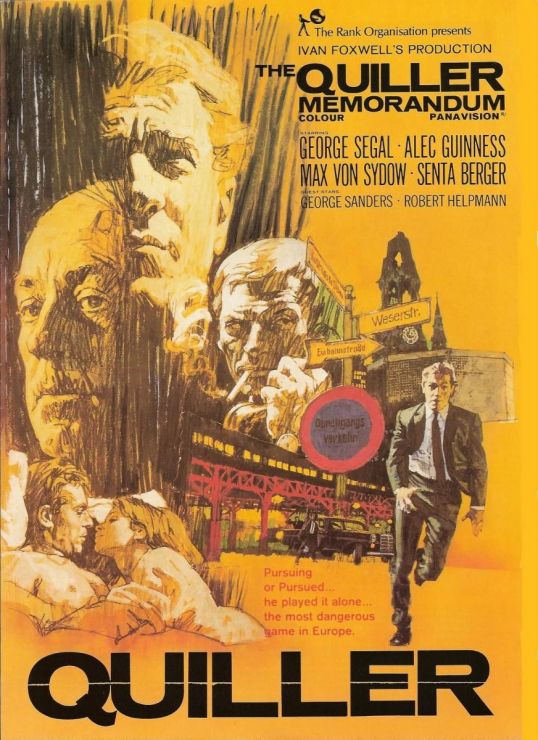
18 Days of Paranoia #10: The Quiller Memorandum (dir by Michael Anderson)


The 1966 film, The Quiller Memorandum, is a diabolically clever little spy thriller.

The film opens with a British secret agent getting gunned down while trying to make a call from a phone booth in Berlin.  While we never learn the exact name of the agency that the man was working for, we do discover that they don’t take kindly to their agents getting gunned down in phone booths.  They send in another agent, an American named Quiller (George Segal), to take his place.

In Berlin, Quiller’s boss is a man named Pol (Alec Guinness).  Pol explains that the man in the phone booth was actually the second of his agents to be assassinated in Berlin.  All of the agents were looking for information about a Neo-Nazi group called Phoenix.  Pol tells Quiller that it is vitally important they discover just where, in Berlin, Phoenix is headquartered.  Quiller is given a few items that were found on the dead man in the phone booth: a bowling alley ticket, a swimming pool ticket, and a newspaper article about a school where it was discovered that one of the teachers had Nazi sympathies.

Though The Quiller Memorandum was undoubtedly produced with the hopes of capitalizing on the popularity of the Bond films, Quiller is no James Bond.  We know that as soon as we see him.  It’s not just that Quiller’s an American while Bond was British.  It’s also that James Bond was played by the cool and calculating Sean Connery while Quiller is played by George Segal.  Whereas Connery’s Bond never loses his confidence, Segal’s Quiller comes across as being, at first, a bit cocky and, as a result, we worry about him.  Whereas Connery’s Bond rarely gave his actions a second thought, Segal brings a slightly neurotic edge to Quiller.  You take one look at Connery’s Bond and you know that he’s going to survive no matter what.  Quiller, however, you never get that feeling.  When he’s in danger, you worry about him because it’s easy to imagine him turning up like the man in the phone booth.

And, indeed, it doesn’t take long for Quiller to get captured by the members of Phoenix.  A man bumps him with a suitcase, injecting a drug into his system that makes Quiller become drowsy.  When Quiller awakens, he’s being interrogated by an erudite man named Oktober (Max von Sydow).  Oktober’s an aristocrat.  He speaks in a very calm tone, rarely showing any hint of anger.  The only thing that betrays his evil nature are his eyes, which are cold and soulless.

Even though Quiller survives the interrogation, it’s tempting to give up on him.  After all, Quiller got captured so easily and Oktober seems so clever that you kind of find yourself wondering if maybe the agency made a mistake when they gave this mission to Quiller.  That’s where The Quiller Memorandum surprises you, though.  Quiller turns out to be a lot more clever and resourceful than anyone gave him credit for being and, for that matter, the film itself turn out to have a few more twists and turns in store for the viewer.

It’s a clever and enjoyable spy film, featuring wonderful performances from Segal, Guinness, von Sydow, and Senta Berger as the teacher who may be in love with Quiller or who may have an agenda of her own.  The film may be a spy thriller but Michael Anderson directs it as if its a film noir, full of shadowy streets and morally ambiguous characters.  The script, by Harold Pinter, encourages us to trust no one and Anderson’s direction reminds us that we made the right decision.  On the dark streets of Cold War Berlin, no one is who they seem.

The Quiller Memorandum is a must-see for fans of 60 spy films.  Watch it with someone who you think you can trust.

Other Entries In The 18 Days Of Paranoia:

  1. The Flight That Disappeared
  2. The Humanity Bureau
  3. The Private Files of J. Edgar Hoover
  4. The Falcon and the Snowman
  5. New World Order
  6. Scandal Sheet
  7. Cuban Rebel Girls
  8. The French Connection II
  9. Blunt: The Fourth Man 

4 Shots From 4 Films: Special Akira Kurosawa Edition


4 Shots From 4 Films is just what it says it is, 4 shots from 4 of our favorite films. As opposed to the reviews and recaps that we usually post, 4 Shots From 4 Films lets the visuals do the talking!

110 years ago today, Akira Kurosawa was born.  Today, we honor the life of one of the most influential directors in film history and that means that it’s time for:

4 Shots From 4 Films

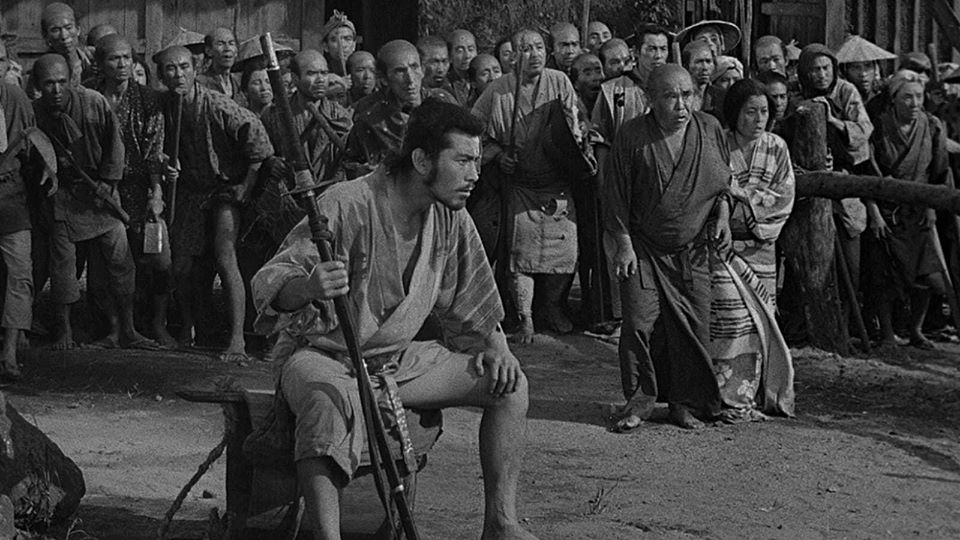
Seven Samurai (1954, directed by Akira Kurosawa)

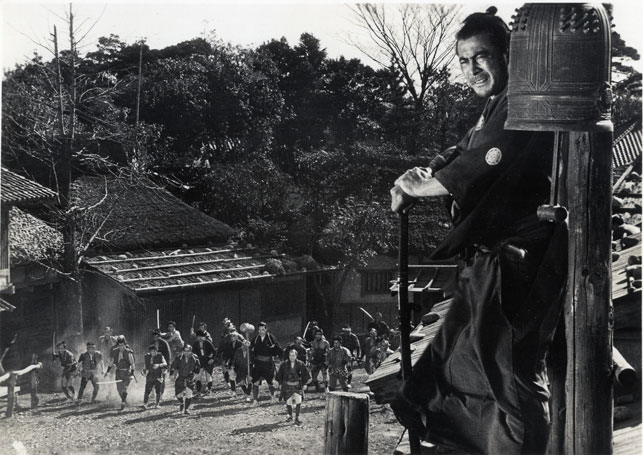
Yojimbo (1961, directed by Akira Kurosawa)

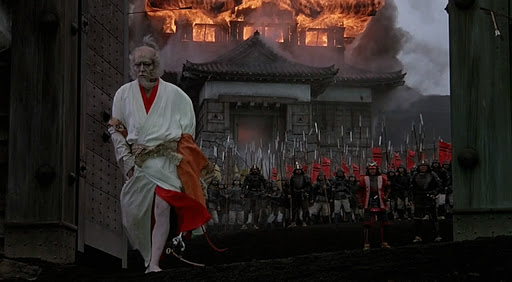
Ran (1987, directed by Akira Kurosawa)

Dreams (1990, directed by Akira Kurosawa)

If you’re on lockdown right now and you’re not at already a familiar with Japan’s greatest director, this is a great time to discover the works of Akira Kurosawa!

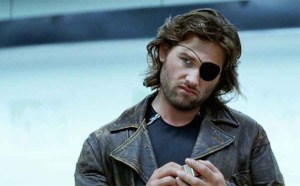
Escape From New York (dir. by John Carpenter)


escape-from-new-york-movie-poster-1981-1020189511Before you start, note that Escape From New York was recently showcased in Jeff’s 4 Shots from 4 Films post to celebrate Kurt Russell’s birthday. For another take on the film, check out Jeff’s review. Please check that out, and then double back here, if you want. 

When I was little, my Aunt would sometimes take my older brother and I with her into Manhattan. In a little movie theatre near 82nd Street, she’d get us a set of tickets for a film, help us get seated with snacks and then either stay for the movie or leave to perform housekeeping duties for someone nearby if she had work and we weren’t allowed to hang out on site. John Carpenter’s Escape From New York wasn’t a film she stayed for (she loved Raiders of the Lost Ark), but it was okay. I was introduced to Snake Plissken, who ended up being cooler than Han Solo to my six year old eyes. Instead of being the hero, here was a criminal being asked to a mission. It showed me that even the bad guys could be heroes, now and then (or better yet, not every hero is cookie cutter clean). The film became an instant favorite for me. As I also do with Jaws and The Fog, I try not to let a year go by without watching Escape From New York at least once. It was my first Carpenter film.

The cultural impact of Escape From New York is pretty grand, in my opinion. It had a major influence on Hideo Kojima’s Metal Gear video games and also spawned a few comics with Plissken, complete with Jack Burton crossovers with Carpenter’s Big Trouble in Little China.

Carpenter brought in most of the same crew he worked with in his previous movies. The film was the third collaboration between Carpenter and Debra Hill, who previously worked with him in 1978’s Halloween and 1980’s The Fog. Though Hill didn’t write this one, she was still the producer, along with Larry Franco. There’s also a bit of speculation on whether Hill performed the opening vocals describing New York or Jamie Lee Curtis handled that. Cinematographer Dean Cundey (who worked on most of Carpenter’s early films) returned to help give the movie it’s gritty look, which is helpful considering how much of it takes place either at night or in darkened rooms. Another interesting part of the production is James Cameron, who was the Director of Photography when it came to the effects and matte work. One of the best effects shots in the film has Plissken gliding over Manhattan, which was designed by Effects member John C. Wash. The shot on his plane’s dashboard of the city was made from miniature mock up with reflective tape that made it appear as if it were digital, which was pretty cool given that they weren’t on an Industrial Light and Magic budget. There’s a fantastic article on We Are The Mutants and on the Escape From New York/LA Fan Page that focus on Wash’s technical contributions to the film.

For Carpenter’s career, Escape From New York marked the start of a great working relationship with Alan Howarth. Howarth, who also worked on the sound in the film, assisted Carpenter with the soundtrack. I’ve always felt this brought a new level to Carpenter’s music overall. You can easily hear the difference when Howarth was involved. Where Carpenter excelled at general synth sound, Howarth’s touch added some bass and depth. Together, they’d work on Christine, Big Trouble in Little China, Halloween III: Season of the Witch, Prince of Darkness and They Live together. On his own, Howarth was also responsible for both Halloween 2, 4 and 5.

For the writing, Carpenter worked with Nick Castle, who played Michael Myers for him in the original Halloween. Escape From New York’s story is simple. In 1988, the crime rate for the United States rises 400 percent. As a result, someone had the notion to turn Manhattan into a prison for an entire country, setting up walls around the borough and mines in the waterways. When Airforce One crashes in the borough nearly a decade later, the recently arrested war hero / fugitive Snake Plissken (Kurt Russell) is given a mission. Go in, rescue the President and/or the tape he’s carrying in 22 hours, and Plissken receives a pardon for all his crimes. To ensure that he follows through, he’s injected with nano-explosives that will kill him when the deadline hits. What seems like a simple mission becomes a little complicated when Snake discovers the President was captured by The Duke of New York, played by Issac Hayes (I’m Gonna Git You Sucka). Given that I’ve commuted to Manhattan more times than I can count, the film holds a special place in my heart.  The concept of the entire borough being a prison was mind blowing as a kid. The concept still holds up for me as an adult.

For a film about New York, there were only two days of filming actually spent on location there, according to Carpenter’s commentary. Most of that was used for the opening shot at the Statue of Liberty. The bulk of the film was made in Los Angeles, Atlanta and St. Louis. At the time, there was a major fire in St. Louis. The damage made for a great backdrop for both the crash site and the city at night. The film does take some liberties with locations, though. For example, as far as I know, we don’t have a 69th Street Bridge in Manhattan, but as a kid, it didn’t matter much. From an action standpoint, it might not feel as intense as other films. Even when compared to other films in 1981 – like Raiders of the Lost Ark (released a month earlier) – Escape From New York doesn’t have a whole lot, though I still enjoy what it does provide.

escape_from_new_york

Snake Plissken (Kurt Russell) has 22 hours to save the President in John Carpenter’s Escape from New York.

Casting seemed to come easy for the film. Hill, Castle and Carpenter reached out to some friends.  Kurt Russell and Carpenter worked together on Elvis, that was easy enough. Russell’s work with Carpenter would continue on in The Thing, Big Trouble in Little China and Escape from L.A.  From Halloween, Donald Pleasance was brought on to play the President, along with Charles Cyphers and Nancy Stephens as one pissed off flight attendant. From The Fog, we have Tom Atkins as Nick and Adrienne Barbeau as Maggie, who happened to be married to Carpenter at the time. According to Carpenter on the film’s commentary track, the sequence for Maggie’s exit needed to be reshot and extended. The scene with her body on the ground was filmed in Carpenter’s garage and added to the film.

Ernest Borgnine’s (The Poseidon Adventure) Cabbie was a favorite character of mine. Like most cabbies, he knew the city well. He even prepared for some of its challenges with molotov cocktails. Harry Dean Stanton (Alien, Christine) played Brain, the smartest individual in the room and the supplier for gas for the Duke. If you look close, you’ll also catch Assault on Precinct 13’s Frank Doubleday as Romero, which his crazy looking teeth. To round it all out, Lee Van Cleef (The Good, The Bad & The Ugly) plays Hauk, who puts Snake on his mission. And of course, it wouldn’t be a Carpenter film without a George ‘Buck’ Flower cameo. Buck was kind of Carpenter’s lucky charm in the way Dick Miller was for Joe Dante’s films. Good Ol’ Buck plays an inmate who sings Hail to the Chief.

Overall, Escape From New York is a classic Carpenter film that’s worth the watch. Whether you do so while wearing an eyepatch or not, that’s on you. We all have our preferences.


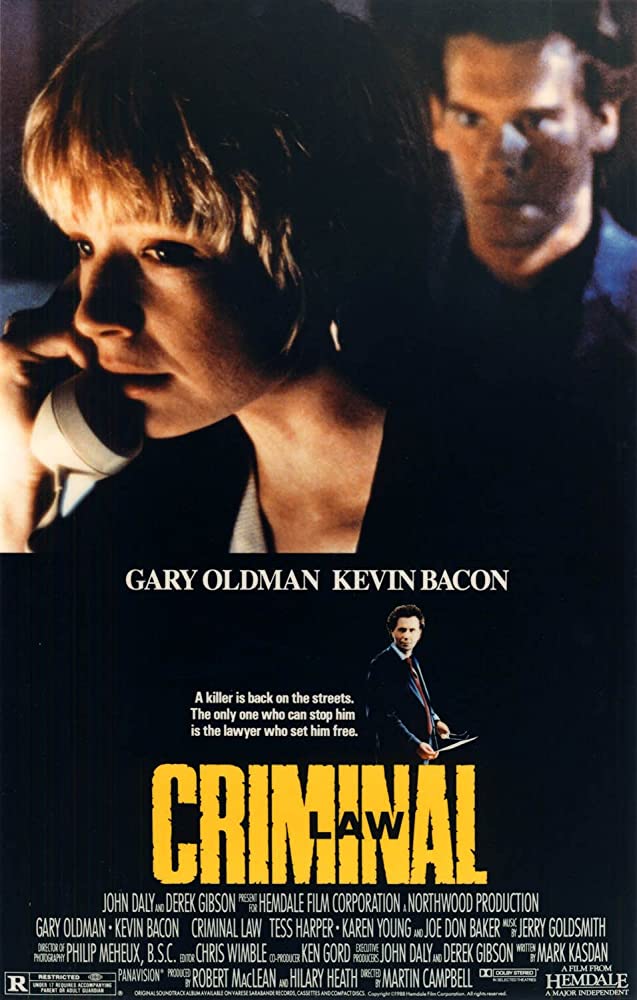
Criminal Law (1988, directed by Matin Campbell)


Gary Oldman is Ben Chase, a hotshot defense attorney who graduated from Harvard and now practices law in Boston.  That means that he gets to have a Boston accent and you know how much Gary Oldman loves playing a role with an accent.  Ben also has a pompadour because Gary Oldman always has something weird going on with his hair in almost every film he appears in.

Ben’s latest client is Martin Thiel (Kevin Bacon), a sociopathic rich kid who has been accused of murder.  Even though Ben thinks that Martin is probably guilty, he still gets Martin off the hook.  As soon as Martin get his acquittal, he starts murdering again.  Ben feels responsible so he decides that what he needs to do is trick Martin into implicating himself.  However, Martin knows what Ben is planning so, instead, he decides to frame Ben for the murders.  Somehow, it all links back to Martin’s feelings about abortion.  I guess Martin is against abortion or maybe he’s for it.  It was hard to keep track.  I watched the movie and I’m still not sure I followed everything that I saw.  It’s not that the plot is diabolically clever.  It’s just that it’s so incoherent that not a single plot point logically follows from another.

The film experiments with suggesting that there’s some sort of deeper connection between Martin and Ben.  Martin is obsessed with Ben and when Ben is in bed with his girlfriend, he briefly imagines that she’s turned into Martin and has a good old-fashioned freak out as a result.  It doesn’t make any sense.  First off, you have to believe that Ben can’t tell the difference between Kevin Bacon and his girlfriend.  Secondly, you have to then accept that Ben — a HARVARD GRADUATE — is so stupid that he would actually believe that his girlfriend had suddenly transformed into Kevin Bacon and must now be strangled.

Criminal Law is a film that you may be tempted to watch because of the pairing of Kevin Bacon and Gary Oldman but you’d be better off just watching JFK again.  They’re both great actors and and it’s always interesting to see them cast against type but neither one of them is particularly good in Criminal Law.  They’re let down by a script that doesn’t allow either one to create a consistent character.  Sometimes, Martin is a soulless attorney and other times, he’s a panicky social justice crusader.  Sometimes, Kevin Bacon is a clever sociopath and, other times, he’s just your typical mindless movie slasher.

On the plus side, Joe Don Baker is in this mess, playing a cop.  Joe Don Baker has played so many cops in so many bad movies that I wonder if he’s ever been tempted to try to arrest someone in real life.  In Criminal Law, he’s not given much to do but it doesn’t matter.  He’s Joe Don Baker!

Every Studio Ghibli Film, Ranked


My kids love Ghibli, but not every Ghibli film is suitable for kids. As pre-screenings evolved into a month-long binge of every film in the studio’s catalogue, I committed to ranking them. I mean hey, who doesn’t love a big dumb list? But let’s be real up front. These are the works of two of the all-time greatest masters of animated story-telling and their closest collaborators. Room for armchair criticism runs dry pretty early into the charts. I just want to share some films I’ve been passionate about lately, and ranking them is a fun way to go about it.
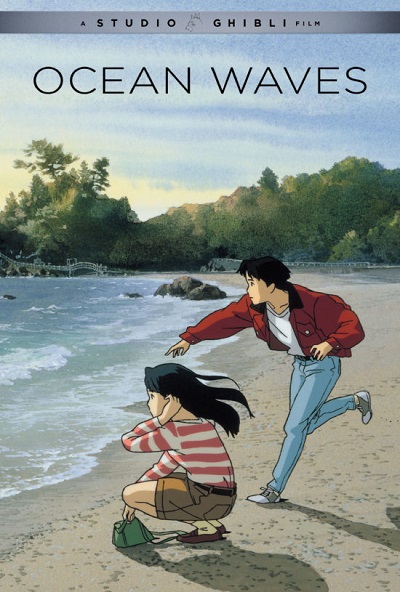
22. Ocean Waves (Tomomi Mochizuki, 1993)
Times watched: 1

Ocean Waves was never intended to be a masterpiece. This made-for-tv anime was a training project for younger staff in the studio, and a lot of reviews I see give it a positive nudge for accomplishing anything at all in this context. I’m not going to pretend to like it. The animation itself is decent enough for a straight-shooting high school romance, but the plot hedges on downright unpleasant. Rikako Muto, the only character with a distinct and memorable personality, is a devious narcissist bent on exploiting anyone who offers her a helping hand. Of course she has a tragic past that justifies it all. Of course she just needs a strong man and her issues will wash away. Of course our generic protagonist Taku sees her inner beauty and falls ever deeper in love the more she treats him like crap. Of course they chance into each other at a train station at the end and Taku embraces his hormones as we fade to credits, our lead characters now destined to live their probably really crappy lives together. It’s dull, cliche, and foregoes any sort of meaningful progression on Rikako and Taku’s rocky, manipulative bond in favor of a half-hearted happy ending.
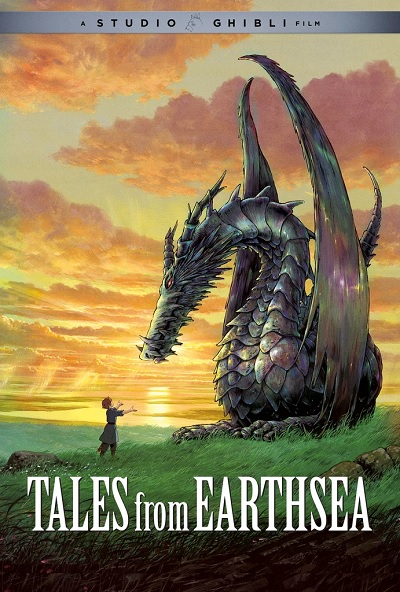
21. Tales from Earthsea (Goro Miyazaki, 2006)
Times watched: 1

Tales from Earthsea is so universally panned that I feel like I’m beating a dead horse to point any of it out, but in brief, the plot is an incoherent mess that necessitates awareness of the novel series its based on to get the slightest grip of what’s going on. The dialogue is comically trite. The characters are hollow facades of Hayao’s visions, with Hare in particular feeling like a chaotic evil caricature of Nausicaä‘s endearing antagonist Kurotowa. The story telling is devoid of vision, jumping around in a haphazard rush to cram in sequences that seem pre-determined, like Goro sat down thinking from the outset that these 100 things have to happen and just crammed them all together without evolution. Yeah, Tales from Earthsea is bad, but unless this is the first write-up you’ve read, you probably knew that.

So let’s talk a little about what it does right. The music! Tamiya Terashima’s score is solid, lending a lush and imaginative soundscape to a world in desperate need of spirit. Some of the landscapes are very tastefully drawn, with Hort Town in particular presenting a number of striking backdrops. While the only villain type Goro seems to grasp is one-dimensional chaotic evil, Cob presents as a legitimately creepy lead antagonist. And lastly, there’s an interesting story to be told outside of the movie itself. Hayao was strongly opposed to allowing his son Goro to direct this film. He knew Goro wasn’t ready, wanted him to start with smaller projects and gain more experience. His concerns were thoroughly legitimized, but Earthsea was not Goro’s final effort. There’s a tale of redemption to it all; the son of a master biting off more than he can chew, failing hard but rebounding to create something entirely decent in its wake.
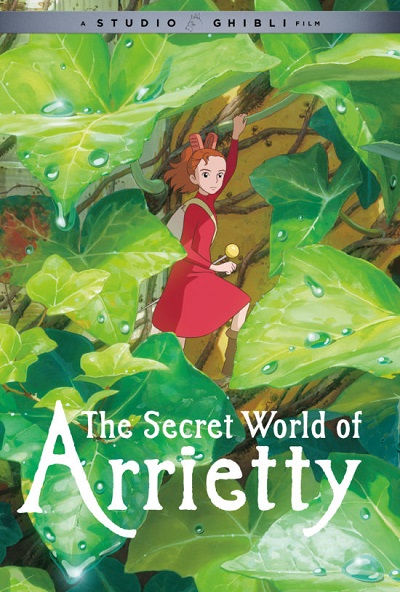
20. Arrietty (Hiromasa Yonebayashi, 2010)
Times watched: 2

Arrietty is a film based on The Borrowers, telling the story of little people living secretly in the walls and how one came to befriend a human ‘bean’. Arrietty’s travels through the house and garden from a mouse-sized perspective are imaginative and compelling both visually and musically. It’s got an awful lot of potential.

Unfortunately, the story telling and character development just aren’t there. Sho is a self-loathing dolt I think I’m supposed to feel bad for but just end up despising, and the emotional rejuvenation he experiences by way of befriending Arrietty feels forced and cliche. Haru might be the worst antagonist in the entire Ghibli catalogue, inconsistently projected as a caring if harsh caretaker, an imbecile injected for comic relief, and a downright sadistic villain. Spiller’s presentation as a stereotypical cave man, pronoun deficiency and all, might serve a purpose in the book–I haven’t read it–but feels completely random and pointless in its film setting. Ultimately Arrietty is a fun, adventurous movie for kids with a pleasant atmosphere, but it tumbles into an abyss at the threshold of the character realism I expect from a Ghibli film.
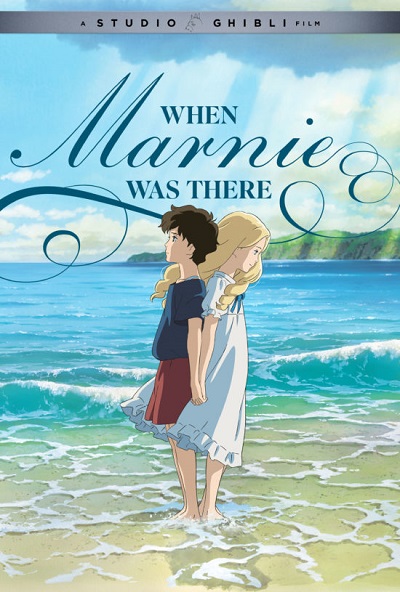
19. When Marnie Was There (Hiromasa Yonebayashi, 2014)
Times watched: 1

When Marnie Was There takes a notable leap from the bottom three, with a carefully crafted protagonist who feels entirely human cast into a world that’s legitimately mysterious. Anna is unlikable for all the right reasons, and sympathy was developed in me gradually and naturally, not forced down my throat like with the equally unpleasant Rikako of Ocean Waves. Marnie has this air of a pre-school siren, innocent in motive but certainly not considerate of Anna’s safety either, and Anna is finely tailored to feel believable as she abandons herself into Marnie’s world. I knew it was going to have a happy ending, but that never fully resolved the twitch in the back of my head that this could turn into a horror film very quickly. And while the plot twist is ultimately predictable, it was sufficiently creative to leave me satisfied.

I’m not sure the story couldn’t have been conveyed better visually. The characters are presented more through color than detail, leaving a glossy feel that didn’t resonate quite so harmoniously with the broader ambience as the lush palettes of say, Arrietty or Ponyo. A grittier look and feel may have done this one well, but at #19 we’re already into movies I enjoyed.
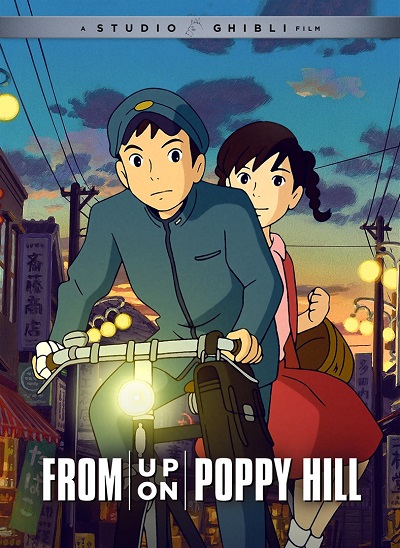
18. From Up on Poppy Hill (Goro Miyazaki, 2011)
Times watched: 1

Or Goro’s redemption, if that’s how you care to think about it. From Up on Poppy Hill is a light comedy that never tries too hard but accomplishes everything it aims for. It felt at risk of the same one-dimensionality as Earthsea at first, but I stopped caring about that when the characters proved to be enjoyable for their simplicity. Umi and Shun’s embodiment of the ultimate made-for-each-other extrovert protagonist couple ends up driving a lot of the humor, and in that sense Goro really flipped one of his major weaknesses in Earthsea on its head and used it to his advantage. It also offers a snappy seaside soundtrack that suits the mood of the movie beautifully. Satoshi Takebe did an outstanding job here; maybe the most well-placed Ghibli score not composed by Joe Hisaishi.
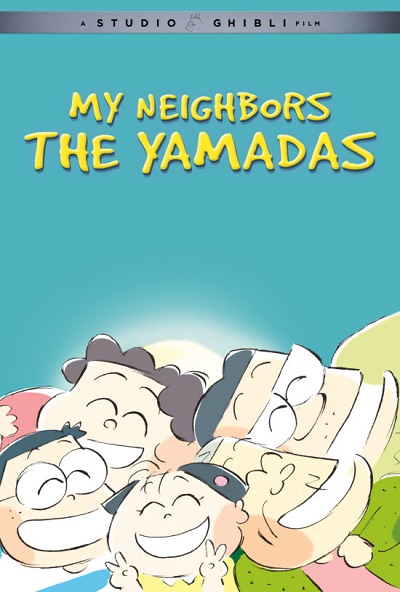
17. My Neighbors the Yamadas (Isao Takahata, 1999)
Times watched: 1

My Neighbors the Yamadas is a collection of light comedy sketches about daily family life reminiscent of classic American sitcoms. The kids fight, mom is lazy, dad comes home drunk, grandma complains about everything. There’s no unfamiliar territory here. But the most central theme throughout is that they all sincerely love each other, and that’s portrayed without ever being forced. For a ‘movie’ that rarely goes ten minutes without a hard break to the next episode, there’s a persistent warmth to it. The most stereotypical gags never feel superficial. Takahata understands people, and I can really pick up on that here. Unfortunately from a ranking standpoint, it barely qualifies as a film and could have just as easily been released for tv as a season of episodes. The minimalistic animation is appropriate but hard to compare in a studio famous for its stunning artwork. It’s an easy one to rank low, but My Neighbors the Yamadas is grand in its humility.
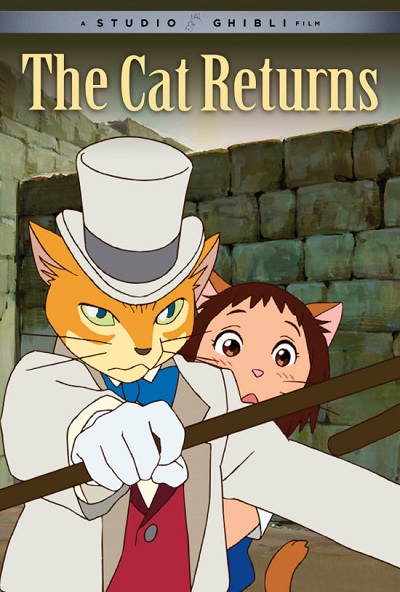
16. The Cat Returns (Hiroyuki Morita, 2002)
Times watched: 3+

This was the hardest movie to rank for me, personally. The Cat Returns is hands down, without question, the most poorly animated film in the Studio Ghibli library. It’s not a remotely introspective or thought-provoking film, either. But wow, what a weird, Alice in Wonderland-esque adventure. My 5 year old son’s favorite Ghibli movie, The Cat Returns is an outwardly innocent romp through a secret world of anthropomorphic felines. The plot is pretty simple from a kid’s perspective. The human protagonist Haru gets stuck in cat land, the bad cats try to keep her there, and the good cats help her escape. Basic.

But there are so many dark undertones to this film. The Cat King is an inbred nutjob who makes his court humiliate themselves for his entertainment and will execute on a whim. His servant Natoru is ever smiling and humbly debasing himself while carrying out the king’s dirty work, pulling creepy stunts like trying to get a character to eat himself to death. The anthropomorphism is twisted; the cats are still cats to the fullest, and they walk about on two legs with all the stagger and imbalance that a real cat might. The entire cat kingdom is warped and unnatural, and it’s all presented with such superficial innocence that I feel completely at ease letting my kids watch it. It’s a real trip and I strongly recommend it. The animation quality is just so poor and the plot so basic that it’s hard for me to juxtapose this to a Takahata or Miyazaki work and call it ‘better’ with a straight face. In terms of raw enjoyment, you’ve got to check this one out.
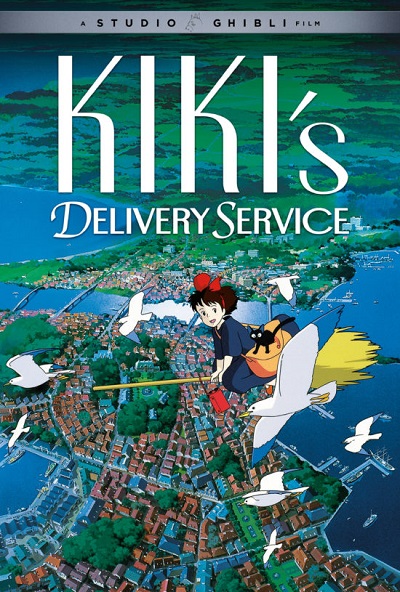
15. Kiki’s Delivery Service (Hayao Miyazaki, 1989)
Times watched: 3+

The most controversial placement on my list was necessarily going to be whichever Hayao film I ranked lowest. Well, here you have it. Kiki’s Delivery Service is a great movie, no doubt about it. But looking back over the collection of Hayao Miyazaki’s works, I just find it to have the least distinguishing character. That is, everything I like about this movie–and I like it quite a lot–I feel like he’s done better since in one form or another. If I really want to get at the root of why this one comes in last though, I think it’s this:

Miyazaki and Takahata are masters of character realism. Of all the things that make Studio Ghibli films so compelling, I think character portrayal carries the day. To take a world as bizarre and foreign as Princess Mononoko and make the characters feel so utterly human… That’s the glue that holds so many other amazing talents on the table here together. Some of these films are focused on deep, complicated subjects. Others are innocent, kid-friendly worlds. Kiki’s Delivery Service is very much a kid’s movie, and her coming of age tale is cast in pure innocence. But she’s going it alone and independently, with a capacity for self-confidence that just doesn’t resonate well as our world spirals back into a dark age that may have felt behind us in the 1980s. Even Hisaishi’s soundtrack has an air of carefree independence about it that’s harder for me to embrace than most of their collaborations. It’s a tale for more confident times. I read a quote by Miyazaki himself along these lines when I was digging for alternative opinions on this film, and I thought “that’s it.”
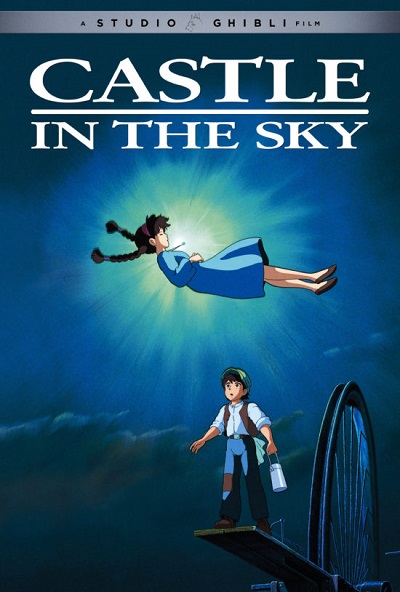
14. Castle in the Sky (Hayao Miyazaki, 1986)
Times watched: 2

Castle in the Sky, also known as Laputa, has a lot of historical value in the evolution of anime, but I’m not enough of a buff to put weight into that. It’s ambitious in a way I think only a younger Miyazaki could be, attempting to fit every expected element of a high fantasy steampunk action film into one package. Towards that end, he does a hell of a job. Laputa is absolutely a classic, but it feels like one. It’s almost like this is the film where he thoroughly proved himself as a master of the traditional and freed himself to delve into his pure artistic sensibilities without any further pressure to create some pre-defined thing.

I have to say, the Dola gang is up there with Calcifer and Donald Curtis for Miyazaki’s most endearing comic relief, but I think on the whole this movie strives too hard to be great at everything to fully perfect any one thing. Colonel Muska in particular is Miyazaki’s most shallow antagonist–and arguably the last time he ever attempted to employ a pure unconditional bad guy. The climax is weak for its binary portrayal of good and evil. And–no fault of Miyazaki–I think Disney gave it a really low effort dub job compared to the top notch voice acting of his other works. Still a fabulous film that I recommend. Everything is relative.
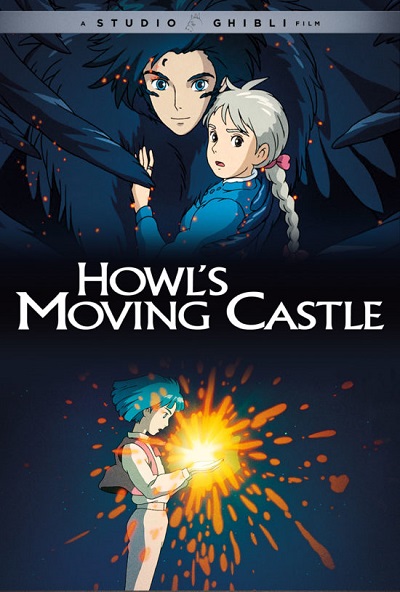
13. Howl’s Moving Castle (Hayao Miyazaki, 2004)
Times watched: 3+

The only Miyazaki film that leaves me conflicted, Howl’s Moving Castle is visually stunning, beautifully animated, highly imaginative, and offers two of the most enjoyable secondary characters of the Ghibli universe in Calcifer and the Witch of the Waste. The world it’s set to is disordered and ill-defined, and knowing that Miyazaki was aware of this and chose to roll with it anyway doesn’t resolve the fact that half the time I really have no clue what’s going on. Howl himself is a hot mess, and Sophie falling for him is a hard sell from a director famous for character development.

Howl’s Moving Castle is filled with compelling scenes and some of Miyazaki’s best animation ever. The way the castle moves and breathes is just fascinating to behold. I’ll never get tired of watching the sequences. Yet out of Miyazaki’s 10 major works, this one leaves me with the least sense of a clear vision. I enjoy it in the moment, but I don’t carry it with me days and weeks later the way I do with many of his other works.
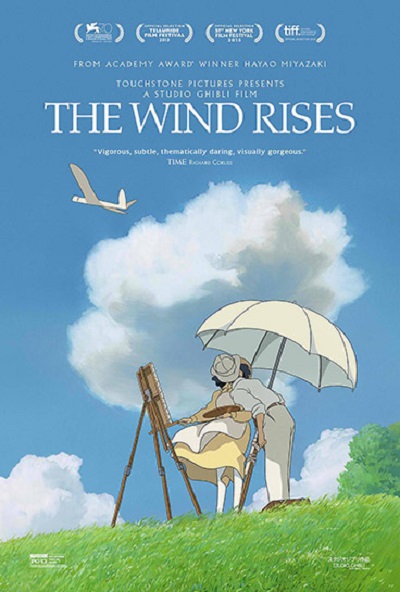
12. The Wind Rises (Hayao Miyazaki, 2013)
Times watched: 1

The Wind Rises is Miyazaki’s final film pending the potential completion of How Do You Live?, and it’s definitely his most subdued. A two hour slow roll through the fictionalized life of Japanese World War II aircraft engineer Jiro Horikoshi, action is mostly limited to a few dream sequences. The movie gets off to an incredibly strong start. The airplanes of Jiro’s childhood dreams, not restricted by physics, are an imaginative thrill. Miyakazi makes great use of sentient sound effects to bring the 1923 Great Kanto earthquake to life. Scene after scene he finds ways to imbue motion into a movie that is ultimately about a guy sitting in front of a desk all day.

But by the mid point, The Wind Rises starts to lose some of its charm for me. The narrative is lost for a moment as the passage of time becomes unclear. Is this failed test flight another dream or an actual event? Have we advanced a day or two years since the last scene? It’s not the sort of transition where the vagueness reflects some internal point; it just seems like a brief lapse in focus. When things come together for me again, Jiro is pursuing a family, and the remainder of the film is told mostly in small rooms and conversations: things that certainly can be portrayed through animation, but don’t facilitate an advantage over live acting; stories that have been told before. Somewhere down the line, the Miyazaki magic was lost to me. Not a flaw per say, just a bit of unfulfilled potential. I still thoroughly enjoyed it.
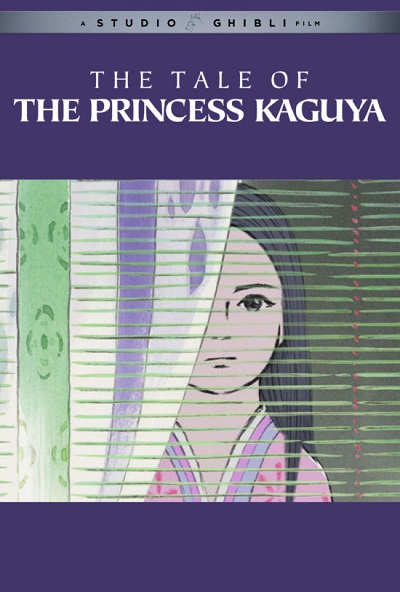
11. The Tale of Princess Kaguya (Isao Takahata, 2013)
Times watched: 1

This one’s hard. I don’t think I’ll ever watch it again. A lot of people say that about Grave of the Fireflies, but for me Takahata’s most difficult film is his final one, The Tale of Princess Kaguya. This is the story of a simple girl living a simple life and loving it with all the innocent fascination of a child until her parents, given the opportunity, force her to pursue a jaded adult’s perception of a ‘better life’. What follows is two hours of superficially well-intended child abuse, as her father, indulging his self-serving vision of a perfect life for her, strips away everything she holds dear. It’s heartbreaking and highly relatable despite being set in a classic Japanese world far removed from modern life, and Takahata takes intriguing liberties with the animation to portray Kaguya’s emotions through varying degrees of visual refinement.

As the film nears its end, it’s hard for me to escape the desire for her to just murder her father and run away forever, but she stays faithful to the end. There’s no forced commentary on whether her obedience is a virtue. It just leaves me to think, rather unpleasantly but not without purpose. At 137 minutes with no action and the narrative fully defined within the first half hour, it does drag, and drag, and drag some more. I could argue that even that plays a meaningful role in casting the viewer into Kaguya’s world. It’s the sort of movie I’ll never find a true fault with because it’s not intended to be pleasant. But I have to draw a line somewhere on the roster between evocative power and evoking emotions I actually want to feel. Don’t be a jerk to your kids. Moving on.
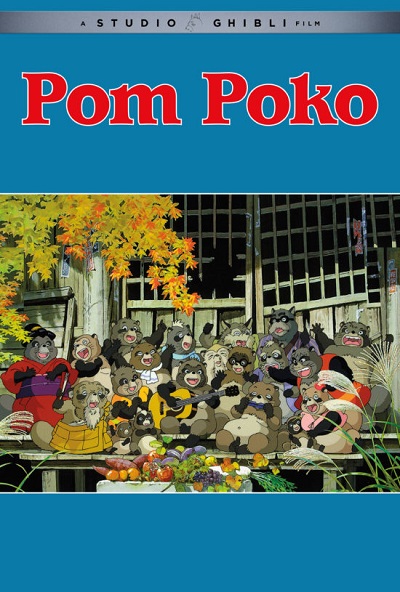
10. Pom Poko (Isao Takahata, 1994)
Times watched: 1

Pom Poko is very serious drama about magical anthropomorphic raccoon testicles. Ok well, raccoon dog testicles. Raccoon dogs are an Asian species most closely related to foxes, but they look like a cross between… you guessed it. Talk about a cultural barrier; the MPAA must have had a field day figuring out how to rate this one. It ultimately got a PG for “thematic elements”. Heh heh.

Anyway, Pom Poko. What a film. Magic raccoon balls actually have a place in Japanese folklore–Takahata didn’t just make this up–but it’s thoroughly self-aware of its outlandishness. Pom Poko is an adult cartoon in the truest sense, with characters reminiscent of the original Teenage Mutant Ninja Turtles animations facing very real starvation and extermination from human encroachment. Slapstick comedy really shouldn’t be able to deliver a socially conscious message, but Takahata finds a way. For better or worse, I’m not going to find another movie like this one. Not in Studio Ghibli. Not anywhere. I loved it.
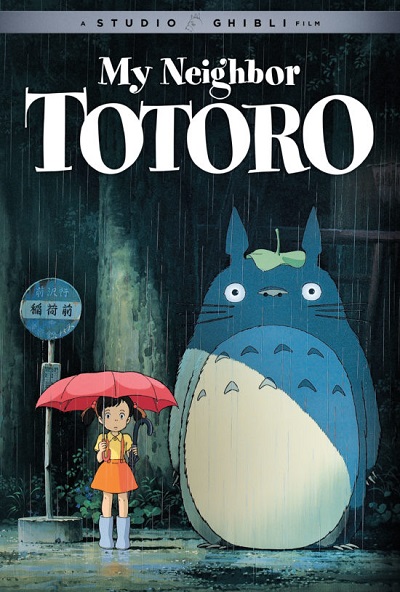
9. My Neighbor Totoro (Hayao Miyazaki, 1988)
Times watched: 3+

My Neighbor Totoro was Studio Ghibli’s first children’s film, and while it’s not half as famous as Spirited Away in the west, you’ll probably recognize the eponymous character. The heartwarming tale of two girls recruiting a forest spirit to help their mother recover from illness stands apart from Miyazaki’s other works in being thoroughly grounded, literally. It’s his only work that lacks a persistent theme of air or water. That might sound trivial, but it gives the movie a really unique texture to me. Something in its landlocked landscape vis a vis the rest of his works makes the world feel smaller, warmer. Independently of that and Joe Hisaishi’s arguably finest score, I’m not sure the movie would do terribly much for me. Satsuki and Mei are adorable, Tatsuo and Granny are endearing, but Miyazaki continued to improve on his character development for decades beyond this film. There are side characters in Spirited Away that develop more personality than Totoro or Catbus in five minutes of screen time. Even the soot spirits, novel for their day, find much more refined character in their second appearance. It’s an early work, and that’s evident. I’m not bound to it for sentimental reasons the way longer-term fans may be.

But the music and setting fit so snugly around it that I can’t help but feel completely at ease every time I put this one on. If you want to talk about a holistic vision, Miyazaki absolutely had one walking into this film and captured it to his fullest potential at the time. The end result is a film that, despite feeling less refined in plot and character development than his later works, emits a constant warmth beyond the scale of any given scene.
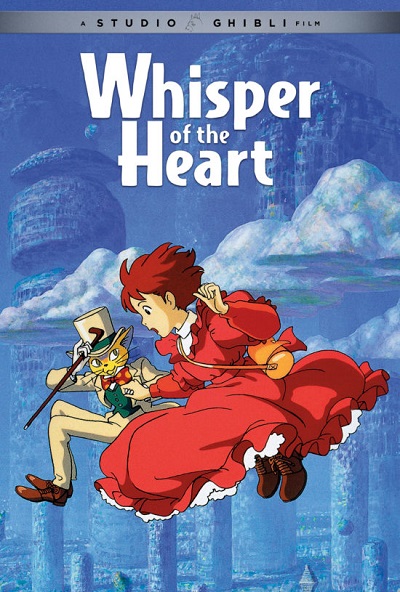
8. Whisper of the Heart (Yoshifumi Kondo, 1995)
Times watched: 2

Kondo’s only director role at Ghibli before his untimely death is one of my favorites. What a beautiful film. Despite the box art, Whisper of the Heart is set in reality. ‘High school romance’ is about the most generic description you can slap on an anime, and it’s not out of place here, but this one is just so endearing and true to itself. At 35, I’m pretty far removed from any age of self-discovery, and I didn’t exactly grow up in a world anything like Shizuku’s, but the film makes it so easy to slip into Shizuku’s life and go through the experience with her. It’s not just her, but the whole supporting cast. Sugimura’s rejection and the way he reacts to her through the rest of the film, the subtle expressions and gestures between the characters, there’s so much attention to detail in bringing all of their emotions to life. When Shizuku’s singing and Nishi and his friends come down the stairs… I don’t know, one of my childhood friends had a musical family, and there wasn’t a romantic factor but I can absolutely relate to that completely non-judgmental, beautiful emergence of sound out of one person picking up an instrument and letting their spirit take them. Maybe it’s not as direct for everybody, but this film evoked so many memories of my childhood in spite of its foreign setting that I have to imagine anyone can find an intimate connection somewhere in it.
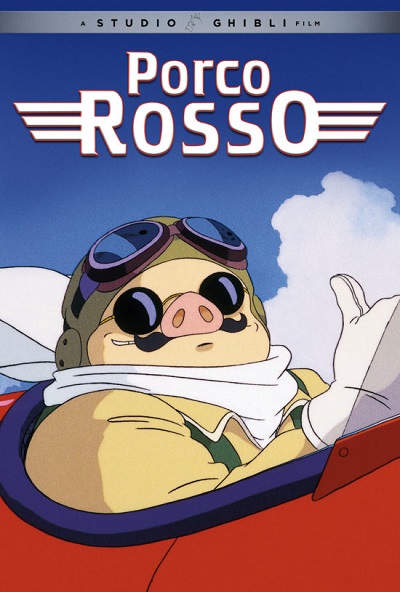
7. Porco Rosso (Hayao Miyazaki, 1992)
Times watched: 2

Something about swine noir, gets to me every time. Well, Porco Rosso is an entirely kid-friendly movie on the surface, complete with an anthropomorphic pig protagonist, and in a lot of ways it’s more conforming to expectations for a kid’s movie than most. Marco is a stereotype anti-hero, the enemies are more like lovable hoodlums than legitimate villains, and even the main antagonist Curtis is among the most likeable characters in Miyazaki’s universe. It’s charming for all of that, and the final showdown between Marco and Curtis is absolutely delightful, but there’s a lot of depth to Porco Rosso beyond its cartoony face. Marco’s playful vigilante policing of the Adriatic serves as the backdrop for exploring his less admirable past as a World War I fighter. There’s a lot of death behind the scenes that a kid wouldn’t readily pick up on. Secret police are hunting him down for desertion. His entire transformation in an otherwise human world is never explained beyond the simple quip that war turns men into pigs. Porco Rosso feels simple and straight-forward relative to Miyazaki’s other works, but it meets me half way whatever level I want to engage it on.
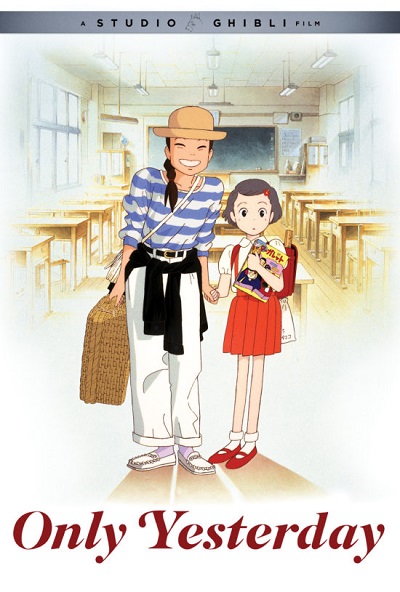
6. Only Yesterday (Isao Takahata, 1991)
Times watched: 1

Before Takahata was exploring the intricacies of how to animate raccoon dog scrotums, he was directing one of Studio Ghibli’s most grounded works. Only Yesterday is the story of a woman in her late 20s reflecting on her inner city childhood during a vacation to her aunt’s farm. That’s it. Nothing magic, nothing tragic, just a straight-forward character portrayal set to the real modern world. The heroine is homely. Her childhood is normal. The choice she is faced with in the end, if life-changing, is hardly extraordinary. It’s just a two hour display of humanity with no frills attached.

Takahata’s mastery for depicting people as they are stands strong through all of his films, but it might be the boldest here. There’s simply nothing else in play. The entire movie is propped up by and dependent on the portrayal of Taeko as a piece of non-fiction. Its broader simplicity allows Takahata the room to focus in on the complexity of the basic human experience, with all its intricate interwoven emotions. Taeko comes to life in an identifiable and immersive way that stuck with me for days. Only Yesterday keeps sneaking further up my list the longer I dwell on it. It’s beautiful, and I definitely intend to watch it again.

The soundtrack also bizarrely features Muzsikás, a Hungarian folk ensemble that I’m pretty sure I featured when I was doing music write-ups for this site a decade ago. Small world eh?
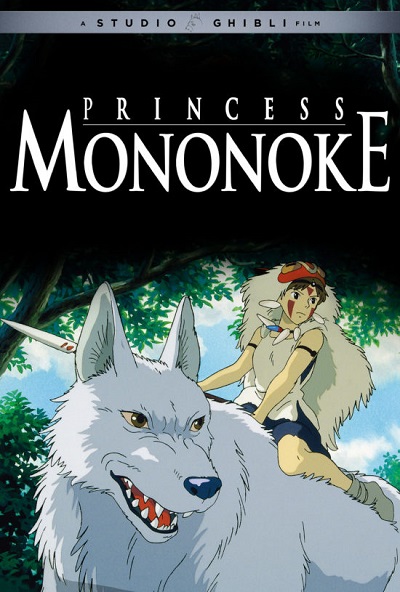
5. Princess Mononoke (Hayao Miyazaki, 1997)
Times watched: 2

This is… a difficult call, and a lot of people would argue for Princess Mononoke as #1. It definitely left me with a lot to process, so much so that it’s probably the Ghibli movie I thought about the most after watching it. Miyazaki’s distinct way of animating fluid motion hits some surreal high points in this film. I don’t know that I’ll ever forget the demon boar’s flesh withering away. So many other-worldly images etched into my mind. San’s mask. The forest spirit’s face. It’s a visually unprecedented film. It’s also Miyazaki’s most adult film, in the sense that it’s grim and tragic from start to finish.

So why only #5? Maybe that bleakness. Just like it took a lot of introspection to not tank The Tale of Princess Kaguya, Princess Mononoke had to grow on me. It didn’t exactly leave the best taste in my mouth. It takes some stewing around to discover that it’s not meant to; to find value in that negative experience. Ashitaka is a strong lead but hardly relatable. San’s desire to kill resonates stronger, and there’s no clear resolution that she or Eboshi or anyone else wins out in the end. There are no winners. That’s part of the point. I mean, the most likeable character in the film to me was Jigo, and he’s the closest thing to a true antagonist Miyazaki’s introduced since Dola’s generic role in Laputa. It leaves a lot to chew on. Perhaps it deserves a higher placement for that, but again, appreciation and enjoyment only coalesce so far. I certainly do love the film.

4. Nausicaä of the Valley of the Wind (Hayao Miyazaki, 1984)
Times watched: 2

Despite that Nausicaä predates Laputa and pursues a similar style, I feel like there’s no comparison. This movie is absolutely wild and offers better character development to boot. Nausicaä‘s world is entirely Miyazaki’s creation, the film being based on his own manga. The insect forests are surreal on a level I didn’t see again until Princess Mononoko. Nausicaä and Ashitaka are very similar characters, but Nausicaä’s given a lot more room to develop through interactions with friends and family where Ashitaka stagnates in isolation. The village legend is vague enough to manifest without feeling forced. The giant warriors fill the same role as the robots in Laputa but with all the amorphous mystique of Mononoko‘s night walker. Joe Hisaishi’s soundtrack is out of this world, and the abrupt audio transitions throughout the film are jarring in a positive way. The English dubbing dodges all of Laputa‘s shortcomings, with Patrick Stewart really stealing the show.

Yeah, video quality looks like it was ripped from a VCR tape, but I can live with that. I love the emotional range this movie projects. Nausicaä has a tangible bond to the people in her village. The insects are at once bestial and more empathetic than many of the humans fighting them. Kurotowa might not be developed to the same extent as Jigo, but he effectively doubles as light comic relief and a human face to an invading army in need of one. The way they lure the ohms is downright disturbing. Nausicaä’s Biblical sacrifice and the giant warrior’s inglorious end… One thing that really stands out to me looking back now is how everything in the film is the catalyst for its own destruction. The Tolmekian capital is destroyed by Tolmekians. Kushana pushes her ambition to ruin. The ohms’ fury leads to suicide. Nausicaä’s own fate. One of Miyazaki’s major reoccurring themes is that there are no winners in war. Nausicaä does an interesting job of portraying that.
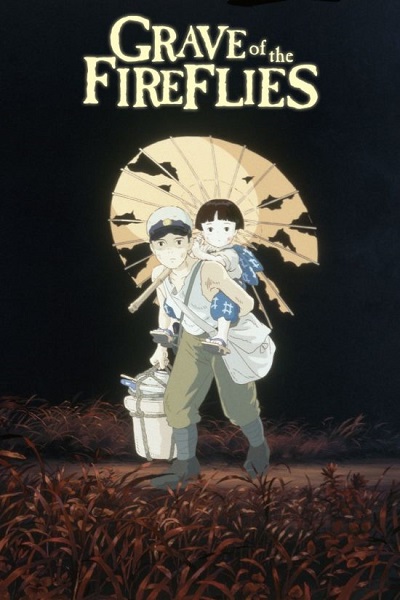
3. Grave of the Fireflies (Isao Takahata, 1988)
Times watched: 1

I’m not sure what to say about Grave of the Fireflies. Takahata’s strength is in portraying people as they are. This is a movie about World War II orphans. You get the picture. It’s more watchable for me than Princess Kaguya. From a step back, part of that is definitely rooted in the differing animation styles, the differing lengths, the more modern setting, the differing levels of action. This film is more engageable on its face. But one thing Seita and Setsuko have that Kaguya lacks is each other. Their tragedies are quite different. I can’t imagine much resistance if I said Seita and Setsuko’s tragedy is fundamentally worse. But they have each other. I think everyone should watch a couple films like this. Maybe the world would be a better place if we did. Love your kids. Moving on.
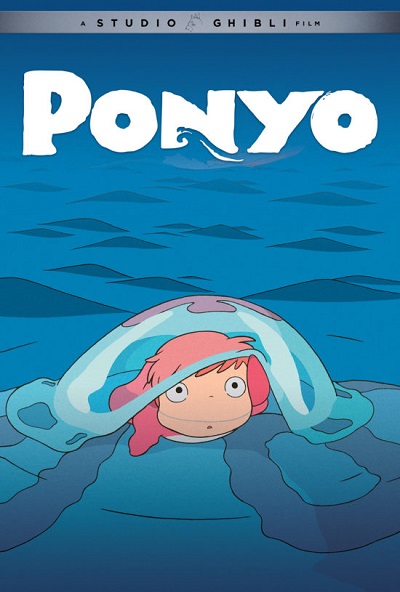
2. Ponyo (Hayao Miyazaki, 2008)
Times watched: 3+

Ponyo is a fantastic movie for kids, but I think it was made about them just as much as it was made for them. I see it trend low in a lot of lists like this, often quoting that two five year olds just don’t make for complex and compelling characters. I guess it depends on what you want out of the movie. Is Miyazaki creating a magical world for kids, or is he showing us, the adults, what a kid’s magical world looks like?

The supernatural mystery is appealing on its face. Fujimoto’s bizarre, unexplained duty to shoot colored lights at passing fish in the intro; the bubble windows of his sanctuary that hint at some rule for safe passage but never resolve on a consistent pattern; the well of life exploding into a stream of millions of half-formed sea creatures. It’s visually presented as no other animator can, and Hisaishi’s score is brilliant. The “Ponyo’s fish wave” sequence is just amazing to me–the way the music is choreographed for big booming percussion as the waves crash down onto the road; the way they phase back and forth between lifeless water and living creatures while Ponyo leaps back and forth. There’s a lot to enjoy here without digging deep, at least in the first half.

But the film gets more interesting to me when I look at how Miyazaki transforms the way Sosuke might experience life through a child’s eyes into the actual reality surrounding Lisa. Of course a kid’s going to think a simple fish can understand him, and sure enough, Ponyo comes to life. A tsunami sweeping away the village is thrilling with no awareness of the danger, and when it calms we see that everything is perfectly intact under water. Sosuke expresses no fear in the car. They’re going home. Home will be safe. So the raging sea comes to a halt at his doorstep. A fish trapped in a bottle, mom leaving for a few hours, those are the tangible sources of dread in Sosuke’s life. Rescuing Ponyo and finding Lisa then manifest as the two central plot directions of the film.

I see my children in Ponyo and Sosuke. I see a bit of myself in Lisa. (And I can’t help but think Koichi is meant to represent Miyazaki himself.) The uncompromising, innocent bond they share; the way Lisa dotes on Sosuke unconditionally while arguing with her husband; the way Lisa copes with her own bewilderment by setting the kids down, expressing herself on their level, and turning her focus onto caring for them–“Alright. Sosuke, Ponyo, life is mysterious and amazing, but we have work to do now.” It just resonates so authentically. On that note, I can’t speak for the Japanese original, but Tina Fey’s voice acting is outstanding throughout the film. The lack of action in the second half of the movie doesn’t bother me because by then I’m already so emotionally invested in the characters. Ponyo paints the big, fascinating mystery of a child’s small, isolated world directly, but the film is just as easily viewed through the eyes of the adults around them. It’s my daughter’s favorite movie, and I think it’s the single happiest thing I’ve ever watched.
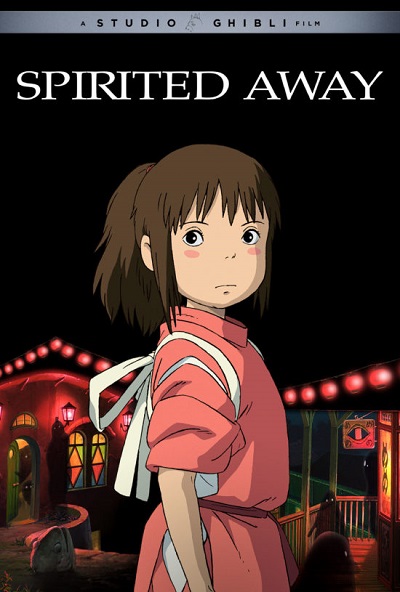
1. Spirited Away (Hayao Miyazaki, 2001)
Times watched: 3+

Where do I even begin with Spirited Away? It’s rare for ten seconds of this film to pass without some new bewildering oddity of Miyazaki’s imagination rearing its head. The bath house emits a glowing warmth that tethers the supernatural to a sense of comfort. The constant flowing water everywhere makes the world itself a reflection of the strange creatures within it. For me it’s not just about great characters, great music, a driving plot, an imaginative setting. I love how Miyazaki ties it all together with such careful attention to the surrounding ambience. I don’t think people will need much convincing to check out a film regarded as one of the greatest ever made, and there are so many brilliant components in play that no one of them makes or breaks it, but if I had to put my finger on one thing that stands out to me uniquely, it’s that constant motif of water and the bath house as a refuge from the amorphous, half-submerged world beyond. Is the bath house a safe space? Yes. No. Spirited Away doesn’t lend itself to simple black and white answers. Miyazaki poured too much life into it for that.

And there you have it. Great stuff. In summary, after mulling it over I wound up at:

1. Spirited Away
2. Ponyo
3. Grave of the Fireflies
4. Nausicaä of the Valley of the Wind
5. Princess Mononoke
6. Only Yesterday
7. Porco Rosso
8. Whisper of the Heart
9. My Neighbor Totoro
10. Pom Poko
11. The Tale of Princess Kaguya
12. The Wind Rises
13. Howl’s Moving Castle
14. Castle in the Sky
15. Kiki’s Delivery Service
16. The Cat Returns
17. My Neighbors the Yamadas
18. From Up on Poppy Hill
19. When Marnie was There
20. Arrietty
21. Tales from Earthsea
22. Ocean Waves

Hope you enjoyed. Cheers.
18 Days of Paranoia #9: Blunt, The Fourth Man (dir by John Glenister)


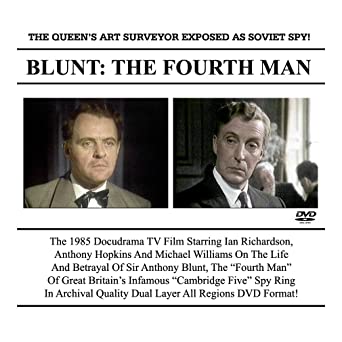
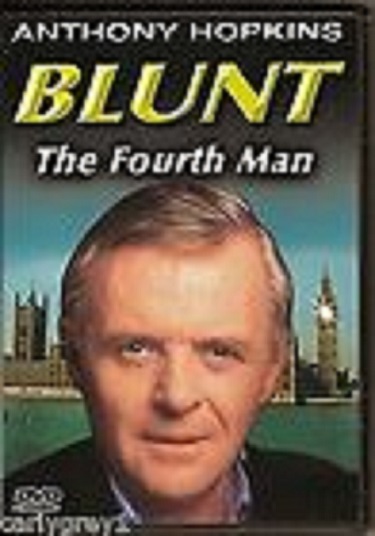
Based on a true story and taking place in 1951, the 1985 film, Blunt: The Fourth Man, tells the story of Anthony Blunt (played by Ian Richardson).

A graduate of Cambridge, Anthony Blunt appears to be a proud member of the British establishment.  He’s upper class with impeccable manners.  He’s the King’s art surveyor, which he says makes him literally a member of the Royal Family.  He belongs to all the right clubs and he expresses all of the right opinions and he has all of the right friends.

However, Anthony Blunt leads a secret life.  First off, he’s gay at a time when that was still illegal in the United Kingdom.  Unlike his flamboyant lover, Guy Burgess (Anthony Hopkins), Blunt is discreet and always keeping an eye out for the vice cops.  Blunt is also a socialist and has been one since his days at Cambridge.  However, he’s not just a socialist.  He’s also spying for the Russians.  It’s not that Anthony thinks much of Russia as much as it’s just that he thinks even less of the U.S. and the U.K.  He feels that the U.S. is pushing the world towards nuclear war.  When his driver says that the UK needs a Joe McCarthy of their own, Blunt can barely hide his distaste.

Even though it was Guy who originally recruited Anthony to spy for the Russians, Anthony now appears to be in charge of the so-called Cambridge Spy Ring.  He’s the one who regularly meets with the group’s Russian contact and he’s also the one who is put in charge of arranging for one of the spies to flee the UK.  The Russians don’t seem to have much faith in Guy Burgess, largely because Guy is an alcoholic and a drug addict.  (Upon returning to London from America, Guy declares that he’s no longer drinks whiskey and that he’s given up Benzedrine.  He then proceeds to get very drunk.)  In fact, the only person who seems to really care about Guy is Anthony but how much does Guy actually care about Anthony?

Almost everyone in Blunt, the Fourth Man is either a spy or a former spy.  And yet, we really don’t see anyone doing much spying.  Guy has a closet that’s full of undeveloped film, official files, and a picture of Lenin and that’s about it.  Throughout the film, Guy brags about how powerful he and his fellow spies are but we’re left to wonder whether Guy’s telling the truth or if he’s just drunk.  For his part, Anthony is more concerned with getting caught and losing his place in society.  He knows that one member of the group is on the verge of getting unmasked and has made arrangements for him to escape to Russia while visiting France.  The problem is that the plan involves Guy and Anthony is not sure if he can trust Guy to play his part.  If Guy’s willing to betray his country, why not his friends and lover?

For the most part, the entire film is Anthony and Guy having cryptic discussion with themselves and with others.  There’s a threatening subtext to almost every conversation in this film.  There’s also a pervasive atmosphere of regret.  Anthony, Guy, and their friends are no longer the idealists that they were back in Cambridge.  They’re now middle-aged men who know that they’ve devoted their lives to a lost cause.  Each deals with it in their own way.  Guy drinks.  Anthony insists that his spying has less to do with betraying a country and more with staying loyal to his friends.  What’s perhaps most interesting is that almost all of these upper class socialists are most worried about losing their place in society.

This is a very talky film.  Fortunately, it stars two great talkers, Ian Richardson and Anthony Hopkins.  The two of them play off each other very well and create two fascinating, if not necessarily likable, characters.  Admittedly, there are a few scenes where Hopkins comes dangerous close to going a bit overboard with Guy’s drunken ramblings but Ian Richardson’s performance is close to perfect.  Somehow, he makes Anthony both smug and vulnerable at the same time.

Obviously, this isn’t a film for everyone.  It requires a bit of patience.  But, for history nerds like me, it’s an interesting historical document, a recreation of one of biggest spy scandals of the previous century.

Other Entries In The 18 Days Of Paranoia:

  1. The Flight That Disappeared
  2. The Humanity Bureau
  3. The Private Files of J. Edgar Hoover
  4. The Falcon and the Snowman
  5. New World Order
  6. Scandal Sheet
  7. Cuban Rebel Girls
  8. The French Connection II


Time Chasers (1994, directed by David Giancola)


People, I know what you’ve heard but Time Chasers is not that bad.

I know that Time Chasers has got a reputation.  It was featured on one of the most brutal (and funniest) episodes of Mystery Science Theater 3000.  That, in fact, is probably how most people know about this film.  (Some members of the MST 3K crew subsequently revisited Time Chasers for Rifftrax.)  It’s true that MST 3K was known for taking apart bad films and it probably hasn’t helped the film’s reputation that it’s been reported that some members of the production were not amused about being mocked by Mike Nelson and the bots.

But that’s all in the past and I think that today, we can finally admit that Time Chasers is not that bad.

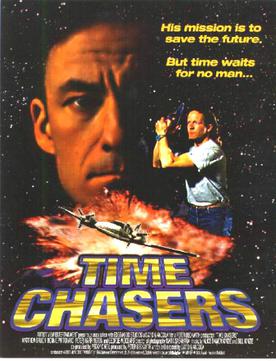
It’s certainly one of the few films to suggest that time travel can be achieved by an airplane, five oversized floppy disks, and a Commodore 64.  Nick Miller (Matthew Bruch) is a scientist and amateur airplane pilot who has discovered how to travel through time.  He hopes that we can use time travel so that we can figure out a way to “stop killing ourselves.”  Lisa (Bonnie Pritchard), the local journalist who went to high school with Nick, is impressed, especially when Nick takes her on a trip to the future (which does indeed look much like a mall food court).  Lisa is less impressed when Nick decides to sell the idea to J.K. Robertson (George Woodard).  J.K.’s a rich businessman and that automatically makes him evil.  Lisa understands this.  Nick does not.

J.K. promises that he won’t use time travel to develop weaponry but, when Lisa and Nick take another romantic trip to the future, they discover that the world is in ruins and it no longer looks like a food court.  Instead, people are shooting at each other.  J.K. lied!  Nick and Lisa go back to the present to confront J.K. but J.K.’s not willing to give up time travel that easily.  Soon, as a result of all the time travel, there are multiple Nicks and Lisas and J.K. Robertsons all over the place.  It all ends with a trip back to the American Revolution, where many of the colonists wear wrist watches and modern-style eyeglasses.

It is easy to poke fun at something like Time Chasers but I’m going to defend it.  The plot is actually more ambitious than you would expect from a low-budget sci-fi film and there are some clever touches that indicate that the director actually did give some serious thought to what would happen if you had multiple people jumping from one time to another.  (I like the fact that, when Nick meets his past self, Past Nick can’t understand why Present Nick won’t stop talking about Lisa.)  For all the ribbing that they took on MST 3K, both Matthew Bruch and Bonnie Pritchard are likable as Nick and Lisa.  Bruch may not look like a conventional hero and, in this film, he’s got a mullet that’s goofy as hell but there’s a lot of sincerity to his performance.

I love MST 3K.  When I first saw the Time Chasers episode, I laughed so much that it hurt and it’s still a favorite of mine.  (I cannot see an empty field without saying, “Hey, Children of the Corn.”  Lisa — our Lisa, not the film’s Lisa — is usually kind enough to reply, “Hey,” so my joke isn’t just left hanging in the air.)  But taken on its own, without Mike and the bots riffing on it, Time Chasers is not that bad.  It’s goofy take on time travel and, dammit, I like it.

18 Days of Paranoia #8: The French Connection II (dir by John Frankenheimer)


The 1975 film, The French Connection II, opens up three years after the downbeat conclusion of the first French Connection.

Having escaped from the police at the end of the first film, the wealthy and suave Alain Charnier (Fernando Rey) is still smuggling drugs and living his best life.  He goes to parties with wealthy people.  He has lunch dates with important businessman.  Even though the French police are keeping an eye on him, Charnier seems to be virtually untouchable and he knows it.  If Charnier seemed impossibly smug in the first French Connection, he’s even worse in the second one.

Charnier may be enjoying himself in Marseille but what he doesn’t know is that there’s an American tourist in town.  He’s a very loud American, one who insists on trying to speak to everyone in English and is shocked to discover that most of the French natives don’t have the slightest clue as to what he’s talking about.  He’s shocked when he goes into a bar and fails to impress two young French women.  He also doesn’t seem to understand that even French people who speak English are not going to appreciate being called a “frogs.”  He wanders around town in loud shirts and with a fedora sitting rakishly on his balding head.

Yep, it’s Popeye Doyle (Gene Hackman).  The anti-hero from the first French Connection is still on the case and he’s now come all the way to France to help track down Charnier.  The last time we saw Doyle, he had just accidentally killed a cop and was running through a dark warehouse, firing his gun.  In fact, the first film ended with the suggestion that Doyle was such a loose cannon that his career as a narcotics detective was probably over.  Instead, in the sequel, we learn that Popeye is still working in narcotics and he’s still just as much of a loose cannon as he ever was.  If you thought people in New York found Popeye to be obnoxious, just you wait to see how the French react to him!

What Popeye doesn’t know is that his superiors in New York have only sent him to Marsielle so that he can be a target.  They know that Popeye will never be able to blend in.  Charnier will spot him and, hopefully, Charnier will panic and make some sort of mistake that will finally allow the police to capture him.  French detective Henri (Bernard Fresson) goes along with the plan, despite his own moral objections.  Henri can’t stand Popeye but he doesn’t want to see him killed either.

It doesn’t take long for Charnier to notice Popeye.  After Popeye is captured by Charnier’s man, they inject him with heroin until soon, Popeye is an addict.  Before Popeye can finally get his shot at Charnier, he’s going to have to overcome his own drug addiction….

The French Connection II starts out well, with Gene Hackman wandering around Marsielle and acting like a stereotypical ugly American.  Director John Frankenheimer does a good job of keeping the action moving at a steady pace during the first half of the film and there’s a lot of great scenes involving Popeye being followed around town by not just the police but also Charnier’s men.  The first half of the film does a great job of establishing an atmosphere of paranoia, which is not surprising when you consider that Frankenheimer’s other credits included The Manchurian Candidate, Seven Days In May, and Seconds.

Unfortunately, once Popeye is captured and gets hooked on heroin, the action not only comes to a halt but the normally reliable Gene Hackman starts to act up a storm.  When Popeye, while going through withdrawal, starts talking about how he used to play baseball and how he once has a try-out with the New York Yankees, the scene seems to go on forever and Hackman’s performance becomes so histrionic that you basically just end up feeling like you’re watching someone auditioning his heart out for a spot in the Actor’s Studio.  Gene Hackman was one of the world’s great actors and Popeye Doyle was a great role but, in The French Connection II, we’re reminded that even a great actor occasionally needs to have his performance reined in.

Eventually, after Hackman’s had his big Oscar moment, the action kicks back in and the film kind of regains its momentum.  There’s a big action scene towards the end of the film.  (Ironically, it’s the type of big, good guys vs. bad guys shoot out that the first film deliberately avoided.)  The film ends with a literal bang that’s abrupt yet undeniably effective.

As far as sequels go, The French Connection II is good.  It’s not great and, not surprisingly, it doesn’t come anywhere close to matching the power of the first film.  But it still has enough effective scenes to make it worth watching.  You just might want to hit fast forward whenever Popeye starts talking about baseball…..

Other Entries In The 18 Days Of Paranoia:

  1. The Flight That Disappeared
  2. The Humanity Bureau
  3. The Private Files of J. Edgar Hoover
  4. The Falcon and the Snowman
  5. New World Order
  6. Scandal Sheet
  7. Cuban Rebel Girls