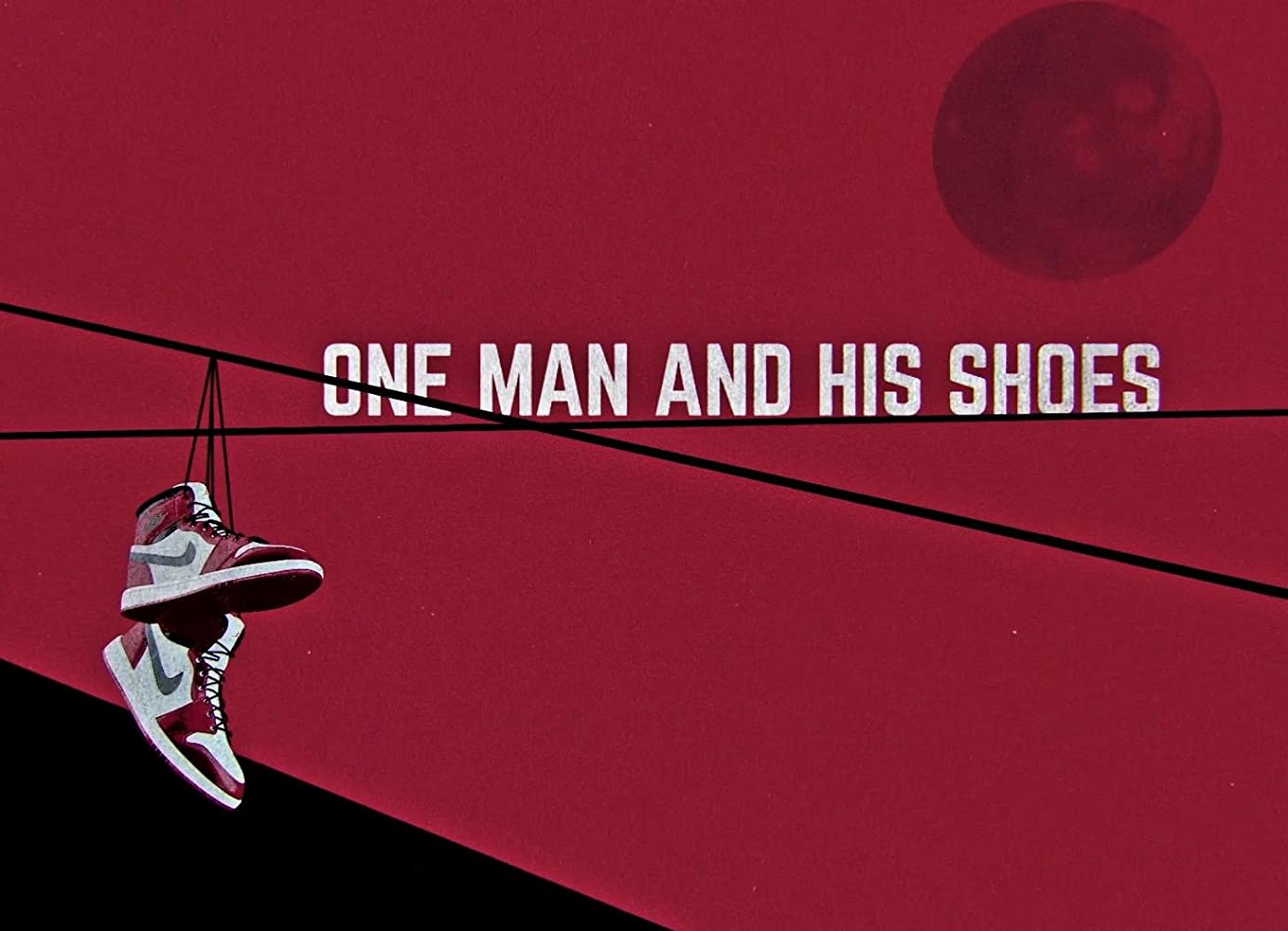
One Man And His Shoes (2020, directed by Yemi Bamiro)


I have never been a shoe person.

As long as they fit, they’re comfortable, and they get me where I’m going, I’ve never cared who made my shoes or what they represented.  That set me apart from most of the people who I grew up with.  They were not only very much concerned with wearing the right shoes but they also judged anyone who was perceived as wearing the wrong shoes.  They all wanted the Air Jordans, even though I can’t think of a single person I knew who was ever able to get a pair.  Everyone knew that the Air Jordans were expensive and that they sold out quickly.  They also knew that owning a pair of Air Jordans could be dangerous.  People got killed for their shoes.  A friend of mine came close to getting a pair but his mother refused to give him the money after she read a news story about someone on the Block getting shot because he wouldn’t hand over his shoes.  That always seemed strange to me.  Why shoot someone over their shoes?  Of course, I was not a shoe person.

The new documentary, One Man and His Shoes, is all about shoes and shoe culture.  Beginning in the 80s, when Michael Jordan was just a promising basketball player in North Carolina and Nike was considered to be an also-ran in the shoe business, the documentary shows how Michael Jordan and the shoes named after him revolutionized American culture.  At a time when shoe companies like Converse were making cringe-worthy commercials that featured Larry Bird and several other players rapping about their shoes, Nike reinvented the game by teaming up with Michael Jordan and bringing in Spike Lee to film their commercials.

If the first half of the documentary celebrates the success of Jordan and Nike, the second half takes a critical look at the violence that has sprung up over the shoes.  Nike is faulted for aggressively advertising the shoes and then only released a limited amount of them at a time.  As a result, the shoes become a status symbol that are difficult to get and which some people are willing to kill to possess.  The documentary goes from celebrating Jordan and Nike to condemning them for refusing to speak out about the violence surrounding their product.  As one interviewee puts it, Jordan telling people to “knock it off” wouldn’t end all of the violence but it wouldn’t hurt.

The documentary ends with the wrenching tale of a man in Houston who was killed for his shoes.  When the murder became national news, Jordan personally sent the grieving family a pair of the new Air Jordans.  The dead man’s sister explains that she didn’t feel safe wearing them in public because, if anyone saw them in her possession, they might kill her as well.

One Man and His Shoes is a sobering documentary.  If you just watched The Last Dance, you owe it to yourself to also watch One Man and His Shoes.

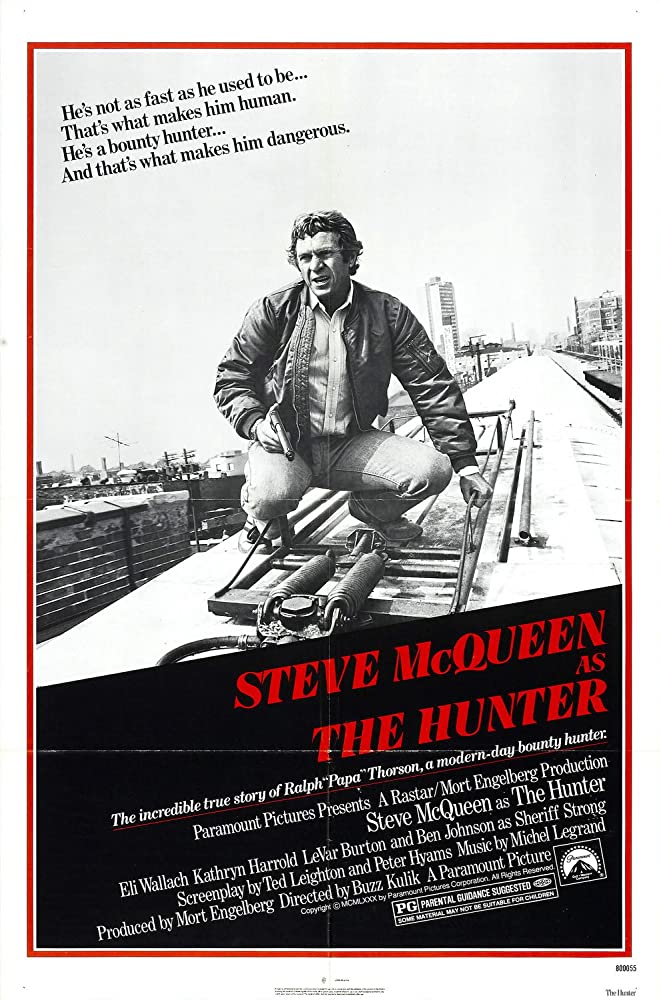
The Hunter (1980, directed by Buzz Kulick)


In The Hunter, legendary car nut, Steven McQueen, plays Papa Thorson, a bounty hunter who is a very bad driver.

That’s it.

That’s the joke.

Papa Thorson was a real-life bounty hunter, the Dog the Bounty Hunter of his day, and The Hunter was based on his own autobiography.  Maybe that explains why the film itself is so extremely episodic.  Thorson goes from one assignment to another, capturing criminals with relative ease and occasionally having to deal with an unappreciative sheriff (Ben Johnson).  Along the way, one of those criminals (Levar Burton) goes to work with Papa and becomes his protege.  Papa’s girlfriend (Kathryn Harrold) is pregnant and a crazed criminal (Tracey Walter) is targeting her because he wants revenge on Papa for putting him away.  It’s all Magnum P.I.-level stuff, without the backdrop of Hawaii to distract you from how predictable it all is.  It’s not terrible because there are a few good action scenes but it still feels more like a pilot for a weekly Papa Thorson television series than a feature film.

The Hunter was also Steve McQueen’s final film.  After The Towering Inferno, McQueen was inactive for most of the 70s.  He still received scripts and turned down good parts (including the roles of both Willard and Kurtz in Apocalypse Now) but the only film in which he appeared in a barely released version of An Enemy of the People.  It wasn’t until 1980 that McQueen finally started appearing in movies again, starring in both Tom Horn and The Hunter.  Tom Horn is an underrated western but The Hunter is largely forgettable.  Sadly, The Hunter would be McQueen’s last film as he died of lung cancer shortly after it was released.

McQueen was obviously ill during the filming of The Hunter, though he still had the laconic coolness that made him a star in the first place and he still looks credible, even at the age of 50, handling a gun and chasing criminals.  He doesn’t give a bad performance as Thorson and he even shows a talent for comedy.  Both Tom Horn and The Hunter show that McQueen wasn’t afraid to play his age.  Neither Tom Horn nor Thorson were young men and, in The Hunter, McQueen gets a lot of mileage out of being a cranky, middle-aged malcontent who has never figured out how to parallel park.  The film might be forgettable but Steve McQueen shows that, to the end, he was an actor who was often better than his material.

A Blast From The Past: Vincent Price Reads The Raven


109 years ago, Vincent Price was born in St. Louis, Missouri.

I have to admit that I’m always somewhat surprised to be reminded that Vincent Price was born in Missouri.  It seems like such a …. normal place to be born, especially for someone who was as wonderfully and cheerfully eccentric as Vincent Price.

Vincent Price is best-known for his horror roles, though he actually appeared in all sorts of films during his career.  He started out as a romantic lead and then he became a character actor, showing up in acclaimed films like The Song of Bernadette, Wilson, and Laura.  Early on his career, Price was even considered for the role of Ashley Wilkes in Gone With The Wind.  Later, he would be listed by Frank Capra as a possibility for the role of Mr. Potter in It’s A Wonderful Life.

That said, Price was always be best-known for his horror work and, because of the films that he made with Roger Corman, he will also always be associated with Edgar Allen Poe.  With today being his birthday, it seems like the perfect time to share this video of Vincent Price reading The Raven.

Unfortunately, I don’t know exactly when this was filmed.  But no matter!  It’s Vincent Price reading Edgar Allen Poe!

Enjoy!

4 Shots From 4 Films: Special Christopher Lee Edition


4 Shots From 4 Films is just what it says it is, 4 shots from 4 of our favorite films. As opposed to the reviews and recaps that we usually post, 4 Shots From 4 Films lets the visuals do the talking!

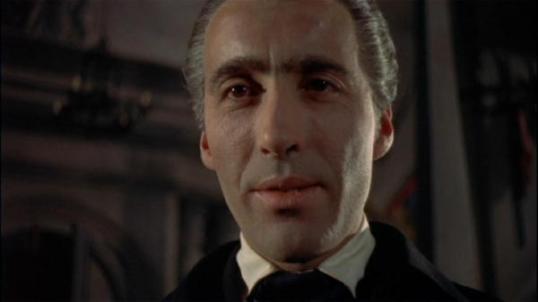
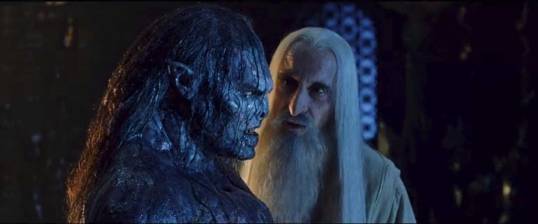
98 years ago today, the greatest actor of all time, Christopher Lee, was born in London!  Today, we honor a legacy of iconic performances, in films that were both good and bad.  Lee worked with everyone from Terence Fisher to Peter Jackson to Martin Scorsese to Laurence Olivier to John Huston to ….. well, if they were an important director, they probably made at least one movie with Christopher Lee!  He was Dracula.  He was Saruman.  He was one of the best Bond villains and it’s been rumored that, during World War II, Lee was a bit of a James Bond himself.

Today, we honor a brilliant career with….

4 Shots From 4 Films

Dracula A.D. 1972 (1972, dir by Alan Gibson)

The Man With The Golden Gun (1974, dir by Guy Hamilton)

Lord of the Rings: The Fellowship of the Ring (2001, dir by Peter Jackson)

Hugo (2011, dir by Martin Scorsese)

Scenes That I Love: The Steak Scene From The Man Who Shot Liberty Valance


Since today is the 113th anniversary of the birth of John Wayne, I decided to watch the 1962 classic, The Man Who Shot Liberty Valance!  And then I decided to share a scene that I love from the film.

The famous steak scene features three of the greatest screen icons of Hollywood’s golden age: James Stewart, John Wayne, and Lee Marvin.  Lee Marvin is the bully who is terrorizing the entire town.  James Stewart is the idealist who thinks that the law, and not violence, is the answer.  And John Wayne is …. well, he’s John Wayne.  He’s the only man in town who can stand up to Lee Marvin but, at the same time, he’s also aware that his time is coming to a close.  In the scene below, all three of the characters display their different approaches to life and a disagreement with steak nearly leads to violence.

This scene — and really, the entire film — features these three actors at their best.  John Wayne is an actor who is often described as having “just played himself” but that’s really not quite fair.  While Wayne’s outsized persona definitely does influence how the audience reacts to any character that he plays, he was a better actor than he’s often given credit for being.  That’s especially evident in The Man Who Shot Liberty Valance, in which Wayne plays a confident man’s man who knows that fate is closing in on him.  The coming of civilization (represented by James Stewart) will be great for the town of Shinbone but it will also leave men like Wayne’s Ton Doniphon with nowhere to go.  The coming of civilization means that the heroes of the past are destined to become obsolete.

Enjoy this scene from The Man Who Shot Liberty Valance:

Film Review: Night Gallery (dir by Boris Sagal, Barry Shear, and Steven Spielberg)


Night Gallery was a horror anthology series that aired on NBC in the early 70s.  Each episode featured Rod Serling, of Twilight Zone fame, serving as the curator of a museum where all of the paintings have a somewhat macabre theme.  (One could even say that the museum was a …. wait for it …. night gallery!)  Serling would give each painting a properly pithy introduction and then the audience would see the story behind the artwork.  It was a bit like the Twilight Zone, except the Night Gallery episodes were in color, they were all horror-themed, and, for the most part, they steered away from social commentary.  The series ran from 1970 and 1973 and it still airs in syndication and on some of the retro stations.  (I believe it currently airs on Comet TV.)  Even if it wasn’t as consistently good as Twilight Zone, it’s still a pretty fun little series.

Two Christmases ago, I was gifted  Night Gallery: The Complete Series on DVD.  Though I’ve watched several episodes from the DVD, I recently realized that I have never actually sat down and watched every episode in order.  With the world currently shut down due to the pandemic (a development that, if we’re going to be honest, sounds like something Rod Serling would have used on the Twilight Zone), I figured what better time to watch the entire series then now?

I started out by watching the Night Gallery pilot film.  This originally aired on November 8th, 1969, a full year before Night Gallery became a weekly series.  It features three different stories (all written by Rod Serling) of the macabre.  As with every episode of the subsequent series, each story is introduced by Serling standing in front of a painting.  In the pilot, though, the museum is rather bare and the painting’s are a bit minimalist.  I have to admit that, as a lover of the baroque, I was a bit disappointed in that aspect of the pilot.

But what about the stories themselves?  Read on!
The Cemetery (dir by Boris Sagal)

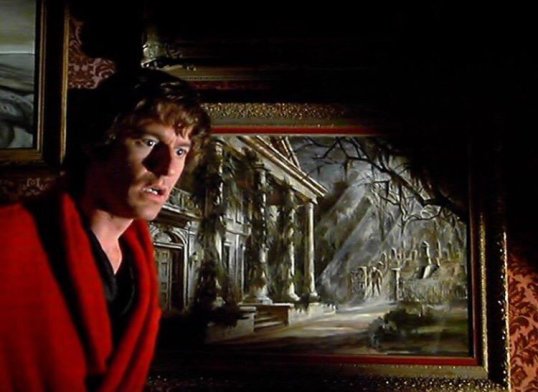
The first story was The Cemetery, a cheerfully gruesome little tale that featured Roddy McDowall and Ossie Davis.  McDowall plays Jeremy, a spoiled young man who murders his uncle so that he might inherit the dead man’s estate.  At first, it looks like McDowall’s plot is a complete success but then McDowall notices a painting of the family graveyard hanging above a staircase.  (To be honest, it seems odd to hang a painting of a graveyard in the foyer but I guess that’s something old rich people do.)  The painting keeps changing.  One minute, the painting looks normal.  The next minute, it features a newly dug grave.  And then something emerging grave.  And then something heading towards the house….

Is Jeremy losing his mind or is the painting warning him that his uncle has risen from the dead and is seeking revenge!?  You’ll probably be able to guess the answer long before poor Jeremy but no matter.  This is a fun little horror story and it benefits from two enjoyably arch performances, from McDowall and, in the role of a butler who may have an agenda of his own, Ossie Davis.

Eyes (dir by Steven Spielberg)

Of the three stories presented in the pilot, Eyes probably gets the most attention from critics because it not only stars Joan Crawford in one of her final performances but it was the professional directorial debut (if you don’t count Amblin’) of 22 year-old Steven Spielberg.  Spielberg apparently had some issues dealing with the veteran crew members, many of whom didn’t like the idea of taking orders from a 22 year-old.  (It probably didn’t help that pictures from that era suggest that Spielberg looked several years younger than his age.  Let’s just say that it’s easy to understand why he eventually grew that beard.)  I’d like to think that Joan Crawford yelled at everyone and defended Spielberg and maybe even Rod Serling came down with Luca Brasi and said, “You’re going to the give this kid the respect he deserves or your brains are going to be all over that union contract.”  I don’t know if that’s true but it’s a nice thought.

That said, Eyes is pretty good.  Even if the crew doubted him, Spielberg proved himself as a director with this story.  It’s about a hateful and selfish woman (Joan Crawford) who happens to be both rich and blind.  She has manipulated a doctor into performing an experimental operation that will allow her to see.  The only catch is that the operation will only be good for 22 hours and a donor (Tom Bosley, as a bookie who is in trouble with the mob) will be required to give up his eyes so that Crawford can have those 22 hours.

On the one hand, this is very-much a Rod Serling-type tale.  It’s easy to imagine Eyes, with its belief in karma and its final macabre twist, as a Twilight Zone episode.  At the same time, Spielberg very much brings his own signature style to the film, livening up dialogue-heavy scenes with interesting camera angles and getting good performances from Crawford, Barry Sullivan, and Tom Bosley.  Eyes is a clever story but, for modern viewers, the most interesting thing about it will be discovering that, even at the age of 22, Spielberg already had a clear directorial style.
The Escape Route (dir by Barry Shear)

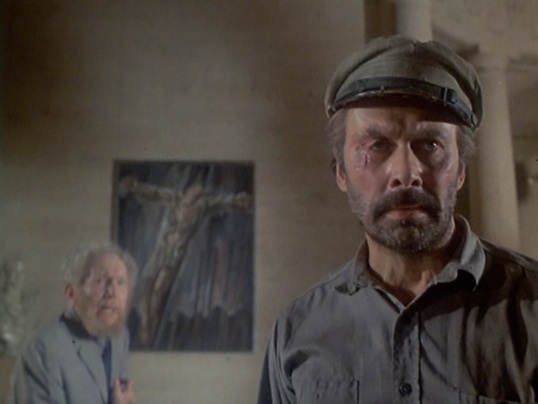
The Escape Route is about an Nazi war criminal named Joseph Strobe (played by Richard Kiley) who is hiding out in South America and spending all of his time nervously looking over his shoulder.  One day, he enters a museum where he finds himself drawn to two paintings.  One painting features a man who has been crucified in a concentration camp, which we learn was Strobe’s trademark back when he, himself, was a camp commandant.  The other painting features a fisherman in a peaceful setting.  Even though Strobe imagines himself as the peaceful fisherman, his attention keeps getting redirected to the painting of the concentration camp.  Soon, Strobe realizes that a survivor of the camp (played by Sam Jaffe) is also in the museum and that he is studying the painting as well.

Compared to Eyes and especially The Cemetery, The Escape Route may seem like a rather low-key story but it has a power that sneaks up on you.  Hiding out (as many real-life Nazi war criminals did) in South America, Strobe is full of excuses for his past and he may indeed be sincere in his wish that he had just become a fisherman as opposed to a brutal Nazi.  But, in the end, Strobe can neither escape his past nor his final punishment.  Justice cannot be escaped, no matter how hard Strobe tries to outrun it.  In the end, there is no escape for the wicked.  Richard Kiley and Sam Jaffe both give excellent performances.  The Escape Route will stick with you.

As a series, Night Gallery was a bit uneven but the pilot stands as a classic of its type, featuring three short films that all deserve to be remembered.

As for me, I’m going to try to watch an episode or two a day.  I may review a few more Night Gallery episodes here on the Shattered Lens.  As I said, the series itself was a bit uneven and not every episode is as good as the pilot.  Still, there’s definitely some gems to be found in the Night Gallery and I’ll share them as I come across them.

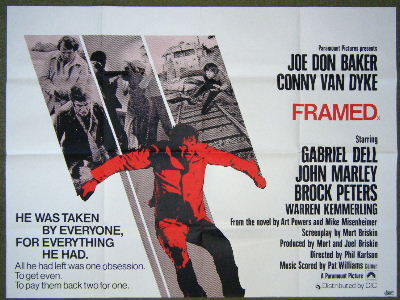
Framed (1975, directed by Phil Karlson)


Revenge can be brutal, especially when you’ve been framed.

Joe Don Baker plays Ron Lewis, a surly nightclub owner and gambler who wins a small fortune, witnesses a crime, and nearly gets shot all in the same night.  When he reaches his house, he’s planning on calling the police but he’s confronted in his own garage by a sheriff’s deputy who tries to kill him!  In a lengthy and brutal scene, Ron beats the deputy to death and gouges out his eyes.  Even though Ron was only acting in self-defense, he’s charged with murder.  Told that there is no way that he’ll be able to win an acquittal, Ron pleads guilty to a lesser charge and is sent to prison for four years.

While he’s in prison, Ron befriends a mob boss (John Marley, who famously woke up with a horse’s head in his bed in The Godfather) and the boss’s number one hitman, Vince (Gabriel Dell).  While Ron is in prison, a group of men assault his girlfriend (country singer Conny Van Dyke) and tell her not to ask any questions about the events that led to Ron being framed.

After serving his sentence and getting into numerous fights with the guards, Ron is finally released.  When Vince shows up and tells Ron that he’s been hired to kill him, the two of them team up with an honest deputy (Brock Peters) and set out to find out why Ron was set up and to get revenge.

Framed is a brutal movie, Ron and his friends hold nothing back in their quest to get revenge.  Whether he’s shooting a man in cold blood or hooking someone up to a car battery in order to get information out of him, there’s little that Ron won’t do and the movie lingers over every act of violence.  Several pounds overweight and snarling out of his lines, Joe Don Baker may not be a conventional action hero but he’s believable in his rage.  He’s the ultimate country boy who has been pushed too far and now he doesn’t care how much blood he has to get on his hands.  However, because Baker does seem more like an ordinary person than a Clint Eastwood or a Charles Bronson-type, he retains the audience’s sympathy even as he splashes blood all over the screen.  As violent as his action may be, they always feel justified.

Baker’s performance and the believable violence are the film’s biggest strengths.  It’s biggest weakness is a plot that revolves around an elaborate conspiracy that doesn’t always make sense and some notably weak supporting performances.  Ron’s revenge may be brutal but it takes a while to get there and the first hour gets bogged down with Ron’s struggle to adjust to life in prison.  John Marley does a good job as Ron’s prison mentor but then he abruptly disappears from the movie.

Before making Framed, Baker and director Phil Karlson previously collaborated on Walking Tall.  Framed is far more violent than that film was but its plot doesn’t hold together as well.  However, if you’re just looking for a violent action film that features Joe Don Baker doing what he does best, Framed delivers.

The Rookie (2002, dir. by John Lee Hancock)


I miss baseball!

I know that the regular MLB season being delayed (or even — gasp! — cancelled) is hardly the worst thing that we have to deal with right now but I still really miss watching baseball!  I miss the swing of the bat, the sounds of the stadium, and I even miss getting upset over the Rangers having a disappointing season.  I’ve been dealing with my grief by watching old games and a lot of baseball movies.  It’s not the same as getting to watch a real game but I guess it’s as good as things are going to get right now.

When the quarantine stated, one of the first baseball movies that I watched was The Rookie.  Starring Dennis Quaid (who gives a really good performance), The Rookie is based on the true story of Jim Morris, a former minor league pitcher who retired from playing the game after injuring his arm and took a job coaching baseball for Reagan County High School in Big Lake, Texas.  In 1999, Morris promised his players that if they managed to win the district championship, he would try out for a major league baseball team.  When his team went on to win the championship, Morris honored his side of the bargain by trying out for the Tampa Bay Devil Rays.  Even though no one expected Morris to make it onto the team, he was given a chance because it was felt that it would be good publicity.  The 35 year-old Morris shocked everyone by throwing a 98 mph fastball.  The team started Morris out in the minors and then, when the roster expanded in September, called him up to the majors.  At an age when many other players were calling it quits, Morris made his major league debut at the Ballpark in Arlington and struck out Royce Clayton.

Though I’m sure it probably takes a lot of liberties with Morris’s story, I really like The Rookie.  It’s a really sweet movie that was filmed on location in Texas.  It’s one of my favorite baseball movies because it captures everything that I love about the game.  It’s about more than just who wins or who struck who out.  It’s about teamwork and healthy competition and fairplay.  (Or, at least, that’s what baseball should be about.  That’s one reason why the Astros cheating scandal hurts so much.  For me, it’s not just that the first Texas team to win the World Series did so dishonestly.  It’s that what they did goes against the spirit of baseball.)  I liked that the movie is as much about Jim coaching his high school team as it was about him eventually getting to play a few games in the majors.  The whole reason that Jim even tried out for the Devil Rays was to keep a promise to his high school team and, in a perfect world, that’s what baseball would be all about.

The Rookie is not just a baseball movie.  It’s also a movie about never giving up on your dreams.  Jim Morris may be happy coaching high school baseball but he’s never stopped thinking about how he once dreamed of playing in the major leagues.  Even he’s surprised when he discovers that he’s still a good pitcher.  (My favorite scene is him throwing a baseball at one of those radars that tells how fast you’re driving.  He only thinks he’s throwing a 78 mph fastball and it’s only after he drives off that the full sign lights up and reveals that he was throwing 98 mph.)  When Jim makes his major league debut, it’s real stand up and cheer moment.

Here’s hoping that we’ll all be back at the ballpark soon!

Nighthawks (1981, directed by Bruce Malmuth)


DaSilva (Sylvester Stallone) and Fox (Billy Dee Williams) are two tough New York cops who just want to be left alone so that they can arrest muggers and purse snatchers.  However, because they both have a background in the military, they are assigned to work with an international anti-terrorism task force that is being headed up by Detective Inspector Peter Hartman (Nigel Davenport).  Rumor has it that the notorious terrorist Wulfgar (Rutger Hauer) is coming to New York and Hartman tells DaSilva and Fox that they must be prepared to do whatever is necessary to take Wulgar down, even if it means taking a shot while he is hiding behind a hostage.  DaSilva says he’s not sure that he could shoot an innocent person, even if it meant stopping Wulfgar from escaping.

Wulfgar has no such moral qualms.  Wulfgar is a terrorist-for-hire who claims to be fighting for the people but whose main interest is remaining employable.  Unfortunately, Wulfgar has become so ruthless and so cavalier about killing civilians (including children) that most terrorist groups have started to refuse to hire him.  He brings too much bad publicity to his employers.  Wulfgar has come to New York to lead a bombing campaign, with the hope of once again making himself employable.  Wulfgar’s partner in all of this is the equally ruthless Shakka Kapoor (Persis Khambatta).

Nighthawks was one of the films that Stallone made after he found stardom as Rocky but before he redefined his career by playing John Rambo.  Stallone actually gives a surprisingly good performance as DaSilva.  DaSilva may be another tough cop who plays by his own rules but the script still gives the character some unexpected shadings and Stallone plays him as being more cerebral than you might expect.  It’s interesting to see Stallone play a character who is worried about using excessive force to do his job and, to the film’s credit, it actually takes DaSilva’s conflicted feelings seriously.  Billy Dee Williams, unfortunately, is not given as much to do as Stallone and his character is far more one-note than Stallone’s.  He’s the loyal partner and, with his natural charisma, Williams deserved a role with more depth.  Also appearing in small roles are Joe Spinell (as Stallone’s boss), Lindsay Wagner (as Stallone’s ex-wife), and the legendary pornographic actor Jamie Gillis (as Wagner’s boss).

Not surprisingly, the film is stolen by Rutger Hauer, who gives a performance that, in many ways, anticipates his more acclaimed work in Blade Runner.  As played by Hauer, Wulfgar is a charismatic sociopath who knows exactly the right thing to say but who, because of his own arrogance, is still vulnerable to allowing his emotions to get the better of him.  He and Stallone both play-off each other well and their face-to-face confrontations are intense.  It probably helped that Hauer and Stallone did not personally get along during the filming.  (Both, however, were very complimentary towards each other in the years that followed Nighthawks, with Hauer especially saying that there was nothing personal about their on-set arguments.)

Nighthawks is hardly an in-depth look at the realities of international terrorism but it has a handful of exciting action scenes and two excellent performances from Stallone and Hauer.  It’s currently on Netflix and worth watching.

14 Shots From 14 Films: Special Roger Deakins Edition


4 Shots From 4 Films is just what it says it is, 4 shots from 4 of our favorite films. As opposed to the reviews and recaps that we usually post, 4 Shots From 4 Films lets the visuals do the talking!

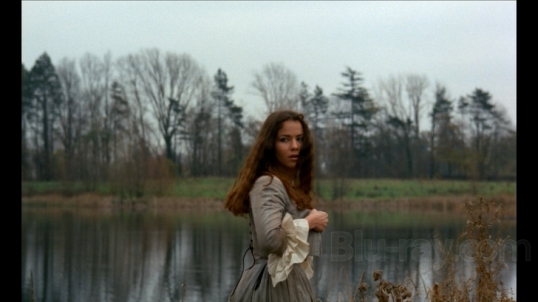
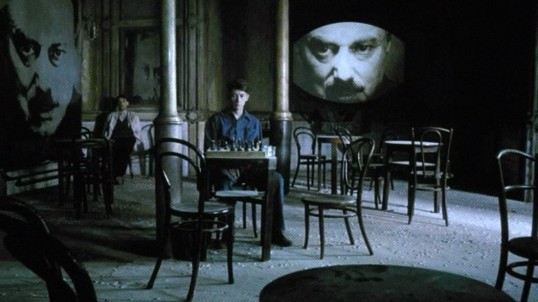
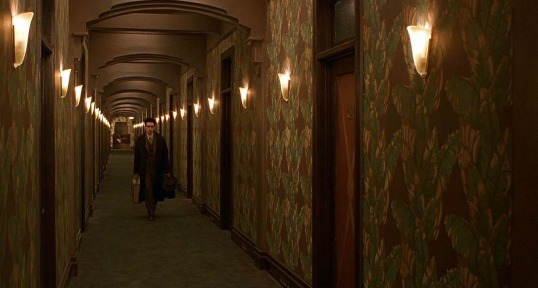
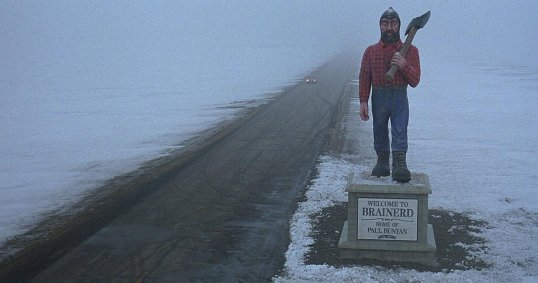
Usually, we only do 4 shots from 4 films but today is the birthday of our greatest living cinematographer, Roger Deakins!  And it’s impossible to only pick 4 when it comes to Deakins.

So, it’s time for….

14 Shots From 14 Films

Marquis De Sade’s Justine (1977, dir by Chris Boger, cinematography by Roger Deakins)

Nineteen Eighty-Four (1984, dir by Michael Radford, cinematography by Roger Deakins)

Barton Fink (1991, dir by the Coen Brothers, cinematography by Roger Deakins)

Fargo (1996, dir by the Coen Brothers, cinematography by Roger Deakins)

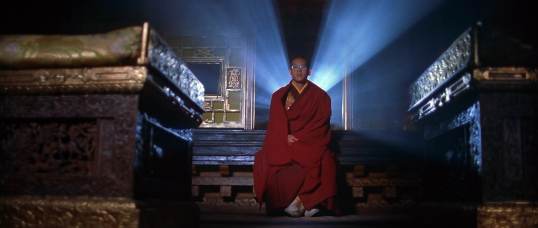
Kundun (1997, dir by Martin Scorsese, cinematography by Roger Deakins)

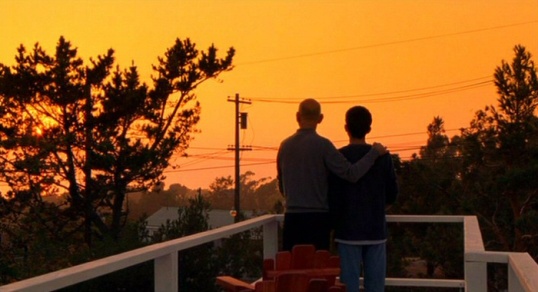
House of Sand and Fog (2003, dir by Vadim Perelman, cinematography by Roger Deakins)

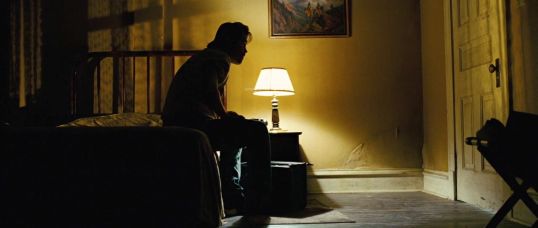
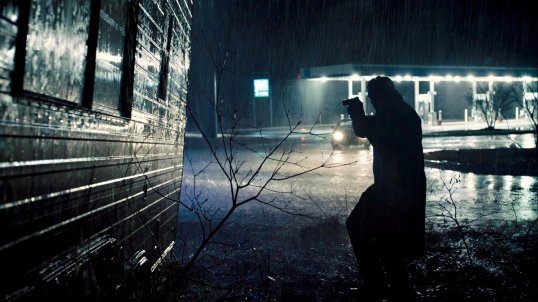
No Country For Old Men (2007, dir by the Coen Brothers, cinematography by Roger Deakins)

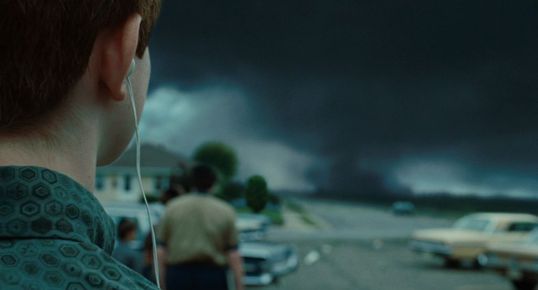
A Serious Man (2009, dir by the Coen Brothers, cinematography by Roger Deakins)

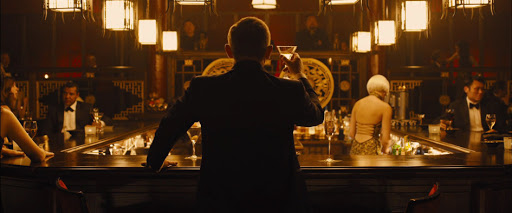
Skyfall (2012, dir by Sam Mendes, cinematography by Roger Deakins)

Prisoners (2013, dir by Denis Villeneuve, cinematography by Roger Deakins)

Sicario (2015, dir by Denis Villeneuve, cinematography by Roger Deakins)

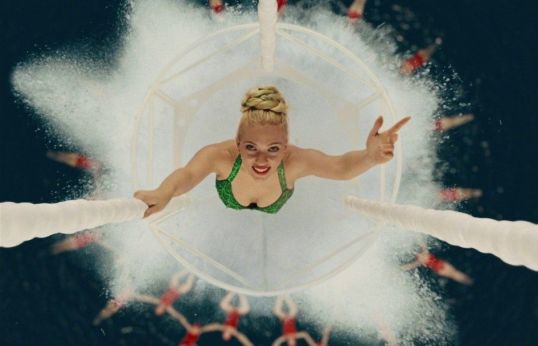
Hail Caesar! (2016, dir by the Coen Brothers, cinematography by Roger Deakins)

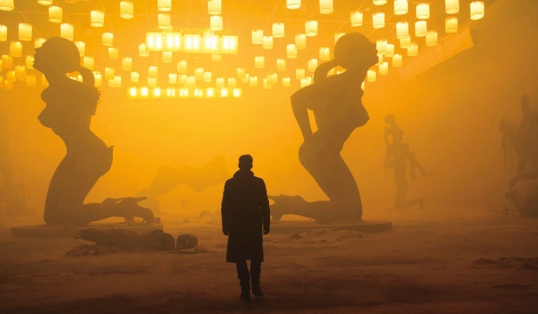
Blade Runner 2049 (2017, dir by Denis Villeneuve, cinematography by Roger Deakins)

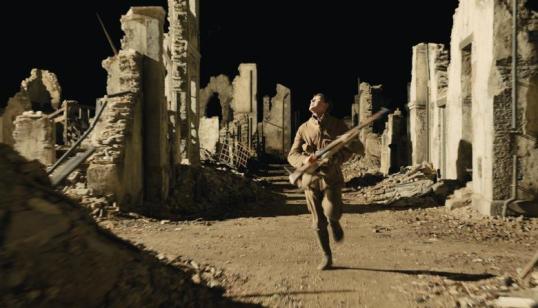
1917 (2019, dir by Sam Mendes. cinematography by Roger Deakins)