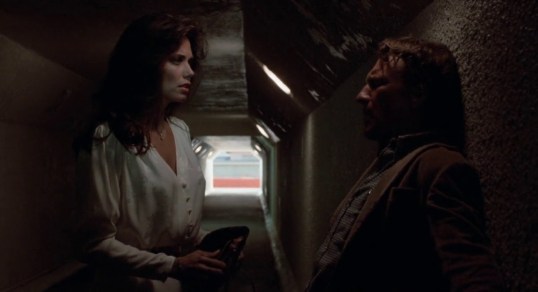
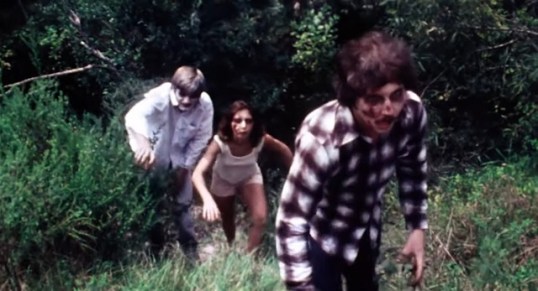
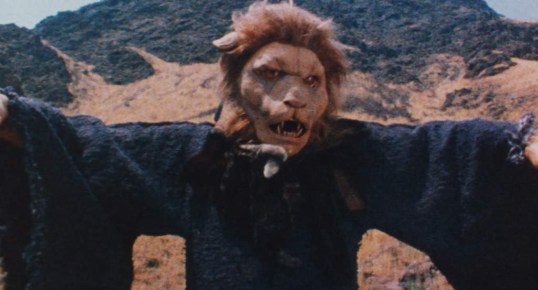
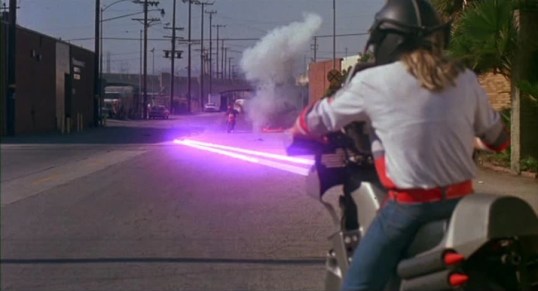
As some of our regular readers undoubtedly know, I am involved in a few weekly watch parties. On Twitter, I host #FridayNightFlix every Friday and I co-host #ScarySocial on Saturday. On Mastodon, I am one of the five hosts of #MondayActionMovie! Every week, we get together. We watch a movie. We tweet our way through it.
Tonight, at 10 pm et, I will be hosting #FridayNightFlix! The movie? 1992’s Glengarry Glen Ross!
If you want to join us this Friday, just hop onto twitter, find Glengarry Glen Ross on Prime, start the movie at 10 pm et, and use the #FridayNightFlix hashtag! I’ll be there happily tweeting. It’s a friendly group and welcoming of newcomers so don’t be shy.
Since today is Superman Day, it only makes sense that today’s song of the day should John Williams’s rousing Superman March from 1978’s Superman. In this video from 2023, John Williams conducts the Saito Kinen Orchestra.
4 Or More Shots From 4 Or More Films is just what it says it is, 4 shots from 4 of our favorite films. As opposed to the reviews and recaps that we usually post, 4 Shots From 4 Films lets the visuals do the talking!
Today is Superman Day! That means that it is time for….
“This is not a war any more than there’s a war between men and maggots… This is an extermination.” — Harlan Ogilvy
When looking back at the vast filmography of Steven Spielberg, science fiction usually evokes a sense of sweeping wonder, starry-eyed optimism, or at the very least, a deeply felt humanism. Films like Close Encounters of the Third Kindand E.T. the Extra-Terrestrial taught generations to look at the stars with hope rather than dread. Even when things took a darker turn in Jurassic Park or the neon-drenched corridors of Minority Report, there remained a foundational thrill—a cinematic ride that ultimately leaves the audience exhilarated. However, his 2005 adaptation of H.G. Wells’ classic novel, War of the Worlds, stands as a radically different beast altogether. It is arguably the bleakest, most claustrophobic blockbuster Spielberg ever directed, operating less as an adventurous alien invasion epic and more as a raw, nerve-shredding analog for collective trauma. Emerging a mere four years after the collapse of the Twin Towers, the film strips away the romanticism of cosmic exploration and replaces it with a visceral, ground-level nightmare of sudden, inexplicable annihilation.
The brilliance of Spielberg’s approach, working alongside screenwriter David Koepp, lies in how intensely localized the narrative remains. Rather than tracking the invasion from the traditional perspective of military command centers, global leaders, or brilliant scientists, the audience is trapped inside the chaotic, deeply flawed perspective of Ray Ferrier, played with a brilliant, unheroic franticness by Tom Cruise. Ray is not a savior; he is a deadbeat, blue-collar crane operator living in a graying New Jersey suburb. He is the kind of father who doesn’t know his son’s school schedule and has an empty refrigerator when his ex-wife drops off their two children, Robbie and Rachel. By centering the apocalypse around a fractured, working-class American family, Spielberg roots the cosmic terror in a painful reality. The impending destruction of the planet mirrors the collapse of Ray’s domestic stability, forcing a man who can barely manage basic parental accountability to suddenly navigate the literal end of the world.
From a purely technical standpoint, the first act of War of the Worlds features some of the most masterful suspense and terror ever committed to celluloid, heavily leaning on a barrage of explicit 9/11 visual imagery. The sequence where the first Martian Tripod emerges from beneath a New Jersey intersection is a masterclass in modern cinematic dread, directly weaponizing the fresh, collective trauma of the post-9/11 American public. Spielberg eschews the clean, omniscient visual language of standard disaster cinema for an organic, chaotic documentary style, mirroring the sudden, disorienting informational and electronic blackout experienced by millions during the real-world attacks. The camera lingers on heavy, ominous storm clouds moving against the wind, the eerie crackle of localized lightning strikes, and the unsettling silence of a neighborhood stripped of electronic life. When the asphalt fractures and the colossal, three-legged war machine rises from the earth, the sound design hits the audience like a physical blow. The Tripod’s horn—a terrifying, mechanical foghorn groan—instantly triggers an ancient, mammalian fight-or-flight response. As the machine opens fire with its disintegration beams, turning nearby pedestrians into literal puffs of ash, the camera tracks Ray running for his life through a massive, rolling cloud of dust and debris. When Ray finally makes it back to his house, the ash of his vaporized neighbors covers his clothes and face, an unmistakable and deeply unsettling visual that explicitly echoes the horrific reality of the streets of Manhattan on September 11, 2001.
This deliberate invocation of post-9/11 anxiety is the thematic engine that drives the entire film. Spielberg does not hide these parallels; he highlights them with a devastating accuracy that makes the film difficult to watch even decades later. When the invasion begins, a terrified, screaming Rachel asks her father if it is “the terrorists,” a line that perfectly encapsulates the collective, reactionary psyche of the mid-2000s American consciousness, where any sudden, catastrophic violence was instantly filtered through the lens of domestic terrorism. The imagery of walls plastered with photocopied missing-persons flyers, crowds of refugees trudging down desolate highways with whatever belongings they can carry, and a derailed, blazing passenger train hurtling past an abandoned station all tap into a very specific, historical vulnerability. In Independence Day, an alien invasion was an opportunity for global unity and triumphant, cigar-chomping counter-offensives. In Spielberg’s hands, the invasion is an overwhelming, asymmetric slaughter that reduces the world’s most powerful military to a collection of burning tanks rolling over a ridge into an invisible abyss.
However, while the film masterfully handles the grand-scale terror of the invasion, it stumbles significantly when navigating its internal family dynamics, particularly regarding Ray’s son, Robbie, played by Justin Chatwin. I completely agree with the widespread criticism that Robbie is an intensely annoying, deeply self-destructive presence whose actions and decisions repeatedly defy basic human survival instincts. Throughout the crisis, his behavior goes beyond typical teenage rebellion and crosses into pure narrative absurdity. Instead of helping protect his traumatized, screaming younger sister, Robbie consistently sabotages his family’s safety to aggressively gawk at a hopeless war zone. His sudden, obsessive urge to join a military force that is clearly being pulverized by an unearthly power feels entirely unearned and maddening to watch. His character arc reaches a peak of irritation when he blindly runs over a burning ridge directly into a mechanical meat grinder, abandoning his family for a bizarre, suicidal patriotic impulse. This makes his miraculous survival at the end of the film a massive narrative misstep; having him casually show up at his grandparents’ pristine Boston home after witnessing a literal military massacre completely undermines the high-stakes realism Spielberg spent two hours building, turning what should have been a tragic consequence of his own foolishness into a cheap, unearned happy ending.
As the narrative progresses past the family friction, the film shifts its focus from external spectacle to the internal breakdown of human morality under the weight of existential terror. This transition is embodied by the mid-movie introduction of Harlan Ogilvy, played with an unsettling, unhinged intensity by Tim Robbins. Trapped in a dark basement while the Martians harvest the surrounding countryside, Ray and Ogilvy represent two radically different, yet entirely believable, reactions to trauma. Ogilvy is consumed by a vengeful, nihilistic madness, obsessed with digging tunnels and launching a futile, suicidal guerrilla war against an enemy that operates on a completely different evolutionary plane. Ray, conversely, is driven solely by a desperate, animalistic urge to protect his daughter. The sequence culminating in Ray’s decision to kill Ogilvy behind closed doors to keep him from alerting the aliens is one of the darkest thematic beats in Spielberg’s career. It forces the audience to confront a disturbing truth: the true horror of the apocalypse is not just what the monsters do to us, but what we are willing to do to each other to survive another hour.
The film’s visual palette, masterfully crafted by cinematographer Janusz Kamiński, reinforces this pervasive sense of rot and despair. Kamiński utilizes a heavily bleached, high-contrast aesthetic that drains the world of vibrant color, leaving behind a cold, metallic landscape dominated by sickly slates, deep shadows, and stark whites. This visual harshness reaches its zenith during the infamous “Red Weed” sequence. As the Tripods begin carpet-bombing the landscape with human blood to fertilize an invasive, crimson alien flora, the film transforms into a surrealist, gothic horror show. The Earth itself is literally being terraformed by the bodily fluids of the slaughtered, creating a grotesque, bleeding ecosystem that visually mirrors the internal rot of the surviving human populations. It is a sequence that feels closer to the cinematic nightmares of H.R. Giger than the traditional whimsy of a Spielbergian adventure.
Despite its immense strengths, War of the Worlds is frequently criticized for its final act, a critique that deserves a nuanced evaluation. The abrupt resolution—wherein the seemingly invincible Martians suddenly succumb to Earth’s microscopic bacteria—is lifted directly from H.G. Wells’ original 1898 text. While narratively faithful, its execution in a modern Hollywood blockbuster can feel jarring, functioning as a biological deus ex machina that robs the human protagonists of a traditional, heroic victory. Furthermore, Robbie’s unearned survival represents a sudden, almost desperate pivot back toward Spielberg’s traditional family-first sentimentality. This neat resolution feels somewhat unearned given the preceding two hours of unrelenting, uncompromising nihilism, momentarily fracturing the film’s gritty, documentary-like reality.
Yet, looking past these structural stumbles, the final voiceover adaptation of Wells’ text offers a profound philosophical punctuation mark to the nightmare. The realization that humanity has earned its right to survive on this planet not through military might or moral superiority, but through millions of years of evolutionary struggle alongside the tiniest microbes, recontextualizes the entire ordeal. It reminds the audience of our inherent fragility and the hubris of believing ourselves to be permanently secure in our modern, technological fortresses. Spielberg’s War of the Worlds remains an incredibly potent piece of mainstream filmmaking precisely because it refuses to comfort its audience for the majority of its runtime. It stands as a brilliant, terrifying time capsule of an era defined by sudden vulnerability, demonstrating that even the master of cinematic wonder could look into the abyss of the cosmos and see nothing but our own reflections looking back in sheer terror.
Hi, everyone! Tonight, on Mastodon, I will be hosting the #TubiThursday watch party! Join us for 1979’s Over the Edge!
You can find the movie on Tubi and you can join us on Mastodon at 9 pm central time! (That’s 10 pm for you folks on the East Coast.) We will be using #TubiThursday hashtag! See you then!
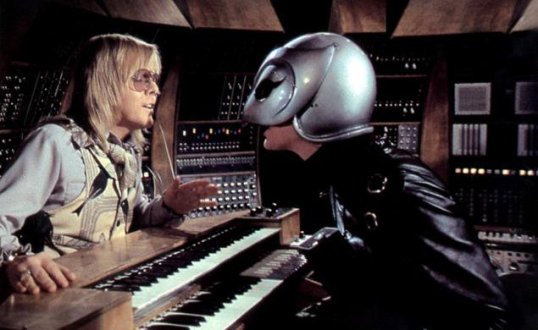
Thank you, Paul Lynch, for directing this classic scene for 1980’s Prom Night! Any director who can combine Leslie Nielsen and disco deserves to be forever remembered.
Remember everyone …. Prom Night! Everything is alright!
4 Or More Shots From 4 Or More Films is just what it says it is, 4 shots from 4 of our favorite films. As opposed to the reviews and recaps that we usually post, 4 Shots From 4 Films lets the visuals do the talking!
Today, we wish a happy birthday to Canadian filmmaker, Paul Lynch! It’s time for….
4 Shots From 4 Paul Lynch Films
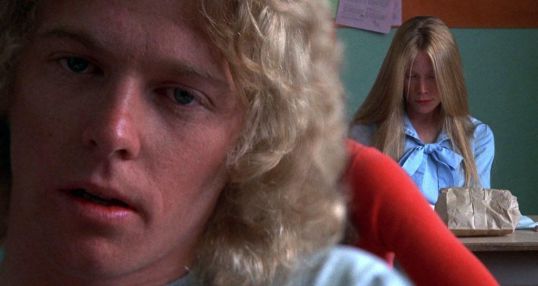
Prom Night (1980, dir by Paul Lynch, DP: Robert C. New)
No Contest (1995, dir by Paul Lynch, DP: Curtis Petersen)
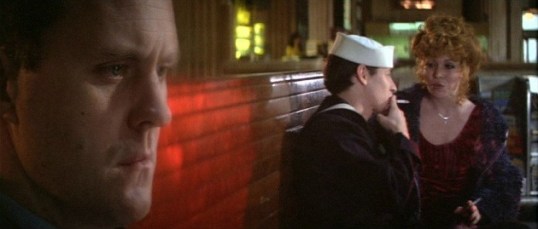
No Contest II (1996, dir by Paul Lynch, DP: Barry Gravelle)
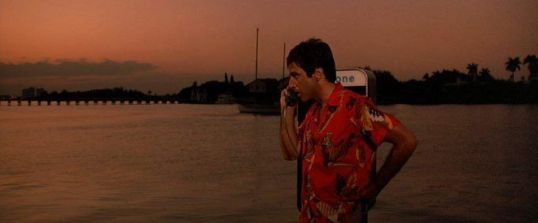
The Keeper (2004, dir by Paul Lynch, DP: Curtis Petersen)
When we look back at the historic cinematic landscape of 1977, it is almost impossible not to view it through the lens of a seismic cultural shift. That was the year a young George Lucas unleashed Star Wars upon the collective consciousness, fundamentally reshaping the Hollywood studio system and redirecting the trajectory of science fiction toward space opera, galactic dogfights, and mythic hero journeys. Yet, just a few months later, Steven Spielberg quietly delivered his own counter-argument to the stars with Close Encounters of the Third Kind. While Lucas looked outward toward far-away galaxies, Spielberg looked upward from our own suburban backyards. The result remains one of the most singular, agonizingly beautiful, and intensely personal science fiction films ever made, a masterclass in atmospheric tension that manages to balance deep blue-collar anxieties with a profound, almost spiritual sense of cosmic wonder. Watching it today, stripped of the immediate historical noise of the late seventies, the film stands out not merely as a technical milestone of visual effects, but as a fascinatingly messy character study about the terrifying, disruptive nature of inspiration and obsession.
The story follows Roy Neary, a blue-collar electrician in Indiana who, during a late-night power outage, sees something inexplicable in the sky. He’s not alone—across the state, a young mother named Jillian Guiler also witnesses strange lights, and her toddler son Barry becomes eerily fascinated by them. What Roy and Jillian don’t know is that similar sightings are happening worldwide, from the Gobi Desert to the air traffic control towers of Indianapolis. The film then does something unusual: instead of cutting to a military briefing or a scientist’s whiteboard, it stays with Roy as his ordinary life starts to fracture. He becomes obsessed with a shape he can’t quite remember—a mountain, maybe, or a tower—that he begins sculpting out of mashed potatoes, shaving cream, and whatever else is at hand. His wife and kids, understandably, think he’s losing his mind. Jillian, meanwhile, faces a more immediate and terrifying version of the same mystery.
What’s remarkable is how Spielberg handles characterization. Roy isn’t a hero in any traditional sense. He’s a loud, slightly goofy family man who loves model trains and bad jokes. Richard Dreyfuss plays him with a permanent crease of confusion between his eyebrows, as if his brain is trying to process a frequency nobody else can hear. The film never explains why Roy is chosen or why the visions hit him so hard—it just shows the consequences: lost jobs, a crumbling marriage, a man who starts seeing his living room as a prison. Jillian, played with fierce tenderness by Melinda Dillon, is the emotional anchor. Where Roy’s obsession feels almost euphoric, Jillian’s is rooted in primal fear and love. She doesn’t want to meet the unknown; she wants her son back. The film wisely never pits them against each other. Instead, they become accidental allies, two people dragged toward the same inexplicable destination for very different reasons.
Then there’s the other side of the coin: the government. François Truffaut (one of the founders of the French New Wave film movement), in a wonderfully offbeat piece of casting, plays Claude Lacombe, a French scientist leading a secret U.N. team that’s been tracking the phenomena for years. We see them discover something astonishing in the Mongolian desert—a lost ship from World War II, returned without its crew, in pristine condition. Later, they find an entire tanker ship deposited in the Gobi, miles from any ocean. These scenes are brief but crucial, because they establish that whatever is happening has been happening for a long time. Lacombe and his team aren’t villains; they’re just as baffled as Roy, but with better funding. Their method of communication—a simple five-note musical phrase—becomes the film’s quiet heartbeat. Spielberg trusts you to understand that this isn’t a code or a weapon. It’s a greeting.
The film’s middle section is where most blockbusters would insert a chase or a battle. Instead, Close Encounters gives us a slow-burn portrait of obsession as a kind of grace. Roy drives his family crazy. Jillian chases rumors. Hundreds of other ordinary people—the film calls them the “paranoids”—start showing up at rural crossroads, drawn by the same psychic pull. Spielberg shoots these scenes with a documentary-like patience: a traffic jam of confused believers, a midnight roadblock, a man who just knows he has to go to Wyoming. You start to feel the pull yourself. By the time Roy finally understands what the mashed-potato mountain is—Devil’s Tower, a real volcanic plug in northeastern Wyoming—the movie has earned every ounce of that revelation. It’s not a twist. It’s a release.
The final forty minutes of Close Encounters are best experienced with as little prior knowledge as possible, so I’ll stay vague. What I will say is that Spielberg stages the arrival of the unknown as a religious event, not an invasion. There are no laser cannons, no ultimatums, no speeches about humanity’s destiny. Instead, there’s light and sound, a symphony of colored orbs and humming engines, and a sequence of hand gestures that communicates more than any dialogue could. The aliens, when they finally appear, are small and pale and oddly childlike—not scary, not angelic, just other. And a choice that Roy faces, involving whether to stay or go, lands with the weight of a moral question, not a happy ending. Spielberg doesn’t tell you if it’s right. He just shows you a man’s face, lit by unearthly glow, and leaves the rest to your own compass.
Technically, the film is a marvel of analog craft. The UFOs aren’t digital—they’re models, lights, and smoke, shot with such loving care that they feel tangible. Douglas Trumbull’s visual effects prioritize scale and mystery over menace. John Williams’s score, anchored by that five-note motif, does the emotional heavy lifting without ever feeling manipulative. And Spielberg’s direction is all about waiting—holding on a character’s face as they process something impossible, letting a shot of the night sky breathe for an extra five seconds. That patience is the film’s secret weapon. In an era of quick cuts and louder-is-better spectacle, Close Encounters dares you to sit in the dark and listen.
Does it hold up? Almost entirely, though with small caveats. The pacing is glacial by modern standards, and Roy’s family is written as shrill obstacles—Teri Garr does her best with a thankless role. Some viewers may find Roy’s eventual choices hard to forgive. But those complaints miss the point. Close Encounters isn’t about good fathers or responsible citizens. It’s about the ache of the ineffable—the feeling that something is out there, just past the treeline, and it knows your name. Spielberg made bigger hits, but he never made anything more personal. If you’ve never seen it, or haven’t since you were a kid, watch it in the dark. Turn your phone off. Let the tones wash over you. You might find yourself humming that five-note song for days. And honestly, that’s the whole point.