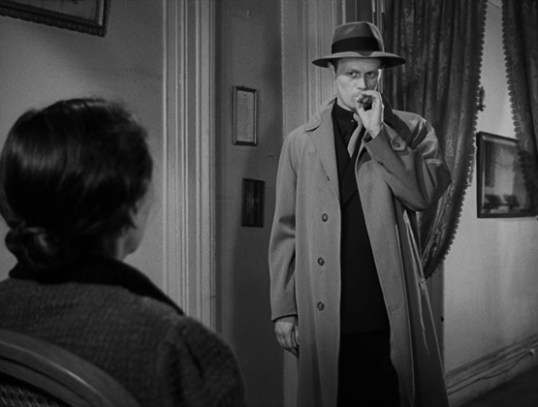
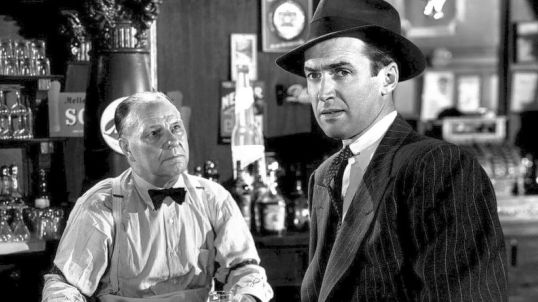
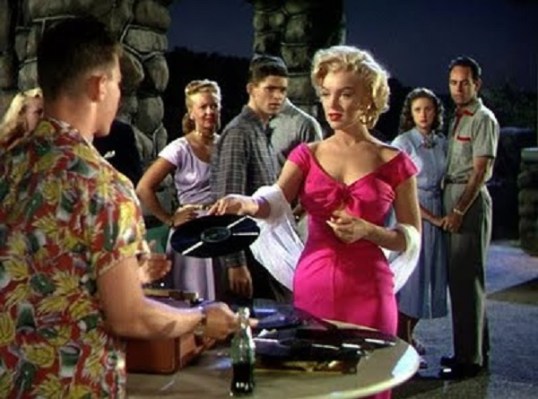
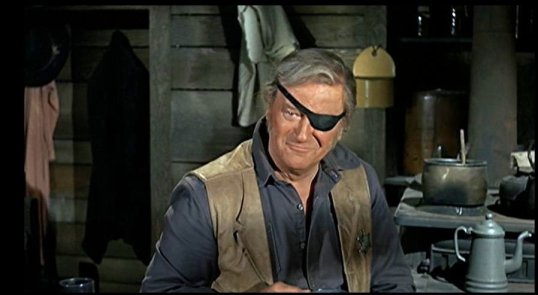
4 Shots From 4 Films is just what it says it is, 4 shots from 4 of our favorite films. As opposed to the reviews and recaps that we usually post, 4 Shots From 4 Films lets the visuals do the talking!
Today, the Shattered Lens celebrates director Henry Hathaway, born 127 years ago today! It’s time for….
4 Shots From 4 Henry Hathaway Films
Kiss of Death (1947, dir by Henry Hathaway, DP: Norbert Brodine)
Call Northside 777 (1948, dir by Henry Hathaway, DP: Joseph MacDonald)
Niagara (1953, dir by Henry Hathaway, DP: Joseph MacDonald)
True Grit (1969, dir by Henry Hathaway, DP: Lucien Ballard)
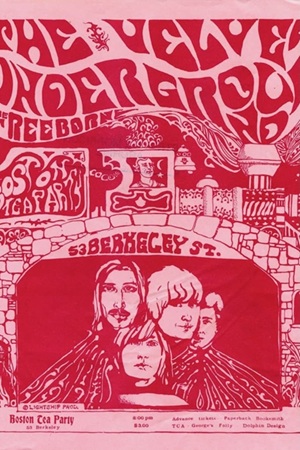
In the late 60s, The Velvet Underground often performed at the Boston Tea Party, a concert venue in — you guessed it! — Boston. Lou Reed described the Boston Tea Party as being the band’s favorite place to play and the Velvets’ performances at the venue would eventually become legendary. The Velvet Underground would attract an audience made up of bikers, Harvard students, MIT Students, Northeastern Students, celebrities, and a young Jonathan Richman.
In 1967, artist Andy Warhol attended a performance and filmed the show. He got 33 minutes of footage, one that doesn’t quite work as a concert film but which does work marvelously as a time capsule. While the music itself is often distorted (and this is not the film to watch if you’re wanting to hear your favorite songs performed live), Warhol’s camera does capture the feel of the psychedelic 60s, complete with strobe lights, sudden zoom shots, and an audience that alternates between moving to the music and standing still in a state of stoned contemplation. Warhol films like someone who has just gotten his first camera and can’t wait to experiment and see what it can do. The end result is actually rather likable, even if it is often incoherent. The enthusiasm and the excitement of filmmaking and capturing history comes through. When you’re first learning and experimenting with film, there’s nothing cooler than a sudden close-up or a sudden pull back to reveal the size of the crowd. The film finds Warhol having fun with the camera and the footage is ultimately rather hypnotic.
It’s a true time capsule. Here is The Velvet Underground in Boston.
4 Shots From 4 Films is just what it says it is, 4 shots from 4 of our favorite films. As opposed to the reviews and recaps that we usually post, 4 Shots From 4 Films lets the visuals do the talking!
Today, the Shattered Lens wishes a happy birthday to the one and only Liza Minnelli. Here she is, in today’s scene that I love, performing Money with Joel Grey in 1972’s Cabaret.
Yes, the 1976 film Dixie Dynamite is supposedly set in Georgia but it’s hard not to notice that all of the hills and mountains in the background look like they’re from California. The story features two sisters, Dixie (Jane Anne Johnston) and Patsy (Kathy McHaley), who go into the moonshine business after their father drives his car off a cliff. Their father was the best moonshiner in the business and they aim to carry on his legacy, despite the efforts of Sheriff Marsh (Christopher George) and banker Charlie White (R.G. Armstrong). Blowing up their stills and threatening to auction off their land isn’t going to stop these two from doing whatever it is exactly that they’re doing in this film. Eventually, the sisters steal a bunch of dynamite and start blowing stuff up. Normally, I’d say “Woo hoo!” but this film even makes random explosions seem as boring as the 4th of July in Canada.
Warren Oates plays Mack, a motocross champion who occasionally helps the daughter’s out. At least, I think he’s helping them. To be honest, it’s not always easy to tell what Mack’s purpose actually is in this story. He tends to show up randomly, usually after all the action has ended. He’s kind of a useless friend, to be honest. Warren Oates brings his rough-hewn charm to the roll and you’re usually glad to see him, if just because the actresses playing the sisters are genuinely lousy, but you’re never quite sure what he’s doing there. Watching the film, one gets the feeling that Oates just dropped by the set whenever he felt like it and filmed a scene or two.
It’s really not that crazy of a possibility. Actor Steve McQueen makes a cameo appearance in this film, riding a motorcycle and challenging Oates. McQueen didn’t make many films in the 70s. Let’s consider some of the films that he turned down: The Great Gatsby, Jaws, Apocalypse Now, The Driver, The French Connection, Sorcerer, and Hard Times. None of those films appealed to McQueen but he was still willing to show up for a day’s worth of shooting on Dixie Dynamite. Of course, McQueen does go uncredited.
This is an odd film, full of slow spots that not even actors like Warren Oates, Christopher George, and R.G. Armstrong can make up for. Director Lee Frost was best-known for his softcore exploitation films and Dixie Dynamite is full of odd transitions and jump cuts, leading me to suspect that the film was originally meant to be a lot more like a typical Frost film before it was decided to go in a PG-direction as well.
Perhaps the oddest part of the film is that the daughter’s final scheme to get revenge on the sheriff and the banker involves stealing two dead bodies from the local morgue. The bodies are made up and dressed to look like Dixie and Patsy so that the sisters can fake their own death. I can understand that and even give them credit for hatching a clever plan. But I still find it weird that the film never really explains how the bodies were stolen or why they were in the morgue in the first place. What are the chances that Patsy and Dixie would head down to the morgue and find two look-alikes?
The film features dynamite, Warren Oates, and corpse-stealing but it’s still incredibly dull. That’s just weird.
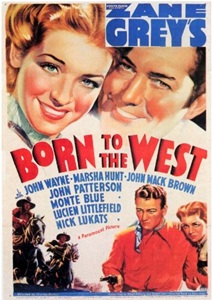
John Wayne plays Dare Rudd, a friendly rogue who aspires to be the best poker player west of the Mississippi. When he and his sidekick, Dinkey Hooley (Syd Saylor), ride into Montana, they meet up with Dare’s cousin, Tom Filmore (Johnny Mack Brown, billed as John here). Filmore needs some help on his cattle drive and Dare sure does like Tom’s girl, Judy (Marsha Hunt). Dare replaces Lynn Hardy (John Patterson) as head of the cattle drive and Lynn teams up with rustler Bart Hammond (Monte Blue) to try to get revenge. While Dinkey tries to sell lightning rods, Dare moves the herd and even finds time to play poker with notorious gambler Buck Brady (James Craig).
This is another one of the B-westerns that John Wayne made before John Ford made him a stars by casting him in Stagecoach. This one is interesting because Wayne is not playing his usual stolid do-gooder or even an expert marksman. Instead, Dare is impulsive and reckless and he’s ultimately not as smart a card player as he thinks he is. It’s rare to see John Wayne need help from anyone but that’s what he gets from Johnny Mack Brown, who shows up in time to reveal that Dare is getting cheated in his poker game. For fans of the genre, this short oater is worth watching for the chance to see two western icons acting opposite each other. Johnny Mack Brown and John Wayne would both go on to appear in a countless number of westerns. Wayne became a superstar, appearing in big budget studio films. Brown remained a mainstay on the B-circuit. They’re amusing to watch in this film as they bounce dialogue off of each other and continually try to steal scenes from one another. Brown is playing the type of no-nonsense, hard-working westerner who would later become John Wayne’s trademark character.
Based on a novel by Zane Grey, Born to the West is a fast-paced western featuring two of the best to ever ride a horse.
In 1948’s White Heat, James Cagney plays Cody Jarrett, a gangster who loves his mother and goes out like a raging inferno. Here, for those who don’t mind a spoiler or two, is the end of Raoul Walsh’s White Heat.
4 Shots From 4 Films is just what it says it is, 4 shots from 4 of our favorite films. As opposed to the reviews and recaps that we usually post, 4 Shots From 4 Films lets the visuals do the talking!
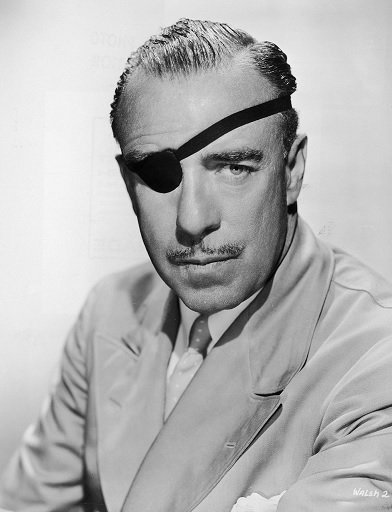
128 years ago today, film director Raoul Walsh was born in New York City. He started out as an actor and a second unit director, learning how to make films under the tutelage of D.W. Griffith. He made his directorial debut in 1915 with Regeneration, which is considered to be the first gangster film. Refusing to sidelined after losing an eye in an auto accident, Walsh continued to direct and his career stretched from the silent era all the way to the mid-60s. Walsh directed westerns, war films, and gangster films. He was a master of tough but sometimes quirky action films. Martin Scorsese continues to cite Walsh as being an influence on his own work.
Today. we pay tribute to Raoul Walsh with….
4 Shots From 4 Raoul Walsh Films
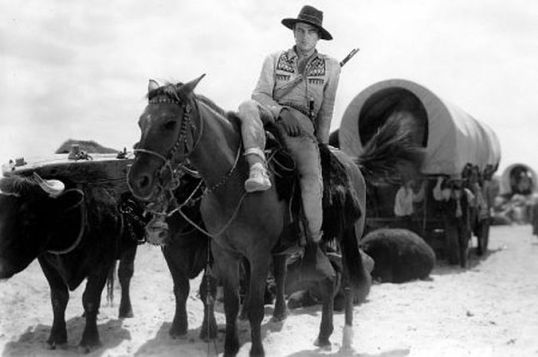
The Big Trail (1930, dir by Raoul Walsh, DP: Lucian Andriot and Arthur Edeson)
The Roaring Twenties (1939, dir by Raoul Walsh, DP: Ernest Haller)
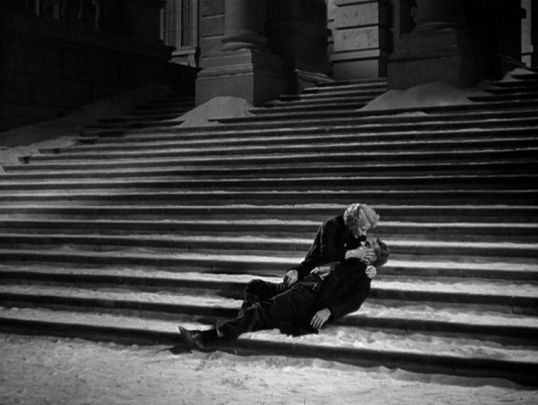
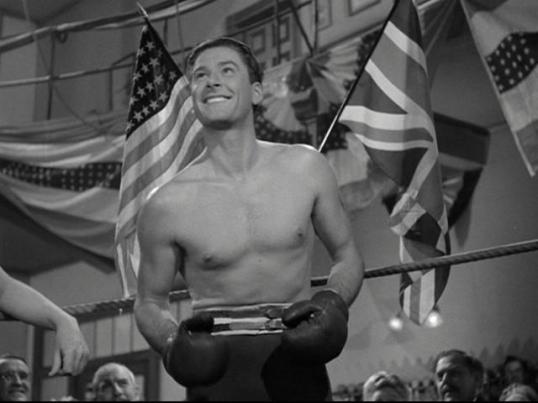
Gentleman Jim (1942, dir by Raoul Walsh, DP: Sidney Hickox)
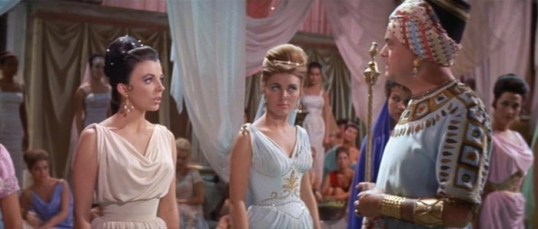
Esther and the King (1960, dir by Raoul Walsh and Mario Bava, DP: Mario Bava)
I’m a huge fan of actor Chuck Norris. His films SILENT RAGE, LONE WOLF MCQUADE, MISSING IN ACTION, and especially CODE OF SILENCE are some of my all time favorites. Fox 16 out of Little Rock seemed to play LONE WOLF MCQUADE on repeat when I was growing up in the 80’s. I always thought this opening scene was so badass. In honor of Norris’ birthday, I share this with all of you! Thanks Chuck, for all the great memories! Enjoy, my friends!
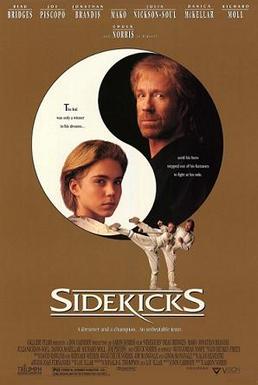
Barry Gabrewski (Jonathan Brandis) is a teenager living in Houston with his father (Beau Bridges). Barry has asthma and has a hard time at school, being picked on by everyone from the school bully (John Buchanan) to the athletics coach (Richard Moll) to the clueless principal (Gerrit Graham). Barry has only one ally and his name is Chuck Norris! Whenever Barry is having a hard time, he imagines taking part in an exciting mission with Chuck Norris. In his imagination, he and Chuck recreate scenes from all of Chuck’s movies even though Barry is really too young to be watching anything that violent.
Barry wants to learn karate but is turned down by an arrogant dojo owner (Joe Piscopo, channeling Martin Kove). Barry finally finds a teacher (Mako) who uses Barry’s love of all things Chuck Norris to train him. Barry enters the local karate tournament and wouldn’t you know it, there’s Chuck! He’s attending as a guest and he’s hoping to see Joe Piscopo taught a lesson in humility. When Barry and his sensei are told that they don’t have enough members for their team, Chuck volunteers to fight with them. No one objects to the world’s most famous martial artist deciding to take part in a local, largely amateur karate tournament. Can Barry win the tournament with the help of his hero?
Chuck Norris famously turned down a role in The Karate Kid. Some sources say that he was offered the John Kreese role while others say that Norris was offered the sensei role that eventually become Mr. Miyagi. Chuck has always said that his agent turned down the script and he didn’t even know it had been offered to him until years later but Sidekicks sticks so close to the Karate Kid plot that it does sometimes feel like it was made so that we could see what Karate Kid would have been like if Chuck Norris had accepted a role. The movie follows the Karate Kid formula while lacking the edge that made Karate Kid stand out. Karate Kid was a coming-of-age movie with a lot of karate. Sidekicks is a blatant celebration of Chuck Norris.
Fortunately, Chuck Norris has always had the moves to back up his high self-regard and, in this film, he actually seems to be relaxed and having fun playing a version of himself. Sidekicks is predictable and ego-driven but it has a likable energy and Chuck shows a willingness to poke fun at his earlier movies. Whatever else you might say about Sidekicks, there were a lot of bullied kids would have loved to have had a friend like Chuck Norris. Sidekicks is also the only place where you can see Chuck Norris fight Joe Piscopo and there’s something to be said for that.