Review: Iron Man 2 (dir. Jon Favreau)


In 2008 Marvel Comics released it’s very first in-house financed film through it’s Marvel Studios. That film was called Iron Man. It was a film that definitely was given buzz and hype by the comic book crowd, but wasn’t highly-anticipated by the general public. Even the prospect of Robert Downey, Jr. as the character of Tony Stark was received by the fanboys with trepidation and by the rest of the film-going public with apathy. When the film finally came out the reaction wasn’t what industry experts had expected. The film became a bonafide hit and it was all due to one man. That man happened to be the very person people thought was wrong for the part: Robert Downey, Jr. His performance as Tony Stark and as Iron Man was one of those which makes a franchise. Robert Downey, Jr. was born to play Tony Stark and it showed on the screen. The film was a major success not just for RDJ but for the fledgling Marvel Studios.

It is now 2010 and the follow-up to Iron Man has finally come out. The road to this second film wasn’t as difficult and mired in trepidation as the first, but now people wondered whether the first film was just a fluke and would lightning be caught once again in the proverbial bottle. The complaints this time around prior to the film’s release was that there were too many new characters both villains and allies being introduced. Would the action scenes be as average and all-too-brief as they were in the first film? Would Robert Downey, Jr. be able to handle the pressure of being the foundation of a world Marvel Studios was building with not just the Iron Man franchise but the other films coming down the pipeline like Thor and Captain America then the big boy in the room: The Avengers. These were all credible worries, but in the end this sequel made a great leap forward into calming down these fears. Iron Man 2 definitely lives up to the first film and improves on certain weaknesses of the first film, but not all which just keeps this sequel from being on the same level as past Marvel superhero sequels like Spider-Man 2 and X2.

The film opens up literally just as the first film ends as we see a Russian TV rebroadcasting Tony Stark declaring himself as Iron Man in front of a crowd of reporters. It’s who is watching this broadcast that moves the story along from start to finish. We meet Ivan Vanko (played with inherent menace by Mickey Rourke) who finds out from his dying father that Tony stark and Iron Man was to blame for their family’s hardship and lost legacy. That very theme of patriarchal and familial legacy becomes a running theme throughout the film. This opening intro sequence shows the audience that Tony Stark wasn’t the only one capable of creating the very power source keeping him alive and powering up the Iron Man suit. The extended intro also does a good job of introducing a main character right from the start and giving us his background, motivations and skill set and why he makes a credible opponent for a one-man army which Iron Man truly has become. But Ivan Vanko, or Whiplash as the credits have dubbed him, won’t be the only problem Tony Stark has to face throughout the film. All the problems he’s having to deal with since becoming Iron Man and publicly declaring himself as such comes from that very declaration.

The U.S. government now sees Iron Man as a problem, despite having stabilized the world by his very existence, and has been trying to force Tony Stark to relinquish the suit and the technology necessary to operate and replicate the Iron Man suit/weapon. Whether it’s his self-inflated and fame-fed ego or his new-found ideals to rewrite his family’s warmongering and war-profiteering past, Tony Stark refuses to give up the suit and even embarrasses the senator (played by Garry Shandling) heading up the subcommittee trying to get Stark to relinquish the suit. The other more immediate and personal problem Stark now has to find a solution for happens to be the very thing keeping him alive. The minituarized ARC Reactor in his chest is gradually poisoning him due to it’s palladium core. While the poison levels slowly builds as he continue to wear the reactor it jumps up in levels whenever he uses the suit. Without a suitable replacement to the toxic palladium all the good work Tony Stark thinks he has done will be for naught as death was something he couldn’t fight against.

Right in the middle of both Vanko and the US government sits one Justin Hammer of Hammer Industries. Hammer (played with weasly and loser aplomb by Sam Rockwell) runs a competing arms manufacturer to Stark Industries. A company who took the opportunity of Stark ending all arms manufacturing and sales to become the government’s newest primary defense contractor. Hammer also looks to replicate the Iron Man suit and arc reactor technology either in-house or through less reputable means. Hammer is instrumental in giving Vanko and the government the resources needed to take on Tony Stark. Most of the comedic aspect of the film involves Hammer trying to help out these two competing antagonists with hilarious and, in the end, lethal results.

Not everything about the film centers on Stark’s problems. The film also works in further building up and rounding out the cast of characters supporting Tony Stark. Pepper Potts has now turned from being Tony’s personal aide and secretary to actually becoming Chairman and CEO of his company by his choice. His military liaison and best friend Lt. Col. James Rhodes (Don Cheadle replacing Terence Howard for this sequel in the role) returns with conflicted agendas as he’s caught between his friendship to Stark and his commitment as an Air Force officer to the military and this to the U.S. government. We get more screentime with S.H.I.E.L.D.’s Nick Fury as he appears in the middle and very end of the film. Another ally to join this core group is Natasha Romanoff as the Black Widow (played by Scarlett Johannson). These people try their best to keep Tony Stark grounded and focused throughout the film.

Iron Man 2 pretty much equals what the first film did in providing the audience with some very good performances from all the actors. Great performances despite another script which definitely needed some help in tightening up the story and it’s many converging subplots. While the screenplay done up by screenwriter Justin Theroux is not bad it does fail to capitalize on the very good origin story of the first. The dialogue was pretty average with some lines bordering on uninspired. The adage of great actors making even the worst script sound great definitely stands with the one for this film.

Robert Downey, Jr. returns to elevate the script and dialogue with his very presence and personality. RDJ is Tony Stark and once again proves that he was born for to play the character and personify it on-screen. Every screentime he has with the rest of the film’s actors pop and sizzle especially those with the two female support of Gwyneth Paltrow as Pepper Potts and Scarlett Johannson as the Black Widow. The chemistry between RDJ and Paltrow has improved even though it was already one of the strongest positives of the first film. We see their relationship evolve beyond the mutual attraction from the first film to something much stronger this second time around. Paltrow’s performance was more defined as she goes from being just Stark’s gal Friday to one in a position of power. She becomes the everyman/woman who bears witness to the fantastic going-ons of a world suddenly becoming full of superheroes and the subsequent villains and enemies.

While the two leads in RDJ and Paltrow continue to do a great job in their roles, and the rest of those returning and even the newest faces keeping up with their own performances, the one actor who almost steals the film has to be Sam Rockwell as Justin Hammer. Some have called his performance as being too campy and over-the-top. I think his work as Justin Hammer was actually one of the best in the whole film. It’s right up there with RDJ’s work as Tony Stark. Where people saw a character that seemed over-the-top was actually an actor playing the role exactly how it should be played. Hammer was a character always in the shadow of the more popular, charismatic and confident Tony Stark. Hammer thought himself equal to Stark in every way when in truth his mannerisms and affectations only made him seem more the loser each and every time he was on-screen.

One thing which the film improved on over the first was the staging of it’s action sequences and the length with which they lasted. In the first film, the action was quite minimum to say the least as the film really focused on Iron Man’s origin. While the action in the first film wasn’t bad in any way the fact that they didn’t last long was a sore point for even the ardest fan of that film. This time around the action had better staging and a much improved choreography. The visual effects work by Legacy Effects Studio (formerly known as Stan Winston Studios) improved on the original with the different Marks of Iron Man suits looking distinct whether it was the newest Mark VI worn by Stark in the climactic battle or the “pimped-out” War Machine worn by Rhodes.

One thing which should excite comic book fans, and especially those who fanatically follow the Marvel line of titles, is the many little references to future Marvel Studios titles. While the script itself could be seen as average with some above-average moments it still was coherent enough that all the little easter eggs about Thor, Captain America and The Avengers didn’t seem out of place. This sequel played less like a sequel to a stand-alone franchise, but more like another piece to the world Marvel was building and adding to with each new film. It is for this very reason that I’m more than willing to give some of the deficiencies in the story and dearth of new characters a break.

I think it would be difficult to look at any Marvel Studio film as a stand-alone or even for a franchise to be self-contained. Both Iron Man films belong in a world where other characters with their own films will inhabit and interact with each other. Thus we get all these little references even though it may bloat up the particular film they appear in. The final judgement will come once all the films planned have been released and the overall effect and payoff has been met or not.

In the end, Iron Man 2 was a sequel which more than matched it’s predecessor but still had problems in its screenplay work to keep it from being great. The performances were excellent from everyone involved with some even elevating their roles to higher levels. The action was better than the original with some great work from the visual effects studios whose task was to keep the action coherent and easy to follow (unlike Michael Bay’s action work). For those who follow the comics this film should definitely be a must-see and shouldn’t disappoint. For the casual viewer the film should be a fun and action-filled two-hours that also happens to have some very great actors doing good to great work. I must also recommend that people not leave the theater once the end credits begin to roll. Like the previous film in the franchise there is a suprise scene at the very end of the credits which should be seen as it hints at a future Marvel superhero film and one that will tie in with this particular franchise.

Review: A Dog Called Vengeance (dir. by Antonio Isasi)


I’ve always felt that a truly good movie should inspire the viewer to seek to confess something about themselves.  So here’s my confession.  When I was a toddler, I was mauled by a stray dog.  I don’t remember it, of course but I still have the small scars on my left arm as proof.  As a result, I’m scared of dogs and I always have been.  I jump when I hear one barking and the sound of one growling can easily set off a panic attack.  Whenever I see one nearby, regardless of whether it’s on a leash or not, my heart starts to race.  

For that reason, I suppose it was inevitable that a movie like the 1976 Spanish production A Dog Called Vengeance would get to me.

The film opens in an unnamed South American country.  Political prisoner Jason Miller escapes from a jungle prison.  As he flees, Miller runs into a tracker and the tracker’s dog, a German Shepard named King.  Miller kills the tracker and then continues to run.  King, after a few rather sad scenes in which he tries to revive his dead master, gives chase.

And that, in short, is pretty much the entire 108-minute film.  Miller runs and King chases.  Whenever Miller thinks that he’s safe (whether he’s taking a bath in a river or making love to a woman who has agreed to hide him), that relentless dog shows up and tries to kill him.   I have to admit that this movie did little to alleviate my fear of dogs because King is truly viscous.  The scenes were attacks both Miller and other assorted humans left me cringing and I don’t think it’s just a coincidence that Miller looks to be truly scared during some of the attack scenes.  King easily dominates the 1st half of this movie.

The 2nd half of the movie feels like a totally different movie from the first.  Jason Miller, having reached the city, is reunited with his comrades in the revolution.  Whereas the first half of the movie was almost wordless, the movie suddenly become a lot more talky as Miller and his associated debate the merits and morality of revolution.  Personally, I prefer the second half if just because a nice element of moral ambiguity is introduced here as it becomes pretty obvious that the “revolutionaries” are just as corrupt as the country’s dictator.  In the city, Miller finds himself still being pursued by his enemies but now his friends want him dead as well.  And, of course, that dog shows up again as well…

Anatonio Isasi’s direction is, for the most part, strong and Jason Miller (best known as Father Karras in the Exorcist) gives a good, low-key performance as the film’s lead.  But, of course, the real star of the movie is that damn dog and, despite not being a doglover, I have to admit that it did a pretty good job.  Not only did I believe that dog wanted to kill Miller but I believed that he easily could as well.  However, at the same time, it hard not to feel a little bit of admiration for King.  He was just so compellingly relentless in his pursuit.  It’s probably one of best unacknowledged canine performances in film history.

A Dog Called Vengeance is the epitome of the type of flawed yet oddly compelling film that could only have been made outside of the Hollywood system.  By refusing to shy away from showing either the full savagery of the dog’s attacks or in man’s response to those attacks, director Isasi manages to craft a political allegory that also works as a simple thriller.  By refusing to paint either Miller or the dog in purely black-and-white terms, he introduces a moral ambiguity that most Hollywood studios would never have the guts to even attempt.  Tellingly, the most shocking and disturbing scene in the film is not one of King’s many attacks on Miller.  Instead, it’s a scene in which our paranoid “hero” guns down an innocent dog while its 10 year-old owner watches in horror.

Unfortunately, A Dog Called Vengeance isn’t an easy film to find.  I saw it as part of the Grindhouse 2 DVD compilation and the transfer — taken straight from a VHS release — was terrible with frequently blurry images and terrible sound.  To a certain extent, this did give an authentic “grindhouse” feel to the experience of watching the movie but it doesn’t change the fact that it took a while to get used to just how bad the movie looked.  Luckily, the transfer seemed to improve as the film went on and, by the end of the movie, was no longer an issue.

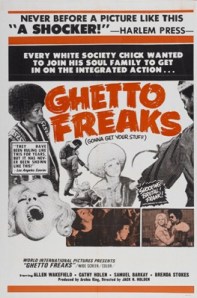
Review: Ghetto Freaks (dir. by Robert J. Emery)


During my freshman year of college, my roommate Kim often used to tell me that we were born several decades too late.  If only, she often lamented, we could have grown up in the 1960s and been part of that legendary counter-culture.  Her logic was that we both considered ourselves to be anti-establishment, we both felt society needed to be changed, and we both liked to get high on occasion.

I can see her point but honestly, I would never had made it as a hippy or, for that matter, even as a quasi-hippy.  For one thing, I hate being outdoors.  I’ve got too many allergies and crickets freak me out.  While I support free love, I don’t support practicing it with people who don’t shower on a regular basis.  I’m not going to argue with any woman who feels the need to burn her bra but quite frankly, I don’t want to wake up one day and discover that I can touch my boobs with my big toe.  Actually, that whole idea of running around day after day without any underwear on is just gross.  I don’t even want to think about it.

So, no, I could never have been a member of the 60s counter-culture.  But that doesn’t mean that I can’t watch the hundreds of films — some well-known but most incredibly dated and obscure — that have been made about and during that era.  Indeed, whatever knowledge I have the 1960s pretty much comes from my movie collection and movies like Ghetto Freaks.

The production history of Ghetto Freaks is rather obscure.  Just to judge from the clothes and the dated lingo, it was originally filmed in 1969 or 1970.  The film, which is nearly plotless, was shot in Cleveland, Ohio.  I’ve never been to Cleveland (or Ohio, for that matter) and Ghetto Freaks — with its cold and gray urban landscape — hardly makes it look inviting.  Still, the fact that it was shot on location and that no attempt was made to hide the decay there, does bring an unexpected rawness to the movie.  Whether it was by intention or just the result of a low budget, director Robert Emery does manages to make the film’s ugliness oddly compelling.

The movie opens up with a bunch of hippies talking to a bunch of older people.  If you’ve seen any of the protest films of the 60s or 70s then you’ve already seen this scene a hundred times.  The hippies are told to get haircuts.  The hippies make the standard response about Jesus having long hair.  Fortunately, the cops arrive before the scene turns into the 2nd act of Bye Bye Birdie. 

This is the 1st of many awkward, predictable scenes in Ghetto Freaks.  Fortunately, this movie was smart enough to follow its bad scenes with good ones.  So, once the pigs have released him, the head of the hippies (a ruggedly handsome former drug dealer named Sonny) spends his night hanging out at a rather dingy club.  

How to describe the Club Sequence?  Well, you really have to see it to understand why I can’t get it out of my head but it all comes down to the a rather hyperactive singer who performs at the club.  This singer performs two songs.  The first features the immortal lyrics “My name is Mousey and I feel lousy.”  The second is an odd cover of the MC 5’s seminal “Kick Out The Jams,” (though, in the film, the song is kicked off by the singer shouting “Kick out the jams, brothers and sisters!” as opposed to the actual “Kick out the jams, motherfucker!”)  The two musical performances are energetic and — as opposed to the earlier “protest” scene — entertaining to watch and the singer’s flamboyance contrasts interestingly with the club’s drabness.

Of course, there’s more going on in the bar than just the music.  Sonny talks to the other members of his hippy commune.  He also turns down a chance to return to his old career of dealing drugs on the street.  These conversations have a rather nice, breezy air to them.  For the most part, the actors all give surprisingly natural performances and the dialogue — no longer full of platitudes — is occasionally even memorable.

One other important thing happens at the bar.  Sonny spots a pretty young woman named Diane who is fighting with her obviously upper class parents.  Sonny finds the time to invite her to drop by the old commune before she is dragged away by mom and dad.

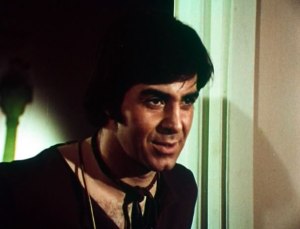
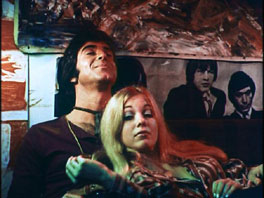
Later that night, Diane makes her way to the hippie pad currently occupied by Sonny and 14 other hippies.  She and Sonny have a long talk about why Sonny and friends live the way that they do.  And I do mean long.  The conversation seems to drag on forever and it doesn’t help that everything Sonny says is a platitude along the lines of “War is bad for children and other living things.”  Fortunately, this scene is made barely tolerable by the fact that Sonny and Diane are both played by likable performers.  Sonny’s has a rugged charisma about him and Diane comes across as sincerely nice.  I haven’t ever seen either one of these actors (or for that matter, anyone in Ghetto Freaks) in any other movies and that’s a shame because the movie does boast some memorable performances.

Anyway, even as Sonny explains his world view to her, Diane is dropping acid for the first time.  Naturally this leads to a huge orgy in which the members of the commune dance around naked while Sonny and Diane make love on the floor.

(I have to admit I got a little bit jealous of Diane here because, back when I used to do that sort of thing, I never had a trip that resulted in an orgy.  I saw my face melting occasionally but never an orgy.  It makes me wish I had a “I Dropped Acid and All I Got Was A Lousy Flashback” t-shirt.)

As you might guess, the Ghetto Freaks orgy is the film’s best known scene.  Along with all the nude hippies dancing (and, credit to the film, all the hippies are seen nude and not just the females), we also get a lot of dark blue lighting and psychedelic music playing the background.  While undeniably erotic, there’s also something rather disturbing about the whole scene.  First off, with all the weird camera angles and nude onlookers, the scene immediately made me think about the Satanic “dream” sequence from Rosemary’s Baby.  Secondly, seen today, it’s painfully obvious that the film’s hero is essentially taking the virginity of a girl who has been drugged. 

Oh, there’s one other interesting thing about the orgy sequence.  Are you wondering yet why this movie about a bunch of white hippies is called Ghetto Freaks?  Well, it’s because of what happens towards the end of the orgy.  Suddenly, we’re no longer watching Sonny rape Diane while a bunch of nude hippies dance.  Instead, we’re confronted with the image of a tall, glowering black man who handles a knife while several women we’ve never seen before parade past him.  I don’t know how to explain just how odd and jarring this two-minute sequence is.  Beyond the fact that we’ve never seen any of these characters before (and we won’t see them after), the scene itself is obviously shot on completely different film stock from the rest of the movie.  The only thing that connects it to anything we’ve seen before is that droning orgy music which continues to play (albeit in rather muted form) in the background.  Yes, this sequence was inserted into the movie after it had already been filmed.  The producers, obviously wondering how they’d ever make their money back, inserted this scene featuring this unnamed black man so that they could then market this nearly entirely white film as a blaxploitation film.  That man and his “followers” are the Ghetto Freaks of the title and they’re in the film for all of two minutes.

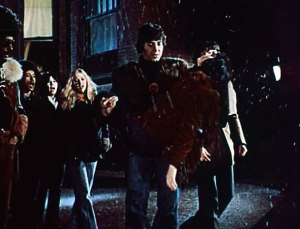
Following the orgy, we are treated to a day in the life of a hippy commune.  Diane accompanies Sonny, Mousey, and the whole gang on a day full of passing out an underground newspaper, panhandling, and getting harassed by the pigs.   Meanwhile, the neighborhood drug dealers, angry that Sonny won’t agree to push their drugs, are plotting their own revenge on our counter-culture Adonis.  If you think all of this eventually leads to a tragedy you can see coming from miles away, you’re right.

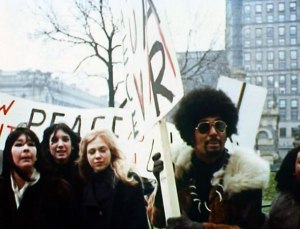
Even though it’s hard (actually impossible) to top a drug-induced orgy sequence, the second part of the film does feature two memorable scenes.  The 1st one features the members of the commune (what should one call them?  Communers, maybe?  Communists?) standing out in the street, trying to convince people to give them money for copies of a free, underground paper.  Shot in a documentary,cinéma vérité -style, this scene is appears to unscripted and features the cast interacting with actual human beings.  As such, the reactions (most negative but some surprisingly positive) are authentic as opposed to idealized.  The cast themselves turn out to be surprisingly skilled at improvisation and this sequence features the film’s best dialogue (which could be considered back-handed praise when you consider that the scene was unscripted).  It helps that the scene was obviously shot on a very cold day and the cast was obviously suffering for their “art.” (Diane, in a surprisingly endearing moment, keeps asking people to look at how blue her frozen hands are.)  I’m not a big fan of panhandlers in general but this film does succeed in making it look like very hard work.

The 2nd sequence occurs at the end of the film, even as the end credits are rolling.  If the panhandling sequence represents the best of Ghetto Freaks, this 2nd sequence represents, perhaps, the worst.  Following the film’s sudden violence of the movie’s “tragic” conclusion, the actors suddenly go from grim-faced to smiling like a bunch of Broadway understudies who have just learned that the entire cast of the latest Grease revival was aboard a plane that crashed while landing.  They start hugging each other (except, of course, for the character who dies at the end of the film.  She just keeps lying there on the sidewalk) and giving each other high fives as the camera pulls back to reveal — yes, you guessed it! — the movie’s director and his crew.  There’s a forced whimsy to this and it’s hard not to imagine the director smirking as he talks about how much he loves Jean-Luc Godard.  Reminding the audience that they’re actively watching a movie (as opposed to reality) was, of course, one of the French New Wave’s major contributions to the language of cinema.  Unfortunately, in Ghetto Freaks, it just feels like a forced attempt at trendiness.  (If Ghetto Freaks was made today, it would be in 3-D.)

As I stated previously, my entire knowledge of the 60s counter-culture pretty much comes from how it was depicted in the movies of the era.  One of the things that I’ve always found interesting about these movies is that, regardless of whether the movie is a classic like Easy Rider or a big budget misfire like Getting Straight or even a Roger Corman B-movie like Psych-Out, they are all essentially so middle class in their attitude towards women.  Again and again, the message of many of these films seems to be that everyone should be allowed to “do their own thing” as long as they don’t have a vagina.  However, those of us who do were continually portrayed in much the same way that we were portrayed in almost every film released before and after 1967.  To be female means that you can either be worshipped or you can be punished but never dare to be an individual.  (For the most obvious example of this, check out Getting Straight, a film in which activist Elliott Gould pretty much spends two hours screaming at Candice Bergen for daring to have opinions of her own.)

This is a trend that continues in Ghetto Freaks.  For all the talk about how Sonny and his commune are all about freedom and allowing people to be themselves, it doesn’t change the fact that the female members are pretty much there to be pretty and sexually available to whoever wants them for the night.  Diane is accepted into the group not because she rejected the values of society but because she has sex with Sonny.  Add to this a scene earlier in the film in which our hero Sonny jokes about how his best friends “big-titted” sister was raped by a black man (“She was asking for it,” Sonny assures her brother who eventually agrees) and you end up with a very contradictory message.  I don’t necessarily have problem with the characters themselves being sexists.  To be honest, I prefer an honest sexist to a liberated liar.  What’s annoying is that this movie, like a lot of other so-called “counter-culture” films, does not seem to be aware of the double standard.

In true exploitation film-tradition, Ghetto Freaks was released and re-released under several different names.  Seeing as how much of the film plays out like a community theater production of Hair, the film originally had the much more appropriate title of The Age of Aquarius.  When that title didn’t exactly work wonders, the film was retitled The Love Commune.  Again, this was an appropriate (if rather banal) title that failed to attract an audience.  Finally, the film’s producers spliced that footage into the middle of the orgy scene and, hoping to appeal to the blaxploitation audience, renamed the movie Ghetto Freaks.

And it worked.

When it comes to exploitation, freaks will beat lovers any day.

Ghetto Freaks was released on DVD by one of my favorite companies, Something Weird Video.  As is typical with SWV, the DVD is actually a double feature.  The second movie is an earlier, drug-centered movie called Way Out.  Technically, it’s a far better movie than Ghetto Freaks but it’s also a lot less fun.

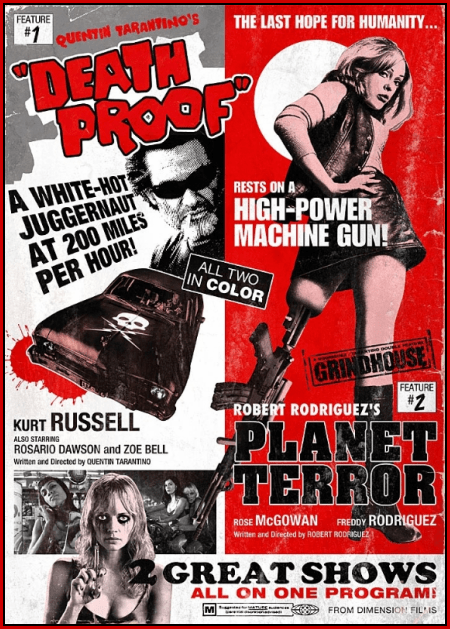
Review: Grindhouse (dir. by Robert Rodriguez and Quentin Tarantino)


Robert Rodriguez and Quentin Tarantino have always professed to anyone within hearing distance their extreme and fanboyish love for the grindhouse days of filmmaking. Both directors’ resume of work look like a modern grindhouse films but with better writing, effects and directing. Anyone who grew up watching grindhouse film’s of the 70’s and 80’s can see it’s heavy influence on films such as From Dusk Til Dawn, Desperado, Pulp Fiction and Kill Bill. With 2007’s Grindhouse, both Rodriguez and Tarantino take their fanboy love for all things grindhouse and exploitation to a whole new level with personal take on the cheap John Carpenter-knock offs, zombie gorefests, slasher film and revenge-driven flicks that made being a young kid during the 70’s and 80’s quite enjoyable.

For those who do not know what grindhouse films are they’re the ultra-cheap and, most of the time, very bad, shlocky horror, revenge, softcore porn, badly-dubbed kung fu flicks and a myriad of other B- to Z-grade movies. These movies were shown in dingy, decrepit (usually former burlesque stagehouses) movie houses which showed double to triple-bills of titles for a low, cheap price all day long (where the popcorn and concession snacks were as stale as week-old coffee). These places and their films were book-ended by the cheap drive-in theaters which grew out of the suburban sprawl boom era of the 60’s and 70’s. One could not avoid the fact that the projector equipment were in bad shape and in desperate need of maintenance while the films played out. Then there’s the film reels themselves with their washed out sequences, out of focus scenes, burnt-in spots and missing film reels where the sex scenes would’ve been. This was the grindhouse experience and with the rise of Hollywood as a corporate entity even moreso than it’s been in the past and urban renewal projects by big city leaders, the grindhouse experience has pretty much faded away and kept alive only in the memories of its fans worldwide.

What Robert Rodriguez and Quentin Tarantino have cranked out with their three-hour long opus to those grindhouse days has been both a literal and thematic homage to an era long since gone. Grindhouse also has allowed Rodriguez and Tarantino to pull out all the stops in filming their respective halves of the film. Rodriguez went all-out in paying literal homage to the zombie gore-fests of George A. Romero, Lucio Fulci and Umberto Lenzi. Planet Terror plays like a hodgepodge of all the zombie movies from these masters of the walking dead but Rodriguez has the use of digital effects to match the over-the-top feel of the past zombie-fests without making the effects look too cheap.

The story for Planet Terror is quite simple yet full of so many incoherent subplots that trying to keep track with whats going on would just confuse a viewer even more. Rodriguez gets the grindhouse feel with such a ludicrous storyline. Whether it was done on purpose or not, the feeling of confusion in addition to the non-stop zombie action was only compounded even more by the digitally-added film stock scratches, burns to the edges of the reel and when the movie was about to get all hot and sexy, missing reel footage. Anyone who watched movies in grindhouse theaters would recognize the look quite well. Rodriguez goes all out in letting his zombie fanboy out. The violence in Planet Terror begins strong and just gets stronger and even more over-the-top right up to the final frame. Zombie’s getting their heads blown apart is shown in scratchy, loving detail with an impossible amount of blood, bone and brain for people to gawk at. The female characters are hot and sexy. Rose McGowan as Cherry Darling holds Planet Terror together with her spunky go-go dancer dreaming to be a stand-up comedienne turning into Ellen Ripley minus a leg but gaining an M16A3 w/ M203 grenade launcher as a leg prosthetic. Freddy Rodriguez as El Wray, her wayward and mysterious lover, almost seem to be channeling a hilariously bad version of Snake Plissken. These two make for quite the explosive couple as they must try and save their small Texas town from the infected townspeople turned pus-oozing, boil-ridden zombies.

Planet Terror sports a nice collection of current B-list actors like Josh Brolin (making like a Nick Nolte at his growliest) and Marley Shelton as a pair of married doctors with marital problems compounded by the increasing amount of zombies their hospital seem to be bringing in for medical help. There’s also genre veterans Michael Biehn, Jeff Fahey and Tom Savini to give Planet Terror the appropriate grindhouse look and feel to it. Ever the good friend and buddy collaborator, Rodriguez even gives Quentin Tarantino a role in his half of the film. He’s shown in the credits for Planet Terror as The Rapist. If any director seem destined to be one, if their love for movies didn’t steer them on the right path, Tarantino seem to look just like one to be called “Tha Rapist”.

There’s explosion and gore galore in Rodriguez’s ode to the zombie genre. Some who sees it might say there’s too much and they would be right if the title of the whole film wasn’t Grindhouse. I, for one, am glad Rodriguez decided to not hold back with what he threw onto the screen. I’m sure that when the dvd finally comes out and the unedited full version of Planet Terror is shown it’ll even surpass the 85-minute running time in the film. I think I can forgive Rodriguez for his gore excess and at times I actually wished for more, but then that would mean taking even more time before I get to Tarantino’s half of the movie. Planet Terror truly got the look of a grindhouse flick, but it’s Tarantino’s Death Proof half which got the spirit of grindhouse down to near-perfect.

Before Tarantino’s Death Proof half of Grindhouse begins the audience gets treated to a sort of intermission involving three fake trailers for movies which celebrate just how ridiculously fun grindhouse movies really were during the 70’s and 80’s. There’s Rob Zombie’s Werewolf Women of the SS which was this weird mish-mash of the women-in-prison flicks with that of the infamous Ilsa: She-Wolf of the SS films that brought about the exploitation in grindhouse. This trailer was great just for the inspired casting of Nicolas Cage as Fu Manchu and Sybil Danning as one of the so-called SS women werewolves. There’s also Edgar Wright’s fake trailer for Don’t (director of Shaun of the Dead and Hot Fuzz) which parodies the trailers for all the gothic, European haunted and horror movies where none of the actors in the trailer speak a word to make sure the film doesn’t get labeled as a “foreign film”. But it’s the third trailer in that intermission trio which had everyone in the audience reacting wildly.

Eli Roth’s Thanksgiving is a throwback to the seasonal-themed slasher flicks like Black Christmas but this time turns the yearly, turkey day and Pilgrim celebration into a trailer with some of the most disturbingly inventive scenes for a fake slasher movie. I don’t know what the Pilgrim serial killer was doing with that turkey at the end of the trailer but I’m sure it will have many people talking about it afterwards. It’s this Eli Roth trailer which fully captures the gritty and gratuitious nature of what makes a grindhouse horror movie. It’s also the one fake trailer I hope Roth would re-visit and turn into a full-length movie.

Now, with the trailers out of the way, Tarantino’s half of Grindhouse begins and we’re treated to a different take on the grindhouse experience. Death Proof begins as if it will continue Rodriguez’s literal examination and homage to the grindhouse experience, but after messing with the film’s focus, adding a few film scratches to the celluloid and even adding a missing reel gag, Tarantino suddenly slows all those grindhouse trickeries and actually ends up making a rip-roaring slasher-revenge-carchase flick. Tarantino takes one part slasher movie adds in a heavy dose of his own Reservoir Dogs (the talking between the female characters in Death Proof are as foul-mouthed and trivial as the diner scene in Reservoir Dogs) then mixes in equal amounts of Vanishing Point, Faster Pussycat! Kill! Kill! and I Spit On Your Grave. Instead of just mimicking these particular grindhouse classics, Tarantino uses his own flair for extended dialogue to slow down the pace of the film thus lulling the audience for the two pay-offs which happen in the middle and the end of Death Proof. Tarantino’s half of Grindhouse could’ve went nowhere with all its estrogen-laced talkies, but Kurt “I AM SNAKE PLISSKEN” Russell really saves the day once he makes his appearance as the automotive-themed serial killer, Stuntman Mike. Where Jason uses farming and bladed implements as his tool of the serial killing trade, Stuntman Mike uses both a 1971 Chevy Nova SS and a 1970 Dodge Charger R/T 440 as his weapons of choice. Both vehicles have been made death proof for filming violent car stunt sequences, but in order to appreciate it’s unique life-saving properties then one has to sit where Mike sits.

Kurt Russell can now add Stuntman Mike to his classic list of badass roles. Mike would feel quite welcome amongst the like of Snake Plissken, John J. MacReady, and Jack Burton to name a few of Russell’s classic characters. Mike comes across as cooly and slickly dangerous, yet not psychotic. His charm is quite disarming until it turns deadly. He really takes the slasher-character stereotype and turns it on its ear. Death Proof once again shows that when Tarantino gets to work with one of his boyhood idols he really gives them a role that they could sink their teeth into.

Death Proof captures the spirit of what makes a grindhouse exploitation film. Even with the heavy references to Vanishing Point, especially with a white 70’s Dodge Challenger used just like in that movie, Tarantino still injects his own brand of craziness to the whole movie. I know many who have complained that Death Proof was too much talk with only the car chase in the end being the saving grace. I politely disagree and say that it’s that very long periods of dialogue between the women in Death Proof that brings some of the spirit of grindhouse to the story. Many forget or don’t remember that most grindhouse cheapies had so much extraneous dialogue to hide the fact that the budget was low to none when the movies were being made so they had to fill-up the movie’s running time with as much nonsensical dialogue before the big effect shots payoff.

The final chase-scene between the Russell’s Stuntman Mike and the female-trio of Rosario Dawson, Tracie Thoms (channeling Jules from Pulp Fiction) and real-life stuntwoman Zoe Bell (she doubled as Uma Thurman in the more dangerous stunts in Kill Bill) has to go down as one of the craziest, whiteknuckling, barnburning car chase sequences of the modern times. No CGI-effects trickery and fancy MTV-style editing was used. George Miller, John Frankenheimer and Richard Sarafian would be proud of what Tarantino was able to accomplish with Death Proof‘s 20-minute long car chase. By the time Death Proof ends the audience have bee put through the wringer and one was hard-pressed not to cheer and root for Stuntman Mike even though we know we shouldn’t. Death Proof proves that “hell hath no fury like a woman scorned” or at least a trio of women endangered.

Grindhouse is a film not for everyone. There’s going to be quite a few people who won’t “get” the film homages and references by both Robert Rodriguez and Quentin Tarantino. Some would say that the movie was too over-the-top, badly made and just out there, but then they would be missing the point of the whole project altogether. For those who grew up watching these kind of films as kids and teenagers, it’s a belated Valentine’s gift from two fanboy filmmakers who finally were able to do the films they grew up idolizing and enjoying. For the rest who are not as well-versed in the grindhouse cinema, this is a good enough starter before they move on to try the classic ones which are now on video (I would suggest they find a worn-out VHS copy of it instead of the cleaned up DVD version). The film is over three-hours long, but one who goes in really can’t say that they didn’t get their money’s worth when they went in to watch Grindhouse.

Review: Evilspeak (dir. by Eric Weston)


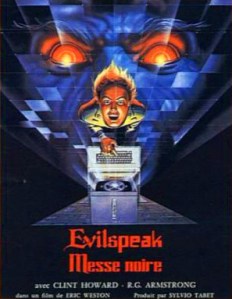
I first came across Evilspeak a few months ago when I was browsing through the selection of used DVDs at the Movie Trading Company in Plano, Texas.  Why did I feel so compelled to buy this movie that I had previously never heard of?  Of course, a lot of it was due to the fact that Evilspeak was a horror movie.  I have to admit that the vagueness of the title intrigued me.  I’ve long been planning on writing the ultimate slasher film and giving it the similarly vague title of Deathurge.  It also helped that the Evilspeak DVD was released by Anchor Bay and that it only cost $1.99.

A few nights ago, I sat down and watched Evilspeak for the first time.    It turned out to be, in many ways, typical of the horror films that were released in the early 80s.  (Evilspeak came out in 1981.)  However, thanks to a strong lead performance from Clint Howard and a few surprisingly dark touches on the part of director Eric Weston, Evilspeak turns out to be an oddly compelling little horror film.

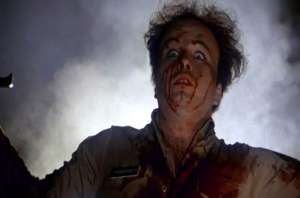
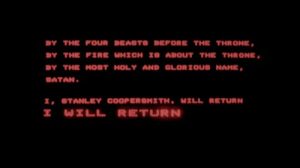
Evilspeak opens with a lengthy prologue in which we see a Satanist named Esteban beheaded, along with several of his followers, by the Spanish Inquisition.  Jump forward several hundred years to a soccer game being played by teams representing two separate military academies.  The players are all typical jocks except for one pudgy, awkward fellow named Stanley Coopersmith (played by a very young Clint Howard).  Coopersmith manages to lose the game for his team.  The team’s angry response establishes that 1) this is not the 1st game that Coopersmith has lost and 2) all of his teammates are apparently psychotic.  His fellow players complain to their coach about Coopersmith’s lack of ability.  The coach replies that school policy requires that Coopersmith be allowed to play but if Coopersmith were to suffer some sort of injury (hint, hint) then they wouldn’t have to worry about school policy.  Seriously, has anything good ever come from soccer?

In many ways, Stanley Coopersmith might seem typical of the horror movie pariahs who always seem to end up asking Satan to kill their peers.  However, there are a few things that set Stanley apart.

First of all, he has one of the best last names in film history.  Coopersmith.  Just say it five times straight and see if it doesn’t get stuck in your head.  I’ve known plenty of Coopers and more than a few Smiths but I’ve never known a Coopersmith.  At first, I thought that maybe Stanley had one of those really cool hyphenated names and I was instantly jealous.  I’ve always wished my mom had done that when she got married so I could introduce myself as “Lisa Marie Marchi-Bowman.”  Of course, it’s probably for the best that she didn’t because if she had, I would have become obsessed with finding a mate with a hyphenated last name of his own just to see how long I could eventually make my last name.  But I digress.  Even though the film clearly establishes that there is not hyphen in Coopersmith, it’s still a great name.  When Stanley’s classmates insist on calling him “Cooperdick,” it just makes them all the more loathsome because not only are the insulting Stanley but they’re failing to recognize the beauty of a good name.

The other thing that sets Stanley apart from other movie outcasts is that he actually looks like an outcast.  He’s not a teen idol wearing a bad wig and prop glasses.  This is largely because Stanley Coopersmith is played by Clint Howard (as opposed to Ron Howard).  Pudgy with visible acne and a somewhat whiny voice, Clint Howard transforms Stanley Coopersmith into every kid that you ever felt sorry for but never dared to befriend.  Watching the movie, you feel sorry for Stanley but you never quite like him.  You’re on his side because every other character in the movie appears to be subhuman.

The film follows Stanley as he is continually attacked and humiliated by basically everyone else in the entire movie.  Now, as someone who did time at more than one Catholic school, I have personally experienced the fact that private schools really are a world of their own.  That said, however, Evilspeak’s military academy appears to be less a school and more some sort of elaborate and sadistic sociological experiment.  Seriously, is there anyone at this school who isn’t obsessed with tormenting Stanley?  (Actually, Stanley does have one friend but he’s kinda useless.)

Of course, one of the school’s problems might be that it has apparently been built on land that was once owned by — you guessed it — Esteban!  As the film opens, Coopersmith has found himself assigned to clean up the school’s chapel as part of a “punishment detail.”  While doing this, Coopersmith happens to stumble upon Esteban’s tomb and, in that tomb, he finds a lot of candles, what appears to be a fetus in a jar, and a black book that happens to have a Satanic symbol on the cover.  Intrigued, Coopersmith steals the book despite the fact that it’s written in Latin.

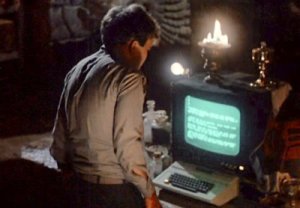
Luckily, this school has a computer!  Admittedly, Evilspeak came out four years before I was born so perhaps I’m not capable of understanding what the world was like in the early 80s.  Still, I’m always amazed to see the awe that computers were apparently regarded with back then.  Apparently, at the time, a personal computer was the ultimate elite status symbol.  All one needed to rule the world apparently was one bulky computer.  Fortunately, Coopersmith doesn’t want to rule the world.  He just wants to read his book.  He does this by typing the latin phrases into the computer and magically getting an English translation in response.  Thanks to his magic computer, Coopersmith discovers that the book was written by Esteban and  that Esteban worshipped Satan.

Coopersmith, of course, is amazed to discover this but we, the viewers are not.  After all, we’ve already sat through the entire prologue.  Unfortunately, it takes Coopersmith almost the entire movie to catch up to where we are from the beginning.  Fortunately, Clint Howard gives a good enough performance to keep the movie vaguely interesting even when it starts to drag.

Fortunately, after Coopersmith gets his translation, the action starts to pick up a bit.  For one thing, the book is stolen by the headmaster’s secretary (who, in an amusingly odd moment, smiles to herself as she listens to the headmaster paddling Coopersmith in his office).  For another thing, Coopersmith decides to get back at his enemies by conducting a black mass.  He does this by turning on his computer (which has now somehow been moved down to the tomb) and asking what he needs for a black mass.  Naturally enough, the computer tells him because it’s a computer and it knows everything.

But before Coopersmith can perform his black mass, he still has to be humiliated a few hundred more times by his classmates.  He also has to deal with a drunk janitor (played by R.G. Armstrong).  On top of that, he adopts a puppy.  Unfortunately, since Coopersmith is the school outcast, that also means that the puppy is fair game too.  After one night of heavy drinking, Coopersmith’s classmates (led by a kid named Bubba, so you know he’s evil) find his hideaway in the tomb and, for reasons that don’t quite make sense, they sacrifice his puppy.

(At this point, I was wondering if maybe it would turn out that the military academy was actually an insane asylum.  I mean, seriously —  on which level of Hell is this place located?)

Meanwhile, you remember that sadistic secretary that stole Coopersmith’s book?  Well, for whatever reason, she is obsessed with trying to pry that Satanic symbol off the cover.  Unfortunately, since she’s the only prominent female in an early 80s horror movie, this can only mean that she’s destined to meet a bloody end while taking a shower.  Which, in this movie’s best known scene, is exactly what happens.  However, she doesn’t meet her end at the hands of a knife-wielding psycho.  Instead, she’s attacked and ripped to pieces by a bunch of rampaging pigs.  And yes, the whole thing is faintly ludicrous and yes, the low-budget gore effects are undeniably crude, but it’s still an undeniably effective sequence.  Perhaps its due to the fact that pigs, in general, are filthy.  Don’t even get me started on pigs.  However, it must also be admitted that, though his direction is often time uninspired, Eric Weston shows an undeniable talent for capturing chaos.  I am not ashamed to admit that I had pig-related nightmares after seeing this movie.

Following the death of the secretary, the book mysteriously reappears in Esteban’s tomb.  Coopersmith finds it the next morning along with the corpse of his puppy.  Obviously, this is all it takes for Coopersmith (with the help of his computer) to carry out his black mass and to finally take his revenge.

Of course, the whole point of a Nerd-With-Powers movie is the finale where that nerd takes vengeance on his tormentors.  If this scene is pulled off with even the slightest amount of panache, it can make up for almost everything that’s come before it.  The prom inferno from Carrie pretty much set the standard by which all others are judged.  Personally, it’s hard for me to think of any movie that could improve on the final house party massacre in The Rage: Carrie 2.  After all, how can you top a blinded Rachel Blanchard accidentally shooting the oldest Home Improvement kid in the balls with a spear gun?

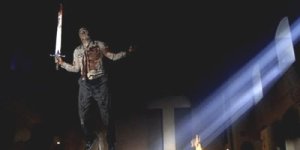
Evilspeak doesn’t quite reach those heights in its finale but it’s still pretty effective.  If nothing else, the sight of Clint Howard wielding a sword while flying above his tormentors is a lot more effective than you might think.  Over the next few minutes, spikes are drilled into foreheads, heads are chopped off, hearts are ripped out of chests, and those pigs show up again.  The gore effects here are undeniably crude but oddly effective.  This sequence (along with the previous pig shower attack) actually inspired a few nightmares the night after I saw Evilspeak.

In the end, Evilspeak is an odd little movie.  While the plot should be familiar to anyone who has ever seen a horror film, there’s a real nastiness at the core of Evilspeak that distinguishes it from other genre offerings that came out during the same period.  At times, Evilspeak almost feels like an Italian film which is probably why I found it to be so oddly compelling.

The Evilspeak DVD features a commentary track featuring both Clint Howard and the film’s director.  I always feel some trepidation before listening to a commentary track.  Too often, the track turns out to just be some jerk explaining how he financed the film for two hours while commenting not at all on the action on-screen.  (For the most part, if a commentary track features any anecdote that begins with, “We had the same lawyer…” you know you’re in trouble.)  However, the Evilspeak track is surprisingly enjoyable.  Clint Howard comes across as a surprisingly likable, levelheaded guy and its interesting to contrast his odd wholesomeness with the action onscreen.

In the end, Evilspeak may be a piece of junk but it’s an enjoyable piece of junk.

A Second Review of The Losers (dir. by Sylvain White)


Usually, I’m not a big fan of action movies.  If you see me in the audience of an action movie, it means that I’m either 1) on a date with a guy who really doesn’t care if I’m bored out of my skull, 2) the movie is actually a film with action as opposed to an action film, or 3) there’s absolutely nothing else playing.  It was because of that third reason that yesterday afternoon, I could be found at the Regal Keystone, watching The Losers.

Surprisingly enough, however, I ended up enjoying The Losers.

Why?

Six words: Idris Elba, Jason Patric, and teddy bear.

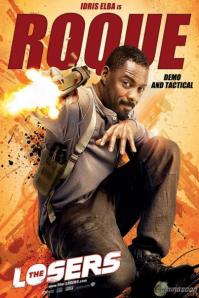
Idris Elba.  Oh God, where to start?  I think Idris Elba may be one of the best actors working today.  If you’ve seen him in The Wire then you’ve seen him as an intimidator.  (And, admit it, The Wire was never as good after Stringer Bell got killed.)  If you’ve seen him on The Office than you know that Elba can also be unexpectedly funny.  In the Losers, Elba gets to be both scary and funny at the same time.  (And incredibly sexy though I doubt that’s going to be a big selling point for this film’s target audience.)  Idris Elba manages to look convincing while both blowing things up and, during one of the film’s many postmodern moments, commenting, “Wow, this is sleazy.”

Elba plays Rocque, the second-in-command of a paramilitary group known as the Losers.  Much like the A-Team and the Expendables (both of which will be coming along later this year), the Losers are betrayed by their government and wrong declared dead.  They — a glowering Elba included — find themselves stranded in Bolivia where they pass the time working in a doll factory, betting on cockfights, and plotting vengeance against Max.

Who is Max?  This question is at the center of The Losers and it’s never really answered (perhaps it will be in the sequel).  It’s insinuated throughout the film that he’s involved with the CIA, that he’s a terrorist, or that he’s just a patriotic businessman.  Of course, the answer is that Max is actually Jason Patric (a.k.a. the son of Father Damien Karras). 

I have to admit that, in  the past, Patric has never really impressed me much as an actor.  In the past, he’s always seemed a bit stiff and humorless.  Patric plays Max as a man who is not only a comic book villain but who is totally aware of it as well.  You can tell that Max is having a lot of fun being evil and that Patric is having fun playing evil.  Patric’s over-the-top but compelling villainy let’s the audience know that this movie has no pretensions beyond entertainment.  It makes both Patric and the film enjoyable to watch.

And this leads us to the teddy bear.

At the start of the movie, the Losers are rescuing a bunch of children who are being held hostage by some random bad guy in Bolivia.  As they load the thankful children into a waiting helicopter, an angelic little boy attempts to hand over his teddy bear as a thank you gift.

“No,” Col. Clay (Jeffrey Dean Morgan) replies, “you keep it.  It will bring you luck.”

The angelic child smiles and clutching his teddy bear, he goes into the helicopter.  The helicopter then lifts up into the air and promptly explodes.  As the Losers stare at the burning wreckage, the camera zooms in on the only thing that apparently wasn’t incinerated in the explosion. 

Yes, it’s the teddy bear.

And as soon as I saw that, I knew that the Losers was going to work.  I soon as I saw that teddy bear, I knew that this was a film that felt no shame at being a work of pure pulp fiction.  In this age when every studio film is trying to feel independent and when most filmmakers would be too self-consciously hip to actually do something as shameless as show that little bear among the wreckage, the Losers went for it.  The Losers said, “We don’t care if it’s an obvious move and thoroughly illogical for a teddy bear to survive — with just a few burns — an explosion that so totally incinerated 25 people that not a single body part is seen among the wreckage.  We’re showing the damn bear!”

That’s when the Losers won me over.

A few more random thoughts on The Losers:

1) As Arleigh pointed out in his review, one of the film’s biggest strengths is the chemistry of the Losers themselves.  As opposed to most ensemble action films, all of the Losers are given clearly definable personalities, all of them are given something important to do, and most importantly, you believe that these guys would actually choose to hang out together.  When one of the Losers is eventually revealed to be a traitor, you feel the entire group’s shock and pain.  This adds an extra layer to the film that, for whatever reason, I suspect we won’t be seeing with The A-Team.

2) The Losers is yet another film that demonstrates the importance of not only walking in slow motion but having something to throw to the side while doing so.  It just looks incredibly cool on-screen though people tend to get annoyed when you attempt to do the same thing in real life.

3) Throughout the movie, we are continually told that The Losers are waging war on the CIA and the American establishment in general.  The audience I was with loved this.  Once again, this validates my theory that the best reflection of the times can usually be found in contemporary pulp.

4) Zoe Saldana is in this film too as a mysterious woman who helps the Losers track down Max.  In the style of Carrie-Ann Moss and the Girl with the dragon tattoo, she gets a chance to kick a lot of ass and I have to admit that I found this so inspiring that, once I got home, I stripped down to my undies, stood in front of my bedroom mirror, and attempted to execute a few flying kicks of my own.  The lesson I learned from this is that I’m not Zoe Saldana.  That and, regardless of how soft the carpet is, it still hurts when you end up falling flat on your ass.

In the end, The Loser is the perfect definition of stupid fun.  I’ll take stupidly fun over funny stupidity any day.

Review: The Losers (dir. by Sylvain White)


There’s something to be said about DC’s attempt to try and take some of the thunder away from Marvel as the two battle it out over the hearts and wallets of the film-going public. With the exception of Christopher Nolan’s Batman Begins and The Dark Knight DC’s properties has lagged behind that of Marvel when it comes to being adapted to the big-screen. Some would say that this is a good thing in that DC hasn’t flooded the market with too many comic book titles adapted to film. Marvel’s track record has been very good but they’ve also had some very awful comic book-to-film titles which at times almost derails this Golden Age of comic book films. But even with the misses Marvel has released they’ve done a good job of keeping their name brand in the film public’s eye.  DC hasn’t been very good at this but this may be changing soon.

While not part of the DC Universe proper the Vertigo line of titles do belong under the DC umbrella. Vertigo has always been the more mature-oriented publishing arm of DC with well-known and critically-acclaimed writers such as Grant Morrison, Garth Ennis, Warren Ellis and Alan Moore being the top names releasing titles under that aegis. There’s already been several films based-off of the Vertigo line with Constantine and League of Extraordinary Gentlemen being two. Two examples which haven’t gone over well with comic book fans and film-goers. We now have another title from DC/Vertigo which hopes to break that cycle of mediocrity. The Losers (written by Andy Diggle) as directed by Sylvain White (Stomp the Yard) is a funny and exciting action-comedy which definitely had a chance to be one of the great comic book films if it actually had a coherent storyline.

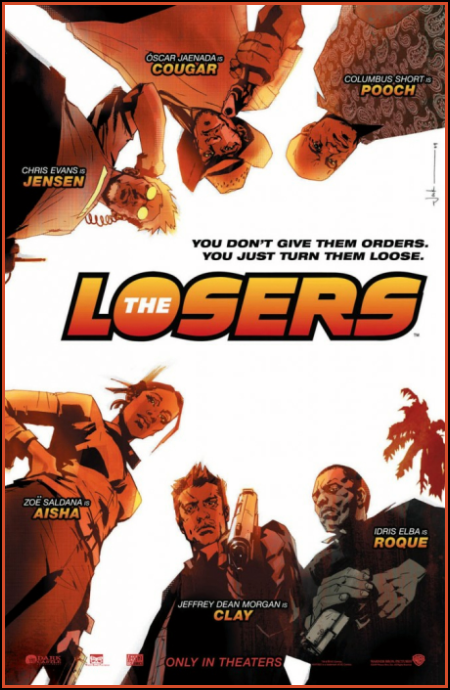
The Losers is pretty much the name of the special-ops covert team the audience gets to know from start to finish. The basic premise to this film is actually straight out of late 80’s and early 90’s action films. A team of badass operatives gets betrayed during a covert mission by unknown parties who may or may not be working for the very organization the team has worked loyally for. For this particular reiteration of that action flick staple the team literally calls themselves the Losers and their betrayal occurs while in a secret mission inside Bolivia to take out a narco-terrorist. While their mission to take out this bad man does happen it does so with some new wrinkles such as first saving 25 innocent Bolivian children before the airstrike called in by them happens within 8 minutes. This eventual betrayal now forces the Losers’ commander, a military colonel called Clay (played by Jeffrey Dean Morgan), to take his 5-man team deep under while convincing their CIA masters that they died during the operation.

The rest of the film revolves around the Losers being discovered by a third-party as still being alive and given a choice. The choice being to remain under the Agency’s radar, stay dead and in Bolivia or take on this third-party’s mission to take out the very man who betrayed them, get back their good name and return to their families or, for some, their old lives. Heading up this mysterious benefactor is the one and lovely Zoe Saldana (fresh-off a little flick called Avatar). She’s pretty much the only female of note in the whole film. One would think she’s the token female, but she’s more than capable of holding her own in a testosterone-fueled action-comedy.

What would an action-comedy about betrayed badass special-ops guys (and gal) without a bad guy to match. In The Losers we get the betrayer of the team in Max (played with an almost James Bond villainish flair by Jason Patric). He’s the one who gave them the team their last official mission in Bolivia and the same one to frame them for the a heinous crime they didn’t commit. To say that Max is over-the-top in terms of on-screen villainy would be an understatement. While the character doesn’t prance or growls his way through the film he does have a certain je ne sais quois about him that doesn’t pigeonhole him as your typical uber-bad guy.

One would think that with such a simple enough revenge and wronged team-on-a-mission set-up it would be quite an easy story to create and film around. I would have to say that the screenplay adapting the first two volumes of the original source material had left much to be desired. While it wasn’t a total waste there wasn’t enough of a story beyond creating set-pieces for the characters to either shoot at and blow stuff and people up, Max to show the audience how evil he really is, or show Saldana’s and Morgan’s character together either fighting or getting it on. The whole script used almost seemed like it was culled from a much bigger one.

What we do see on the screen was exciting and funny enough that it helps cover up enough of that major flaw of a non-existent story. In fact, I would say that the film behaved almost like an extended, well-shot and well-casted pilot for a new tv action series. It’s almost what I would expect USA Network’s excellent spy-comedy Burn Notice to look like if shot on 35mm, given a multi-million dollar budget and shot on exotic locations. The film definitely would’ve benefited from an additional 20-30 more minutes to help add muscle to the story. The fact of the matter is that the story actually was able to flesh out the main characters enough that they were all quite distinct in personalities without ever becoming cardboard copy caricatures.

It’s the chemistry between the ensemble cast which shines in The Losers. While Jeffrey Dean Morgan (Watchmen), Zoe Saldana and Jason Patric were the three main leads (with each of them pushing their own agenda over the other two) the rest of the players were very good in their roles. Idris Elba (The Wire) as Clay’s second-in-command Roque does a very good job of balancing out the cool-headed team leader. his name may not be spelled like it but he definitely was the rogue factor in the whole film. While the team itself wasn’t an amoral team of killers and expert covert ops operators it was the character Roque who came closest and Elba played him with enough menace that one might’ve wondered why he was actually still with the team instead of going off on his own. Columbus Short as driver extraordinaire and Óscar Jaenada as Cougar (got a hilarious reaction from Saldana’s character upon hearing of the name) the expert marksman who never seems to miss are good in their roles as well, but the one who stole every scene he was in was Chris Evans as Jensen who filled the role of team tech and communications expert.

Chris Evans is definitely not a novice when it comes to being part of a comic book film. He’s already done two portraying the wise-ass brother in the Fantastic Four franchise and already tapped to play one of Marvel Comics’ most iconic characters in Captain America. His character portrayal of the Losers’ Jensen is more akin to his work as Johnny Storm in the FF franchise. He was the funniest thing and most lively character in The Losers. He pretty much got the best dialogue and his comedic timing was on point. He definitely kept the film from leaning towards the too-serious side of the equation. His singing of Journey’s classic motivational song, “Don’t Stop Believing”, was one of the funniest moments in the film and the song itself ended up being the closing credits musical choices which I thought was quite appropriate.

Sylvain White’s work in this film I would say would constitute as being good and, at times, bordering on being very good. There were a few stylistic choices by White which elevated the action sequences into comic book territory such as sudden pauses in the action to capture a good kill or scene like one would see in a panel of a comic book page. Even some of the camera angles mimicked those angles used by comic book artists to create a more dynamic and stylized point of view of the scene. I thought his use of the slo-mo shots of the team walking towards the screen was done overmuch. It was good to show the team together for the first time with something exploding in the background, but just once would’ve been enough. His background as a music video director showed too much in The Losers that at times it became too distracting. Fortunately, it didn’t detract from the fun everyone seemed to be having on-screen. There’s talent in White as a filmmaker if he would just trust in his growing sense as a feature filmmaker and not fall back on his music video directing days. I did like the choice of using the original comic book art to highlight the starting and ending credits of the film. Artist Jock’s artwork was great to see on the screen.

Overall, I enjoyed my time with The Losers. I enjoyed the film despite a glaring flaw in the story (which was really nowhere to be seen). The film took the comic book film staple of “origin story” a bit too far and made the whole production look like a glorified and high-budgeted tv pilot for an action series. In fact, if DC and Warner Brothers wanted to make a series out of The Losers they already have said pilot in the can and just continue things from there. What really saves this film from becoming a huge disappointment was the cast and how much fun they had on-screen. The action scenes were not great but they had life in them and when propped up by some of the comedic stylings of one Chris Evans made the sequences enjoyable. While The Losers will not be anything to scare Marvel Studio into cranking out something similar it does help bring attention to some of the more non-superhero properties DC has in its Vertigo line. The film definitely has more excitement in it despite its major flaw than either Constantine and League of Extraordinary Gentlemen. I do hope it does well enough that a sequel gets greenlit and helps build more of a story in the follow-up now that introducing the characters and the world are now out of the way.

10 Reasons Why I Hated Avatar


(The opinions in this review are mine and mine alone.  They reflect the feelings of Lisa Marie Bowman and not the feelings of any other editor on this site.  To prove that the opinions below are solely mine, check out this very positive review of Avatar that was posted on this very site last December.)

In case you didn’t already know this from my previous reviews, I’m going to confess something here.  I hated Avatar.  It was probably my least favorite film of 2009.  How much did I hate Avatar?  Well, I didn’t care much for The Hurt Locker either but I still cheered when it won best picture because it meant that Avatar didn’t. 

Most of my friends and family loved Avatar and, I’m proud to say, that none of them have allowed our difference of opinion to effect our relationship.  Indeed, most Avatar fans have been very tolerant of my dissenting views.  However, there’s always an exception.  From the 1st time I ever openly admitted to disliking Avatar, I have had to deal with a small but vocal group of people who not only disagree but apparently feel that I’ve committed a crime against humanity.  So, why bring it up now?  Because on Thursday, Avatar is going to be released on DVD and Blu-ray.  In honor of that event, here are 10 reason why I personally hated Avatar. 

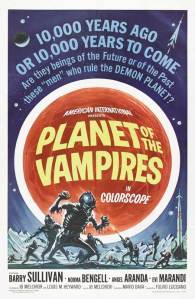
1) Ironically enough, most people who love Avatar will probably agree with the majority of my criticisms.  They’ll argue that yes, the story is predictable and yes, James Cameron is heavy-handed as both a writer and a director but none of that matters because of all the brilliant visual effects.  They’ll argue that Cameron made a whole different world, Pandora, come to life.  To a certain extent, they’re right.  Cameron does manage to make Pandora believable and wow, Pandora certainly turns out to be a boring planet.  Seriously, does that jungle cover the entire freaking planet?  However, regardless of my personal feelings about Pandora, James Cameron is hardly the 1st director to make an alien world believable.  Peter Jackson did it with his Lord of the Rings trilogy and the same can, arguably, be said of the Narnia films.  Even earlier, Mario Bava did it with Planet of the Vampires and he did it with a lot less money.  Of course, none of these films were in 3-D but so what?  Just because the mundane appears to be inches in front of your nose doesn’t make it any less mundane.

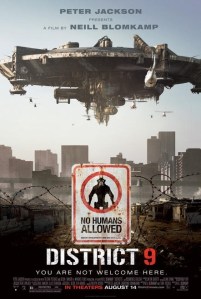
2) Speaking of mundane, wouldn’t you be let down if, when you first met the members of a totally alien race, they all turned out to be a bunch of movie stereotypes?  The Na’vi appear to have developed their entire culture as the result of a steady diet of Hollywood westerns, New Age self-help books, and some 16 year-old’s half-assed understanding of what it means to be a Pagan.  I remember when I first saw Avatar, it was impossible for me not to compare it unfavorably with District 9, a film that addressed many of the same themes and issues as Avatar but did it with a much lower budget and a much more intelligent script.  This was especially evident when one compares Avatar’s Na’vi with District 9’s prawns.  While the prawns were believable as both individual characters and as representatives of a totally alien race, the Na’vi are essentially the reflections of James Cameron’s sophomoric noble savage fantasies.

3) District 9 wasn’t the only great science fiction film to come out in 2009.  There was also Moon, which featured a great performance by Sam Rockwell and excellent direction from Duncan Jones.  When /Film asked Jones for his opinion of Avatar, Jones replied, “…at which point in the film did you have any doubt what was going to happen next?”  It’s a good question. 

In all honesty, I’m a horror girl.  I haven’t seen much science fiction and therefore, I’m not as well acquainted with the genre’s clichés as I am with horror.  However, I can still say that, at no point, did anything that happened in Avatar take me by surprise.

Of course, some of my favorite movies were (and are) very predictable.  Georges Polti argued that there were really only 36 basic plots available to use in fiction so its understandable that you’re going to come across the same one used several times.  However, a predictable plot can be forgiven if maybe that plot features at least a few interesting characters or maybe an occasional unexpected line of dialogue.  Avatar, however, can’t even manage this.  Our hero is an impulsive man of action.  The villains are all evil because … well, they just are.  In the manner of most oppressed races in American film, the Na’vi are noble savages who require a white guy to come save them.  The only lines of dialogue that I remember are the ones that made me roll my eyes.  I’m talking about stuff like a bunch of 22nd century marines being greeted with “You’re not in Kansas anymore.”  Well, that and “I see you,” which was apparently included in the script so that it could serve as the title of a syrupy theme song.

4) Strangely enough, even though the movie took absolutely no narrative risks, it was still full of plot holes and things that just didn’t make much sense. 

For instance, why does Quaritich promise to give Jake back his legs (“your real ones”)?  I mean, does Quaritich have them sitting in a freezer somewhere? 

As part of his deal with Quaritich, Jake agrees to make videos about the Na’vi.  Oddly enough, it appears that he’s still making the videos even after he turns against Quaritich and you have to wonder exactly why.  Also, Jake records many of these videos in an isolated, apparently one-room outpost occupied by him and two other scientists yet the scientists are later shocked and outraged when told that Jake was making the videos.  Okay, what did they think he was doing all that time?  Were they just not listening to what he was saying? 

What exactly was the backstory of Sigourney Weaver’s character and when exactly did she join Sully in the Na’vi camp?   And why were the Na’vi willing to let her into their tribe when they would only grudgingly accepted Sully even after the Goddess selected him?  I mean, if Weaver already had such a great relationship with the Na’vi, it seems like she could have saved a lot of time by just taking Sully straight to them.  (Editor’s Note: According to the comments below, this issue actually was addressed in the film. — LMB)

Sully, after the final battle, decides to stay on Pandora and he might as well since the Tree of Souls (good God!) transferred his soul into his Na’vi body.  But what’s in it for Max and Norm?  We seem them at the end (though really, Norm should be dead) standing there pointing guns at all the humans that are leaving.  Norm, at least, could still probably hang out in his avatar but what about Max?  Why is Max, who has had nothing to do with Na’vi, so quick to join the revolution?

I’m sure a lot of this is because scenes were edited out and I know that Cameron has a reputation for reinserting those scenes once his movies come out on DVD and blu-ray.  Well, more power to him.

5) The film suffers from a really bad case of the white man’s burden disease.  This is another one of those films where a caucasian character befriends an oppressed minority and, with remarkably little dissent, manages to appoint himself as the leader of that minority.  It’s a fantasy, one in which members of the bourgeoisie (like James Cameron) can live out their childhood fantasies of being outlaws without having to worry about  (unlike actual “outlaws,”) being punished for taking their stand.

Once again, it’s hard not to compare Avatar with District 9.  Both of them feature lead characters who are transformed into aliens.  The difference is that, with the exception of one brief scene, Jake Sully accomplishes the transformation rather easily and quickly becomes the best Na’vi there is while in District 9, poor Sharlto Copley is terrified by the process and, even though it does lead to him understanding the prawns (and ironically, learning how to show a little humanity), the movie never pretends that Copley isn’t losing his own individuality in the process of transforming.

6) The lead character is named Jake Sully.  Did James Cameron get frustrated and just use a Random Generic Movie Hero Name Generator to come up with that?  I wonder if Nick Sully was Cameron’s 2nd choice.  It’s not that there’s anything wrong with either name.  It’s just that it feels so generic.  Of course, the leader character is going to be named Jake and, of course, he’s not going to be an intellectual and, of course, Sigourney Weaver’s going to spend the whole movie making sarcastic comments about how stupid he is.  Speaking of which…

7) Sigourney plays Dr. Grace Augustine.  Her character and her performance are typical of a rather annoying Hollywood tradition, that of portraying any “strong” female as a total and complete bitch.  If you want the audience to know they’re supposed to take a woman seriously, have that woman spend the entire movie pissed off about something, as if the only way a woman can be strong is by sacrificing anything that might make her unique.  Now, there’s a lot I could say about why, from a cultural perspective, American movies often seem to be so conflicted about how to portray any woman who is neither an Eve nor a Lillith.  But in the case of Avatar, its hard not to feel that it comes down to screenwriter Cameron’s inability to make any of his characters interesting unless something nearby is exploding.

8 ) And while we’re on the subject of misunderstood women…okay, let’s say you discover a planet and this planet is a lush, beautiful paradise.  Why the Hell would you then call it Pandora?  Yes, I understand that newly discovered planets are usually named after mythological figures.  But there’s still usually some sort of vague logic behind the names.  For instance, Mars was named after the God of War because of its red hue.  Venus was often considered to be the most beautiful star in the sky.  Mercury has the fastest orbit.  Jupiter’s the biggest planet.  Pluto (before it got downgraded) was considered the darkest and coldest of the planets.  Pandora, however, was the woman who opened up the jar that released everything terrible, evil, and destructive into the world.  Why would anyone name a planet after her?  It’s possible, of course, that all the good names were taken.  Of course, it’s also possible that this is just another example of how thuddingly obvious Avatar is in its symbolism and subtext.

9) Speaking of obvious, what about the villain played by Stephen Lang?  More specifically, what about that accent?  It’s true that Cameron doesn’t exactly encourage his villains to be subtle.  Just check out Billy Zane in Titanic.  Zane, however, at least appeared to be having a little fun at his director’s expense.  He, alone among the cast, seemed to realize that Titanic was a silly melodrama and so he gave something of a silly performance.  It’s no great secret that it’s often more important to have a good villain than to have a good hero.  A good villain usually has some sort of motivation beyond just being the villain.  This is something that Cameron has never seemed to be able to grasp.  Whenever I see a military figure show up in a James Cameron movie, I get the same feeling that I get whenever a preacher shows up in a Stephen King novel.  Automatically I know that they’re going to turn out to be evil and I find myself dreading having to even waste the time with the “shocking” discovery of that evil. 

10) Perhaps most importantly, this is a movie that wants to preach peace but celebrate war.  Avatar contains all the trendy environmental messages that you’d expect from a Hollywood film but — even though director Cameron seems to be in a state of denial about it — the film’s heart is with its villanous soldiers.  Much as how Titanic, for all the rhetoric about the passengers in third class, was really only interested in portraying the lives (and deaths) of those in first class, Avatar spends a lot of time talking about trees but is much more interested in blowing them up with the destruction of the Home Tree serving as the money shot.

To be honest, I don’t mind a little hypocrisy when it comes to movies.  Most exploitation films celebrate hypocrisy.  The filmmakers knew it and, for the most part, the audiences knew it.  The fact that a movie like Child Bride could be advertised as “an important movie every parent must see!” became something of a shared joke between the filmmaker and his audience.  Rather than being hypocritical, the exploitation filmmaker is simply inviting his audience to join in a conspiracy against the forces of dullness.

Unfortunately, Avatar is not an exploitation film.  If Avatar was simply a B-movie, none of the my previous complaints would matter.  They would add to the film’s rogue charm.  Avatar, however, is too expensive to be considered an exploitation film.  And James Cameron, as he proved when he went ballistic over Kenneth Turan’s negative review of Titanic and as he has continued to prove with his recent comments regarding global warming, does not have the sensibility of a B-movie maker.  Arguably, he once did.  This is a man who, after all, did the special effects for Galaxy of Terror and made his directorial debut with Piranha II.  The Terminator was a great B-movie, right down to the accusations of plagiarism from Harlan Ellison.  However, as he’s become the most financially succesful director in history, Cameron has lost that B-movie sensibility. 

In other words, James Cameron takes himself seriously now and that, ultimately, is the main reason I hated Avatar.  It just takes itself too damn seriously.

Yes, I’ve read quite a few favorable reviews that have argued that Avatar‘s sole purpose is to entertain and that people like me who occasionally expect unique characters and an interesting story should just lie back and enjoy it.  I’ve seen the term “popcorn epic” used in quite a few reviews. 

I’m sorry but I’m not buying it.  If Avatar was truly setting out to be a “popcorn epic,” than I’d be a lot more willing to cut it some slack.  However, when the script contains lines about how on Earth, humans have “destroyed all the green,” and when the villains are accused of launching a “shock and awe” campaign, it’s ludicrous to then argue that Avatar isn’t setting itself up to be judged by a higher standard. 

It becomes hard to escape the fact that Cameron, regardless of how well he handles the special effects, has essentially made a stupid movie about deep issues.

As I said before, the majority of the people I know love Avatar.  I don’t hold it against them or think any less of them because, ultimately, movies are a subjective experience.  Whether or not a movie is good has less to do with the actual movie and more to do with the person watching it.

It would be nice to have the same courtesy extended to me .  Since I first revealed my opinion of Avatar on a non-Avatar related message board, I have found myself frequently attacked by little fanboys who apparently cannot handle the fact that one human being didn’t enjoy Avatar.  I’ve been told that, as a female, I can’t be expected to understand Avatar.  I’ve been accused of being “unimaginative,” “a snob,” “a bitch,” and my personal favorite “the type of cunt who cried at the end of the Blind Side.” 

I realize the risk I’m taking by openly admitting my dislike of Avatar but then again, movies are supposed to inspire conversation and not just pavlovian agreement.  So, in conclusion, I’ll just admit that yes, I am female and yes, I did cry at the end of The Blind Side, and yes, I hated Avatar.

Review: Kick-Ass (dir. by Matthew Vaughn)


Comic books which have been adapted for the big-screen have had an uneven track record. For every excellent film-incarnations like Spider-Man 2, X-Men 2, The Dark Knight and Iron-Man we get dregs like Elektra, Ghost Rider and Daredevil. The last couple years filmmakers have gravitated towards the deconstruction side of comic book superheroes. Christopher Nolan’s The Dark Knight was as much an action-thriller as it was a meditation on the superhero psyche and mythmaking. Then there was 2009’s Watchmen which tried admirably (though failed in the end) to adapt Alan Moore’s epic deconstruction of the superhero archetypes.

It’s now 2010 and we get the first comic book film of the year. The film is an adaptation of Mark Millar (writer) and John Romita, Jr.’s (artist) ultraviolent comic book title from Marvel’s Icon Comics (their creator-owned publishing line). Kick-Ass was optioned and adapted by British-director Matthew Vaughn and screenwriter Jane Goldman. Unlike most comic book films of the past decade, Vaughn’s Kick-Ass was independently-financed (with help from Brad Pitt and his Plan B Studio) and made which was the best thing that could’ve happened to this project. With a free rein to make the film he wanted without corporate studio meddling, Matthew Vaughn was able to craft a fun and violent romp of a film mashup that collides superhero archetypes and conventions with “real world” grounding.

The story and premise for Kick-Ass is actually quite simple enough to follow. We have high-schooler and avid comic book fan Dave Lizewski asking his best friends and fellow comic book fans why no one has actually tried to be a superhero. The answer he gets from his like-minded friends doesn’t instill hope in his dream. While they are huge fans of superheroes and comic books they stop at actually trying to be one in real-life. Dave, on the other hand, knows that it’s possible for one to try and be a superhero even without powers. He believes that determination, conviction and the need to help those in need would be all that someone requires to become a superhero. With these criteria in mind he sets off to do the very thing he had asked his friends about. He accomplishes this by ordering (for the amount of $99.99) a green and yellow wet-suit and head cover plus a pair of batons and a taser gun. His first attempt at superherodom fails spectacularly as he’s stabbed and violently run over in the street. This near-fatal introduction to the world of superheroes doesn’t deter Dave when deep down even he knows that he’ll get killed if he continues on his quest to become the next Spider-Man.

The story moves on to Dave finally getting his superhero fame by stopping a beatdown of a stranger and having this event caught on a bystander’s camera phone and uploaded said video on Youtube. With this amateur video on Youtube getting millions of hits and views, plus Dave’s own creation of a MySpace page for his alter-ego the world finally gets it’s real-life superhero in the form of Kick-Ass. A name that spurs not just tens of thousands of fans on Kick-Ass’ MySpace page but also a boom in sudden Kick-Ass merchandise in Dave’s local comic book shop. Through it all Dave revels in the attention his alter-ego has been getting even the unexpected attention of the girl of his dreams, Katie Deauxma (played by the lovely Lyndsy Fonseca). An attention born out of a misunderstanding where Katie believes Dave to be gay because of circumstances revolving around his near-death experience of his very first attempt at crimefighting.

On the sidelines of all this we get introduced to the film’s real “superheroes” in the form of Big Daddy (played by Nicolas Cage) and his sidekick and 11-year old daughter, Hit-Girl (Chloe Moretz). We see early on that both Big Daddy and Hit-Girl are the real thing though calling them superheroes would be a stretch since they seem to be more vigilantes who happen to wear costumes and with no compunction at all about killing the criminals. These two are definitely not Batman and Robin (one of many easter egg-like references to comic book characters and storylines). Their story parallels that of Kick-Ass’ but where Dave seems to enjoy just playing at being a superhero and the adoration such role-playing gives him both Big Daddy and Hit-Girl actually have a focus and mission in their own attempts. These are two individuals who believe in the superhero roles they’ve taken on themselves and have prepared and trained themselves well for the violent consequences and ramifications of their mission.

The rest of the film takes the audience on a peculiar coming-of-age journey for one Kick-Ass. As stated earlier he’s pretty much all talk with a rose-tinted view of a superhero’s life. What he has read in his comic books doesn’t prepare him for the reality of actually trying to act and become a true superhero. While writer Mark Millar takes a dim and cynical view of what Kick-Ass is trying to figure out and accomplish (most of the comic’s morality ends up being that bad things happen to good people with the best of intentions), director Matthew Vaughn and screenwriter Jane Goldman take a more hero’s journey approach (sprinkled liberally with foul language and bloody violence). While Dave Lizewski’s attempts to live up to his hero persona of Kick-Ass range from succeeding through luck to failing miserably and at times fatally, by the end of the film circumstances (which have spiralled out of his own control) forces him to finally face up to the fact that if he really wanted to be a superhero he needed to finally do more than just talk and pretend to be one and actually act and perform like one.

This is in contrast to Hit-Girl’s own journey which doesn’t start her off as clumsy and unsure of herself. Instead we see in Hit-Girl the type of individual Kick-Ass wants to be but is unable to through most of the film. Where Kick-Ass suddenly realizes that he’s way over his head once the bodies start dropping in bloody ways, Hit-Girl doesn’t lack in confidence but is in control of every situation she’s confronted with. Whether it’s rescuing Kick-Ass from death (more than once) or finally launching the climactic assault on her and Big Daddy’s focus and reason for being. Hit-Girl is the true superhero with Big Daddy really her sidekick. Everyone else, from Kick-Ass to Red Mist (Christopher Mintz-Plasse), just pretend and play at being costumed superheroes. Hit-Girl is the personification of the female antihero of the recent comics, but unlike most female characters in comic books she’s not the fringe character or the one in need to help. She’s the one who rescues everyone and willing to sacrifice her very life to live up to the ideals (however twisted they may be to the audience) she has set for herself.

Kick-Ass may have been an post-modern exercise in trying to deconstruct and then acknowledge the superhero archetype and themes, but first and foremost it is a very fun and exhilarating rollercoaster ride of an action film. Vaughn and Goldman were able to capture the exciting and fun side of the original comic despite leaving behind some of the meanspiritedness of Millar’s writing. Goldman definitely has an ear for inserting comedy beats into the film to keep the story from becoming too serious and thus slowing down the film. In fact, I would say that Kick-Ass was a very fast-paced two-hour film that would alternate between comedy and action with a tender moment spliced in at the last third of the film. Much of the comedy in Kick-Ass come at the expense of Kick-Ass himself as he stumbles his way through most of the film either out of his league or just pantshitting scared of what he’s gotten himself into. Nicolas Cage’s characterization of Big Daddy also drew some major laughs as he alternated from a twisted version of Mr. Rogers as Damon MacReady to channeling Adam West’s “Batman” when dressed up as Big Daddy.

One thing which Matthew Vaughn has shown with is third feature-length film was the ability to create and shoot some very good action sequences. He even made an interesting stylistic choice to film his action sequences differently depending on whether it was Kick-Ass who was the focal point in the fight or whether it was Hit-Girl or Big Daddy doing the mayhem. Vaughn chose to shoot Kick-Ass’ fight sequences with comedy in mind as the character clumsily fought his way through his opponents. Even when he finally finds his inner superhero in the final fight with his newly discovered nemesis Kick-Ass still fought more on instinct and blindly swinging away instead of actually fighting like an expert. The same couldn’t be said about when Hit-Girl or Big Daddy were the main focus in the action scenes. These two characters were trained killers pure and simple. Their fight choreography was the exact opposite of Kick-Ass’. Hit-Girl’s was especially well-choreographed to show just how honed a fighter and killer Big Daddy’s 11-year old daughter really was even when confronted by over a dozen heavily-armed gangsters and drug dealers. It’s the Hit-Girl action scenes which drew the biggest positive reactions from the audience and rightfully so. Chloe Moretz truly sold the idea of an 11-year old costumed vigilante killer and the film was better for it.

Chloe Moretz star-making performance brings us to the overall performances of the film’s cast. While pretty much everyone who sees this film will agree that Chloe Moretz as Hit-Girl pretty much steals every scene she’s in Aaron Johnson as Dave Lizewski/Kick-Ass also does a very good job in his performance. He anchors the film as the everyman, or everyboy for this film, the audience will gravitate towards. He’s believable as the stumbling and naive teen whose dream of becoming a superhero turns his life upside-down and rightside-up. We can sympathize with his teen need to be accepted and, ultimately, find his identity. It just happens that he find it in the midst of playing at being his dream girl’s fake gay BFF and then as the superhero he finally became in the end. Nicolas Cage, Clark Duke and Lyndsy Fonseca were good at their “sidekick” roles. On the other side of the superhero spectrum we have Mark Strong as mob boss Frank Dimico doing a wonderful job. Christopher Mintz-Plasse as Chris Dimico/Red mist makes for a great counterpoint and mirror to Dave Lizewski/Kick-Ass. But where Dave finally learns to be a hero and take the role seriously, Mintz-Plasse’s Chris never learns the true meaning of what a hero is and just continues to be the wannabe that Dave started off as but finally shed in the end.

Kick-Ass does a better job at deconstructing the superhero world of comic books than Zack Snyder’s Watchmen of 2009. While the comic book version of Kick-Ass will never be in the same league and level as Alan Moore’s Watchmen the film version flip-flop and shows that sometime the simpler story makes for a better film. Vaughn and Goldman did a great job in adapting the darker and more nihilistic writing of Millar. But while changes were made to allow the story to be more accesible to the general public, the film still manages to keep the spirit of the original source material intact but minus the cuckolding the story’s intrepid hero gets hit with twice to end the story.

Even with the controversy over the Hit-Girl character and of Chloe Moretz protrayal of this blood-soaked and foul-mouthed killer it shouldn’t diminish the fact that Kick-Ass set out to be both thought-provoking, fun and entertaining and succeeds in accomplishing all three. While the film has flaws they’re not so glaring or even distracting that they take away from one’s enjoyment of the film. Even for an “origins” tale Kick-Ass manages to escape being too overly reliant on dialogue to explain everything that’s going on to the audience. The fact that a sequel was already being talked about even before the film’s release shows confidence in both Millar and Vaughn that there’s further adventures and stories to show and tell about Kick-Ass and Hit-Girl. I, for one, will be there to see what they will be up to next.

Review: Rats: Night of Terror (dir. by Bruno Mattei)


Can one scene make an otherwise thoroughly useless movie worth seeing?

That’s the question that I’m pondering right now as I attempt to write this review of 1984‘s Rats: Night of Terror.

Rats: Night of Terror opens in the 23rd century.  As the result of a nuclear war, Earth has been transformed into a barbaric wasteland.  While the majority of humankind has retreated underground, small bands of scavengers occasionally get dressed up like a New Order tribute band before coming to the surface and driving around on their motorcycles. The movie follows one group of survivors as they scavenge for food, come across a deserted ghost town, and eventually end up getting attacked by hundreds of rats.

For the most part, that’s the movie.  None of the characters are all that memorable and the so-called rats appear to be bored.  For the most part, the film wouldn’t even be worth reviewing except for the Scene.  After 90 minutes of languid mayhem, Rats: Night of Terror comes up with one scene that manages to be odd, brilliant, and numbingly stupid all at the same time.  The Scene simply has to be seen to be believed.

Director Bruno Mattei often said that Rats: Night of Terror was his personal favorite out of the countless number of exploitation films that he directed.  While it’s generally agreed that Mattei was responsible for making some of the worst films in history, I’ve always had a sneaky admiration for him.  It’s hard not to love someone who defies the odds while pursuing his dream.  Mattei’s dream was to make movies and he never let a thing like budget or talent to stand in his way.  While Mattei is best known for taking over the direction of Zombi 3 after Lucio Fulci walked off the set, he was a prolific director who dabbled in every genre.  Rats: Night of Terror is his contribution to the post-apocalyptic genre.

For a brief period in the 1980s, Italian exploitation filmmakers moved away from cannibals, gialli, and zombies and instead concentrated on making movies about post-apocalyptic bikers.  For the most part, I’ve never been a huge fan of these Italian versions of The Road.  There’s an overwhelming blandness to them.  If the underlying goal of Italian exploitation cinema was to make movies that could pass for American studio productions, then the postapocalyptic genre is the closest the Italians came to accomplishing that goal.  As opposed to the zombie films or the gialli, the only thing that was obviously Italian about the majority of these films was George Eastman.

Rats: Night of Terror, strangely enough, does not feature George Eastman.  What it does feature is a lot of gerbils.  We’re continually told, throughout the movie, that these gerbils are actually rats but no, they’re gerbils and they’re pretty obviously not only gerbils but cute gerbils too!

 I’m sure I’m not the only person out there who has a strong phobia of rats.  I can still remember when I was 12 years old and visiting my grandad’s farm in Arkansas.  I was exploring an old barn with my older sister, Erin.  The barn, which already smelled like death, was also full of hay and, within a few minutes of stepping inside, I stared to have trouble breathing.  I stepped outside, used my inhaler, and leaned up against the barn’s wall.  As I caught my breath, I heard a very distinct squeaking coming from inside the wall.  I jumped away from the wall, spun around, and realized that I had been resting my head against a small hole.  Staring contemptuously at me from inside that hole was a really ticked-off looking rat.  No matter how many times I washed my hair that day (and, believe me, I washed and rewashed it a lot), I could not stop imagining the feeling of germ-ridden rodents running across the back of my head.

Ever since that day, whenever I’ve seen a rat in a movie (or, God forbid, real life), I’ve remembered that feeling and it still makes me shudder.  It’s a reminder that, in the end, we’re all going to end being devoured by the same scavengers.

On the other hand, whenever I see a gerbil, I’m reminded of that episode of South Park where Mr. Garrison, attempting to get fired, makes Mr. Slave his new teaching assistant.

And whenever I see Rats: Night of Terror, I’m reminded of the Pandemic episodes of South Park because the gerbils in this film appear to be about as naturally aggressive as a bunch of guinea pigs dressed up like pirates.

Pirates!

 Yes, Rats: Night of Terror has a lot going against it.  The characters are boring, the rats are gerbils, and the director is Bruno Mattei.  It would be easy to dismiss this film if not for the Scene.  Oh, how I wish I could tell you something about the Scene without giving the whole thing away.  I wish there was some way I could safely expand on just how weird and silly and oddly wonderful the Scene is.

Tell you what.  My e-mail address is LisaMarieBowman@live.com.  Or you can talk to me on twitter where I’m @LisaMarieBowman.  If you’ve seen this movie or if you see the movie after reading this review, contact me and tell me what you thought when you saw the Scene.  Seriously, it’s something that has to be discussed.

If you haven’t seen the film, I’ll give you a clue about the Scene.  It happens at the end of the movie.  It makes absolutely no sense and it is so extremely odd that it actually makes you wonder if maybe the entire film was meant to be somehow satiric.  What’s especially odd is that most viewers usually guess what the Scene is going to be halfway through the film before then thinking, “No, no way.  There’s no way that’s going to happen.”

So, to a return to the original question, can one scene make an entire film worth seeing?

In the case of Rats: Night of Terror, the answer is yes.