Horror Daily Grindhouse: Cannibal Holocaust (dir. by Ruggero Deodato)


cannibalholocaust

“I wonder who the real cannibals are?”

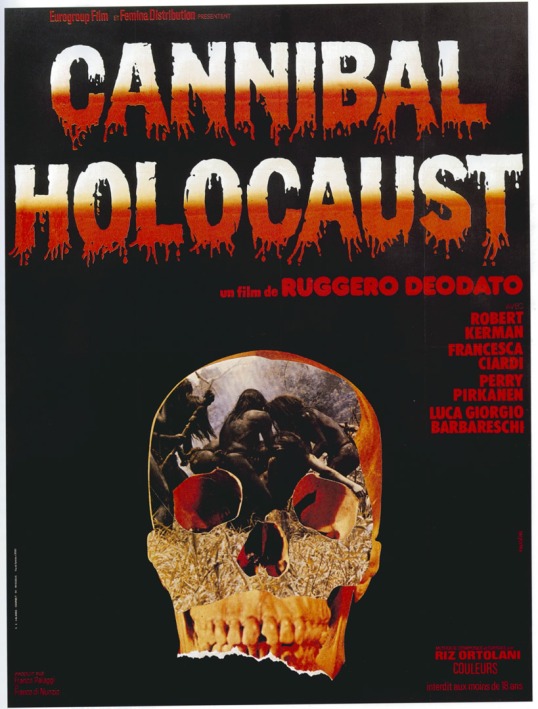
The month of October here at Through the Shattered Lens wouldn’t be complete if I didn’t introduce one of the very films which this site was made for: Cannibal Holocaust.

This 1980 film by Italian exploitation filmmaker Ruggero Deodato remains of the best examples of grindhouse filmmaking. It continues to be many people’s teop ten grindhouse and exploitation films list. Cannibal Holocaust could be considered as the best of the cannibal subgenre films which first began with Umberto Lenzi’s 1972 The Man from the Deep River.

Cannibal Holocaust also remains one of the best found footage films which has regained a sort of come back the last couple years with such popular found footage horror films like the Paranormal Activity series right up to 2012’s The Bay from Barry Levinson. It’s no surprise that Deodato’s film has survived the test of time as new legions of horror fans discover his films and older fans return to watch it again.

The film itself has continued to gain notoriety as newer fans discover the film. Upon it’s release the film was censored or outright banned from many countries who thought it was an actual snuff film (an allegation that even got Deodato and the film’s producers arrested in Italy on charges of murder) or because of atual animal cruelty performed by the film crew on live animals during the shoot. While the notion of Cannibal Holocaust was an actual snuff film remains a sort of urban legend amongst the new and young horror fans discovering it for the first time it really was the allegations of animal cruelty that continues to haunt the film to this day as it remains banned it several countries.

While the film was finally removed from the UK’s “video nasties” list it still hasn’t been released fully uncut and unedited in that country unlike the rest of the world. Though with the global reach of the internet such censorship and banned lists have become irrelevant and thus has given Cannibal Holocaust a much wider reach than it has ever had.

Cannibal Holocaust may be over thirty years old now, but it remains one of the finest example of grindhouse and exploitation filmmaking. It will continue to live on for future generations of horror fans and gorehounds to discover.


Horror Film Review: Warm Bodies (dir by Jonathan Levine)


Warm Bodies

I did not see Warm Bodies when it was first released back in February.  I was certainly aware of the film, having been bombarded with the trailer since December of 2012. and I assumed that I would see the film but, for whatever reason, I simply could not work up the enthusiasm necessary to actually see it.

Perhaps it was because the concept — a zombie love story — simply seemed too cutesy and, as much as I love zombie movies, they’re not exactly what I want to watch on Valentine’s Day.  The fact that the movie was being called a “zombie twilight” didn’t help.  (Don’t get me wrong.  The Twilight films are a very guilty pleasure of mine but that still doesn’t make the comparison a selling point.)

As a result, as much as I thought I would end up seeing Warm Bodies in the theaters, I never got around to it.  Instead, I waited until Warm Bodies premiered on Cinemax earlier this month to watch it and you know what?

I was surprised to discover how much I loved it.

Warm Bodies takes place after the zombie apocalypse has decimated America.  The undead wander through the ruins of society while the few remaining humans have barricaded themselves in a heavily guarded enclave.  Leading them is Col. Grigio (John Malkovich) who continually tells his citizens that the only way to survive is to kill every zombie that they see.  As Grigio explains it, the zombies may look human but they have no humanity left.

This would probably come as news to R (Nicholas Hoult), a zombie whose day consists of wandering around an airport, looking for people to eat, and occasionally acknowledging his friend M (Rob Corddry) with a grunt.  R spends most of his time thinking about how bored he is with being a zombie and wondering who he once was.  That’s one reason why R enjoys eating brains because, by doing so, R gets to enjoy the memories of his victims and, for just a brief few moments, he can know what it’s like to be human.

Things change for R when he and a group of zombies come across humans that are searching the city for medical supplies.  R spots one of the humans, Julie (Teresa Palmer), and finds himself immediately drawn towards her.  However, R is also shot in the chest by Julie’s boyfriend, Perry (played by Dave Franco, the younger brother of my beloved James Franco).  R responds by attack Perry and eating his brain, which causes R to experience all of Perry’s memories of Julie.  Now in love with Julie, R saves her from the other zombies and takes her back to the airplane where he makes his home.

Warm Bodies 3

As Julie and R bond, R finds himself slowly becoming more and more human.  Yes, that’s right — the cure to the zombie apocalypse is love.  Now, that may sound predictable or simplistic and I guess it is.  But you know what?  I’m a romantic and I loved it!  It helped that both Palmer and Hoult have a really likable chemistry.  Even before R’s heart starts to beat again, they make a really adorable couple.

Unfortunately, the more R tries to act human, the more the other zombies want to eat him.  This is especially true of the Boneys, zombies who have decayed to the point of just being skeletons and who prey on anything that happens to have the slightest trace of a heartbeat.  Meanwhile, Julie’s father — Col. Grigio — remains firmly convinced that the only cure for zombification is a bullet in the head.

Though there are moments of horror in Warm Bodies (mostly involving the Boneys, who are genuinely scary), the film is mostly concerned with telling an audience-friendly love story.  As I watched the film, I occasionally found myself wishing that the movie has been directed by someone like James Gunn, who would have brought a bit more of a satiric bite to the film.

And yet, despite being occasionally frustrated by how (literally) bloodless the film was, I loved Warm Bodies.

What can I say?  It’s an incredibly sweet and romantic movie and, as much as its fashionable to be cynical, who can resist a good love story?  If anything truly elevates Warm Bodies above being just another supernatural romance, it’s the performance of Nicholas Hoult.  Even when he’s just stumbling around with a blank face and uttering meaningless groans, Hoult makes R into a likable flesh eater.  As sweet as the idea of love bringing life to the dead may be, it’s Hoult’s intelligent performance that makes both the idea and the romance feel real.

And that’s why I loved Warm Bodies.

Warm Bodies2

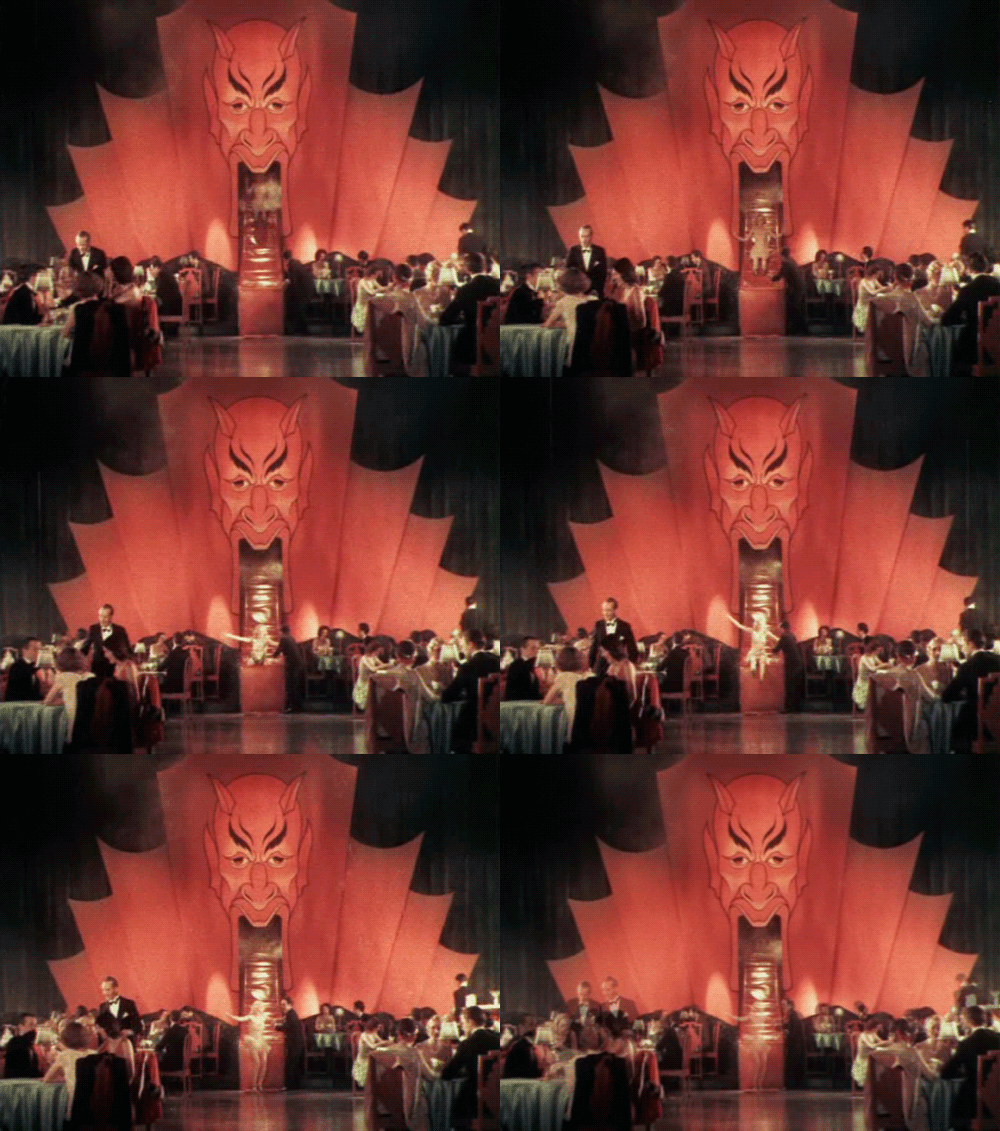
What the Hell is This? The Devil’s Cabaret.


The Devil's Cabaret

Today, I want to take about 18 minutes to share something with our readers.  The Devil’s Cabaret is an early color short film from 1930.  I recent caught it on TCM and my immediate reaction was that I simply had to share it.  Along with fitting in with the October theme of this site, The Devil’s Cabaret provides ample evidence of just how weird Hollywood could be before the production code was instituted.

Incidentally, the devil is played Charles Middleton who, nearly two decades later, would play The Strangler of the Swamp.

Enjoy The Devil’s Cabaret!

Film Review: Brother John (dir by James Goldstone)


Yesterday, while I was out running, I tripped over an invisible rock (at least I think it was an invisible rock) and I twisted my ankle. My first impulse was to check to see if I was being chased by zombies since I’ve learned from movies that anytime a woman sprains her ankle, there has to be either zombies or a masked killer somewhere nearby. Fortunately, movies are not real life. Anyway, I’m staying home from work today, trying to rest and stay off my ankle — which means going against every naturally hyper instinct in my body.

Fortunately, I’ve got thousands of movies, a lot of books, and a TV to help comfort me as I spend the day on the couch.  (I also have the sound of my landlord’s son mowing the lawn outside.)   Earlier this morning, as I was exploring everything that television has to offer, I came across a channel called Bounce TV and a movie called Brother John.

Up until I randomly came across it on Bounce TV, I had never heard of Brother John.  A quick google search hinted that I probably wasn’t alone in that.  Brother John appears to be a rather obscure film.

And that’s a shame because, as I quickly discovered, Brother John is actually a pretty interesting film.

Released in 1971, Brother John takes place in a small town in Alabama.  The majority of the town’s black citizens work at the local factory, where they are exploited by the white owners and kept in check by the white sheriff (who, as played by Ramon Bieri, is the epitome of the nightmarish Southern law enforcer).  When the workers, under the leadership of the charismatic Charlie Gray (Lincoln Kilkpatrick), threaten to unionize, the town finds itself on the verge of exploding into racial violence.

Into all of this comes John Kane (Sidney Poitier).  Wearing a dark suit and viewing the world through weary eyes, John grew up in the town.  The local doctor and town drunk Doc Thomas (Will Geer) can still remember delivering John.  However, John mysteriously vanished when he was a teenager.  As Doc Thomas points out, John only returns after someone dies.  In this case, it was the funeral of John’s sister that led to him returning to town.

This time, however, John doesn’t leave immediately after the funeral.  Instead, he spends a few days in the town and dates a school teacher (Beverly Todd).  The authorities — led by Doc Thomas’s politically ambitious son, Lloyd (Bradford Dillman) — are convinced that John is a labor agitator who has come to town to start trouble.  Meanwhile, the factory workers (including Todd’s ex-boyfriend, played by Paul Winfield) are angered by John’s reticent nature.

After having John arrested, Lloyd discovers, from looking at John’s passport, that John has been all over the world, even to communist countries that should be closed to American citizens.  He discovers that John carries a journal that’s full of empty pages.  When he asks John how he managed to learn a dozen different languages, John replies, “I listened.”  Lloyd thinks John is a communist.  Doc Thomas, meanwhile, is convinced that John is something more than just a human being…

Who is Brother John?  That’s the question that everyone’s asking in this film.  It’s a question that the film never answers.  Instead, it’s up to the audience to consider the enigmatic clues offered up in this film and come to their own conclusions.

And that is why I enjoyed Brother John.  It’s a film that encourages the audience to think for itself.  Featuring an excellent performance from a perfectly cast Sidney Poitier and plenty of moody Southern atmosphere, Brother John is a great discovery waiting to be found.

brother-john-movie-poster-1971-1020235424

Horror On The Lens: Plan 9 From Outer Space (dir by Edward D. Wood, Jr.)


Plan_9_Alternative_poster

We have a few traditions here at the Shattered Lens.  Every Christmas, we feature Treevenge.  Every Halloween, we invite everyone to watch Night of the Living Dead.  And every October, we offer up Ed Wood’s classic plea for world peace, Plan 9 From Outer Space.

Enjoy!

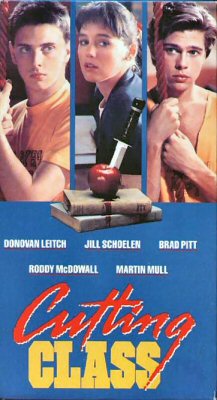
Horror On The Lens: Cutting Class (dir by Rospo Pallenberg)


Cutting_Class_film_poster

it’s been said that, early in the career of every Oscar nominee, there’s a film or two that he probably wishes would be forgotten.  Today’s movie is one of those films, 1989’s Cutting Class.

Cutting Class is, in many ways, a fairly standard 1980s slasher comedy hybrid.  It features a stronger heroine than most and it does a bit of a better job than expected at making you guess who the killer is but, for the most part, Cutting Class is mostly memorable for being one of Brad Pitt’s first major roles.

The bad news is that the character he’s playing here is kind of an asshole and not even the fact that he looks like Brad Pitt can make him likable.

The good news is that Brad Pitt has always been hot.

And here’s the proof…

Horror On The Lens: Manos: The Hands of Fate (dir by Harold P. Warren)


torgo

I, Zombie, yesterday’s film, was pretty dark.  So, for today, let’s lighten things up with a horror film from 1966 that some people consider to be one of the worst films ever made.

I am, of course, talking about Manos: The Hands of Fate.

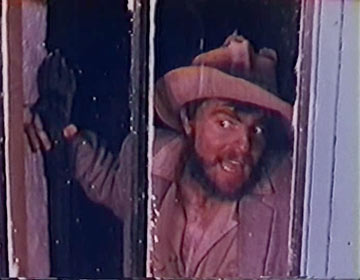
Manos deals with an angry middle-aged man named Michael (played by the film’s director-writer-producer, Harold P. Warren) who, after driving for an eternity through west Texas, ends up stopping off at a motel.  At the motel, he meets an odd fellow named Torgo (John Reynolds, who sadly committed suicide immediately after filming Manos).  Torgo works for a mysterious figure that he calls “The Master” and it quickly becomes obvious that the Master wants to add Michael’s wife and daughter to his harem.  Most people would probably react to all of this by just getting in their car and driving somewhere else.  However, Michael is kind of stubbon and stupid…

As I mentioned at the start of this review, Manos has a reputation for being one of the worst films ever made.  This may be true but it’s also compulsively watchable.  This is one of those films that is so extremely (and, often times, unintentionally) strange that you simply cannot look away.

One final word in defense of Manos.  Manos was written, directed, and produced by a fertilizer salesman from my great home state of Texas.  The cast was made up of community theater veterans.  Next to nobody involved with Manos ever made another film.  And yet, Manos will be remembered long after you’ve forgotten the title of the last film made by Michael Bay.  You can keep your boring, well-made films because there will always be a place in my heart for Manos: The Hands of Fate.

(Add to that, the film’s title translates to Hands: The Hands of Fate and who can’t appreciate that?)

Horror On The Lens: I, Zombie: The Chronicles of Pain (dir by Andrew Parkinson)


izombie

Today’s movie is one of the darkest zombie films ever made.

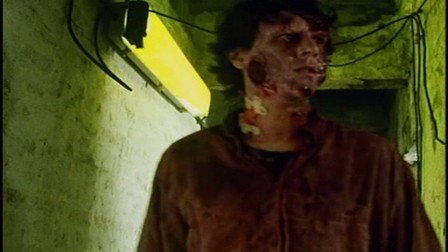
First released in 1998, I, Zombie tells the story of Mark (Giles Aspen), a likable doctoral candidate who, while on a field trip, comes across a young woman trapped in a shack.  Mark rescues the woman but, as he carries her to safety, she suddenly bites him in the neck.  As you can probably guess from the title, this bite leads to Mark becoming a zombie.

However, as opposed to what we’ve seen in other zombie films, Mark transformation is a slow process.  It starts with Mark realizing that his wounds are not healing and that he has suddenly started to have cannibalistic urges.  Realizing that he’s doomed to become a zombie, Mark cuts off all contact with his girlfriend and instead tries to isolate himself from the world.  The rest of the film follows Mark as he clinically observes the decay of his both his body and his mind.

To say that I, Zombie is not an easy film to watch is perhaps the highest compliment that you can pay it.  Whether one interprets the film as a metaphor for addiction or just as the ultimate acknowledgement of the body horror that rests at the heart of the zombie genre (and I think both interpretations are valid), I, Zombie is one of the best zombie films ever made.

What Lisa and the Snarkalecs Watched Last Night #92: Scarecrow (dir by Sheldon Wilson)


Last night, the Snarkalecs and I watched the SyFy original horror film, Scarecrow.

Why Were We Watching It?

For the first time in several months, SyFy was actually showing an original film on Saturday night (as opposed to episodes of Sinbad).  Since the Snarkalecs have sworn to protest SyFy’s decision to make Thursday movie night, we were naturally very happy to have a movie premiering where we felt it belonged.  Needless to say, there was no way that we weren’t going to watch Scarecrow and tweet the hell out of it, if just to let SyFy know that there is an audience for original movies on Saturday.

What Was It About?

A high school teacher takes the Saturday morning detention crew out to a deserted farm so that they can perform a community service by taking apart an old scarecrow and transporting it back to town.  However, the scarecrow has other ideas…

What Worked?

Overall, Scarecrow was a surprisingly effective little horror film.  The filmmakers didn’t attempt to reinvent the genre but that’s okay.  They may have told a familiar story but the important thing is that they told the story well.  In the best SyFy tradition, Scarecrow moves quickly and is a lot of fun to watch with a group of friends.

As I watched Scarecrow, I quickly came to realize that the filmmakers understood something very important.  Farms — especially deserted farms that sit abandoned out of the middle of nowhere — are inherently creepy.  When I was little, my family lived near (and occasionally on) several farms and, as my sisters delight in reminding me, I would get scared anytime we walked or drove by a barn.  Can you blame me?  Barns, after all, were big, dark buildings that were maintained by taciturn, unsmiling men.  Anything could be living inside of a barn, just waiting to reach out and grab a little redheaded girl as she tried to walk by.  (Not to mention that barns were full of hay and dust and were not the best place for a girl with severe asthma to be near.)  The barns in Scarecrow were just as creepy as the ones from my childhood and they contributed nicely to the film’s horrific atmosphere.

The Scarecrow, itself, was a surprisingly effective monster.  Considering the film’s limited budget, the Scarecrow was scary and, even more importantly, believable.  He was the type of monster who could have easily popped out of one of my many farm-related nightmares.

What Did Not Work?

This was another one of those horror films in which one of the major characters was essentially responsible for getting almost the entire cast killed off.  And yet, nobody ever said, “Hmmm…y’know, that person really screwed things up…”  Seriously, if we don’t start to hold people accountable then what hope do we ever have of stopping scarecrows from committing mass murder?

“Oh my God!  Just like me!” Moments

Whenever I watch a movie like this, where a group of people end up getting killed largely as a result of their own stupidity, I realize that I probably would not survive a horror movie.  Seriously, if I was ever confronted by an axe-wielding maniac, I would so be the type of girl that everyone makes fun of whenever they watch a horror movie.  I would be the girl who would end up trying to escape by running up a flight of stairs.  In the case of Scarecrow, I guess I would the one who would end up running off into the cornfield by herself.

I also appreciated the scene where two future victims start making out on the school bus.  It brought back a lot of memories because, as fun as it was to go to speech and drama tournaments and on field trips, you still had to find some way to pass the time on the bus.

Lessons Learned

Farms are creepy!

Scarecrow

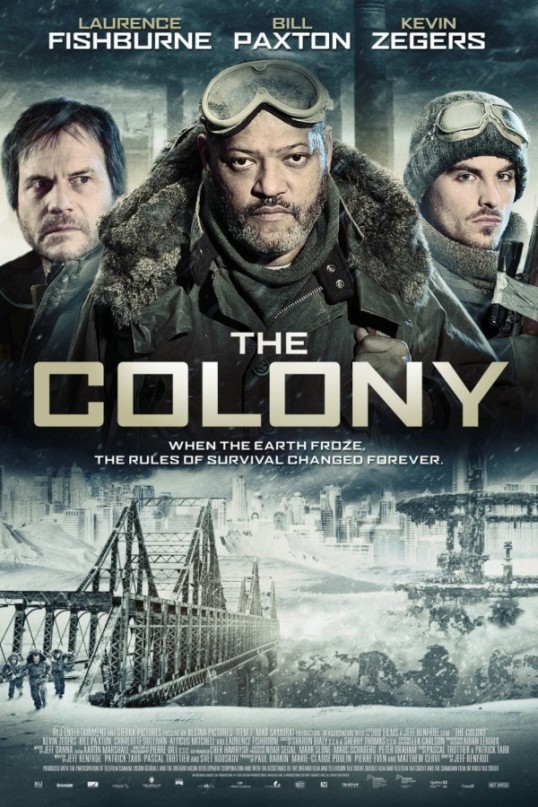
Horror Review: The Colony (dir. by Jeff Renfroe)


TheColony

“You’re going to need every bullet.”

The Colony was this little-seen horror film that came out in early 2013. From the trailers shown it looked like it was going to be a decent looking post-apocalyptic, scifi-horror that looked to evoke the sort of icy desolation and paranoia that Carpenter’s The Thing did so perfectly. Under Canadian-filmmaker Jeff Renfroe’s command the film’s high, lofty horror goals didn’t exactly come to fruition.

The film itself wasn’t awful by any stretch of the imagination, but it does suffer a lot from having it look like it was one of those mid-2000 SyFy film productions. At times some of the sequences even looked like it was copied off from one of those the SyFy “New Ice Age” disaster flicks starring Dean Cain. Yet, there’s some genuine tense moments in The Colony that should make this film a look-see if there’s nothing else to see.

Yes, the film is about the planet going through a sort of artificially-created Ice Age due to weather tampering. It’s a story that could’ve been lifted from early Twilight Zone episodes. Humanity barely survives inside spread out colonies using former factories and government bunkers. These colonies don’t just have the danger or dwindling supplies, simple diseases and the cold weather to deal with, but as we soon find out there’s now a new danger that’s much closer to home.

The Colony’s ad campaign and trailers have focused on it’s two American stars in Laurence Fishburne and Bill Paxton to sell the film. Both actors do some workman-like performances which helps anchor the ensemble cast’s performance. It’s the cast’s performances that elevates The Colony above it’s SyFy counterparts and one of it’s few saving graces. The other being the filmmakers’ success in creating a sense of freezing isolation through the use of arctic-like location shoots and some very well-done CGI icy landscapes.

The horror part of the film comes from the so-called “other” survivors who have adjusted to the scarcity of food by turning on the only abundant source of nourishment left in a world where there are no more growing things. Yes, The Colony tries to revive that old horror staple of the late 70’s and early 80’s which we know of as the cannibal-subgenre.

Cannibal films never truly went away but they remained mostly in the very outer fringes of the horror scene. They tended to be quite awful affairs that went for extreme shocks to bring in the horror crowd, but that only works when there’s a semblance of a narrative to explain things. With The Colony the film does a good enough job to try and explain why some have turned to a diet of the so-called other “white meat”. To add a new wrinkle to these feral antagonists the filmmakers they decided to update them for the modern audiences by giving them free-running skills that makes them seem more than human once they enter the screen. If the film has any sort of lesson to impart it could be that eating “long pig” might just give one parkour-like abilities.

The Colony definitely tried to be one of those scifi-horror that wanted to elevate itself to something beyond it’s grindhouse and exploitation roots, but it’s trying to be somethng it wasn’t meant to be that became it’s biggest flaw. The set-up of an Ice Age created by man is a time-tested story and the reintroduction of the cannibal thread to the film’s storyline was ripe for a grandg uignol-like production that could’ve been done using practical effects. But the filmmakers tried to mimic the CGI-smorgasbord of the Roland Emmerich-style, but they just barely distinguished themselves from what amounted to be an enhanced SyFy-production.

It’s a film that has enough entertaining moments, but overall it was a nice try that that just failed short of it’s goals.