The TSL’s Grindhouse: Giallo in Venice (dir by Mario Landi)


(I know this is a boring poster but it’s literally one of the few Giallo in Venice graphics that I can post without running the risk of getting the site in trouble.)

So, I finally saw the infamous (and, in many countries, banned) 1979 film, Giallo in Venice.

Back when I first decided to learn about the history of Italian horror, Giallo in Venice was a title that I frequently came across in the course of my research.  Everyone — and I do mean everyone — seemed to agree on three points: 1) it was one of the most graphic and mean-spirited Italian thrillers of all time, 2) it had never been released on DVD or Blu-ray in the United States and, as such, it was not the easiest film to see, and 3) the film was really, really bad.

Now, I have to admit that I probably wouldn’t have had any desire to see Giallo in Venice if not for the fact that I repeatedly read that it would be next to impossible for me to do so.  I hate being told what I can and cannot do.  Don’t get me wrong.  Everything that I read about Giallo in Venice was overwhelmingly negative.  Critics, some of whom I actually respected, were nearly unanimous in their dismissal of the film.  Unlike my hope that I’ll someday see fully restored versions of Greed and London After Midnight, seeing Giallo in Venice was never a number one priority for me.  Instead, it was just something that I kept in the back of my mind.  If I ever had a chance to watch Giallo in Venice, I told myself, I would just so I could say that I had seen it.

Last week,I got that chance.  I discovered that Giallo in Venice had not only been uploaded on YouTube but it was also the uncut version.   (I’m not going to include a link because of the film’s graphic content.  I don’t want to get either this site or the people who uploaded the video in trouble.  If you go to YouTube and search for “Giallo in Venice,” it should be one of the first videos to come up.) The only problem was that, along with being copied from a faded VHS tape, it was the Russian language version.  Basically, whenever any of the film’s characters spoke, you would first hear the line in the original Italian and then a rather angry man would shout the same the line in Russian.  Unfortunately, I know very little Italian and absolutely no Russian.

Needless to say, this led to a rather odd viewing experience.  If Giallo in Venice had been directed by a visual stylist like Lucio Fulci, Dario Argento, Mario Bava, or even Ruggero Deodato, it might not have been a problem.  Those four directors are all rightly renowned for their ability to create mood and atmosphere.  (And, for that matter, the best giallo films are often more concerned with visuals than dialogue.)  Unfortunately, Giallo in Venice was directed by Mario Landi, an veteran television director whose style can best be described as “turn on the camera at the start of the scene, turn it off at the end.”

(Landi also directed Patrick Still Lives, which is a smidgen more interesting than Giallo in Venice.)

As for the film’s plot — well, it’s hard for me to say for sure.  Not to overemphasize this point but, quite literally, I COULD NOT UNDERSTAND A WORD THAT ANYONE WAS SAYING.

The film opens in Venice, with a man being stabbed to death while a woman drowns in a canal.  Inspector De Paul (Jeff Blynn) is assigned to solve the murders.  He has poofy hair that wouldn’t be out of place in a stage production of Boogie Nights and, for some reason, Inspector De Paul is constantly eating hard-boiled eggs.  In just about every scene in which he appears, he is eating an egg.  Though it was hard to judge his overall performance (though the Russian seemed to enjoy repeating De Paul’s dialogue), Jeff Blynn really got into eating those eggs.  It got rather sickening to watch after a while.  As far as I could tell, De Paul’s investigation amounted to talking to one witness and then talking to the dead woman’s roommate.

The roommate, incidentally, is played by Mariangela Giordano, who also appeared in Patrick Still Lives, Burial Ground, and Michele Soavi’s The Sect.  Any fan of Italian horror will not only recognize Giordano but will also immediately know that her Giallo in Venice character is destined meet an unlucky end.  Patrick Still Lives, Burial Ground, and Giallo in Venice were all produced by Giordano’s then-boyfriend and, in all three films, she played a character who was graphically and gruesomely killed onscreen.  In Patrick Still Lives, she was skewered by a fireplace poker.  In Burial Ground, she made the mistake of trying to breastfeed her zombiefied son.  And in Giallo in Venice, one of her legs is slowly sawed off.  Seriously, if my boyfriend insisted that I suffer a terrible death in every film that he produced, it would probably be an issue.  Just saying.

Anyway, while Inspector De Paul is investigating the murder, this young couple keeps popping up.  They’re young, rich, and fifty shades of fucked up.  Fabio (Gianni Dei) has apparently been rendered impotent by all the cocaine that he’s been snorting and the only way he can get off is by forcing Flavia (Leonara Favi) to play out all of his kinky fantasies.  I found myself wondering why the film kept switching back and forth, between the not-quite-loving couple and the murder investigation.  Was Fabio the murderer?  Then, suddenly, I realized that Fabio and Flavia were the same couple who were murdered at the start of the film.  The Fabio and Flavia scenes were flashbacks.  I’m assuming that my confusion was due to the Russian dialogue but it says something about Landi’s visual style that it was impossible to tell, just from watching, that the Flavia/Fabio scenes were meant to be flashbacks.

(As far as I can — and again, dialogue problems — the flashbacks weren’t triggered by anyone saying, “I remember one time…” or anything like that.  Add to that, most of the flashbacks only featured Fabio and Flavia so, logically, there’s no way anyone could have been telling Inspector De Paul what happened.  Instead, the flashbacks just felt like random scenes that were sprinkled in between the violence and the eating.)

Giallo in Venice is a mix of egg eating, sex, and sadism.  The graphic murders are probably what Giallo in Venice is best known for, though I have to admit that I found the constant egg eating to be almost as disgusting.  As for the film’s gore, it was just as graphic and extreme as I had previously read.  But, with the exception of what happens to poor Mariangela Giordano, the violence has no impact on the viewer.  Since Landi directs with no discernible style, there’s nothing behind the murders beyond the fact that, when you title a movie Giallo in Venice, you’re obligated to include a few deaths.  It’s violence for the sake of violence and therefore, rather boring.  Admittedly, I’m sure it was rather shocking in 1979 but, today, audiences are more used to that sort of thing.  After all, everyone’s seen that tutorial on how to be a zombie for Halloween.

While watching Giallo in Venice, it was hard not to compare it to Lucio Fulci’s The New York Ripper.  Both films are deeply unpleasant but, due to Fulci’s energetic and, at times, subversive direction, there’s at least always something going on underneath the blood-drenched surface of The New York Ripper.  You can debate whether or not he succeeded but it can’t be denied that Fulci was going for something more than just sadism when he made The New York Ripper.  (If you doubt me, read Stephen Thrower’s analysis in Beyond Terror: The Films of Lucio Fulci.)  Landi’s style, in Giallo in Venice, is so flat that there’s not only nothing going on underneath but the surface itself seems to be pretty barren too.

To give credit where credit is due, I did appreciate just how ugly Landi managed to make Venice look.  I’ve been to Venice and I absolutely love it.  I would never believe that a director could make Venice look like a dump but Mario Landi managed to do it.  I don’t know if that was intentional on his part but it actually worked for the film.  Since all of the characters actually lived in Venice, it made sense that they wouldn’t be standing around and admiring the city’s natural beauty.  Instead, they all live and operate in the parts of Venice that tourists don’t see.

Finally, Landi did manage to get one interesting shot, when the reflection of one of the victims is seen in the killer’s sunglasses.  Unfortunately, Landi was so impressed by that shot that he kept using it over and over again until, eventually, it became far less interesting.

One final note: Giallo in Venice had a very odd score.  It sounded like it was being played by a cocktail lounge jazz quartet.  The music, itself, was actually rather boring but it was so totally out-of-place that it became oddly charming.  I found myself craving a drink with a little umbrella in it.

Anyway, that’s Giallo in Venice.  It’s not good, it’s not memorable, but at least I can now say that I’ve seen it.
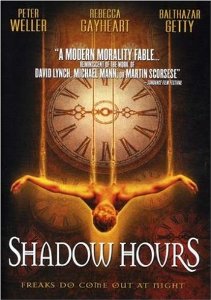
A Movie A Day #117: Shadow Hours (2000, directed by Isaac H. Eaton)


Straight from the direct-to-video graveyard comes this journey through the seedy underbelly of Los Angeles.  Michael Holloway (Balthazar Getty) used to drink every hour and snort cocaine every night.  That was the past.  Now, he is clean and sober.  Michael is married to Chloe (Rebecca Gayheart) and they have a baby on the way.  In desperate need of money to support his family, Michael gets a job working the night shift at a 24-hour gas station.  Most of his customers are the scum of the Earth until, one night, Stuart Chappell (Peter Weller) steps into the station.  Stuart claims to be a writer and he hires Michael to accompany him on an exploration of the dark side of L.A.  They start with strip bars and then eventually move on to fight clubs and BDSM parlors.  Everywhere they go, Stuart is recognized but everyone knows him by a different name.  Soon, Michael is not only drinking and doing drugs again but he is also the prime suspect in a murder.
Shadow Hours is a dumb but entertaining vision of Los Angeles as Hades.  It has loads of atmosphere but it’s all taken from other movies, a hint of Taxi Driver there and a pinch of 8mm here.  The film’s main weakness is that it stars Balthazar Getty, who, as an actor, has the least sympathetic screen presence this side of Edward Furlong.  Even if Getty was playing a paraplegic veteran who had devoted his life to finding good homes for stray puppies, he would still come across as unlikable.  Make him a loser who spend most of the movie lying to his pregnant wife and it is impossible to care what happens to Michael.  The film’s main strength is that it also stars Peter Weller, who is pitch perfect as the mysterious Stuart, who might be the Devil.  If the whole movie had just been Peter Weller going to bars and fight clubs and hanging out with Lydia Lunch, Shadow Hours would have been a B masterpiece.  It’s too bad he had to take an oil heir with him.

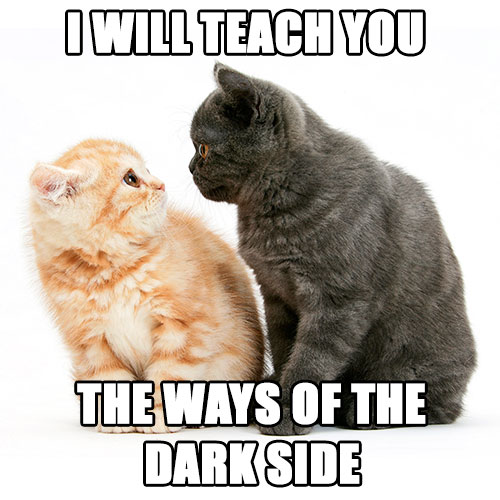
Happy Star Wars Day From The Shattered Lens!


Today is May 4th, which, in 2011, was declared by some silly humans to be Star Wars Day!

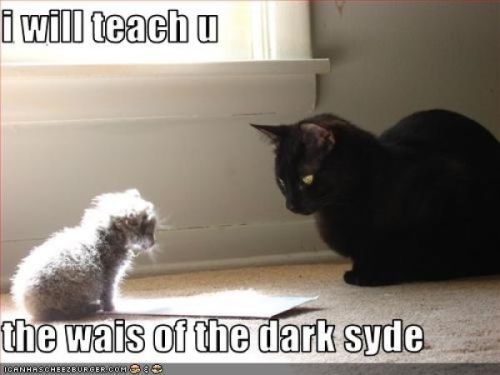
The humans here at the Shattered Lens seem to love Star Wars as well!  (The kitty is indifferent.)  Check out these Star Wars reviews:

Star Wars Episode 1: The Phantom Menace, reviewed by Leonard Wilson

Star Wars Episode 1: The Phantom Menace, reviewed by Jedadiah Leland

Star Wars Episode II: Attack of Clones, reviewed by Alexandre Rothier

Star Wars Episode III: Revenge of the Sith, reviewed by Jedadiah Leland

Rogue One, A Star Wars Story, reviewed by Jedadiah Leland

Star Wars Episode IV: A New Hope, reviewed by Leonard Wilson

Star Wars Episode IV: A New Hope, reviewed by Gary Loggins

The Star Wars Holiday Special, reviewed by Valerie Troutman

Star Wars Episode V: The Empire Strikes Back, reviewed by Leonard Wilson

Star Wars Episode VI: Return of the Jedi, reviewed by Lisa Marie Bowman

The Ewok Adventure, reviewed by Valerie Troutman

Ewoks: The Battle for Endor, reviewed by Valerie Troutman

Star Wars Episode VII: The Force Awakens, reviewed by Ryan C.

Star Wars Episode VII: The Force Awakens, reviewed by Arleigh Sandoc

Enjoy and happy Star Wars Day from all the humans and the cat at the Shattered Lens!  May the Force be with you on May the 4th!

A Movie A Day #116: Evocateur: The Morton Downey, Jr. Show (2012, directed by Seth Kramer, Daniel A. Miller, and Jeremy Newberger)


Long before the rise of trash TV, reality television, Jerry Springer, Maury Povich, Fox News, and MSNBC, there was The Morton Downey, Jr. Show.  Airing at the end of the 1980s, The Morton Downey, Jr. Show featured its host railing against liberals, vegetarians, communists, feminists, libertarians, animal rights activists, teenagers, and pot smokers.  Though the show only lasted for two seasons and ended after a bizarre incident in which Downey faked being the victim of a hate crime, The Morton Downey, Jr. served as a forerunner to the rise of our current toxic political culture.
At least, that is the claim made by Evocateur, a documentary about both the show and the controversial showman who hosted it.  Since I was too young to watch the show when it originally aired, it was interesting, for me, to watch the many clips that were featured in this documentary.  Downey would chain-smoke and shout, while kicking people off his stage.  At one point, Downey literally wrapped himself in an American flag and ordered a guest to kiss his ass.  On another show, Downey provoked then-Libertarian presidential candidate Ron Paul into shouting at him to shut up.  One of the high points of the documentary comes when guest Roy Innis loses his temper and sends Al Shaprton falling to the floor.  The audience would into it, chanting “Mort!  Mort!  Mort!” in the same way that the audience of The Jerry Spring Show chant “Jerry!” whenever a fight breaks out or a guest takes a spin on a the stripper pole.  As way of comparison, a clip of Phil Donahue respectfully interviewing a professional foot model (and promising to let his audience know if maybe they could become a foot model too) is used to illustrate just how different The Morton Downey, Jr. Show was from everything else on the air at the time.  It is a stretch to try to connect (as this film attempts to do) The Morton Downey, Jr. Show to the rise of the Tea Party but it is true that both Donald Trump and Morton Downey, Jr. borrowed a page from the same populist playbook.

Through home video footage and candid interviews, the documentary attempts to show how Morton Downey, Jr. went from being the son of a famous Irish crooner and a friend of Ted Kennedy’s to being the forerunner of trash tv.  There is a lot of speculation about what motivated Downey, some parts of which are more credible than others.  A lot of attention is given to Downey’s relationship with his father and his early attempts to have a musical career of his own. As a singer, Mort was always overshadowed but, as a political provocateur and, later, as an anti-smoking activist, Mort was able to establish an identity of his own.  Along with archival footage and talking head clips, Evocateur uses animation to tell a good deal of the story.  It’s distracting but that currently seems to be the trendy thing to do when it comes to documentaries.

Despite its flaws, Evocateur is an interesting profile of a man whose influence is still being felt even if he has largely been forgotten.


Musclebound Mess: HERCULES IN NEW YORK (RAF Industries 1969)


gary loggins's avatarcracked rear viewer

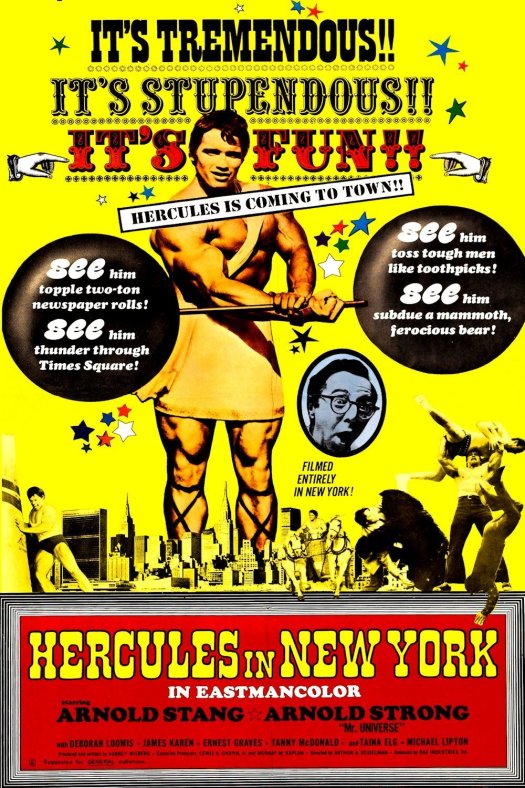
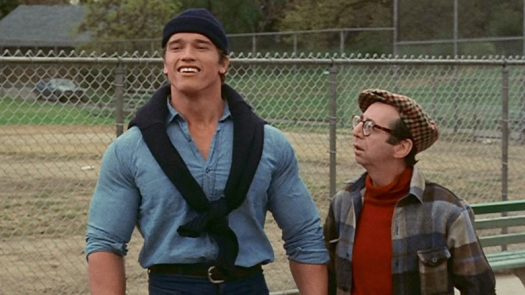
Well, I can finally cross HERCULES IN NEW YORK off my bucket list. This fantasy-comedy starred the team of bespectacled, scrawny comic actor Arnold Stang and musclebound ‘Mr. Universe’ Arnold Strong. Who? Why, none other than the Governator himself, Arnold Schwarzenegger, making his film debut as the Greek Demi-God paying a visit to modern-day Earth. Hercules is all-powerful, and can only be defeated by one thing… a lousy script!

The plot, if you can call it that, has half-human Herc pining to go to Earth against father Zeus’s wishes. Zeus finally relents and transports the headstrong Herc to Terra Firma, where he befriends Stang playing Pretzie, so named because he sells pretzels. Brilliant! The two then have a series of adventures. Herc battles an anemic looking grizzly bear in Central Park! Herc becomes a pro wrestler! Herc falls in love with a mortal! Meanwhile, on Mount Olympus, Juno conspires with Pluto to get rid…

View original post 329 more words

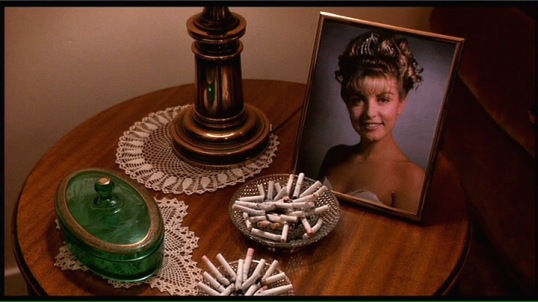
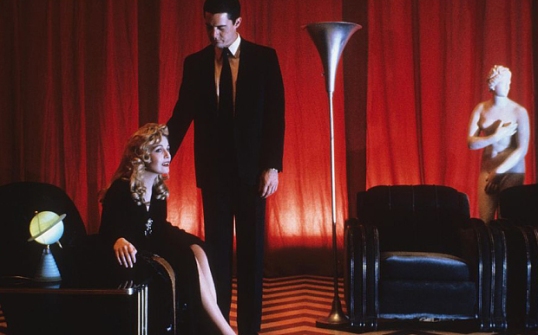
Film Review: Twin Peaks: Fire Walk With Me (dir by David Lynch)


“It was a dream!  We live in a dream!”

— Phillip Jeffries (David Bowie) in Twin Peaks: Fire Walk With Me (1992)

Even among fans of the show, Twin Peaks: Fire Walk With Me is controversial.

If you read Reflections: An Oral History of Twin Peaks, you’ll discover that many members of the television show’s cast either didn’t want to be involved in the film or didn’t care much for it when it came out.  Fearful of being typecast, Kyle MacLachlan only agreed to play Dale Cooper on the condition that his role be greatly reduced.  (Was it that fear of being typecast as clean-cut Dale Cooper that led to MacLachlan later appearing in films like Showgirls?)  Neither Lara Flynn Boyle nor Sherilyn Fenn could work the film into their schedules.

When Twin Peaks: Fire Walk With Me premiered at Cannes, it was reportedly booed by the same critics who previously applauded Lynch’s Wild at Heart and who, years later, would again applaud Mulholland Drive.  When it was released in the United States, the film was savaged by critics and a notorious box office flop.  Quentin Tarantino, previously a fan of Lynch’s, has been very outspoken about his hatred of Twin Peaks: Fire Walk With Me.  When I first told people that we would be looking back at Twin Peaks for this site, quite a few replied with, “Even the movie?”

And yet, there are many people, like me, who consider Twin Peaks: Fire Walk With Me to be one of David Lynch’s most haunting films.

It’s also one of his most straight forward.  Twin Peaks: Fire Walk With Me is a prequel, dealing with the events leading up to the death of Laura Palmer.  Going into the film, the viewer already knows that Laura Palmer (Sheryl Lee) is full of secrets.  They know that she is using drugs.  They know that she is dating Bobby (Dana Ashbrook), while secretly seeing James (James Marshall).  They know about her diary and her relationship with the reclusive Harold (Lenny Von Dohlen).  They know that she is a friend to innocent Donna Hayward (Moria Kelly, somewhat awkwardly taking the place of Lara Flynn Boyle).  Even more importantly, they know that she has spent the last six years of her life being abused by BOB (Frank Silva) and that BOB is her father, Leland Palmer (Ray Wise).  The viewer starts the story knowing how it is going to end.

Things do get off to a somewhat shaky start with a nearly 20-minute prologue that basically plays like a prequel to the prequel.  Theresa Banks, who was mentioned in the show’s pilot, has been murdered and FBI director Gordon Cole (David Lynch) assigns agents Chester Desmond (Chris Isaak) and Sam Stanley (Kiefer Sutherland) to investigate.  Chester and Sam’s investigation basically amounts to a quick reenactment of the first season of Twin Peaks, with the agents discovering that Theresa was involved in drugs and prostitution.  When Chester vanishes, Dale Cooper is sent to investigate.  Harry Dean Stanton shows up as the manager of a trailer park and David Bowie has an odd cameo as a Southern-accented FBI agent who has just returned from the Black Lodge but otherwise, the start of the film almost feels like a satire of Lynch’s style.

But then, finally, we hear the familiar theme music and the “Welcome to Twin Peaks” sign appears.

“And the angel’s wouldn’t help you. Because they’ve all gone away.”

— Laura Palmer (Sheryl Lee), Twin Peaks: Fire Walk With Me (1992)

A year has passed since Theresa Banks was murdered.  The rest of the film deals with the final few days of the life of doomed homecoming queen Laura Palmer.  Laura smiles in public but cries in private.  She is full of secrets that she feels that she has to hide from a town that has literally idolized her.  She has visions of terrifying men creeping through her life and each day, she doesn’t know whether it will be BOB or her father waiting for her at home.  She knows that the world considers her to be beautiful but she also know that, within human nature, there is a desire to both conquer and destroy beauty.  When she sleeps, she has disturbing dreams that she cannot understand but that she knows are important.  At a time when everyone says she should be happy to alive, all she can think about is death.  Everywhere she goes, the male gaze follows and everything that should be liberating just feels her leaving more trapped.  For all the complaints that Twin Peaks: Fire Walk With Me is somehow too strange to be understood, it’s not a strange film at all.  This is David Lynch at his most straight forward.  Anyone who thinks that Laura’s story is incomprehensible has never been a 17 year-old girl.

This is the bleakest of all of David Lynch’s films.  There is none of broad humor or intentional camp that distinguished the TV show.  After the show’s occasionally cartoonish second season, the film served as a trip into the heart of the darkness that was always beating right underneath the surface of Twin Peaks.  It’s interesting how few of the show’s regulars actually show up in Twin Peaks: Fire Walk With Me.  None of the characters who represented goodness are present.  There’s no Doc Hayward.  No Sheriff Truman.  No Deputies Andy or Hawk.  No Pete Martell.  No Bookhouse Boys.  Scenes were filmed for some of them but they didn’t make it into the final cut because their tone did not fit with the story that Lynch was seeking to tell.  The Hornes, Dr. Jacoby, Josie, none of them are present either.

Instead, there’s just Larua and her father.  As much as they try to deny it, Laura knows that she is going to die and Leland knows that he is going to kill her.  Killer BOB and the denziens of the Black Lodge may be scary but what’s truly terrifying is the sight of a girl living in fear of her own father.  Is Leland possessed by BOB or is BOB simply his way of excusing his own actions?  If not for Leland’s sickness, would BOB even exist?  When Laura shouts, “Who are you!?” at the spirit of BOB, she speaks for every victim of abuse who is still struggling to understand why it happened.  For all the talk of the Black Lodge and all the surreal moments, the horror of this film is very much the horror of reality.  Leland’s abuse of Laura is not terrifying because Leland is possessed by BOB.  It’s terrifying because Leland is her father

David Lynch directs the film as if it where a living nightmare.  This is especially evident in scenes like the one where, at the dinner table, Leland switches from being kindly to abusive while Laura recoils in fear and her mother (Grace Zabriskie) begs Leland to stop.  It’s a hard scene to watch and yet, it’s a scene that is so brilliantly acted and directed that you can’t look away.  As brilliant as Ray Wise and Grace Zabriskie are, it’s Sheryl Lee who (rightly) dominates the scene and the rest of the film, giving a bravely vulnerable and emotionally raw performance.  In Reflections, Sheryl Lee speaks candidly about the difficulty of letting go of Laura after filming had been completed.  She became Laura and gave a performance that anchors this absolutely terrifying film.

“Mr. Lynch’s taste for brain-dead grotesque has lost its novelty.”

— Janet Maslin

“It’s not the worst movie ever made; it just seems to be”

— Vincent Canby

If you need proof that critics routinely don’t know what they’re talking about, just go read some of the original reviews of Twin Peaks: Fire Walk With Me.

And yet, having just rewatched the show and now the movie, I can understand why critics and audiences were baffled by this film.  This is not Twin Peaks the TV show.  There is no light to be found here.  There is no comic relief.  (Even Bobby Briggs, who had become something of a goofy anti-hero by the time the series ended, is seen here shooting a man in the head.)  There is no exit and there is no hope.  In the end, the film’s only comfort comes from knowing that Laura was able to save one person before dying.  It’s not easy to watch but, at the same time, it’s almost impossible to look away.  The film ends on Laura’s spirit smiling and, for the first time, the smile feels real.  Even if she’s now trapped in the Black Lodge, she’s still free from her father.

Since this was a prequel, it didn’t offer up any answers to the questions that were left up in the air by the show’s 2nd season finale.  Fortunately, those questions will be answered (or, then again, they may not be) when the third season premieres on Showtime on May 21st.

Previous Entries in The TSL’s Look At Twin Peaks:

  1. Twin Peaks: In the Beginning by Jedadiah Leland
  2. TV Review: Twin Peaks 1.1 — The Pilot (dir by David Lynch) by Lisa Marie Bowman
  3. TV Review: Twin Peaks 1.2 — Traces To Nowhere (directed by Duwayne Dunham) by Jedadiah Leland
  4. TV Review: Twin Peaks 1.3 — Zen, or the Skill To Catch A Killer (dir by David Lynch) by Lisa Marie Bowman
  5. TV Review: Twin Peaks 1.4 “Rest in Pain” (dir by Tina Rathbone) by Leonard Wilson
  6. TV Review: Twin Peaks 1.5 “The One-Armed Man” (directed by Tim Hunter) by Jedadiah Leland
  7. TV Review: Twin Peaks 1.6 “Cooper’s Dreams” (directed by Lesli Linka Glatter) by Lisa Marie Bowman
  8. TV Review: Twin Peaks 1.7 “Realization Time” (directed by Caleb Deschanel) by Lisa Marie Bowman
  9. TV Review: Twin Peaks 1.8 “The Last Evening” (directed by Mark Frost) by Leonard Wilson
  10. TV Review: Twin Peaks 2.1 “May the Giant Be With You” (dir by David Lynch) by Leonard Wilson
  11. TV Review: Twin Peaks 2.2 “Coma” (directed by David Lynch) by Jedadiah Leland
  12. TV Review: Twin Peaks 2.3 “The Man Behind The Glass” (directed by Lesli Linka Glatter) by Jedadiah Leland
  13. TV Review: Twin Peaks 2.4 “Laura’s Secret Diary” (dir by Todd Holland) by Lisa Marie Bowman
  14. TV Review: Twin Peaks 2.5 “The Orchid’s Curse” (dir by Graeme Clifford) by Lisa Marie Bowman
  15. TV Review: Twin Peaks 2.6 “Demons” (dir by Lesli Linka Glatter) by Leonard Wilson
  16. TV Review: Twin Peaks 2.7 “Lonely Souls” (directed by David Lynch) by Jedadiah Leland
  17. TV Review: Twin Peaks 2.8 “Drive With A Dead Girl” (dir by Caleb Deschanel) by Lisa Marie Bowman
  18. TV Review: Twin Peaks 2.9 “Arbitrary Law” (dir by Tim Hunter) by Lisa Marie Bowman
  19. TV Review: Twin Peaks 2.10 “Dispute Between Brothers” (directed by Tina Rathbone) by Jedadiah Leland
  20. TV Review: Twin Peaks 2.11 “Masked Ball” (directed by Duwayne Dunham) by Leonard Wilson
  21. TV Review: Twin Peaks 2.12 “The Black Widow” (directed by Caleb Deschanel) by Leonard Wilson
  22. TV Review: Twin Peaks 2.13 “Checkmate” (directed by Todd Holland) by Jedadiah Leland
  23. TV Review: Twin Peaks 2.14 “Double Play” (directed by Uli Edel) by Jedadiah Leland
  24. TV Review: Twin Peaks 2.15 “Slaves and Masters” (directed by Diane Keaton) by Lisa Marie Bowman
  25. TV Review: Twin Peaks 2.16 “The Condemned Woman” (directed by Lesli Linka Glatter) by Leonard Wilson
  26. TV Review: Twin Peaks 2.17 “Wounds and Scars” (directed by James Foley) by Lisa Marie Bowman
  27. TV Review: Twin Peaks 2.18 “On The Wings of Love” (directed by Duwayne Dunham) by Jedadiah Leland
  28. TV Review: Twin Peaks 2.19 “Variations on Relations” (directed by Jonathan Sanger) by Lisa Marie Bowman
  29. TV Review: Twin Peaks 2.20 “The Path to the Black Lodge” (directed by Stephen Gyllenhaal) by Lisa Marie Bowman
  30. TV Review: Twin Peaks 2.21 “Miss Twin Peaks” (directed by Tim Hunter) by Leonard Wilson
  31. TV Review: Twin Peaks 22.2 “Beyond Life and Death” (directed by David Lynch) by Lisa Marie Bowman

A Movie A Day #115: Zero Tolerance (1994, directed by Joseph Mehri)


In Zero Tolerance, Robert Patrick plays Jeff Douglas, an FBI agent who is sent down to Mexico to pick up a recently captured drug dealer.  Ray Manta (Titus Welliver) is the head of the White Hand drug cartel and he is not happy about having been arrested.  When Ray tells Jeff that his entire family is being held hostage and will be killed unless Ray is allowed to escape, Jeff demands that Ray give him his word that no harm will come to his wife and children.  Ray gives his “word of honor,” not realizing that his associates have already killed Jeff’s family.  Jeff is now out for revenge and he is not going to let the FBI, with its rules and procedures, stand in his way.  Jeff is not only out to get Ray.  He is also going to track down and kill every member of the White Hand, which includes everyone from Mick Fleetwood (yes, that Mick Fleetwood) to Jeffrey Anderson-Gunter (playing almost exactly the same role that he played in Marked for Death and Only The Strong) to Ator the Invincible himself, Miles O’Keeffe.

(How much keeffe is in this movie?  Miles O’Keeffe!  Ha ha, that never gets old!)

Robert Patrick is one of those actors who can make any movie worth watching and Zero Tolerance, an otherwise forgettable revenge flick, is proof of that.  No one plays a revenge seeking killing machine with as much panache as Robert Patrick.  After his family is killed, Patrick crosses the country, stopping everywhere from New Orleans and Las Vegas and seeing vengeance with a determination that almost makes Charles Bronson and Clint Eastwood seem mellow by comparison.  This is the type of movie where Robert Patrick literally drives his car through the side of a helicopter and, even after the helicopter explodes, still emerges unscathed.

There’s only one man who could pull that off.

Robert Patrick.

Film Review: Queen of the Desert (dir by Werner Herzog)


Last night, I finally saw the latest Werner Herzog film to be released in the United States, Queen of the Desert.

Queen of the Desert has actually been around … well, I was going to say forever but actually, I first started to hear about it in 2014.  It premiered (to less-than-enthusiastic reviews) at the Berlin International Film Festival in February of 2015 and was released in Germany later that same year.  Originally, it was going to get a wide release in America but then IFC acquired the distribution rights and ended up sitting on it for two years.  (During that time, Herzog went on to direct another film, Salt and Fire.)  Only last month did Queen of the Desert finally get a very limited theatrical and VOD release here in the United States.

Despite all of the bad things that I had heard, I was still looking forward to seeing Queen of the Desert.  Why not?  Werner Herzog is one of my favorite directors.  The star of Queen of the Desert, Nicole Kidman, is one of my favorite actresses.  Of course, there was also the Franco factor.  I knew that Queen of the Desert featured James Franco in a small role and, if you’ve been reading this site for a while, y’all know how I feel about James Franco.

Having now watched it, I can say that Queen of the Desert is not the disaster that so many have been insisting.  That doesn’t mean that it’s a great film or even a good film.  It’s a very middle-of-the-road film, one that is too well-made to really be a disaster but, at the same time, is never as memorable as it should be.

Queen of the Desert tells the story of Gertrude Bell (Nicole Kidman), who abandoned a safely comfortable but restrictive life in turn-of-the-century Britain so that she could explore the world.  In the film, Gertrude falls in love twice and, following the unhappy (and tragic) conclusions of those affairs, she always returns to the Middle East, where surviving the harshness of the desert and exploring the ruins of past civilizations brings her peace and gives her life a greater meaning.

That’s a theme that should be familiar to anyone who has watched any of Herzog’s documentaries or feature films.  The problem is that, as told in this film, there’s no real spark to the story or to Gertrude as a character.  Herzog’s best work has often dealt with people driven to the point of madness by their obsessions.  Think about Nicolas Cage in Bad Lieutenant: Port of Call New Orleans.  Think about Timothy Treadwell, obsessively living with the grizzlies until one them ate him in Grizzly Man.  Consider the introverted eccentrics who explored The Cave of Forgotten Dreams or even Christian Bale’s refusal to allow himself to be broken in the POW film, Rescue Dawn.  Think about Klaus Kinski in just about every film he ever made with Herzog.  For that matter, just think about Werner Herzog himself is Les Blank’s documentary, The Burden of Dreams.  Nicole Kidman would seem like an ideal choice for Gertrude and she does a good job with the role but, as written, Gertrude never has that touch of madness.  Unlike Aguirre, she’s not looking to conquer nature.  Unlike Fitzcarraldo, she’s not trying to bring “civilization” to the isolated spot in the world.  Unlike Timothy Treadwell, she’s not even trying to literally become one with nature.  Instead, she’s just someone who deals with heartache by going on a trip.  I do that every time I spend the weekend up at Lake Texoma.

(The real-life Gertrude Bell died, under somewhat mysterious circumstances, of an overdose of sleeping pills.  Whether it was suicide or an accidental overdose is not known.  In the film, the circumstances of her death — which seem very Herzogian, to be honest — are glossed over by an end title card that simply informs us that she died in 1926.)

As I said earlier, Queen of the Desert is disappointing but it’s not terrible.  Visually, it’s quite stunning and the scenes of the sand blowing in the desert are often a hundred times more interesting than the film’s storyline.  Whenever Herzog is letting his camera focus on the desert or glide over the ruins of an ancient palace, you can understand why Herzog wanted to make this film.  But, unfortunately, the film keeps returning to a story that’s about as middling as an old soap opera.

Nicole Kidman does a good job as Gertrude but she runs into the same problem that she ran into with Grace of Monaco.  She’s stuck with a script that repeatedly tells us that the lead character is fascinating without ever really giving her a chance to prove it.  (Before I get any angry comments, I know that Grace Kelly was fascinating and I’m sure that Gertrude Bell was too.  I’m merely talking about the way that they were portrayed in their biopics.)  As the men in her life, James Franco and Robert Pattinson are both ideal but Damian Lewis is a bit on the dull side.

All in all, this is not one of Werner Herzog’s best but, with all that said, I’ll still follow him anywhere that he chooses to go.

A Movie A Day #114: Scavenger Hunt (1979, directed by Michael Schultz)


When game designer Milton Parker (Vincent Price) dies, all of his greedy relatives and his servants gather for the reading of his will.  Parker’s lawyer, Benstein (Robert Morley), explains that Parker is leaving behind a $200 million dollar estate to whoever can win an elaborate scavenger hunt.  Dividing into five teams, the beneficiaries head out to track down as many items as they can by five o’clock that evening.  Among the items that they have to find: a toilet, a cash register, an ostrich, a microscope, and an obese person.  Hardy har har.
The five teams are made up of a who’s who of sitcom and television actors who had time to kill in 1979.  The Odd Couple‘s Tony Randall is Henry Motely, who is Parker’s son-in-law and who works with his four children.  Soap‘s Richard Mulligan plays a blue-collar taxi driver named Marvin Dummitz (because funny names are funny) who teams up with his friend, Merle (Stephen Furst).  The Mary Tyler Moore Show‘s Cloris Leachman (an Oscar winner, no less) gets stuck with the role of Milton’s greedy sister, Mildred.  She works with her conniving lawyer (Richard Benjamin) and her stupid son (Richard Masur).  Maureen Teefy plays Milton’s niece while his nephews are played by Willie Aames and Dirk Benedict.  Cleavon Little, James Coco, Roddy McDowall, and Stephanie Faracy play the servants.

It doesn’t stop there, though.  Avery Schreiber plays a zookeeper.  Meat Loaf plays a biker who beats up Richard Benjamin.  Ruth Gordon, Stuart Pankin, Pat McCormick, and Scatman Crothers all have cameos.  Even Arnold Schwarzenegger makes an appearance as a gym instructor who knocks Tony Randall out of a second story window.

There are a lot of famous people in Scavenger Hunt.  It’s just too bad that the movie itself is barely watchable and not at all funny.  It tries to go for the zaniness of It’s A Mad, Mad, Mad, Mad World but, unless watching Willie Aames steal a clown head from Jack in the Box is your idea of hilarity, the film never comes close to succeeding.  Michael Schultz directed some classic films (like Car Wash) during the 1970s but, unfortunately, he also directed Sgt. Pepper’s Lonely Hearts Club Band and this.

Scavenger Hunt used to show up on a late night television, where it was always advertised as starring Arnold Schwarzenegger.  (He barely has five minutes of screentime.)  It was released on DVD/Blu-ray earlier this year but watching for the cameos is the only reason to take part in this Scavenger Hunt.

Pre Code Confidential #11: THE MALTESE FALCON (Warner Brothers 1931)


gary loggins's avatarcracked rear viewer

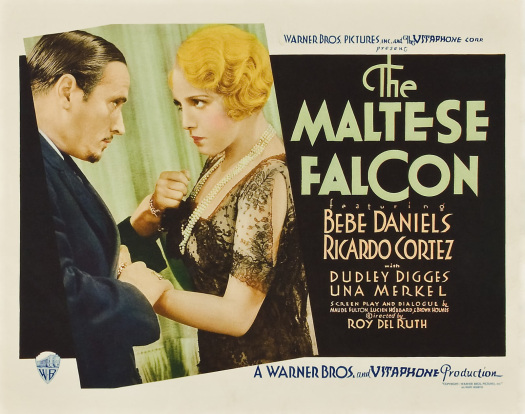
Everybody knows the 1941 Humphrey Bogart/John Huston classic THE MALTESE FALCON, but only true film fanatics watch the original 1931 version. Since I fall squarely into that category, I recently viewed the first adaptation of Dashiell Hammet’s seminal private eye yarn. The film, like it’s more famous remake, follows the novel’s plot closely, with the added spice that Pre-Code movies bring to the table.

Cortez is no Bogie, but he’ll do

The odds are six-two-and-even if you’re reading this post, you don’t need a plot recap. What I intend to do is go over some of the differences between the two versions. Let’s start with Sam Spade himself, the prototype hard-boiled detective. Suave, slick-haired Ricardo Cortez  interprets the role as a grinning horndog who’s never met a skirt he didn’t like. We meet Spade in the opening shot, clinching a dame in silhouette at the door to his office. Then the door…

View original post 575 more words