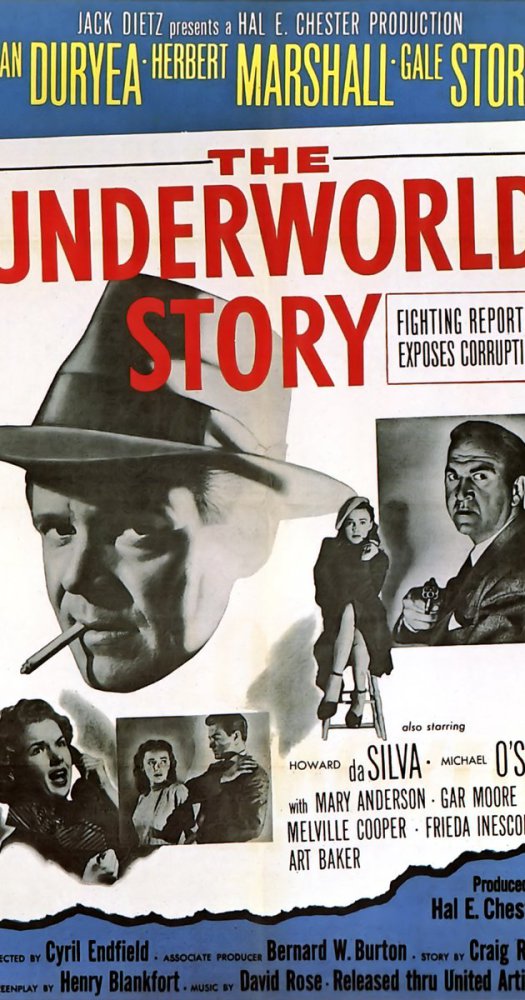
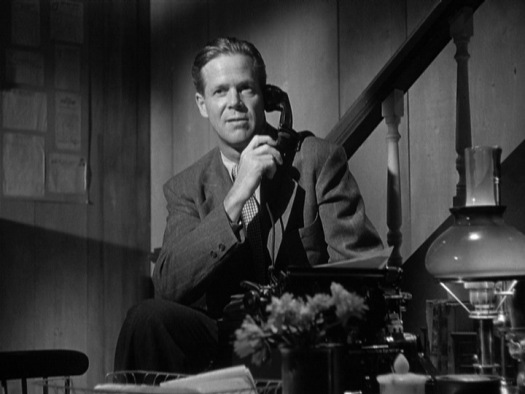
Hollywood’s favorite heel Dan Duryea got a rare starring role in THE UNDERWORLD STORY, a 1950 crime drama in which he plays… you guessed it, a heel! But this heel redeems himself at the film’s conclusion, and Duryea even wins the girl. Since that girl is played by my not-so-secret crush Gale Storm , you just know I had to watch this one!
The part of muckraking tabloid journalist Mike Reese is tailor-made for Duryea’s sleazy charms. He’s a big-city reporter who breaks a story about gangster Turk Meyers spilling to the D.A., resulting in the thug ending up murdered on the courthouse steps in a hail of bullets. DA Ralph Monroe (Michael O’Shea ) puts the pressure on Mike’s editor, and Reese becomes persona non grata in the newspaper game. Seeing an ad for a partner at a small town newspaper, Mike gets a $5,000 “loan” from crime boss Carl…
Everyone knows who Al Capone was but few people remember Frank Nitti. Nicknamed “The Enforcer,” Nitti was Capone’s right-hand man. When Big Al was sent to federal prison for not paying his taxes, Nitti was the one who kept things going in Chicago. While Al was losing his mind in Florida, Nitti was the one who moved the Chicago Outfit away from prostitution and into the labor racket. Today, if anyone remembers Frank Nitti, it is probably because of the scene in Brian DePalma’s The Untouchables where Eliot Ness tosses him off of a building. In real life, Nitti survived the Untouchable era just to become one of the few crime bosses to die by his own hand. In 1943, With the feds closing in on him, Nitti shot himself in a Chicago rail yard.
Frank Nitti: The Enforcer was a made-for-TV movie that told the story of Nitti’s life. Broadcast a year after The Untouchables, Nitti is, in many ways, a direct refutation of DePalma’s film. Eliot Ness never appears in the movie and is dismissed, by special prosecutor Hugh Kelly (Michael Moriarty), as being a publicity seeker. Al Capone (Vincent Guastaferro) is ruthless and resents being called Scarface but he never hits anyone with a baseball bat. In this movie, the only real villains are the Irish cops who harass Nitti (played by Anthony LaPaglia, in his American film debut) and Chicago’s ambitious mayor, Anton Cermak (Bruce Kirby). Cermak orders a corrupt cop (Mike Starr) to shoot Nitti and the film implies that Cermak’s subsequent assassination was payback.
Though it sometimes tries too hard to portray its title character as just being a salt of the Earth family man who also happened to be the biggest mob boss in the country, Nitti is a good gangster film. Michael Moriarty’s performance is a forerunner to his work on Law & Order and Trini Alvarado is lovely as Nitti’s wife. Anthony LaPaglia gives a good performance in the lead role, with the film’s portrayal of Nitti as a ruthless but reluctant mob boss predating The Sopranos by a decade.
Scott Wolf plays Clyde, a nerdy high school student who has a go-nowhere job at a burger place. Maureen Flannigan, best known for starring in Out Of This World, is Bonnie, who likes to steal stuff and have fun. Unfortunately, Bonnie’s father (played by Tom Bower) is not an avuncular alien who sounds like Burt Reynolds. Instead, he’s the extremely strict and controlling police commissioner of their hometown. Clyde like Bonnie but Bonnie wants nothing to do with him. It’s not until Clyde spies Bonnie shoplifting in a record store that he realizes that larceny is the key to her heat. When Clyde steals a van and Bonnie steals her father’s guns, the two of them head for Mexico, robbing banks, shooting guns, making love (which, judging from the comments I have found online, is the main reason the film found an audience once it started showing up on HBO) and becoming media celebrities along the way.
An attempt to do a teenage version of Bonnie and Clyde, Teenage Bonnie and Klepto Clyde predates Natural Born Killers by a year with its critique of the public’s fascination with sex and violence. While the film was hurt by its low-budget, both Maureen Flannigan and Scott Wolf were ideally cast as the young lovers and the entire movie is a hundred times better than anyone would ever expect something called Teenage Bonnie and Klepto Clyde to be. After being typecast of Out of this World‘s wholesome Evie, Maureen Flannigan tried to change her image with this violent film. Unfortunately, the movie ended up exiled to late night showings on HBO where it guaranteed that kids like me would never look at reruns of Out of This World the same way ever again.
After I watched Deadly Sorority, I watched the second Lifetime premiere of the night, Running Away!
Why Was I Watching It?
I nearly missed Running Away, which would have been a shame. After being disappointed with Deadly Sorority, I was seriously tempted to go down to my neighbor’s 3-day Cinco de Mayo party. But, somehow, my cinematic instincts knew that I should take the time to watch Running Away. I’m glad that I did because Running Away is one of the best Lifetime films of the years so far.
What Was it About?
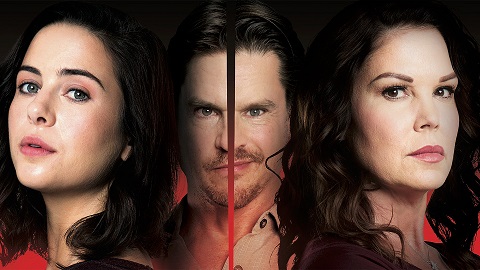
Peg (Paula Tricky) is a single mother, struggling to raise two rebellious daughters even as the bank attempts to take her home away from her. However, salvation comes in the form of Richard (William McNamara). Richard is never quite clear about what he does for a living but he’s rich. He has a great (and big) house. He drives a red sports car and has no problem about honking the horn at people crossing the street and shouting, “Yeah, you better be watching!” He’s more than a little creepy but he appears to worship the ground that Peg walks on. Add to that, when he asks her to marry him, he gives her a really nice ring.
After the wedding, Peg’s two daughters have differing reactions to Richard. The youngest, Lizzie (Madison Lee Brown), loves their new home and decides that Richard isn’t as bad or as creepy as he originally seemed. Maggie (Holly Deveaux) knows that Richard is a creepy perv, the type who walks in on her when she’s in the shower and who, when he discovers that she’s been drinking beer, uses the knowledge for sexual blackmail. Being molested and abused by her stepfather, Maggie resorts first to self-harm and then to running away.
Maggie finds herself living with a drug dealer and his traumatized girlfriend. Both Richard and Peg are searching for her but both have different plans for what to do when they find her.
What Worked?
I know that the plot probably sounds extremely melodramatic and, in a way, I guess it was. But, that’s okay. This is a film that used melodrama to make a very real and important point about the consequences of abuse. This a very well-done and very heartfelt film.
It took me a while to recognize William McNamara, who gives an all-too realistic performance as the monstrous Richard. When we first meet Richard, the film wisely plays up his dorkiness. We know he’s a bad guy but we’re still shocked by just how bad and dangerous he ultimately turns out to be. Paula Trickey also does a good as Peg, portraying her with a combination of regret, disillusionment, and, as the same time, a cautious hope for the future. However, the film really belongs to Holly Deveaux, who gives an empathetic and compelling performance of Maggie, one that reveals both her pain and her inner strength.
What Did Not Work?
I have to admit that, towards the end of the film, I kind of rolled my eyes when one final secret about Richard was revealed. At that point, he was already such a bad guy that revealing the reason why he was so rich felt like overkill. Other than that, though, I would say that the entire films worked.
“Oh my God! Just like me!” Moments
As someone who was an angry, rebellious, and often self-destructive teenager, I related to Maggie. Holly Deveaux’s performance captured all of the emotions. Though the whole movie, I was cringing as I had flashbacks to all the times that I was tempted to get on a bus and go wherever it took me.
(Seriously, for about a year and a half, I had this ludicrously romanticized fantasy about getting on a bus, traveling to random towns, and spending a year filling up my notebooks with my thoughts on America. After I talked about it one too many times, my sister Megan drove me down to the Greyhound station in downtown Dallas and we spent an hour watching people get on and off buses. The sights and the smells — well, mostly the smells — of actual bus living pretty much ended that fantasy.)
Lessons Learned
You can’t run away from your problems but you can beat them over the head with a baseball bat.
Last night, I watched the latest Lifetime original film, Deadly Sorority!
Why Was I Watching It?
You have to give the people at Lifetime some credit. I often give them a hard time for the way that they retitle movies to give them more of a “Lifetime-y” feel but Deadly Sorority is a perfect title. According to the imdb, this movie was originally called Undergrad Nightmare. Deadly Sorority is such an improvement that I don’t even know where to begin. It was enough to convince me to watch.
(Of course, I would have watched anyway because the movie was on Lifetime but, for the purpose of this review format, let’s pretend like the title was the sole reason.)
What Was It About?
Sam (Greer Grammer) and Kris (Emilija Branac) have been BFFs since high school but, once they arrive at Barclay University, things start to change. Kris gets accepted into an exclusive sorority and soon, her new “sisters” are telling Sam to stay away. When Kris is murdered, Sam suddenly finds herself as the number one suspect. Everyone says that Sam was obsessed with Kris and jealous over her new friends.
In order to prove her innocence, Sam is going to have to catch the real murderer. Was it Kris’s frat boy boyfriend? Was it the lecherous professor or his wife? Was it the creepy guy who lives upstairs from her? Was it one of Kris’s sorority sisters? Was it … well, actually, that’s all the suspects. It’s a small school.
What Worked?
I absolutely loved Barclay University, which was located up in the mountains, had nice, big dorm rooms (during my first year of college, I lived in a dorm that didn’t even have air conditioning), and — as far as I could tell — only three or four professors. There weren’t many students either. Sam and Kris’s history class only had about 12 students in it. As someone who hated the anonymous feeling of being one of many students in a gigantic lecture hall, I appreciated that.
The sorority was effectively creepy. However…
What Did Not Work?
…the sorority itself really didn’t figure much into the plot. There were a few effective scenes of all of the sisters staring at Sam dismissively but otherwise, the sorority was just a big, pink-clad red herring. Deadly Sorority is a great title but Undergrad Nightmare was actually a more accurate title. Usually, I don’t mind a misleading title but, when you promise a deadly sorority, you need to deliver.
The identity of the murderer also felt a bit random to me.
“Oh my God! Just like me!” Moments
I related to Sam, who had a wonderfully snarky attitude and said whatever was on her mind. Unlike Sam, I was actually invited to join a sorority but I turned them down because I was busy being a nonconformist. I kind of regret that choice because, according to what I’ve seen on Lifetime, joining a sorority would have led to several years of adventure and melodrama. At the very least, I would have had a few hundred more closets to borrow from.
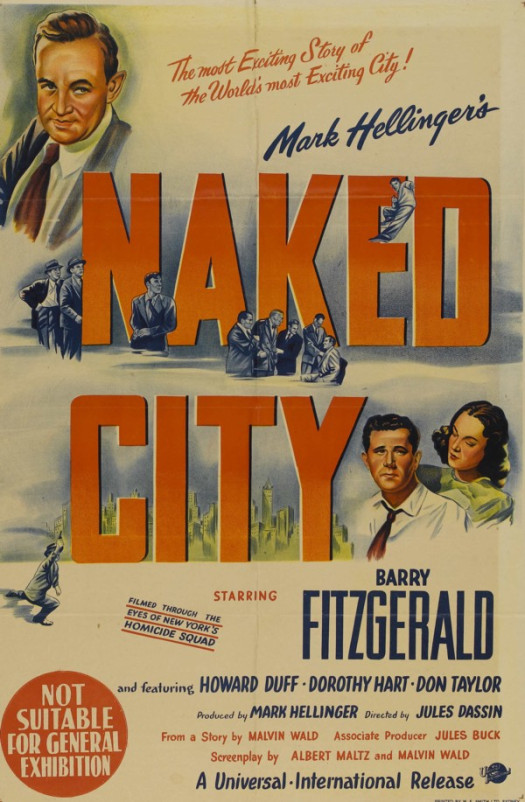
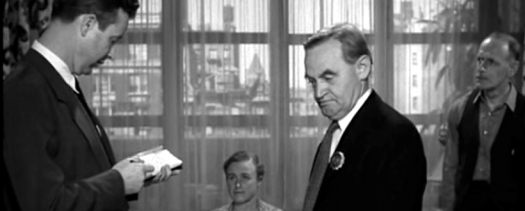
Producer Mark Hellinger, who brought you the film noir classics THE KILLERS and BRUTE FORCE , traveled to the mean streets of New York City to shoot NAKED CITY, along with director Jules Dassin and a solid cast led by Barry Fitzgerald. The movie, though fiction, is shot in docu-drama style, with Hellinger himself providing narration throughout. It was an attempt to do something boldly different with the genre, and it succeeds thanks to the talents in front and behind the cameras.
Beautiful young model Jean Dexter is found in her bathtub brutally murdered by her housekeeper. The homicide squad, with veteran Lt. Dan Muldoon and rookie detective Jimmy Halloran, gets to work investigating the case. They discover Jean had been seeing a mysterious man from Baltimore named Henderson. The team then begins the slow, methodical process of catching a killer, pulling on the loose strings of Dexter’s life. Their number one…
Based on a novel by veteran sports writer Dan Jenkins, Dead Solid Perfect takes an episodic look at a year on the PGA tour. Kenny Lee (Randy Quaid) is a good but aging golfer who wants to finally have his time in the spotlight. His sponsor (Jack Warden) is an eccentric old racist. His girlfriend (Corinne Bohrer, who has a lengthy scene where she walks naked down hotel hallway while carrying an ice bucket) isn’t looking for a commitment while his wife (Kathryn Harrold) is getting sick of his emotional immaturity. Kenny Lee just wants to hit the perfect shot.
An early HBO production, Dead Solid Perfect is one of the best movies ever made about pro golfers, not that there is really much competition. Eschewing the pretentious blathering that has marred other golf films (like The Legend of Bagger Vance), Dead Solid Perfect focuses on the day-to-day life of aging athletes who have never had to grow up. This was Dan Jenkins’s specialty and Dead Solid Perfect feels authentic in a way that many other sports film, like Bagger Vance, do not. Randy Quaid, long before he had his widely publicized breakdown and started making videos about the “star whackers,” is perfectly cast as Kenny. Sadly, Dead Solid Perfect has never been released on DVD or Blu-ray but it will entertain any golf fan who owns an operational VCR.
Of course, the best movie about golf is still Caddyshack.
80 years ago, on May 6th, 1937, the Hindenburg, a German airship, exploded in the air over New Jersey. The disaster was not only covered live by radio reporter Herbert Morrison (whose cry of “Oh the humanity!” continues to be parodied to this day) but it was also one of the first disasters to be recorded on film. Looking at the footage of the Hindenburg exploding into flame and sinking to the ground, a mere skeleton of what it once was, it’s hard to believe that only 36 people died in the disaster. The majority of those who died were crew members, most of whom lost their lives while helping passengers off of the airship. (Fortunately, the Hindenburg was close enough to the ground that many of the passengers were able to escape by simply jumping.)
Not surprisingly, there was a lot of speculation about what led to the Hindenburg (which has successfully completed 63 flights before the disaster) exploding. The most commonly accepted explanation was that it was simply an act of God, the result of either lightning or improperly stored helium. Apparently, there was no official evidence found to suggest that sabotage was involved but, even back in 1937, people loved conspiracy theories.
And really, it’s not totally implausible to think that the Hindenburg was sabotaged. The Hindenburg was making its first trans-Atlantic flight and it was viewed as being a symbol of Nazi Germany. One of the ship’s passengers, Captain Ernest Lehman, was coming to the U.S. in order to lobby Congress to give Germany helium for their airships. With Hitler regularly bragging about the superiority of German industry, the theory was that an anti-Nazi crewman or passengers planted a bomb on the Hindenburg. Since no individual or group ever stepped forward to claim responsibility, the theory continues that the saboteur must have perished in the disaster.
At the very least, that’s the theory put forward by a film that I watched earlier today, the 1975 disaster movie, The Hindenburg.
A mix of historical speculation and disaster film melodrama, The Hindenburg stars George C. Scott as Col. Franz Ritter, a veteran of the German air force who is assigned to travel on the Hindenburg and protect it from saboteurs. Ritter is a Nazi but, the film argues, he’s a reluctant and disillusioned Nazi. Just a few weeks before the launch of the airship, his teenage son was killed while vandalizing a synagogue. Ritter is a patriot who no longer recognizes his country and George C. Scott actually does a pretty good job portraying him. (You do have to wonder why a seasoned veteran of the German air force would have a gruff, slightly mid-Atlantic accent but oh well. It’s a 70s disaster film. These things happen.)
Ritter is assigned to work with Martin Vogel (Roy Thinnes), a member of the Gestapo who is working undercover as the Hindenburg’s photographer. Tt soon becomes obvious that he is as much a fanatic as Ritter is reluctant. Vogel is a sadist, convinced that every Jewish passenger is secretly a saboteur. Thinnes is chilling in the role. What makes him especially frightening is not just his prejudice but his casual assumption that everyone feels the same way that he does.
And yet, as good as Scott and Thinnes are, the rest of the cast is rather disappointing. The Hindenburg features a large ensemble of actors, all playing characters who are dealing with their own privates dramas while hoping not to burn to death during the final 15 minutes of the film. Unfortunately, even by the standards of a typical 70s disaster film, the passengers are thinly drawn. I liked Burgess Meredith and Rene Auberjonois as two con artists but that was mostly because Meredith and Auberjonois are so charming that they’re fun to watch even if they don’t have anything to do. Anne Bancroft has one or two good scenes as a German baroness and Robert Clary does well as a vaudeville performer who comes under suspicion because of his anti-Nazi leanings. Otherwise, the passengers are forgettable. Whether they die in the inferno and manage to make it to the ground, your main reaction will probably be to look at them and say, “Who was that again?”
Anyway, despite all of Ritter and Vogel’s sleuthing, it’s not much of mystery because it’s pretty easy to figure out that the saboteur is a crewman named Boerth (William Atherton). Having seen Real Genius, Die Hard and the original Ghostbusters, I found it odd to see William Atherton playing a sympathetic character. Atherton did okay in the role but his attempt at a German accent mostly served to remind me that absolutely no one else in the film was trying to sound German.
Anyway, the main problem with The Hindenburg is that it takes forever for the airship to actually explode. The film tries to create some suspense over whether Ritter will keep the bomb from exploding but we already know that he’s not going to. (Let’s be honest. If you didn’t already know about the Hindenburg disaster, you probably wouldn’t be watching the movie in the first place.) The film probably would have worked better if it had started with the Hindenburg exploding and then had an investigator working backwards, trying to figure out who the saboteur was.
However, the scenes of the explosion almost make up for everything that came before. When that bomb goes off, the entire film suddenly switches to black-and-white. That may sound like a cheap or even sensationalistic trick but it actually works quite well. It also allows the scenes of passengers and crewmen trying to escape to be seamlessly integrated with actual footage of the Hindenburg bursting into flame and crashing to the ground. The real-life footage is still shocking, especially if you’re scared of fire. Watching the real-life inferno, I was again shocked to realize that only 36 people died in the disaster.
In the end, The Hindenburg is flawed but watchable. George C. Scott was always at his most watchable when playing a character disappointed with humanity and the real-life footage of the Hindenburg disaster is morbidly fascinating.
(MINOR SPOILERS! SPECIFICALLY, THE IDENTITY OF THIS FILM’S MAIN VILLAIN WILL BE REVEALED)
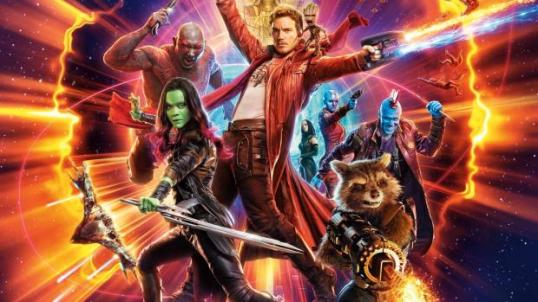
The Guardians of the Galaxy are back!
And this time, they’ve brought some new friends with them, friends with names like Kurt Russell, Sylvester Stallone, and … David Hasselhoff?
That’s right. David Hasselhoff is now a part of the Marvel Cinematic Universe and somehow, it feels totally appropriate. For all the words that have been written comparing Guardians of the Galaxy to the Star Wars franchise, it’s true ancestor is the 1978 Italian film, Starcrash. (Perhaps not coincidentally, Starcrash was Hasselhoff’s film debut.) Watch the trailer below and just try to tell me that you can’t imagine Chris Pratt and Zoe Saldana in the lead roles.
But enough about my obsession with Italian exploitation films. I know the question that you want answered. Is Guardians of the Galaxy Vol. 2 as good as the first one?
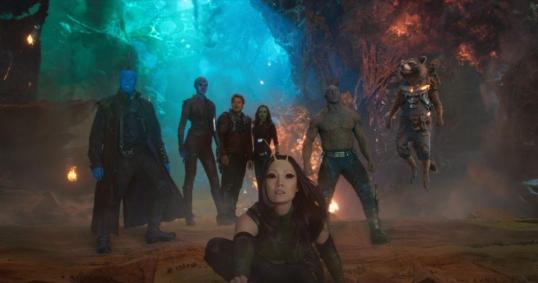
Well, it depends on how you look at it. Guardians of the Galaxy Volume 2 is an absolute blast, a wonderfully entertaining film that mixes subversive comedy with sci-fi action. Everyone from the first film — Chris Pratt, Zoe Saldana, Dave Bautista, Karen Gillan, Michael Rooker, and the voices of Bradley Cooper and Vin Diesel — is back and they’ve still got the same winning chemistry that made the first film so much fun. Everyone is still committed to their roles, delivering even the strangest of dialogue with undeniable flair. Nobody’s gotten bored with saving the universe yet. The new additions to the cast are all well selected. Kurt Russell totally disproves the assumption that MCU villains are never as interesting as their heroic opponents but, then again, it helps that he’s playing a character who has a memorable and odd backstory. Once again, director James Gunn combines crowd-pleasing moments with his own sharp sense of humor. If the pompous tone of Man of Steel and Batman v Supermanmade you sick, Guardians of the Galaxy Volume 2 is the perfect antidote.
Unfortunately, Volume 2 doesn’t provide the same thrill of discovery as the first film. It’s easy to forget that, before the first film came out, a lot of people were predicting that Guardians of the Galaxy would be the first MCU film to flop at the box office. The conventional wisdom was that, as opposed to a character like Captain America, no one, outside of a few comic book readers, knew who the Guardians of the Galaxy were. Chris Pratt was just the goofy guy from Parks and Recreation. A talking raccoon? A walking tree? It was all way too weird, the naysayers proclaimed, to appeal to a mainstream audience.
However, James Gunn proved them wrong. Guardians of the Galaxy was not only the most successful MCU film to that date but it was also my pick for the best film of 2014. I can still remember watching it for the first time and immediately falling in love with both the film’s skewered sensibility and Chris Pratt’s funny but soulful performance. As opposed to a lot of films that were nominated for and won Oscars that year, Guardians of the Galaxy actually holds up after repeat viewings.
(Seriously, has anyone tried to rewatch Birdmanlately?)
Going into the sequel, everyone now knows who the Guardians are and Chris Pratt is now a beloved film star. Volume 2 has a lot to live up to and, for the most part, it succeeds. It’s a tremendous amount of fun and, at the same time, it has a heart. (The heart at the center of the Guardian of the Galaxy films is perhaps the biggest heart in the MCU.)
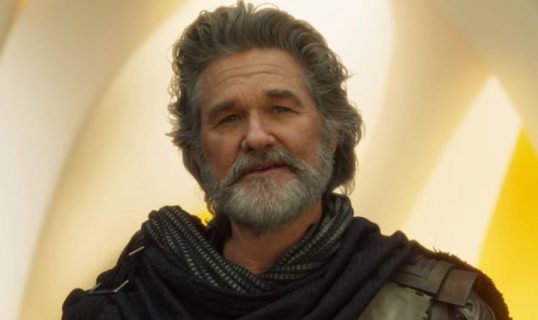
What is the film about? Much like the first film, it’s about family. After years of telling everyone that his father was David Hasselhoff, Peter Quill (Chris Pratt) finally meets his real father (Kurt Russell), a God-like figure named Ego. Charismatic, cheerful, and just a little bit odd, Ego seems like the perfect father figure but he has some secrets of his own. Russell gives a wonderful performance, making Ego one of the few MCU villains to be as interesting as the heroes.
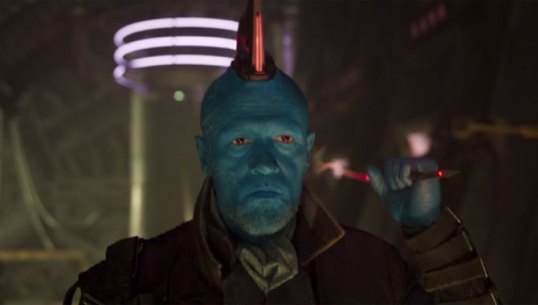
While Peter is bonding with his dad, he is also being pursued by his adoptive father, the blue-skinned space pirate named Yondu (Michael Rooker). Yondu has been rejected by both his adopted son and the rest of his adopted family. The other space pirates are no longer loyal to him. His former boss (Sylvester Stallone) wants nothing to do with him. As silly as it all may sound, it’s also unexpectedly poignant, thanks to Michael Rooker’s performance. Rooker has appeared in several of Gunn’s films. He’s almost the Cary Grant to Gunn’s Alfred Hitchcock. Rooker gives one of the best performances of his careeer in the role of Yondu. It’s tempting to be dismissive of Yondu, with his blue-skin and his Alabama accent, but Rooker makes him one of the most compelling characters to ever be found in an MCU film.
Meanwhile, Rocket Raccoon (voiced again by Bradley Cooper) has become a surrogate father figure to Groot (voice by Vin Diesel), who is still just a baby tree. (Groot, a living tree, was reduced to just a twig at the end of the first film. Fortunately, Rocket planted the twig and, in another few movies, we’ll hopefully have a fully grown Groot.) Yes, Baby Groot does get to dance, again. At one point, one of the film’s villains forbids any of his henchmen from attacking Baby Groot because he’s just too adorable to destroy. And he’s right! After this movie, everyone will want a Baby Groot of their own.
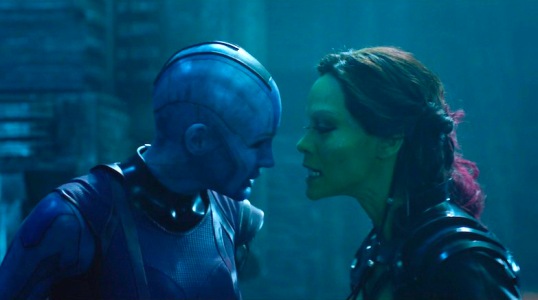
Gamora (Zoe Saldana) has been reunited with her sister, Nebula (Karen Gilliam) and, once again, they spend most of the movie trying to kill each other. I have three older sisters so I related to their relationship.
And finally, Drax (Dave Bautista) is still mourning his family. Fortunately, he gets to spend some quality time with Ego’s odd assistant, an empath named Mantis (Pom Klementieff). Drax and Mantis both have no idea how social interaction is supposed to work and their scenes together are definitely a highlight of the film. Bautista and Klementieff share a really likable chemistry. Bautista is one of those actors who can make you laugh just be giving the camera a quizzical look. Drax may not be as a complicated as the other Guardians but that simplicity often makes him as interesting as his more complex compatriots.
The film’s not only about family. It’s also a strike against elitism and a celebration for freedom. Over the course of two films, the Guardians have battled against both an actual god and a fanatic who claimed to speak for God. At a time when so many movie heroes are tools of authoritarianism, the Guardians of the Galaxy stand for freedom. In many ways, Peter Quill is as much of a symbol for liberty as Captain America. Captain America makes his point with a shield while Peter Quill makes his case by dancing.
As might be expected from an MCU film, Guardians of the Galaxy Volume 2 is full of thrilling visuals, exciting battles, and quotable one liners. Even if it never reaches the heights of the first one, it’s a blast of a film and, as Arleigh told me it would, the finale brought tears to my mismatched eyes. See it and have a good time.
Also, be sure to stick around through the entire end credits. Along with a lot of clues about what might happen in the future of the MCU, there’s also one final Groot joke that made me laugh out loud.
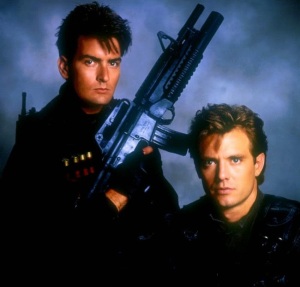
While rescuing hostages in the Middle East, a team of Navy SEALs discover that terrorist leader Ben Shaheed (Nicholas Kadi) has a warehouse full of stinger missiles. Hawkins (Charlie Sheen) wants to destroy the missiles but his superior, Curran (Michael Biehn), orders him to concentrate on saving the hostages. As a result, Shaheed has time to move the missiles to another location. With the help of a Lebanese-American journalist (Joanne Whalley-Kilmer) and the CIA, the SEALs must now track down the new location and destroy the missiles before they are used by Shaheed’s organization.
Navy SEALs is mostly memorable for the amount of James Cameron alumni who appear in its cast. The cast not only features The Terminator‘s Michael Biehn and Rick Rossovich but Bill Paxton as well. Of course, the main star is Charlie Sheen, still technically a serious actor at the time, who gives a wide-eyed and histrionic performance that suggests Hawkins may have snorted a little marching powder before reporting for duty. 24‘s Dennis Haysbert plays a SEAL who is engaged to marry Law & Order‘s S. Epatha Merkerson. Haysbert spends so much time planning his wedding and talking about both the importance of both duty and love that the only shocking thing about his role is that he manages to survive half the movie before getting killed. Neither Val Kilmer nor Cary Elwes is in the cast, though it seems like they both should be.
Navy SEALs was a box office bust in 1990 but, after the death of Osama Bin Laden, it experienced a sudden upswing in popularity and even appeared on primetime television a few times. The scene where the SEALs blow off some steam by playing golf is a classic but, otherwise, this is a largely forgettable Top Gun rip off.

 Everyone knows who Al Capone was but few people remember Frank Nitti. Nicknamed “The Enforcer,” Nitti was Capone’s right-hand man. When Big Al was sent to federal prison for not paying his taxes, Nitti was the one who kept things going in Chicago. While Al was losing his mind in Florida, Nitti was the one who moved the Chicago Outfit away from prostitution and into the labor racket. Today, if anyone remembers Frank Nitti, it is probably because of the scene in Brian DePalma’s The Untouchables where Eliot Ness tosses him off of a building. In real life, Nitti survived the Untouchable era just to become one of the few crime bosses to die by his own hand. In 1943, With the feds closing in on him, Nitti shot himself in a Chicago rail yard.
 Scott Wolf plays Clyde, a nerdy high school student who has a go-nowhere job at a burger place. Maureen Flannigan, best known for starring in Out Of This World, is Bonnie, who likes to steal stuff and have fun. Unfortunately, Bonnie’s father (played by Tom Bower) is not an avuncular alien who sounds like Burt Reynolds. Instead, he’s the extremely strict and controlling police commissioner of their hometown. Clyde like Bonnie but Bonnie wants nothing to do with him. It’s not until Clyde spies Bonnie shoplifting in a record store that he realizes that larceny is the key to her heat. When Clyde steals a van and Bonnie steals her father’s guns, the two of them head for Mexico, robbing banks, shooting guns, making love (which, judging from the comments I have found online, is the main reason the film found an audience once it started showing up on HBO) and becoming media celebrities along the way.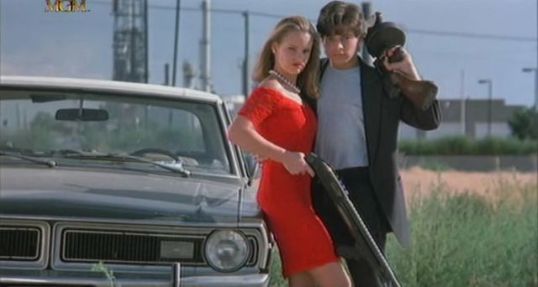

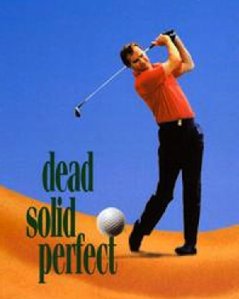 Based on a novel by veteran sports writer Dan Jenkins, Dead Solid Perfect takes an episodic look at a year on the PGA tour. Kenny Lee (Randy Quaid) is a good but aging golfer who wants to finally have his time in the spotlight. His sponsor (Jack Warden) is an eccentric old racist. His girlfriend (Corinne Bohrer, who has a lengthy scene where she walks naked down hotel hallway while carrying an ice bucket) isn’t looking for a commitment while his wife (Kathryn Harrold) is getting sick of his emotional immaturity. Kenny Lee just wants to hit the perfect shot.