Way back in January, when I first heard about To The Bone, I had high hopes for it.
After all, To The Bone was the directorial debut of Marti Noxon, who is well-known both for her work on Buffy the Vampire Slayer and for co-creating Unreal. To The Bone was reportedly based on Noxon’s own struggle with an eating disorder and it was said to feature an outstanding lead performance from Lily Collins as an artist struggling with anorexia. Even the casting of Keanu Reeves as a doctor sounded intriguing.
And, to me, it didn’t matter that To The Bone got mixed reviews at Sundance. Who would seriously expect critics, especially male critics, to understand a movie about body issues and eating disorders? When I heard that To The Bone had been purchased by Netflix, I did sigh a little. Far too often, Netflix is where good films end up getting lost in a sea of mediocre offering. But then again, perhaps To The Bone was exactly the type of intimate character study that would actually benefit from being viewed on a small screen. After all, it’s not a film about a bunch of space lizard attacking the great wall of China. It’s a film about a young woman struggling with an eating disorder.
When Netflix finally released To The Bone back in July, I was excited.
Then I actually watched the movie.
To The Bone actually gets off to a pretty good start. The first 20 minutes or so are dedicated to establishing who Ellie (Lily Collins) is. She’s 20 years old. She’s smart. She’s sarcastic. She’s an artist. She’s a college dropout who apparently used to have a very popular tumblr that dealt with being thin. She’s also anorexic and, from the first minute that we see her, Ellie looks like she’s on the verge of death. (To the film’s credit, it makes clear that there is a huge difference between being naturally thin and being anorexic. That’s a distinction that is far too often overlooked.) We meet Ellie’s dysfunctional family: her frustrated stepmother (Carrie Preston), the father who often can’t be bothered, and the half-sister (Liana Liberato) who both loves and resents her. The relationship between the two sisters is especially well-handled. Even if it takes a while to get used to Keanu Reeves playing a compassionate but tough-talking doctor, the film still works during his first few scenes.
Then, Ellie joins Reeves’s inpatient program and moved into a house with six other patients and this is where the film started to annoy me. Ellie is such a well-drawn and well-acted character that it makes it all the more obvious that the rest of the patients are not. Instead, the rest of the patients are all easily identifiable types. As soon as they show up on screen, you know everything about them and you know exactly what is going to happen to each and every one of them. From the minute that Ellie reluctantly steps into that house, To The Bone starts to feel less like an honest look at anorexia and more like a well-meaning and predictable PSA. One of the patients is pregnant and always talk about how worried she is that her eating disorder is going to lead to her losing the baby. Can you guess what happens?
And then there’s Luke (Alex Sharp). Luke is the ballet dancer who is recovering from a knee injury. As soon as I saw that Luke was the only male in the house, I knew that he was destined to eventually declare his love for Ellie. But my problem with Luke has less to do with his predictable character arc and more to do with just how annoying a character he is. Luke is relentlessly upbeat. Luke constantly tells corny jokes. Luke just will not stop talking! When Luke leaves a room, he starts singing a song called Sugar Blues. When Luke reenters a room, he is still singing Sugar Blues. SHUT UP, LUKE!
(Whenever Ellie would visit Luke in his room, I would find myself distracted by the posters on his wall. The majority of them said “Jazz Festival” and featured some saxophone clipart. As strange as it may sound, it really started to annoy me that there was no date or location listed. Why would you go through all the trouble of making — or buying, for that matter — a poster for a jazz festival and then not bother to include a date or a location? That may sound like a minor thing but, as I watched the film, that inauthentic poster came to represent everything that felt inauthentic about Luke as a character.)
I guess the main problem with To The Bone is that it never succeeds in convincing us that the inpatient program is actually going to do any good for Ellie. It’s not for lack of trying. However, the scenes in the house are too overwrought and predictably scripted. There’s a scene where Reeves takes the patients on a field trip and it’s supposed to be inspiring but it doesn’t work because, as a first-time director, Noxon doesn’t trust her material enough to allow us to draw our own conclusions. Instead, she beats us over the head with her message. For To The Bone to work, it needed a director like Andrea Arnold, someone who specializes in a naturalistic performances and who is willing to embrace ambiguity and take the time to let a scene play out. Noxon makes the mistake of not trusting her audience to draw the right conclusion and, as a result, To The Bone goes from being an intriguing character study to being the cinematic equivalent of the last 15 minutes of an episode of Intervention.
Though it all, Lily Collins continues to give a good performance. Even when she’s forced to deliver some unfortunate dialogue, she’s the best thing about To The Bone. Unfortunately, the rest of this movie just collapses around her.

Jazz Festival

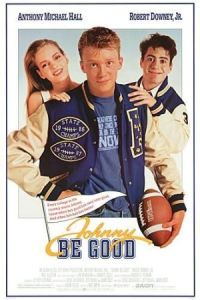 Johnny Walker (Anthony Michael Hall) may be the best high school quarterback in the country but he has a difficult choice to make. He promised his girlfriend, Georgia (Uma Thurman), that he would go to the local state college with her but every other university in the country wants him. (Even legendary sportscaster Howard Cosell calls Johnny and advises him to go to an Ivy League college.) As Johnny tours universities across the country, he faces every temptation. By the time he makes his decision, will Johnny still be good?
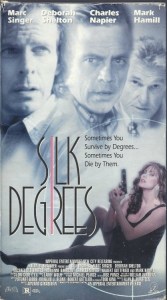 Actress Alex Ramsey (Deborah Shelton) may have become a star as a result of playing the lead role in a cop show but she still worries that her show is not realistic enough. When a fight with her director (Gilbert Gottfried) leads to her walking off the set for the hundredth time, Alex stumbles across a real-life murder. Now being chased by terrorists and gun smugglers, Alex is forced to go into hiding. FBI agent Baker (Marc Singer) is assigned to protect her but how can he hide one of the most famous women in America, especially one who does not appreciate being told what to do? Making things even worse, there is a traitor in the bureau. Shelton is going to have to use all of her tv crime-fighting skills to survive.


 How do you solve a crime in a society that refuses to admit that crime exists?
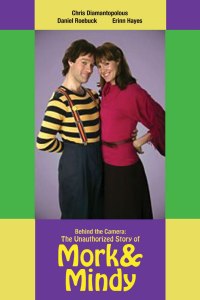 The year is 1978. A television producer named Garry Marshall (Daniel Roebuck) teaches America how to laugh again by casting Pam Dawber (Erinn Hayes) and a hyperactive stand-up comedian named Robin Williams (Chris Diamantopoulos) in a sitcom about an alien struggling to understand humanity. Despite constant network interference, the show makes Robin a star but, with stardom, comes all the usual temptations: lust, gluttony, greed, pride, envy, wrath, and John Belushi.