The Allman Brothers Band, as accomplished and acclaimed as they were, seem to not have the garnered the same attention with the younger generations like their contemporaries such as Lynyrd Skynyrd, Kansas, Creedence Clearwater Revival, etc. It’s a shame really since they were probably the greatest band to come out of the southern rock scene.
Led by frontman Gregg Allman with the mythical Duane Allman and Dickey Betts bookending him as duo lead guitarists, The Allman Brothers Band came onto the scene with their mixture of blues-inspired rock and that southern flavor (almost a touch of the bluegrass and country) that left such a huge with rock listeners during the late 60’s and throughout the 1970’s. Their signature song will always be the ever-present “Whipping Post” where anyone wanting to take up the guitar will hear the genius slide-guitar playing of Duane Allman (dying at the age of 24 and cementing his spot in rock legend lore).
Yet, Dickey Betts also had his time to shine as Duane’s partner-in-crime and this is more than evident on his work in the band’s track “Ramblin’ Man” released in 1973 which in itself inspired by the Hank Williams song of the same name. “Ramblin’ Man” is one of the band’s more country-sounding song, but it’s blues rock foundation comes to the forefront with Dickey Betts performing the outro guitar solo to finish off the song.
While Duane Allman’s death in 1971 could’ve been the death knell to this rising band, it powered through this tragedy and more than a little help from Duane’s guitar-mate Dickey Betts.
Ramblin’ Man
Lord, I was born a ramblin’ man, Tryin’ to make a livin’ and doin’ the best I can. And when it’s time for leavin’, I hope you’ll understand, That I was born a ramblin’ man.
My father was a gambler down in Georgia, And he wound up on the wrong end of a gun. And I was born in the back seat of a Greyhound bus Rollin’ down highway 41.
Lord, I was born a ramblin’ man, Tryin’ to make a livin’ and doin’ the best I can. And when it’s time for leavin’, I hope you’ll understand, That I was born a ramblin’ man.
[Interlude]
I’m on my way to New Orleans this mornin’, Leaving out of Nashville, Tennessee, They’re always having a good time down on the bayou, Lord Them Delta women think the world of me.
Lord, I was born a ramblin’ man, Tryin’ to make a livin’ and doin’ the best I can. And when it’s time for leavin’, I hope you’ll understand, That I was born a ramblin’ man.
[Repeat and Fade] Lord, I was born a ramblin’ man…
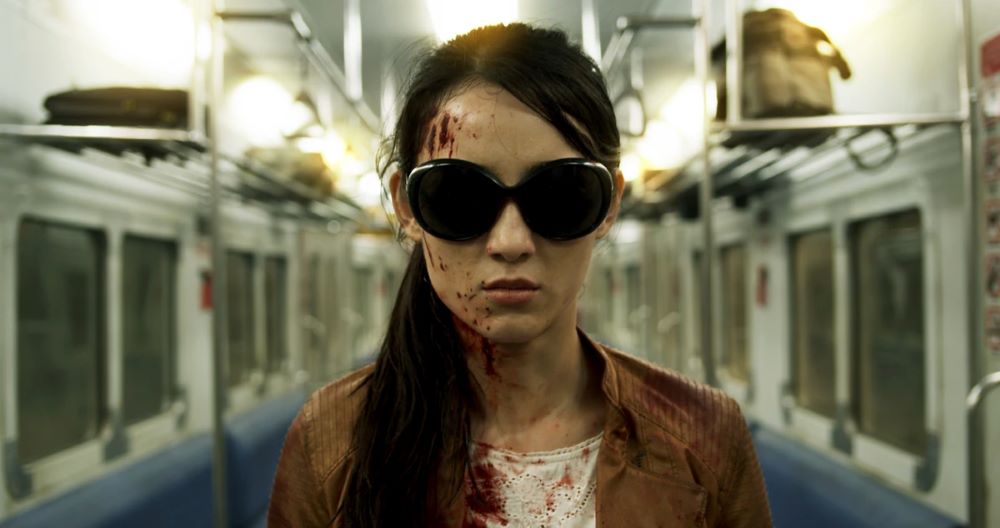
Yesterday, I highlighted one of my more recent guilty pleasures, Timu Tjahjanto’s unhinged action thriller The Night Comes for Us, and today I highlight an action scene from an earlier film that helped propel Indonesia’s action film scene to most Westerners with a little sequence from Gareth Edwards’ The Raid 2. A sequel to his own earlier film, The Raid.
This sequence stars the character only known as Hammer Girl and played Julie Estelle who is also in The Night Comes for Us. I would’ve picked her scene from that film to highlight but it spoils a major part of the film so I decided on this scene in The Raid 2 that got her noticed with action film aficionados worldwide.
It’s a simple set-up. Girl with two claw hammers in a crowded train silently squares up against a train car full of yakuza members. What comes next is a masterclass in action choreography that induces many a visceral response form the viewer yet hard to look away from.
Some of the most inventive action films have been coming out of Southeast Asia these past 20 or so years. It was led by the very entertaining and brutal actions films headlined by martial artist turned action star Tony Jaa from Thailand then followed up by Indonesian action star Iko Uwais from The Raid series by Welsh director Gareth Edwards.
In 2018, Netflix bought the distribution rights for an Indonesian action thriller from director Timo Tjahjanto that starred the aforementioned Iko Uwais, Joe Taslim, Julie Estelle and a who’s who of Indonesia’s acting scene. At first glance, The Night Comes for Us looked to cash-in o the popularity of Gareth Edwards’ The Raid series, but one would be both mistaken and remiss to think such a thing.
The Night Comes for Us looked at Edwards’ The Raid duology and thought to itself that the action wasn’t brutal and visceral enough so decided to rectify that missed opportunity. Timo Tjahjanto took what he learned from his past work on horror films and decided to add some of those visual storytelling techniques to an action film that one would either have a hard time to sit through while viewing or just gobble with up with glee.
Guilty pleasure doesn’t mean the film has to be cheaply made or seen as being bad it’s good type of thing. I always thought that its something that one enjoyed despite knowing that there’s many out there who would look at someone askance for enjoying such a low-brow affair. The Night Comes for Us is both visually stunning in its production yet still has that low-down, grungy feel to it that harkens back to the hey day of grindhouse films of the 70’s and early 80’s. The only thing missing from this film was film grain imperfections such as film scratches and flaws to give it that 42nd street, NYC movie theater circa 1970’s experience (stale, days old popcorn and sticky floors included).
This film has it all and it has it in such abundance that one might just forgive Timo Tjahjanto for overdoing things when it came to the brutal violence that in years past would’ve earned it the dreaded XXX thus endearing it to the grindhouse crowd. The film actually opens up and ends in one of the few calm and introspective scenes with everything else in-between just straight up violence both hand-to-hand and gun variety. The Night Comes for Us is the film version of that saying “it woke up and chose violence.”
Joe Taslim headlines the film and he gives such a visceral and unhinged performance that one would be forgiven for mistaking his character as the villain if seeing the film in the middle after missing the beginning. Iko Uwais usually plays the reluctant hero in his previous films, but gets to let loose in a more antagonist role that more than matches Taslim when the two finally square off each other. The other stand-out performance to highlight would be Julie Estelle as The Operator who can throw down just as extreme as the men and, in fact, her fight scenes are pretty much the most brutal in the whole film and that is saying a lot.
So yeah, The Night Comes for Us, go see it and be horrified and/or amazed in equal measure. I guarantee that even if you hate the experience you won’t say that it was ever boring or bland.
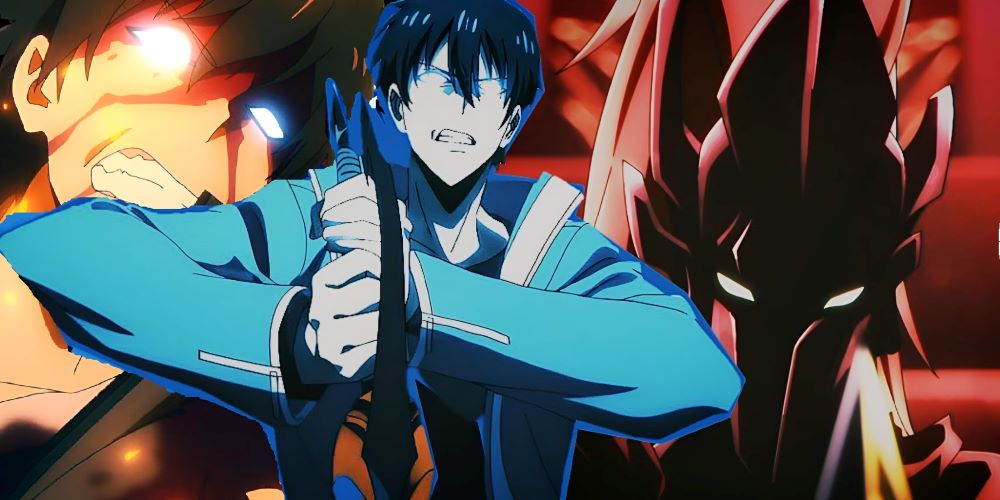
Latest AMV of the Day comes courtesy of AMV creator ABOKAI and its all about Jin-woo of the anime series Solo Leveling. I know some anime purists don’t like watching anime adaptations of Korean manwha (South Korean version of Japanese manga). I can take it or leave it since there’s not many examples of such adaptations though I have read quite a few Korean webtoons that were expanded into more official manwha.
Solo Leveling is one of the better Korean manwha and its follows the long-standing and well-utilized power fantasy of Japanese shonen manga. Jin-woo is one such MC whose rise from lowly nobody to OP main character was best shown in the one of the main fight sequences in the first season of Solo Leveling.
ABOKAI does a great job of editing the fight sequences to match the energy of the song by South Korean kpop girl group NewJeans. The song itself, titled GODS, was the anthem for the League of Legends World 2023.
Solo Leveling just premiered its second season and this AMV just a good way to remember just how action-packed this series is.
“For you, all lives are created equal. That’s why I came back to life. But you’ve finally come to realize it now, haven’t you? Only one thing is equal for all, and that is death.” — Johan Liebert
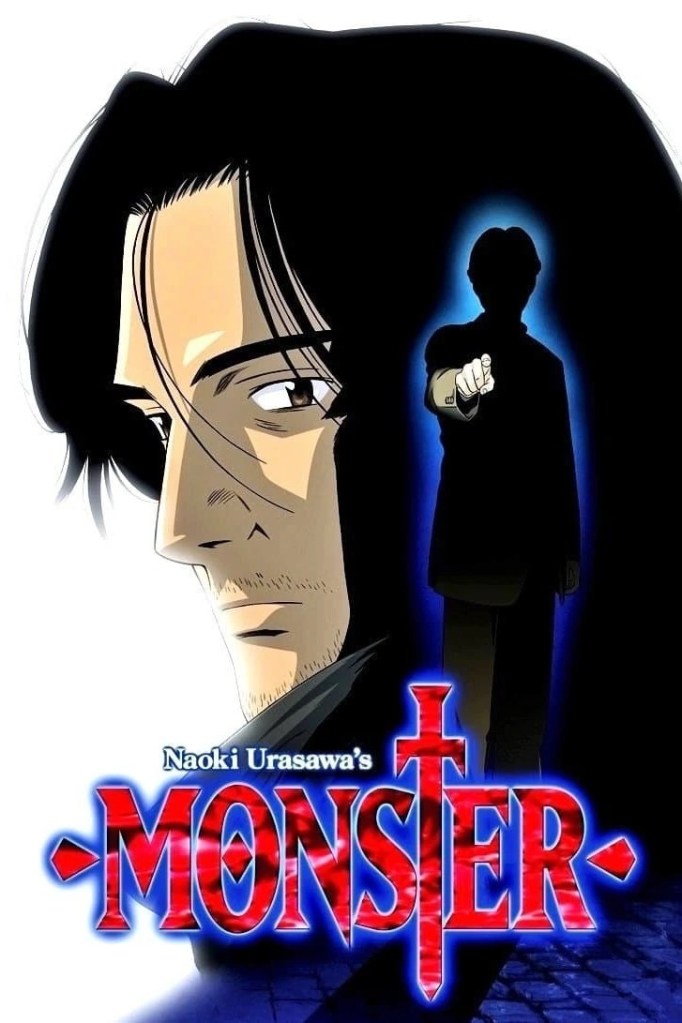
Naoki Urasawa’s MONSTER stands as one of the most accomplished psychological thrillers not just in manga, but in modern storytelling as a whole. Widely regarded as one of the greatest mangaka, Urasawa has built a reputation for crafting deeply human narratives that transcend genre boundaries. While his works span science fiction (20th Century Boys), sports (Happy!), and beyond, MONSTER represents perhaps his most fully realized exploration of morality, identity, and the fragile line between good and evil. Both the original manga (1998–2001) and its anime adaptation (2004–2005) serve as masterclasses in long-form storytelling, though each medium offers a slightly different experience in how these themes are conveyed.
At its core, MONSTER is a story about moral responsibility and the consequences of choice. Dr. Kenzo Tenma’s fateful decision to save the life of a young boy—who would grow up to become the enigmatic and terrifying Johan Liebert—forms the backbone of the narrative. What begins as an ethical stand against institutional corruption evolves into a haunting question: can a single act of good inadvertently unleash unimaginable evil? Urasawa refuses to offer easy answers. Instead, he constructs a world where morality is rarely absolute, and where even the most well-intentioned actions can ripple outward in unforeseen ways.
Johan himself is less a conventional antagonist and more an embodiment of philosophical dread. He represents the void—the idea that human identity can be hollowed out, shaped, or even erased entirely. Throughout the series, Urasawa interrogates whether evil is innate or constructed. Is Johan born a “monster,” or is he the product of trauma, manipulation, and systemic failure? This ambiguity is central to the story’s power. Unlike many thrillers that seek to explain or rationalize their villains, MONSTER leans into discomfort, suggesting that some truths may be fundamentally unknowable.
Another key theme is the search for identity, particularly in the aftermath of trauma. Characters across the narrative grapple with fractured pasts, false names, and reconstructed selves. Nina Fortner (Anna Liebert) serves as a compelling counterpoint to Johan—someone who has endured similar horrors but struggles toward healing rather than destruction. Through her and others, Urasawa presents identity not as something fixed, but as something constantly negotiated. Memory, in this context, becomes both a burden and a battleground. To remember is to risk pain; to forget is to risk losing oneself entirely.
The manga’s strength lies in how patiently and meticulously it develops these ideas. Urasawa’s paneling, pacing, and use of silence create a reading experience that feels almost surgical in its precision. He allows tension to build gradually, often dedicating entire chapters to side characters whose lives intersect with the central narrative in unexpected ways. These detours are not distractions but essential threads that reinforce the story’s thematic tapestry. They emphasize that MONSTER is not just about Tenma and Johan, but about a broader human landscape shaped by fear, ideology, and history—particularly the lingering shadows of post-Cold War Europe.
When Madhouse adapted MONSTER into an anime, the primary challenge was translating this deliberate pacing and narrative density into a different medium without losing its essence. Many adaptations of complex manga falter by condensing material or prioritizing spectacle over substance. MONSTER, however, takes the opposite approach. Spanning 74 episodes, the anime commits itself to a remarkably faithful retelling, often recreating scenes from the manga with near shot-for-shot accuracy.
This fidelity is both the anime’s greatest strength and, depending on the viewer, a potential limitation. On one hand, it preserves the integrity of Urasawa’s storytelling. The slow-burn pacing remains intact, allowing tension and atmosphere to develop organically. The anime resists the temptation to sensationalize its material, maintaining the grounded, almost clinical tone that defines the manga. On the other hand, this adherence means that the anime inherits the same demands it places on its audience. It requires patience, attention, and a willingness to sit with ambiguity—qualities that are increasingly rare in more fast-paced, contemporary anime.
Where the anime distinguishes itself is in its use of audiovisual elements to enhance the story’s emotional and psychological impact. The soundtrack, composed by Kuniaki Haishima, is particularly effective in reinforcing the series’ eerie, unsettling tone. Subtle musical cues and ambient sound design heighten tension in ways that static panels cannot. Silence, too, is used masterfully—moments of quiet often feel heavier and more oppressive when experienced in real time.
Voice acting further deepens character portrayal, especially in Johan’s case. His calm, almost hypnotic delivery adds an additional layer of menace that complements the manga’s more interpretive presentation. Similarly, Tenma’s internal conflict becomes more immediate and visceral when expressed through performance rather than internal monologue. These elements collectively make the anime a more immersive sensory experience, even as it mirrors the manga’s narrative structure.
Visually, the adaptation remains grounded and realistic, avoiding the exaggerated stylistic flourishes common in other anime. This restraint works in its favor, reinforcing the story’s mature tone. The European settings are depicted with care and authenticity, contributing to a sense of place that is crucial to the narrative. While the animation itself may not be as dynamic or visually striking as other series, it is consistently purposeful, prioritizing mood and clarity over spectacle.
In comparing the two, it becomes clear that the manga and anime function less as competing versions and more as complementary experiences. The manga offers a slightly more intimate engagement, allowing readers to control pacing and linger on specific panels or moments. Its visual storytelling invites interpretation, particularly in how it frames Johan’s presence—or absence—within a scene. The anime, by contrast, provides a more guided experience, using sound, timing, and performance to shape the viewer’s emotional response.
Ultimately, the success of the MONSTER anime lies in its restraint. Rather than attempting to reinterpret or modernize the source material, it recognizes the strength of Urasawa’s original vision and commits to preserving it. This makes it one of the rare adaptations that can stand alongside its source as an equal, rather than merely a derivative work.
MONSTER endures because it refuses to offer comfort. It challenges its audience to confront unsettling questions about human nature, morality, and the structures that shape our lives. Whether experienced through the manga or the anime, it remains a deeply affecting work—one that lingers long after its final moments. The anime may not surpass the manga in every respect, but it honors it with a level of care and seriousness that is all too rare, solidifying MONSTER as a benchmark for what adaptations can and should strive to be.
There’s a saying amongst creatives that those “who can, do; those who can’t, teach”.
That label definitely doesn’t pertain to Joe Satriani. Not only is he one of rock’s greatest guitarists but he has also taught in one way or another some of the greatest rock and metal guitarists such as Alex Skolnick, Kirk Hammett, Stevie Vai and Larry LaLonde just to name a few.
Not just a genius on the guitar in a technical sense but also creatively as well. He has mastered many of the electric guitar techniques that’s become commonplace with guitarists in the rock and metal scene. Influenced by other greats such as Jimi Hendrix, Jeff Beck, Jimmy Page, Eric Clapton and Brian May, his many work shows some background in his fusion of jazz and rock that clearly makes him one of rocks virtuoso who stand amongst the Mount Rushmore of greats.
Just listen to “Satch Boogie” with special emphasis a the 1:50 mark.
The first official trailer for the return of Daredevil to the small screen has finally been released by Marvel Television (a part of Marvel Studios). Daredevil: Born Again will finally and officially be the homecoming of the live-action Daredevil character that many fans have been clamoring for. Disney is finally embracing the Netflix Marvel shows as part of the MCU (they ignored the ABC/Netflix Marvel shows like they were something one found under their shoes).
Charlie Cox is back as Matt Murdock aka Daredevil, The Man With No Fear. Vincent D’Onofrio is also back as his arch nemesis Wilson Fisk aka The Kingpin. Pretty much the rest of the cast of the Netflix Daredevil show and its many spin-offs are back, as well.
There was some major fears and trepidations from fans of those shows that Disney will water down the mature-aspect of those shows in order to have them on Disney+. The fact that Kevin Feige and his braintrust at Marvel Studios made a major overhaul of the shows creative team six-episodes in of the shows production to start anew tells me that the initial plan to make the show more lighthearted didn’t so well when reviewed by the powers-that-be. So, after some many months of major reshoots, change in showrunner and directors, we now see a taste of that pivot away from the studio’s original plan.
Daredevil: Born Again trailer channels the original Netflix series’ serious and mature tone. Even the fear that the violence of the original series would be water-downed could be put to rest. Daredevil: Born Again definitely is for mature-audiences only.
The Marvel Cinematic Universe hasn’t has many hits since the end of Avengers: End Game, but this trailer (hopefully just a hint of what to expect when the show comes out) is a right step in the direction of righting the MCU ship, because the pop-culture landscape is much better when its tentpole franchises are working perfectly on all cylinders rather than not.
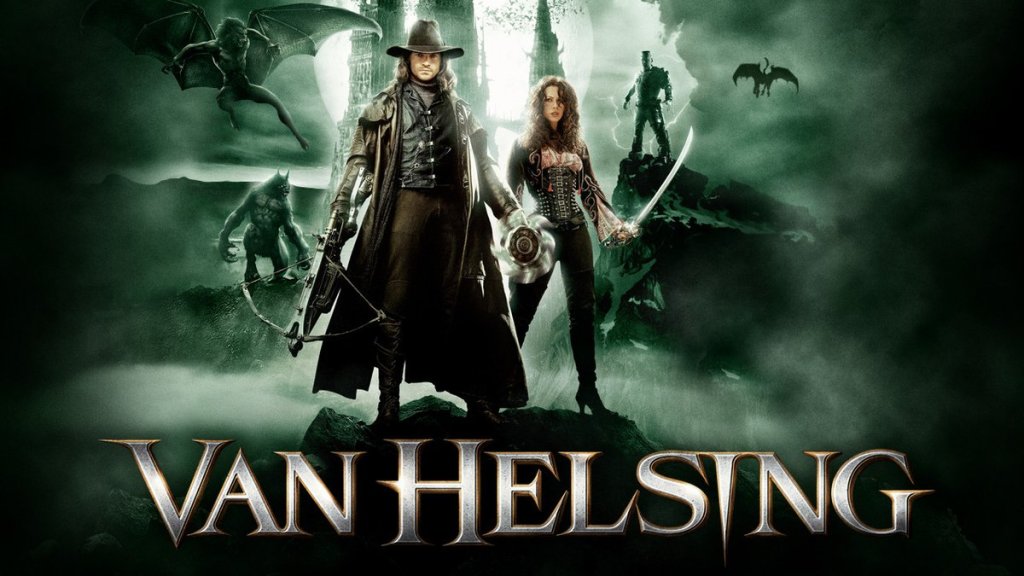
What can I say about this 2004 action horror film that can do it justice at just how it perfectly represent what I call a “guilty pleasure”.
Van Helsing by Stephen Sommers (him being at his most Stephen Sommersist) was suppose to be a new action franchise with Hugh Jackman as it’s lead. One must remember that in 2004, Hugh Jackman was still at the height of his popularity as an action star with roles as Wolverine in the X-Men film franchise and, in another guilty pleasure of mine, Swordfish.
This film was suppose to catapult him to the stratosphere and taking the action star role from aging ones such as Arnold Schwarzenneger, Sylvester Stallone and Bruce Willis. Instead Stephen Sommers reached for that brass ring and failed, but did so with a mish-mash of horror properties blended haphazardly to give us a film that tried to be too much yet also not enough.
Hugh Jackman in the title role was more than game to try and prop up the film’s convoluted plot. Kate Beckinsale was stunning as usual and hamming it up in what I could only guess is here version of a Transylvanian accent. Even Richard Roxbrough in the role of Dracula, miscast as he seem to be in the role, gave a campy and scenery-chewing performance that his performance went past bad and circled back to being entertaining.
Yet, for all its flaws, I actually enjoy Van Helsing for what it was and that was a modern version of those Abbott and Costello mash-up with the Universal horror characters of the 40’s and 50’s. One cannot mistake this film on the same level as Nosferatu (Murnau, Herzog and Eggers versions) and Sommers definitely cannot be mistake for the three auteurs who had their own take on the abovementioned film. But Sommers does make thrilling, though some would say repetitive, action films.
Did I turn my brain off watching Van Helsing?
I sure did, but it still didn’t stop me from being entertained…and I cannot ever sat anything bad about a film with Kate Beckinsale in a tight black-red leather corset. It’s against some sort of law to do so.
Here’s a new AMV to usher in my return (hopefully for much longer than before).
Song: Blinding Lights by The Weeknd
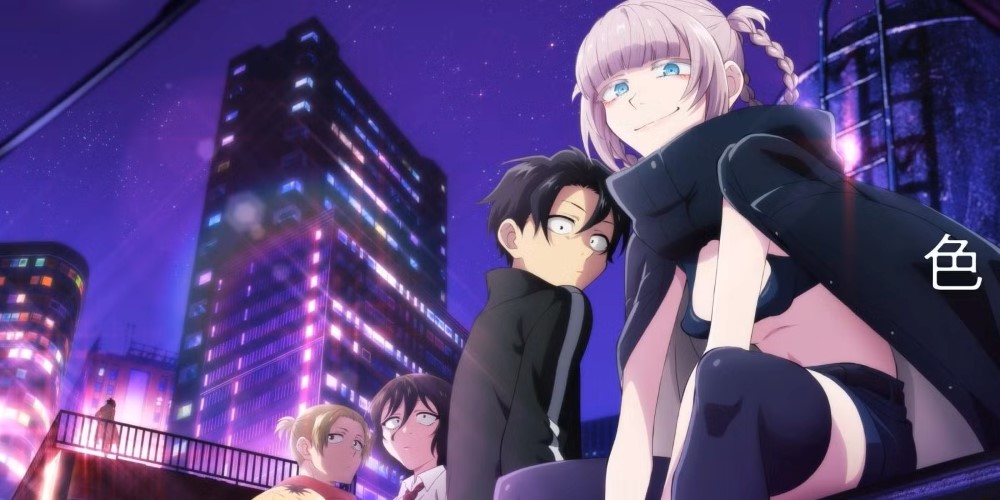
Anime: Call of the Night (Yofukashi no Uta)
Creator:Pyrothemusical (As always, if you enjoyed this video, we encourage you to subscribe to the creator’s channel and give them lots of likes and nice comments)
There’s something to say about an individual who follows a code of behavior and has a moral compass that may seem archaic for today’s sensibilities, but when one really thinks about it…well, they’re not wrong.
We may hate that such people may be correct in their way of thinking and that it may offend certain sensibilities but that doesn’t necessarily means its wrong.
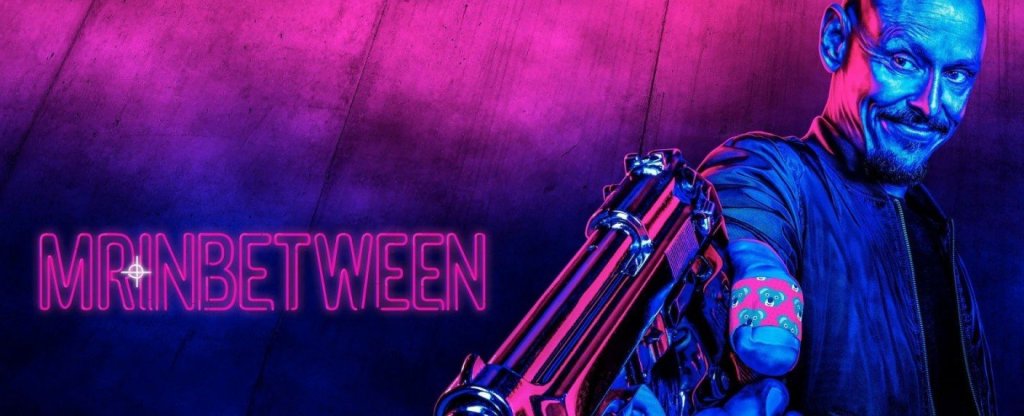
And on that note let me introduce you to Ray Shoesmith aka Mr Inbetween. This scene of him attending an anger management class best describes not just who Ray is but sets the tone for what this series is all about.




 Through the Shattered Lens