Horror Film Review: Curse of the Stone Hand (dir by Jerry Warren, Carlos Hugh Christensen, and Carlos Schlieper)


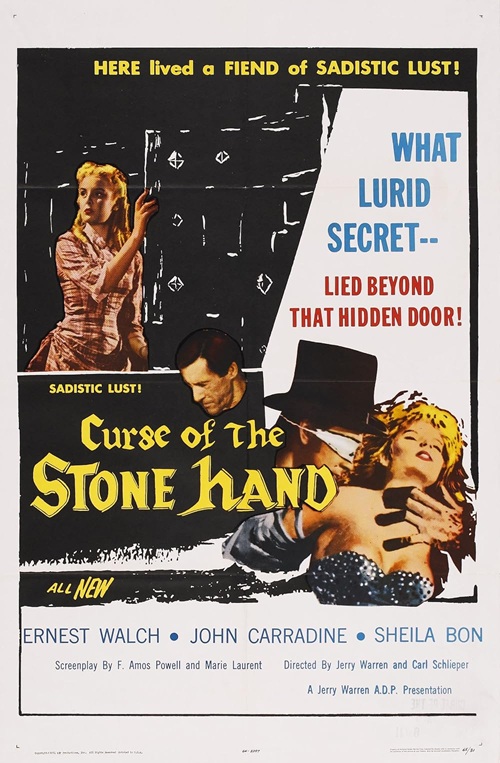
In 1965’s Curse of the Stone Hand, a dilapidated mansion sits deserted. Two men explore the grounds of the estate and one of them mentions that this house was once the finest in “Kent” but now the locals feel that it is cursed. There are mysterious stone sculptures of hands throughout the house. Some inhabitants think that the hands are the source of the curse. The first inhabitant of the house was a degenerate gambler named Robert Braun (Carlos Cores), who gambled himself into debt and, as a result, joined the Suicide Club as a way to try to win back his money. The hands, we are told, are somehow to blame for this, though it sounds like it’s more of a case of Robert needing to join Gamblers Anonymous. Once Robert was no longer in the house, the estate was claimed by another rich family. The family’s son was a sadist who had the power of hypnotism, which he used to torment his sister’s fiancé. Again, in my opinion, it’s open to debate as to whether or not the hands are to blame. To me, it seems more likely that the hypnotist is just a spoiled wastrel who wasn’t properly raised by his parents. The message seems to be less “Beware of the hands” and more “Don’t let your child grow up to be a hypnotist.”

If all of this sounds disjointed, that’s because it is. American film distributor Jerry Warren purchased two Chilean films and then edited them together to form what would become Curse of the Stone Hand. He dubbed over the dialogue to create some false connections between the two films and then he shot a few extra scenes with Katherine Victor and John Carradine. Victor and Carradine served to provide exposition, filling in the blanks that had been created by Warren’s mash-up. John Carradine’s character is especially interesting because he’s credited as being “The Old Drunk” but his character doesn’t ever appear to be drunk. Instead, he appears to just be one of the many people who works on the estate and who has opinions about the family that lives there. Carradine only has about two minutes of screen time. (Of course, Jerry Warren gave him top billing.) He’s not onscreen long enough to really give a performance that could be considered either good or bad. That said, it’s impossible not to smile whenever John Carradine shows up in one of these films. It’s always a little amusing how John Carradine effortlessly went back and forth from working with John Ford to working with people like Jerry Warren. Before there was Eric Roberts, there was John Carradine.

Curse of the Stone Hand is pretty much an incoherent film. It’s possible that the original Chilean films were good. Some of the shots do feature a bit of atmosphere. But, ultimately, it’s impossible to tell while watching this film, with its dubbed dialogue and its incomprehensible plot. That said, I’ll always have a spot in my heart for the shamelessness of filmmakers like Jerry Warren. Warren knew that you could get a lot out of a melodramatic title and a cameo from a name performer. Curse of the Stone Hand stands as a tribute to his never give up, never surrender spirit.
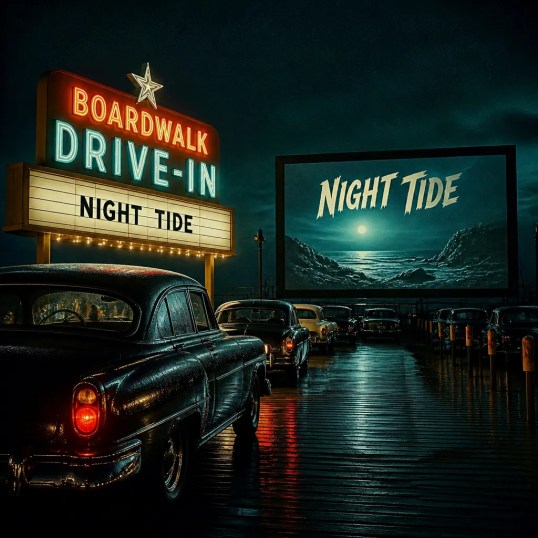
Bonus Horror On The Lens: Night Tide (dir by Curtis Harrington)


First released in 1961 and directed by Curtis Harrington, Night Tide stars a young Dennis Hopper as Johnny, an awkward sailor.  Johnny meets Mora (Linda Lawson), who works as a “mermaid” on the pier.  For Johnny, it’s love at first sight.  However, the more that Johnny pursues her, the more he learns about both her mysterious past and the dark fate of her previous boyfriends.

Night Tide is low-key and atmospheric gem of a movie, one that serve as an inspiration for low-budget filmmakers every where.  Lawson is perfectly cast as the enigmatic Mora but the film really belongs to Dennis Hopper.  Hopper’s naturally off-key presence made him perfect for the role of Johnny.

Night Tide is one of those low-budget movies that, because it’s in the public domain,  has been released on DVD (often in inferior form) by dozens of different companies.  Often times, films like this turn out to be fairly forgettable.  Night Tide, however, is an exception.

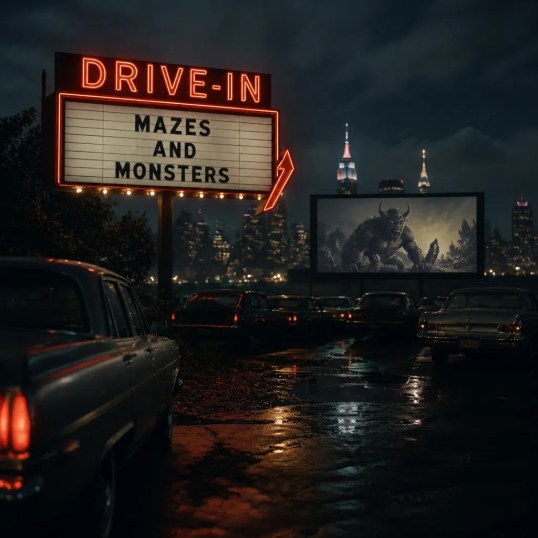
Horror On The Lens: Mazes and Monsters (dir by Steven Hilliard Stern)


Based on a best-seller by Rona Jaffe, 1982’s Mazes and Monsters tell the story of some college students who enjoy playing a game called…. well, Mazes and Monsters.  Now, I realize that Mazes and Monsters may sound a lot like Dungeons and Dragons but they are actually two separate games.  One game takes place in a dungeon.  The other takes place in maze, got it?

When the players decide to play the game in some nearby caves, it causes the newest member of the group (Tom Hanks — yes, Tom Hanks) to snap and become his character.  Convinced that he’s living in a world full of monsters and wizard, Hanks runs away to New York.  How does that go?  During a moment of clarity, Hanks calls his friends and wails, “There’s blood on my knife!”

It’s all fairly silly.  There was a moral panic going on about role playing games when this film was made and this film definitely leans into the panic.  But, in its own over-the-top way, it works.  If you’ve ever wanted to see Tom Hanks battle a big green lizard, this is the film for you.  And I defy anyone not to tear up a little during the final scene!

From 1982, here is Mazes and Monsters!   

Horror Song Of The Day: Dawn of the Dead Main Theme by Goblin


Dawn of the Dead (1978, dir by George Romero, DP: Michael Gornick)

Dario Argento not only produced and edited the European cut for 1978’s Dawn of the Dead, he also introduced George Romero to Goblin.  The Italian band, famous for their horror movie soundtracks, provided the classic score to Dawn of the Dead.

(Admittedly, the score is is used far more prominently in Argento’s cut of the film than in Romero’s.)

For today’s horror song of the day, here is Goblin’s Main Theme From Dawn of the Dead.

Horror Scenes That I Love: Lon Chaney Transforms Into The Wolfman


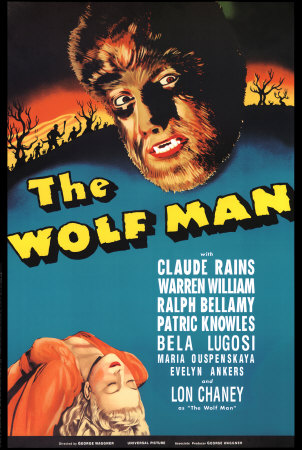
Today’s horror scene that I love comes from 1941’s The Wolf Man.  Watch as poor Larry Talbot transforms, for the first time, into The Wolf Man!  I’ll be the first to admit that, in the past, I’ve been pretty critical of Larry as a character and Lon Chaney, Jr.’s performance in the role.  But, in this scene, Chaney does an excellent job of capturing Larry’s helplessness as the curse takes effect for the first time.

4 Shots From 4 Horror Films: October 27th


4 Or More Shots From 4 Or More Films is just what it says it is, 4 shots from 4 of our favorite films. As opposed to the reviews and recaps that we usually post, 4 Shots From 4 Films lets the visuals do the talking!

4 Shots From 4 Horror Films

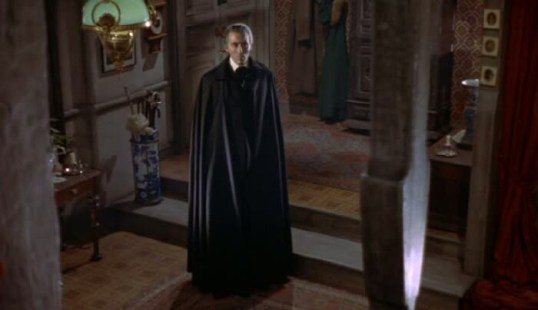
The Horror of Dracula (1958, dir by Terence Fisher, DP: Jack Asher)

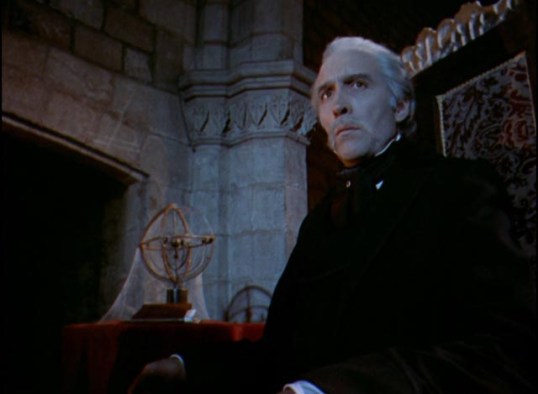
Count Dracula (1970, dir by Jess Franco, DP: Manuel Merino and Luciano Trasatti)

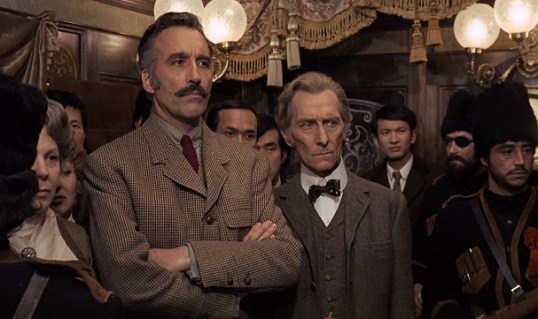
Horror Express (1972, dir by Eugenio Martin, DP: Alejandro Ulloa)

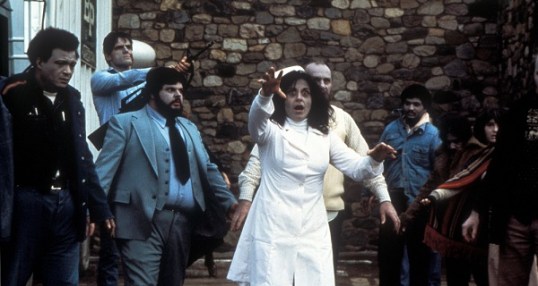
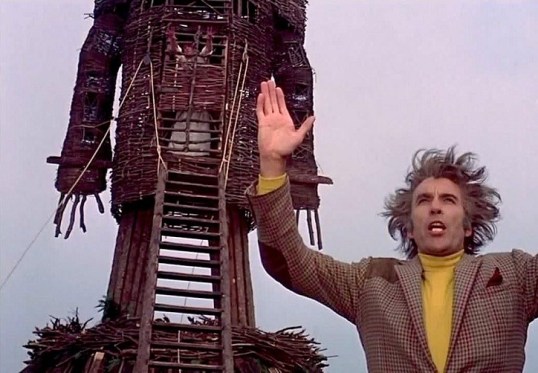
The Wicker Man (1973, dir by Robert Hardy. DP: Harry Waxman)

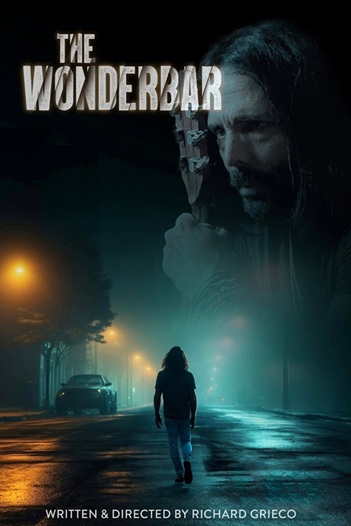
October Positivity: The Wonder Bar (dir by Richard Grieco)


Every year, for one night, former rock star Devon (Richard Grieco) dines at his favorite restaurant. He reserves and pays for every table so that he’ll be the only diner. The staff stays until he leaves. If he leaves early, they leave early. If he leaves late, they leave late. Devon demands that everything in the restaurant remain identical to the last time he ate there. If the restaurant has recently changed anything, it changes back for that one night. Devon always orders the same thing and, despite the fact that he’s alone, he always orders two meals: one for him and the other for his wife if she were still alive. Ever since she died, Devon has been living like a recluse, unable to perform his music or move on.

On the latest night, something unexpected happens. It rains, which it hasn’t done before. A mysterious woman shows up and delivers a cake to Devon. At first, Devon is paranoid, but soon he starts to drop his defenses. He talks to his waitress. He talks to the bartender. The conversation turns to death and the loneliness of being a survivor. Soon, they come up with an idea about how to comfort those who have recently lost a loved one.

The Wonder Bar, which was released earlier today, is an interesting film. It was directed by the film’s star, Richard Grieco, and the first half of the film takes place at the Wonder Bar Steakhouse in Clarksburg, West Virginia. It’s a lovely restaurant, and Grieco frames the scenes with the care of someone who truly seems to love the location. (Judging from this film and Clinton Road, Grieco appears to be a director with a surprisingly good eye for locations and an understanding of why it’s important to set your story in the exact right place.) The scenes at the steakhouse feel very much like a play, with the characters discussing the type of issues that we all think about but rarely discuss. The first half of the film feels very assured and, despite the inherent staginess of the concept, I found myself sincerely interested in both the characters and the location. The second half of the film, which moves the story out of the steakhouse, isn’t quite as strong because it actually deals with how the characters put their thoughts into action and, as we all know, it’s always easier to talk about our thoughts than to act on them. I didn’t completely buy the second half of the film, nor did I necessarily believe that everyone who interacted with Devon and his newfound friends would have quite the same positive reaction to them that they have in the film. That’s about as much as I can say without totally spoiling the plot.

That said, the first half of the film was nicely done and had a quiet power to it. It made me think about how I’ve been reacting to death over the past few years. And, of course, the restaurant was lovely.

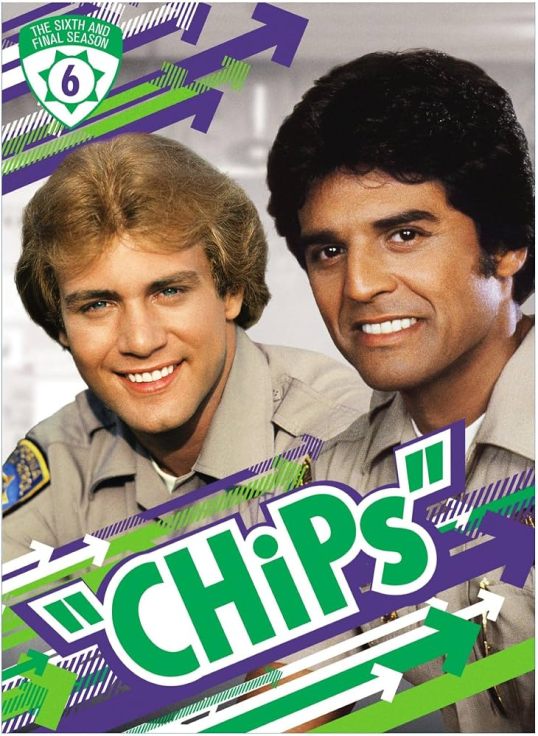
Late Night Retro Television Review: CHiPs 6.14 “Country Action”


Welcome to Late Night Retro Television Reviews, a feature where we review some of our favorite and least favorite shows of the past!  On Mondays, I will be reviewing CHiPs, which ran on NBC from 1977 to 1983.  The entire show is currently streaming on Prime!

This week, CHiPs goes country!

Episode 6.14 “Country Action”

(Dir by Charles Bail, originally aired on January 23rd, 1983)

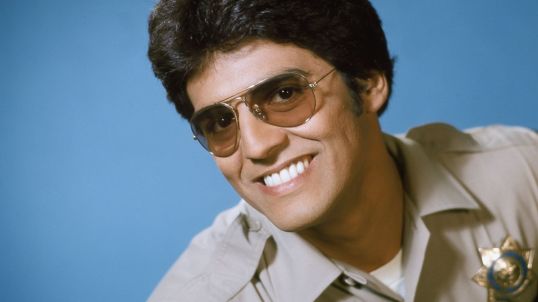
Skip Miller (Tom Engleman) is a cowboy who owns a orangutang.  He’s been hired to transport cattle but, after he’s injured in a highway accident, it’s revealed that the people who hired him were actually cattle rustlers!  Ponch and Bobby go undercover as cattle buyers.  Ponch also takes care of the orangutang, who may not be able to speak and who has terrible dental hygiene but who can identify the men who hired Skip.

How you react to this episode of CHiPs will depend on how much tolerance you have for country music and orangutangs.  The orangutang is played by Manis, who also co-starred in Every Which Way But Loose and Any Which Way You Can with Clint Eastwood.  Watch as Manis walks around CHP headquarters!  Thrill as Manis takes off on a motorcycle!  Try not to freak out every time Manis shows off her rotting teeth!  As for the country music, there’s a lot of it.  Every time Ponch and Bobby go to the local country-western bar, we have to hear at least one song.

Larry Wilcox probably would have been a good fit for this episode.  Officer Jon Baker grew up on a ranch and love animals.  As it is, Erik Estrada seems to resent having to share screentime with Mavis and Tom Reilly is as spacey as ever.  The folks behind the scenes were really running out of ideas.

Once again, Ponch does not mention the fact that his fiancée was recently killed by a drunk driver.  You would think he would have flashbacks at every accident scene.  Ponch, however, has moved on.


Horror on TV: Halloween Is Grinch Night (dir by Gerard Baldwin)


So, we all know that the Grinch once tried to steal to Christmas and then his heart grew a few sizes but did you know that apparently, the Grinch also tried to steal Halloween?

Until about 10 or 12 years ago, I did not.  I was going through YouTube, searching for horror films that I could share here on the Shattered Lens, and guess what I came across?

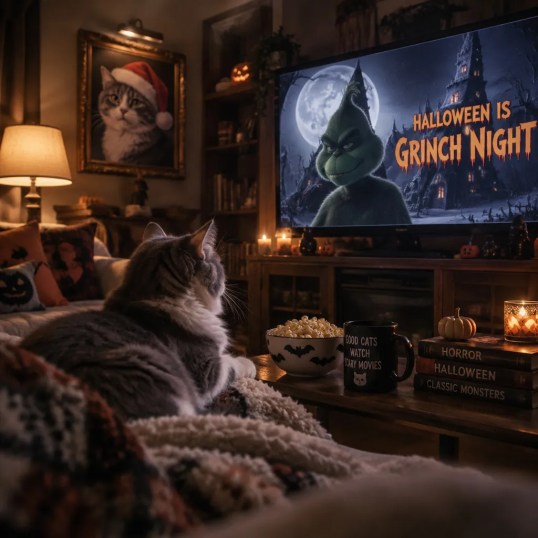
A TV special from 1977 entitled Halloween is Grinch Night!

Unlike How The Grinch Stole Christmas, Halloween is Grinch Night apparently never became a holiday classic.  Perhaps that’s because Halloween is Grinch Night is not exactly the most heart-warming of holiday specials.  Whereas How The Grinch Stole Christmas tells us about how the Grinch learned the true meaning of Christmas, Halloween is Grinch Night gives us a Grinch who has no redeeming features.  There is no hope for this Grinch.  This Grinch will steal your soul and probably drink your blood.  This Grinch is pure Grinchy evil.

This is the Grinch of our nightmares.

Check out Halloween is Grinch Night below and hope the Grinch doesn’t capture you this Halloween….