Welcome to Retro Television Reviews, a feature where we review some of our favorite and least favorite shows of the past! On Thursdays, I will be reviewing Police Squad!, which aired on ABC in 1982. The show can be found on Netflix!
This week, Frank Drebin investigates the fight game.
Episode 1.2 “Ring of Fear (A Dangerous Assignment”
(Dir by Joe Dante, originally aired on March 11th, 1982)
Gangster Montague Martin (Rudy Solari) is fixing fights all over the city and, after an up-and-coming boxer is murdered after refusing to take a dive, Detective Frank Drebin is going to do something about it. Drebin goes undercover as a boxing manager and, after a high-stakes poker game that is made all the more difficult by the fact that no one knows how to play poker, Drebin wins the contract of boxer Buddy Briggs (Patrick St. Esprit). Drebin visits Buddy in his run-down apartment and promises him that he’s going to get him out of “this sewer.” Cut to a scene of Drebin emerging from a manhole in the middle of the street, followed by Buddy.
That’s the type of humor that runs through this episode of Police Squad! You laugh when you see it and then you struggle to describe it afterwards. Drebin and Buddy emerging from an actual sewer might not sound like much but, when you see Leslie Nielsen doing it with a serious-as-hell expression on his face and while wearing a suit, it’s impossible not to laugh. A few years ago, I binged Dragnet and my favorite episodes were always the ones where Joe Friday and Bill Gannon would “go undercover.” On Dragnet, this meant that they would take off their jackets before meeting a criminal. Drebin doesn’t even take off his jacket and yet, everyone buys the idea that he’s a tough, hard-as-nails boxing promoter.
This episode was directed by Joe Dante and, perhaps as a result, it does have a slightly more coherent plot than the ZAZ-directed pilot. If the pilot featured a new joke every 10 seconds, this episode features a new one every 30 seconds. It’s still funny but it definitely has a slightly different feel to it. That said, there’s still enough absurdity to clearly brand this as a ZAZ project. When a boxer is told to take a dive, a man in a wet suit takes a literal dive. When Drebin and Martin have a steam room shootout, there’s so much steam in the scene that it’s impossible to see either man. Buddy works out at Jim’s Gym, where a boxer shadowboxes until he knocks out his own shadow. Drebin meets with Johnny the Snitch and, after he leaves, Johnny’s next customer is a heart surgeon who needs to know how to perform an operation. (“I don’t know nothing about that,” Johnny says until he’s handed a bill.)
Most importantly, the episode ends with a freeze frame, one that affects everyone except for the recently arrested Montague Martin. Martin attempts to escape but, fortunately, he can’t break through the screen of your TV. Not every rule can be broken, even on Police Squad!
Last night, I was pretty upset with Survivor. I may have even had a tear in my left eye as he left the tribal council area. Fortunately, The Amazing Race cheered me up.
Ann-Marie & Riley are out of the race and I couldn’t be happier!
I know that Ann-Marie & Riley have their fans and, if you’re one of them, that’s fine. People are free to like different teams. That’s part of what makes watching a show like this fun. In my case, though, I’ve disliked Ann-Marie & Riley from the start of the season. While teams like Daisha & Dalton and Erin & Javi grew on me and caused me to set aside my initial negative reaction to them, Ann-Marie & Riley have consistently just annoyed me. Why?
There was the constant expectation that all the other teams would help them at every detour and roadblock.
There was Riley’s habit of claiming to be an expert at doing just about everything.
There was the Boss Ladies Alliance, in which Ann-Marie & Riley decided that the all-female teams should basically work together to help only Ann-Marie & Riley.
There were the sanctimonious speeches at each pit stop, all of which pointed to the bigger issue that both Ann-Marie and Riley seemed to be a bit fake when they interacted with the other teams. We saw that last night when Riley tried to convince Daisha & Dalton that they should actually be flattered that Ann-Marie & Riley U-turned them.
To me, Ann-Marie & Riley came across as being entitled. They expected each team to help them and yet Riley still had the gall to complain that they weren’t helping them enough. Last week, Riley essentially demanded that Javi let her and her mom have first place. There was Ann-Marie glaring at Phil as she asked him to say that last night’s leg was a non-elimination leg. There was Riley breaking down into uncontrollable sobbing and saying that losing made her heart hurt, something that no other team—not even the ultra-competitive Matt & Michelle—did upon being eliminated. For all of Riley’s bragging about how positive she was, she always tended to snap at her mother whenever they were running behind. Last night, during the detour, she spent most of her time whining and yelling at her mom for not “helping.” It came across as being a bit bratty.
To be honest, I get the feeling that the show’s producers assumed that Ann-Marie & Riley would be a much more popular team than they actually were. That’s why we seemed to spend an inordinate amount of time with them while other teams often seemed to be ignored. That’s why Ann-Marie & Riley got an extended flashback after being eliminated while Matt & Michelle, arguably one of the best teams to ever run the race despite their problems last week, were barely given a goodbye. That’s why we saw so little of the appealing goofy Conner & Garrett during the first half of the season. But there was never any sincerity to Ann-Marie and Riley’s forced positivity. One need only compare them to a genuinely positive team like Doug & Dylan to see how fake they actually were.
Having spent 500 words criticizing Ann-Marie & Riley, I should also say that I wouldn’t have been sad if Andrea had been eliminated from the race last night. I would have been sad to see Anuar go but not his daughter. Seriously, the way Andrea talked to her Dad last night was awful. Andrea needs to realize that the team that panics is usually the team that comes in last.
Finally, I totally could have rocked last night’s detour because I’ve actually done the Lao bamboo dance. It’s not difficult at all. You just have to relax and follow the beat. Last night, I couldn’t help but laugh at the contrast between difficulty levels as far as the two detours were concerned. And I will say that if Ann-Marie & Riley had followed Riley’s initial instinct and done the dancing, they probably would have finished first instead of last.
Oh well, live and learn!
Here’s how things stand at the end of last night’s episode.
Daisha & Dalton, who I am growing to love, came in first. Good for them!
Erin & Javi, who I honestly thought would be eliminated early on in the race, came in second. They’re really coming on strong here at the end.
Conner & Garrett came in third. I like Conner & Garrett. With the elimination of Matt & Michelle, they’re the team that I want to see win. Even if they don’t win, I like their laid-back attitude. They’re having a good time.
Ali & Joanna came in fourth. Ali & Joanna are a strong team but they rarely seem to finish as high as you would expect them to.
Anuar & Andrea came in fifth. Andrea needs to stop complaining and realize that her father isn’t 20 years old.
Ann-Marie & Riley came in sixth and got eliminated. Riley cried nonstop at the Pit Stop. Did she think the other teams were just going to stand aside so she could win?
We’re down to five teams now. Next week, The Amazing Race heads to Australia!
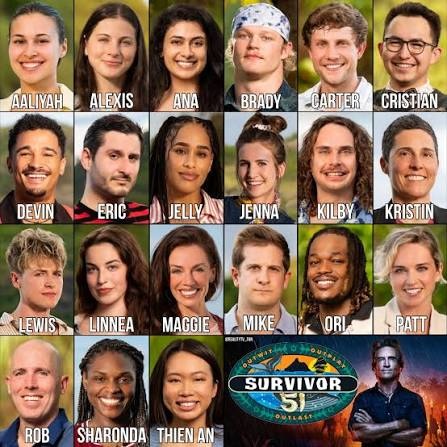
Welcome to Open Era Survivor! This is the era where one of the only likable people in the game can get sent to the jury because they lost a freaking coin flip.
No, I’m not happy that Lewis is gone. I’ve made it pretty clear from the start that Lewis was my favorite, so it’s not easy accepting that he has no chance of winning while wastes of space like Eric, Mike, and Christian remain in the game. Over the past three episodes, Brady, Kristen, Kilby, and now Lewis have been voted out. Now, I’m not a fan of all of those people, but it’s still hard not to feel as if, post-merge, we’ve been losing the most interesting people on the beach.
Now, I will say that Lewis was probably going to go no matter what. He was simply too good at challenges and everyone on the tribe had noticed. It really was one of those cases where I think the majority of the castaways would have said, “If we don’t get rid of him now, we might not get another chance.” I would have been upset if Lewis had been voted out, but at least I could have understood it. But eliminating a player—any player—with a freaking coin toss? No, that sucks.
As a producer as well as a host, Jeff Probst loves his twists and his idols and his gimmicks. I’m not a fan of most of them. I hate the Top 4 firemaking challenge. I’m still pissed off that Chris Underwood won Survivor: Edge of Extinction because he was allowed to re-enter the game at the last minute. I hate the summit meetings and all the rest of the post-COVID era crap that’s been brought into this game. In the future, I predict Jeff will disavow the coin toss in much the same way that he now disavows the hourglass twist from seasons 41 and 42.
Now, I will admit that Lewis did make the choice to flip the coin. It was a dumb decision. Lewis should have let Devin flip it. And if Devin had flipped it and guessed wrong, I might not be as upset as I am about Lewis doing it. Devin is a lot more annoying than Lewis and, despite my distaste for the gimmick, I would be a lot happier today if a coin toss resulted in me not having to listen to any more of his psychobabble for the rest of the season. Then again, Devin isn’t the only person guilty of psychobabble this season. Devin, Jelly, Eric, Christian, Maggie, and Mike all have a tendency to talk a lot without actually saying anything. One could also say the same of Brady, Kristen, and Kilby. This is a season of psychobabble.
You know who doesn’t engage in nonstop psychobabble? Carter. With Lewis gone, I’m now fully on Team Carter.
“I’ve seen their beauty and their ugliness with my own eyes.” — Princess Yuki
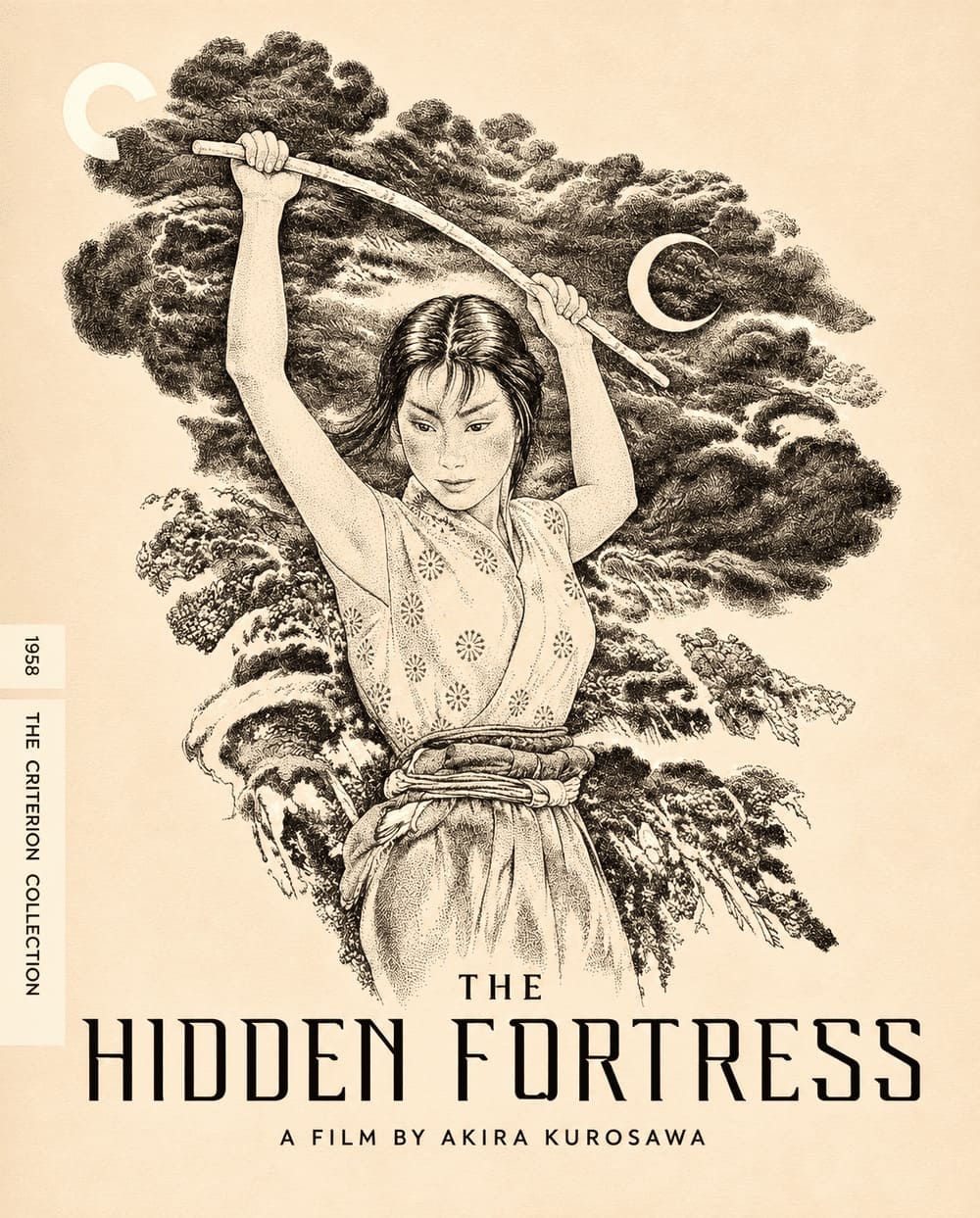
Nobody in The Hidden Fortress seems especially interested in making a heroic entrance. Its first companions are two filthy, complaining peasants who have wandered into a war hoping to make money and discovered that war is mostly terrible for business. They bicker, separate, reunite, and find fresh reasons to distrust each other. It is a wonderfully undignified way to begin an epic, and it establishes the attitude behind Akira Kurosawa’s 1958 adventure. Before offering noble sacrifice and spectacular combat, he puts us beside people wondering what they might get out of the situation. The grand adventure develops from there, but the dirt and desperation of that opening never entirely wash away.
Those unlikely companions are Tahei and Matashichi, played by Minoru Chiaki and Kamatari Fujiwara. Their fortunes become more complicated when they discover gold and encounter General Rokurota Makabe, played by Toshiro Mifune. Rokurota is escorting Princess Yuki, the heir of a defeated clan, through enemy territory while protecting the treasure needed for her people’s future. The peasants become part of the escape, although their participation involves considerably more intimidation than patriotic enthusiasm. Everyone needs the journey to succeed, but they disagree about what success should look like. Saving a royal dynasty sounds much less appealing to the peasants than leaving with its money.
That clash of priorities keeps the film moving. Rokurota thinks strategically, Yuki carries the responsibilities of her position, and the peasants keep looking for opportunities to improve their circumstances. Kurosawa makes those differences productive. A sensible military decision might seem intolerable to someone who wants a shortcut to wealth. An act of compassion might threaten the secrecy on which everyone’s survival depends. The suspense grows from the difficulty of getting these particular people to cooperate. They are not a ready-made team whose disagreements exist merely to supply amusing dialogue. Their competing interests can have dangerous consequences.
Chiaki and Fujiwara make an entertainingly unpleasant double act. Their suspicious glances, wounded pride, and endless negotiations give the journey a steady comic undertow. They are particularly funny when greed inspires teamwork, only for distrust to destroy it almost immediately. Still, the routine occasionally wears thin. Some arguments continue after the joke has landed, and their whining can become exhausting. That abrasiveness also distinguishes the film. Kurosawa does not reassure us that these men are secretly adorable. They can be cowardly, opportunistic, and mean, with desperation making their behavior understandable without necessarily making it forgivable.
Mifune’s performance is the film’s great stabilizing force. His Rokurota has the authority of someone who has assessed the situation before everybody else has finished panicking. Mifune communicates that confidence through his stance, his watchfulness, and the economical way he moves. He does not need to keep demonstrating the general’s strength because he makes the possibility of action feel constantly present. When that stillness breaks, the effect is tremendous. His physical performance has weight and speed, but also clarity: every movement seems connected to a decision. Intelligence and bodily confidence become parts of the same instinct.
He is also funny without turning Rokurota into a joke. His exchanges with the peasants suggest a capable professional whose work keeps being interrupted by assistants trying to steal the supplies. A glance can communicate an entire exhausted assessment of their behavior. Yet Mifune never makes the character merely a reassuring father figure. Rokurota intimidates and manipulates, and his dedication to duty has a hard edge. Warmth comes through selectively, which makes it persuasive. This is a commanding adventure performance because it preserves the distinction between a charismatic protector and an uncomplicatedly nice man.
Misa Uehara’s Princess Yuki supplies another kind of intensity. Her voice and bearing are imperious, sometimes almost confrontational, and the performance can initially seem rigid. That quality suits someone raised to embody authority rather than blend into ordinary life. What makes Yuki interesting is the pressure the journey places on that upbringing. Outside her protected environment, she encounters suffering that cannot be neatly absorbed into inherited ideas about duty. Her forcefulness does not disappear, but it begins responding to a broader understanding of other people. She becomes more than a royal passenger waiting for delivery.
Kurosawa’s widescreen compositions make those relationships visible. In his first widescreen feature, the expanded frame becomes a way of organizing power, vulnerability, and suspicion. Characters stand above one another, watch from a distance, or occupy separate areas until circumstances force them together. The landscapes are equally purposeful. Rocky slopes and exposed paths determine where the travelers can hide and how quickly they can escape. The scenery is beautiful, but never safely decorative. Moving through it requires effort, keeping the adventure grounded even when the storytelling takes on the simplicity of a fable.
That precision pays off in the action. The mass escape down a huge staircase turns architecture and human movement into a frightening surge. Rokurota’s mounted action has a thrilling physical directness, while his spear duel builds excitement through distance, anticipation, and controlled changes of pace. Kurosawa lets us understand the space before asking us to feel its dangers. The cutting sharpens the action rather than concealing it. The pauses become compelling because we can see what each fighter risks by advancing. It is action built around attention, and Mifune gives it tremendous bodily commitment.
The fire festival opens the film into a different emotional register. Flames, music, and collective movement briefly overwhelm the travelers’ calculations. The sequence serves the escape, but it also becomes something Yuki experiences rather than simply navigates. Its awareness of life’s brevity gives the adventure a reflective undertow without stopping it for a lecture. Moments like this complicate the film’s harsher instincts. Kurosawa recognizes cruelty and selfishness while allowing encounters that loosen the boundaries between people. His generosity feels earned because it emerges from a world that gives everyone reasons to remain guarded.
This was the Kurosawa adventure that would heavily influence a young filmmaker named George Lucas. Tahei and Matashichi helped inspire C-3PO and R2-D2 in Star Wars, particularly the decision to introduce a large conflict through two low-status, squabbling participants. The endangered princess and dangerous journey offer further connections, while Kurosawa’s wipe transitions became part of Lucas’s visual vocabulary. But The Hidden Fortress is harsher in tone and characterization. Its peasants are nastier than the droids, its protector more intimidating, and its humor less inclined to transform desperation into lovable eccentricity. The resemblance makes those differences especially revealing.
The film’s afterlife also includes Shinji Higuchi’s 2008 remake, Hidden Fortress: The Last Princess. Interestingly, that version reflects not only Kurosawa’s original but also the influence of Star Wars, bringing elements of the Hollywood spectacle it helped inspire back into a Japanese adventure. That circular exchange illustrates how film history actually works: stories cross borders, change shape, and return carrying traces of their descendants. Yet the original needs no family tree to justify its appeal. Its rhythms, performances, and uneasy mixture of comedy and cruelty remain distinctive rather than merely historically important.
What finally makes The Hidden Fortress satisfying is that its generosity never requires us to forget its roughness. Loyalty and mercy offer alternatives to the opening’s suspicion, but nobody erases the conditions that made suspicion reasonable. Even the comic characters remain recognizably themselves instead of becoming polished heroes. Mifune gives the journey its commanding center, while the surrounding friction gives it texture. Kurosawa delivers the pleasures of an escape story without sanding down the people making the escape. The result is a muscular, funny, sometimes abrasive adventure whose humanity comes from its willingness to let heroism and foolishness share the same road.
Hi, everyone! Tonight, on Mastodon, I will be hosting the #TubiThursday watch party! Join us for Revenge Of The Ninja!
You can find the movie on Tubi and Prime and you can join us on Mastodon at 9 pm central time! (That’s 10 pm for you folks on the East Coast.) We will be using #TubiThursday hashtag! See you then!
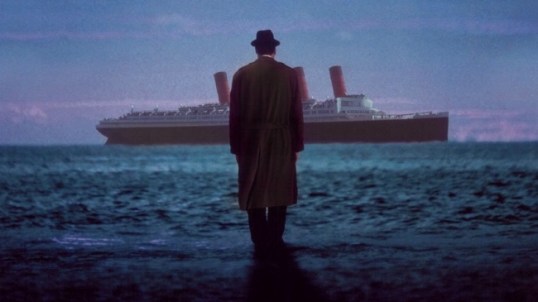
Today’s song of the day comes from The Legend of 1900, a 1998 film that probably deserves to be a bit better known than it is. The film’s score was composed by the great Ennio Morricone.
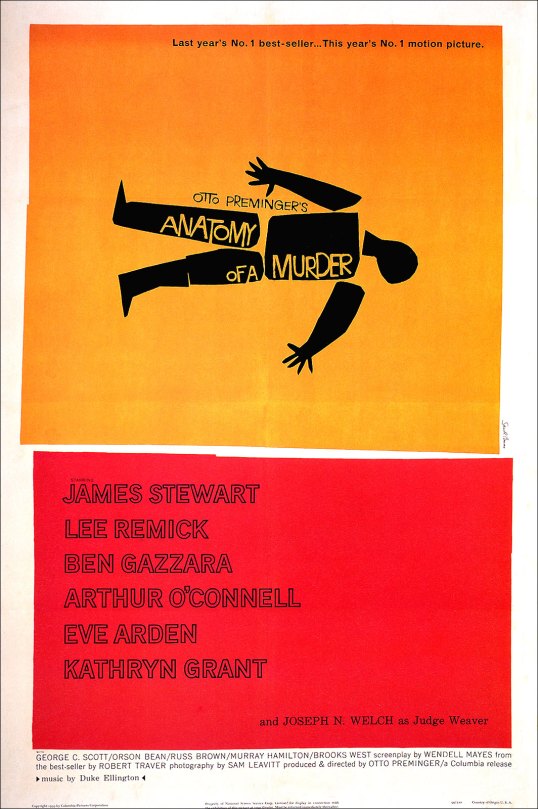
In this scene from director Otto Preminger’s 1959 film, Anatomy of a Murder, prosecutor Claude Dancer (played, in one of his first screen roles, by George C. Scott) cross-examined Laura Manion (Lee Remick), the wife of a man who has been accused of murder. Playing the role of the defense attorney is James Stewart. This scene is a master-class in great acting. Otto Preminger could be a bit of an inconsistent director but his willingness to take on controversial subjects set him apart from many of his contemporaries. When he had the right material, as he did here, he could create the perfect mix of melodrama and art. Preminger’s best films, like Anatomy of a Murder, stand the test of time.
4 Shots From 4 Films is just what it says it is, 4 shots from 4 of our favorite films. As opposed to the reviews and recaps that we usually post, 4 Shots From 4 Films is all about letting the visuals do the talking.
This video was shot on the same set where the video for Bad was filmed. Weird Al had to get permission for Michael Jackson to use the set and Jackson granted it. Jackson appreciated almost all of Weird Al’s parodies, though he did ask Weird Al not to do a parody of Black or White.