
Horror Game Review: Tenebris Somnia (by Andrés Borghi, Tobías Rusjan & Saibot Studios)


“What if they aren’t just nightmares…” — Tenebris Somnia

A breakup can leave plenty of unfinished business, but fighting monsters in your ex’s apartment is a pretty extreme way to deal with it. That’s the uncomfortable territory Tenebris Somnia explores, turning lingering concern and shared history into the foundations of a supernatural nightmare. Developed by Andrés Borghi, Tobías Rusjan, and Saibot Studios, this indie horror game pairs retro 8-bit-style gameplay with live-action sequences. The combination gives it an immediately recognizable identity, but the relationship underneath keeps it from feeling like a technical experiment. Its strongest idea is that leaving somebody behind doesn’t necessarily mean escaping the life you built together.

Julia, a filmmaker, returns to her ex-boyfriend Ivan’s apartment after recurring nightmares show him being attacked by horrific creatures. Checking on him seems reasonable enough, even if revisiting their former home already promises an awkward conversation. Unfortunately, Ivan’s involvement with a mysterious cult has made the situation considerably worse than Julia expects. She becomes caught in spaces distorted by memory and supernatural forces, where their shared past is no longer something she can keep at a comfortable distance. Concern gets her through the door, but understanding what’s happening requires confronting more than the immediate danger.

Their background in filmmaking makes that history more interesting than a generic troubled romance. Creative collaboration has become tangled up with affection, ambition, and resentment, leaving Julia and Ivan’s personal disappointments difficult to separate from their artistic ones. Revisiting the relationship means questioning what they wanted from each other and how those expectations changed. Julia also has her own convictions, which keeps her from becoming a passive visitor inside Ivan’s breakdown. She has an emotional stake in the memories being uncovered, and the story benefits from treating their history as something both characters experienced rather than something only he gets to define.

That tension between recognition and discomfort carries into the presentation. During gameplay, the retro 8-bit-style pixel art reduces rooms, characters, and monsters to relatively simple forms. It’s a deliberate choice, but not one everyone will enjoy. Players accustomed to hyper-realistic CG graphics may find the chunky sprites and limited detail more distancing than frightening, especially if visual realism is central to their enjoyment of horror. The game asks you to let your imagination finish the picture. If that aesthetic leaves you cold, the live-action footage won’t necessarily make the playable sections more appealing.

For players willing to embrace it, though, the contrast does more than provide a novelty. A creature that looked unpleasant in pixel form suddenly has texture, weight, and a disturbingly physical presence. Recognizable details connect the two styles, making the filmed sequences feel like a closer view of the same nightmare. Careful framing and expressive performances help maintain that connection, with Clara Kovacic giving Julia a human presence beyond her small playable sprite. The practical and digital effects also benefit from relatively clear footage. Without artificial VHS damage constantly obscuring the image, the monsters have nowhere to hide—and neither do you.

Between those sequences, Tenebris Somnia follows a familiar survival-horror routine of searching rooms, collecting objects, solving puzzles, and managing limited supplies. The sound design reinforces the uncertainty through harsh effects and recognizable monster noises, making danger a concern before it necessarily appears on-screen. Puzzles encourage you to understand the environment rather than simply move through it. Strange connections suit a setting distorted by memory, provided the clues establish enough logic. Progress becomes less satisfying when an easily overlooked item or interaction point sends you circling the same room. Careful investigation builds atmosphere; repeatedly checking everything because one detail barely registers tends to drain it.

Combat is less assured, largely because its survival-horror intentions are more convincing than its execution. Melee attacks, firearms, and evasive movement give Julia options, while limited ammunition makes fighting a decision rather than a reflex. Removing an enemy might make exploration safer, but those bullets could be more valuable later. That’s an effective source of tension when encounters cooperate with it. The problem is that stiffness can shift your attention away from resource management and toward the basic difficulty of carrying out your plan. Instead of worrying about whether an attack is worth attempting, you can end up worrying about whether it will behave as expected.

Cramped spaces make that friction more noticeable because there’s less room to recover when an attack or evasive movement goes wrong. Horror benefits from making a protagonist vulnerable, but vulnerability still needs consistent rules. Otherwise, the fear of getting hurt gives way to irritation about how the damage happened. Boss encounters expose those weaknesses more clearly. Their designs make a strong first impression, but some fights demand more precision and repetition than the mechanics comfortably support. Checkpoints soften failure without making every retry engaging. The creatures are often more compelling as disturbing presences than as opponents you have to repeatedly bring down.

Those shortcomings keep Tenebris Somnia from being an effortless recommendation, particularly for players who need polished combat or dislike retro graphics. Still, its relationship drama, filmmaking background, and mixed-media presentation reinforce one another in a way that gives the experience genuine personality. The monsters aren’t the only reason Julia’s return feels uncomfortable; they make an already complicated reunion physically dangerous. For horror fans drawn to atmosphere and unsettling imagery, that combination has plenty of appeal. The visit begins with concern for someone Julia once loved, then becomes a reminder that caring about a person and understanding what they’ve become are very different things.
Horror Game Review: Visage (by SadSquare Studio)


“It feels like the treatments are only making things worse.” — George

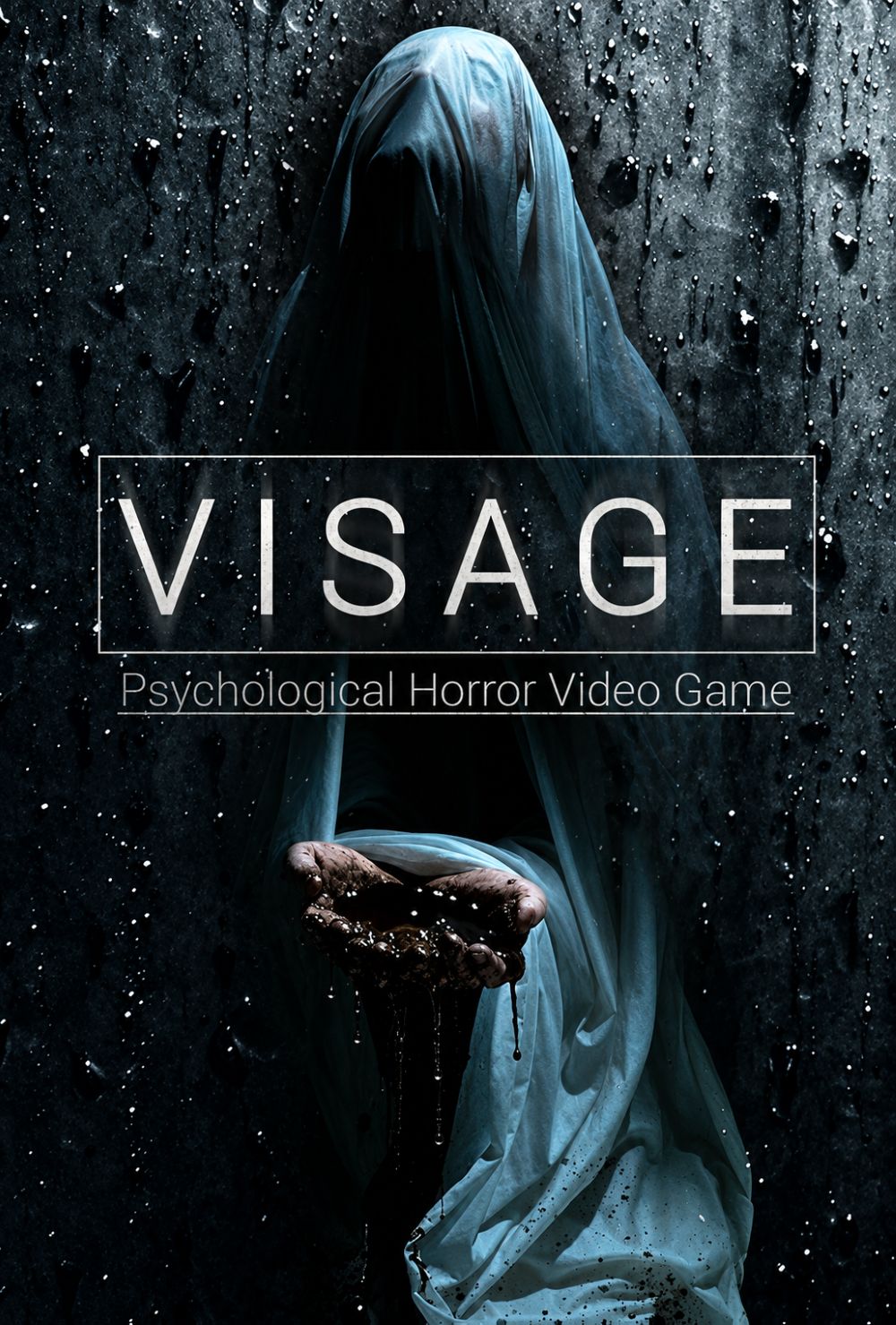
Visage knows how to make you dread the next room long before anything actually happens. Released in 2020 by SadSquare Studio, this indie psychological nightmare takes the familiar haunted-house setup and stretches it into something deeply uncomfortable. Its connection to P.T.—Hideo Kojima’s playable teaser for a canceled entry in the Silent Hill series—is obvious, but dismissing it as another imitator would overlook how much it brings to the table. There are proper survival mechanics, substantial exploration, and several distinct stories beneath its ghostly surface. It is also clumsy, confusing, and occasionally exhausting for the wrong reasons. Still, when everything clicks, its atmosphere makes those shortcomings surprisingly easy to forgive.

The setup puts you in the shoes of Dwayne Anderson, a man exploring a sprawling house burdened by the tragedies of its previous inhabitants. Before that exploration begins, though, the game opens with a deeply disturbing sequence involving family murder and suicide. That immediately establishes how ugly things can get. This is not a playful ghost story where a few spooky noises lead to a monster reveal. The house becomes a space for confronting violence, suffering, and uncertainty, with Dwayne’s connection to everything left deliberately murky. The mystery offers plenty to chew on, although anyone expecting straightforward answers should adjust those expectations early.

What makes the house so effective is how ordinary it feels before reality starts coming apart. These are recognizable domestic spaces rather than elaborate gothic chambers, and that familiarity does much of the heavy lifting. A dark corner does not need a creature standing in it to become threatening; the possibility is enough. Visage understands that horror often works best when the player is mentally filling in the blanks. Its environments create an uneasy relationship between recognition and suspicion: you know what a home should feel like, but this one keeps quietly violating that understanding. Even exploration can feel like trespassing.

The audiovisual presentation reinforces that discomfort without needing nonstop spectacle. The house looks convincingly lived-in, while shadows and unsettling creaks make its emptier spaces feel occupied. Technically, this is not a game that needs to outmuscle a blockbuster production. Its strength lies in how effectively the visuals and sound work together to make you distrust your surroundings. The jump scares certainly matter, but they land because tension has already done most of the work. The frightening part is often the stretch before something happens, when you are staring into darkness and wondering whether moving forward will finally trigger the thing you have been dreading.

Unlike a purely passive haunted-house tour, Visage gives you systems to manage while all that anxiety builds. Spending too long in darkness or experiencing disturbing events affects your sanity, introducing another layer of uncertainty through hallucinations. You also have to juggle objects between your hands and a limited inventory. Conceptually, this is a smart combination: navigating the environment becomes more involved than simply following the next corridor. You are not just witnessing frightening events; you are trying to stay functional inside them. That extra responsibility helps distinguish the game from horror experiences that rely almost entirely on scripted surprises.

Unfortunately, the inventory is also where that involvement becomes irritating. The two-handed control system sounds immersive until using a tool requires clearing your other hand, rearranging your possessions, or dropping something because there is no room left. There is a difference between making a character vulnerable and making basic actions unnecessarily awkward, and Visage does not always respect that distinction. Some friction suits survival horror, but menu and item-management friction can pull attention away from the environment entirely. When your biggest concern becomes figuring out how to hold the correct object, the haunting has temporarily lost its grip.

The chapter structure provides welcome variety. Lucy’s chapter leans closest to the intimate, oppressive horror associated with P.T., while Dolores’s puts greater emphasis on puzzles. Rakan’s moves toward more traditional survival-horror encounters, and the final chapter pushes further into surreal territory. That variation keeps the game from feeling like one idea repeated indefinitely. It also gives the house a broader identity, as though different tragedies have left different kinds of damage behind. The tradeoff is unevenness: depending on whether you prefer exploration, puzzles, or direct danger, some sections will naturally feel stronger than others.

Puzzle design is the biggest obstacle to enjoying that variety. There are satisfying moments of observation and deduction, but the game also slips into obscure interactions that can feel arbitrary rather than clever. Being lost in a haunted house should be frightening; being lost because you cannot identify the next required trigger is mostly annoying. Once exploration turns into repeatedly checking familiar rooms, suspense risks giving way to impatience. The game deserves credit for resisting constant hand-holding, but withholding direction is not automatically good design. A stronger balance between subtle guidance and uncertainty would preserve the mystery without draining so much momentum.

Ultimately, Visage is an impressive horror game with rough edges that genuinely matter. Its storytelling favors implication over resolution, its controls need patience, and its puzzles can interrupt an otherwise powerful sense of dread. Yet those problems do not erase how convincingly it turns an ordinary house into somewhere you desperately want to leave. It builds fear through familiarity, then steadily makes that familiarity unreliable. For players who value slow-burning psychological horror and can tolerate some frustration, there is a memorable experience here. It is not consistently elegant, but it understands something essential: the scariest room is often the one you have not entered yet.

Trailer: Dead Rising 3 (Gameplay Trailer)


DeadRising3I will admit that zombie entertainment will always catch my attention. Yes, it probably has reached oversaturation, but guess what…I don’t care. I’ve always enjoyed the apocalyptic, Last Man On Earth possibilities that zombie entertainment has offered gamers, readers and viewers. This was the case with the first Dead Rising by Capcom and then by it’s sequel Dead Rising 2 a couple years ago.

Dead Rising 3 has now been announced as an exclusive title for the Xbox One and it looks to take the power of the One to upgrade the graphics, gameplay and overall experience of the title. This time around instead of set inside a mall or a Las Vegas strip-style location we have a game that’s more akin to Grand Theft Auto or Saints Row in terms of open-sandbox gameplay. This looks to be a natural progression for a franchise that seem to get bigger and bigger with each each release.

This gameplay trailer during the Microsoft E3 Presser just shows how much bigger and interactive Dead Rising 3 than it’s two previous predecessors.

Dead Rising 3 is set to be a launch title for the Xbox One.

Trailer: Resident Evil 6 “No Hope Left” Cinematic Live-Action


I haven’t been as big a fan of Capcom’s Resident Evilsurvival horror game franchise (weird considering that zombie fiction and entertainment is like catnip to me), but the upcoming and latest entry in the series has me excited. Resident Evil 6 looks to return the series to its zombie roots after spending the last two titles veering away from it.

While the gameplay still looks to be just something upgraded and tweaked from games past the story itself looks like something that I would find interesting as it moves the danger from being localized to something more global in scope. I’m really hoping that this title brings me back to the franchise which was great in the beginning then began to lose steam and ideas in it’s latest offerings.

This latest trailer takes a page out of the Halofranchise’s marketing book by making it live-action. It might be only 90 seconds but getting a glimpse of how a world reacts to the onset of a zombie apocalypse makes for a nice, brief piece of entertainment.

Resident Evil 6 is set for an October 6 release for the Xbox 360, PS3 and Windows PC.