Today’s song of the day comes to us from DJ Judaa. Enjoy freedom.
Today’s song of the day comes to us from DJ Judaa. Enjoy freedom.

He’s not a zombie!
He’s Bill Murray!
And today is Bill Murray’s birthday so it seems like a good time to share a scene that I love. In this scene from 2009’s Zombieland, Bill Murray proves that not even the zombie apocalypse can stop the Murraycane.
(Unfortunately, Bill comes to a tragic end in Zombieland but at least he gets to enjoy himself for a while.)

4 Shots From 4 Films is just what it says it is, 4 shots from 4 of our favorite films. As opposed to the reviews and recaps that we usually post, 4 Shots From 4 Films lets the visuals do the talking!
Today, we wish a happy birthday to one of our favorite actors, Bill Murray!
That means, of course, that it’s time for….
4 Shots From 4 Films
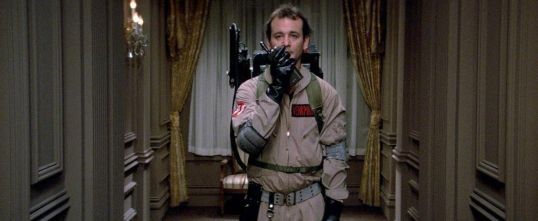
Ghostbusters (1984, dir by Ivan Reitman)

Rushmore (1998, dir by Wes Anderson)

Lost In Translation (2003, dir by Sofia Coppola)

The Dead Don’t Die (2019, dir by Jim Jarmusch)
As some of our regular readers undoubtedly know, I am involved in hosting a few weekly live tweets on twitter and occasionally Mastodon. I host #FridayNightFlix every Friday, I co-host #ScarySocial on Saturday, and I am one of the five hosts of Mastodon’s #MondayActionMovie! Every week, we get together. We watch a movie. We snark our way through it.
Tonight, for #MondayActionMovie, I will be hosting Graduation Day!
If you want to join this watch party, just hop onto Mastodon, pull up Graduation Day on YouTube, start the movie at 8 pm et, and use the #MondayActionMovie hashtag!
Enjoy!
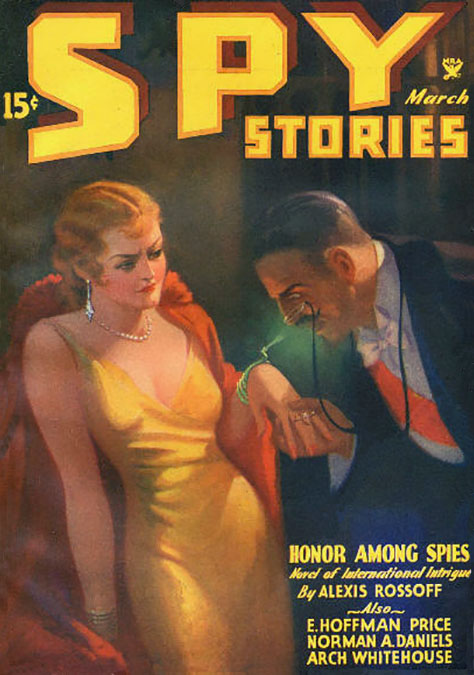
by O.K. Uzzell
This cover is from 1935.
Information Society was formed, in Minneapolis, by Paul Robb in 1982. Despite a small but devoted fan base, the band initially struggled to achieve mainstream success, which led to several lineup changes during the group’s early years. It wouldn’t be until 1985 that Information Society would have their first minor hit and then it would be another three years before they released their two best known songs, What’s On Your Mind (Pure Energy) and Walking Away.
According to Paul Robb, Walking Away was written while he was thinking about all of the people who had recently left the band. In Robb’s own words, “So if you listen to the lyrics of ‘Walking Away,‘ it’s basically just someone complaining about people who left. That’s because that’s exactly what it is.” Though Walking Away was not as big a hit as What’s On Your Mind, it still charted at #9 and there’s a good chance of hearing it played at any 80s night.
Just as Pure Energy sampled Leonard Nimoy, Walking Away opens with William Shatner saying, “It is useless to resist us.” Leonard’s son, Adam Nimoy, was a huge fan of the band and was instrumental in winning the band permission to use the audio samples in their songs.
Mark Pellington also directed the video for the band’s first hit, What’s On Your Mind.
Enjoy!
Welcome to Late Night Retro Television Reviews, a feature where we review some of our favorite and least favorite shows of the past! On Sunday, I will be reviewing the Canadian series, Degrassi: The Next Generation, which aired from 2001 to 2015! The series can be streamed on YouTube and Tubi.
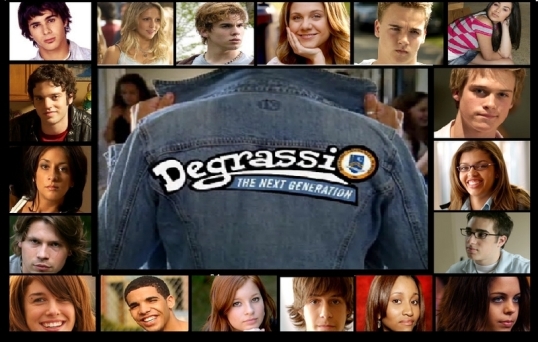
This week, it’s the holidays!
Episode 3.11 “Holiday: Part One”
(Dir by Philip Earnshaw, originally aired on December 17th, 2003)
It’s Christmas in Canada!
While snow blankets the ground, Sydney and Joey have a tree-trimming party that is attended by Caitlin and Spike. Caitlin reveals that she’s going to be spending Christmas alone but it doesn’t matter because it’s just one meaningless day out of the year. Joey is horrified at the thought of Caitlin being by herself for the holidays. Sydney, on the other hand, is wondering why her boyfriend is so worried about what his high school ex is going to be doing over the holidays. Still, when Joey and Sydney need someone to babysit Angie for a night, Sydney reaches out to Caitlin. Caitlin allows Angie to stay up too late and to wear the red dress that Sydney made for her to wear on Christmas day. Sydney is not amused. Caitlin says, “Don’t blame her….” “I’m not,” Sydney replies.
Caitlin, shaken over rightly being called out for her own irresponsible behavior, stumbles out of the house. Joey follows her and says that Sydney didn’t mean to be harsh. Sydney just likes things a certain way. Then, he and Caitlin kiss.
Meanwhile, Joey’s stepson, Craig, is torn between his girlfriend Ashley and his secret girlfriend Manny. Manny gives Craig an ultimatum. She tells him to pick either her or Ashley. Craig picks Manny and then goes over to Ashley’s house to tell her. Before Craig can say anything, Ashley gives him a guitar that once belonged to her grandfather who, she says, played it with Django Reinhardt. Craig forgets about dumping Ashley.
The next day, Manny sees Craig at school. He’s sitting next to Ashley and playing his guitar. Manny is not amused. Craig lies and tells Manny that he and Ashley have broken up but “I haven’t told her about us yet.” The school Christmas show is coming up and Craig and Ashley are scheduled to perform a song together. Craig explains that it would make the performance awkward if he told Ashley that he liked Manny. Manny accepts Craig’s lie. For now.
And that’s it! If this episode seemed a little anti-climatic, that’s because “Holiday” was actually an hour-long Christmas special that was split into two episodes for syndication. The action, as it were, doesn’t really pick up until the second half. We’ll take a look at that next week.
For this week, let me just admit that I’ve always had mixed feelings about this episode. On the one hand, I love the holidays and, of the many relationship dramas that played out over the course of this series, the whole Ashley/Craig/Manny triangle was a favorite of mine. But it’s always bothered me that, in this episode, Sydney was suddenly transformed into a bitch just so the show could justify Caitlin and Joey getting back to together. I mean, really, what did Sydney do wrong? She wanted the house to be neat. She wanted the tree to look nice. And she didn’t want Angie to ruin her pretty dress. Somehow, all of this is supposed to make Sydney look bad. Meanwhile, Caitlin is a grown woman who is still obsessing over the boyfriend who treated her terribly in high school.
We’ll conclude this holiday next week!
Here is my week in review! October is right around the corner!
(Well, two corners.)
Films I Watched:
Live Tweets:
4 Shots From 4 Films:
Scenes That We Love:
Songs of the Day:
Artworks of the Day:
Music Videos of the Day:
Links From Last Week:
News From Last Week:
Links From The Site:
Click here to see what I watched last week!
Rambo: First Blood Part II (1985, dir by George Pan Cosmatos, DP: Jack Cardiff)
Welcome to Retro Television Reviews, a feature where we review some of our favorite and least favorite shows of the past! On Sundays, I will be reviewing Homicide: Life On The Street, which aired from 1993 to 1999, on NBC! It can be viewed on Peacock.
This episode made me cry.
Episode 6.4 “The Subway”
(Dir by Gary Felder, originally aired on December 5th, 1997)
It’s another morning in Baltimore. Salesman John Lange (Vincent D’Onofrio) goes to the local subway station with his girlfriend, Sarah (Laura MacDonald). Sarah goes on her morning run. John enters the station so he can catch his train to work. John is wearing a suit and he’s moving quickly and impatiently. When he reaches the platform, something happens. We see John and a shorter man falling forward as the train pulls in. We see the bystanders gasp. And then we see that John is pinned between the train and the platform. Only the upper half of his body is visible. The lower half of his body is twisted underneath the train. John is still alive.
Homicide is called because, even though John is breathing and shouting, everyone knows that he’ll soon be dead. Pembleton and Bayliss arrive. Bayliss interviews Larry Bierdon (Bruce MacVittie), a man who claims that he was pushed at the same time as John. Pembleton talks to John Lange. For once, Pembleton — who has always tried to remain coolly detached — finds himself dealing one-on-one with a man whose name will soon be going up on the board.
John is confused and he’s angry and he’s demanding to know why he hasn’t been freed yet. He yells at the EMT (Wendee Pratt) who is checking his blood pressure and continually asking him if he’s feeling anything. Everyone seems to know that John Lange only has 30 to 40 minutes left. Everyone but John. But eventually, Lange figures it out. While everyone else — the EMTs, the firemen, the cops — go about their job like any other day (and the EMT herself gets annoyed with John’s constant abuse), John Lange hopes that he’ll somehow get that million to one shot that will allow him to be freed from the platform without dying in the process.
Falsone and Lewis search for Sarah. Actually, “search” is a bit too generous a term for what they do. Falsone and Lewis wander around the harbor and glance at any women who they see jogging. Lewis talks about how much he hates getting older. They spend a lot of time shooting the breeze. At one point, Sarah runs by them and they don’t notice.
At the station, Bayliss discovers that Larry Bierden previously shoved a man in front of a subway in Chicago. Larry was placed in a psychiatric ward. When he was released, he moved to Baltimore and did it again. It becomes obvious that there was no grand reason for Larry pushing John. If Larry hadn’t pushed John, he would have pushed someone else. John’s death is a random case of being in the wrong place at the wrong time.
As for John, he finally starts to feel the pain of being pinned. The EMT explains that she can’t give him painkillers in his current state because it will reduce the miniscule chance that they have of saving his life. Pembleton sits down next to the train and holds Lange’s hand. Pembleton talks about his stroke. Lange talks about how sugar maple leaves will turn whenever it rains. Lange tells Pembleton, “I’m okay,” just before the EMTS inflate the airbags that push the train away from the platform. Lange is freed and dies immediately.
Pembleton steps outside the station, where Bayliss is joking with a uniformed cop about how Larry Bierden apparently thought he could get away with doing the exact same thing that he did in Chicago just by moving to a different city. Pembleton stops to stare at Bierden, who is handcuffed in a squad car. “I want my ID back,” Bierden says, a complaint that he’s been repeating ever since Bayliss initially took his expired drivers license away from him.
As they get in their own car, Pembleton asks Bayliss if he knew that sugar maple leaves turn when it rains. Bayliss says that he didn’t. “Learn something new every day,” a shaken Pembleton says.
Meanwhile, Sarah runs past the station, little knowing that John has just died.
This was an incredibly powerful episode, one that had me sobbing from the minute I saw John trapped between the train and the platform. Vincent D’Onofrio gives an incredible performance as John Lange, one that works because the show itself refuses to sentimentalize the character. John Lange is angry and abrasive and the show doesn’t ask us to like him. Instead, it asks us to acknowledge the humanity that we all share. Lange may not have been a likable person but he was still a person. If he hadn’t been pushed, he would have gone to work like any other day. Instead, because he was pushed, he spends 40 minutes dealing with the realization that he’s going to die. He’s pissed off and he has every right to be.
This was an emotionally draining episode. As I watched, I kept flashing back to my Dad in home hospice care and his final words to me: “I don’t understand what’s happening. I feel so weak.” I was exhausted by the time the episode ended. John Lange wanted to say goodbye to his girlfriend and instead, he said goodbye to Frank Pembleton, the stranger who comforted him in his final minutes.
(Would it have killed Lewis and Falsone to have looked a little harder? To be honest, their failure to find her was realistic and it kept the episode from descending into sentimentality. Still, I’ve never been quite as annoyed with Meldrick Lewis as I was while watching The Subway. Given the previous three episodes of Homicide, I guess I should just be happy that the show didn’t have Falsone magically figure out a way to save John’s life.)
This was one of the best television episodes that I’ve ever seen. And I never want to watch it again.
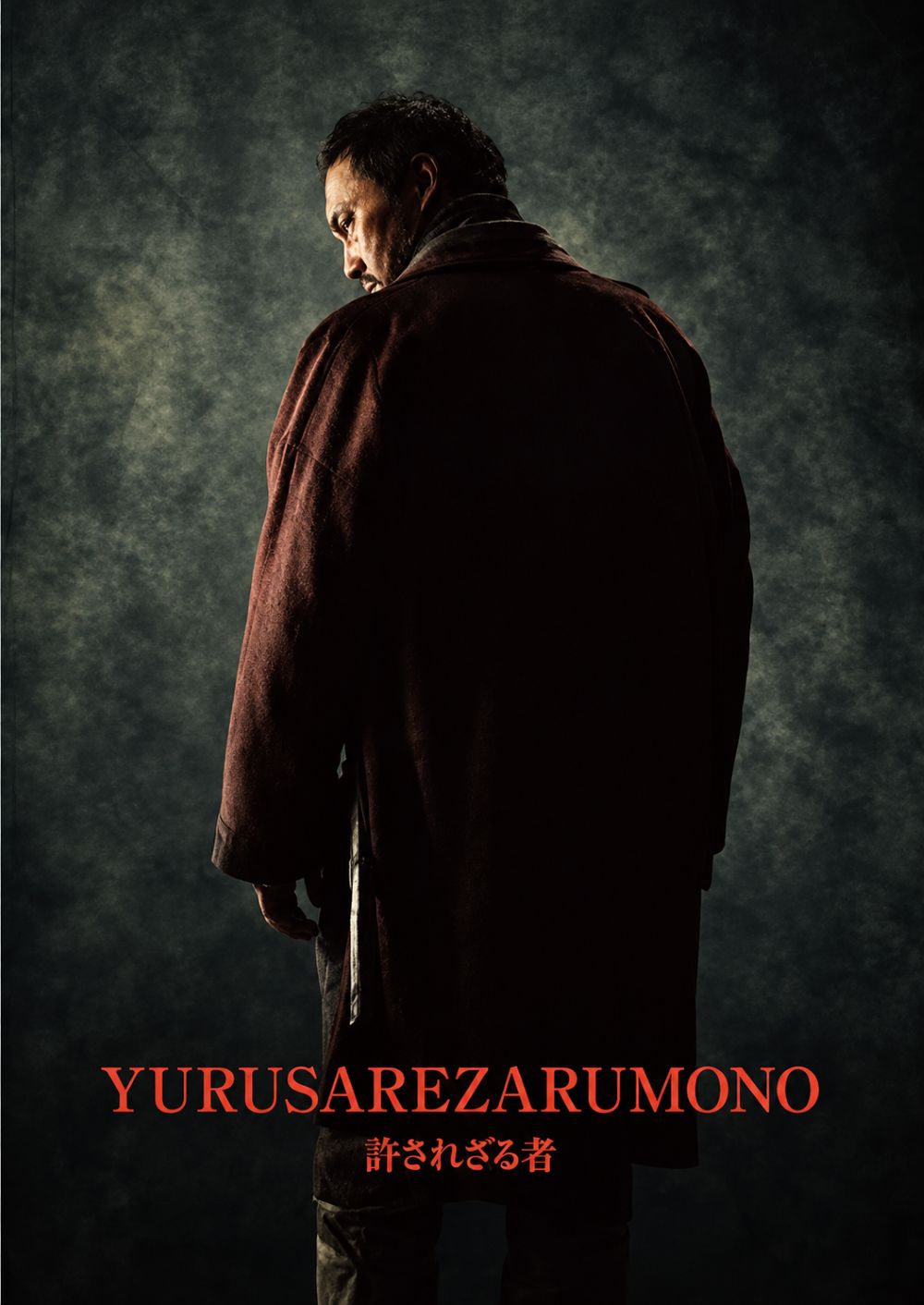
“Wait for me in hell.” — Jubei Kamata
Unforgiven, released in Japan as Yurusarezaru Mono—literally “The Unforgiven” or “Unforgivable”—is the 2013 Japanese remake of Clint Eastwood’s 1992 revisionist Western. Rather than treating the original as a sacred object that cannot be touched, director Lee Sang-il and star Ken Watanabe prove that its central ideas can travel surprisingly well. The story moves from the fading American frontier to Hokkaido in the early Meiji era, when Japan was modernizing quickly and the samurai class was becoming a relic of a vanishing order. In that sense, the film finds the perfect Japanese equivalent to Eastwood’s aging gunslingers. Just as William Munny belongs to an Old West that is dying around him, Jubei Kamata belongs to a Japan that no longer has a clear place for men like him.
It also belongs to a much longer tradition in which samurai and Western gunslingers have become closely intertwined character types. Both are often portrayed as isolated men shaped by violence, reputation, personal codes, and the decline of the worlds that made them useful. Both can drift into a troubled town, become involved in someone else’s conflict, and turn into a larger-than-life figure whether they want to or not. The exchange between the genres has gone on for decades, most famously when Akira Kurosawa’s Yojimbo became the basis for Sergio Leone’s A Fistful of Dollars. Yurusarezaru Mono feels like an especially appropriate continuation of that conversation: a Japanese filmmaker takes an American Western that was itself deeply interested in dismantling the gunslinger myth and uses it to confront the equally romanticized myth of the samurai.
The original Unforgiven was already a film about stripping the glamour away from violence. Eastwood took the familiar image of the weathered gunfighter coming back for one final job and showed the ugliness underneath it. Violence is not clean, heroic, or especially skillful when it happens for real. It is frightening, clumsy, painful, and impossible to undo. Lee Sang-il keeps that moral core but finds a distinct cultural target. The Japanese version examines the idealized samurai image: the disciplined swordsman, the honorable warrior, the proud survivor of a more noble age. It asks whether any of those myths can survive when the man behind them has killed people, carries terrible memories, and no longer knows who he is without violence.
Ken Watanabe plays Jubei Kamata, a former samurai once feared as “Jubei the Killer.” He is the film’s William Munny equivalent, but Watanabe does not simply imitate Eastwood’s performance. Jubei is introduced as an exhausted farmer and widower raising two children in hard conditions. He is poor, physically worn down, and clearly ashamed of the person he used to be. Watanabe gives him an almost painful heaviness. Jubei is not merely an old warrior who wants peace; he is a man who has spent years trying to become someone else because he knows exactly what “Jubei the Killer” was capable of.
The early-Meiji setting gives that character arc a stronger historical charge. Jubei is not just retired from a bloody life. He is part of a fading warrior caste in a country remaking itself through new laws, new institutions, modernization, and expanding state power. The samurai may still exist in memory and in popular myth, but their old social role is slipping away. That mirrors the original film’s dying Old West perfectly. The gunslinger and the samurai are both figures from a violent past who have become obsolete, yet neither can completely escape the reputation that past gave them.
The plot begins after a prostitute is viciously assaulted and scarred by two men in a northern settlement. The town’s authorities treat the crime as an economic issue instead of an act of cruelty against a human being, so the women of the brothel raise a bounty for the attackers’ deaths. Kingo Baba, Jubei’s old companion, approaches him about the bounty and offers him a share of the reward. Jubei refuses at first because he has children, a failing farm, and a life he is trying to preserve. But poverty, desperation, and the lingering pull of his former identity eventually drag him back into violence.
The film’s real power is that it never turns this decision into a simple revenge fantasy. The men being hunted deserve condemnation for what they did, and the film does not soften that. Still, it never suggests that killing them will restore the woman they harmed or somehow balance the moral scale. Murder does not solve the original injustice; it only broadens the cycle of pain. Like Eastwood’s film, Yurusarezaru Mono constantly pushes against the audience’s instinct to treat revenge as satisfying or cleansing.
Jubei teams up with Kingo Baba, played by Akira Emoto, an old companion who fills the role of Ned Logan from the original. Their relationship is one of the remake’s best qualities. Emoto gives Kingo a tired, approachable decency, but he also makes clear that the man has lived long enough to understand the price of violence. He and Jubei do not need to explain their history in long speeches. Their shared past comes through in their guarded conversations, familiar irritation, and unspoken awareness that they are both far too old to be pretending this job will end cleanly.
Goro Sawada, played by Yuya Yagira, is just as important because he represents the fantasy of violence before reality destroys it. He wants a name. He wants to be feared. He wants stories about himself that will make him sound larger than life. But the film dismantles him in the same way Unforgiven dismantled the Schofield Kid. The first time he confronts the real consequences of killing, there is no rush of glory. There is only confusion, panic, and guilt. A legend is always easier to believe in when someone else has done the killing.
One of the Japanese remake’s most meaningful additions is its inclusion of the Ainu people, the Indigenous people of Hokkaido. The original film largely avoided directly engaging with the history of Native Americans in the American frontier, but Yurusarezaru Mono brings Indigenous displacement and discrimination into the story in a major way. Jubei’s late wife was Ainu, and his children therefore carry that heritage. Goro is also connected to the Ainu community and can speak the language. The film takes place during a period in which the Japanese state was expanding its control over Hokkaido, dispossessing and assimilating Ainu people while suppressing their culture and language.
That addition does not merely provide a local equivalent for the Western’s Native American history. It changes the emotional stakes of the entire story. Jubei is not only a former samurai made obsolete by Japan’s new order; he is tied by family to people being actively marginalized by that order. His farm, his children, and his dead wife become part of a larger historical wound. The film’s frontier is not empty land waiting for settlement. It is land already inhabited by people whose rights, identities, and futures are being threatened. By including the Ainu, the remake adds racial and colonial dimensions that the original’s story did not fully explore.
It also reframes Goro’s desire to prove himself. His hunger for reputation is not just youthful swagger. It comes from living in a society that treats people connected to the Ainu as inferior or disposable. He wants to be seen as somebody in a world eager to reduce him to less than that. Jubei understands this more deeply than he initially lets on. His eventual concern for Goro is shaped not only by friendship but by a recognition that the authorities could use Goro’s participation in the killings as an excuse to punish or target Ainu people more broadly.
Koichi Sato plays the local lawman, the Japanese counterpart to Gene Hackman’s Little Bill. He does not copy Hackman’s performance, which is a smart choice. Hackman’s Little Bill had a bluff, talkative confidence and an almost absurdly casual capacity for brutality. Sato’s version is colder and more calculating, with a distinctly bureaucratic edge. He sees himself as the defender of law and social order, but his version of order is built on intimidation, humiliation, and selective cruelty. He treats the abused woman as a problem, the prostitutes as a nuisance, and anyone outside his preferred hierarchy as someone to be controlled.
The emerging Meiji state may promise progress, but the film refuses to portray it as automatically enlightened. The samurai system’s decline does not erase injustice; it simply gives power a newer, more bureaucratic face. The lawman claims to hate disorder, yet he creates the kind of world where people can only pursue justice through murder because the law refuses to recognize their suffering. That makes him more than a simple villain. He is the embodiment of a new authority that insists it is civilized while using the same old cruelty to keep vulnerable people in their place.
The snowbound Hokkaido landscape gives the movie a visual identity that sets it apart from the dusty Wyoming imagery of the original. The cold, mud, wind, and vast stretches of white make the characters look even more vulnerable and lost. This is not the kind of samurai story built around beautiful duels and graceful swordplay. Lee Sang-il keeps the violence ugly and exhausting. When Jubei finally falls back into the terrifying persona of “Jubei the Killer,” it does not feel like he has rediscovered his true heroic self. It feels like a man surrendering to the worst part of himself because grief, anger, and desperation have burned away his restraint.
The ending closely follows the original in the way it brings Jubei’s buried reputation and frightening capacity for violence back to the surface. The climactic confrontation itself remains broadly faithful to Eastwood’s version, so the remake’s biggest distinction is not really in the setting or moment-to-moment mechanics of the final fight. The more meaningful change comes afterward, in what the film suggests about Jubei’s future once he has once again become “Jubei the Killer.”
Yurusarezaru Mono gives this question more weight through its focus on shame, guilt, and the possibility that some actions cannot be left behind simply because a man has spent years living differently. Jubei built a quieter life with his wife and children in the hope of becoming more than the killer he once was. But revisiting that past, even for reasons the audience can understand, forces him to confront whether he has truly escaped it—or whether he was only temporarily pretending it was gone. The remake’s final variation gives the story a sadder and more personally haunted edge, making Jubei’s past feel less like a legend he can reluctantly put back on and more like a moral burden that may have permanently separated him from the life he tried to build.
Those changes are important because they give Yurusarezaru Mono a distinct identity beyond simply being a Japanese version of a famous American film. The original Unforgiven ends with its own deliberately uneasy ambiguity. This remake reaches a similarly tragic, morally unsettled place, but it does so through the specific burdens of early-Meiji Hokkaido: the decline of the samurai, the oppression of the Ainu, and the false promise that modernization automatically means justice. The result is an ending that honors the emotional power of Eastwood’s film while still finding its own voice.
Ultimately, Yurusarezaru Mono works because it understands that Unforgiven was never only about the American West. It was about the myths societies build around violent men, the damage hidden by those myths, and the painful impossibility of separating a person from what he has done. By placing that story in early-Meiji Hokkaido, adding the history and oppression of the Ainu people, and revising key elements of the final act, Lee Sang-il’s film becomes more than a competent remake. It is a serious reinterpretation of a great Western through the lens of Japan’s own fading warrior mythology, colonial violence, and troubled modern identity.

