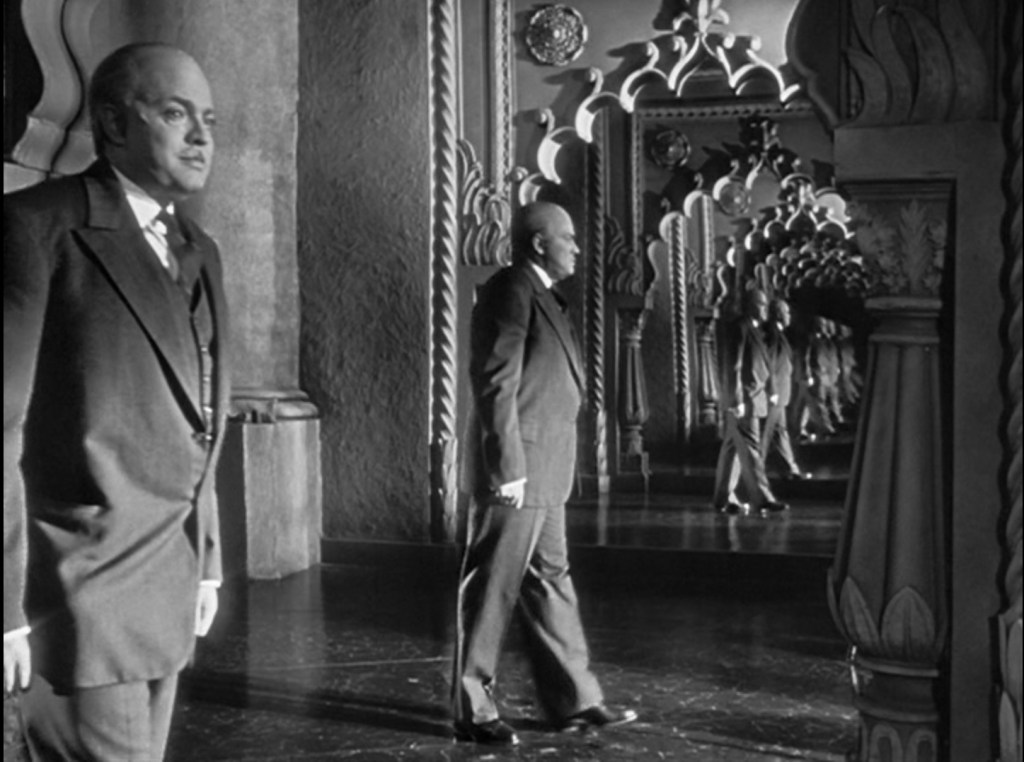
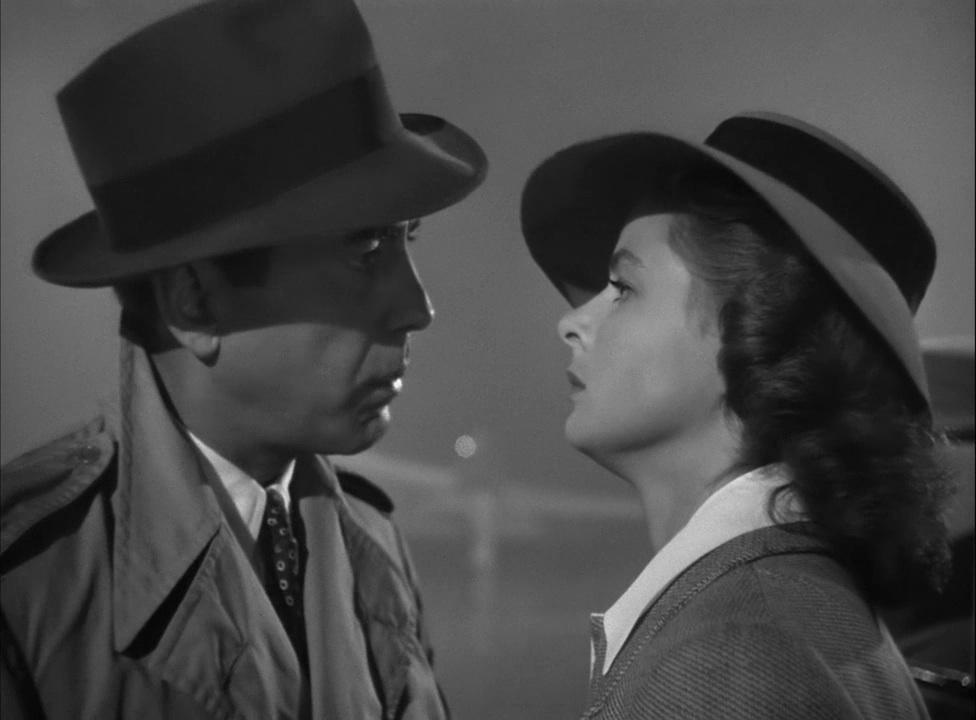
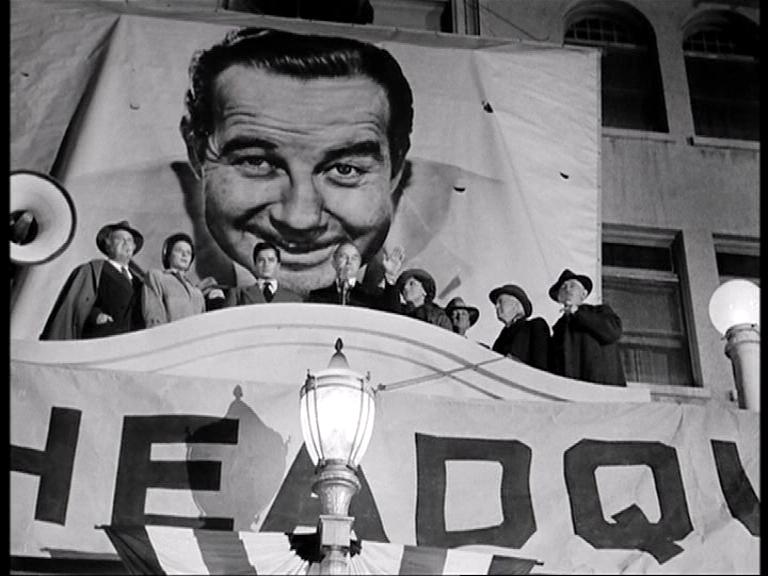
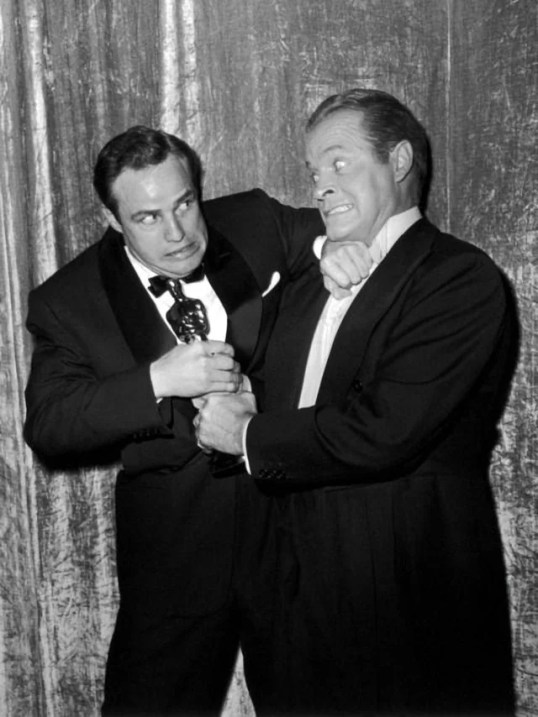
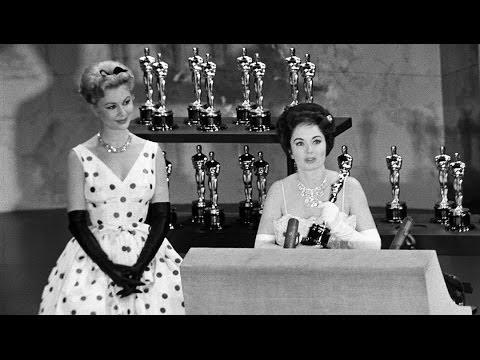
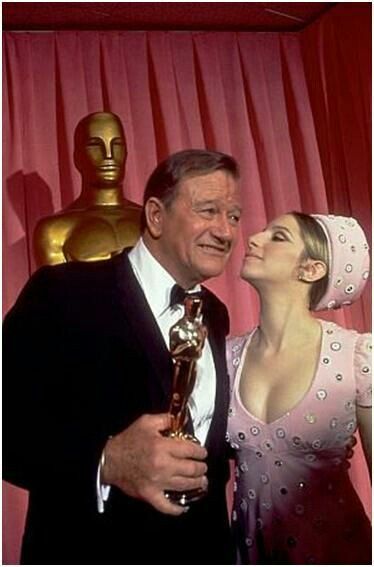
Ah, the 40s! For most of the decade, the world was at war and the Academy’s nominations reflected that fact. The best picture lineups alternated between patriotic films that encouraged the battle against evil and darker films that contemplated both the mistakes of the past and what threats might be waiting in the future.
Should Have Won: Rebecca was the only Hitchcock film to win Best Picture and while I hate to take that honor away from him, it simply cannot compare to the power of John Ford’s adaptation of The Grapes of Wrath. Considering that people nowadays tend to assume that FDR just waved a magic wand and ended The Great Depression as soon as he was elected, The Grapes of Wrath is still an important historic document of just how bad things truly were in the 1930s. (World War II ended the Great Depression for more effectively than the New Deal ever did.)
Should Have Won: Mrs. Miniver was a heartfelt tribute to the strength of the British people and it’s certainly understandable why the Academy honored it. That said, today, the over-the-top melodrama of Kings Row is a lot more fun to watch.
Should have Won: The Academy went from nominating ten films to only nominating five this year. (Decades later, it would go back to nominating ten.) Darryl F. Zanuck launched an all-out blitz to convince the Academy to honor Wilson, a film about one of our worst presidents. The Academy instead went with Going My Way, a pleasant crowd-pleaser. I would have voted for Double Indemnity, a film that was perhaps too cynical to win at a time when America was at war.
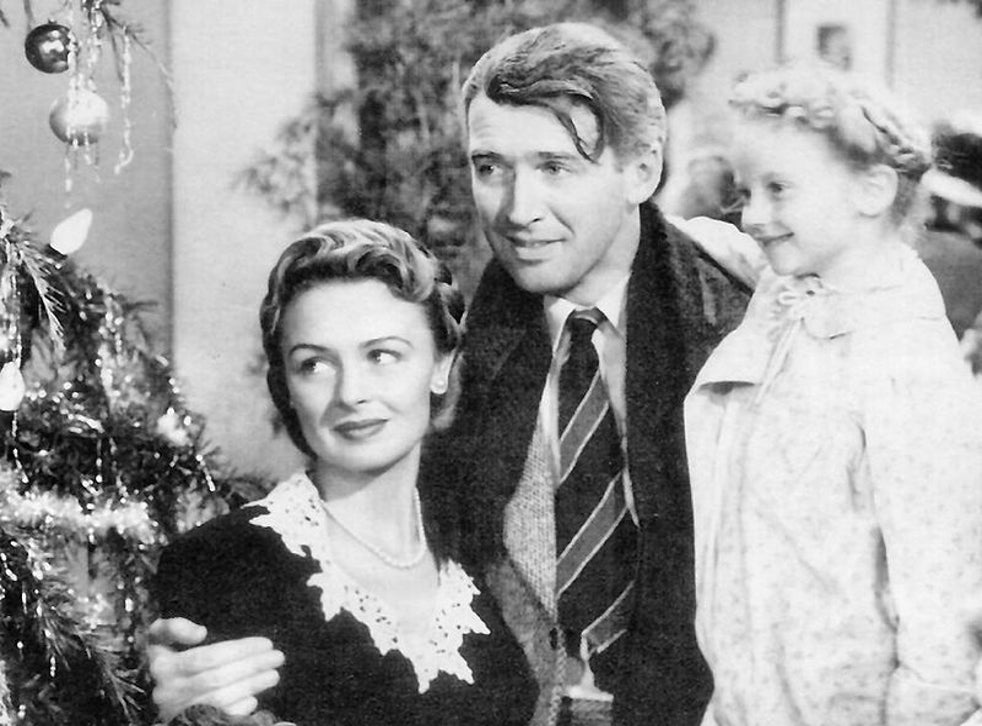
Should Have Won: The Best Years Of Our Lives was one of the first films to deal with the struggle of returning veterans. It’s a great film. That said, I still have to vote for It’s A Wonderful Life, a film that is far darker than its reputation as a holiday favorite might suggest.
Should Have Won: Crossfire. Like Gentleman’s Agreement, Crossfire deals with anti-Semitism. Crossfire, though, does so in a far more direct, angry, and effective manner.
Should Have Won: Hamlet is an excellent film but The Treasure of the Sierra Madre is one of the best ever. John Huston’s look at the power of greed gets my vote.
Should Have Won: In this case, I think that Academy got it right. All The King’s Men is a film that seems rather prophetic today. Willie Stark would have made out like a bandit during the COVID lockdowns.
Up next, get ready to like Ike and hate commies because we’re heading into the 50s!
Ah, the 1930s. America was mired in the Great Depression. FDR was plotting to pack the courts. In Europe, leaders were trying to ignore what was happening in Italy, Spain, and Germany. As for the Academy, it was still growing and developing and finding itself. With people flocking to the movies and the promise of an escape from reality, the Academy Awards went from being an afterthought to a major cultural event.
Should Have Won: This is a tough year. None of the nominees are really that great. The two main contenders were Cimarron and Trader Horn but neither one has aged particularly well. Of the film that were nominated, The Front Page probably holds up the best. The best of the film eligible for these split-year Oscars — Little Caesar and The Public Enemy — were not nominated for Best Picture.
Should Have Won: Cavalcade is one of the more forgotten best picture winners and for good reason. It’s just not that interesting. Of the other nominees, I Am A Fugitive From A Chain Gang is the most powerful and 42nd Street is the most entertaining. In the end, my vote would have gone to 42nd Street. The original King Kong was eligible but not nominated.
Should Have Won: Oh wow. I really love The Thin Man but seriously, nothing beats Clark Gable and Claudette Colbert in It Happened One Night. For the first time this decade, the Academy got it right.
Should Have Won: The Great Ziegfeld is a good example of a film that won because it was big. It was a spectacle. It overwhelmed audiences and voters with how overproduced it was. Seen today, it’s entertaining but overlong. My vote would have gone to the far more low-key (but also far more intelligent) Dodsworth.
Should Have Won: The Life of Emile Zola isn’t a bad film but it’s not the best of the nominees. Dead End features one of Humphrey Bogart’s best pre-Casablanca performances and The Awful Truth is a classic screwball comedy with Cary Grant and Irene Dunne. In the end, my vote would have gone to The Awful Truth.
Should Have Won: Damn. As much as I hate to vote against any movie starring Jimmy Stewart, there’s no way that I can take You Can’t Take It With You over either The Adventures of Robin Hood or Grand Illusion. Robin Hood is the most entertaining of the nominees but Grand Illusion is the most important. My vote goes to Grand Illusion.
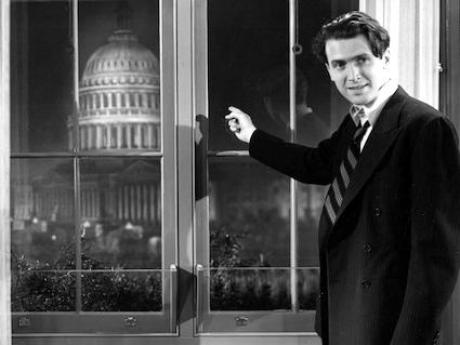
Should Have Won: This is such a difficult year because I can make a case for all of the nominees, with the exception of the creaky Love Affair. In the end, my vote goes to …. argh! This is so hard. I’m juggling Gone With The Wind, Mr. Smith Goes To Washington, Wuthering Heights, Stagecoach, Ninotchka, and The Wizard of Oz in my head. Can I pick all of them? No? Okay, I’ll go with …. Hell, I have to go with Jimmy Stewart holding the Senate hostage. Sorry, Wizard of Oz. I vote for Mr. Smith Goes To Washington, which has Jimmy Stewart and no munchkins.
And that’s it for the 30s. Up next, in about 30 minutes, it’s time for the 40s!
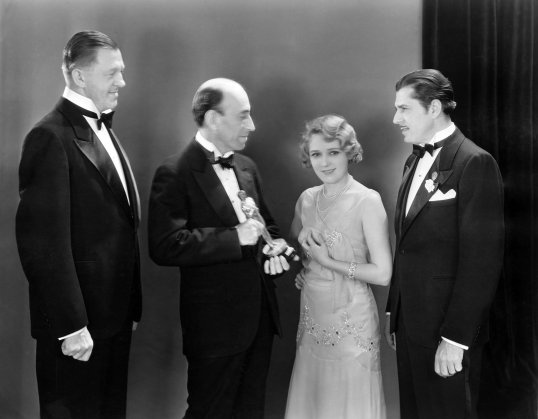
When Louis B. Mayer first proposed setting up what would become the Academy of Motion Picture Arts and Sciences in 1927, he wasn’t really that interested in giving out awards. Instead, he saw the Academy as an organization that would mediate labor disputes between the studios and the unions. He also felt that the Academy could basically be used to improve the film industry’s image, which had taken a hit from the rape trial of Fatty Arbuckle, the overdose of Wallace Reid, and the murder of William Desmond Taylor. When he and the other 35 founders of the Academy met to draw up the organization’s charter, the idea of giving out awards was mentioned only in passing. A committee would be set up to give out yearly awards to honor the best that Hollywood had to offer.
The first Academy Awards ceremony was held in a hotel ballroom in 1928. It occurred at the end of a private dinner and the awards were handed out in 15 minutes. The 2nd ceremony was the first to be broadcast on the radio. It was only when the Academy got around to the third ceremony that the Oscars started to transform into the spectacle that we know today. It was only then that people started to really pay attention to what was and was not nominated for Best Picture.
Today, for Oscar Sunday, we’re taking a a decade-by-decade look at the Best Picture races of the past. We start with those first three ceremonies.
Wings (1927, dir by William Wellman)
1927–1928
Uniquely, the very first Academy Awards saw the presentation for two best picture trophies. Best Production went to the most entertaining film. Unique and Artistic Production went to the most artistic film.
Should Have Won: The first time out, the Oscars got it right. People tend to be a bit dismissive of Wings but it has that one amazing tracking shot and it also features the wonderful Clara Bow. Sunrise, meanwhile, is a triumph in every way. Among the eligible films not nominated: Buster Keaton’s The General and Fritz Lang’s Metropolis.
Sunrise (1927, dir by F.W. Murnau) Won Best Unique and Artistic Picture
1928–1929
Uniquely, only the winners were announced for the 2nd awards ceremony. The “nominees” listed below are taken from a list of notes that were taken while the judges were discussing who and what to honor.
Should Have Won: The Broadway Melody was the first musical to win but it’s aged terribly. I actually prefer The Hollywood Revue of 1929, which has no plot but which does feature a bunch of MGM stars singing, dancing, and showing off that they were having no problem transitioning for silent cinema to sound films. Or, at least, that was the idea. Poor John Gilbert.
Here to get you in the Oscar spirit is today’s song of the day, the main title track to 1966’s The Oscar.Listening to this music, you’ll be more than ready to walk the red carpet!
Tonight will mark the 92nd year that the Oscars have been awarded. The Academy Awards are now an American tradition and, just as America has changed over the past 10 decades, so have the Oscars.
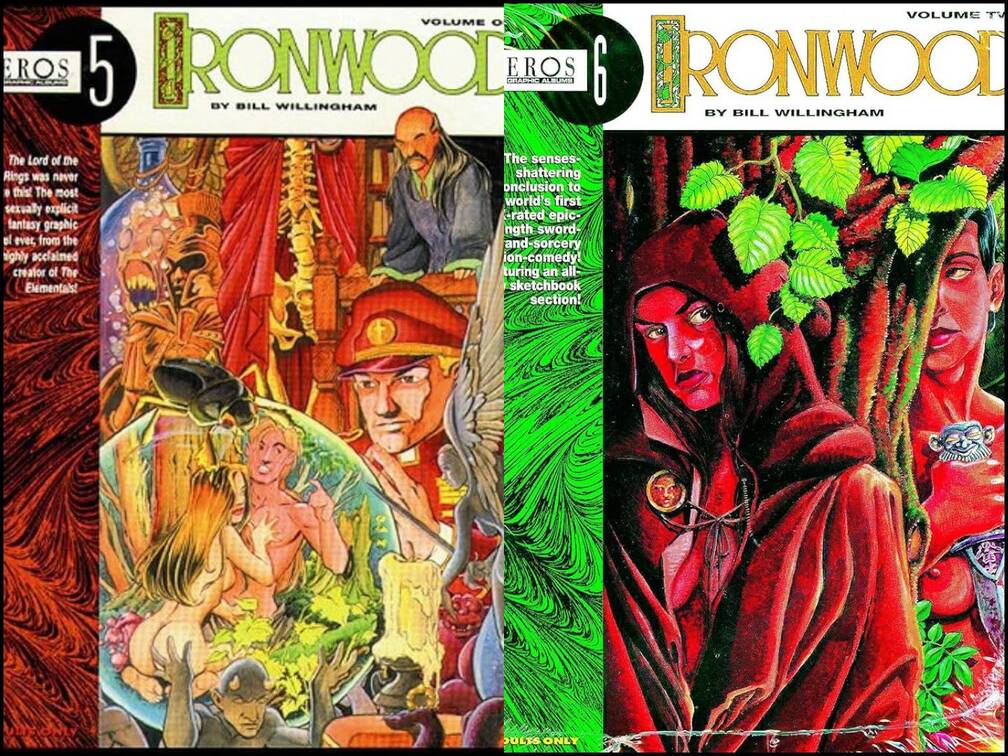
Bill Willingham’s Ironwood is the sort of graphic novel that lives in the uneasy space between bawdy escapism and unexpectedly thoughtful worldbuilding, making it a quintessential guilty pleasure that some readers insist on treating as near–high art. It is at once shamelessly pornographic and surprisingly committed to telling a coherent sword‑and‑sorcery story, which means your mileage will depend heavily on whether you can accept explicit sex as an integral—often dominant—part of the narrative rather than a tacked‑on indulgence.
Published by Eros Comix in the early 1990s, Ironwood ran for eleven issues and was later collected into two trade paperbacks that have acquired a minor cult status among fans of erotic fantasy comics. The premise follows Dave Dragovon, a juvenile dragon who appears entirely human because he has not yet matured into his full draconic form, as he is hired by the beautiful and cursed Pandora Breedlswight to seek out the wizard Gnaric and break the spell on her. It is a familiar quest hook—hero, sorcerer, cursed damsel—but Willingham uses it as a loose scaffold on which to hang an almost nonstop parade of sexual encounters, bawdy gags, and bursts of fantastical incident.
As a narrative, Ironwood is better than its reputation as “porn with plot” might suggest, though that label is not entirely unfair. The story is consciously serialized in the classic fantasy‑adventure mode: Dave and Pandora move from one locale to another, encountering wizards, monsters, political schemes, and rival factions, all while the central quest to undo Pandora’s curse gives a sense of forward momentum. Various readers have pointed out that there is genuine political intrigue and thought given to motivations, and you can see Willingham testing out the sort of layered plotting and character dynamics he would later refine in Fables, even if here they are wrapped around mandatory explicit scenes. There are moments when the story is engaging enough that the sex almost feels like an interruption, a dynamic Willingham himself has reportedly acknowledged when noting that fitting in each issue’s required sex scene could break the flow.
Tonally, the book leans heavily into adult humor, but it is not mean‑spirited. The jokes range from clever wordplay and situational comedy to unabashedly adolescent gags, the sort that make you groan even as you recognize they fit this world of oversexed dragons, lecherous wizards, and magically enhanced perversions. In this regard, Ironwood is very much a product of its era: a 1990s underground/alt sensibility that treats fantasy tropes and sexual taboos with the same irreverent shrug. When the humor lands, it gives the book a disarming charm, but when it doesn’t, the dialogue can feel like an overlong dirty joke that mistakes sheer explicitness for wit. Still, there is a lightness here—especially in Dave’s reactions and the deadpan absurdity of certain magical mishaps—that keeps the series from tipping into grim or exploitative darkness, despite its plentiful kinks.
Visually, Willingham’s art is the most persuasive argument for why some readers champion Ironwood as something more than disposable smut. His linework is clean and expressive, with a confident sense of anatomy, staging, and page composition that gives both the action and the erotic scenes a fluid, readable rhythm. The fantasy settings are detailed without being cluttered; taverns, towers, and mystical landscapes all feel like lived‑in spaces rather than generic backdrops for sex scenes. The character designs, especially Pandora and the various magical oddballs, show a cartoonist relishing the chance to exaggerate physicality and personality in equal measure, which goes a long way toward making these figures feel like characters rather than mere bodies.
That said, the erotic content is not merely frequent—it is foundational, and that is where Ironwood becomes a textbook guilty pleasure. This is an unabashedly hardcore series: explicit sex acts, imaginative uses of magic for sexual purposes, and sequences that leave nothing to implication. Devices like a hydra‑head spell repurposed so a character can pleasure multiple partners at once are emblematic of the book’s gleeful “power perversion potential,” embracing the logic of a sex‑obsessed Dungeons & Dragons campaign. For readers comfortable with that premise, there is an undeniable energy in the way Willingham integrates erotic spectacle into battles, spells, and negotiations; for others, the same material will read as juvenile, repetitive, or simply exhausting.
Reception among those who have sought out the collected volumes tends to be surprisingly positive, with many praising Ironwood as one of the rare “sex comics” where the story can stand on its own, even if stripped of the explicit content. Fans often note the balance between story, humor, and eroticism, arguing that the plot is engaging enough that the sex becomes a bonus rather than the sole reason to read. This is where the “high art” argument creeps in: within certain circles of fantasy and underground comics readers, Ironwood is celebrated as an early sign of Willingham’s strengths as a writer and artist, and as an example of how erotic comics can pursue worldbuilding and character arcs rather than simple vignettes. Yet that enthusiasm coexists with acknowledgment that, without the sex, this would largely be a light, sometimes flimsy adventure—a fun romp, but not a lost masterpiece of the medium.
In a broader context, Ironwood sits at an interesting crossroads in Willingham’s career and in the evolution of adult comics. Knowing his later mainstream success, you can see how this early project let him experiment with long‑form storytelling, recurring cast chemistry, and a blend of mythic and mundane concerns, all while operating in a corner of the market that gave him almost total creative freedom. That creative freedom is both the book’s greatest strength and its biggest barrier to entry: it delivers exactly the kind of unfiltered fantasy‑erotica hybrid it promises, but that same purity of purpose locks it firmly into the realm of niche appetite.
Ultimately, Ironwood is best approached with clear expectations and a sense of humor. As a graphic novel, it is technically accomplished, often funny, and occasionally more narratively ambitious than its reputation suggests, which explains why some fans will defend it as a minor classic of erotic fantasy comics. At the same time, its relentless explicitness, adolescent impulses, and lightweight core plot mark it firmly as a guilty pleasure—one that knows exactly what it is and never pretends otherwise, even as a devoted subset of readers insists on elevating it to the status of “high art.”
The scene below is from the 1953 film, Julius Caesar. This Oscar-nominated Shakespearean adaptation had a cast that was full of distinguished actors. James Mason played Brutus. The great John Gielgud played Cassius. Louis Calhern was Caesar while other roles were filled by Deborah Kerr, Greer Garson, Edmond O’Brien, George Macready, John Hoyt, Edmund Purdom. and a host of other distinguished thespians. And yet, the best performance in the film came from an actor who, at the time, no one considered to be a Shakespearean. Marlon Brando brought his method intensity to the role of Mark Antony and the result was a performance that is still electrifying today.
Here is Marlon Brando in Julius Caesar, giving one of the best performances to not win an Oscar. Remember this the next time someone defends a film or a performance by saying that it won an Oscar. Sometimes, the best does not win. Most of the time, the best cannot even be identified until several years have passed. It’s hard to argue with William Holden winning a long overdue Oscar for his work in 1953’s Stalag 17 but still, the power of Brando’s performance is impossible to deny.
If Scarlett Johansson hadn’t spent several years appearing in Marvel films, she’d probably have an Oscar by now. She was nominated twice in 2019, for JoJo Rabbit and Marriage Story. I would argue that she also deserved nominations forUnder The Skinand Lost in Translation as well. Indeed, considering that Jonathan Lynn revealed himself to be a pretentious blowhard when he was accepting his Oscar for The Zone of Interest, it seems even more likely than before that the power of Under the Skin was totally due to Johansson’s performance. This year, she’ll be appearing in Paper Tiger, James Gray’s latest movie about two brothers dealing with the Russian mafia. (Seriously, how many times has Gray made this movie?)
Kirsten Dunst
Kirsten finally received her first nomination for The Power of the Dog and she probably would have won if that film hadn’t been such a remote and chilly viewing experience. Dunst is a Hollywood survivor, someone who has gone from appearing in cutesy film like Get Over It to becoming one of the best interpreters of depression out there. Between Melancholiaand Power of the Dog, there’s really no excuse for her not to have an Oscar already.
Carey Mulligan
Mulligan should have won an Oscar for An Education. Along with An Education, she’s also been nominated for Promising Young Woman and Maestro. She deserved a nomination for Shame as well. Carey Mulligan is one of the most intelligent actresses of her generation and hopefully, she’ll get the award that she deserves soon.
Anya Taylor-Joy
Taylor-Joy has seemed like an eventual nominee ever since her role in The Witch. This year, she’ll be playing Joni Mitchell in Cameron Crowe’s currently untitled biopic and appearing in Dune: Part Three. It’ll be interesting to see if she follows the Timothee Chalamet route of getting nominated for playing an iconic singer.
Kate Hudson
A lot of people have been dismissive of Kate Hudson’s nomination for Song Sung Blue. Well, I’ve actually seen the film and I hope she wins tonight. She gave a great performance. And if she does lose to Jessie Buckley or Rose Byrne tonight, I hope she’ll get a third nomination soon.
Amy Adams
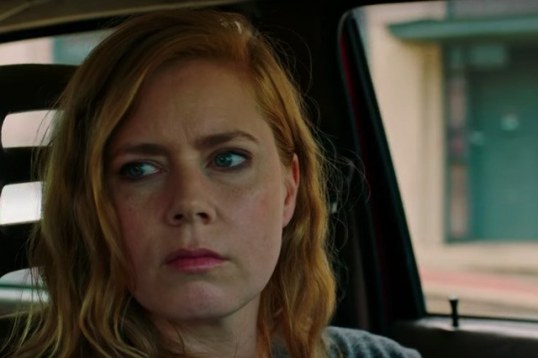
A few years ago, Amy Adams seemed certain to win an Oscar at some point in the very near future. Since 2005, she has received 6 Oscar nominations and her lack of a nomination for Arrivalis often cited as one of Oscar’s more bizarre decisions. And yet, it’s been 8 years since Adams was last nominated, for Adam McKay’s irksome “satire,” Vice. Adams has continued to appear in major films. In fact, many of her recent roles have been the type that seem to have Oscar nomination written all over them. That may be a part of the problem. Adams’s main strength as an actress has always been her natural authenticity. With films like Hillbilly Elegy and Nightbitch, she almost seemed to be trying too hard to catch the attention of the Academy. Her upcoming film, At The Sea, features her as a recovering addict and, again, it seems like the type of role that would get her nomination but the film itself was greeted with derision when it premiered at the Berlin Film Festival. Oh well. I remain hope that my fellow redhead will finally get the Oscar that she deserves.
I should begin by saying that there’s a good chance that Ethan Hawke will win an Oscar later tonight. He’s been nominated for Blue Moon. When this Oscar season began, he was definitely the front runner. As of late, the momentum seems to have shifted toward Michael B. Jordan or perhaps Timothee Chalamet but still, one should not totally discount Hawke’s chances. If Hawke does lose tonight, I have no doubt that he will be nominated in the future and eventually, he will win. It’ll be long overdue. As you can probably guess by the picture at the start of this post, I’m one of those people who thinks that he definitely should have won for Boyhood.
Colin Farrell
Colin Farrell finally received his first Oscar nomination for The Banshees of Inisherin but he lost the award to Brendan Fraser. Farrell is not an actor who has always gotten the respect that he deserves. Especially early in his career, he was often miscast. Much like Matthew McConaughey, he was often dismissed as just being a pretty boy until he met a director — in this case, Martin McDonagh — who truly understood how to best utilize Farrell’s screen presence. As In Bruges, Banshees and The Penguin showed, Farrell is essentially a character actor in a leading man’s body. My hope is that Farrell will win his first Oscar between now and 2036 and that he’ll give a memorable acceptance speech.
Brendan Gleeson
Speaking of The Banshees of Inisherin, how does Brandan Gleeson only have one Oscar nomination to his name? Now, to be clear, I don’t begrudge the fact that Gleeson lost to Ke Huy Quan. Quan had a wonderful personal story, gave the best performance in the overrated mess that was Everything Everywhere All At Once, and his acceptance speech was truly touching. That said, my sincere hope is that the Academy understands that Gleeson is long overdue an Oscar. Hopefully, that will be corrected soon.
Kurt Russell
Kurt Russell is one of those actors who I just can’t believe has never been nominated. In a few days, Kurt Russell will be turning 75. He’s been a popular actor for most of his life but he’s not getting any younger. So, get with it, Academy! I don’t care what his next film is. I don’t care how big the role is. Give Kurt Russell his Oscar!
Tom Cruise
Tom Cruise has had an interesting career. He went from being a teen idol to a character actor to a somewhat disreputable celebrity to finally reemerging with the Mission Impossible films as one of our last true movie stars. One need only watch Top Gun: Maverick to see the type of charisma that we’re going to miss once it’s gone. Later this year, Cruise will be starring in Digger.
Sylvester Stallone
Seriously, how many times does this man have to play Rocky and Rambo before the Academy finally gives him the award that everyone secretly wants him to win? Give Stallone his Oscar!
David Lynch died without ever having won a competitive Oscar. He was nominated three times, once for a movie that was also nominated for Best Picture. He was given an honorary award before he died. But he never won the Oscar for Best Director.
When it comes to the Oscars, we always talk about artists who are “overdue” and we often suggest that they’ll win with their next major release. But life and art are both unpredictable. Indeed, even when a past due director does win an Oscar, it’s often for a lesser film. George Cukor directed many charming films but he only won one Oscar and that was for the leaden My Fair Lady.
Here are my picks for six directors who I hope will win an Oscar in the next ten years. Some are overdue. Some are just underrated. All of them are deserving.
Richard Linklater
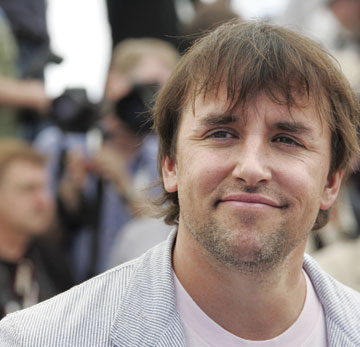
Richard Linklater had a great 2025. Blue Moon resulted in an Oscar nomination for Ethan Hawke. Nouvelle Vague swept the Cesars. He’s widely viewed as one America’s best and most independently-minded directors. And yet, he’s only once been nominated for Best Director, for Boyhood. That Linklater lost that Oscar to Alejandro Gonzales Inarritu is a true injustice. Linklater is one of those directors who vision may be too idiosyncratic for the Academy but I remain hopeful that he will get his Oscar. He’s currently directing Merrily We Roll Again, with filming set to wrap up in 2040. That’s a long wait but I look forward to reviewing it.
Joseph Kosinski
With Top Gun: Maverick and F1, Kosinski has emerged as one of the best directors of action around. Both Top Gun: Maverick and F1 were satisfying films that were not ashamed of being works of adrenaline-pumping excitement. Both were nominated for Best Picture but Kosinski has yet to receive a Best Director nomination. I hope that changes soon.
David Fincher
It’s amazing to realize that David Fincher still doesn’t have an Oscar. He’s one of the most influential directors around. Much as with David Lynch, a lot of aspiring filmmakers have tried to imitate Fincher but David Fincher really is the only one who can do what he does. 2026 will see the release of The Adventures of Cliff Booth and it will be interesting to see how Fincher continues the story started by Quentin Tarantino in Once Upon A Time In Hollywood.
Quentin Tarantino
To be honest, I suspect that Quentin Tarantino is never going to win a Best Director Oscar. He’s talented, he’s beloved by a large number of film fans, and he also has a real talent for burning bridges and ticking people off. If you’re a director who happens to be a friend of Paul Dano’s, you’re probably never going to vote for Tarantino. That said, I have my doubts as to whether or not Tarantino really cares about the Oscars. His favorite films are the ones that don’t win Oscars. I personally would enjoy hearing his acceptance speech.
Andrea Arnold
I have been a fan of Andrea Arnold’s ever since I saw Fish Tank at the Dallas Angelika in 2010. This British director has only directed five feature films since 2006 but she’s still one of the best filmmakers out there, capturing life on society’s fringes with an empathy that never feels condescending.
Sofia Coppola
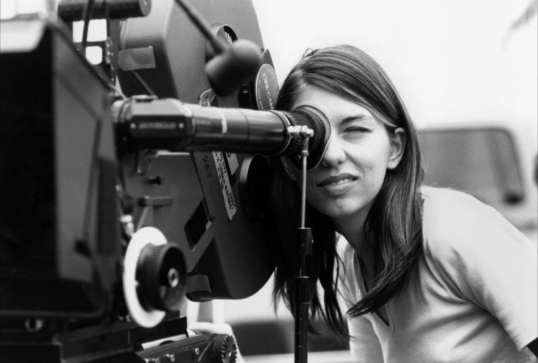
Sofia is a perennial on these lists and I’ll keep including her until she finally wins her Oscar. No one captures the beauty of ennui with quite the skill and visual flair of Sofia Coppola.