What If Lisa Marie Determined The Oscar Nominees…


With the Oscar nominations due to be announced this week, now seems like a good time to indulge in something I like to call “If Lisa Marie Had All The Power.”  Listed below are my personal Oscar nominations.  Please note that these are not the films that I necessarily think will be nominated.  The fact of the matter is that the many of them will not.  Instead, these are the films that would be nominated if I was solely responsible for deciding the nominees this year.  Winners are listed in bold.

For those who are interested, you can check out my picks for 2010 by clicking on this sentence.

Meanwhile, my picks for last year can be seen by clicking on this sentence.
Best Picture

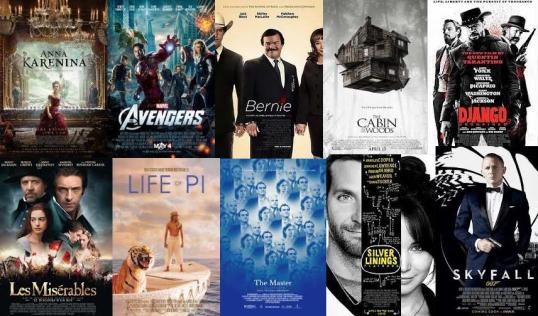
Best Picture

Anna Karenina

The Avengers

Bernie

The Cabin In The Woods

Django Unchained

Les Miserables

Life of Pi

The Master

Silver Linings Playbook

Skyfall
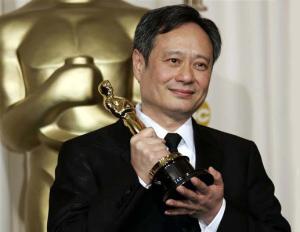
Ang Lee

Best Director

Drew Goddard for The Cabin In The Woods

Ang Lee for Life of Pi

Richard Linklater for Bernie

Quinton Tarantino for Django Unchained

Joe Wright for Anna Karenina

master-trailer-joaquin-phoenix

Best Actor

Jack Black in Bernie

Bradley Cooper in Silver Linings Playbook

Daniel Day-Lewis in Lincoln

Matthew McConaughey in Killer Joe.

Joaquin Phoenix in The Master
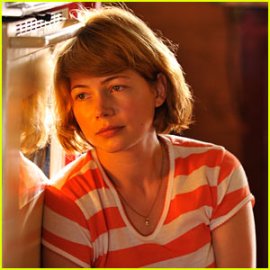
michelle-williams-take-this-waltz-trailer

Best Actress

Marion Cotillard in Rust and Bone

Greta Gerwig in Damsels in Distress

Kiera Knightley in Anna Karenina

Jennifer Lawrence in Silver Linings Playbook

Michelle Williams in Take This Waltz
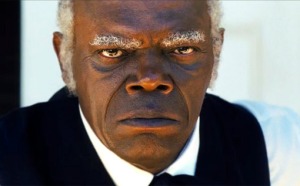
django-jackson

Best Supporting Actor

Robert De Niro in Silver Linings Playbook

Philip Seymour Hoffman in The Master

Samuel L. Jackson in Django Unchained

Sam Rockwell in Seven Psychopaths

Christoph Waltz in Django Unchained

Zoe-Kazan-in-Ruby-Sparks-e1348740167495

Best Supporting Actress

Rebecca De Mornay in Mother’s Day

Dame Judi Dench in Skyfall

Anne Hathaway in Les Miserables

Zoe Kazan in Ruby Sparks

Sarah Silverman in Take This Waltz

cabininthewoods_4

Best Original Screenplay

The Cabin In The Woods

Django Unchained

The Master

Ruby Sparks

Take This Waltz

Bernie Bearing Gifts

Best Adapted Screenplay

Anna Karenina

Argo

Bernie

Life of Pi

Silver Linings Playbook
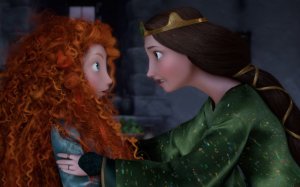
"BRAVE"

Best Feature-Length Animated Film

Brave

Frankenweenie

Paranorman

Pirates!  Band of Misfits

Wreck-It Ralph

rustboen21

Best Foreign Language Film

Barbara

Headhunters

The Raid: Redemption

A Royal Affair

Rust and Bone

Ai Weiwei never sorry film

Best Documentary Feature

Ai Wei Wei: Never Sorry

The Central Park Five

First Position

The Queen of Versailles

2016: Obama’s America

brave_movie--300x300

Best Original Score

Beasts of the Southern Wild

Brave

The Dark Knight Rises

For Greater Glory

The Master
the-raid-redemption-trailer_450x254

Best Original Song

“For You” from Act of Valor

“Yo No Se” from Casa De Mi Padre

“The Sambola! International Dance Craze” from Damsels in Distress

“Ancora Qui” from Django Unchained

“Abraham’s Daughter” from The Hunger Games

“The Baddest Man Alive” from The Man With The Iron Fists

“Razor’s Out” from The Raid: Redemption

“Big Machine” from Safety Not Guaranteed

“Skyfall” from Skyfall

“Anything Made Out of Paper” from West of Memphis
Les Miserables 

Best Sound Editing

Chronicle

The Dark Knight Rises

End of Watch

Les Miserables

Skyfall
Les Miserables2

Best Sound Mixing

Chronicle

End of Watch

Killing Them Softly

Les Miserables

Skyfall
Anna Karenina

Best Art Direction

Anna Karenina

The Avengers

The Cabin In The Woods

Cosmopolis

Les Miserables
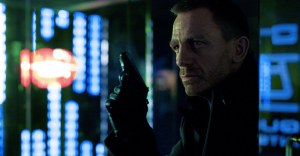
Skyfall

Best Cinematography

The Hobbit

Lawless

Life of Pi

Moonrise Kingdom

Skyfall
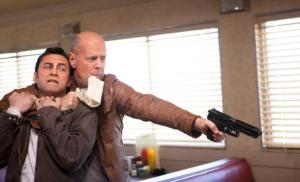
looper

Best Makeup

The Hobbit

The Hunger Games

Les Miserables

Lincoln

Looper
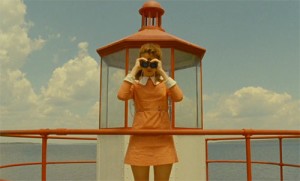
wesandersonmoonrisekingdom

Best Costume Design

Anna Karenina

Django Unchained

The Hunger Games

Lincoln

Moonrise Kingdom
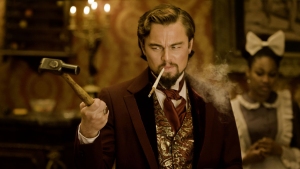
django-unchained-2

Best Film Editing

Anna Karenina

The Cabin In The Woods

Django Unchained

The Master

Silent House
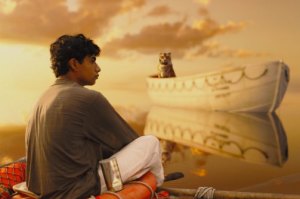
Life of Pi

Best Visual Effects

The Avengers

The Dark Knight Rises

Life of Pi

Looper

Men In Black 3

List of Films By Number of Nominations

8 Nominations — Django Unchained

7 Nominations — Anna Karenina

6 Nominations — Les Miserables, Life of Pi, The Master, Skyfall

5 Nominations — The Cabin In The Woods, Silver Linings Playbook

4 Nominations — Bernie

3 Nominations — The Avengers, The Dark Knight Rises, The Hobbit, The Hunger Games, Lincoln, Take This Waltz

2 Nominations — Brave, Chronicle, Damsels in Distress, End of Watch, Moonrise Kingdom, The Raid: Redemption, Ruby Sparks, Rust and Bone

1 Nomination —Act of Valor, Ai Wei Wei: Never Sorry, Argo, Barbara,  Beasts of the Southern Wild, Casa De Mi Padre, The Central Park Five, Cosmopolis, First Position, For Greater Glory, Frankenweenie, Headhunters, Killer Joe, Killing Them Softly, Lawless, Looper, The Man With The Iron Fists, Men In Black 3, Mother’s Day, The Pirates! Band of Misfits , The Queen of Versailles, A Royal Affair, Safety Not Guaranteed, Seven Psychopaths, Silent House, 2016: Obama’s America, West of Memphis, Wreck-It Ralph

List of Films By Oscars Won

2 Oscars — Anna Karenina, Brave, Django Unchained, Les Miserables, Life of Pi

1 Oscar — Ai Wei Wei: Never Sorry, Bernie, The Cabin In the Woods, Looper, The Master, Moonrise Kingdom, The Raid: Redemption, Ruby Sparks, Rust and Bone, Skyfall, Take This Waltz
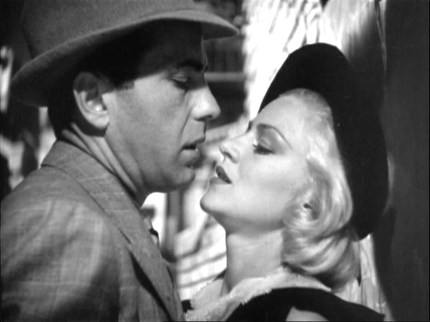
Film Review: Dead End (dir. by William Wyler)


Originally released in 1937, Dead End is a gangster film with social conscience.  Based on a Broadway play and featuring a screenplay by the iconic progressive writer Lillian Hellman, Dead End is a crime film that’s more interested in the root causes of crime than in crime itself.

Dead End takes place over the course of one day in the slums of New York City.  While tenement children spend their time swimming in the East River and idealizing gangsters, wealthy people live in high-rise apartments and depend on the police and their doorman (played, naturally enough, by Ward Bond) to keep them protected from the poor people living next door.

Among the poor is Drina (Sylvia Sidney), who divides her time between marching on a picket line and trying to keep her younger brother Tommy (Billy Halop) from hanging out with the local street gang, the Dead End Kids (Huntz Hall, Bernard Punsly, Leo Gorcey, and Gabriel Dell).  Drina’s childhood friend is Dave (Joel McCrea), an idealistic architect who is having an affair with a rich man’s mistress (Wendy Barrie).

Complicating things is the arrival of Baby Face Martin (Humphrey Bogart).  Like Dave, Martin grew up in the slums.  However, while Dave is trying to escape by making an honest living, Martin has already escaped by choosing a life of crime.  Now, he’s viewed as a hero by Tommy and his friends and with wariness by Dave and Drina who know that Martin’s presence will eventually lead to the police invading their home.  Martin, however, is more concerned with seeing his mother (Marjorie Main) and his ex-girlfriend (Clare Trevor), who has become a prostitute and is suffering from syphilis.

For a film that was made close to 80 years ago, Dead End holds up pretty well.  Is this because it’s a brilliant film or just because the connection between poverty and crime has remained one of the constants of human history?  It’s probably a combination of both.  Considering that Dead End was filmed on a Hollywood backlot, it’s a surprisingly gritty and realistic film that only occasionally feels a bit stagey.  The film’s entire cast does a good job of bringing this particular dead end to life, though the obvious star of the film is Humphrey Bogart.  As played by Bogart, Baby Face Martin is both sympathetic and despicable, the epitome of the potential that can be found and wasted in any American city.

Dead End was nominated for best picture but lost to The Life of Emile Zola.  The film also received a much deserved nomination for best art design but lost to Lost Horizon while Clare Trevor lost the race for best supporting actress to Alice Brady, who won for In Old Chicago.  Perhaps most surprisingly of all, Humphrey Bogart did not even receive a nomination for his excellent work in Dead End.  Meanwhile, the film’s tough gang of street kids proved to be so popular that they, as a group, were cast in several other films.  Originally credited as the Dead End Kids (and later known as the Bowery Boys), they ended up making a total of 89 films together.  With the possible exception of Angels With Dirty Faces, none of those films are as highly regarded as Dead End.

Erin’s Favorite Films of 2012


Taking into consideration that I haven’t seen Zero Dark Thirty yet, here are my ten favorite films of 2012.

1. Argo

2. Bernie

3. Silver Linings Playbook

4.  Brave

5. Lincoln

6. For Greater Glory

7. Looper

8. Moonrise Kingdom

9. The Avengers

10. October Baby

The First Six Trailers of 2013


Finally!  It’s 2013 and it’s time for another edition of Lisa Marie’s Favorite Grindhouse and Exploitation Film Trailers!

1) The Incredibly Strange Creatures Who Stopped Living and Became Mixed-up Zombies (1966)

With a title that long, how couldn’t this be a good movie?

2) Frankenstein Meets The Space Monster (1965)

3) Frankenstein Conquers The World (1965)

1965 was obviously a busy year for Frankenstein.

4) Charlie and the Hooker (1977)

With a name like Charlie and the Hooker, you know it’s going to be a fun film for the whole family.  And no, this is not a Charlie Sheen biopic.

5) A Taste of Blood (1967)

From the director Herschell Gordon Lewis…

6) Lisa and the Devil 

And finally, in honor of the new year, here is the trailer for one of my favorite films of all time — Mario Bava’s Lisa and the Devil.

What do you think, trailer kitties?

582396_552198271458521_1029447361_n (1)


Arleigh’s Favorite Five (…Songs) of 2012


I must admit that in 2012 I didn’t get to listen in full many new albums outside of soundtracks. My Fave five of 2012 Songs will reflect this fact, but still with the lack of variety in my past year’s listening habit I thought the songs I came up with for the list I still would’ve put on a much bigger favorite 2012 list if I had need to come up with one. Without further ado he are the Fave Five (though it’s more Fave Six but I decided to combine the first entry’s two as a tie).

  • The Fave Five starts off with a tie that comes from the same film. Both songs come from the soundtrack to The Hobbit: An Unexpected Journey. While the film may not have been up to some audiences’ high expectations the soundtrack itself by Howard Shore (and for “Song of the Lonely Mountain” as sung by Neill Finn) continued the high-quality of the Tolkien soundtracks which began with the original Lord of the Rings trilogy. “Song of the Lonely Mountain” is a much more folk rock addition to the soundtrack while the “Misty Mountains” was actually part of the film itself when the character of Thorin Oakenshield sings it with his band of dwarfs while at Bilbo Baggin’s hobbit hole in the beginning. Both songs so a great job of telling the story of the quest that begins with this first film in the new trilogy.
  • The theme song 2012’s Skyfall was a throwback to the classic James Bond theme song’s of the Sean Connery and Roger Moore Bond eras. In fact, I thought it’s one of the best theme songs the long-running spy thriller franchise has had these past 25 years. It helps that you have Adele singing the theme who seems to be able to hit the right proper emotional notes during the song. It’s really hard to think of Skyfall the film being as good as it is without making sure one mentions Adele’s theme for it. I’d take the leap and say that the song itself may even be better than the film itself.
  • Mass Effect 3 was the epic conclusion to what was this gaming generation’s version of the original Star Wars space opera. It was a story that spanned the galaxy with memorable characters, thrilling action and some very good writing. There will always be the vocal minority who seem to think the ending to the trilogy was bungled by the writers over ta BioWare. That’s a whole different debate altogether. One thing that doesn’t seem to bring out the pitchforks was Clint Mansell’s score work for the game and it all culminates with the song simply titled “An End, Once and For All” which in it’s extended version more than makes up for whatever deficiencies the ending it orchestrally-scored may have had.
  • Another game’s music makes itself to my Fave Five list and this time it’s my second favorite song for the year of 2012. It’s from Halo 4 and it’s a song that brought new life to the venerable franchise. It didn’t just make the end credits more than just memorable, but also surprised many fans of the franchise’s music since the song wasn’t composed by the franchise’s original music composer, Martin O’Donnell, but by Kazuma Jinnouchi. It’s the one song in 2012 that I must’ve listened to on repeat for hours on end and probably in the high hundreds by now. It’s a song that brings back memories of the scifi soundtracks of the 80’s. It’s a work that I easily can compare to the best that’s ever been composed by luminaries in the genre like John Williams, Alan Silvestri, Michael Giacchino and others.
  • What can I say. The song speaks for itself. How can one not say this was the best song for 2012.

The Daily Grindhouse: Mother’s Day (dir. by Darren Lynn Bousman)


One of the great things about writing about films is that occasionally you both get to watch a film that, despite all of your expectations, turns out to be pretty good and then you get to tell other people about it!  Case in point: 2012’s Mother’s Day.

Mother’s Day opens with two memorable scenes.  In the first scene, we watch as a mysterious woman sneaks into a hospital and kidnaps a baby out of the maternity ward.  When a guard attempts to stop her, he ends up with a knife driven into his throat.  While we’ve seen similar scenes in other horror movies, it’s rare that we’ve ever seen this scene handled as well as it is in Mother’s Day.

The second scene opens with an almost intrusive close-up of a woman (played by Jaime King) sobbing as she stares at herself in a mirror.  Again, it’s not that we haven’t seen this scene in other horror films.  Instead, it’s the fact that Jaime King so totally throw herself into those sobs.  We believe her tears and immediately, we want to know why she’s crying and we want to know how she’s connected to that baby being kidnapped from the hospital.  In just two scenes, Mother’s Day captures our attention and, once it grabs a hold of us, it doesn’t let go for the next two hours.

It turns out that King and her husband have just bought a new house and, on one stormy night, they’re throwing a party with a few of their closest friends.  It quickly becomes obvious that, regardless of how happy everyone’s pretending to be, there’s a lot of tension between King and her husband.  Something has happened in the past that no one wants to talk about…

Suddenly, three heavily armed men barge into the house and take everyone hostage.  The three of them are brothers and they’ve just robbed the bank.  The youngest has been shot and is bleeding to death on the couch.  The oldest brother explains that they’re looking for their mother.  She used to live in the house before King and her husband bought it.  The brothers didn’t know that their mother had been kicked out of the house and they’ve been mailing money to the address for the past few months.  When King and her husband claim that none of the money ever showed up at the house, the brothers call their mother and soon, mom shows up to take control of the situation.

Mom is named Natalie and she’s played by Rebecca De Mornay.  From the minute she shows up, it’s obvious that Natalie is both obsessed with her children and that she’s totally and completely insane.  Continually switching between being sweet and psychotic, Natalie is a thoroughly frightening and disturbingly believable monster.  De Mornay wisely underplays Natalie’s more showy moments and prevents the character from becoming just another stereotypical movie psycho.  Instead, she’s the type of villain that we can easily imagine meeting in the real world.  Needless to say, that makes her a hundred time more frightening than any faceless killer with a machete.

Mother’s Day, which was made in 2010 but not released in the U.S. until earlier this year, is a remake of low-budget, 1980 horror film.  This is a rare case where the remake is about a thousand times better than the original.  Director Darren Lynn Bousman keeps the action moving at a perfect pace and the film’s cast (which includes True Blood‘s Deborah Ann Woll in a showy role) creates a disturbingly credible gallery of rogues and victims.

Mother’s Day is a rarity — a horror remake that not only deserves to be seen but which is so good that the original might as well just be an afterthought.

( An earlier version of this review appeared on HorrorCritic.com.)


Lisa Marie Picks The Best 26 Films of 2012


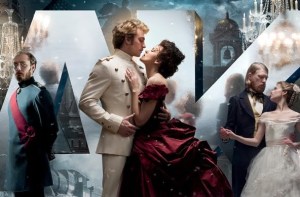
Anna Karenina Movie

Without further ado, here are my picks for the 26 best films of 2012!

  1. Anna Karenina
  2. The Cabin In The Woods
  3. Life of Pi
  4. Bernie
  5. Django Unchained
  6. The Master
  7. Silver Linings Playbook
  8. Skyfall
  9. The Avengers
  10. Les Miserables
  11. Take This Waltz
  12. Rust and Bone
  13. Cosmopolis
  14. Ruby Sparks
  15. Brave
  16. Damsels in Distress
  17. The Hobbit
  18. Lincoln
  19. Argo
  20. Looper
  21. Moonrise Kingdom
  22. The Hunger Games
  23. Sinister
  24. Silent House
  25. Mother’s Day
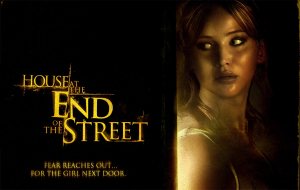
  26. The House AT The End of the Street

House-at-the-End-of-the-Street

Film Review: Guess Who’s Coming To Dinner (directed by Stanley Kramer)


Sometimes, you just had to be there.

That was my reaction as I watched the 1967 Best Picture nominee Guess Who’s Coming To Dinner.  While this film may have been topical and even controversial when it was first released, when watched today it seems to be rather mild and tame.

In Guess Who’s Coming To Dinner, Spencer Tracy plays Matt Drayton.  Matt’s a San Francisco newspaper publisher, a respected member of the upper class establishment.  His wife, Christina (Katharine Hepburn), owns a trendy art gallery and Matt spends his spare time playing golf with Monsignor Ryan (Cecil Kellaway).  He’s the father of the free-spirited Joey (Katharine Houghton, who was Hepburn’s niece in real life).  He’s also, as we’re told repeatedly by every other character in the film, a liberal who supports the civil rights movement.

As the film begins, Joey is returning from a vacation in Hawaii and she has big news.  While in Hawaii, she met and fell in love with the widowed John Prentice, a highly succesful doctor who is literally on the verge of winning a Nobel Peace Prize.  Though he’s 16 years older than her and they’ve only known each other for 10 days, Joey and Prentice are planning on getting married.  While Joey thinks that she’s bringing Prentice to San Francisco just so her parents can meet their future son-in-law, Prentice has specifically come to ask Matt’s permission to marry Joey.  As Prentice explains to Matt, he’ll call the marriage off if Matt doesn’t approve.

John Prentice, by the way, is played by Sidney Poitier and that is the source of the film’s conflict.  Will Matt give his daughter permission to marry a polite, considerate, wealthy, saintly, world-renowned doctor despite the fact that he happens to be black?

Watching Guess Who’s Coming To Dinner was a bit of a culture shock to me, both because I’m the result of an interracial marriage myself (my mom was Spanish and my dad’s white) and because several of my friends are either in or have been a part of an interracial relationship or marriage.  For people my age, it’s not a big deal.  We take it for granted that if you find someone to be attractive, you can have a relationship with him regardless of whatever race he may happen to be.

While I was doing research on Guess Who’s Coming To Dinner, I was reminded that this wasn’t always the case.  When Guess Who’s Coming To Dinner was first released in 1967, interracial marriage was still illegal in 17 states.  In that same year, U.S. Secretary of State Dean Rusk offered to resign when his daughter married a black man.  When Guess Who’s Coming To Dinner was first released, interracial marriage still a controversial subject and when Spencer Tracy struggled with his feelings about it, he stood in for countless Americans who, though they may  have taken pride in how tolerant they were, still weren’t sure what they would do if a black man tried to join their family.

As you can probably guess, Guess Who’s Coming To Dinner is far more interested in teaching a lesson than telling a story.  It’s perhaps not surprising that the film was directed and produced by Stanley Kramer.  Kramer was one of the most prominent filmmakers of the 1960s.  He specialized in making big films that dealt with big issues, the type of films that were regularly nominated for an academy award but rarely honored with an actual win.  In many ways, Guess Who’s Coming To Dinner is a prototypical Kramer picture — its heart is in the right place but the film itself is so conventional and free of ambiguity that it never manages to truly challenge the status quo that it claims to be criticizing.*

In his excellent look at the 1967 nominees for best picture, Pictures At A Revolution: Five Movies And The Birth of The New Hollywood, Mark Harris provides a fascinating behind-the-scenes look at the filming of Guess Who’s Coming To Dinner.  Harris quotes Kramer as explaining that the character of John Prentice had to be perfect because, if the character had any flaws, then bigots in the audience would have seized on those flaws as the reason why Prentice and Joey should not be allowed to marry.  As Kramer explains it, the entire film was set up to make it clear that the only possible reason that Matt could have to object to Prentice would be the color of his skin.

To an extent, I can see Kramer’s point (and again, it’s hard to judge what was necessary to make a point in 1967 from the perspective of 2013) but, as I watched Guess Who’s Coming To Dinner, it was hard not to feel that the main problem with the film was that Prentice was just too perfect.  Certainly, he was too perfect to be in love with Joey who, as played by Houghton, simply seemed to be too naive and foolish to be a good match for a man who is on the verge of winning a Nobel Prize.  Even more importantly, it’s hard to escape the fact that this accomplished, confident black man still needs to get the permission of a well-meaning white liberal before he can marry the woman he claims to love.

Ultimately, despite the film’s noble intentions, it feels more than a bit condescending.  At no point is Prentice allowed to show any anger or frustration at having to prove himself.  There’s even a scene where Prentice criticizes his own father for being too hung up on racism.  “Not until you and you’re whole lousy generation lay down and die will the weight of you be off our backs … You think of yourself as a colored man … I think of myself as a man!” Prentice tells him, as if his success was due to ignoring racism as opposed to defying it.

If Guess Who’s Coming To Dinner has dated badly as a look at race relations in the United States, it remains watchable because of the performances of Katharine Hepburn and Spencer Tracy.  This was their 9th and final film together and the love that these two accomplished actors felt for each other shines through every scene.  Tracy was seriously ill while making the film (and died before it was released) but he gave one of his best and most heartfelt performances here.  He was nominated for a posthumous Oscar but lost to Rod Steiger, who co-starred with Poitier in the film that beat Guess Who’s Coming To Dinner for best picture, In The Heat of the Night.

In the Heat of the Night is best-remembered for the scene in which Poitier angrily declares, “They call me …. MISTER TIBBS!”  This line epitomized the righteous anger that he was not allowed to display in Guess Who’s Coming To Dinner.  If only Guess Who’s Coming To Dinner had its own “MISTER TIBBS” moment, it might be remembered as something other than a film that seems curiously out-of-place as a nominee for best picture.

* That said, Kramer’s post-Guess films were actually pretty interesting and a bit more daring.  Some day, I’ll have to get around to reviewing his 1970 campus unrest film, R.P.M.

Movie Review: Texas Chainsaw 3D (dir. by John Luessenhop)


TexasChainsaw3D11012012-thumb-550x382-104468

I like to use 2010’s Nightmare on Elm Street as the basis for horror remakes I’m not fond of. So when Texas Chainsaw 3D was announced, I automatically wrote it off as being something you could put on the shelf right next to this one. I have to admit I was actually surprised. Yeah, it’s a bad movie, but I didn’t find myself scoffing nearly as much as I did Nightmare, which really didn’t work for me at all. I just don’t see myself running back to see this one. I believe part of this has to do with the way the film opens.

Having gone into the film blind, I expected a remake of the remake. Essentially the same story we had with The Texas Chainsaw Massacre: The Beginning. The shock was that the film starts with the events of the original Tobe Hooper film, rendered in 3D (which was very cool, I might add). It then moves to the afternoon after the last victim ran away. This gives anyone who may be unfamiliar with the original a bit of a bridge, and personally having never liked any of the original sequels, I liked the aftermath that takes place.

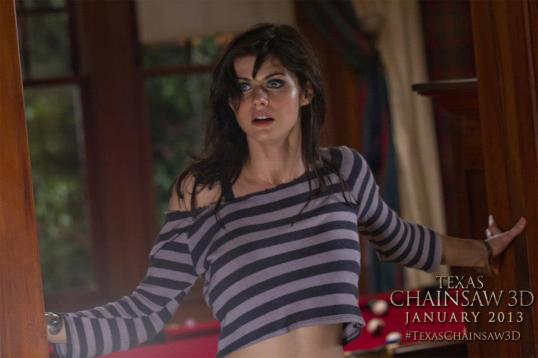
Essentially, Texas Chainsaw 3d is the story of Heather Miller (played by Percy Jackson’s Alexandra Daddario), who receives word from her lawyer that she’s inherited a home in Dallas, Texas. What she doesn’t realize is that this inheritance comes with a few problems. She decides to hop in a van and head down there, accompanied by her friend Nikki (Tania Raymonde), Nikki’s date Kenny (Keram Malicki-Sanchez), and her boyfriend (Tremaine “Trey Songz” Neverson, who the girls in my audience gave the same whoops and catcalls normally reserved for Pattinson/Lautner in a Twilight Showing).

Basically, the movie becomes the cliché “draw this person into isolation and Bam!” that every horror film has, but I’ll admit that I watched a lot of those scenes with my eyes averted, so in that aspect, it got the job done. The visual makeup effects were done by Robert Kurtzman, the “K” in the KNB Effects group (The Walking Dead’s Gregory Nictotero and Howard Berger are the others), and there’s no shortage of blood in this film. While it’s not quite on the level on what the upcoming Evil Dead looks like – that appears to be on the epic Dead Alive levels – Chainsaw does have limbs lost, blood spurting and Leatherface’s signature weapon used to fullest extent. Those moments of isolation come of as very intense, and the direction isn’t bad.

The 3D in the film was nice, though used sparingly. To be honest, the best use of the effects was in what it added to the pieces of the original film that were used. I really enjoyed the outcome there and there are a few key “weapon in the camera” shots that may make you flinch.

Horror films have their eye candy. Sex sells, let’s face it. In Chainsaw, both Raymonde and Daddario had the guys captivated, and Scott Eastwood (Clint’s Son) works for the ladies. While there’s no nudity in the film, good considering how many kids were at my showing, there’s enough skin to appreciate.

What I didn’t like about the film was that in this day and age where you have smart heroes in horror stories – one need only look at Cabin in the Woods here – Chainsaw resorts to the classic “two step, drop” method, meaning that characters meaning to escape will only make it a few steps before stumbling over their feet. I don’t know if that works anymore for audiences. The times that it happened at my showing brought about more laughter than it did horror. Granted, I can’t say I’d be the best of runners with someone wielding a noisy chainsaw behind me, but you’d be damn sure I’d be up or kicking from the floor if I had to. Additionally, the heroes make a few stupid mistakes, which they have to I suppose. Still, I would have liked a few more smart moves. One other thing is that Leatherface himself, while menacing, doesn’t have the same effect that the Brynarski one in Marcus Nispel’s film with Jessica Biel. The Leatherface in that film was a hulking behemoth of a dude that ran with football player like speeds. Chainsaw 3D’s Leatherface is more like your grandpa that caught you stomping around his rose garden and chased after you with garden shears. It’s the equivalent of seeing Dawn of the Dead running zombies and going back to shuffling walkers.

Overall, Texas Chainsaw 3D isn’t anything fantastic and new. You can wait for it on 3D Blu-Ray. If you are an absolute fan of the series, it’s worth a look for both the connections to the original and a cool Gunnar Hansen cameo. Or you can watch it just for Daddario. Just make sure someone else buys you the ticket.

Hottie of the Day: Alexandra Daddario


My pick for Hottie of the Day for January 5, 2013 is Alexandra Daddario.

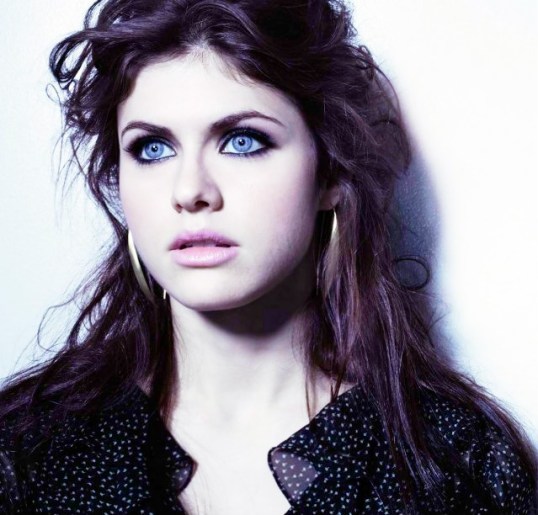
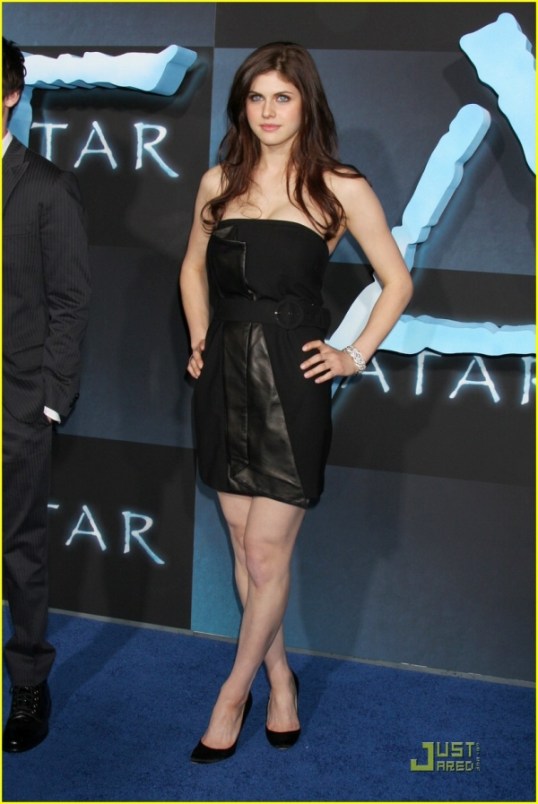
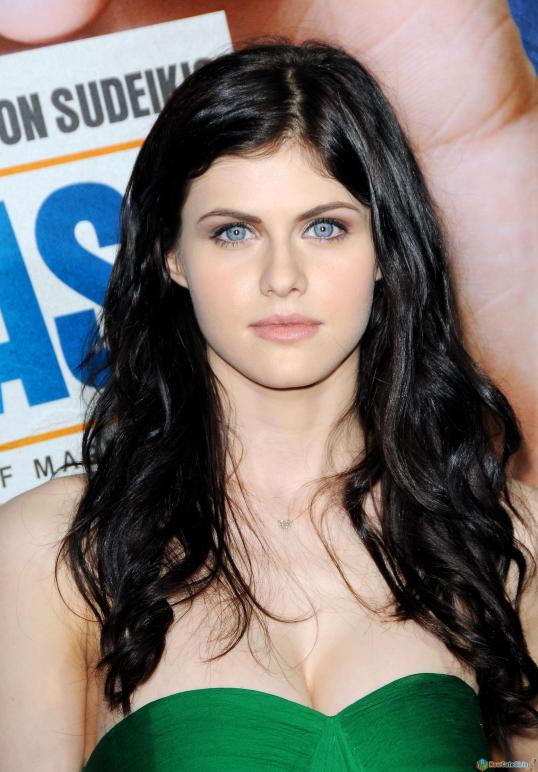
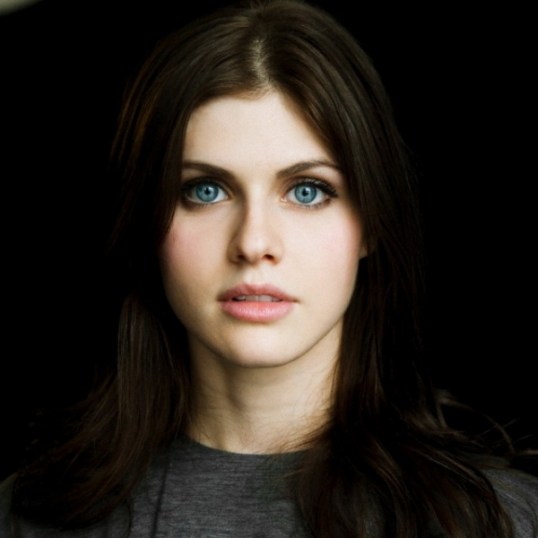
While Texas Chainsaw 3D will probably a blip in the January 2013 movie set, I doubt anyone seeing the film will forget it’s heroine, Heather Miller, played by Alexandra Daddario. Audiences may know her from Parenthood or Blue Collar, but she’s perhaps best known as Annabeth Chase, daughter of Athena in Chris Columbus’ Percy Jackson and the Olympians: The Lightning Thief. With a pair of brilliant blue eyes, this Italian / Czechoslovakian beauty will also grace audiences with Percy Jackson and the Olympians: The Sea of Monsters later this year and hopefully, more in the future.

alexandra daddario under flash

600full-alexandra-daddario

alexandra daddario tcs3d

alexandra%20daddario%20bikini

264909_416462018422923_358535722_n

Alexandra-Daddario-percy-jackson-and-the-olympians

AlexandraDaddario159791

alexandra-daddario


PAST HOTTIES