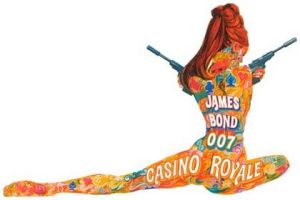
James Bond Film Review: Casino Royale (dir by Ken Hughes, John Huston, Joseph McGrath, Robert Parrish, Val Guest, and Richard Talmadge)


As you probably already know, we here at the Shattered Lens have been counting down the days until the American release of Skyfall by reviewing every single film in the James Bond franchise.  Today, we take a look at the first non-EON Bond film, the epic, psychedelic 1967 spoof Casino Royale.

Where to begin?

When Ian Fleming’s first James Bond novel, Casino Royale, was published in 1953, veteran Hollywood producer Charles K. Feldman bought the film rights.  However, Feldman didn’t buy the rights to Fleming’s subsequent novels and was forced to sit by and watch as Albert Broccoli and Harry Saltzman had unexpected success with Dr. No and the subsequent EON-produced Bond films.  Much as Kevin McClory did with Thunderball, Feldman first attempted to co-produce a serious adaptation of Casino Royale with Broccoli and Saltzman.  However, when Feldman, Broccoli, and Saltzman couldn’t come to an agreement on how each side would be compensated in the proposed production deal, Feldman decided to make Casino Royale on his own.  He also decided that, instead of trying to compete with EON by making a “straight” James Bond film, his version of Casino Royale would be a satirical extravaganza.

Feldman’s vision of James Bond is apparent from Casino Royale’s opening credits.  While the credits are definitely based on the iconic openings of the EON Bond films, they’re also designed to play up the fact that Casino Royale — in the grand tradition of the Hollywood studios at their most excessive — is meant to be a big budget, all-star extravaganza.

Casino Royale actually starts out with a pretty clever premise.  It seems that the name “James Bond,” is simply a code name that has been assigned to several British spies over the years.  As M (played by John Huston, who also directed the first third of the film), explains it, the name “James Bond” strikes such fear in the hearts of Britain’s enemies that the name must be kept alive.

(Speaking for myself, this is an idea that I kinda wish that the official James Bond series would adopt.  If nothing else, it would certainly explain how Pierce Brosnan and Daniel Craig could possibly be the same person.)

The original James Bond (played by David Niven) has long since retired to his stately country estate, where he spends his time playing the piano and complaining about how the agents who have inherited his name are sullying his reputation with excessive womanizing and violence.  It turns out the Sir James Bond is a man renowned for his “celibate image.”  At the start of the film, Bond is asked to come out of retirement by not only M but the heads of the CIA, KGB, and French secret service as well.  SMERSH, an organization of female assassins that’s led by the mysterious Dr. Noah, has been eliminating agents worldwide and only the original (and very chaste) Bond can defeat them.  Bond, however, refuses and M responds by ordering a mortar attack on Bond’s estate.  The estate is blown up but so is M and Bond soon finds himself returning to London as the new head of MI6.

Interestingly enough, David Niven was one of the actors who was considered for the role of James Bond in Dr. No.  Reportedly, Ian Fleming was quite enthusiastic for Niven to take the role but, by the time that Dr. No went into production, Niven was considered to be too old.  There’s a nice bit of irony here in seeing David Niven playing a retired James Bond who spends a good deal of the film complaining about the men who have subsequently assumed his name.

Once Niven takes over MI6, he orders that, in order to confuse SMERSH, all British agents (including female agents) will be known as James Bond.  The rest of the film is divided into episodes that feature these new James Bonds battling SMERSH and the mysterious Dr. Noah.

Among these agents, there’s the handsome Coop (played by Terrence Cooper) who has been trained to resist all sexual temptations.

There’s Mata Bond (Joanna Pettet), the daughter of Sir James Bond and Mata Hari.

There’s Vesper Lynd (Ursula Andress) who is sent to seduce and recruit the expert gambler Evelyn Tremble (Peter Sellers) so that Tremble can beat SMERSH agent Le Chiffre (Orson Welles) at the Casino Royale.

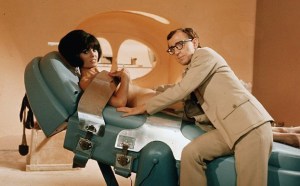
Best of all, there’s Sir James Bond’s nephew, Jimmy Bond.  Jimmy Bond is played by Woody Allen and … well, let’s just take a look at Jimmy’s first scene in the film:

Casino Royale had a notoriously troubled production history and most of those troubles seemed to center on Peter Sellers.  While the film was designed to be a broad, slapstick comedy, Sellers reportedly insisted on trying to play his role straight and even rewrote his lines to make his scenes more dramatic.  Welles eventually grew so disgusted with Sellers that he refused to be in the same room with him.  This caused quite a bit of difficulty since Sellers was in almost every scene that featured Welles.  Eventually, Sellers walked off the film and the film had to be hastily (and awkwardly) rewritten to account for his sudden absence.

When one watches Casino Royale today, it’s hard to escape the conclusion that Sellers was essentially correct.  While most of Casino Royale often feels disjointed and incoherent, the scenes featuring Sellers, Andress, and Welles are some of the strongest in the film.  Sellers’ dramatic approach doesn’t negate the film’s comedy.  If anything, it makes the comedy even stronger because Sellers actually seems to be invested in the reality his character, regardless of how ludicrous a situation that character may find himself in.
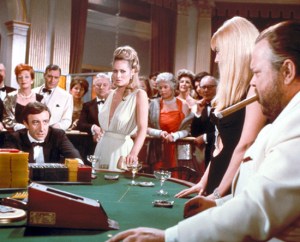
When I watched Casino Royale, I was struck by the stark contrast between the parts of the film that worked and the parts that didn’t.  This is a movie that truly swings from one extreme to another.  Either the film’s satire is working  brilliantly (mostly in the scenes featuring Woody Allen and Peter Sellers) or it’s falling completely flat (like in an extended sequence that features Deborah Kerr as a SMERSH assassin).

I found myself laughing more at the little scenes than the big set pieces.  For instance, I loved it when David Niven embraces Miss Moneypenny (Barbara Bouchet) just to be then told that she’s actually the daughter of the original Miss Moneypenny.  I don’t know much about the actor Terrence Cooper (though, according to Wikipedia, he was also a contender to take the role of James Bond in the official series) but I enjoyed the brief sequence where Moneypenny “tests” him to see if he can take on the Bond identity.  Unfortunately, the film doesn’t really have enough of these small, clever moments.

Ultimately, I found that Casino Royale works best when viewed as a time capsule.  Casino Royale was made at a time when the established major Hollywood studios (and veteran producers like Charles K. Feldman) were struggling to remain relevant.  Foreign films (including, it must be said, the James Bond films) were challenging the common assumptions of what could and what couldn’t be shown on-screen and the studio system reacted by trying to make films that would appeal to younger audiences while also reassuring older audiences that the movies hadn’t really changed that much.  The end result were films like Casino Royale that featured the occasional psychedelic sequence along with cameos from old (and safe) Hollywood stars like George Raft, William Holden, and Charles Boyer.  Casino Royale is the type of self-indulgent film that could only have been made in 1967 and, as such, it’s a valuable time capsule for all of us cinematic historians.

I also have to admit that, as excessive as Casino Royale may be, I happen to love excess.  Casino Royale might be overlong and occasionally incoherent but the costumes are simply to die for.  The film is a visual feast, if nothing else.

Casino Royale was released to scathing reviews and terrible box office but, in the years since, it has become something of a cult favorite.  Our own Trash Film Guru has identified Casino Royale as his favorite Bond film.  Myself, I found the film to be extremely flawed and yet oddly fascinating to watch.  Casino Royale is a total mess and that is both its greatest flaw and greatest strength.

Tomorrow, we’ll return to the official James Bond series by taking a look at You Only Live Twice.  
4 Late Quickies With Lisa Marie: Bully, For Greater Glory, Sound of My Voice, To Rome With Love


While I try to review just about every film I see, there are times when I don’t get to review a film as soon as I would like.  Fortunately, in this age of Netflix, DVDs, and Blu-ray, it’s never too late to review a film!  I saw the following four films earlier this year.  These reviews are a little late but here they are.

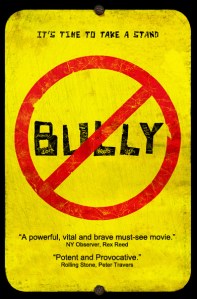
1) Bully (directed by Lee Hirsch)

This documentary, which follows and tells the story of several bullied teenagers over the course of one year, has the best of intentions and it’s definitely effective as far as making you dislike bullies and feel sorry for their victims.  That said, did anyone really like bullies before this film was released? 

Bully got a lot of attention when it was released earlier this year and a lot of people (who should have known better) said that the film itself was a solution to the problem of bullying.  I doubt that this film (or anything else, for that matter) will solve the issue of bullying but it is a well-made look at what kids do whenever adults aren’t watching (and, sad to say, sometimes when they are). 

One problem I did have with this film is that it chooses to limit itself to schools in small towns and rural communities, which gives the whole enterprise something of an elitist feel.  Are there no bullies up north? 

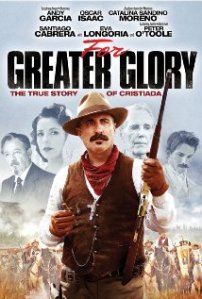
2) For Greater Glory (directed by Dean Wright)

For Greater Glory is a dramatization of the bizarrely obscure period of Mexican history known as the Cristero War.  In 1920s, Mexican President Plutarco Elias Calles (played in this film by Ruben Blades) started a violent and relentless crackdown on the country’s Catholic faithful.  Churches were burned, priests and nuns were murdered by supporters of the government, and eventually Catholic peasants rose up in violent rebellion.  The Cristero War lasted from 1926 until 1929, eventually ending with a truce that was brokered by the U.S. Ambassador to Mexico, Dwight Morrow (played by Bruce Greenwood).

For Greater Glory set box office records in Mexico but it received some pretty negative reviews from American film critics.  To a certain extent, the negative reviews are not surprising.  The film is long, frequently heavy-handed and melodramatic and it’s also unapologetically pro-Catholic in its storytelling.  (Roger Ebert, who never seems to get tired of apologizing for having been born into a Catholic family, was especially critical of that aspect of the film.) 

With all that in mind, I still enjoyed For Greater Glory.  It’s a well-made and ultimately rather moving film (though I imagine some parts of the film might be a bit confusing if you don’t have at least a little bit of a Catholic background) and it features excellent performances from Andy Garcia and Oscar Isaac as two of the rebel leaders.  In many ways, For Greater Glory feels like a throwback to the epic films of the past and that’s not necessarily a bad thing.

3) Sound of My Voice (directed by Zat Batmanglij)

Like last year’s Another Earth, Sound of My Voice is a science fiction film that stars and was co-written by Brit Marling.  The difference between the two is that Another Earth was a pretentious mess while Sound of My Voice is an effectively creepy little film that puts story and atmosphere above trite pronouncements about the state of existence.

Brit Marling plays a mysterious woman who claims to have been sent from the future.  She has a devoted cult of followers who spend their nights sitting on the floor around her, listening to her talk about the horrors waiting for them in the future.  Two journalists go undercover and infiltrate her cult, hoping to expose her as a fraud.  

Sound Of My Voice keeps the viewer guessing as to whether or not Marling is who she says she is and the film’s ending, while not a total surprise, is still effective enough to inspire debate after the end credits roll.  As opposed to Another Earth, Marling gives an actual performance here and is both creepy and sympathetic at the same time.

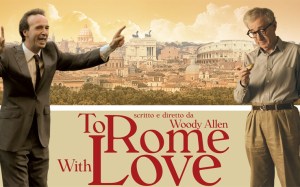
4) To Rome With Love (directed by Woody Allen)

Woody Allen’s follow-up to Midnight in Paris, To Rome With Love tells four separate stories that all take place in Rome.  Despite the fact that the cast features everyone from Alec Baldwin to Roberto Begnini to Penelope Cruz to Ellen Page, the true star of the film is the city of Rome.  I spent the summer after I graduated high school in Italy and this film brought back a lot of good memories.

Unfortunately, the film’s four stories are pretty uneven and the film’s frequent transitions from story to story are pretty awkward.  The worst story features Alec Baldwin meeting his younger self (played by Jesse Eisenberg) and trying to prevent him from falling in love with a neurotic actress (Ellen Page).  The film’s best story is a satiric fable about an ordinary man (played, in an excellent performance, by Roberto Begnini) who wakes up one day to discover that he’s the most famous man in Italy. 

The film doesn’t really work but I still loved to getting to see Rome once again.

No Guts, No Glory, Part II: Lisa Marie Goes Down Into The Oscar Pool And Gets Wet


Since every other film blogger and wannabe Awards diva is doing so, I figured I might as well post my predictions as to who and what will actually win when the Oscars are handed out on Sunday.  Please remember, these are not the films and performers that I personally would choose to honor.  (Indeed, I’ve never disagreed with the Oscar nominations more than I have this year.)  These are just my predictions and random guesses at what will be honored on Sunday.

Best Picture: The Descendants

Best Director: Michel Hazanavicius for The Artist

Best Actor: George Clooney in The Descendants

Best Actress: Viola Davis in The Help

Best Supporting Actor: Christopher Plummer in Beginners

Best Supporting Actress: Octavia Spencer in The Help

Best Original Screenplay: Woody Allen for Midnight in Paris

Best Adapted Screenplay: The Descendants

Best Animated Feature Film: Rango

Best Foreign Language Film: In Darkness (Poland)

Best Documentary Feature: Paradise Lost 3: Purgatory

Best Original Score: War Horse

Best Original Song: “Man or Muppet” from The Muppets

Best Sound Editing: Hugo

Best Sound Mixing: Hugo

Best Art Direction: The Artist

Best Cinematography: The Tree Of Life

Best Makeup: Albert Nobbs

Best Costume Design: The Artist

Best Film Editing: The Descendants

Best Visual Effects: Hugo

Agree?  Disagree?  Confused as to what just the Hell I was thinking when I made some of these predictions?  Please let me know in the comments section below.

Here Are The 2012 Critics’ Choice Movie Award Nominees


Earlier today, the Broadcast Film Critics Association announced their nominations for the 17th Annual Critics’ Choice Awards.  The BFCA is the largest of the so-called “major” critics’ groups (and, interestingly enough, it’s also the newest and the least prestigious) and it has a fairly good track record of predicting the actual Oscar nominations.  The awards themselves will be handed out on January 12th, 2012 in a self-important, kinda seedy ceremony that will be broadcast on VH-1.   

BEST PICTURE
The Artist
The Descendants
Drive
Extremely Loud & Incredibly Close
The Help
Hugo
Midnight in Paris
Moneyball
The Tree of Life
War Horse

BEST ACTOR
George Clooney – The Descendants
Leonardo DiCaprio – J. Edgar
Jean Dujardin – The Artist
Michael Fassbender – Shame
Ryan Gosling – Drive
Brad Pitt – Moneyball

BEST ACTRESS
Viola Davis – The Help
Elizabeth Olsen – Martha Marcy May Marlene
Meryl Streep – The Iron Lady
Tilda Swinton – We Need to Talk About Kevin
Charlize Theron – Young Adult
Michelle Williams – My Week With Marilyn

BEST SUPPORTING ACTOR
Kenneth Branagh – My Week With Marilyn
Albert Brooks – Drive
Nick Nolte – Warrior
Patton Oswalt – Young Adult
Christopher Plummer – Beginners
Sir Andrew Serkis – Rise of the Planet of the Apes

BEST SUPPORTING ACTRESS
Berenice Bejo – The Artist
Jessica Chastain – The Help
Melissa McCarthy – Bridesmaids
Carey Mulligan – Shame
Octavia Spencer – The Help
Shailene Woodley – The Descendants

BEST YOUNG ACTOR/ACTRESS
Asa Butterfield – Hugo
Elle Fanning – Super 8
Thomas Horn – Extremely Loud & Incredibly Close
Ezra Miller – We Need to Talk About Kevin
Saoirse Ronan – Hanna
Shailene Woodley – The Descendants

BEST ACTING ENSEMBLE
The Artist
Bridesmaids
The Descendants
The Help
The Ides of March

BEST DIRECTOR
Stephen Daldry – Extreme Loud & Incredibly Close
Michel Hazanavicius – The Artist
Alexander Payne – The Descendants
Nicolas Winding Refn – Drive
Martin Scorsese – Hugo
Steven Spielberg – War Horse

BEST ORIGINAL SCREENPLAY
The Artist – Michel Hazanavicius
50/50 – Will Reiser
Midnight in Paris – Woody Allen
Win Win – Screenplay by Tom McCarthy, Story by Tom McCarthy & Joe Tiboni
Young Adult – Diablo Cody

BEST ADAPTED SCREENPLAY
The Descendants – Alexander Payne and Nat Faxon & Jim Rash
Extremely Loud & Incredibly Close – Eric Roth
The Help – Tate Taylor
Hugo – John Logan
Moneyball – Steven Zaillian and Aaron Sorkin, Story by Stan Chervin

BEST CINEMATOGRAPHY
The Artist – Guillaume Schiffman
Drive – Newton Thomas Sigel
Hugo – Robert Richardson
Tree of Life – Emmanuel Lubezki
War Horse – Janusz Kaminski

BEST ART DIRECTION
The Artist – Production Designer: Laurence Bennett, Art Director: Gregory S. Hooper
Harry Potter and the Deathly Hallows Part 2 – Production Designer: Stuart Craig, Set Decorator: Stephenie McMillan
Hugo – Production Designer: Dante Ferretti, Set Decorator: Francesca Lo Schiavo
The Tree of Life – Production Designer: Jack Fisk, Art Director: David Crank
War Horse – Production Designer: Rick Carter, Set Decorator: Lee Sandales

BEST EDITING
The Artist – Michel Hazanavicius and Anne-Sophie Bion
Drive – Matthew Newman
The Girl With the Dragon Tattoo – Kirk Baxter and Angus Wall
Hugo – Thelma Schoonmaker
War Horse – Michael Kahn

BEST COSTUME DESIGN
The Artist – Mark Bridges
The Help – Sharen Davis
Hugo – Sandy Powell
Jane Eyre – Michael O’Connor
My Week With Marilyn – Jill Taylor

BEST MAKEUP
Albert Nobbs
Harry Potter and the Deathly Hallows Part 2
The Iron Lady
J. Edgar
My Week With Marilyn

BEST VISUAL EFFECTS
Harry Potter and the Deathly Hallows Part 2
Hugo
Rise of the Planet of the Apes
Super 8
The Tree of Life

BEST SOUND
Harry Potter and the Deathly Hallows Part 2
Hugo
Super 8
The Tree of Life
War Horse

BEST ANIMATED FEATURE
The Adventures of Tintin
Arthur Christmas
Kung Fu Panda 2
Puss in Boots
Rango

BEST ACTION MOVIE
Drive
Fast Five
Hanna
Rise of the Planet of the Apes
Super 8

BEST COMEDY
Bridesmaids
Crazy, Stupid, Love
Horrible Bosses
Midnight in Paris
The Muppets

BEST FOREIGN LANGUAGE FILM
In Darkness
Le Havre
A Separation
The Skin I Live In
Where Do We Go Now

BEST DOCUMENTARY FEATURE
Buck
Cave of Forgotten Dreams
George Harrison: Living in the Material World
Page One: Inside the New York Times
Project Nim
Undefeated

BEST SONG
“Hello Hello” – performed by Elton John and Lady Gaga/written by Elton John and Bernie Taupin – Gnomeo & Juliet
“Life’s a Happy Song” – performed by Jason Segel, Amy Adams and Walter/written by Bret McKenzie – The Muppets
“The Living Proof” – performed by Mary J. Blige/written by Mary J. Blige, Thomas Newman and Harvey Mason, Jr. – The Help
“Man or Muppet” – performed by Jason Segel and Walter/written by Bret McKenzie – The Muppets
“Pictures in My Head” – performed by Kermit and the Muppets/written by Jeannie Lurie, Aris Archontis and Chen Neeman – The Muppets

BEST SCORE
The Artist – Ludovic Bource
Drive – Cliff Martinez
The Girl With the Dragon Tattoo – Trent Reznor & Atticus Ross
Hugo – Howard Shore
War Horse – John Williams

The BFCA has obviously made a lot of nominations and some of them are interesting but I have to be honest: the BFCA as an organization annoys me with how they’re always bragging about how big they are and how they’re so good at celebrating the conventional establishment wisdom.  So, I’ll just say that its nice to see Hanna getting at least some sort of recognition (even if that recognition is kinda minor.)

The WAFCA Has Spoken


I don’t know much about the Washington Area Film Critics Association but, just judging from the films that they chose to nominate for being the best of 2011, they would appear to have better taste than most film critics. 

(Seriously, film critics are the worst.)

They announced their picks for the best of 2011 earlier today and here’s a complete list of their nominees and winners.  If nothing else, this year’s Oscar race is certainly shaping up to be a bit more interesting than last years. 

Best Film:
*The Artist
The Descendants
Drive
Hugo
Win Win

Best Director:
Woody Allen (Midnight in Paris)
Michel Hazanavicius (The Artist)
Alexander Payne (The Descendants)
Nicolas Winding Refn (Drive)
*Martin Scorsese (Hugo)

Best Actor:
*George Clooney (The Descendants)
Jean Dujardin (The Artist)
Michael Fassbender (Shame)
Brad Pitt (Moneyball)
Michael Shannon (Take Shelter)

Best Actress:
Viola Davis (The Help)
Elizabeth Olsen (Martha Marcy May Marlene)
Meryl Streep (The Iron Lady)
Tilda Swinton (We Need to Talk About Kevin)
*Michelle Williams (My Week with Marilyn)

Best Supporting Actor:
Kenneth Branagh (My Week with Marilyn)
*Albert Brooks (Drive)
John Hawkes (Martha Marcy May Marlene)
Christopher Plummer (Beginners)
Andy Serkis (Rise of the Planet of the Apes)

Best Supporting Actress:
Bérénice Bejo (The Artist)
Melissa McCarthy (Bridesmaids)
Carey Mulligan (Shame)
*Octavia Spencer (The Help)
Shailene Woodley (The Descendants)

Best Acting Ensemble:
*Bridesmaids
Harry Potter and the Deathly Hallows Part 2
The Help
Hugo
Margin Call

Best Adapted Screenplay:
*Alexander Payne and Nate Faxon & Jim Rash (The Descendants)
Tate Taylor (The Help)
John Logan (Hugo)
Steven Zaillian and Aaron Sorkin (Moneyball)
Bridget O’Connor & Peter Straughan (Tinker, Tailor, Soldier, Spy)

Best Original Screenplay:

Woody Allen (Midnight in Paris)
Michel Hazanavicius (The Artist)
Tom McCarthy (Win Win)
Annie Mumolo & Kristen Wiig (Bridesmaids)
*Will Reiser (50/50)

Best Animated Feature:
The Adventures of Tintin
Arthur Christmas
Puss in Boots
*Rango
Winnie the Pooh

Best Documentary:
Being Elmo: A Puppeteer’s Journey
Buck
*Cave of Forgotten Dreams
Into the Abyss: A Tale of Death, A Tale of Life
Project Nim

Best Foreign Language Film:
13 Assassins
Certified Copy
I Saw the Devil
Pina
*The Skin I Live In

Best Art Direction:
Lawrence Bennett, Production Designer, and Gregory S. Hooper, Art Director (The Artist)
Stuart Craig, Production Designer, and Stephenie McMillan, Set Decorator (Harry Potter and the Deathly Hallows Part 2)
*Dante Ferretti, Production Designer, and Francesca Lo Schiavo, Set Decorator (Hugo)
Jack Fisk, Production Designer, and Jeanette Scott, Set Decorator (The Tree of Life)
Rick Carter, Production Designer, and Lee Sandales, Set Decorator (War Horse)

Best Cinematography:
Guillaume Schiffman (The Artist)
Robert Richardson (Hugo)
Manuel Alberto Claro (Melancholia)
*Emmanuel Lubezki (The Tree of Life)
Janusz Kaminski (War Horse)

Best Score:
*Ludovic Bource (The Artist)
Cliff Martinez (Drive)
Trent Reznor & Atticus Ross (The Girl with the Dragon Tattoo)
Howard Shore (Hugo)
John Williams (War Horse)

Film Review: Midnight in Paris (dir. by Woody Allen)


Woody Allen’s latest film, Midnight in Paris, has an appealing premise behind it. 

Gil (Owen Wilson) is a Hollywood screenwriter who has come to Paris with his shallow fiancée Inez (Rachel McAdams) and her stuffy Republican parents (played by Kurt Fuller and Mimi Kennedy).  Disillusioned with American culture, Gil idealizes the Paris of the 1920s, the Paris that was home to Ernest Hemingway, F. Scott Fitzgerald, and James Joyce.  However, Inez and her parents are far less impressed with Paris and, as quickly become clear, with Gil himself.  While Inez spends her time with self-important “intellectual” Paul (a bearded Michael Sheen), Gil takes to wandering the streets of Paris at night.

One night, as Gil wanders around Paris, a vintage car approaches out of the shadows and the two well-dressed passengers in the back seat invite Gil to join them.  Gil does so and discovers that he’s been transported back to 1920s Paris.  He meets everyone from Hemingway (Corey Stoll) to Salvador Dali (Adrien Brody) to F. Scott and Zelda Fitzgerald (Tom Hiddleston and Alison Pill).  At the end of the night, Gil finds himself transported back to modern-day Paris.  Soon, Gil finds himself sneaking out at midnight every night so he can escape to the past, where he eventually meets and starts to romance an idealistic model named Adrianna (Marion Cotillard).  While Gil finds himself torn between his modern life and the past that he loves, he also begins to discover that the inhabitants of the 20s feel the same way about their present as he does about his.

The premise of the film itself is likable and one that I think anyone can relate to.  Who doesn’t wish that they could go back in the past and live with all the amazing people who they’ve only read about?  Myself, there are many eras that I often fantasize about finding myself in.  1920s Paris is definitely one of them but I’ve also occasionally dreamed of being in 1950s New York, having a threesome with Kerouac and Cassady or maybe being in Paris during the early days of the French new wave, appearing in movies directed by Rollin, Truffaut and Godard.  Ever since I read Peter Biskind’s Easy Riders and Raging Bulls, there’s been a part of me that wishes so much I could have been out in Hollywood or New York in the 1970s, hanging out on the beach with directors like Martin Scorsese, William Freidkin, Jon Milius, and even Peter Bogdonavich.  (But especially Freidkin, his terrible charisma just radiates from the page.) 

Still, Allen is smart enough as a screenwriter to know that everyone tends to idealizes the past, even those who we now idealize in the present.  Perhaps my favorite part of the film came when Wilson, while in the 1920s, sees a character getting into a horse-drawn carriage so that she can go back to the time that she idealizes as fiercely as he idealizes the 20s.

Midnight in Paris has a lot to recommend it.  Cotillard, despite the fact that she’s played the same idealized French mystery woman about a thousand times, gives a likeable performance and Rachel McAdams is hilariously shallow.  Michael Sheen, as well, makes a perfect stand-in for every pompous, self-important jerk who has ever talked down to you.  On the basis of his cameo appearance here as Dali, Adrien Brody really needs to consider doing more comedy.  He’s a lot more appealing when he’s being funny than when he’s trying to be a leading man.

At the same time, I have to admit that I wanted to like Midnight in Paris more than I actually did.  I like Owen Wilson as both an actor and a writer but he’s a little bit miscast here and the end result is that he occasionally seems like he’s trying too hard.  You just never buy him and McAdams as a couple and, as such, there’s really not much at stake as far as his romance with Cotillard is concerned. 

As well, I found it hard not to be a little bit disappointed with the way Allen presented 1920s Paris.  Though they were all well-cast and acted, Hemingway, the Fitzgeralds, Gertrude Stein (Kathy Bates), and all the rest just fell flat as actual characters.  Gil gets a chance to go into the past and essentially, he discovers that Hemingway was macho, the Fitzgeralds were neurotic and self-destructive, and that Dali didn’t make much sense.  Personally, I would be a bit let down if I got a chance to meet these icons and I discovered that essentially they just acted the exact same way that they acted in various PBS educational programs.

Despite this, Midnight in Paris is still a likable, frequently engaging comedy that works best as a tribute to a legendary and beautiful city that Allen (not to mention myself) obviously loves.  Flaws and all, this movie made me want to visit Paris once again (though Florence and Venice remains my favorite cities of all time) and, for that reason alone, it makes Midnight in Paris a film worth seeing.