Brad reviews THIRTEEN LIVES (2022), starring Viggo Mortensen!


After reading the memoir THE BOYS, from Ron Howard and Clint Howard, I’ve taken a renewed interest in their careers. While scanning Ron’s IMDB listing, I noticed that he directed a film in 2022 called THIRTEEN LIVES. Movies had such strange release patterns in the post-Covid years, and somehow this film had flown completely under my radar. Seeing that the movie was very highly rated and that it was based on what seemed like an incredible true story, I became very interested. So much so, that I started the two and a half hour movie after midnight! 

THIRTEEN LIVES is based on a real life “flooded cave” rescue in Thailand in 2018 after 12 boys and their soccer coach become stranded deep inside a cave system when unexpectedly early monsoon rains hit the area. We watch as an international coalition of Thai Navy SEALS, British cave divers, including Rick Stanton (Viggo Mortensen) and John Volanthen (Colin Farrell), and other expert volunteers take part in an extremely urgent and dangerous mission to save the thirteen lives. When it appears that all hope may be lost, the men come up with a risky, experimental plan requiring the expertise of anesthetist and cave diver Harry Harris (Joel Edgerton). As scary as the plan is, everyone agrees it’s the only chance they have…

I mentioned earlier that one of the reasons that THIRTEEN LIVES piqued my interest is the fact that it’s based on a true story. The real world has been full of heartbreaking tragedy this year, and this story seemed like something I really needed to see. On a personal note, 2018 was one of the most difficult years in my life. I don’t remember hearing about this real life drama out of Thailand, so I honestly didn’t know what was going to happen. I’ll give Director Ron Howard a lot of credit for how effectively he captures the seemingly hopeless and terrifying situation over the 18 day period from the time the team was first trapped to the time that the rescue attempt reaches its conclusion. His deliberate pacing doesn’t rush the story, and we can’t help but become invested in the emotions being experienced by the families and the rescue teams. I also enjoyed watching people from all over the world working together and not caring who gets the credit. There was tension at times of course, but the focus was never about ego. It was always about their mission to save those who were trapped. This movie is about regular people who became real heroes. The film captures the psychological cost of that transition as not every person will survive the 18 day journey. 

The incredible real-life story of THIRTEEN LIVES is complimented very well by an excellent cast. I’ve been a fan of Viggo Mortensen since he starred in the film THE INDIAN RUNNER in 1991, which happened to co-star my movie hero Charles Bronson. I’ve also been a fan of Colin Farrell since he emerged in what seemed like a concerted effort in the early 2000’s to make him a star. Both men bring their “A” games here in understated and powerful performances. Other actors that stood out to me include Joel Edgerton as the expert who holds the key to the rescue plan, Sahajek Boonthanakit as Governor Narongsak, the man who takes the ultimate responsibility for their mission, and Pattrakorn Tungsupakul, the distraught mother of one of the trapped boys. Howard assembled a great cast that brings the incredible story to life. 

I mentioned earlier that I started watching THIRTEEN LIVES after midnight. For a 51 year old man, the fact that I watched the entire film at that time of the night, without falling asleep, says a lot about the way this extraordinary story pulled me in. I highly recommend this powerful film to any person who enjoys movies based on true stories. 
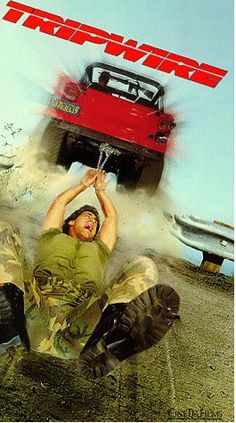
Tripwire (1989, directed by James Lemmo)


Terrorist Josef Szabo (David Warner) and his team (including Viggo Mortensen, Charlotte Lewis, and Sy Richardson) attempt to hijack a train that’s carrying weapons that they can use in their plans for world conquest.  Renegade ATF agent Jack DeForest (Terence Knox) catches them in the act and, in the resulting crossfire, Szabo’s son is killed.  Now looking for revenge, Szabo kidnaps Jack’s estranged wife (Meg Foster) and Jack’s son.   Even though his supervisor (Yaphet Kotto) claims that Jack is dangerous and out-of-control, fellow ATF agent Anne (Isabella Hofmann) teams up with Jack to rescue his family.

This is a well-done B action movie, featuring villains who have more depth than usual and an interesting opening sequence that plays out with almost no dialogue.  Terence Knox is not the most exciting of heroes (he was better served by television than the movies) but the supporting cast makes up for his character’s blandness.  Where also can you see Meg Foster, David Warner, Yaphet Kotto, Viggo Mortensen, and Tommy Chong (!) all in the same movie?  The mountainous Utah setting gives the film  a modern western feel and, though this may be a direct-to-video B movie, the cast gives it their all.  Tripwire is cinematic fast food, quick and just satisfying enough to leave you happy.

Retro Television Review: Miami Vice 3.19 “Red Tape”


Welcome to Retro Television Reviews, a feature where we review some of our favorite and least favorite shows of the past!  On Mondays, I will be reviewing Miami Vice, which ran on NBC from 1984 to 1989.  The entire show can be purchased on Prime!

This week …. has Tubbs turned evil?

Episode 3.19 “Red Tape”

(Dir by Gabrielle Beaumont, originally aired on March 13th, 1987)

There’s a turncoat in the Vice Department.  Someone is leaking information about search warrants to the bad guys and, as a result, cops are walking straight into booby traps.  When a routine search for a low-level thief leads to an explosion that kills one cop (Viggo Mortensen) and leaves Tubbs covered in the man’s blood, Tubbs announces that he’s fed up with all of this and he refuses to take another assignment until the leaker has been caught.  Castillo tells Tubbs he can either accept his new assignment or quit.  Tubbs says he’s done.

The problem is that all of Tubbs’s money is wrapped up with the department’s credit union and Tubbs can’t withdraw it quickly enough to get back to New York.  The usually cool and collected Tubbs throws a fit, getting himself arrested when he starts threatening people at the credit union.  Crockett gets him out of jail and Tubbs says their partnership is done.  Switek tries to open up about his feelings after Zito’s death.  Tubbs says he doesn’t care.  What’s going on with Tubbs?  He’s acting like a total jerk and he’s also loudly letting everyone know that he’s desperate to get out of Miami and that he needs money quickly….

If you guessed Tubbs was working undercover, you are correct!  It’s all an elaborate ruse to get crooked Detective McIntyre (Scott Plank) to approach Tubbs with an offer.  (McIntyre’s girlfriend is played by a young actress named Annette Bening)  Unfortunately, only Tubbs and Castillo know that Tubbs is still one of the good guys,  A hot-headed young detective named Bobby Diaz (Lou Diamond Phillips) thinks that Tubbs really is crooked.  Diaz already lost one partner to the leaker.  He’s looking for revenge and even while Tubbs and Castillo are planning to take down McIntyre, Bobby is planning to take down Tubbs.  In typical Miami Vice fashion, it all leads to shoot out that leaves the bad guys dead but which also leaves Diaz mortally wounded and cursing Tubbs with his dying breath.  Tubbs goes from pretending to hate his job to actually hating it.

Seriously, were there ever any unambiguously happy endings on Miami Vice?  It seems like nearly every episode ended with Crockett and Tubbs realizing that their latest victory — assuming they were lucky enough to even have one — would prove to pyrrhic. There would always be a new drug boss ready to replace anyone that they took out of the game.  There would aways be a new cop willing to betray his colleagues.  And there would always be a mountain of red tape, waiting to keep them from making a difference.  This episode was dark!

This season seems like it’s been more Tubbs-centric than previous seasons and, as dark as thing got, it was still a little fun to watch Phillip Michael Thomas go totally over the top as the angry Tubbs.  The scene in the credit union was one that I’m sure would be enjoyed by anyone who has ever had to deal with red tape.  One could argue that Tubbs go so far overboard that the bad guys should have been able to see through his ruse.  But, still, this episode was effectively moody and dark.  Watching it, it was hard not to feel that Thomas deserved more storylines than he got.

Next week: Crockett falls in love with Melanie Griffith!

Scenes I Love: Lighting the Beacons in Return of the King


We just received word that the Texas Branch is still currently down. It’s been six full days without power. I can’t even begin to imagine the impact, but we’re hoping that they back up and running soon. Case and I are keeping the fires lit here, but it also reminds us of Lisa Marie’s John Wick levels of legendary speed, sheer will, creative output and literary fortitude. We miss the Bowmans, and are rooting for their quick return.

In the meantime, we’re sharing some of our favorite scenes and films. It seems fitting that the Lighting of the Beacons sequence of The Return of the King is our focus here. With the city of Gondor under attack, the steward Denathor (John Noble) doesn’t wish to call for any help. With Pippin’s (Billy Boyd) help, Gandalf (Ian McKellan) gets word out to Rohan in a most spectactular fashion. Howard Shore’s score amplifies the sequence to epic levels.

Enjoy!

Cronenberg returns to Cannes with the Crimes of the Future teaser!


David Cronenberg’s been keeping busy with his latest, Crimes of the Future. It looks like Existenz, but with major upgrades. The film stars Academy Award Nominee Viggo Mortensen (Eastern Promises, A History of Violence), Léa Seydoux (No Time to Die), and Academy Award Nominee Kristen Stewart (Spencer). I can’t begin to understand what the plot’s about, but given it’s Cronenberg, we’re all in.

Crimes of the Future will compete in this years Cannes Film Festival for the coveted Palm d’Or.

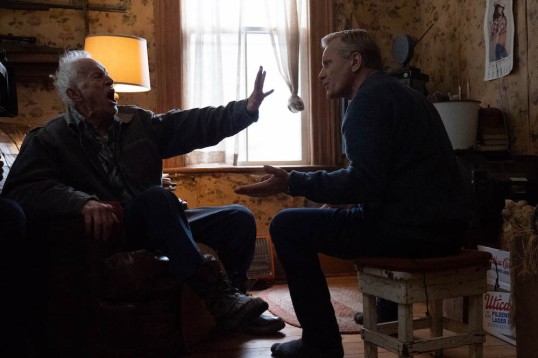
Film Review: Falling (dir by Viggo Mortensen)


If you’re one of the many people who watched The Father and thought to yourself, “Good movie but I wonder what it would have been like if every character involved had been thoroughly unlikable and one-dimensional,” Falling might be for you.

I almost felt guilty writing that paragraph because Falling is the directorial debut of actor Viggo Mortensen and Mortensen has been very open about how several members of his family have struggled with dementia. He lost both his mother and his father to dementia and he served as his father’s caretaker during the last year of his life. As Falling is film about a man taking care of his father when the latter develops dementia, it’s easy to see that this film is a very personal one for Mortensen. Unfortunately, as both a director and a screenwriter, Mortensen basically leads his story straight into a dead end.

Lance Henriksen plays Willis Peterson, a bigoted and angry old farmer who is being taken care of by his estranged son, John (Viggo Mortensen) and John’s husband, Eric (Terry Chen). John hopes to find Willis a new and nearby place to live so that he and his sister, Sarah (Laura Linney), can check in on him. Willis is occasionally charming in a irascible old man way but, usually, he’s just abrasive, abusive, angry and a bit of a homophobe. He’s also losing his memory, continually forgetting that his wife is dead and talking about all of the ways that John and Sarah disappointed him when they were teenagers.

The film asks whether or not Willis was always an asshole or if he’s just asking like this because he’s suffering from dementia. That would be an interesting question if not for the fact that the film is also full of heavy-handed flashbacks that reveal that, without any doubt, Willis was always an asshole. The problem is that, once you realize that Willis was an unbearable young parent and an unbearable middle-aged crank, it becomes difficult to care much about him once he becomes an unbearable old man. If The Father showed how dementia changes one’s personality and way of looking at the world, the message of Falling seems to be that terrible things also happen to terrible people. And while that’s a certainly true statement, it doesn’t make for a particularly compelling narrative.

One does have to give Mortensen some credit for giving Lance Henriksen a leading role. Henriksen not only looks like he could conceivably by Viggo Mortensen’s father but he does what he can to suggest that, under all of the bluster and the anger and the hateful words, Willis is ultimately a man who is scared because the world is transforming into one that he’s not capable of understanding. That’s a idea that is present in the film almost solely due to Henriksen’s performance and the few scenes that are genuinely interesting to watch are almost all due to his efforts. There’s no winking at the audience during Willis’s many abrasive moments and Henriksen deserves credit for fearlessly and honestly playing a character that most viewers aren’t going to like.

Unfortunately, the rest of the film doesn’t live up to the promise of Henriksen’s performance. The script often feels repetitive and neither Mortensen nor Linney make much of an impression as Henriksen’s children. (Linney, as happens far too often, feels especially wasted, leaving viewers to wonder what happened to the actress who, long ago, gave such a fierce performance in Mystic River.) The scene where Henriksen meets Linney’s children is especially poorly-written and seems to go on forever. It becomes clear that, as a director, Mortensen has a good visual eye but no idea how to build or maintain narrative momentum with a story that centers on characters who are incapable of moving forward.. One watches the film and admires Mortesen’s intentions but emotionally, the whole production feels remote and overly studied. Falling underwhelms.

Lisa Marie’s 10 Worst Films of 2021


Also be sure to check out my picks for 2020, 201920182017201620152014201320122011, and 2010!

10. Paradise Cove (dir by Martin Guigi)
9. Eternals (dir by Chloe Zhao)
8. Spiral: From the Book of Saw (dir by Darren Lynn Bousman)
7. Space Jam: A New Legacy (dir by Malcolm D. Lee)
6. Falling (dir by Viggo Mortensen)
5. Deadly Illusions (dir by Anna Eizabeth James)
4. Being the Ricardos (dir by Aaron Sorkin)
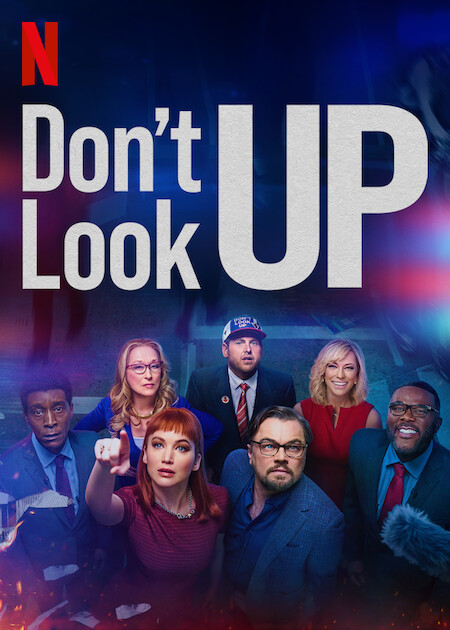
3. Don’t Look Up (dir by Adam McKay)
2. After We Fell (dir by Castille Landon)
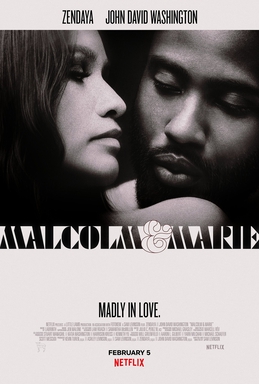
1. Malcolm & Marie (dir by Visionary Sam Levinson)

An Offer You Can Do Whatever You Want With #21: Carlito’s Way (dir by Brian De Palma)


It’s been a week so I guess it’s time for me to get back to reviewing mob movies, right?  Usually, I do my best not to take such a long break in-between reviewing films — especially when it’s a themed-series of reviews — but I just got busy this week.  It happens.  Luckily, even when we get busy, the movie’s remain ready to be watched and reviewed.

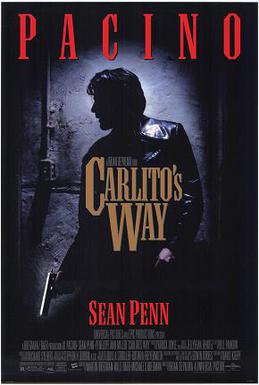
Last week, I reviewed Scarface and The Untouchables, two gangster films from Brian De Palma.  It only seems right to return to my look at the gangster genre by considering another Brian De Palma film.  Released in 1993, Carlito’s Way reunites De Palma with Scarface’s Al Pacino.  In Scarface, Pacino played a Cuban named Tony who was determined to get into the drug trade.  In Carlito’s Way, Pacino plays a Puerto Rican named Carlito who is desperate to escape the drug trade.

Carlito’s Way opens with Carlito getting released from prison in 1975.  He’s spent the past five years serving time on a drug conviction.  Originally, Carlito was sentenced to 30 years but his friend and attorney, David Kleinfeld (Sean Penn), managed to get the conviction thrown out on a technicality.  Now a free man, Carlito finds himself torn between two options.  He can either get involved, once again, in the drug trade or he can go straight.  Returning to his life of crime will mean once again doing something that he’s good at but it will also require him to deal with people who he can’t stand, like the sleazy Benny Blanco (John Leguizamo).  Going straight will mean escaping from New York with his girlfriend, a dancer named Gail (Penelope Ann Miller).  The problem is that it takes money to start a new life and there are people in New York who have no intention of allowing Carlito to leave.

Of the three De Palma-directed gangster films that I’ve recently watched, Carlito’s Way is probably the weakest.  De Palma has always been a frustratingly uneven director and Carlito’s Way contains some of his worst work and some of his best.  For instance, there’s a brilliant sequence where Carlito goes to a hospital to get revenge on someone who betrayed him and it is perhaps one of DePalma’s best set pieces.  But then there’s other scenes where DePalma’s trademark style feels rather empty and counterproductive.  Just when you’re starting to sympathize with Carlito’s predicament, DePalma will suddenly toss in a fancy camera trick and remind you that you’re just watching a film and that Carlito Brigante is just a character in that film.  That technique worked well in the satiric Scarface and the mythological Untouchables but it often feels unnecessary in Carlito’s Way.  

Al Pacino plays Carlito and, like DePalma’s direction, the end result is a bit uneven.  On the one hand, Pacino and Penelope Ann Miller have a likable chemistry, even if Carlito and Gail don’t really make sense as a couple.  On the other hand, this is one of those films where Pacino does a lot of yelling.  Sometimes it works and sometimes, it’s just too theatrical to be effective.  It’s hard not to compare Pacino’s performance here with his slyly humorous work in Scarface.  Tony Montana yelled because he genuinely enjoyed getting on people’s nerves.  The way that Tony expressed himself told us everything that we needed to know about the character.  Carlito yells because that was Al Pacino’s trademark at the time the film was made.

The best thing about the film is Sean Penn’s performance as David Kleinfeld.  Kleinfeld is one of the sleaziest character to ever appear in a movie and Penn seems to be having a good time playing him.  (Watching the film, I found myself wishing that Penn was willing to have that much fun with all of his roles.)  Penn doesn’t make Kleinfeld into a straight-out villain.  Instead, he portrays Kleinfeld as being a somewhat nerdy guy who thought it would be fun to pretend to be a gangster and who has snorted too much cocaine to understand the amount of trouble that he’s brought upon himself.  Just check out Penn in the scene where he’s dancing at a disco.  There’s a joy to Penn’s performance in Carlito’s Way that you typically don’t see from him as an actor.  He’s actually fun to watch in Carlito’s Way.

It’s a flawed film but fortunately, the movie’s good moments are strong enough to help carry the audience over the weaker moments.  The movie often threatens to collapse under the weight of its own style but it seems like whenever you’re on the verge of giving up on the film, De Palma’s kinetic camerawork will calm down enough to allow you to get at least mildly invested in Carlito’s predicament or Sean Penn’s amoral dorkiness will create an amusing moment and you’ll think to yourself, “Okay, let’s keep giving this a chance.”  Carlito’s Way may not be an offer that you can’t refuse but it’s still fairly diverting.

Previous Offers You Can’t (or Can) Refuse:

  1. The Public Enemy
  2. Scarface (1932)
  3. The Purple Gang
  4. The Gang That Could’t Shoot Straight
  5. The Happening
  6. King of the Roaring Twenties: The Story of Arnold Rothstein 
  7. The Roaring Twenties
  8. Force of Evil
  9. Rob the Mob
  10. Gambling House
  11. Race Street
  12. Racket Girls
  13. Hoffa
  14. Contraband
  15. Bugsy Malone
  16. Love Me or Leave Me
  17. Murder, Inc.
  18. The St. Valentine’s Day Massacre
  19. Scarface (1983)
  20. The Untouchables

Lisa Reviews An Oscar Winner: Green Book (dir by Peter Farrelly)


Set in 1962, the 2018 film Green Book tells the story of two men.

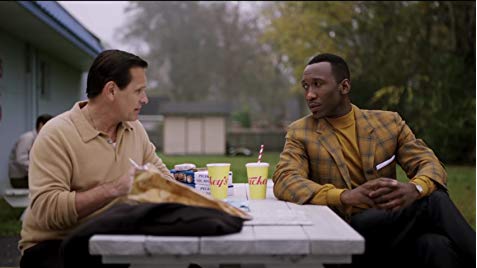
Dr. Don Shirley (Mahershala Ali) is a world-acclaimed pianist who lives a regal life.  How regal is Dr. Shirley’s life?  He’s got a throne in his living room!  Being both black and gay, Shirley knows that he’s destined to always be on the outside of American society but he refuses to allow anyone to take away his dignity or devalue his intelligence.  Shirley is scheduled to do a concert tour in the Midwest and the Deep South and his record company knows that he’s going to need protection during his trip.  For that matter, he’s also going to need a driver.

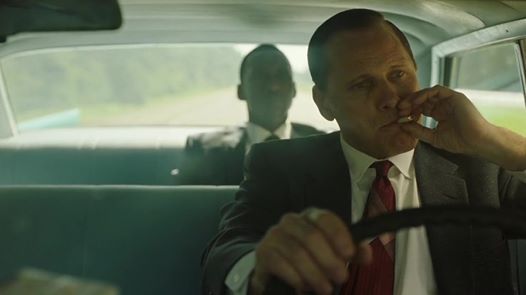
Tony Lip (Viggo Mortensen) is actually named Frank Vallelgona but everyone calls him Tony Lip because he can talk his way out of almost any situation.  He’s a casually prejudiced Italian who lives in the Bronx.  He’s a professional bouncer and he can drive a car too!  He’s in desperate need of money and he doesn’t want to have to go to work for the Mafia.  When Shirley’s record company contacts him about spending two months as Shirley’s driver and bodyguard, it could be the solution to all of his financial problems.

Soon, Tony is driving Shirley through the South.  Tony smokes in the car and Shirley snaps at him.  Shirley doesn’t appreciate fried chicken so Tony convinces him to try it.  Tony punches a cop and ends up in jail so Shirley calls his friend Bobby Kennedy.  Eventually, Tony and Shirley even become friends and together….

THEY SOLVE CRIMES!

No, not really.  Instead, Tony encourages Shirley to loosen up and enjoy life a little bit more.  Meanwhile, Shirley teaches Tony how to write a decent letter to his wife.  Tony introduces Shirley to rock and roll.  Shirley introduces Tony to high society.  At the end of the film, we’re told that, in real life, Shirley and Tony remained friends until the end of their days.

It’s a crowd-pleasing ending.  It’s also one that’s been described as being inaccurate.  While it is true that Tony Lip (who later had a career as a character actor in gangster films) did drive Don Shirley around the South during his 1962 concert tour, Shirley’s family maintained that Shirley never considered him to be a friend but instead just viewed him as being an employee.  At the time of the film’s initial release, it was also pointed out that, while the script was co-written by Tony Lip’s son, no one bothered to reach out to Don Shirley’s family during the production.

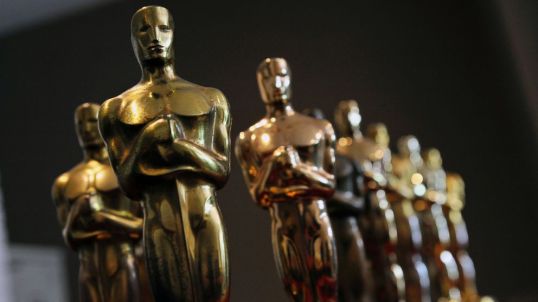
When Green Book was nominated for best picture, a lot of observers assumed that the controversy over its accuracy would keep the film from winning the top prize.  The fact that Peter Farrelly was not nominated for best director was also seen as an indicator that Green Book was not a serious contender.  Of course, to the shock (and, it must be said, anger) of many, Green Book did win the Oscar for Best Picture, defeating Roma, BlackKklansman, Black Panther, A Star is Born, The Favourite, Vice, and Bohemian Rhapsody.  During the days immediately after the Oscars, there was a definite feeling of embarrassment in the air.  No one, it seemed, could quite accept that — out of all the films released in 2018 — the Academy had declared Green Book to the best.

Why was Green Book such an unpopular winner?  Setting aside the controversy over the film’s historical accuracy (or lack thereof), Green Book is just a painfully conventional movie.  At a time when many directors were testing the limits of narrative and taking cinema in new and different directions, Green Book was a film that was almost defiantly old-fashioned and predictable.  At a time when filmmakers were being praised for their willingness to keep audiences off-balance, Peter Farrelly crafted about as blatant a crowd pleaser as had ever been released.  Not since Alan Arkin shouted, “Argo fuck yourself!,” had a film been so obvious about its desire to be loved.  Even the film’s best scenes have a generic quality to them.  You never find yourself thinking, “Only a cinematic visionary like Peter Farrelly could have made a film like Green Book!”

Beyond that, Green Book is another film that deals with the issue of race in America in the safest and most anodyne way possible.  Tony Lip starts out as prejudiced.  Then he spends two months driving around a black man and suddenly, he’s not prejudiced anymore.  This the type of approach that may drive intersectional film critics crazy on twitter but audiences tend to like it because it leaves them feeling good about the state of the world.  “Yes,” the film says, “things aren’t perfect but all we have to do is spend two months in a car together and everything will be okay.”

The first time I watched Green Book, I thought it was blandly pleasant, predictable and a bit forgettable.  I also thought it was well-acted.  Last night, I rewatched the film for this review and …. well, my feelings pretty much remain the same.  Sometimes, a conventional film will benefit from the intimacy of the small screen but that’s not the case with Green Book.  If anything, watching this film in my living room (as opposed to in a theater with a gigantic screen) made me realize that, when I first saw Green Book, I was perhaps a bit too kind in my evaluation of the film’s lead performances.  Viggo Mortensen and Mahershala Ali are good, charismatic actors and that natural charisma serves them well in Green Book.  But neither one of them really gives that interesting of a performance.  Despite their roles being based on real people, they’re both playing cliches and, as a result, you never really go emotionally involved with either one of them.

I can understand why Green Book won best picture.  It’s competently made, conventionally liberal, and full of good intentions.  Given that the Academy uses rank-choiced voting, it’s probable that Green Book won not because it was everyone’s favorite movie but because it was everyone’s 2nd or 3rd choice.  Hopefully, this year, the Academy will pick something a little bit more interesting for its top prize.


Lisa Marie’s Oscar Predictions for December


Well, it’s that time of the month!

It’s time for me to post my Oscar predictions.  With precursor season in full swing, the Oscar picture has become a lot clearer.

If you want to see how my thinking has evolved over the year, be sure to check out my predictions of January, February, March, April, May, June, July, August, September, October, and November!

Also, keep in mind — these are not necessarily my picks for the best of the year.  I’ll be posting those during the second week of January.  Instead, these predictions are based on the precursor awards and just my own guesses based on the Academy’s past picks.

Best Picture

BlackKklansman

Black Panther

The Favourite

Green Book

If Beale Street Could Talk

Roma

A Star is Born

Vice

Best Director

Ryan Coogler for Black Panther

Bradley Cooper for A Star is Born

Alfonso Cuaron for Roma

Yorgos Lanthimos for The Favourite

Adam McKay for Vice

Best Actor

Christian Bale in Vice

Bradley Cooper in A Star is Born

Ethan Hawke in First Reformed

Rami Malek in Bohemian Rhapsody

Viggo Mortensen in Green Book

Best Actress

Yalitza Aparicio in Roma

Glenn Close in The Wife

Olivia Colman in The Favourite

Lady Gaga in A Star is Born

Melissa McCarthy in Can You Ever Forgive Me?

Best Supporting Actor

Mahershala Ali in Green Book

Timothee Chalamet in Beautiful Boy

Sam Elliott in A Star is Born

Richard E. Grant in Can You Ever Forgive Me?

Michael B. Jordan in Black Panther

Best Supporting Actress

Amy Adams in Vice

Regina King in If Beale Street Could Talk

Thomasin McKenzie in Leave No Trace

Emma Stone in The Favourite

Rachel Weisz in The Favourite