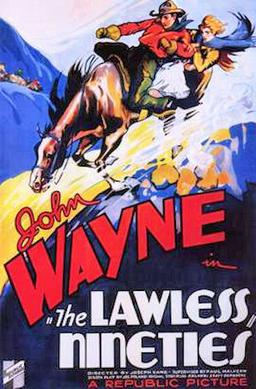
The year is 1890 and Wyoming is on the verge of voting for statehood. Newspaperman Major Carter (George “Gabby” Hayes) believes that it’s time for Wyoming to become a state and most of the locals agree with him. Businessman Charles Plummer (Harry Woods) does not want Wyoming to become a state and he’s willing to send out his main henchman, Steele (Al Bridge), to intimidate the voters and to silence Carter. Plummer has a profitable racket going and the last thing he wants is for the U.S. government to get involved in his activities. It falls to two federal agents, John Tipton (John Wayne) and Bridger (Lane Chandler), to supervise the voting and protect the citizen. When Major Carter is shot by a drunk anti-statehood activist, the mission to make Wyoming a part of the Union becomes personal.
The Lawless Nineties is typical of the B-movies that John Wayne made for Republic Pictures before John Ford resurrected his struggling career by casting him as The Ringo Kid in Stagecoach. There are plenty of gunfights and horse chases and explosions as the bad guys try to keep the townspeople from voting and the federal agents set up their own sting operation to expose Plummer’s gang. Wayne seems more relaxed here than he did in some of his other B-movies. He was obviously getting more comfortable with being on camera and playing the hero. Probably the most interesting thing about this film is that Gabby Hayes (credited as George Hayes, without his famous nickname) plays the renowned and intelligent Major Carter. Hayes was just a year away from establishing himself as a perennial B-movie sidekick and supplier comedy relief. He would soon be best-known for playing characters who had little in common with the intelligent and well-spoken Major Carter. In The Lawless Nineties, Hayes gets a chance to play something other than the comedic relief and turns out to be petty good at it.
This is another one of those westerns that will be enjoyed by fans of the genre. It’s nothing special but it does allow Wayne to show hints of his future stardom and it also gives Gabby Hayes a chance to show what he was actually capable of.
I’ve been going through my movies and re-watching some of my favorites. A movie that clearly falls into that category is TRUE BELIEVER starring James Woods and Robert Downey, Jr. I became a fan of James Woods around 1988 primarily based on the strength of two action films that he worked on around that time, those being BEST SELLER (1987) and COP (1988). I spent hours combing through the rental selections at our local Hastings Entertainment store and I remember both of these movies being in the “New Release” section at the same time. They’re both hard hitting, violent films, and Woods is especially good in both. Being an obsessive completist, I found myself searching out the prior work of the star for some more good movies. It was during this time that TRUE BELIEVER was released to the theaters in February of 1989. I enjoy courtroom dramas, and knowing the intensity that Woods brings to his films, I had no doubt I would like it.
The story revolves around Eddie Dodd (Woods), an attorney who used to fight for the cause of the little guy, but now mostly finds himself protecting drug dealers from the law. Enter Roger Baron (Downey Jr.), a recent law school graduate who idolizes Dodd, and is now disappointed to see his legal hero reduced to his current cynical state. When a Korean mother comes into the law offices one day and says her son, Shu Kai Kim, has spent 8 years in prison for a crime he didn’t commit, cynical Dodd doesn’t want to take the case. Young Baron shames him into it though, and soon the two men find themselves taking on the New York District Attorney himself Robert Reynard (Kurtwood Smith) as they try to prove Shu Kai Kim’s innocence and help him taste freedom once more!
Often when people ask me to name my favorite James Woods film, I’ll quickly answer TRUE BELIEVER even though there are many good films to choose from. There are a few reasons for that. First, even though the film is a serious legal thriller with many dark undertones, director Joseph Ruben has given his movie a dark sense of humor. Woods and Downey, Jr. are able to find the humorous elements inherent in their characters and that brings some fun to the otherwise serious proceedings. Second, I really enjoy the story of underdogs taking on the big, bad system. Shu Kai Kim is an underdog who maintains his innocence when all the evidence appears flawlessly stacked against him. Eddie Dodd, the once feared civil rights lawyer who is now a hopeless burnout, is an underdog who appears to be out of his league as he goes up against the most powerful attorney in New York. These underdog story lines give us something to really root for as the story plays out. And finally, the performances are phenomenal from top to bottom. James Woods, an actor known for his electric intensity, is at the top of his game and Kurtwood Smith is a great adversary. Robert Downey, Jr. brings a bright-eyed enthusiasm to the role that compliments the cynical Woods nicely. And Yuji Okumoto as Shu Kai Kim shows us quite a transformation from a man who goes from almost being dead inside as a result of his eight years in prison, to a man who allows a glimmer of hope to seep in for a second chance. I think Okumoto is great in the role. The story takes many twists and turns and I enjoy every moment as it plays out.
Welcome to Retro Television Reviews, a feature where we review some of our favorite and least favorite shows of the past! On Mondays, I will be reviewing Miami Vice, which ran on NBC from 1984 to 1989. The entire show can be purchased on Prime!
This week, a man from the past returns to haunt Castillo.
Episode 2.9 “Bushido”
(Dir by Edward James Olmos, originally aired on November 22nd, 1985)
This week’s episode opens with yet another intricately plotted drug bust going awry. This time, a dealer ends up dead, a DEA Agent ends up knocked out and tied up in a bathroom, and $50,000 goes missing. Watching the tapes of the bust, Castillo is shocked to spot a familiar face on the scene. Castillo says that Jack Gretsky (Dean Stockwell) was his partner when he was working for the CIA in Vietnam. Gretsky has long been thought dead but there he is, on tape and ruining Castillo’s bust.
Realizing that Gretsky was sending him a message, Castillo decides to deal with the situation personally. After visiting two CIA agents (Jerry Hardin and Tom Bower) who work out of an adult novelty shop, Castillo tracks Gretsky down to a Buddhist temple. The two of them talk. Gretsky reveals that he’s married to a Russian woman and that he has a son. He asks Castillo to watch over them if anything happens to him. The stoic Castillo agrees and then gives Gretsky a hug. Castillo says that he has to arrest Gretsky. Gretsky says he knows and then pulls a machine gun, forcing Castillo to kill him. The CIA agents are happy to no longer have to deal with Gretsky.
A day later, the coroner’s office calls Vice and says that Gretsky was terminally ill with cancer and probably only had a few days left to live. When Crockett and Tubbs go to tell Castillo, they find his badge and a note sitting in the office. Castillo is fulfilling Gretsky’s final wish and protecting his wife (Natasha Schneider) and his son, Marty (Robin Kaputsin). Castillo sees it as being a part of the samurai code by which he lives his life. Meanwhile, a rogue CIA agent named Surf (David Rasche, giving a wonderfully unhinged performance) is working with the KGB to track down Gretsky’s family.
Directed by Edward James Olmos, Bushido is a wonderfully odd episode. With a combination of skewed camera angles and deliberately eccentric performances from Dean Stockwell and David Rasche, this episode plays out with the relentless intensity of a fever dream. (The opening drug bust even features Zito burying himself in the sand and using a straw to breathe until its time to emerge and knock out one of the bad guys. It’s weird but it’s great.) Olmos contrasts Castillo’s trademark stoicism with the more verbose characters played by Stockwell and Rasche and, as a result, Castillo emerges as an honorable man who hides his emotions because he knows that’s the only way to survive in his world. To fall in love like Jack or to get cocky like Surf can only lead to one’s downfall.
After a few uneven episodes, Bushido is a nice reminder of what Miami Vice was capable of at its best.
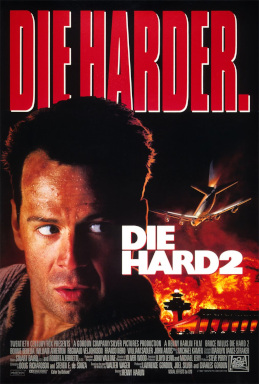
During 1990’s Die Hard 2, John McClane (Bruce Willis) asks himself, “How can the same shit happen to the same person twice?” and he does have a point.
I mean, consider the situation. In 1988, McClane spent his Christmas sneaking around a skyscraper and saving his wife from a group of sadistic mercenaries. Two years later, John McClane spends his Christmas sneaking around an airport and saving his wife from a group of sadistic mercenaries.
There are a few differences of course. In 1988, the mercenaries were only interested in stealing as much money as they could and each mercenary had his own properly ghoulish personality. In 1990, the mercenaries are really more of a cult, led by the fanatical Col. Stuart (William Sadler). And, along with trying to make some money, they are also trying to free General Ramon Esperanza (Franco Nero), a Central American drug lord and former CIA asset. Despite the fact that the mercenaries are played by familiar actors (like Robert Patrick, John Leguizamo, Tony Ganois, and Vondie Curtis-Hall), none of them are quite as memorable as the henchmen that Alan Rickman commanded in the first film. And while Sadler has charisma and makes a big impression during his first scene, his character is nowhere near as interesting or entertaining as Hans Gruber. Franco Nero, it must be said, is as dashing as ever. He really seems to be having fun in this movie.
A lot more people die in Die Hard 2 than died in the first Die Hard and the majority of them are innocent bystanders. This isn’t like the first film, where Harry Ellis died because his coke-addled mind led him to believe that he could outsmart Gruber. The victims in Die Hard 2 include a friendly church caretaker and over 200 passengers of an airplane that Stuart tricks into crashing on an airport runway. The scene where the plane crashes remains disturbing no matter how many times that you see it and it truly makes you hate Colonel Stuart. When the plane crashes, despite McClane’s futile efforts to warn the pilots, McClane sobs and it’s a powerful scene because it’s the first scene in which McClane has not had a quip or a one-liner ready to go. In this scene, McClane fails to save the day and, for a few minutes, he’s helpless. I usually end up crying with McClane. Today, those tears are also a reminder of what a good actor Bruce Willis truly could be whenever he let down his defenses and allowed himself to be vulnerable on screen.
Die Hard 2 is usually dismissed as not being as good as the first movie and …. well, that’s correct. It’s not as good but then again, few actions films are. There’s a reason why Die Hard continues to be held in such high regard. That said, Die Hard 2 is not bad. The stakes are a bit higher and the action scenes a bit more elaborate, as you would expect from a film directed by Renny Harlin. Bruce Willis plays McClane with the blue collar swagger that made his such an awesome hero in the first film. Bonnie Bedelia and William Atherton also return from the first film and Atherton once again gets his comeuppance in a crowd-pleasing moment. The cast is full of character actors, all of whom get a chance to make an impression. Dennis Franz is the profane head of security who eventually turns out to be not such a bad guy. John Amos is the major who eventually turns out to be not such a good guy. Colm Meaney has a few heart-breaking moments as the pilot of the doomed airplane. My favorite supporting performance is given by Fred Thompson, bringing his quiet authority to the role of tough but fair-minded Air Traffic Control director. Watching Die Hard 2, it does feel as if the viewer has been dropped in the middle of these people’s lives. Everyone seems real. No one seems like a mere plot device.
Is Die Hard a Christmas movie? You bet it is! But so is Die Hard 2 and it’s not a bad one.
— Terrence McDonagh (Nicolas Cage) in Bad Lieutenant: Port of Call New Orleans (2009)
Happy Mardi Gras!
Since today is not only Fat Tuesday but also rapidly coming to a close, I think it’s time for me to share one final New Orleans film review. Admittedly, though this film takes place and was filmed in New Orleans, it doesn’t feature any Mardi Gras scenes. However, it does feature a lead performance that is perhaps as bizarre as anything that you’re likely to see in the French Quarter tonight. Of course, I’m talking about Werner Herzog’s 2009 film, Bad Lieutenant: Port Of Call New Orleans.
Whenever I mention this movie to anyone, it only takes a few minutes before they get around to saying, “What was the deal with the iguanas?” Everyone remembers the two iguanas who would randomly show up throughout the movie. At one point, they were sitting in a coffee table while Lt. Terrence McDonagh (Nicholas Cage) and Sgt. Stevie Pruit (Val Kilmer) were watching a house across the street. When McDonagh demanded to know why the iguanas were on his coffee table, Pruit replied, “There ain’t no iguanas.” McDonagh looked down at them and grinned. This was followed by several hand-held close-ups of the iguanas, looking around inquisitively while McDonagh kept giving them the side eye.
The iguanas show up a second time, after McDonagh has tricked one gangster into killing another gangster. “Shoot him again,” McDonagh demands, “his soul’s still dancing!” Herzog pans over to show us that, indeed, the man’s soul is still dancing next to his corpse. After the soul gets shot down, an iguana wanders across the floor.
What do the iguanas represent? Some people think that they actually are meant to be hallucinations. As the result of a back injury that he received saving a prisoner during Hurricane Katrina, McDonagh has permanent back problems and this has led to him getting hooked on drugs. The perpetually high McDonagh sees and does a lot of bizarre things over the course of this movie. Perhaps the iguanas are just a part of his addiction.
Myself, I think the iguanas represent the fact that, no matter what McDonagh and anyone else in New Orleans does over the course of the film, the randomness of nature is going win out in the end. After all, Bad Lieutenant: Port of Call New Orleans opens with Katrina, which is perhaps the ultimate example of how helpless modern society is in the face of nature’s whims. The film takes places in neighborhoods that have yet to recover from the flooding. Every corner of the film is full of physical, emotional, and mental debris. McDonagh pops pills and snorts cocaine in an attempt to maintain some semblance of control but ultimately, the iguanas are going to show up regardless of how much control he thinks he has. Just as how Klaus Kinski, at the end of Aguirre, The Wrath Of God, couldn’t keep the monkeys off of his raft, Terrence McDonagh can’t keep the iguanas off of his coffee table.
Bad Lieutenant: Port of Call New Orleans apparently started life as a reboot of Abel Ferrara’s 1992 film, Bad Lieutenant. The script (which was credited to William M. Finkelstein) is full of moments that mirror scenes from Ferrara’s film. Once again, the protagonist is a corrupt police lieutenant who spends almost the entire film fucked up on drugs and whose only friend is a prostitute. Again, there’s a disturbing scene in which the lieutenant harasses a young woman in a parking lot. Again, the lieutenant has gambling debts and again, the lieutenant has to solve a horrifying crime.
While promoting his film, Herzog always said that 1) he had never seen Bad Lieutenant and 2) he didn’t even know who Abel Ferrara was. Judging from the way Herzog directs the film, which is the complete opposite of the approach that Ferrara took to similar material, I’m inclined to believe Herzog. Whereas Ferrara’s film was a grim and humorless plunge into the depths of Hell, Herzog takes an almost satirical approach to the story. The running joke throughout Herzog’s film is that the bad lieutenant gets results precisely because he is so thoroughly messed up and incompetent. The final part of Herzog’s film features so many sudden twists and turns that it’s hard not to conclude that Herzog is poking fun at how American crime films always have to wrap everything up within the final fifteen minutes, regardless of how messy or convoluted their plots may be. Whereas Ferrara’s film featured Harvey Keitel naked and bellowing in soul-searing pain, Herzog gives us Nicolas Cage grinning, laughing, and apparently having a ball.
This has got to be one of Nicolas Cage’s wildest performances. He yells. He bulges his eyes. He grins maniacally at the strangest moments. He interrogates a suspect while taking hits off a joint. Because his character has a bad back, Cage moves stiffly, carrying himself almost as if he were a living Golem. McDonagh may have his demons but, at the same time, he also seems to be having a blast every time we see him. Wisely, Herzog also allows the character some quieter moments. When the lieutenant talks about how he used to imagine there was pirate treasure buried in his back yard or when he and an ex-con sit in front of a gigantic fish tank, Cage gets a chance to show that there actually is something going on underneath all of McDonagh’s bluster. This not only one of Cage’s most over the top performances but also one of his best.
Herzog not only gets the best out of Cage but also the best out of New Orleans. He may not make New Orleans look beautiful but he still captures the atmosphere that has made New Orleans one of the most legendary cities in the world. Cage, Herzog, and New Orleans make for a great combination.
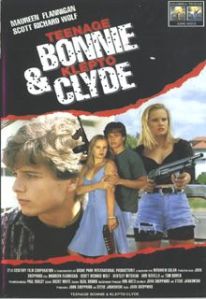
Scott Wolf plays Clyde, a nerdy high school student who has a go-nowhere job at a burger place. Maureen Flannigan, best known for starring in Out Of This World, is Bonnie, who likes to steal stuff and have fun. Unfortunately, Bonnie’s father (played by Tom Bower) is not an avuncular alien who sounds like Burt Reynolds. Instead, he’s the extremely strict and controlling police commissioner of their hometown. Clyde like Bonnie but Bonnie wants nothing to do with him. It’s not until Clyde spies Bonnie shoplifting in a record store that he realizes that larceny is the key to her heat. When Clyde steals a van and Bonnie steals her father’s guns, the two of them head for Mexico, robbing banks, shooting guns, making love (which, judging from the comments I have found online, is the main reason the film found an audience once it started showing up on HBO) and becoming media celebrities along the way.
An attempt to do a teenage version of Bonnie and Clyde, Teenage Bonnie and Klepto Clyde predates Natural Born Killers by a year with its critique of the public’s fascination with sex and violence. While the film was hurt by its low-budget, both Maureen Flannigan and Scott Wolf were ideally cast as the young lovers and the entire movie is a hundred times better than anyone would ever expect something called Teenage Bonnie and Klepto Clyde to be. After being typecast of Out of this World‘s wholesome Evie, Maureen Flannigan tried to change her image with this violent film. Unfortunately, the movie ended up exiled to late night showings on HBO where it guaranteed that kids like me would never look at reruns of Out of This World the same way ever again.
The year is 1971 and Malcolm Smith (Kyle MacLachlan) has just started working as a prison guard at Attica Correctional Facility. Even though his father (Harry Dean Stanton) was a prison guard, Malcolm does not fit in with the other guards at Attica. Malcolm is younger than them and is disgusted by the inhumane treatment of the prisoners. If not for his wife (Anne Heche) and the child that they are expecting, Malcolm would just quit but he needs the money. He fears that he is going to eventually turn into just another sadistic guard.
When a prison riot breaks out, Malcolm is one of the guards taken hostage. While the psychotic Chaka (Clarence Williams III) wants to kill all of the guards, Jamaal X (Samuel L. Jackson) realizes that killing the hostages will sacrifice what little leverage that prisoners have. If the guards are killed, Jamaal X reasons, the state police will have no reason not to storm the prison and violently restore order. Over the course of the four-day riot, Jamaal and Malcolm become unlikely friends and allies but it turns out that, even with the guards being held hostage, the government has no interest in negotiating with the prisoners.
This moving, thought-provoking, and well-acted docudrama originally aired on HBO and it won John Frankenheimer a well-deserved Emmy. Samuel L. Jackson is powerful as Jamaal X and this is one of the few times that Kyle MacLachlan got to play a thoroughly normal person with no dark secrets or weird quirks. Malcolm Smith is just a regular everyman who finds himself in the middle of a history-making event.
For fans of Twin Peaks, Against the Wall features three alumni of the show. Kyle MacLachlan, of course, starred as Dale Cooper while Clarence Williams III appeared in one episode as Roger Hardy. Finally, Harry Dean Stanton, a longtime favorite of David Lynch, appeared in Twin Peaks: Fire Walk With Me.
Sometimes, you watch a movie and all you cay say, at the end, is “What the Hell were they thinking?”
Wired is one such movie. Based on a widely discredited biography by Bob Woodward, Wired tells two stories. In the first story, John Belushi (Michael Chiklis, making an unfortunate film debut) wakes up in a morgue and is told by his guardian angel that he has died of a drug overdose. Did I mention that his guardian angel is Puerto Rican cabbie named Angel Vasquez (Ray Sharkey) and Angel drives Belushi through a series of flashbacks? Belushi meets Dan Aykroyd (Gary Groomes, who looks nothing like Dan Aykroyd). Belushi gets cast on Saturday Night Live. Belushi marries Judy (Lucinda Jenney). Belushi uses drugs, costars in The Blues Brothers, dies of a drug overdose in a sleazy motel, and plays a pinball game to determine whether he’ll go to Heaven or Hell. While this is going on, Bob Woodward (J.T. Walsh) is interviewing everyone who knew Belushi while he was alive.
There are so many things wrong with Wired that it is hard to know where to even begin. I haven’t even mentioned the scene where Bob Woodward travels back in time and has a conversation with Belushi while he’s dying on the motel room floor. Wired tries to be a cautionary tale about getting seduced by fame and drugs but how seriously can anyone take the message of any movie that features Ray Sharkey as a guardian angel? The scenes with Woodward are strange, mostly because the hero of Watergate is being played by an actor best known for playing sinister villains. (Seven years after playing Bob Woodward, J.T. Walsh was actually cast as Watergate figure John Ehrlichman in Nixon.) Considering that this was his first movie, Michael Chiklis is not bad when it comes to playing a drug addict named John but he’s never convincing as John Belushi. He never captures the mix of charisma and danger that made John Belushi a superstar. Wired wants to tell the story of Belushi’s downfall but never understands what made him special to begin with.
Wired tries to be edgy but it only succeeds for one split second. During the filming of The Blues Brothers, a director who is clearly meant to be John Landis walks over to Belushi’s trailer. Listen carefully, and a helicopter can be heard in the background.
As for the rest of Wired, what the Hell were they thinking?
For the longest time, I thought that Two-Minute Warning was a movie about a gang of art thieves who attempt to pull off a heist by hiring a sniper to shoot at empty seats at the Super Bowl. As planned by a master criminal known as The Professor (Rossano Brazzi), the sniper will cause a riot and the police will be too busy trying to restore order to notice the robbery being committed at an art gallery that happens to be right next to the stadium.
I believed that because that was the version of Two-Minute Warning that would sometimes show up on television. Whenever I saw the movie, I always through it was a strange plan, one that had too many obvious flaws for any halfway competent criminal mastermind to ignore them. What if the sniper was captured before he got a chance to start shooting? What if a riot didn’t break out? The sniper spent the movie aiming at empty seats but, considering how many people were in the stadium, it was likely that he would accidentally shoot someone. Were the paintings really worth the risk of a murder charge?
Even stranger was that Two-Minute Warning was not only a heist film but it was also a 1970s disaster film. Spread out throughout the stadium were familiar character actors like Jack Klugman, John Cassevetes, David Janssen, Martin Balsam, Gena Rowlands, Walter Pidgeon, and Beau Bridges. It seemed strange that, once the shots were fired and Brazzi’s men broke into the gallery, all of those familiar faces vanished. When it comes to disaster movies, it is an ironclad rule that at least one B-list celebrity has to die. It seemed strange that Two-Minute Warning, with all those characters, would feature a sniper shooting at only empty seats. For that matter, why would there be empty seats at the Super Bowl?
That wasn’t the strangest thing about Two-Minute Warning, though. The strangest thing was that Charlton Heston was in the film, playing a police captain. In most of his scenes, he had dark hair. But, in the scenes in which he talked about the art gallery, Heston’s hair was suddenly light brown.
Recently, I watched Two-Minute Warning on DVD and I was shocked to discover that the movie on the DVD had very little in common with the movie that I had seen on TV. For instance, the television version started with the crooks discussing their plan to rob the gallery. The DVD version opened with the sniper shooting at a couple in the park. In the DVD version, there was no art heist. The sniper had no motive and no personality. He was just a random nut who opened fire on the Super Bowl. And, in the DVD version, he did not shoot at empty seats. Several of the characters who survived in the version that I saw on TV did not survive in the version that I saw on DVD.
What happened?
The theatrical version of Two-Minute Warning was exactly what I saw on the DVD. A nameless sniper opens fire and kills several people at the Super Bowl. In 1978, when NBC purchased the television broadcast rights for Two-Minute Warning, they worried that it was too violent and too disturbing. There was concern that, if the film was broadcast as it originally was, people would actually think there was a risk of some nut with a gun opening fire at a crowded event. (In 1978, that was apparently considered to be implausible.) So, 40 minutes of new footage was shot. Charlton Heston even returned to film three new scenes, which explains his changing hair color. The new version of Two-Minute Warning not only gave the sniper a motive (albeit one that did not make much sense) but it also took out all of the violent death scenes.
Having seen both versions of Two-Minute Warning, neither one is very good, though the theatrical version is at least more suspenseful than the television version. (It turns out that it was better to give the sniper no motive than to saddle him with a completely implausible one.) But, even in the theatrical version, the potential victims are too one-dimensional to really care about. Ultimately, the most interesting thing about Two-Minute Warning is that, at one time, an art heist was considered more plausible than a mass shooting.
In his film guide, Heavy Metal Movies, Mike McPadden describes the disturbing 1987 teen crime drama River’s Edge as being “666 Candles“. It’s a perfect description because River’s Edge appears to not only be taking place in a different socio-economic setting than Sixteen Candles and The Breakfast Club but perhaps on a different planet as well.
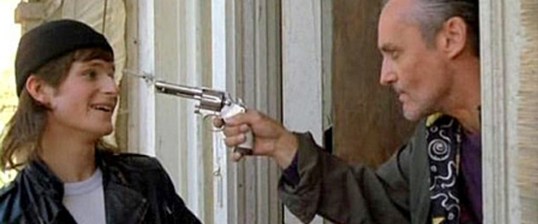
River’s Edge opens with a close-up of a dead and naked teenage girl lying on the edge of a dirty, polluted river and it gets darker from there. The dead girl was the girlfriend of the hulking John Tollet (Daniel Roebuck, playing a character who is miles away from his role in Cavegirl). As John explains to his friends, he strangled her for no particular reason. His friends, meanwhile, respond with detachment. Their unofficial leader, the hyperactive Layne (Crispin Glover), insists that since nothing can be done about the dead girl, their number one concern now has to be to keep John from getting caught. While Layne arranges for John to hide out with a one-legged drug dealer named Feck (Dennis Hopper), two of John’s friends, Matt and Clarissa (played by Keanu Reeves and Ione Skye), consider whether or not they should go to the police. Oddly enough, John really doesn’t seem to care one way or the other.
Seriously, River’s Edge is one dark film. If it were made today, River’s Edge would probably be directed by someone like Larry Clark and, in many ways, it feels like a distant cousin to Clark’s Bully. The teenagers in River’s Edge live in a world with little-to-no adult supervision. Matt’s mom is more concerned with whether or not Matt has been stealing her weed than with the fact that Matt might be covering up a murder. The local high school teacher is a former hippie who won’t shut up about how much better his generation was compared to every other generation. In fact, the only adult with any sort of moral code is Feck and he’s usually too busy dancing with a sex doll to really be of much help. It’s a world where no one has been raised to value their own lives so why should they care about a dead girl laying out on the banks of the river?
The film features good performances from Keanu Reeves, Ione Skye, and Daniel Roebuck but really, the entire movie is stolen by Crispin Glover and Dennis Hopper. In the role of Layne, Glover is a manic wonder, speaking quickly and gesturing even when he isn’t making a point. When Layne first shows up, he seems like he’s just overly loyal to his friend John but, as the film progresses, it becomes more apparent that he’s less concerned about protecting John and more interested in ordering other people to do it. For Layne, protecting John is ultimately about maintaining power over Matt, Clarissa, and the rest of their friends.
As for Dennis Hopper — well, this is one of those films that you should show to anyone who says that Hopper wasn’t a great actor. The role of a one-legged drug dealer who lives with a sex doll sound like exactly the type of role that would lead Hopper to going totally over-the-top. Instead, Hopper gave a surprisingly subtle and intelligent performance and, as a result, he provided this film with the moral center that it very much needs.
 The year is 1890 and Wyoming is on the verge of voting for statehood. Newspaperman Major Carter (George “Gabby” Hayes) believes that it’s time for Wyoming to become a state and most of the locals agree with him. Businessman Charles Plummer (Harry Woods) does not want Wyoming to become a state and he’s willing to send out his main henchman, Steele (Al Bridge), to intimidate the voters and to silence Carter. Plummer has a profitable racket going and the last thing he wants is for the U.S. government to get involved in his activities. It falls to two federal agents, John Tipton (John Wayne) and Bridger (Lane Chandler), to supervise the voting and protect the citizen. When Major Carter is shot by a drunk anti-statehood activist, the mission to make Wyoming a part of the Union becomes personal.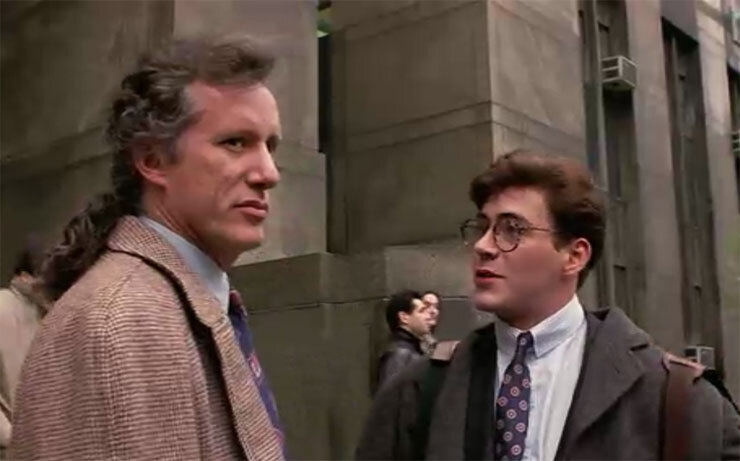


 Scott Wolf plays Clyde, a nerdy high school student who has a go-nowhere job at a burger place. Maureen Flannigan, best known for starring in Out Of This World, is Bonnie, who likes to steal stuff and have fun. Unfortunately, Bonnie’s father (played by Tom Bower) is not an avuncular alien who sounds like Burt Reynolds. Instead, he’s the extremely strict and controlling police commissioner of their hometown. Clyde like Bonnie but Bonnie wants nothing to do with him. It’s not until Clyde spies Bonnie shoplifting in a record store that he realizes that larceny is the key to her heat. When Clyde steals a van and Bonnie steals her father’s guns, the two of them head for Mexico, robbing banks, shooting guns, making love (which, judging from the comments I have found online, is the main reason the film found an audience once it started showing up on HBO) and becoming media celebrities along the way.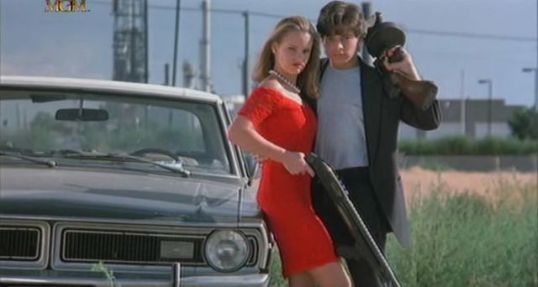
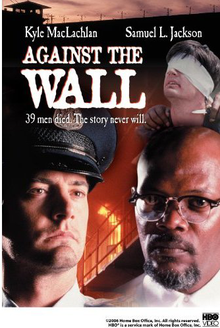 The year is 1971 and Malcolm Smith (Kyle MacLachlan) has just started working as a prison guard at Attica Correctional Facility. Even though his father (Harry Dean Stanton) was a prison guard, Malcolm does not fit in with the other guards at Attica. Malcolm is younger than them and is disgusted by the inhumane treatment of the prisoners. If not for his wife (Anne Heche) and the child that they are expecting, Malcolm would just quit but he needs the money. He fears that he is going to eventually turn into just another sadistic guard.
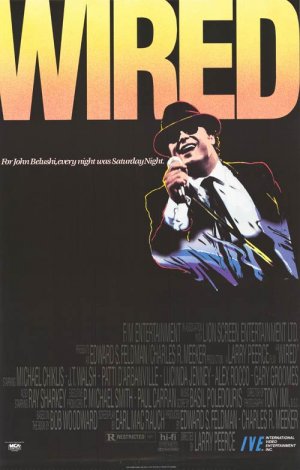 Sometimes, you watch a movie and all you cay say, at the end, is “What the Hell were they thinking?”

 Through the Shattered Lens