World’s Greatest Dad (2009, directed by Bobcat Goldthwait)


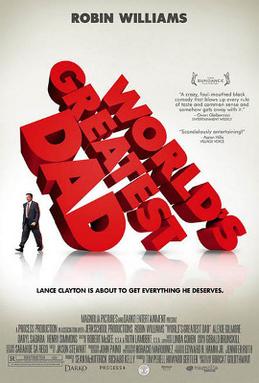
Lance Clayton (Robin Williams) is an English teacher who has a rotten teenage son named Kyle (Daryl Sabara).  Some teenagers go through a rebellious phase.  Some teenagers are troubled because of how they were raised or a recent trauma.  Some teenagers are misunderstood.  Kyle is just a disrespectful and stupid jerk who seems destined to do nothing his life.  He’s the type of fifteen year-old boy who uses his phone to secretly take upskirt pictures of his Dad’s girlfriend while they’re all out for dinner.

Those upskirt pics prove to be the last thing that Kyle sees as he’s looking at them where he dies in a case of autoerotic asphyxiation gone wrong.  Lance impulsively stages Kyle’s death to look like a suicide, both to preserve Kyle’s dignity and his own.  Lance, a frustrated writer, composes a suicide note and signs it with Kyle’s name.  When the note is leaked to the press, Kyle is hailed as a sensitive young man and becomes a hero to the former classmates who used to hate him.  Lance goes on to forge and publish a journal, which he claims was written by Kyle.  Kyle is hailed as a hero and Lance as the “world’s greatest dad.”  Lance enjoys the fame, until he doesn’t.

World’s Greatest Dad is a dark comedy, one that has the courage to often be downright unpleasant in its portrayal of how Kyle’s memory is idealized after his death.  It also features one of Robin Williams’s best performances.  Almost every performance that Williams gave had at least a hint of sadness to it.  In this film, he plays one of his saddest characters, a well-meaning teacher who cannot understand how his son has become such a jerk.  By writing the journal, Williams is not only deceiving the rest of the world but also himself.  He’s recreating Kyle as the son that he wanted as opposed to the one he got.  It’s one of Williams’s most emotionally honest and open performances.

For obviously reasons, it’s not easy to watch Williams playing such a depressed character, especially one who staes a suicide but the film really does show what a great actor Robin Williams could be.  In the end, his talent is what we should remember and celebrate.


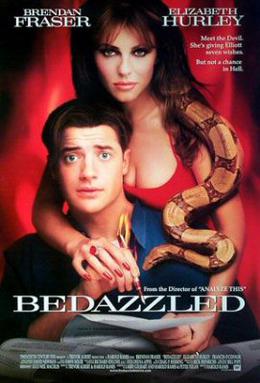
Bedazzled (2000, directed by Harold Ramis)


Elliot (Brendan Fraser) has a go-nowhere job at a computer company and an unrequited crush on Alison (Frances O’Connor), a co-worker who doesn’t even know who he is.  One night, at a bar afterwork, he’s approached by the Devil (Elizabeth Hurley), who offers Elliot seven wishes in return for his soul.  Elliot agrees but then he discovers that the Devil is tricky and his wishes always have an complication.  Elliot wants to be powerful so the Devil turns him into a Columbian drug lord.  Elliot wants to be sensitive and the Devil turns him into a whiny crybaby.  Elliot wants to be president and suddenly, he’s Abraham Lincoln being told to get ready for the theater.  Whenever things start to get too dangerous, the Devil brings Elliot back to reality so that she can continue to taunt him.

An Americanized remake of a British comedy that starred Dudley Moore and Peter Cook, Bedazzled was unfairly savaged by the critics when it was first released.  While it can’t match the wit and heart of the original and not all of the wishes are equally effective, the remake has its charms.  When Bedazzled first came out, most people talked about Elizabeth Hurley’s sexy performance of the Devil.  When she appears as a school teacher, it’s not a surprise that every student brings her an apple at the start of the day.  Hurley is so sexy that it’s easy to miss that she’s also giving a really good performance.  Hurley’s Devil is a prankster.  She likes to steal souls but mostly, she’s just having fun ruining all of Fraser’s wishes.  Brendan Fraser is likable as Elliot and the way he responds to each wish gives him a chance to show off his comedic skills.  Finally, the movie has a good ending, with Elliot growing up and realizing the truth about his crush on Alison.

Bedazzled may not be up to the level of some of director Harold Ramis’s other films but it’s still better than its reputation.

Shattered Politics: The Front Runner (dir by Jason Reitman)


Based (loosely, I assume) on a true story, 2018’s The Front Runner tells the story of a politician named Gary Hart (played by Hugh Jackman).

The year is 1987 and former U.S. Sen. Gary Hart is preparing to announce that he will be seeking the Democratic nomination for the Presidency of the greatest nation of all time, the United States!  (YAY!)  Hart is widely seen as the front runner, for both the nomination and the general election.  He’s got the youth vote sewn up.  He’s energetic.  He’s supposed to be intelligent.  We are told that he is handsome and charismatic.  (I say “told” because, in this film, they seem to be informed attributes as Hugh Jackman is given a truly terrible haircut and his performance here is a bit on the dull side.)  Hart announced his candidacy while standing in the Rocky Mountains.  His wife (Vera Farmiga) is behind him, even if she chooses not to join him on the campaign trail.  His campaign manager (J.K. Simmons) is welcoming new and idealistic volunteers to the campaign headquarters and encouraging them to remember that all of the difficulties of the campaign will be worth it after Gary Hart is elected president.  As for the press, they’re investigating long-standing rumors that Hart is a womanizer.  “Follow me around, you’ll get bored,” Hart says.  So, two reporters from the Miami Herald (Bill Burr and Steve Zissis) do just that they catch a young woman named Donna Rice (Sara Paxton) apparently staying over at Gary Hart’s Florida townhouse.

“It’s nobody’s business!” Hart snaps, when asked about his private life and it’s obvious that the film expects us to take Hart’s side.  The problem, as Hart’s campaign manager points out, is that a lot of people are volunteering for Hart’s campaign and have sacrificed a lot to help him out and now, if Hart doesn’t figure out some way to deal with the story, it looks like it was all for nothing.  Even if Hart didn’t cheat with Rice, he still showed remarkably poor judgment in spending time alone with her in Florida while his wife was back in Colorado.  The film argues that the press went overboard pursuing the story and perhaps they did.  The press tends to do that and really, no politician has any excuse not to realize that.  But, even if we accept the argument that the press acted unethically, that doesn’t exactly exonerate Gary Hart, though this film certainly seems to think that it does.  To a certain extent, this film reminded me a bit of James Vanderbilt’s Truth, in which it was assumed we would be so outraged that Cate Blanchett’s Mary Mapes was fired for producing a story about George W. Bush’s time in the National Guard that we would overlook that Mapes and CBS news tried to build a major story around a bunch of obviously forged documents.

(Of course, if Hart had been running today, I doubt the scandal would have ended his campaign.  If anything, Donald Trump’s personal scandals seemed to play to his advantage when he ran in 2016 and 2024.  To a find a 21st Century equivalent to Hart’s scandal, you’d probably have to go all the way back to John Edwards in 2008.  Of course, Edwards was cheating on his wife while she was dying of breast cancer, which makes Edwards a special type of sleaze.)

As for the film itself, director Jason Reitman tries to take a Altmanesque approach, full of overlapping dialogue and deceptively casual camera moments.  There are a few moments when Reitman’s approach work.  The start of the film, in which the camera glided over hundreds of journalists reporting from outside the 1984 Democratic Convention, was so well-handled that I briefly had hope for the rest of the film.  Reitman gets good performances from dependable veterans like J.K. Simmons and Alfred Molina.  But, at the heart of the film, there’s a massive blank as Hugh Jackman gives an oddly listless performance as Hart.  The film expects us to take it for granted that Gary Hart would have been a good President but there’s nothing about Jackman’s performance to back that up.  It’s odd because, typically, Hugh Jackman is one of the most charismatic actors around.  But, as Gary Hart, he comes across as being petulant and a bit whiny.

It’s an interesting story but ultimately, The Front Runner doesn’t do it justice.


Down Periscope (1996, directed by David S. Ward)


After being passed over twice as a result of both a “brushing incident” with a Russian submarine and an embarrassing tattoo, Lt. Commander Thomas Dodge (Kelsey Grammer, playing Dodge as being the laid back opposite of Frasier Crane) has finally been promoted and given his own submarine to command.  The catch is that the submarine is a rusty piece of junk from World War II and he’s been assigned a crew of misfits.  Captain Dodge is to take part in a war game.  Admiral Winslow (Rip Torn) wants Dodge to prove that even an out-of-commission submarine can be dangerous by infiltrating Charleston Harbor undetected and then blowing up a dummy warship in Norfolk Harbor.  If Dodge is successful, he’ll get a nuclear submarine to command.  If he fails, he’ll be assigned of desk job and probably leave the Navy.  While the sympathetic Winslow encourages Dodge to “think like a pirate,” the antagonistic Admiral Graham (Bruce Dern) pulls out all the stops to make sure Dodge fails.

I imagine that Down Periscope was probably pitched as Police Academy In The Navy and it follows the general rules of the Police Academy films, right down to casting Lauren Holly as the one woman on the submarine who has to overcome her own insecurities and prove herself to all the men.  Unfortunately, none of the misfits on the crew are as memorable as the cadets from Police Academy and the movie’s attempts to mix juvenile humor with suspenseful naval action are not at all successful.  Having Rob Schneider go totally over the top as Dodge’s second-in-command while having William H. Macy give a serious performance as the captain assigned to prevent Dodge from reaching the harbor indicates that Down Periscope has a definite identity problem.

Harry Dean Stanton plays Howard, who is the submarine’s chief engineer and who uses whiskey as a fuel to keep the submarine moving.  Toby Huss has a few amusing moments as the electrician who keeps electrocuting himself.  Grammer, Dern, and Macy have more than proven their talents in other projects and Rip Torn will always be remembered for bringing Artie to profane life on The Larry Sanders Show.  Director David Ward also directed Major League and wrote The Sting.  A lot of talent went into making Down Periscope so it’s a shame the film wasn’t more memorable.

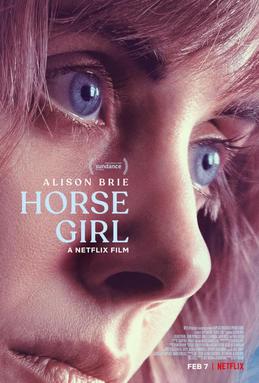
The Films of 2020: Horse Girl (dir by Jeff Baena)


Horse Girl tells the story of a lost woman named Sarah (played, in a bravely committed performance, by Alison Brie).

Sarah is an introvert who works in a craft store, where she can tell the customers exactly the right type of paint to buy and where she’s watched over by her friendly co-worker, Joan (Molly Shannon).  During the day, she occasionally visits the grave of her mother, who committed suicide.  Sometimes, she might have a conversation with her wealthy stepfather (Paul Reiser).  She enjoys going out to the stables and watching a horse named Willow.  When she was a little girl, she rode Willow and she still thinks of him as being her horse.  The owners of the stable, however, are never particularly enthused to see Sarah hanging around.  In one scene, Sarah attempts to give advice to the girl who was just riding Willow, despite the fact that the girl obviously has no idea who Sarah is.  Despite her good intentions, Sarah tends to be so awkward in her attempts to socialize that she just leaves people feeling uncomfortable.

When she’s not at work or at the stables or trying to fit in with the other students at her zumba class, Sarah lives in an apartment with her roommate, Nikki (Debby Ryan).  While Nikki has a boyfriend, Sarah spends most of her nights in her living room, watching a cheesy sci-fi adventure show called Purgatory.  She knows every detail about the show and is always shocked when no one else is as interested in it as she is.

In short, Sarah is a misft but she’s a familiar misfit.  We all probably know someone like Sarah.  At the very least, we all follow someone on twitter who is like Sarah, someone who always seems to be trying to make a connection but who can never quite get comfortable enough to just relax and be herself.

Strange things start to happen to Sarah.  She hears voices in the apartment.  She has dreams in which she’s lying on the floor of what appears to be a spaceship.  Sarah starts to sleepwalk and is soon waking up to find herself in random locations.  When she sees a picture of her grandmother, she wonders if it’s possible that she’s a clone.  Strange scratches start to appear on the walls of her apartment.  Did Sarah put them there or are they result of something coming after her?

Horse Girl is a surprisingly effective film, one that keeps you guessing as to whether or not what we’re seeing is really happening or if it’s all just occurring in Sarah’s head.  Horse Girl was produced by Duplass Brothers Productions and it really does feel like a mumblecore version of Repulsion, with Alison Brie stepping into Catherine Deneuve’s role of the repressed young woman who finds herself a prisoner of her own fears.  Whereas Repulsion featured arms growing out of the walls, Horse Girl features alien abductions and clones.

It’s a film that is sometimes heart-breaking and occasionally darkly funny.  As much as we care and worry about Sarah, the people around her are interesting as well.  The world that Horse Girl creates feels very real and very familiar and even the actors in the smallest roles create an indelible impression.  This is one of those rare movies where it actually seems like the characters in the film all have a life even when they’re not in a scene.  Every performance and every character feels real and authentic.  I particularly liked the performance of Molly Shannon, who brings a very natural and sincere kindness to the role of Sarah’s co-worker.  Playing Sarah’s father and Sarah’s gently humorous doctor, Paul Reiser and David Paymer shine in small roles.

That said, the film works best as a showcase for Alison Brie, who is both sympathetic and, eventually, more than a little frightening in the role of Sarah.  Brie gives such an emotionally vulnerable performance as Sarah that there are times when you really wish that you could step into the film yourself and assure her that everything’s going to be okay.  It’s also a rather brave performance, one that wins our sympathy while also showing why the increasingly manic Sarah might be too much for some people to take.

I have to admit that I wasn’t necessarily expecting much when I started watching a film called Horse Girl but it turned out to be one of my favorite films of 2020 so far.

Halloween 2018, Review by Case Wright


h2.jpg

Happy Halloween!!!  I have reviewed A LOT of Halloween movies! They’re pretty… pretty good  This one’s goodThis one’s not bad this one’s probably my best. This Halloween movie was …. well … fine.  There’s a spectrum of Halloween franchise films. Some are amazing, some are epically terrible, and some are fine.  Not terrible, just ok.  This is in the meh category, but like much of life itself- kinda dull and disappointing as you slowly degrade towards the infinite.

Michael in an insane asylum and about to be transferred….again, but to make it different this time annoying podcasters interview him first.  So…. it’s kinda new? But really, this guy escapes custody more than El Chapo, but they keep moving him around movie after movie after movie. I know that this movie is supposed to disregard all the ones after the first one, but that really is just an excuse to recycle the old tropes.  I wish they’d taken another route like they did in H20, which is still amazing and holds up really well.

The big change is that Laurie Strode has been waiting for Michael’s inevitable escape.  She turned her home in a fortress with all kinds of booby traps.  She has an arsenal that my grandma would’ve been proud to see.  Unfortunately, it drove Laurie to raise her daughter Karen (Judy Greer) like a special forces recruit and always afraid and a quasi-prisoner.  Karen, now an adult with a family of her own, wants nothing to do with her gung ho mom, but her Karen’s daughter Allyson (Andi Matichak) wants the family to reunite by inviting her to mom to dinner and it goes…yikes.

The unsung character of the movie that provides the only comic relief was Karen’s husband Ray (Toby Huss) who got not a tear from anyone when Michael made short work of him.  Really, no one cared at all about the dad getting killed, not the wife or the daughter; only Michael seemed to care and he murdered the guy.  Poor dads, we’re just cast aside like old meat- no one cares.

The movie have A LOT of bad decisions; if bad boxers lead with their chins, these guys led with their necks.  I guess that’s why it was tough for me to feel sympathetic for the victims because they were so dumb that I figured something else would’ve gotten these walking Darwin Awards: stopping on railroad tracks, taking a selfie in a lion enclosure at a zoo, or getting eaten by a Labrador Retriever…somehow.

In any case, I would get this on netflix; it was …fine.


Film Review: Rescue Dawn (dir by Werner Herzog)


Dieter Dengler (Christian Bale) has been obsessed with flying ever since he was a child in Germany.  Towards the end of World War II, while his native country burned around him, Dieter would stare up at the skies and watch the American planes fly overhead and he knew that was not only what he wanted to do someday but also who he wanted to do it for.  Jump forward two decades, to 1966.  Dengler is now a lieutenant in the U.S. Air Force, an always smiling optimist who is considered to be something of a wild man.  When Dengler is reported as having been shot down over Loas, his fellow pilots are not only convinced that Dengler survived but that he’ll also eventually escape captivity.  Why?  Because they now Dieter Dengler is not the type to give up.

And they’re right.  Dengler not only survives the crash but he also survives in the wild.  After growing up in the rubble of Germany, Dengler is confident that he can survive anything.  Even when he’s finally captured by communist rebels, Dengler remains optimistic that he’ll make it back home.  When he’s told that he can go free if he signs a statement denouncing the United States, he refuses.  Dengler’s not going to turn on the country that allows him to fly.  Dengler soon finds himself being held in a POW camp with four other men, including two other Americans (played by Jeremy Davies and Steve Zahn).  The guards are determined to break Dengler but he’s just as determined to escape.  Hearing that it’s impossible to do so only makes Dengler more determined.

The story of Dieter Dengler and his eventual escape from captivity was originally told, by Dengler himself, in Werner Herzog’s 1997 documentary, Little Dieter Needs To Fly.  That Herzog saw Dengler as a kindred spirit is evident in the fact that, 9 years after the documentary, Herzog again told Dengler’s story in the 2006 film, Rescue Dawn.

On the face of it, a story about a group of Americans escaping from a POW camp might sound like an unlikely topic for a Werner Herzog film but it doesn’t take long for Herzog to put his own distinctive stamp on the project.  As played by Bale, Dengler is another one of Herzog’s obessessive heroes.  Dengler’s obsession is not just with flying but also with being free.  For Dengler, that’s what being an American means and that’s why he would rather be tortured than sign a simple piece of paper denying the existence of that freedom.  Much as how Grizzly Man portrayed Timothy Treadwell as being a man who would rather be eaten by a bear than live a life that’s been dictated by others, Dengler would rather suffer than betray his adopted country.

Rescue Dawn also centers around another common Herzog theme, the pitilessness of nature.  Watching Dengler trying to make his way through the jungle, we’re reminded that nature will always win in the end.  In Herzog’s world, neither nature nor the universe as a whole has any ideology.  Long after every warrior has died, the film tells us, nature will still be there.  The one thing that the POWs and their captors have in common is that they’re all at the mercy of the chaos of nature.  Just as the jungle threatens to swallow up Dengler and the other prisoners, their captors are slowly starving to death due to a drought.  As filmed by Herzog, the jungle is both beautiful and overwhelming.  Even at the film’s triumphant conclusion, it’s hard not to feel that, for all the planning, Dengler’s escape and survival was due to the random chaos of the universe.  How much can we control and how much must we simply leave up to the whim of nature?

Bale, Davies, and Zahn all give excellent performances and Herzog keeps the story moving quickly.  It’s probably one of his most emotionally accessible films and it’s impossible not to shed a tear at that final scene.  That said, I’d be remiss if I didn’t acknowledge that there’s a good deal of controversy about the way that Rescue Dawn portrays Gene DeBruin, the POW played by Jeremy Davies.  The film often contrasts Dengler with DeBruin.  If Dengler is always hopeful and determined, DeBruin is portrayed as being unstable and unreliable.  However, by most accounts — including the one given by another one of the prisoners — DeBruin was actually the exact opposite of how he was portrayed in the film.  Instead of being selfish, he was a source of strength for the POWs and he actually refused to take advantage of a previous chance to escape because it would have meant abandoning the rest of the prisoners.  Herzog has said that he wasn’t aware of DeBruin’s heroism when he wrote and directed the film and that he now regrets the way that DeBruin was portrayed.  (DeBruin’s brother has said that Herzog refused to talk to the family while the film was in poduction.)  Rescue Dawn is a well-made and wonderfully acted film and it’s one that always brings tears to my mismatched eyes but, while watching it, it’s impossible not to regret the injustice that was done to Gene DeBruin.

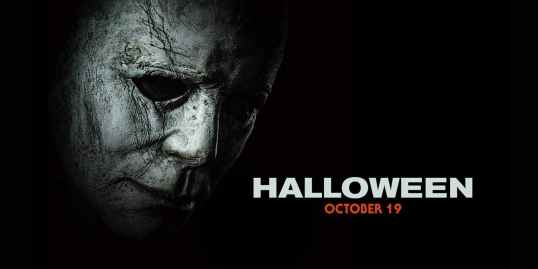
Trailer: Halloween


Halloween 2018

October 19, 2018. Keep that date in mind.

It’s the date for the latest entry to the Halloween franchise. It’s to be a sequel to the original film. It will also discard every other Halloween sequel ever made. So, for those who are so anti-remake/reboot this should alleviate any of those triggers.

David Gordon Green (who co-wrote this sequel with Danny McBride and Jeff Fradley) directs this sequel as a continuation of the events which happened with the original film. A follow-up that’s 40 years in the making, literally.

So, once again, remember October 19th and make sure to check this film out. I have a sneaking suspicion that it’ll be the true sequel to Carpenter’s classic.

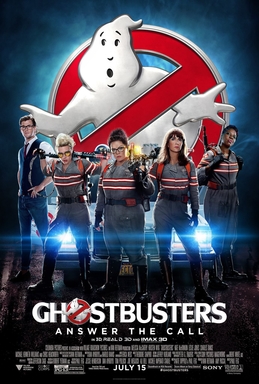
Film Review: Ghostbusters (dir by Paul Feig)


Ghostbusters

If you need any further proof that 2016 is a screwed-up year, just consider the fact that Ghostbusters, an entertaining but ultimately rather mild-mannered and innocuous summer action/comedy, has become the center of one of the biggest controversies of the year.

It all started, of course, when the reboot was first announced.  Fanboys reacted with outrage, offended that Hollywood would even consider remaking a film that was apparently one of the defining moments of their childhood.  Then, it was announced that Ghostbusters would feature an all-female cast and it would be directed by Paul Feig, the director of Bridesmaids.  The howls of outrage grew even louder.  Then that infamous trailer was released and even I felt that trailer sucked.  I wasn not alone because the trailer quickly became one of the most disliked videos in the history of YouTube.  Reading the comments underneath that trailer was literally like finding yourself trapped in a production of Marat/Sade.

Suddenly, in the eyes of very vocal group of internet trolls, the reboot of Ghostbusters went from being simply another dubious idea to being a crime against humanity.  And the trolls were so obnoxious that they managed to turn this big-budget, studio-backed production into an underdog.  Here was a movie directed by one of Hollywood’s biggest directors and starring some of Hollywood’s hottest stars and suddenly, it had become David in a biblical showdown with the Goliaths of internet.
ghostbusters1-800x430

And then it happened.  Earlier last week, Ghostbusters was finally screened for critics.  The first reviews started to come in and they were surprisingly positive.  In fact, they were so positive that I found myself distrusting them.  I found myself wondering if critics were reacting to the film or if they were simply trying to prove that they were better than the trolls who leave obscene comments on YouTube.

Which was true, I wondered.  Was Ghostbusters the worst film ever made or was it the greatest?  Or was it perhaps just possible that Ghostbusters would turn out to be a typical summer film?

With all the controversy, it’s tempting to overpraise a film like Ghostbusters.  Battle lines have been drawn and sometimes, I feel as if I’m being told that failing to declare Ghostbusters to be the greatest and most important comedy of all time is the equivalent of letting the trolls win.

Well, that’s not true.  Ghostbusters is not the greatest or the most important comedy of all time but you know what?  Ghostbusters is good.  Ghostbusters is entertaining.  Especially during the first half, it’s full of laugh out loud moments.  At times, Ghostbusters is everything that you could hope for.

No, it’s not a perfect film.  Paul Feig is a great comedy director but, in this film at least, his direction of the big action sequences often feels uninspired (especially when compared to his previous work on Spy).  The final fourth of the film gets bogged down in CGI and the film goes from being a clever comedy to being just another summer spectacle.  Even the one-liners, which flowed so naturally at the start of the film, feel forced during the final half of the film.  Ghostbusters is good but it never quite becomes great.

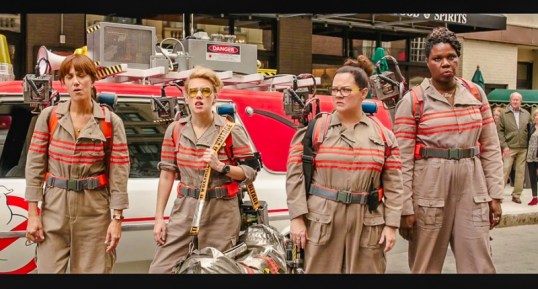
ghostbusters-2016-cast-proton-packs-images

Here’s what did work: the cast.  As he previously proved with Bridesmaids, Paul Feig is a director who is uniquely skilled at creating and showcasing a strong comedic ensemble.  Kristen Wiig plays Erin Gilbert, who is denied tenure at Columbia when it is discovered that a book she wrote on the paranormal has been republished and is being sold, on Amazon, by her former best friend, Dr. Abby Yates (Melissa McCarthy).  When Erin goes to confront Abby, she not only meets Abby’s newest colleague, Dr. Jillian Holtzmann (Kate McKinnon) but she also gets dragged into investigating an actual case of paranormal activity..  Soon, Erin, Abby, and Holtzmann are investigating hauntings and capturing ghosts, all with the secret approval of the Mayor of New York (Andy Garcia).  Of course, for PR reasons, the mayor’s office has to continually disavow the Ghostbusters and occasionally have them arrested.  Working alongside the three scientists are Patty (Leslie Jones), who apparently knows the history of every building in New York, and Kevin (Chris Hemsworth), their adorably stupid receptionist.

As written, both Patty and Kevin are fairly thin characters.  Kevin’s the handsome dumb guy.  Patty is streetwise and sassy.  But both Hemsworth and Jones give such enthusiastic and sincere performances that they transcend the stereotypical nature of their roles.  At times, Kevin runs the risk of becoming too cartoonish for even a Ghostbusters film.  But if you can’t laugh at Chris Hemsworth explaining that he took the lenses out of his glasses because they were always getting dirty, what can you laugh at?

Erin is an interesting character and Kristen Wiig deserves a lot of credit for her performance.  Erin is actually given a fairly affecting backstory, centering around how she was haunted by the ghost of the old woman who used to live next door to her.  Erin is a former believer, someone who, in order to succeed in the “real” world, gave up her beliefs and conformed to the expectations of society.  When she actually meets a ghost, it’s more than just a confirmation of the supernatural.  It’s a chance for Erin to finally embrace who she truly is and what she truly cares about.  When she and the other ghostbusters chase after evil spirits, Erin is not just doing a job.  Instead, she’s finally found somewhere where she belongs.  She no longer has to pretend to be someone that she isn’t.  Wiig plays the role with just the right touch of neurotic wonder.  She grounds the entire film.

Wiig McKinnon

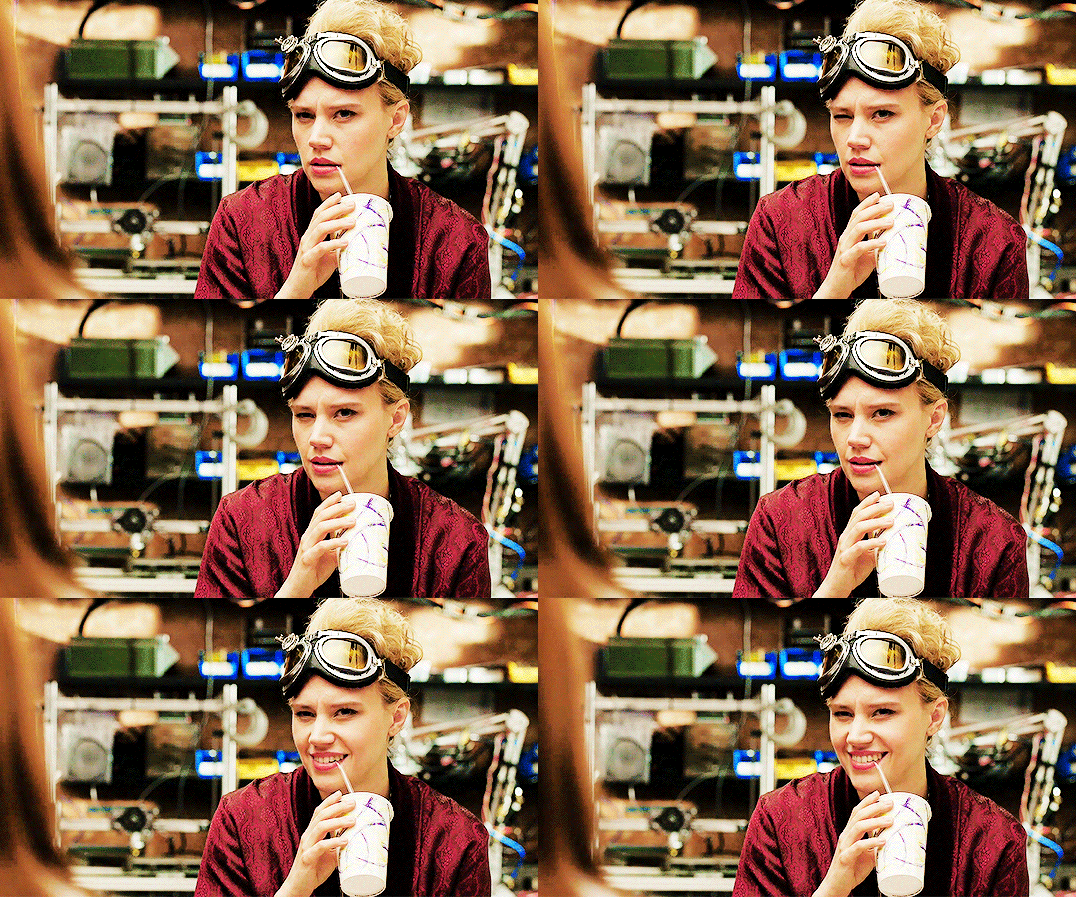
But the true star of the film is Kate McKinnon.  Whether she’s cheerfully smiling as a ghost vomits all over her colleagues or cheerfully explaining how easily their equipment could kill them all, Holtzmann is the greatest character in the film and McKinnon gives the best performance.  If Wiig grounds the film, McKinnon provides it with a truly demented soul.

The first half of the movie, which focuses on the relationships between the characters and features snappy and endlessly quotable dialogue, is wonderful and I was thrilled while watching it, convinced that the entire movie would be as good as the first hour.  However, the second half of the film gets bogged down in a rather predictable plot and the final action sequences could have just as easily been lifted from Pixels or one of The Avengers movies.  The surviving cast of the original Ghostbusters all show up in cameos that are, at best, inoffensive and, at worst, groan-worthy.  The end result is rather uneven.  If the film had maintained the momentum of that first hour, it would be a classic.  But that second half transforms it into just another entertaining but not quite memorable summer action film.

That said, Paul Feig is an excellent comedy director and let’s hope that he never gets so self-important that he ends up turning into Jay Roach.  Hopefully, if there is a sequel, Feig will return to direct it and Kate McKinnon will have an even bigger role.
tumblr_o3h37546Pl1v6mqeeo2_540