Embracing the Melodrama Part II #120: We Need To Talk About Kevin (dir by Lynne Ramsay)


We Need To Talk About KevinThis is a historic occasion!

Two months and one week ago, I started on this journey that we call Embracing the Melodrama, Part II.  At the time, I announced that I would be reviewing 126 film melodramas and that I would get it all done in 3 weeks.  Well, I was 6 weeks off as far as the timing was concerned but I am going to reach the 126 mark.

(And then I’m going to pass out and sleep for a year…)

We started this series by taking a look at the 1927 silent classic Sunrise and now, 119 reviews later, we have reached the disturbing 2011 film, We Need To Talk About Kevin.

We Need To Talk About Kevin tells the story of Eva (Tilda Swinton).  Eva was once a very successful travel writer, who explored the world and lived a life of total independence and sophistication.  Now, however, she has a demeaning job at a travel agency.  She lives in a dilapidated house that is the frequent target of vandals.  Everyone in town views her as a pariah, either deliberately avoiding her or greeting her with open hostility.

You see, Eva is the mother of a teenager named Kevin (Ezra Miller) who is currently in prison.  One day, Kevin locked all of his high school classmates in the gym and, using a bow and arrow set that was given to him by his father, Franklin (John C. Reilly), Kevin proceeded to kill or maim them all, one-by-one.  When Kevin finally surrendered to police, he looked over at his mother and he smirked.

We Need To Talk About Kevin unfolds in flashback as Eva looks back on her former life and tries to understand how her son could do something so evil.  From the time that Kevin was a baby, Eva suspected that there was something wrong with her son and found it impossible to bond with him.  While Franklin spoiled him and refused to accept that there was ever anything wrong, Eva went the opposite direction.  When Eva became more and more convinced that Kevin was evil, Franklin refused to listen to her.

And, make no mistake about it, Kevin is evil.  For the majority of the film, he is one of the most evil characters that you’ve ever seen.  (It’s even suggested — though thankfully never shown — that he may have deliberately blinded his little sister.)  We, like Eva, wonder if Kevin was born evil or if he became evil as the result of the way he was raised but there’s no doubt that he’s evil.

And then, one day, Eva goes to visit her son in prison and we see a different Kevin.  Kevin is about to turn 18, which means that he’ll be transferred to an adult prison.  Kevin admits that he’s scared.  In this scene, the cocky and hateful Kevin is one.  This new Kevin has shaved off his previously unruly mop of hair.  His face is bruised and he has a cut above his eye, suggesting that, within the walls of the justice system, he’s no longer the attacker but instead the one being attacked.  He no longer smirks or glares at his mother.  Instead, he looks lost and vulnerable.

And, at first, I actually felt sorry for Kevin when I saw that scene.  I guess it was maybe my own maternal instinct coming out or maybe my own tendency to feel compassion for those who have no freedom.  But, at that moment, I felt as if maybe Kevin finally understood that what he did was wrong.  Just like Tilda Swinton’s Eve, I suddenly felt compassion for this hateful creature…

Until, of course, it occurred to me that the only time that Kevin showed any fear or regret was when it came to his own situation.  As scared as Kevin is, Kevin never expresses any regret over what he did.  Instead, he’s scared for himself and upset that he no longer has control of his situation.  Though the film never states it, that’s classic sociopath behavior.  (One is reminded of the BTK Killer, who unemotionally talked about those he killed but then cried when talked about having to spend the rest of his life in prison.)

At that point, I realized that Kevin hadn’t changed at all.  Much like Eve, I wanted to believe that Kevin had changed because that, at least, would give the story some sort of closure.  But, unfortunately, the Kevins of the world can never change.  We may not know how someone like Kevin is created, whether he’s born evil or becomes evil due to circumstances.  But we do know that evil can never change.  That’s the burden that both Eve and the audience must carry.

We Need To Talk About Kevin is a lot like Million Dollar Baby.  It’s well-directed and fiercely well-acted but, at the same time, it’s so sad and disturbing that I don’t know that I’ll ever be able to watch it again.  There are a few moments of very dark humor, mostly connected to just how oblivious everyone, with the exception of Eve, is to Kevin’s evil.  But make no mistake, this is a seriously dark film.

http://www.youtube.com/watch?v=TGjjK5SMbJA

(For those keeping track, that’s 120 reviews down and 6 to go.)

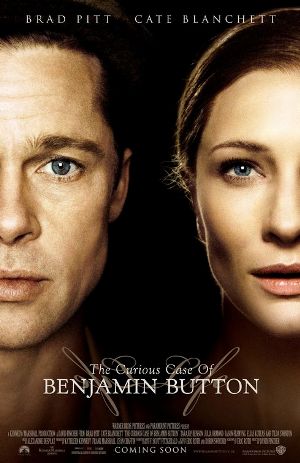
Embracing the Melodrama Part II #112: The Curious Case of Benjamin Button (dir by David Fincher)


Curious_case_of_benjamin_button_ver32010 will always be considered, by many of us, to be the year that Oscar journalism first jumped the shark.  That was the year that a group of self-styled award divas (which Awards Daily’s Sasha Stone being the most obnoxious culprit) went batshit crazy over a film called The Social Network.  

From the minute that David Fincher-directed film premiered, the Sasha Stones in the world not only declared it to be the greatest film ever made but also insinuated that anyone who disagreed had to be stupid, crazy, and evil.  It actually got rather silly after a while.  That is until The Social Network lost best picture to The King’s Speech.  Suddenly, what was once merely enthusiastic advocacy transformed into fascistic fanaticism.  Suddenly, these people started to view the 2010 Oscar race (and each subsequent Oscar race) as a rather tedious battle between good and evil.  For these people, David Fincher represented the forces of good.  And Tom Hooper, the director of The King’s Speech, represented all that was evil.  They took this to such an absurd extreme that they not only subsequently heaped undeserved praise on Fincher’s bastardization of The Girl With The Dragon Tattoo but also unnecessary scorn on Hooper’s Les Miserables.

Of course, what was forgotten in all of that drama was that — before Hooper and The King’s Speech came along, the 2010 Oscar race was predicted be some to be a rematch between Fincher and Danny Boyle (whose 2010 film, 127 Hours, was indeed nominated for best picture, alongside The Social Network, King’s Speech, and Black Swan).  When Fincher and Boyle previously competed during the 2008 Oscar race, Danny Boyle’s Slumdog Millionaire defeated Fincher’s The Curious Case of Benjamin Button.

And indeed, the case of Benjamin Button was curious one!

Loosely based on a short story by F. Scott Fitzgerald, The Curious Case of Benjamin Button told the story of a man who aged in reverse.  When Benjamin is a baby, he has the wrinkled face of an elderly man.  When he’s a teenager, he’s walking with a cane.  When he’s middle-aged, he looks like Brad Pitt in Legends of the Fall.  (In that regard, it helps that Benjamin is played by Brad Pitt.)  And when he’s an old man, he’s a baby.  Though the film, wisely, refrains from offering up a definite reason why Benjamin ages in reverse, it hints that it could have something to do with a clock that was built to run backwards as an anti-war statement.

Benjamin is born in New Orleans in 1918 and raised in a nursing home by Queenie (Oscar nominee and future Empire star Taraji P. Henson).  The love of Benjamin’s life is Daisy Fuller (Elle Fanning when young, Cate Blanchett as an adult), a dancer who also loves Benjamin but who, unlike him, is not aging in reverse.  For this reason, Benjamin and Daisy cannot be together.  That’s the way tragic love works.

The film itself features a framing device.  Daisy, now an elderly woman, is dying and gives her estranged daughter, Caroline (Julia Ormond), the diary of Benjamin Button.  As Caroline reads, Hurricane Katrina rages outside.  I’ve never really been comfortable with the way that the film uses Katrina as a plot point, for much the same reason that it bothered me when Hereafter used the real-life Thailand typhoon and London terrorist bombings to tell its story.  The real-life tragedy of Katrina feels out-of-place in a story about Brad Pitt aging backwards.

As for the rest of the film, The Curious Case of Benjamin Button is … well, it’s a curious film.  Visually, it’s definitely a David Fincher film but, at the same time, there’s something curiously impersonal about it.  You almost get the feeling that this was Fincher’s attempt to show that he was capable of making a standard big budget Hollywood film without getting too Fincheresque about it.  Brad Pitt and Cate Blanchett have chemistry and they look good together but Fincher has never been a sentimental director and his heart never truly seems to be in their love story.  (Ben Affleck and Rosamund Pike in Gone Girl feel more like a natural couple than Brad Pitt and Cate Blanchett do in this film.)  There’s only a few scenes, mostly dealing with the more morbid aspects of Benjamin’s odd condition, towards which Fincher really seems to feel any commitment.

As a result, The Curious Case of Benjamin Button becomes a curious misfire.  It’s a film that struggles with the big picture but is occasionally redeemed by some of its smaller moments.  (The scenes with the elderly Benjamin as a dementia-stricken baby are haunting and unforgettable.)  Ultimately, The Curious Case of Benjamin Button is probably the weakest of the five 2008 films nominated for best picture but it’s still an interesting film to watch.

Yay! Here Are The Alliance of Women Film Journalists Award Winners!


Film Review Under the Skin

That’s right, I said “Yay!”  And believe it or not, I’m not at all being snarky.  The AWFJ awards are always some of my favorite of the annual precursor awards.  Not only do they provide a different (and, let’s just be honest, better) perspective than the other male-dominated critical societies but they also have a lot of extra (some fun and some thought-provoking) categories.

Here are their picks for the best of 2014!  I especially appreciate and agree with the recognition given to Under the Skin and Emily Blunt’s performance in Edge of Tomorrow.

Best Film
BOYHOOD

Best Director (Female or Male)
Richard Linklater for BOYHOOD

Best Screenplay, Original
BIRDMAN – Alejandro Gonzales Inarritu, Nicholas Giacobone, Alexander Dinelaris, Armando Bo

Best Screenplay, Adapted
GONE GIRL – Gillian Flynn

Best Documentary
CITIZENFOUR – Laura Poitras

Best Animated Film
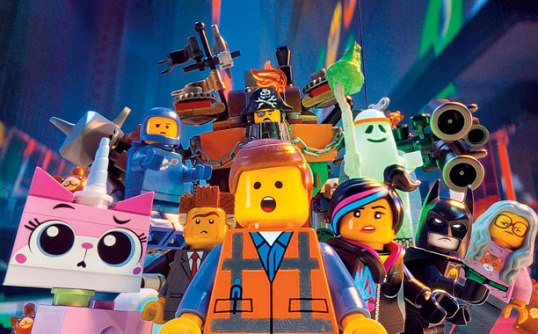
LEGO – Phil Lord, Christopher Miller

Best Actress
Julianne Moore for STILL ALICE

Best Actress in a Supporting Role
Tilda Swinton for SNOWPIERCER

Best Actor
Michael Keaton for BIRDMAN

Best Actor in a Supporting Role
J.K. Simmons for WHIPLASH

Best Ensemble Cast (tie)
BIRDMAN – Francine Maisler, Casting Director
and
GRAND BUDAPEST HOTEL – Douglas Aibel (US), Antoinette Boulat (France), Simone Bar, Alexandra Montag (Germany), Debra Maxwell Dion (LA), Jina Jay (UK)

Best Editing
BIRDMAN – Douglas Crise, Stephen Mirrione

Best Cinematography
BIRDMAN – Emmanuel Lubezki

Best Film Music Or Score
BIRDMAN – Antonio Sanchez

Best Non-English-Language Film
IDA – Pavel Pawlikowski (Poland)

EDA FEMALE FOCUS AWARDS
These awards honor WOMEN only.

Best Woman Director
Ava DuVernay for SELMA

Best Woman Screenwriter
Gillian Flynn for GONE GIRL

Best Female Action Star
Emily Blunt for EDGE OF TOMORROW

Best Breakthrough Performance
Gugu Mbatha-Raw for BELLE

Female Icon of the Year (tie)
(a woman whose work in film and/or in life made a difference)
Ava DuVernay
and
Laura Poitras

EDA SPECIAL MENTION AWARDS

Best Depiction Of Nudity, Sexuality, or Seduction
UNDER THE SKIN – Scarlett Johansson

Actress Defying Age and Ageism
Tilda Swinton

Most Egregious Age Difference Between The Leading Man and The Love Interest
MAGIC IN THE MOONLIGHT – Colin Firth (b. 1960) and Emma Stone (b. 1988)

Actress Most in Need Of A New Agent
Cameron Diaz for SEX TAPE

Movie You Wanted To Love, But Just Couldn’t
INHERENT VICE

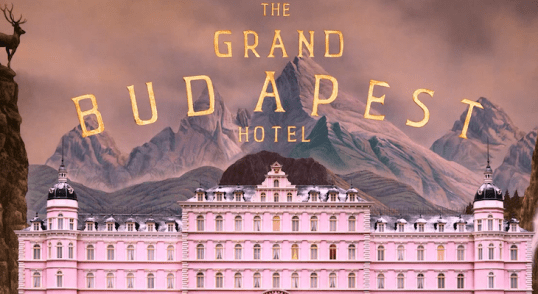
A Few Very Late Thoughts On Wes Anderson’s The Grand Budapest Hotel


grand-budapest-hotel

It took me a while to come around to appreciating The Grand Budapest Hotel.

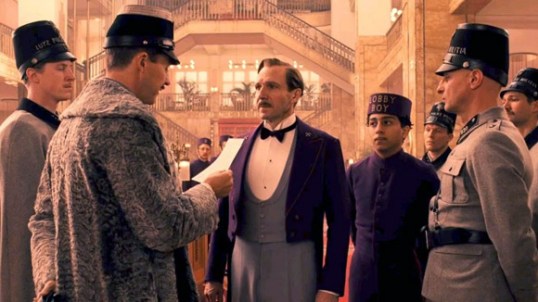
When I first saw Wes Anderson’s latest film, way back in March, I have to admit that I was somehow both impressed and disappointed.  The film’s virtues were obvious.  Ralph Fiennes gave a brilliant lead performance as Gustave, the courtly and womanizing concierge of the Grand Budapest Hotel.  As played by Fiennes, Gustave came to represent a certain type of old world elegance that, I’m assuming, died out long before I was born.  As is typical of Anderson’s film, The Grand Budapest Hotel was visual delight.  Even when the film’s convoluted storyline occasionally grew self-indulgent, The Grand Budapest Hotel was always interesting and fun to watch.

At the same time, I had some issues with The Grand Budapest Hotel.

One of the major ones — and I will admit right now that this will seem minor to some of you — is that halfway through the film, a cat is killed.  The evil Dimitri Desgoffe von Taxis (Adrien Brody) is attempting to intimidate a nervous lawyer, Kovacs (Jeff Goldblum).  Kovacs’s owns a cat and, at one point, Dimitri’s henchman, Jopling (Willem DaFoe), tosses the cat out of a window.  Kovacs runs to window and sees his dead cat splattered on the sidewalk below…

And this is when the audience in the theater laughed and I got very angry.

To me, there was nothing funny about killing that man’s cat.  But the more I’ve thought about it, the more that I’ve come to realize that my reaction had more to do with the audience than the film.  The film was not saying that the cat’s death was funny.  The film was saying that Dimitri and Jopling were evil and dangerous, as their actions throughout the film would demonstrate.  It was the audience that decided, since Grand Budapest Hotel is full of funny moments and has the off-center style that one has come to expect from Wes Anderson, that meant every scene in the film was meant to be played strictly for laughs.  The fact of the matter is that a typical Wes Anderson film will always attract a certain type of hipster douchebag.  They were the ones who loudly laughed, mostly because they had spent the entire movie laughing loudly in order to make sure that everyone around them understood that they were in on the joke.

But that’s not the fault of the film.  Despite what you may have heard and what the Golden Globes would have you believe, The Grand Budapest Hotel is not a comedy.  For all the deliberately funny and quirky moments, The Grand Budapest Hotel is actually a very serious film.  For all of the slapstick and for all of Ralph Fiennes’s snarky line readings, The Grand Budapest Hotel ultimately ends on a note of deep melancholy.

When I first saw The Grand Budapest Hotel, it seemed like it was almost too quirky for its own good.  And, to be honest, I could still have done without some of Anderson’s more self-indulgent touches.  The sequence at the end, where Gustave, who has been framed for murder, gets help from a series of his fellow hotel concierges started out funny but, as everyone from Bill Murray to Owen Wilson put in an appearance, it started to feel less like the story of Gustave and more like the story of all of Wes Anderson’s famous friends.

However, the more I’ve thought about it (and The Grand Budapest Hotel is a film that I’ve thought about a lot over the past year), the more I’ve realized that the quirkiness is only a problem if you made the mistake of thinking that the film is meant to be taken literally.

The more I thought about it, the more obvious it became that the most important scenes in The Grand Budapest Hotel were to be found at the beginning and the end of the film.

The film opens with a teenage girl sitting in front of the grave of a great author.  She opens a book and starts to read.

As soon as the girl starts to read, we flashback 29 years to 1985 where the author (Tom Wilkinson) sits behind his office desk and starts to talk about the time that he visited the Grand Budapest Hotel.  

We flashback again to 1969, where we see how the author (now played by Jude Law) met the owner of the Grand Budapest Hotel, a man named Zero (played by F. Murray Abraham).  Over dinner, Zero tells the author the story of how he first came to the Grand Budapest and how he eventually came to own the hotel.

And again, we go back in time, this time to 1932.  We see how the young Zero (Tony Revolori) first met and came to be the protegé of Gustave (Ralph Fiennes).  We see how Gustave taught Zero how to be the perfect concierge.  Eventually, Gustave would be framed for murdering a guest, Zero would meet and fall in love with Agatha (Saoirse Ronan), and then Zubrowska (the fictional Eastern European country in which this all takes place) would be taken over by fascists who would eventually claim the hotel as their own.

After the story of Gustave, Zero, and Agatha has been told, we suddenly flash forward to the author talking to Zero and then to the old author telling the story to his grandson and then finally back to the teenage reader sitting in the cemetery.

In other words, the Grand Budapest Hotel may be the story of Zero but we’re experiencing it through the memories of the author as visualized by the reader.  Gustave, Zero, and the entire Grand Budapest Hotel are not just parts of a story.  Instead, they become symbols of an old way of life that, though it may have been lost, still exists in the memories of old travelers like the author and the imaginations of young readers like the girl in the cemetery.

As I said at the start of this, I was vaguely disappointed with The Grand Budapest Hotel when I first saw it but, perhaps more than any other movie that I saw last year, this has been a film that I haven’t been able to get out of my mind.  Having recently rewatched the film on HBO, I can also attest that both The Grand Budapest Hotel and Ralph Fiennes’s performance not only hold up on a second viewing but improve as well.

I still stand by some of my original criticisms of The Grand Budapest Hotel.  I still wish that cat had not been thrown out the window, even though I now understand that Anderson’s main intent was to show the evil of Dimitri and Jopling.  And I still find some of the cameos to be jarring, precisely because they take us out of the world of the film.

But you know what?

Despite those flaws, The Grand Budapest Hotel is still a unique and intriguing film.  When I sat down tonight and made out my list of my top 26 films of 2014, I was not surprised that Grand Budapest Hotel made the list.  But I was a little bit surprised at how high I ended up ranking it.

But then I thought about it and it all made sense.

The-Grand-Budapest-Hotel-580


Here Are The Central Ohio Film Critics Nominees!


Birdman

Yesterday, the Central Ohio Film Critics announced their nominees for the best of 2014 and they really liked Birdman!  I wonder if the Central Ohio Film Critics ever have fights with the Southwestern Ohio Film Critics or the Ohio/Kentucky Border Critics…

Here are the nominees!

Best Film

  • Birdman or (The Unexpected Virtue of Ignorance)
  • Boyhood
  • Gone Girl
  • The Grand Budapest Hotel
  • The Imitation Game
  • A Most Violent Year
  • Nightcrawler
  • Selma
  • Snowpiercer
  • Whiplash

Best Director

  • Wes Anderson – The Grand Budapest Hotel
  • Damien Chazelle – Whiplash
  • Ava DuVernay – Selma
  • Alejandro González Iñárritu – Birdman or (The Unexpected Virtue of Ignorance)
  • Richard Linklater – Boyhood

Best Actor

  • Ralph Fiennes – The Grand Budapest Hotel
  • Jake Gyllenhaal – Nightcrawler
  • Michael Keaton – Birdman or (The Unexpected Virtue of Ignorance)
  • David Oyelowo – Selma
  • Eddie Redmayne – The Theory of Everything

Best Actress

  • Essie Davis, The Babadook
  • Scarlett Johansson, Under the Skin
  • Felicity Jones, The Theory of Everything
  • Rosamund Pike, Gone Girl
  • Reese Witherspoon, Wild

Best Supporting Actor

  • Josh Brolin – Inherent Vice
  • Ethan Hawke – Boyhood
  • Edward Norton – Birdman or (The Unexpected Virtue of Ignorance)
  • Mark Ruffalo – Foxcatcher
  • J.K. Simmons – Whiplash

Best Supporting Actress

  • Patricia Arquette – Boyhood
  • Jessica Chastain – A Most Violent Year
  • Keira Knightley – The Imitation Game
  • Emma Stone – Birdman or (The Unexpected Virtue of Ignorance)
  • Tilda Swinton – Snowpiercer

Best Ensemble

  • Birdman or (The Unexpected Virtue of Ignorance)
  • Foxcatcher
  • Gone Girl
  • The Grand Budapest Hotel
  • Guardians of the Galaxy

Actor of the Year (for an exemplary body of work)

  • Jessica Chastain (The Disappearance of Eleanor Rigby, Interstellar, Miss Julie, and A Most Violent Year)
  • Benedict Cumberbatch (The Hobbit: The Battle of the Five Armies and The Imitation Game)
  • Jake Gyllenhaal (Enemy and Nightcrawler)
  • Chris Pratt (Guardians of the Galaxy and The LEGO Movie)
  • Tilda Swinton (The Grand Budapest Hotel, Only Lovers Left Alive, Snowpiercer, and The Zero Theorem)

Breakthrough Film Artist

  • Damien Chazelle – Whiplash – (for directing and screenwriting)
  • Ava DuVernay – Selma – (for directing)
  • Jennifer Kent – The Babadook – (for directing and screenwriting)
  • Gugu Mbatha-Raw – Belle and Beyond the Lights – (for acting)
  • Justin Simien – Dear White People – (for directing and screenwriting)

Best Cinematography

  • Benoît Delhomme – The Theory of Everything
  • Hoyte Van Hoytema – Interstellar
  • Daniel Landin – Under the Skin
  • Emmanuel Lubezki – Birdman or (The Unexpected Virtue of Ignorance)
  • Robert Yeoman – The Grand Budapest Hotel

Best Film Editing

  • Sandra Adair – Boyhood
  • Spencer Averick – Selma
  • Kirk Baxter – Gone Girl
  • Douglas Crise and Stephen Mirrione – Birdman or (The Unexpected Virtue of Ignorance)
  • Tom Cross – Whiplash

Best Adapted Screenplay

  • Paul Thomas Anderson – Inherent Vice
  • Bong Joon-ho and Kelly Masterson – Snowpiercer
  • Gillian Flynn – Gone Girl
  • Nick Hornby – Wild
  • Graham Moore – The Imitation Game

Best Original Screenplay

  • Wes Anderson – The Grand Budapest Hotel
  • J.C. Chandor – A Most Violent Year
  • Damien Chazelle – Whiplash
  • Alejandro González Iñárritu, Nicolás Giacobone, Alexander Dinelaris, and Armando Bo – Birdman or (The Unexpected Virtue of Ignorance)
  • Paul Webb – Selma

Best Score

  • Alexandre Desplat – The Grand Budapest Hotel
  • Jóhann Jóhannsson – The Theory of Everything
  • Trent Reznor and Atticus Ross – Gone Girl
  • Antonio Sanchez – Birdman or (The Unexpected Virtue of Ignorance)
  • Hans Zimmer – Interstellar

Best Documentary

  • Citizenfour
  • Dinosaur 13
  • Finding Vivian Maier
  • Jodorowsky’s Dune
  • Life Itself

Best Foreign Language Film

  • Force Majeure (Turist)
  • A Girl Walks Home Alone at Night
  • Ida
  • Two Days, One Night (Deux jours, une nuit)
  • We Are the Best! (Vi är bäst!)

Best Animated Film

  • Big Hero 6
  • The Book of Life
  • The Boxtrolls
  • How to Train Your Dragon 2
  • The LEGO Movie

Best Overlooked Film

  • The Babadook
  • Blue Ruin
  • Edge of Tomorrow
  • Enemy
  • Locke

000144.0022649.tif

Award Season Continues! Here Are The Winners From Georgia!


selma

Yes, awards season is still going on and critics and guilds from across the country and the industry are still announcing their picks for the best of 2014!

The latest group to make their picks known?  The Georgia Film Critics Association!  Here are their nominees for the best of 2014!

Best Picture
BIRDMAN
BOYHOOD
GONE GIRL
THE GRAND BUDAPEST HOTEL
IDA
A MOST VIOLENT YEAR
NIGHTCRAWLER
SELMA
SNOWPIERCER
WHIPLASH

Best Director
Richard Linklater BOYHOOD
David Fincher GONE GIRL
Wes Anderson THE GRAND BUDAPEST HOTEL
Ava DuVernay SELMA
Damien Chazelle WHIPLASH

Best Actor
Ralph Fiennes THE GRAND BUDAPEST HOTEL
Jake Gyllenhaal NIGHTCRAWLER
Michael Keaton BIRDMAN
David Oyelowo SELMA
Eddie Redmayne THE THEORY OF EVERYTHING.

Best Actress
Marion Cotillard TWO DAYS ONE NIGHT
Scarlett Johansson UNDER THE SKIN
Felicity Jones THE THEORY OF EVERYTHING
Lisa Loven Kongsli FORCE MAJEURE
Julianne Moore STILL ALICE
Rosamund Pike GONE GIRL

Best Supporting Actor
Riz Ahmed NIGHTCRAWLER
Ethan Hawke BOYHOOD
Edward Norton BIRDMAN
Mark Ruffalo FOXCATCHER
JK Simmons WHIPLASH

Best Supporting Actress
Patricia Arquette BOYHOOD
Jessica Chastain A MOST VIOLENT YEAR
Rene Russo NIGHTCRAWLER
Emma Stone BIRDMAN
Tilda Swinton SNOWPIERCER

Best Original Screenplay
BOYHOOD
CALVARY
THE GRAND BUDAPEST HOTEL
NIGHTCRAWLER
SELMA

Best Adapted Screenplay
GONE GIRL
THE IMITATION GAME
INHERENT VICE
SNOWPIERCER
THE THEORY OF EVERYTHING
WILD

Best Cinematography
BIRDMAN
THE GRAND BUDAPEST HOTEL
IDA
INHERENT VICE
INTERSTELLAR

Best Production Design
THE GRAND BUDAPEST HOTEL
INHERENT VICE
INTERSTELLAR
INTO THE WOODS
SNOWPIERCER
UNDER THE SKIN

Best Original Score
BIRDMAN (Antonio Sánchez)
GONE GIRL (Trent Reznor, Atticus Ross)
INTERSTELLAR (Hans Zimmer)
LIFE ITSELF (Joshua Abrams)
UNDER THE SKIN (Mica Levi)

Best Original Song
“Everything is Awesome” from THE LEGO MOVIE
“Glory” from SELMA
“We Will Not Go” from VIRUNGA
“I’m Not Gonna Miss You” from GLEN CAMPBELL: I’LL BE ME
“Something So Right” from MUPPETS MOST WANTED

Best Ensemble Cast
BIRDMAN
BOYHOOD
THE GRAND BUDAPEST HOTEL
GONE GIRL
SELMA

Best Foreign Language Film
FORCE MAJEURE
IDA
SEPIDEH
TWO DAYS ONE NIGHT
WE ARE THE BEST!

Best Animated Feature Film
BIG HERO 6
THE BOOK OF LIFE
THE BOXTROLLS
HOW TO TRAIN YOUR DRAGON 2
THE LEGO MOVIE

Best Documentary Feature Film
CITIZENFOUR
FINDING VIVIAN MAIER
KEEP ON KEEPIN’ ON
LIFE ITSELF
SEPIDEH

Breakthough of the Year
Ellan Coltrane
Ava DuVernay
Gugu Mbatha-Raw
Jenny Slate
Tessa Thompson

Selma


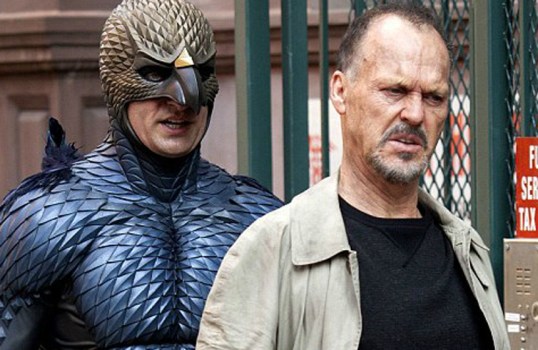
Birdman Soars Over Utah


michael-keaton-birdman

Somehow, I missed this one in my previous awards roundup.  Way back on December 18th, the Utah Film Critics announced their picks for the best of 2014.  Here’s what won!

Best Picture
“Birdman”
(Runner-up: “The Imitation Game”)

Best Director
Alejandro González Iñárritu, “Birdman”
(Runner-up: Jonathan Glazer, “Under the Skin”)

Best Actor
Michael Keaton, “Birdman”
(Runner-up: TIE – Benedict Cumberbatch, “The Imitation Game” and Ralph Fiennes, “The Grand Budapest Hotel”

Best Actress
Rosamund Pike, “Gone Girl”
(Runner-up: Marion Cotillard, “Two Days, One Night”)

Best Supporting Actor
J.K. Simmons, “Whiplash”
(Runner-up: Edward Norton, “Birdman”)

Best Supporting Actress
Jessica Chastain, “A Most Violent Year”
(Runner-up: Tilda Swinton, “Snowpiercer”)

Best Adapted Screenplay
(TIE) “Inherent Vice” and “Snowpiercer”

Best Original Screenplay
“Birdman”
(Runner-up: “Nightcrawler”)

Best Cinematography
“Nightcrawler”
(Runner-up: “Under the Skin”)

Best Animated Feature
“The LEGO Movie”
(Runner-up: “The Boxtrolls”)

Best Non-English Feature
“We Are the Best!”
(Runner-up: “Two Days, One Night”)

Best Documentary Feature
“CITIZENFOUR”
(Runner-up: “The Overnighters”)


Here’s What The Southeastern Film Critics Honored!


The-Grand-Budapest-Hotel-580

The Oscar precursor race — which started out with Boyhood and Birdman basically winning everything — has gotten a little bit more interesting over the past week or so.  Other movies have been picking up awards.  For instance, Wes Anderson’s The Grand Budapest Hotel!

On December 22nd, the Southeastern Film Critics named their picks for the best of 2014.  And here are the winners!

Top Ten
1. The Grand Budapest Hotel
2. Boyhood
3. Birdman or (the Unexpected Virtue of Ignorance)
4. Whiplash
5. The Imitation Game
6. Gone Girl
7. Snowpiercer
8. Nightcrawler
9. Foxcatcher
10. The Theory of Everything

Best Actor
1. Michael Keaton, Birdman or (the Unexpected Virtue of Ignorance)
2. Eddie Redmayne, The Theory of Everything

Best Actress
1. Julianne Moore, Still Alice
2. Reese Witherspoon, Wild

Best Supporting Actor
1. J.K. Simmons, Whiplash
2. Edward Norton, Birdman or (the Unexpected Virtue of Ignorance)

Best Supporting Actress
1. Patricia Arquette, Boyhood
2. Tilda Swinton, Snowpiercer

Best Ensemble
1. The Grand Budapest Hotel
2. Birdman or (the Unexpected Virtue of Ignorance)

Best Director
1. Richard Linklater, Boyhood
2. Wes Anderson, The Grand Budapest Hotel

Best Original Screenplay
1. The Grand Budapest Hotel: Wes Anderson and Hugo Guinness
2. Birdman or (the Unexpected Virtue of Ignorance): Alejandro González Iñárritu, Nicolas Giacobone, Alexander Dinelaris, Armando Bo

Best Adapted Screenplay
1. Gone Girl: Gillian Flynn
2. Wild: Nick Hornby

Best Documentary
1. Life Itself
2. CitizenFour

Best Foreign Language Film
1. Force Majeure
2. Ida

Best Animated Film
1. The Lego Movie
2. Big Hero 6

Best Cinematography
1. Birdman or (the Unexpected Virtue of Ignorance): Emmanuel Lubezki
2. The Grand Budapest Hotel: Robert Yeoman

The Gene Wyatt Award for the Film that Best Evokes the Spirit of the South
1. Selma

Here’s What Won In Toronto! Love you, Canada!


Love you, Canada!

Love you, Canada!

Here are the Toronto Film Critics Awards.

BEST PICTURE
“Boyhood” (Mongrel Media)
Runners-up
“The Grand Budapest Hotel” (Fox Searchlight)
“Inherent Vice” (Warner Bros.)

BEST ACTOR
Tom Hardy, “Locke”
Runners-up
Ralph Fiennes, “The Grand Budapest Hotel”
Jake Gyllenhaal, “Nightcrawler”

BEST ACTRESS
Marion Cotillard, “The Immigrant”
Runners-up
Julianne Moore, “Still Alice”
Reese Witherspoon, “Wild”

BEST SUPPORTING ACTOR
J.K. Simmons, “Whiplash”
Runners-up
Josh Brolin, “Inherent Vice”
Edward Norton, “Birdman Or (The Unexpected Virtue of Ignorance)”

BEST SUPPORTING ACTRESS
Patricia Arquette, “Boyhood”
Runners-up
Tilda Swinton, “Snowpiercer”
Katherine Waterston, “Inherent Vice”

BEST DIRECTOR
Richard Linklater, “Boyhood”
Runners-up
Paul Thomas Anderson, “Inherent Vice”
Wes Anderson, “The Grand Budapest Hotel”

BEST SCREENPLAY, ADAPTED OR ORIGINAL
“The Grand Budapest Hotel”, screenplay by Wes Anderson
from a story by Wes Anderson & Hugo Guinness
Runners-up
“Boyhood”, written by Richard Linklater
“Inherent Vice”, screenplay by Paul Thomas Anderson
based on the novel by Thomas Pynchon

BEST FIRST FEATURE
“The Lunchbox”, directed by Ritesh Batra
Runners-up
“John Wick”, directed by Chad Stahelski
“Nightcrawler”, directed by Dan Gilroy

BEST ANIMATED FEATURE
“The Tale of the Princess Kaguya” (GKids)
Runners-up
“Big Hero 6″ (Walt Disney Studios)
“How to Train Your Dragon 2″ (20th Century Fox)
“The Lego Movie” (Warner Bros.)

BEST FOREIGN-LANGUAGE FILM
“Force Majeure” (filmswelike)
Runners-up
“Ida” (filmswelike)
“Leviathan” (Mongrel Media)

BEST DOCUMENTARY
“The Overnighters” (filmswelike)
Runners-up
“Citizenfour” (Entertainment One)
“Manakamana” (filmswelike)

JAY SCOTT PRIZE FOR AN EMERGING ARTIST
Albert Shin, director of “In Her Place”

Here Are The Houston Film Critics Nominations!


houston_skyline

I love it when groups from my home state make their voice known.  Here are the Houston Film Critics nominations!

Best Picture
A Most Violent Year, A24 Films
Birdman, Fox Searchlight Pictures
Boyhood, IFC Films
Guardians of the Galaxy, Marvel
Inherent Vice, Warner Bros.
Nightcrawler, Open Road Films
Selma
The Grand Budapest Hotel, Fox Searchlight Pictures
The Imitation Game, The Weinstein Compaany
Whiplash, Sony Pictures Classics

Director
Alejandro G. Iñárritu, Birdman
Damien Chazelle, Whiplash
Paul Thomas Anderson, Inherent Vice
Richard Linklater, Boyhood
Wes Anderson, The Grand Budapest Hotel

Actor
Bendict Cumberbatch, The Imitation Game
Eddie Redmayne, Theory Of Everything
Jake Gyllenhaal, Nightcrawler
Michael Keaton, Birdman
Tom Hardy, Locke

Actress
Essie Davis, The Babadook
Felicity Jones, The Theory of Everything
Julianne Moore, Still Alice
Marion Cotillard, Two Days, One Night
Reese Witherspoon, Wild

Supporting Actor
Andy Serkis, Dawn of the Planet of the Apes
Edward Norton, Birdman
Ethan Hawke, Boyhood
J.K. Simmons, Whiplash
Josh Brolin, Inherent Vice
Mark Ruffalo, Foxcatcher

Supporting Actress
Emma Stone, Birdman
Jessica Chastain, A Most Violent Year
Kiera Knightley, The Imitation Game
Patricia Arquette, Boyhood
Tilda Swinton, Snowpiercer

Screenplay
Alejandro González Iñárritu, Nicolas Giacobone, Alexander Dinelaris Jr., Armando Bo; Birdman
Damien Chazelle, Whiplash
Dan Gilroy, Nightcrawler
Richard Linklater, Boyhood
Wes Anderson, The Grand Budpest Hotel

Animated
Big Hero 6
How to Train Your Dragon 2
The Book of Love
The Boxtrolls
The Lego Movie

Cinematography
Emmanuel Lubezki, Birdman
Hoyte van Hoytema, Interstellar
Robert Elswit, Nightcrawler
Robert Yeoman, The Grand Budapest Hotel
Roger Deakins, Unbroken

Documentary
Citizenfour
Glen Campbell: I’ll Be Me
Jodorowsky’s Dune
Life Itself
The Overnighters

Foreign
Force Majeure
Ida
Leviathan
The Raid 2
Two Days, One Night

Original Score
Alexander Desplat, The Imitation Game
Alexandre Desplat, The Grand Budapest Hotel
Antonio Sánchez, Birdman
Hans Zimmer, Interstellar
Johann Johannson, The Theory of Everything

Original Song
Big Eyes, Big Eyes
Everything is Awesome, The Lego Movie
Glory, Selma
I’m Not Going to Miss You, Glen Campbell: I’ll Be Me
Lost Stars, Begin Again

Texas Independent Film Award
Above All Else
Boyhood
Hellion
Joe
No No: A Dockumentary
Stop the Pounding Heart

Best Poster
Birdman
Godzilla, IMAX
Guardians of the Galaxy, Primary Theatrical
Inherent Vice
The Grand Budapest Hotel

Technical Achievement
Birdman – Creation of single long take for bulk of film
Boyhood – Filming over 12 years
Dawn of the Planet of the Apes – creation of ape characters

Worst Film of the Year
Blended
Dumb and Dumber To
Left Behind
The Identical
Transformers: Age of Extinction