This October, I’m going to be doing something a little bit different with my contribution to 4 Shots From 4 Films. I’m going to be taking a little chronological tour of the history of horror cinema, moving from decade to decade.
Today, we take a look at the latter half of the 1920s.
4 Shots From 4 Films
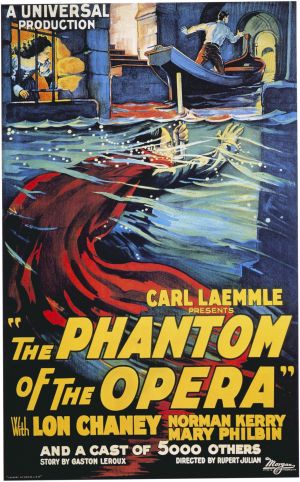
The Phantom of the Opera (1925, dir by Rupert Julian)
Faust (1926, dir by F.W. Murnau)
London After Midnight (1927, dir by Tod Browning)
The Fall of the House of Usher (1928, dir by Jean Epstein)
Today’s horror movie on the Shattered Lens is both a classic of silent era and one of the most influential horror films ever made. It’s one that I previously shared in 2013 but it’s such a classic that I feel that it is worth sharing a second time. Add to that, the original video that I embedded has been taken off of YouTube.
First released in 1925, The Phantom of the Opera is today best known for both Lon Chaney’s theatrical but empathetic performance as the Phantom and the iconic scene where Mary Philbin unmasks him. However, the film is also a perfect example of early screen spectacle. The Phantom of the Opera was released during that period of time, between Birth of the Nation and the introduction of sound, when audiences expected films to provide a visual feast and Phantom of the Opera certainly accomplishes that. Indeed, after watching this film and reading Gaston Leroux’s original novel, it’s obvious that the musical was inspired more by the opulence of this film than by the book.
This film is also historically significant in that it was one of the first films to be massively reworked as the result of a poor test screening. The film’s ending was originally faithful to the end of the novel. However, audiences demanded something a little more dramatic and that’s what they got.
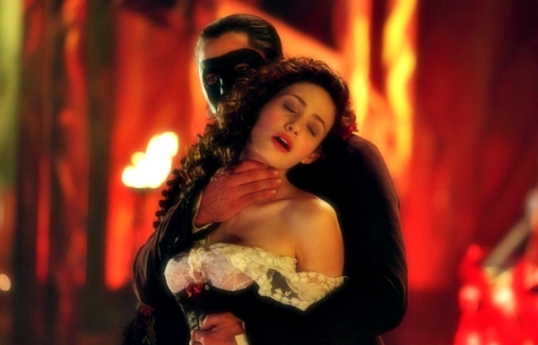
It’s time to finish off my triptych of Scenes I Love from 2004’s film adaptation of The Phantom of the Opera. The first two parts were my favorite solo and chorus scenes from film and now we finish it off with what has to be the top scene (IMO) from the film.
The characters of The Phantom and Christine have always been the focal point of the film. Even with the arrival of the wholesome and (as Lisa Marie would call him) vanilla Raoul, Vicomte de Chagny, the film continues to truly sizzle when it’s all about The Phantom and Christine moving their relationship from ingenue and mentor to unrequited lovers.
It’s the latter which this scene looks to portray through a duet written by The Phantom himself and where he swaps himself into the role of Don Juan. This duet has always been a fan favorite for those who love the musical and many different versions of it have played throughout the years. Yet, they all have one thing in common and that is the heated chemistry between the two characters once the duet begins.
The scene itself begins and comes off pretty much like foreplay between the two characters without having literal sex on the stage. The whole scene is so sexually charged that even those watching the duet who set the trap looked so transfixed that they fail to act. Even Raoul, Christine’s own fiance, finishes the scene with such a look of cuckold expression once he realizes that he could never have such a deep and personal connection that Christine has with The Phantom.
For me, this duet pretty much sums up what the whole is all about.
Here we have the second of three scenes I love from the 2004 film adaptation of The Phantom of the Opera.
The first scenes was my favorite solo from the film with Emmy Rossum as Christine Daaé performing the solo “Think of Me”. It’s a powerful scene that more than holds it’s own against the other solos in the film. The second favorite scene from this film comes in the beginning of Act II.
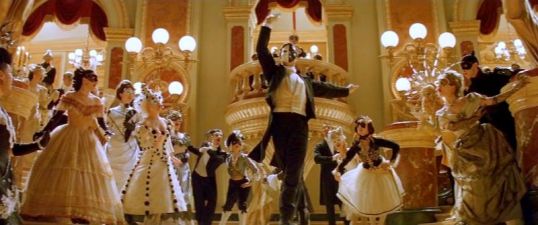
“Masquerade” is really the one and only true full cast and chorus production in the film and in the stage musical. While both would have songs and scenes involving multiple characters and a large of background chorus, this one pretty much cements the film’s grandiose and epic visuals.
Director Joel Schumacher may have his detractors and critics, but he definitely nails the grand masquerade ball in the opera house to begin the second half of the film.
Stage productions, especially musicals, have always drawn me. I think it goes back to my time in my final two years in high school when, on a lark, I decided to join the Drama production as part of my after-school activities. For a teenager whose never really had any experience watching musicals prior to joining one I was surprised as any to have fallen in love with the art when exposed to it.
Musicals range from classic Sondheim-style productions to the Andrew Lloyd Webber rock opera epics right up to the Matt Stone and Trey Parker comedy musicals. I love them all. One musical production that I was literally obsessed with during those late high school years was Andrew Lloyd Webber’s rock opera production of The Phantom of the Opera.
I knew the songs by heart and, even now, I still remember those final years of high school fondly because of this particular musical. So, finding out that they were going to make a film adaptation of the musical had me feeling both excited and hesitant.
How could a stage musical translate to film if they cast more for acting and less for singing?
My trepidation ended up being unfounded once I finally saw the film and was satisfied that all involved were more than up to the task of performing the iconic roles in the musical.
This first of three of my favorite scenes from The Phantom of the Opera comes early in the film as Emmy Rossum’s understudy, Christine Daaé, gets a chance to show just how much she has learned from her mysterious tutor. “Think of Me” is the one of the signature solos in the musical (the other being the Phantom’s own) and Emmy Rossum nails the scene and song. The expression on the skeptical managers in the beginning quickly turns to surprise as does the rest of the cast and crew who never realized they had a genuine ingenue in their midst.
While I will admit that the song and the scene has been pulled off better on stage, Emmy Rossum’s own experience singing as a member of the Metropolitan Opera as a child leading up to being chosen for the role of Christine Daaé more than makes her hold her own against those who came before her.
Today’s horror movie on the Shattered Lens is both a classic of silent era and one of the most influential horror films ever made.
First released in 1925, The Phantom of the Opera is today best known for both Lon Chaney’s theatrical but empathetic performance as the Phantom and the iconic scene where Mary Philbin unmasks him. However, the film is also a perfect example of early screen spectacle. The Phantom of the Opera was released during that period of time, between Birth of the Nation and the introduction of sound, when audiences expected films to provide a visual feast and Phantom of the Opera certainly accomplishes that. Indeed, after watching this film and reading Gaston Leroux’s original novel, it’s obvious that the musical was inspired more by the opulence of this film than by the book.
This film is also historically significant in that it was one of the first films to be massively reworked as the result of a poor test screening. The film’s ending was originally faithful to the end of the novel. However, audiences demanded something a little more dramatic and that’s what they got.
Much like Twilight, Deathmaster combines the true life crimes of Charles Manson with vampires. In this one, the Manson character is played by Robert Quarry. Speaking of which, did anyone see those pictures of the modern-day, incarcerated Manson that were released last week? I took one look at those and I went, “Santa Claus is really letting himself go.”
3) The Last Horror Film (1984)
Speaking of maniacs, this film reunited the two stars of the infamous movie of the same name, Caroline Munro and Joe Spinell.
4) Hercules (1983)
For the past month and a half, I’ve been watching Lou Ferrigno on The Celebrity Apprentice and, even though I’m rooting for Aubrey O’Day, it’s impossible not to like Lou. Here’s Lou starring as Hercules in a film from the infamous Luigi Cozzi. (I wanted to also include the trailer for Hercules In New York, the 1970 debut of Arnold Schwarzenegger but every single Hercules in New York YouTube video is embedding disabled. Bleh!)
5) Ironmaster (1983)
Yes, it’s yet another history lesson from the Joel Schumacher of Italian exploitation, Umberto Lenzi.
6) The Phantom of the Opera (1998)
Since it’s the holidays, let’s end with some Argento.