Made-For-TV Horror: The Initiation of Sarah (dir by Robert Day)


Oh, poor Sarah.

Sarah (Kay Lenz) is attending college with her sister, Patty (Morgan Brittany).  Patty is pretty and popular and everyone wants to be her friend.  Sarah is withdrawn and a bit moody and people seem to go out of their way to avoid her.  Sarah, however, has a secret.  She can move and break things with her mind.  When a guy on the beach tries to force himself on Patty, Sarah uses her powers to push him away.  Later, when Sarah’s upset, she stares at a mirror until it cracks.

When Patty and Sarah visit their mother’s old sorority, Patty is a hit but Sarah is less popular.  The bitchy president of the Sorority, Jennifer Lawrence (Morgan Fairchild), is happy to invite Patty to join but she doesn’t want Sarah to be anywhere near her.  Sarah ends up joining the outcast PDE sorority.  Jennifer, however, remains obsessed with humiliating and destroying Sarah.  And Sarah, when she gets angry, has a tendency to cause things to happen….

This film, which aired in 1978, probably sounds like a rip-off of Carrie and, in many ways, it is.  For whatever reason, Sarah’s bullies seem to be obsessed with making her as miserable as possible.  In Carrie, one reason you hated the bullies was because Sissy Spacek gave such a heart-breaking, vulnerable and empathetic performance as Carrie White.  The bullies were terrible to begin with but then to pick on someone as fragile as Carrie?  It sucked William Katt had to die but there’s still a reason why the prom inferno makes as many people applaud as scream.  In The Initiation of Sarah, Kay Lenz is not particularly sympathetic as Sarah.  Even before the bullies start picking on her, Sarah comes across as being angry and bitter about …. well, everything.  Patty goes out of her way to take care of her sister but Sarah never seems to appreciate it.  Bullies still suck, of course.  There’s no excuse for being a bully and Jennifer really does go overboard when it comes to going after Sarah.  But Sarah herself still doesn’t necessarily come across as being someone you would want to join your sorority.

What sets The Initiation of Sarah apart from other Carrie rip-offs is the character of Mrs. Hunter (Shelley Winters).  Mrs. Hunter founded PDE when she was a student and now, as the school’s resident expert on paganism, she’s the housemother of PDE.  As soon as Sarah joins, Mrs. Hunter starts to talk about how Sarah is destined to lead PDE to glory.  When another member of PDE, Mouse (Tisa Farrow), takes a look in Mrs. Hunter’s room, she discovers a Satanic altar that is guarded by a fierce looking dog….

That’s right!  This isn’t just a rip-off of Carrie.  It’s a rip-off of The Omen as well!

Kay Lenz might be a bit on the dull side as Sarah but this film is worth watching for the performance of Morgan Fairchild and, especially, Shelley Winters.  As played by Fairchild, Jennifer is more than just a bitch.  She’s a sociopath with great hair.  Meanwhile, Shelley Winters — especially once the 70s started — was never a particularly low-key or subtle actress.  When you cast her as an overbearing housemother who happens to be the high priestess of a cult, you know that you’re going to get something worth watching.  Winters attacks the role with a ferocity that is occasionally over-the-top and almost funny but always entertaining.

The Initiation of Sarah is an enjoyable made-for-TV movie.  Watch it the next time you’re feeling nostalgic for college life.

4 Shots from 4 Arkansas Films!


4 Shots From 4 Films is just what it says it is, 4 shots from 4 of our favorite films. As opposed to the reviews and recaps that we usually post, 4 Shots From 4 Films lets the visuals do the talking.

I love to share movies that are filmed in my beautiful home state of Arkansas. There aren’t a lot of movies filmed in Arkansas, but there are definitely some interesting movies filmed in Arkansas. Check these out!

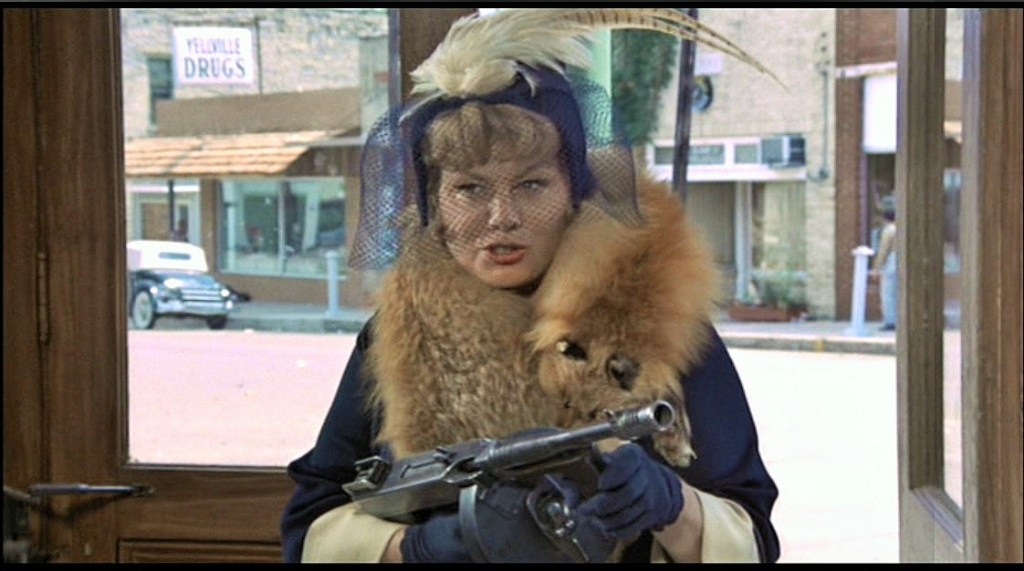
Bloody Mama (1970)
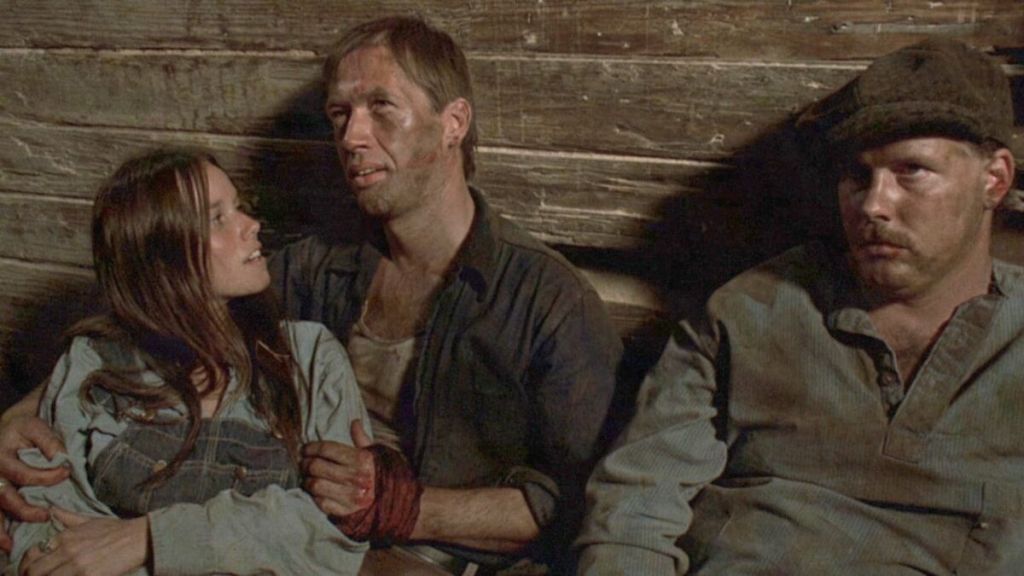
Boxcar Bertha (1972)
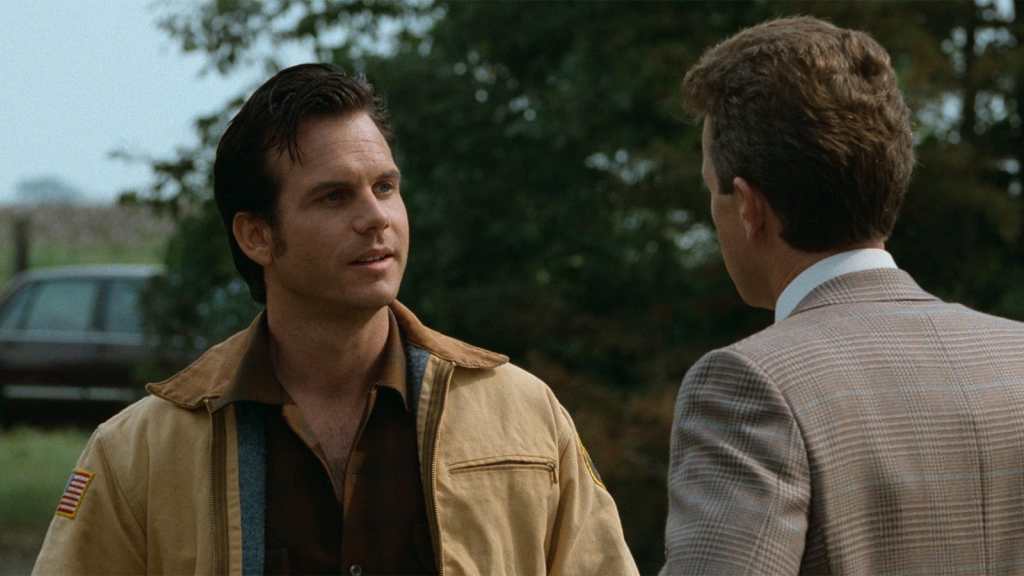
One False Move (1991)
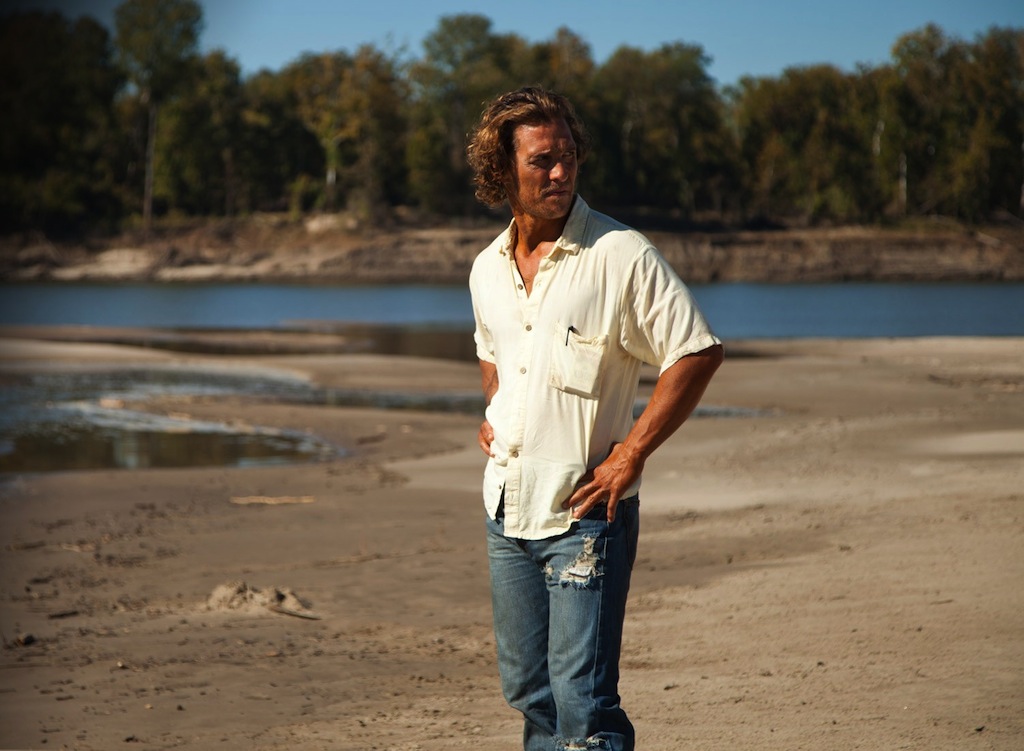
Mud (2012)

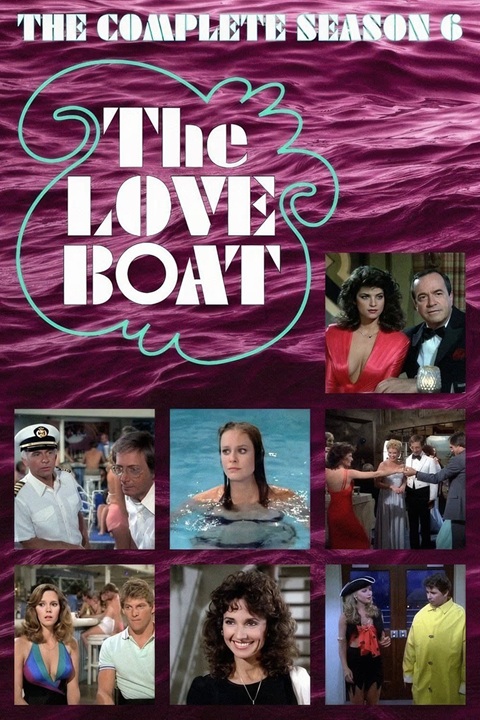
Retro Television Review: The Love Boat 6.1 and 6.2 The Italian Cruise: Venetian Love Song/Down for the Count/Arrividerci, Gopher/The Arrangement”


Welcome to Retro Television Reviews, a feature where we review some of our favorite and least favorite shows of the past!  On Wednesdays, I will be reviewing the original Love Boat, which aired on ABC from 1977 to 1986!  The series can be streamed on Paramount Plus!

This week, season 6 begins!

Episode 6.1 and 6.2 “The Italian Cruise: Venetian Love Song/Down for the Count/Arrividerci, Gopher/The Arrangement”

(Dir by Richard Kinon, originally aired on October 2nd, 1982)

The Love Boat crew goes to Italy!

The sixth season of The Love Boat did indeed start with a cruise to Italy.  It was a special two-hour episode, shot on location at sea and in Italy!  Our crew visits Monaco, Rome, Capri, and Venice and really, that’s the main appeal of this episode.  It’s certainly not the stories, which are pretty superficial even by the standards of the Love Boat.

Ernest Borgnine and Shelley Winters play an old Italian couple who bicker through the whole cruise but who also truly love each other.  Awwww!  Ernest and Shelley were veteran actors and they both appear to be having fun devouring the scenery in their scenes.  Their cruise goes better here than it did in The Poseidon Adventure.

Meredith Baxter falls for a man (David Birney, the annoying Dr. Samuels from the first season of St. Elsewhere) who turns out to be a gigolo.  However, he abandons being a manwhore so that he can pursue a relationship with Meredith.  I understand that Baxter and Birney were married at the time.  They have absolutely zero chemistry when they’re acting opposite each other.

Marie Osmond is angry over being expected to take part in an arranged marriage.  Yeah, that is kind of messed up.  She’d rather marry the totally handsome John James.

Finally, an Italian handyman who looks just like Gopher (and who is also played by Fred Grandy) abducts the real Gopher and takes his place on the ship so that he can try to win the love of a wealthy passenger named Angelica Francini (Christopher Norris) and…. well, actually, this storyline is kind of interesting.

Actually, maybe “interesting” the wrong word.

Goofy!  That’s the word I’m looking for.

This storyline is so goofy — so damn goofy — that it’s actually kind of fun.  I mean, it’s The Love Boat.  The Love Boat should be silly.  Fred Grandy playing two characters is silly and fun.  To give credit where credit is due, Grandy did a pretty good job playing the imposter imitating Gopher.  His attempts to speak in a stereotypical American accent made me laugh.  In the end, the real Gopher makes it back to the boat.  Confronted with two Gophers, the Captain realizes that the fake Gopher is the one who has actually been doing a good job and kicks him off the boat.  He’d rather have the real, incompetent Gopher and I don’t blame him.  What’s odd is that no one’s really upset or even that surprised by the kidnapping.  I don’t think anyone even bothers to callsthe police.

Anyway, Italy is the main attraction here.  I love Italy (which I visited the summer after I graduated high school) and I loved this episode!  At one point, Marie Osmond wore a red dress that looked a lot like the one that I wore to Pompeii on that windy day when I accidentally flashed a thousand tourists.  Marie was struggling with the wind too and I was like, “I share your struggle, Marie!”

I enjoyed this cruise.  I want to go back to Italy.

Join #MondayMuggers For THE DELTA FORCE!


Hi, everyone!  Guess is who is guest hosting the #MondayMuggers live tweet tonight?  That’s right …. me!

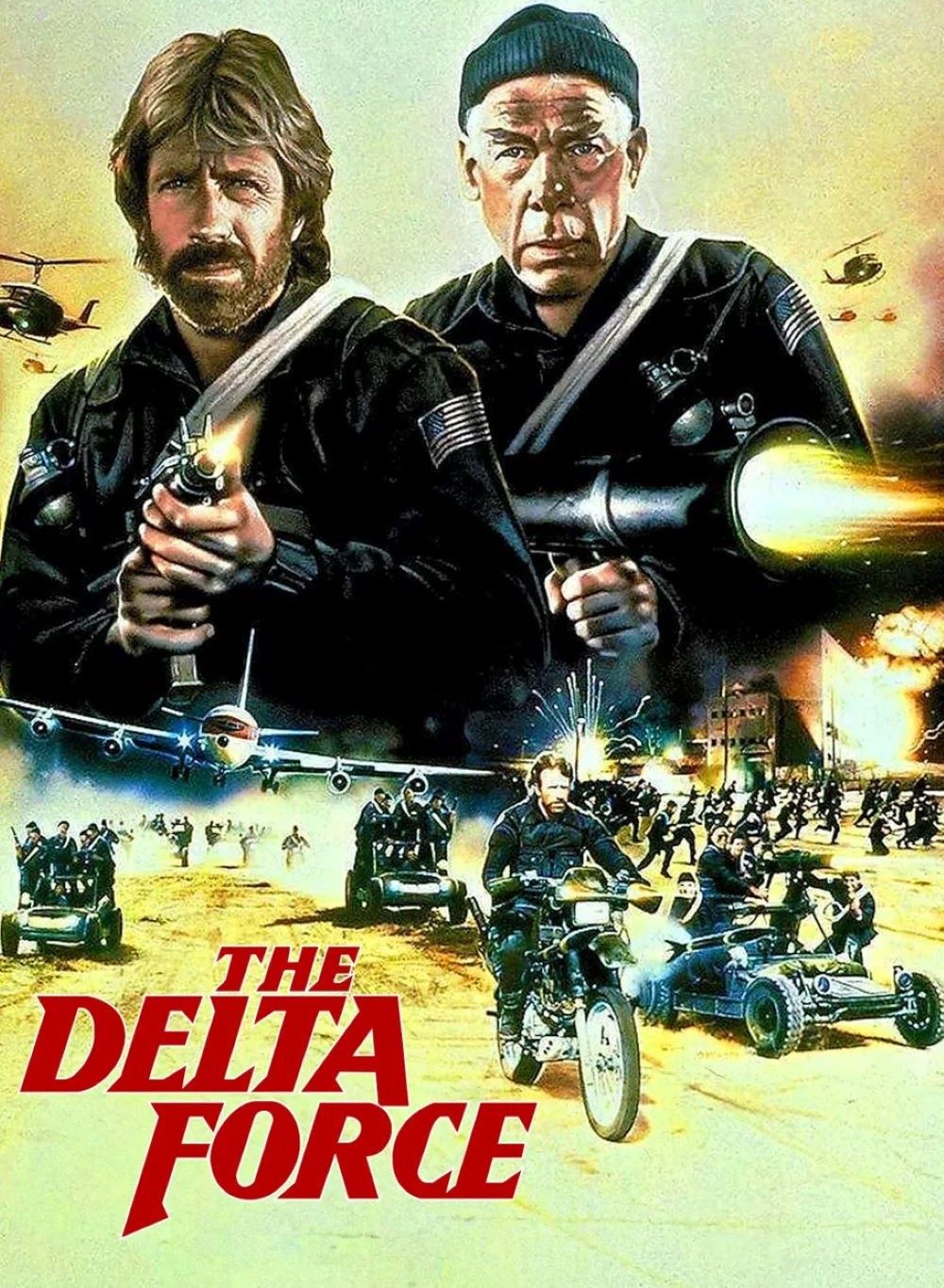
Tonight’s movie will be The Delta Force (1986), starring Chuck Norris, Lee Marvin, Robert Forster, George Kennedy, Robert Vaughn, Steven James, Hanna Schygulla, Shelley Winters, Martin Balsam, Bo Svenson, Joey Bishop, Susan Strasberg, Kim Delaney …. well, you get the idea.  There’s a lot of people in this movie!  Jedadiah Leland swears that this is the greatest film ever made.  We’ll find out tonight!

You can find the movie on Prime and then you can join us on twitter at 9 pm central time!  (That’s 10 pm for you folks on the East Coast.)  See you then!

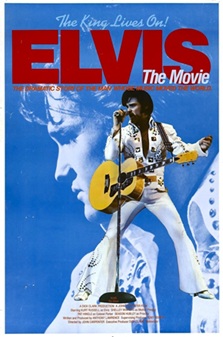
Elvis (1979, directed by John Carpenter)


Elvis, not to be confused with the later film starring Austin Butler, is a historically-interesting film for a number of reasons.

Made for television, it was the first of many biopics to be made about the King of Rock and Roll.  Seeing as how it went into production just a year after Elvis’s death and that its script was vetted and approved by Priscilla Presley herself, it’s not surprising that Elvis doesn’t really delve into the darker aspects of his life.  Elvis shoots a television, gets frustrated with his bad movies, and wonders who he can trust but we don’t see him get fat nor do we see him popping pills.  The movie ends with Elvis making his comeback in 1969, allowing a happy ending for the title character.

The film was directed by John Carpenter.  It was his first film to be released after the monster success of Halloween, though Carpenter actually started work on Elvis before Halloween was released.  Though the film’s television origins means there aren’t many examples of Carpenter’s signature style in Elvis, Carpenter does a good job recreating Elvis’s performances and, most importantly, he comes up with a film that holds your interest for three hours.

Finally, the role of Elvis is played by Kurt Russell, who was at the time still struggling to prove himself as being something more than just a Disney star.  Russell, who made his film debut kicking Elvis in the shins, throws himself into playing the role and captures the look, the swagger, and the voice of Elvis without ever descending into caricature.  His singing voice is dubbed for the performances but Russell is still convincing as the King.  It takes skill to wear that white jumpsuit without looking like you’re wearing a bad Halloween costume.  While this film showed that Russell was capable of more than just Disney films, it even more importantly launched his friendship with John Carpenter.  Escape From New York, The Thing, and Big Trouble In Little China all began with Elvis.

The movie doesn’t really tell us anything that we didn’t already know about Elvis but its entertaining and it has a big, colorful cast that include Pat Hingle as Tom Parker, Shelley Winters as Elvis’s mother, and Bing Russell (Kurt’s father) as Elvis’s father.  Priscilla is played by the beautiful Season Hubley, who married Kurt Russell shortly after filming.  (They divorced in 1983.)  Joe Mantegna, Ed Begley Jr., Ellen Travolta, and Dennis Christopher all appear in small roles and do their part to bring Elvis’s world to life.  Elvis is a fitting tribute to the King of Rock and Roll, one that gave Elvis a happy ending and started a great collaboration between a director and his star.

Scenes That I Love: Happy New Year From The Poseidon


Happy new year!

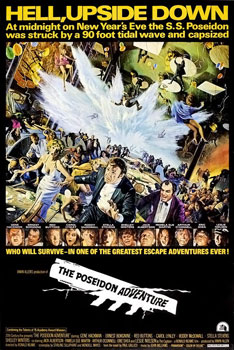
With 2023 coming in like a tidal wave, it only seem fitting that the first scene that I love for this year should come from 1972’s The Poseidon Adventure.  Just as how Die Hard has recently been acclaimed as one of the great Christmas films, The Poseidon Adventures is one of the best of the New Year’s Day films.  It’s also perhaps the only film in which Gene Hackman managed to overact more than even Ernest Borgnine.  I mean, don’t get me wrong.  It’s a strong competition between two great actors, neither of whom was known for being particularly subtle when it came to barking out their lines.  But, in the end, Hackman still managed to take the overacting crown for this film.

(That said, what’s New Year’s Day without Borgnine shouting, “Where’s your God now, Preach-ah!?”)

In the scene below, the passengers ring in the new year while Leslie Nielsen faces the tidal wave that will soon turn the boat upside down.  Whatever else you may want to say about this particular film, it does a great job of contrasting the celebrations in the ballroom with the dread on the bridge.  While everyone else is counting down and celebrating and mugging for the camera, Nielsen can only stare in stoic horror as the wave approaches.  He does the only thing that a captain can do.  He sounds the alarm.  He sends out an S.O.S.  Unfortunately, the alarm can barely be hard over the celebrations of the new year and the S.O.S. man is quickly swept away by the crashing of the wave.

The scene goes from celebrating the future to highlighting the type of old-fashioned, nature-fueled destruction that has been wiping out civilizations since the beginning of time.  It doesn’t matter how many plans you’ve made.  It doesn’t matter how rich  you are.  It doesn’t matter how safe you feel or how much you cling to the furniture as the world turns upside down.  Fate, whether it’s in the form of a wave or some other natural disaster, is pitiless.  That’s one reason why disaster movies, as melodramatic as they could often be, so entranced audiences.  Everyone knew that it would just as easily happen to them.  Just as no one expected the tidal wave on New Year’s, no one would be expecting to leave the theater to be confronted by an earthquake or a tornado.  But it could definitely happen.  Life, like society, is a fragile thing.  If not even Gene Hackman, Stella Stevens, Shelley Winters, and Roddy McDowall could make it to the end of the movie, what hope is there for anyone?  Of course, the thing to remember is that they may not have made it but Ernest Borgnine, Red Buttons, Carol Lynley, and a few others did.  They survived, though I imagine they spent the rest of their lives dreading January 1st.

Needless to say, neither the passage of time nor the wave can be escaped.  As much as we may have things left to do in 2022, it’s too late now. 2023 is here and the world has moved on.

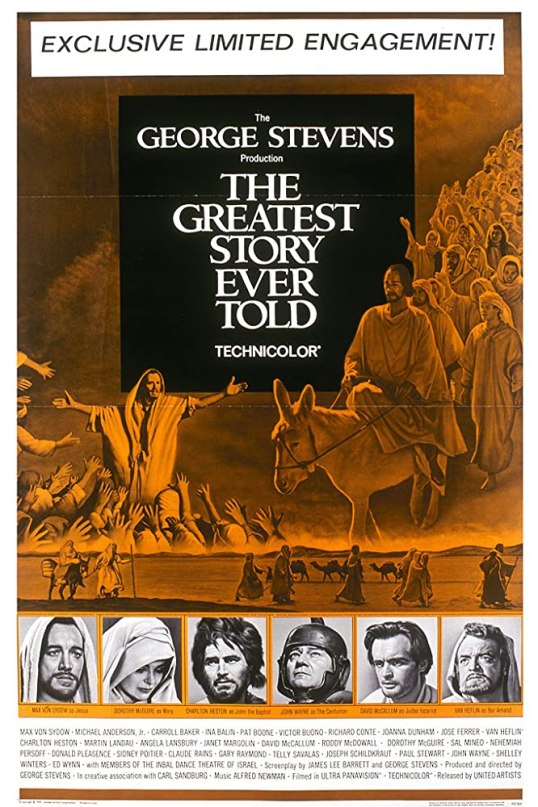
Film Review: The Greatest Story Ever Told (dir by George Stevens)


The 1965 biblical epic, The Greatest Story Ever Told, tells the story of the life of Jesus, from the Nativity to the Ascension.  It’s probably the most complete telling of the story that you’ll ever find.  It’s hard to think of a single details that’s left out and, as a result, the film has a four hour running time.  Whether you’re a believer or not, that’s a really long time to watch a reverent film that doesn’t even feature the campy excesses of something like The Ten Commandments.

(There’s actually several different version of The Greatest Story Ever Told floating around.  There’s a version that’s a little over two hours.  There’s a version that’s close to four hours.  Reportedly, the uncut version of the film ran for four hour and 20 minutes.)

Max von Sydow plays Jesus.  On the one hand, that seems like that should work because Max von Sydow was a great actor who gave off an otherworldly air.  On the other hand, it totally doesn’t work because von Sydow gives an oddly detached performance.  The Greatest Story Ever Told was von Sydow’s first American film and, at no point, does he seem particularly happy about being involved with it.  von Sydow is a very cerebral and rather reserved Jesus, one who makes his points without a hint of passion or charisma.  When he’s being friendly, he offers up a half-smile.  When he has to rebuke his disciples for their doubt, he sounds more annoyed than anything else.  He’s Jesus if Jesus was a community college philosophy professor.

The rest of the huge cast is populated with familiar faces.  The Greatest Story Ever Told takes the all-star approach to heart and, as a result, even the minor roles are played by actors who will be familiar to anyone who has spent more than a few hours watching TCM.  Many of them are on screen for only a few seconds, which makes their presence all the more distracting.  Sidney Poitier shows up as Simon of Cyrene.  Pat Boone is an angel.  Roddy McDowall is Matthew and Sal Mineo is Uriah and John Wayne shows up as a centurion and delivers his one line in his trademark drawl.

A few of the actors do manage to stand out and make a good impression.  Telly Savalas is a credible Pilate, playing him as being neither smug nor overly sympathetic but instead as a bureaucrat who can’t understand why he’s being forced to deal with all of this.  Charlton Heston has just the right intensity for the role of John the Baptist while Jose Ferrer is properly sleazy as Herod.  In the role Judas, David McCallum looks at the world through suspicious eyes and does little to disguise his irritation with the rest of the world.  The Greatest Story Ever Told does not sentimentalize Judas or his role in Jesus’s arrest.  For the most part, he’s just a jerk.  Finally, it’s not exactly surprising when Donald Pleasence shows up as Satan but Pleasence still gives a properly evil performance, giving all of his lines a mocking and often sarcastic bite.

The Greatest Story Ever Told was directed by George Stevens, a legitimately great director who struggles to maintain any sort of narrative momentum in this film.  Watching The Greatest Story Ever Told, it occurred to me that the best biblical films are the ones like Ben-Hur and The Robe, which both largely keep Jesus off-screen and instead focus on how his life and teachings and the reports of his resurrection effected other people.  Stevens approaches the film’s subject with such reverence that the film becomes boring and that’s something that should never happen when you’re making a film set in Judea during the Roman era.

I do have to admit that, despite all of my criticism of the film, I do actually kind of like The Greatest Story Ever Told.  It’s just such a big production that it’s hard not to be a little awed by it all.  That huge cast may be distracting but it’s still a little bit fun to sit there and go, “There’s Shelley Winters!  There’s John Wayne!  There’s Robert Blake and Martin Landau!”  That said, as far as biblical films are concerned, you’re still better off sticking with Jesus Christ Superstar.

City on Fire (1979, directed by Alvin Rakoff)


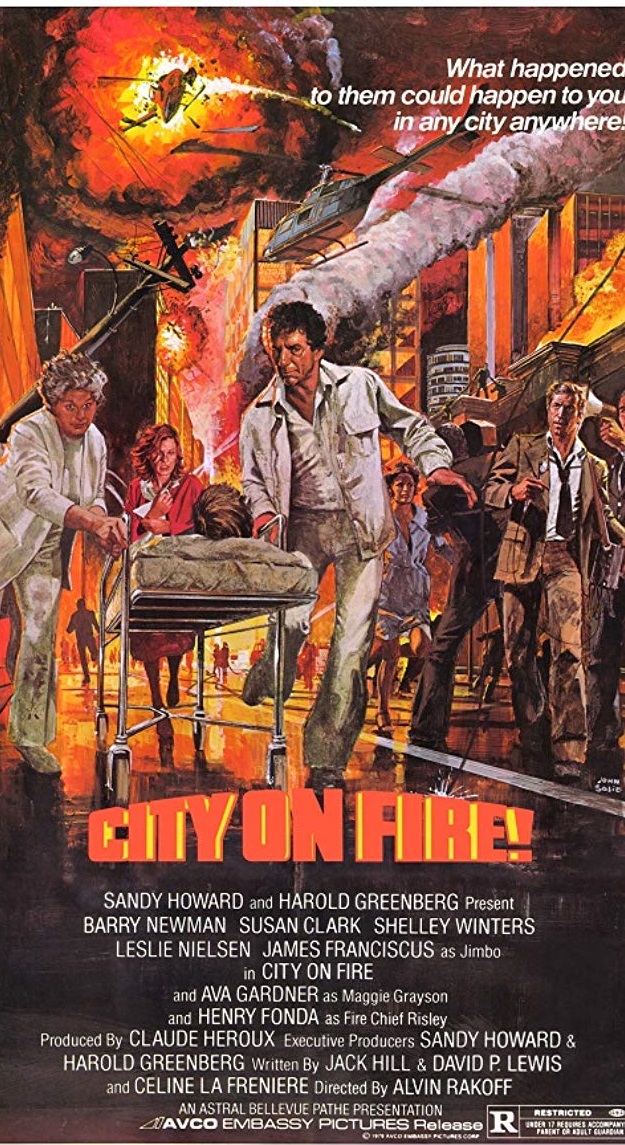
In an unnamed city somewhere in the midwest, Herman Stover (Jonathan Welsh) is fired from his job at an oil refinery.  Herman does what any disgruntled former employee would do.  He runs around the refinery and opens up all the valves and soon, the entire location is covered in a combustible mix of oil and chemicals.  One spark is all it takes for the refinery to explode and the entire city to turn into a raging inferno.

While Fire Chief Risley (Henry Fonda, getting a special “And starring” credit for doing what probably amounted to a few hours of work) sits in his office and gives orders to his subordinates, Dr. Frank Whitman (Barry Newman) cares for the injured at the city’s new hospital.  Also at the hospital is Mayor William Dudley (Leslie Nielsen) and local celebrity Diana Brockhurst-Lautrec (Susan Clark), who is having an affair with the mayor.  Diana also went to high school with Herman and he still has a crush on her.  When he shows up at the hospital to try to hit on her, he’s roped into working as a paramedic.  Also helping out at the hospital is Nurse Shelley Winters.  (The character may be named Andrea Harper but she’s played by Shelley Winters and therefore, she is Shelley Winters.)  At the local television station, news producer Jimbo (James Franciscus) tries to keep his anchorwoman, Maggie Grayson (Ava Gardner), sober enough to keep everyone up to date on how much longer the city is going to be on fire.

Mostly because it was featured on an early pre-Comedy Central episode of Mystery Science Theater 3000, City on Fire has a reputation for being a terrible movie but, as far as 70s disaster films are concerned, it’s not that bad.  The special effects are actually pretty impressive, especially during the first half of the film and there’s really not a weak link to be found in the cast.  It’s always strange to see Leslie Nielsen playing a serious role but, before Airplane! gave him a chance to display his skill for deadpan comedy, he specialized in playing stuffy and boring authority figures.  He actually does a good job as Mayor Dudley and it’s not the film’s fault that, for modern audiences, it’s impossible to look at Leslie Nielsen without instinctively laughing.  Of course, there is a scene towards the end where Leslie Nielsen picks up a fire hose and starts spraying people as they come out of the hospital and it was hard not to laugh at that because it felt like a scene straight from The Naked Gun.

What the film does suffer from is an overabundance of cliches and bad dialogue.  From the minute the movie starts, you know who is going to live and who isn’t and sometimes, City on Fire tries too hard to give everyone a connection.  It’s believable that Herman would be stupid enough to start a fire because we all know that happens in the real world.  What’s less believable is that, having started the fire, Herman would then go to the hospital and keep asking Diana if she remembers him from high school.  It’s not asking too much to believe that Diana, as wealthy local celebrity, would be invited to the opening of a new hospital.  It’s stretching things, though, to then have her deliver a baby while the hospital is in flames around her.

Coming out at the tail end of the disaster boom, City on Fire didn’t do much at the box office and would probably be forgotten if not for the MST 3K connection.  A year after City on Fire was released, Airplane! came out and, through the power of ridicule, put a temporary end to the entire disaster genre.

Lisa Reviews An Oscar Nominee: The Diary of Anne Frank (dir by George Stevens)


http://www.youtube.com/watch?v=wRjX3otqSRA

From 1942 to 1944, a teenage girl named Anne Frank lived in hiding.

She and her family lived in what was sometimes called The Secret Annex, three stories of concealed rooms that were hidden behind a bookcase in an Amsterdam factory.  At first, it was just Anne, her older sister Margot, and their parents.  Eventually, they were joined by another family and eventually a dentist, with whom Anne did not get along.  Life was not easy in the concealed space and tempers often flared.  As the months passed, Anne had a romance-of-sorts with Peter, the teenage son of the other family, but she wondered if she truly felt anything for him or if it was just because they were stuck together.  Anne looked forward to someday returning to school and seeing all of her old friends, again.  However, she knew that she could not leave the Annex until the Nazis had finally been forced out of the Netherlands.  She and the other occupants had to remain in hiding and they had to remain perfectly quiet eight hours a day because they were Jewish.  If they were discovered, they would be sent to the camps.  So, they waited and Anne kept a diary.

Tragically, the Nazis did eventually discover the Secret Annex.  Of the 8 occupants, only Anne Frank’s father, Otto, would survive the war.  The rest died in various concentration camps.  Anne Frank’s mother starved to death in Auschwitz.  Her older sister, Margot, was 19 when she fell from her bunk and, because she was in such a weakened state, was killed by the shock.  Anne Frank, it is believed, died a few days after Margot.  She died at the Bergen-Belsen Concentration Camp, one of the 17,000 prisoners to succumb to Typhus.  Before she died, Anne Frank spoke with two former schoolmates who were also being held at Bergen-Belsen.  She told them that she had believed her entire family was dead and that she no longer had any desire to go on living.

However, Otto Frank did survive and, at the end of the war, he returned to the Secret Annex.  That’s where he discovered Anne’s diary.  After editing it (a process that Anne, who aspired to be a journalist, had already started doing shortly before she was arrested), Otto arranged for the publication of the diary.  The Diary of A Young Girl (or, as it was titled in some countries, The Diary of Anne Frank) was a bestseller and has remained one ever since it was first published.  Along with being recognized as being one of the most important books ever written, it’s also been adapted for both stage and screen.

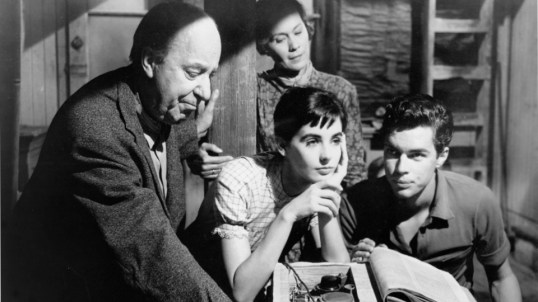
The first such screen adaptation was in 1959.  It was directed by George Stevens and it starred 20 year-old Millie Perkins as Anne.  (Perkins bore a great resemblance to Audrey Hepburn, who was reportedly Otto Frank’s preferred choice for the role.  Hepburn turned him down, saying she would have been honored to have played the role but believed that she was too old to believable as a 14 year-old.)  Joseph Schildkraut played Otto while Diane Baker played Margot and Gusti Huber played Edith Frank.  The Van Daans were played by Shelley Winters and Lou Jacobi while Richard Beymer played their son (and Anne’s tentative boyfriend), Peter.  Ed Wynn, who was best known as a comedian, played the role of Albert Dussell, the dentist to whom Anne took a dislike.  (The surviving family of Fritz Pfeffer — who was renamed Dussell in Anne’s diary — objected to the way he was portrayed in both the book and the film.)

As a film, it has its flaws.  George Stevens specialized in big productions but that was perhaps not the proper approach to take to an intimate film about a teenage girl coming-of-age under the most difficult circumstances imaginable.  Because this was a 20th Century Fox production from the 50s, The Diary of Anne Frank was filmed in Cinemascope, which made the annex itself look bigger than it should.  Scenes that should feel claustrophobic often merely come across as being cluttered.

But, in the end, the story is so powerful and so important that it doesn’t matter.  Though the Annex was recreated on a Hollywood sound stage, the exteriors were actually filmed in Amsterdam.  When we see the outside of the factory where the Frank family lived, we are seeing the actual factory.  When we see repeated shots of the uniformed Nazi police patrolling the streets at night, we know that we’re seeing the actual view that Anne Frank undoubtedly saw many a night from the Annex.  And because we know the story, we begin the film knowing how it’s going to end and that adds an even greater weight to each and every scene.  It’s impossible not to relate to Anne’s hopes for the future and it’s just as impossible to not mourn that Anne never lived to see that future.

Stevens originally planned for the film to end with a scene of Anne at Bergen-Belsen.  To their discredit, 20th Century Fox removed the scene after preview audiences complained that it was too upsetting.  People should be upset while watching (or, for that matter, reading) The Diary of Anne Frank.  Even today, there are people who still seem to struggle with acknowledging the enormous evil that was perpetrated by the Nazis and their allies.  As a result, it’s not uncommon to find people who, when they don’t outright deny that it happened, try to minimize the Holocaust.  It’s a disgusting thing.  There was recently a viral video, which was released by NowThis that featured a student at George Washington University saying, “What’s going to happen if there’s another Holocaust? Well, we’re seeing what’s happening. We’re seeing people die at the border for lack of medical care. That’s how Anne Frank died. She didn’t die in a concentration camp, she died from typhus.”  NowThis later said that the student meant to say that Anne Frank “didn’t die from a concentration camp, she died from typhus,” and you really have to wonder just how fucking stupid someone has to be to think that 1) that’s somehow an improvement on what was originally said and 2) that typhus and the concentration camp were not essentially the same thing.  Even if one accepts that the student misspoke, it would seem that her main complaint was the the concentration camp didn’t have proper medical care, as opposed to the fact that it was specifically created to imprison and kill Jewish people.  It’s an astounding combination of ignorance and antisemitism.  NowThis later edited her comments out of the video, which again seems to miss the point of why people were upset in the first place.  Instead of just saying, “Hey, this idiot is a Holocaust denier and, regardless of whether she hates Trump as much as we do, we want nothing to do with her,” NowThis instead said, “Well, if that comment offends you, we’ll take it out and you won’t have to hear it.”  To me, that’s why The Diary of Anne Frank is still important and why it should still be read and watched and studied.  There are too many ignorant people and craven, weak-willed organizations out there for us to turn our backs on teaching history.

The Diary Anne Frank was nominated for best picture of the year.  While Shelley Winters won the Oscar for Best Supporting Actress, the Best Picture Oscar went to Ben-Hur.  Interestingly enough, Ben-Hur’s director, William Wyler, was originally interested in directing The Diary Anne Frank before George Stevens was brought on board.

Italian Horror Showcase: Tentacles (dir by Ovidio G. Assonitis)


Okay, tell me if this sounds familiar.

There’s a beachside resort town, one whose survival is pretty much dependent upon tourists and big business.  If you give the tourists a reason to not show up, the town dies.  If you give big business a reason to build their factories and their underground tunnels somewhere else, the town dies.

Unfortunately, something bad is happening in this little town.  People are going in the water and they’re never returning.  It appears that they’re being killed by some sort of giant sea monster, even though the authorities swear that it’s simply impossible.  The town’s leaders are putting pressure on the sheriff to cover up the crimes.  A scientist shows up and thinks that everyone he meets is an idiot.

It’s not safe to go in the water but people keep doing it!

Now, you may be thinking that it sounds like I’m describing the plot of Jaws but actually, I’m talking about an Italian film called Tentacles.  Released in 1977, Tentacles was one of the many films that was directly inspired by the success of Spielberg’s film.  Jaws was such a phenomenal success that it was ripped off by filmmakers across the world.  That said, of all the people ripping off Spielberg’s film, the Italians brought an undeniable and frequently shameless flair to the Jaws knockoffs.

Tentacles is a bit different from other Italian Jaws films in that, this time, the threat does not come from a shark.  Instead, it comes from a giant octopus!  That’s actually a pretty good twist because, in real life, an octopus is actually more dangerous than a shark.  Not only are they bigger and considerably smarter than most sharks but if they get enough of their eight arms around you, they can literally squeeze you to death!  I mean …. agck!  Say what you will about sharks, I imagine getting eaten by one would suck but at least it wouldn’t take long to die.  Whereas if an octopus gets you, you would actually be aware of it squeezing you to death and oh my God, I’m never getting in the water.

Anyway, in Tentacles, the octopus is snatching babies off of piers and sailors off of boats and it’s using its octopus powers to rip their skin from their bones.  It also attack scuba divers by firing ink at them.  The sheriff (Claude Akins) says that it’s nothing to worry about but Ned Turner (John Huston), a hard-boiled reporter, thinks that there’s a story here.  Ned’s in town visiting his sister (Shelley Winters).  She has a ten year-old son who enjoys sailing.  Uh-oh….

Henry Fonda shows up for a few very brief scenes, playing the head of a company that built the underwater tunnel that somehow mutated the octopus.  Fonda looks incredibly frail in his scenes (and apparently, he filmed his part while recovering from heart surgery) but his performance in Tentacles still isn’t as cringe-inducing as his performance in The Swarm.

Also showing up is a marine biologist named Will Gleason (Bo Hokpkins).  Fortunately, Gleason owns two killer whales so, after the octopus kills his wife, Gleason sends out the orcas to track it down.  Before doing so, he gives them a pep talk.  Apparently, killer whales respond to positive reinforcement.

Tentacles is unique in that it’s an Italian production that managed to rope in a few well-known American actors.  It’s an odd film to watch because, on the one hand, the film is full of risible dialogue and it’s painfully slow whenever the octopus isn’t attacking anyone and no one really seems to be that invested in any of their characters.  (When the octopus kills a baby, the actress playing the baby’s mother underacts to such an extent that the scene becomes almost surreal.)  This isn’t like Jaws, where you actually care about Brody, Quint, Hooper, and the Kintner boy.  On the other hand, the octopus itself is actually kind of frightening so, on that very basic level, the film works.

In the end, Tentacles is one of the lesser Jaws rip-offs but you’ll never forget that octopus.