Scenes That I Love: Bob Fosse’s All That Jazz


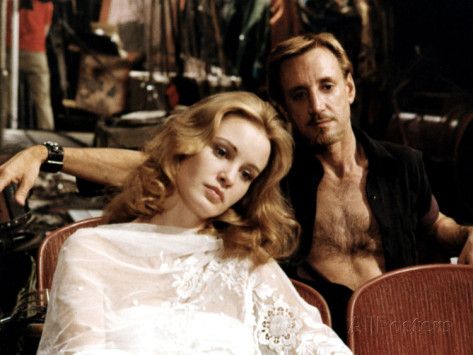
Today’s scene that I love comes from Bob Fosse’s 1979 masterpiece, All That Jazz.  This scene features the legendary Ann Reinking at her best.  Roy Scheider said that he cried after shooting this scene.

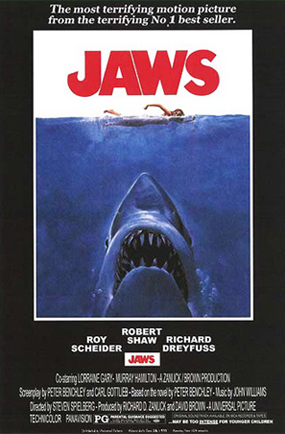
Scenes I Love: Jaws


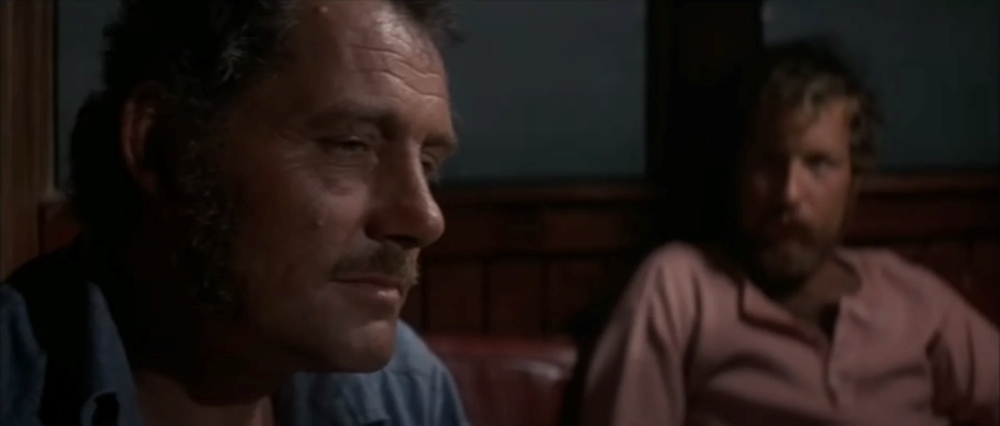
“You know the thing about a shark, he’s got…lifeless eyes, black eyes, like a doll’s eye. When he comes at ya, doesn’t seem to be livin’. Until he bites ya and those black eyes roll over white.” — Quint

People have blamed Spielberg and his breakout film, Jaws, as the cause of the blockbuster mentality that studios have had since this film came out. Studios and producers wanted to recreate the ultra-successful box-office numbers of Jaws. Despite the fact that this film was modestly budgeted, people nowadays who think they’re film experts point to it as the culprit. They’ve called it the film that begun the dumbing down of Hollywood when creativity was sacrificed for profit.

Why did I pick a scene from this film as a favorite? I picked this particular scene because it’s one reason why the film succeeded and made people come back again and again. It’s a scene that perfectly captures one reason why we love to see films in a communal setting. We want to share the same experience and emotions this scene brought up from the pit of each audience’s psyche.

Jaws didn’t ruin the creativity in filmmaking. I like to think that this one film was a filmmaker at his most creativie (shark wouldn’t work properly so Spielberg kept it off-screen which just added to the terror and tension in the film). This very scene goes down as one of the greatest film monologues. It sets up the danger the trio faces with some anecdotal evidence from the very person who survived the experience, but who might have become unhinged because of it. I love the look of frozen terror on the face of Richard Dryefuss’ character as he listens to Robert Shaw tell the story of the ill-fated journey of the U.S.S. Indianapolis.

This latest “Scenes I Love” is why I consider Spielberg one of the best filmmaker of his generation and probably beyond that.

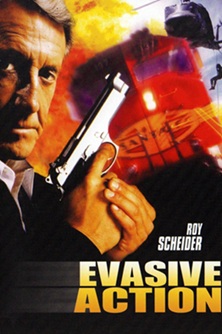
Evasive Action (1998, directed by Jerry P. Jacobs)


Some of the toughest criminals in America are being transported, via train, to a high security prison.  For some reason, instead of using an entire train to transport the prisoners and guards, it’s decided to just put the criminals in one car attached to a normal passenger train.  Did the passengers in the other cars get a warning that would be traveling with a bunch of desperate criminals?  Did they at least get a discount on their tickets?  Of course, Mafia kingpin Enzo Martini (Roy Scheider, slumming) engineers a takeover with the rest of the prisoners.  It’s up to Sheriff Wes Blaidek (Ray Wise) and bartender Zoe Clark (Delane Matthews) to stop the prisoners.

This is a fast-moving, dumb-as-Hell action movie that’s memorable mostly for having a cast that was very much overqualified for the film.  Keith Coogan, Dorian Harewood, Don Swayze, Ed O’Ross, and Sam J. Jones are all in this thing.  Clint Howard plays the homicidal serial killer who lets a child live because the kid has seen Taxi Driver.  Dick Van Patten plays the head of the parole board.  I can understand why Roy Scheider might be selected to play a mob boss and how Clint Howard and Don Swazye ended up playing killers.  But how do you look at this film’s story and think, “This need Dick Van Patten?”  It’s Die Hard on a train but without the wit or the budget.  The movie moves quickly, there’s plenty of train and helicopter action and it’s still good to see so many familiar and eccentric talents gathered together to bring too life one very stupid movie.  It’s too bad they couldn’t find room for Joey Travolta or Joe Estevez but I guess you can’t have everything.

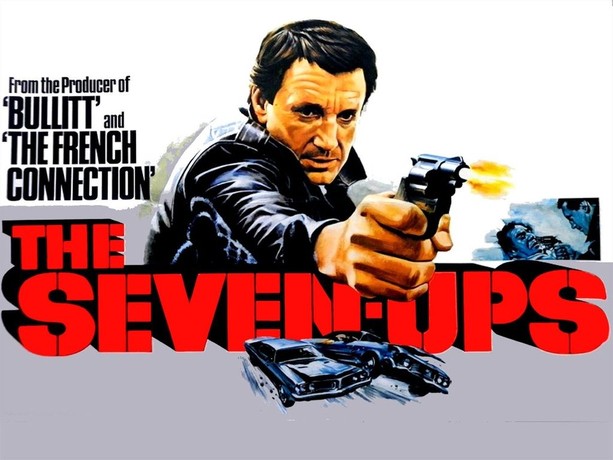
#MondayMuggers presents THE SEVEN-UPS (1973) starring Roy Scheider!


Every Monday night at 9:00 Central Time, my wife Sierra and I host a “Live Movie Tweet” event on X using the hashtag #MondayMuggers. We rotate movie picks each week, and our tastes are quite different. Tonight, Monday February 24th, we’re watching THE SEVEN-UPS starring Roy Scheider, Tony Lo Bianco, Ken Kercheval, Richard Lynch, and Bill Hickman.

THE SEVEN-UPS is about an elite New York City police unit, led by detective Buddy Manucci (Roy Scheider). The unit is nicknamed the “seven-ups” based on their ability to secure convictions and jail sentences of 7 years and up. While working a job, one of his fellow seven-ups is killed, and Buddy will do anything to find the men who did it.

I wrote a full review of THE SEVEN-UPS just last week because it’s truly a great movie and features one of the best car chase sequences ever put on film. Rather than repeat a lot of those same facts, I’m including a link to my review below, which also includes the trailer for the film:

So, join us tonight for #MondayMuggers and watch THE SEVEN-UPS! It’s on Amazon Prime.

THE SEVEN-UPS (1973) – Roy Scheider in a gritty 70’s cop thriller!


I’m guessing it started with JAWS (1975) and JAWS 2 (1978) since they played often on Fox-16 out of Little Rock when I was a kid, but I’ve been a fan of actor Roy Scheider for as long as I can remember. He’s one of those actors who has his own section in my massive collection of physical movie media. I’ve read about every film he’s ever made, and I’ve watched most of them. Surprisingly, THE SEVEN-UPS is the first Roy Scheider film I’ve written about on The Shattered Lens. 

NYPD detective Buddy Manucci (Roy Scheider) leads a team of elite cops, known as the “seven-ups.” They’ve acquired this nickname because most of the criminals they arrest receive sentences that are 7 years and longer, which makes their superiors on the force very happy. Granted, the team does use a variety of unorthodox methods to find and arrest the criminals, which can also rub their superiors and some of their fellow cops the wrong way. Buddy’s childhood friend Vito Lucia (Tony Lo Bianco), an undertaker by trade who has his finger on the pulse of the criminal activities in his community, serves as an important snitch for the team, with his information often leading to major busts. Unbeknownst to Buddy, prominent members of various organized crime families and other white-collar criminals start getting kidnapped and held for ransom in the community. Buddy’s unaware of the full extent of the kidnappings, but he asks his old friend / snitch Vito about this when he actually witnesses the abduction of a crooked bail bondsman he’s following named Festa. We know that Vito is the mastermind behind all of the kidnappings, and his two main henchmen, Moon (Richard Lynch) and Bo (Bill Hickman), are impersonating cops just long enough to confuse and abduct the various criminals. When the Seven-Ups stake out a funeral meeting of various mobsters in the area, squad member Ansel (Ken Kercheval) is killed as part of a screwed-up abduction attempt. Buddy spots Moon and Bo trying to flee the area and tries to chase them down in an incredible car chase that ends when Buddy is almost decapitated in a violent collision with a parked 18-wheeler. With one of their own dead and with the wild chases through the streets, the members of the team are placed on suspension and even investigated as suspects for the kidnappings. Not content to just lay low during their suspensions, the seven-ups continue to try to figure out what’s going on, doing whatever it takes to get the information they need. When Buddy and his group start applying incredible pressure to some of the local mobsters about who shot Ansel, he gets information that ties the killing and the kidnappings to his friend Vito. This time when he meets with Vito, Buddy feeds him false information, thus setting a trap to bring the whole operation down.

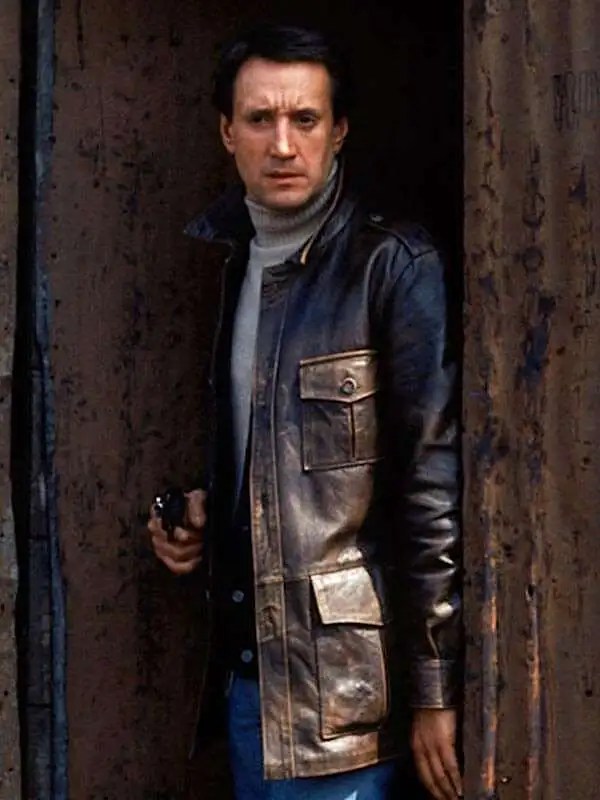
After viewing THE SEVEN-UPS again for the first time in a while, it continues to be my opinion that this movie is severely underrated. It’s a great cop film from the early 70’s, anchored by an excellent lead performance from Roy Scheider, who’s wearing one of the coolest leather jackets in the history of cinema. Coming in hot off the heels of THE FRENCH CONNECTION (1971), and with many connections to the Oscar winner, it seems that somehow this great film has fallen through the cracks over the years. I mean, how often do you hear people talk about this movie? THE SEVEN-UPS is directed by Philip D’Antoni, his only directorial credit, although he did serve as the Producer for both BULLITT (1968) and THE FRENCH CONNECTION. D’Antoni clearly values a good car chase sequence. THE SEVEN-UPS contains a thrilling car chase, which really isn’t that big of a surprise when you learn that stunt coordinator Bill Hickman, who plays the bad guy Bo in this film, coordinated the car chase sequences in BULLITT and THE FRENCH CONNECTION. This film features my personal favorite car chase sequence from any film that I’ve seen to date. Don Ellis composed the memorable musical score, a service that he also provided in THE FRENCH CONNECTION. I point out all of these ties to THE FRENCH CONNECTION because, in my humble opinion, the talent behind that film created another classic in THE SEVEN-UPS. 

Complimenting Roy Scheider’s lead performance, THE SEVEN-UPS has a strong supporting cast. Tony Lo Bianco, Ken Kercheval (of DALLAS fame), Bill Hickman, and Richard Lynch are all quite memorable in their respective roles. I also like the 1973 New York City setting for the film. In movies like this and the following year’s DEATH WISH, we get to see a New York that no longer exists. To me, this only adds to the gritty realism of the film. 

Overall, THE SEVEN-UPS is a movie I recommend without any reservations. If you’re a fan of 70’s cop thrillers, you simply can’t go wrong with this one. 

I share the trailer for THE SEVEN-UPS below:

Horror Scenes I Love: Alex Kintner Goes For A Swim in Jaws


The first time I saw Jaws, this scene totally freaked me out.  Every subsequent time that I’ve watched Jaws, this scene continues to freak me out.  Even though I always know it’s coming, the brutality of it always takes me by surprise.  This scene and the way it goes from mild comedy (“That’s a real bad hat, Harry!”) to terrifying horror without missing a beat is a reminder that Steven Spielberg definitely knows something about directing.

Poor Alex Kintner!


Paper Lion (1968, directed by Alex March)


Writer George Plimpton (Alan Alda) is a Park Avenue sophisticate who practices “participatory” journalism.  He has already written about pitching in an exhibition all-star game and getting knocked out by Sugar Ray Robinson.  He is having trouble coming up with his next stunt until he goes to Central Park and plays a touch football game with his girlfriend Kate (Lauren Hutton) and his editor, Oscar (David Doyle).  Oscar sees George throwing the ball and decides that George should write about going to a professional football team’s training camp as a player.

George, who fantasizes about throwing the game-winning touchdown, is enthusiastic.  Most of the teams that George approaches are less enthusiastic but finally, the Detroit Lions agree to sign him as a quarterback.  Once the other players realize that George is a writer and not a professional athlete, there’s a lot of resentment.  As Guard John Gordy (playing himself) puts it, he could easily get injured while protecting an inexperienced quarterback like George.  George can always go back to Park Avenue but, for the rest of the players, the game is their life and they don’t like the idea of some outsider coming in and treating it all like a joke.  At first, only the fearsome defender Alex Karras (also playing himself) is willing to support George but eventually, George’s refusal to give up wins over the rest of the team.  They even let him score a touchdown during practice.

When the preseason begins, George waits for his opportunity to take the field.  How many yards can he lose in three plays?

Paper Lion is based on a true story.  In 1963, George Plimpton did attending training camp and play a scrimmage for the Lions and he later wrote a book about the experience.  The movie changes the time period from ’63 to ’67 so that all of the then-members of the Lions could play themselves.  (Though Karras was a friend of Plimpton’s, he was actually suspended during the 1963 season and, unlike in the movie, never joined Plimpton on the practice field.)  The film plays Plimpton’s football career largely for laughs, celebrating every guy’s fantasy of being a sports star while also showing why it’s probably best to leave the actual game to the professionals.  Alan Alda doesn’t imitate Plimpton’s famous Mid-Atlantic accent but he does capture the excitement of a man getting to live out his fantasy.

Paper Lion was made with the full cooperation of the NFL and a good deal of the film’s final third is made up footage that was shot for an actual game.  Seen today, it’s interesting to see how positively Paper Lion portrays both the game and its players and to contrast it with how the game is usually portrayed today.  There’s no talk of steroids or fears of multiple concussions.  All of the players are clean-cut, friendly, witty, and helpful.  Even the training camp hazing is all done is good fun.  Paper Lion introduces us to the nicest people in the world and they’re all football players!

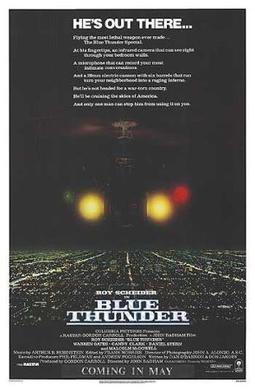
Blue Thunder (1983, directed by John Badham)


Frank Murphy (Roy Scheider) is a Vietnam vet-turned-cop who pilots a police helicopter for the LAPD.  Every night, he and his partner, Richard Lymangood (Daniel Stern) fly over Los Angeles, helping to keep the peace and peeping on anyone undressing in a high-rise apartment.

Murphy is selected to serve as the test pilot for what is described as being the world’s most advanced military helicopter, Blue Thunder.  Blue Thunder is so advanced that the pilot can control the gun turrets just by turning his head and it’s also been supplied with the latest state of the art surveillance equipment.  The pilot of a Blue Thunder can literally spy on anyone while listening to and recording their conversations.  With the Olympics coming up, the city of Los Angeles wants to test out the Blue Thunder as a way to control the crowds and prevent crime during the Games.

Murphy may be impressed by the helicopter but he has his reservations about the program.  He immediately sees that Blue Thunder could be a dangerous tool in the wrong hands.  Those wrong hands would belong to Col. Cochrane (Malcolm McDowell), who was Blue Thunder’s first pilot and also Murphy’s commanding officer during Vietnam.  Murphy is still haunted by the atrocities that he saw committed by Cochrane during the war.

When it turns out that Murphy was right to be suspicious of Cochrane’s intentions, the movie turns into an exciting aerial chase above Los Angeles, with Murphy in Blue Thunder, trying to outrun F-16s, heat-seeking missiles, and eventually Cochrane, who enters the chase in a Blue Thunder of his own.

I’m always surprised that Blue Thunder doesn’t have a bigger following than it does.  It’s an action classic, with a gritty performance from Roy Scheider, a villainous performance from Malcolm McDowell, and comedic relief from the always reliable Daniel Stern.  Even Warren Oates is in the movie, playing Murphy’s LAPD commander!  The script actually does have something relevant to say about the militarization of America’s police forces (and it feels downright prophetic today) and the chase scenes are all the more exciting because they were filmed in the era before CGI and have an authenticity to them that is missing from most modern action films.

Blue Thunder is a perfect example of the “don’t do this really cool thing” style of action film.  The Blue Thunder helicopter is described as being a danger to everyone in the country and the movie even ends with a note saying that real-life Blue Thunders are currently being designed.  But I don’t think anyone who has ever watched this film has thought, “I hope they stopped making those helicopters.”  Instead, this movie makes you want to have a Blue Thunder of your very own.  They’re so cool, who wouldn’t want to fly one of those things?

Lisa Reviews An Oscar Nominee: All That Jazz (dir by Bob Fosse)


“Bye bye life….

Bye bye happiness….

Hello loneliness….

I think I’m going to die….”

So sings Joe Gideon (Roy Scheider) at the end of the 1979 film, All That Jazz.  And he’s right!  It’s hardly a spoiler to tell you that All That Jazz ends with Joe Gideon in a body bag.  It’s not just that Gideon spends a good deal of the film flirting with the Angel of the Death (Jessica Lange).  It’s also that, by the time the film ends, we’ve spent a little over two hours watching Joe engage in non-stop self-destruction.  Joe is a director and a choreographer who is so in love with both death and show business that his greatest triumph comes from choreographing his own death.

Joe wakes up every morning, pops a handful of pills, stares at himself in the mirror and says, “It’s showtime!”  He spends his day choreographing a Broadway play.  He spends his nights editing his latest film, a biopic about Lenny Bruce called The Stand-Up.  He’s particularly obsessed with a long monologue that Lenny (played by Cliff Gorman) delivers about the inevitability of death.  When he’s not choreographing or editing, he’s smoking, drinking, and cheating on his girlfriend (Ann Reinking).  It’s obvious that he’s still in love with his ex-wife (Leland Palmer) and that she loves him too but she’s also too smart to allow herself to get fully sucked back into his self-destructive orbit.  He loves his daughter (Erzsébet Földi) and yet still ignores her when she begs him not to die.

Joe and the Angel of Death

When Joe has a heart attack and ends up in the hospital, he doesn’t change his behavior.  Instead, he and the Angel of Death take a look back at his youth, which was spent hanging out in strip clubs and desperately trying to become a star.  Joe Gideon, we see, has always know that he’s going to die early so he’s pushed himself to accomplish everything that he can in what little time he has.

As a result of his drive and his refusal to love anyone but himself, Gideon is widely recognized as being an artistic genius.  However, as O’Connor Flood (Ben Vereen, essentially playing Sammy Davis, Jr.) puts it, “This cat allowed himself to be adored, but not loved. And his success in show business was matched by failure in his personal relationship bag, now – that’s where he really bombed. And he came to believe that show business, work, love, his whole life, even himself and all that jazz, was bullshit. He became numero uno game player – uh, to the point where he didn’t know where the games ended, and the reality began. Like, for this cat, the only reality – is death, man. Ladies and gentlemen, let me lay on you a so-so entertainer, not much of a humanitarian, and this cat was never nobody’s friend. In his final appearance on the great stage of life – uh, you can applaud if you want to – Mr. Joe Gideon!”

Now, of course, Connor doesn’t really say all that.  Gideon just imagines Connor saying that before the two of them launch into the film’s final musical number, Bye Bye Life.  It should be a totally depressing moment but actually, it’s exhilarating to watch.  It’s totally over-the-top, self-indulgent, and equally parts sincere and cynical.  It’s a Bob Fosse production all the way and, as a result, All that Jazz is probably about as fun as a movie about the death of a pathological narcissist can be.  This is a film that will not only leave you thinking about mortality but it will also make you dance.

All That Jazz was Bob Fosse’s next-to-last film (he followed it up with the even darker Star 80) and it’s also his most openly autobiography.  Roy Scheider may be playing Joe Gideon but he’s made-up to look exactly like Bob Fosse.  Like Joe Gideon, Bob Fosse had a heart attack while trying to direct a Broadway show and a film at the same time.  Gideon’s girlfriend is played by Fosse’s real-life girlfriend.  The character of Gideon’s ex-wife is clearly meant to be a stand-in for Gwen Verdon, Fosse’s real-life ex-wife.  When the film’s venal Broadway producers make plans to replace the incapacitated Gideon, Fosse is obviously getting back at some of the producers that he had to deal with while putting together Chicago.  It’s a confessional film, one in which Fosse admits to his faults while also reminding you of his talent.  Thank God for that talent, too.  All that Jazz is self-indulgent but you simply can’t look away.

It helps that Gideon is played by Roy Scheider.  Originally, Scheider’s Jaws co-star Richard Dreyfuss was cast in the role but he left during rehearsals.  Dreyfuss, talented actor that he was, would have been all-wrong for the role of Gideon.  One can imagine a hyperactive Dreyfuss playing Gideon but one can’t imagine actually feeling much sympathy for him.  Scheider, on the other hand, brings a world-weary self-awareness to the role.  He plays Gideon as a man who loves his talent but who hates himself.  Scheider’s Joe Gideon is under no illusions about who he is or how people feel about him.  When Fosse’s own instincts threatens to make the film unbearably pretentious, Scheider’s down-to-Earth screen presence keeps things grounded.

I love All That Jazz.  (Admittedly, a good deal of that love is probably connected to my own dance background.  I’ve known my share of aspiring Joe Gideons, even if none of them had his — or Bob Fosse’s — talent or drive.)  It’s not for everyone, of course.  Any musical that features actual footage of open heart surgery is going to have its detractors.  For the record, Stanley Kubrick called All That Jazz “the best film I think I’ve ever seen.”  It won the Palme d’Or at Cannes and it was nominated for Best Picture, though it ultimately lost to the far more conventional Kramer vs. Kramer.

All that Jazz would be the last of Fosse’s film to receive a best picture nomination.  (Fosse directed five features.  3 of them were nominated for Best Picture, with the other two being Cabaret and Lenny.)  8 years after filming his cinematic doppelganger dying during heart surgery, Fosse would die of a heart attack.  Gwen Verdon was at his side.

Film Review: Jaws 2 (dir by Jeannot Szwarc)


The 1978 film Jaws 2 poses a question that has been asked many times under many different circumstances:

When will people learn?

Seriously, you would think that after everything that happened during the first Jaws, the people of Amity Island would be a little bit smarter when it comes to sharks.  I mean, did Ben Gardner, the Kintner Boy, Quint, and Chrissie Watkins all die in vain?  If I lived on Amity Island, I would be so paranoid about another shark attack that I would probably move to Manitoba.  At the very least, I would demand that the beach be closed if there was even the slightest chance that another great white shark was somewhere out there, eating anyone foolish enough to get back in the water.

It’s just common sense!

But no.  In Jaws 2, when another shark shows up and eats two divers and a water skier before blowing up a motor boat, no one is even willing to consider shutting down the beach.  Even after Chief Brody (Roy Scheider) insists that another shark has shown up, no one is willing to listen to him.  “I know something about sharks!” Brody insists but the town council just shrugs him off.  Maybe they think that Quint and Hooper did all the work the last time and that Brody was just along for the ride.

Of course, Brody does bring some of his problems on himself.  Brody spends a lot of this film sitting in the dark, brooding about sharks.  When he sees a shadow in the ocean, he runs down to the beach and starts shooting at it.  “It’s just blue fish!” someone yells while Brody looks a little confused.  How shocked can we really be when the town council fires Brody?  He was a loose cannon.

Before he gets fired, Brody orders his teenage son, Mike (Mark Gruner) to stay out of the water.  Of course, Mike doesn’t listen.  He goes sailing with his friends and his younger brother, Sean (Marc Gilpin).  That’s a big mistake, of course.  As soon as Mike and company are a good distance away from Amity Island, the shark attacks and leaves them all stranded at sea.  Mike is knocked unconscious.  Sean is trapped on a boat all by himself.  One of the teenage girls, Jackie Peters (Donna Wilkes), totally freaks out while her older sister, Brooke (Gigi Voran), suggests that they all play charades to pass the time.  Everyone dismisses her idea but you know what?  I have it on very good authority that sharks love charades.  I think Brooke was on to something…

Jaws 2 is a strange, strange movie.  It’s really two films in one.  Jaws 2 starts out as an almost by-the-book remake of Jaws.  True, Quint’s dead.  And Richard Dreyfuss had just won an Oscar so there’s no way Hooper was going to come back.  But Brody’s back and he’s once again an island police chief who is afraid of the water and who can’t get anyone to listen to him.  Just as Jaws started out as almost a small town comedy, Jaws 2 has an early scene where Brody has to deal with the quirky citizens of Amity Island. (Unfortunately, Harry and his really bad hat don’t make a return appearance.)  A scene where a dead killer whale washes up on the beach is shot to remind us of the scene in the first in which Hooper and Brody examine a dead shark.

But then, halfway through, Jaws 2 turns into a totally different movie.  Suddenly, the teenagers are trapped out in the middle of the ocean and the shark is circling them and Brody is searching from them and the whole movie just goes insane.  Roy Scheider abandons any attempt at subtlety as he becomes as obsessed with shark as Donald Pleasence was with Michael Myers in Halloween.  The shark turns out to be incredibly sneaky.  He’s never around until you stick your hand in the water and then suddenly — SHARK!

How powerful is this shark?  He’s so powerful that he eats a freaking a helicopter!  Seriously, a coast guard helicopter tries to rescue the kids and ends up getting eaten by the shark!  That scene alone is worth whatever’s led up to it.  (I think Jaws 2 might be the first film to feature a shark eating a helicopter.)  The film only gets crazier from there, with Brody eventually reduced to verbally taunting the shark while clutching onto a power cable.

Now, admittedly, those stranded teenagers aren’t the most developed characters in the world.  There’s a lot of them and it’s sometimes difficult to keep track of who is who.  Fortunately, this is a 70s films and that means that Jaws 2 is all about the hair.  You may not know their names but you’ll never forget their hair:

Check out some of the members of the Jaws 2 hair club:

Jaws, come out to play…

(Okay, Luther wasn’t actually in the movie but just imagine if he had been!)

Anyway, Jaws 2 cannot begin to hold a candle to the original Jaws but it’s still a lot of fun.  Admittedly, there are a few parts, especially during the first hour, that drag in a way that Spielberg, the consummate story teller, would not have allowed.  I could have done without some of the lengthy scenes where Brody tries to convince the city council that there’s another shark in the water, if just because we already know that the shark’s there and we can guess that the beach isn’t going to be closed.  (After all, if the beach was closed, there wouldn’t be a movie…)

But once the teenagers are stranded in the ocean and the shark is eating the helicopter and Brody is calling it a bastard while hanging onto a power cable, there’s no way that you can resist the charms of this sequel.  Jaws 2 isn’t exactly good but it’s just so entertaining!

Jaws 2 frequently shows up on AMC so keep an eye out for it!

And, for the love of God — stay out of the water!