The NYFCC Honors American Hustle


Oscar season has begun!  This afternoon, The New York Films Critics Circle announced their picks for the best of 2013.  Fortunately, I had the office to myself so I was able to follow along online.  Here are the winners and a few random thoughts:

BEST PICTURE
“American Hustle”

(This is something of a surprise, no?  Most award watchers were expecting 12 Years a Slave to pretty much sweep all of the critics’ awards.  It will be interesting to see if American Hustle does with the other critic groups but, for now, it seems like American Hustle has taken a major step forward to scoring a best picture nomination.)

BEST DIRECTOR
Steve McQueen, “12 Years a Slave”

(This was much more expected.)

BEST ACTOR
Robert Redford, “All Is Lost”

(Ditto.  I recently saw All Is Lost.  It’s interesting to note that Redford has only a few more lines than Jean Dujardin in The Artist.)

BEST ACTRESS
Cate Blanchett, “Blue Jasmine”

(Deserved and expected.)

BEST SUPPORTING ACTOR
Jared Leto, “Dallas Buyers’ Club”

(I haven’t seen this one yet but I hope to soon.)

BEST SUPPORTING ACTRESS
Jennifer Lawrence, “American Hustle”

(I was kind of surprised how angry some people on twitter got over Lawrence’s victory.  However, from my own personal experience, being intelligent, talented, and pretty really brings out the haters..)

BEST SCREENPLAY
“American Hustle”

(A lot of people on twitter were upset over this.  I haven’t seen American Hustle yet so I can’t judge.)

BEST CINEMATOGRAPHY
Bruno Delbonnel, “Inside Llewyn Davis”

(This was the award that managed to tick off thousands of Gravity fans.  Don’t get me wrong — I liked Gravity.  But some of the pro-Gravity people actually make the pro-Avatar people look calm and collected.)

BEST ANIMATED FILM
“The Wind Rises”

BEST FOREIGN LANGUAGE FILM
“Blue is the Warmest Color”

(I agree.)

BEST NON-FICTION FEATURE
“Stories We Tell”

(I agree.)

BEST FIRST FEATURE
“Fruitvale Station”

(And, for a third time, I agree.)

One final note — unlike the Academy, in which a simple majority determines the winner, the NYFCC awards were determined by consensus and, as a result, several of the categories apparently required multiple ballots before a winner was agreed upon.  As such, some of the winners listed above are definitely compromise picks.

Myself, I still have to see a lot of the potential Oscar nominees — including 12 Years A Slave, American Hustle, and Dallas Buyers Club.  However, for now, my favorite film of 2013 remains Upstream Color.

44 Days of Paranoia #13: Quiz Show (dir by Robert Redford)


For today’s entry in the 44 Days of Paranoia, I want to take a look at a film that I recently caught on cable — 1994’s Quiz Show.

Directed by Robert Redford and based on a true story, Quiz Show was nominated for the Academy Award for best picture but lost to Forrest Gump.  Among those of us who obsess over Oscar history, Quiz Show is often overshadowed by not only Forrest Gump but two of the other nominees as well, Pulp Fiction and The Shawshank Redemption.  When compared to Pulp Fiction, Quiz Show certainly feels old-fashioned.  At the same time, it’s not quite as much of a sentimental crowd-pleaser as Gump or Shawshank.  Perhaps for those reasons, Quiz Show never gets quite as much attention as some other films that have been nominated for best picture.  However, taking all of that into consideration, Quiz Show is still one of the best films of the 90s.

Quiz Show takes us back to the 1950s.  The most popular show on television is 21, a game show in which two contestants answer questions, win money, and try to be the first to score 21 points.  The American public believes that all of the questions asked on 21 are locked away in a bank vault until it’s time for the show.  What they don’t know is that the show’s producers have instead been rigging the show, giving the answers to contestants who they feel will be good for ratings.

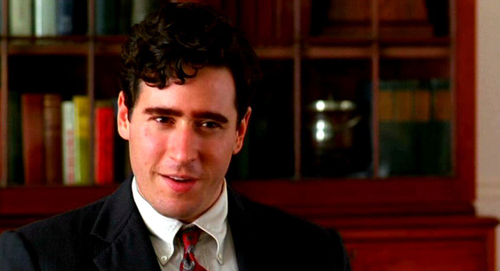
When Quiz Show begins, nerdy Herbie Stempel (John Turturro) has been the champion for several weeks.  However, both the show’s producers and sponsors feel that the untelegenic Herbie has peaked.  Hence, the handsome and charismatic Charles Van Doren (Ralph Fiennes) is brought on the show and Herbie is ordered to lose to him.  Reluctantly, Herbie does so.

john_turturro_quiz_show

Charles is initially reluctant to cheat but, as he continues to win, he finds himself becoming addicted to the fame.  Charles is the son of the prominent academic Mark Van Doren (Paul Scofield) and his success on television finally gives him a chance to escape from his father’s shadow.  Indeed, the film’s subtle and nuanced portrait of Charles and Mark’s loving but competetive relationship is one of the film’s greatest strengths.

ralph_fiennes_quiz_show

Herbie, however, is bitter over having to lose and has subsequently gambled away all of his winnings.  When 21′s producer (David Paymer) refuses to help Herbie get on another TV show, Herbie reacts by going to the New York County district attorney and publicly charging 21 as being fixed.  Though the grand jury dismisses Herbie as being obviously mentally unbalanced, his charges come to the attention of a congressional investigator, Richard Goodwin (Rob Morrow).

rob_morrow_quiz_show1

Goodwin launches his own investigation into 21 and discovers that the show is fixed.  (As the ambitious Goodwin puts it, he wants to “put television on trial.”)  Along the way, he also meets and befriends Charles Van Doren and finds himself torn between his desire to expose the show and to protect Charles from the bad publicity.  Again, the film is to be applauded for the subtle way that it uses Goodwin’s investigation of both Charles and Herbie as a way to explore issues of both class resentment and class envy.  Goodwin may have come from the same ethnic background of Herbie but it quickly becomes obvious that Goodwin has more sympathy for the genteel (and very WASPy) world that produced Charles Van Doren.  When Goodwin tries to justify protecting Charles, his wife (played by Mira Sorvino) responds by calling him “the Uncle Tom of the Jews” and it’s hard not to feel that she has a point.

1quiz3

While I greatly enjoyed Quiz Show, I do have to say that, on one major point, the film fails.  Try as he might, director Redford never convinces us that a rigged game show is really as big of a crime as he seems to be believe it to be.  Perhaps in the 1950s, people were still innocent enough to be shocked at the idea of television reality being fake but for cynical contemporary viewers, it’s hard not to feel that the “scandal” was more about Richard Goodwin’s ambition and less about any sort of ethical or legal issue.  Towards the end of the film, one character suggests that television will never be truly honest unless the government steps in to regulate it.  “What?” I yelled back at the TV.

Seriously, it seemed like a bit of an overreaction.

As I watched Quiz Show, I found it hard not to think about the reality shows that I love.  For instance, I know that The Bachelor and The Bachelorette are largely staged.  I know that the previous season of Big Brother was largely set up so that Amanda could win.  (And, believe me, if Amanda hadn’t sabotaged her chances by turning out to be a mentally unstable racist bully, she would have won and she would probably would have been invited back for the next all-stars season.)  I know that shows like Storage Wars and Dance Moms are “unscripted” in name only.  I know that reality shows aren’t real but my attitude can basically be summed up in two words: “who cares?”  Perhaps I would be more outraged if I lived in the 50s which, to judge from both Quiz Show and a host of other movies, was apparently a much more innocent time.

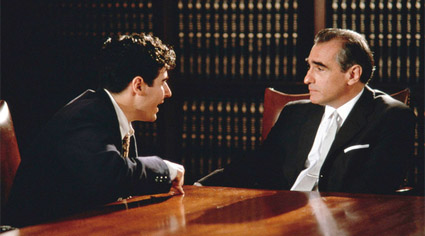
quiz-show-morrow-scorsese

That said, I really enjoyed Quiz Show.  A lot of that is because I’m a history nerd and, therefore, I have a weakness for obsessively detailed period pieces.  But even beyond that, Quiz Show is a well-made, entertaining film that features three excellent lead performances and several strong supporting turns.  If you love to watch great actors playing great roles then Quiz Show is the film for you.  Rob Morrow lays his Boston accent on a bit thick but otherwise, he does a good job of suggesting both Goodwin’s ambition and the insecurities that lead him to desire Charles’s friendship even as he tries to expose him as a fraud.  John Turturro brings an odd — if manic — dignity to Herbie Stempel while Johann Carlo is well-cast as his wife.  Best of all, Ralph Fiennes makes Charles Van Doren into a sad, frustrating, and ultimately sympathetic character while Paul Scofield is the epitome of both paternal disappointment and love as his father.  The film is full of great supporting turns as well, with David Paymer and Hank Azaria perfectly cast as the show’s producers and Christopher McDonald playing the show’s host with the same smarmy charm that he brought to a similar role in the far different Requiem For A Dream.  Perhaps best of all, Martin Scorsese shows up as the owner of Geritol and gets to bark, “Queens is not New York!”

Even if Robert Redford doesn’t quite convince us that the quiz show scandal was as big a deal as he obviously believes it to be, Quiz Show is still an uncommonly intelligent film and one that deserves to rediscovered.

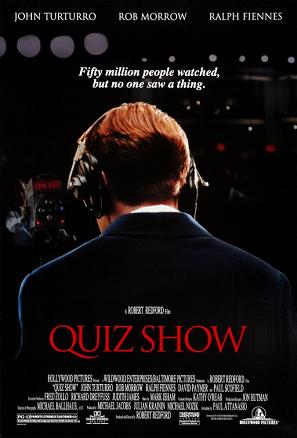
QuizShowPoster

Other entries in the 44 Days Of Paranoia:

  1. Clonus
  2. Executive Action
  3. Winter Kills
  4. Interview With The Assassin
  5. The Trial of Lee Harvey Oswald
  6. JFK
  7. Beyond The Doors
  8. Three Days of the Condor
  9. They Saved Hitler’s Brain
  10. The Intruder
  11. Police, Adjective
  12. Burn After Reading

It’s The 2014 Independent Spirit Nominations!


46-frances-ha

The nominees for the 2014 Independent Spirit Awards were announced earlier today.  While the Spirit noms aren’t exactly the most accurate of Oscar precursors (and the rules of Indie Spirit Awards are pretty much specifically designed to honor the type of low-budget films that are often ignored by the Academy), more than a few of the Spirit nominees are usually remembered when the Oscar nominations are announced.

The winners will be announced, by Patton Oswalt, on March 1st.

Myself, I’m just happy to see Frances Ha and Upstream Color’s Shane Carruth nominated.

Best Feature:
“12 Years a Slave”
“All Is Lost”
“Frances Ha”
“Inside Llewyn Davis”
“Nebraska”

Best Director:
Shane Carruth, “Upstream Color”
J.C. Chandor, “All is Lost”
Steve McQueen, “12 Years a Slave”
Jeff Nichols, “Mud”
Alexander Payne, “Nebraska”

Best Screenplay:
Woody Allen, “Blue Jasmine”
Julie Delpy, Ethan Hawke and Richard Linklater, “Before Midnight”
Nicole Holofcener, “Enough Said”
Scott Neustadter & Michael H. Weber, “The Spectacular Now”
John Ridley, “12 Years a Slave”

Best Female Lead:
Cate Blanchett, “Blue Jasmine”
Julie Delpy, “Before Midnight”
Gaby Hoffman, “Crystal Fairy”
Brie Larson, “Short Term 12″
Shailene Woodley, “The Spectacular Now”

Best Male Lead:
Bruce Dern, “Nebraska”
Chiwetel Ejiofor, “12 Years a Slave”
Oscar Isaac, “Inside Llewyn Davis”
Michael B. Jordan, “Fruitvale Station”
Matthew McConaughey, “Dallas Buyers Club”
Robert Redford, “All Is Lost”

Best Supporting Female:
Melonie Diaz, “Fruitvale Station”
Sally Hawkins, “Blue Jasmine”
Lupita Nyong’o, “12 Years a Slave”
Yolonda Ross, “Go for Sisters”
June Squibb, “Nebraska”

Best Supporting Male:
Michael Fassbender, “12 Years a Slave”
Will Forte, “Nebraska”
James Gandolfini, “Enough Said”
Jared Leto, “Dallas Buyers Club”
Keith Stanfield, “Short Term 12”

Best First Feature:
“Blue Caprice”
“Concussion”
“Fruitvale Station”
“Una Noche”
“Wadjda”

Best First Screenplay:
“In a World,” Lake Bell
“Don Jon,” Joseph Gordon-Levitt
“Nebraska,” Bob Nelson
“Afternoon Delight,” Jill Soloway
“The Inevitable Defeat of Mister and Pete,” Michael Starrbury

John Cassavetes Award:
“Computer Chess”
“Crystal Fairy”
“Museum Hours”
“Pit Stop”
“This Is Martin Bonner”

Best Cinematography:
Sean Bobbit, “12 Years a Slave”
Benoit Debie, “Spring Breakers”
Bruno Delbonnel, “Inside Llewyn Davis”
Frank G. DeMarco, “All Is Lost”
Matthias Grunsky, “Computer Chess”

Best Editing:
Shane Carruth & David Lowery, “Upstream Color”
Jem Cohen & Marc Vives, “Museum Hours”
Jennifer Lame, “Frances Ha”
Cindy Lee, “Una Noche”
Nat Sanders, “Short Term 12”

Best Documentary:
“20 Feet From Stardom”
“After Tiller”
“Gideon’s Army”
“The Act of Killing”
“The Square”

Best International Film:
“A Touch of Sin”
“Blue Is the Warmest Color”
“Gloria”
“The Great Beauty”
“The Hunt”

Robert Altman Award (given to a film’s director, casting director and ensemble cast)
“Mud”

Piaget Producers Award:
Toby Halbrooks & James M. Johnston
Jacob Jaffke
Andrea Roa
Frederick Thornton

Someone to Watch Award:
“My Sister’s Quinceanera,” Aaron Douglas Johnston
“Newlyweeds,” Shake King
“The Foxy Merkins,” Madeline Olnek

Truer Than Fiction Award:
“A River Changes Course,” Kalvanee Mam
“Let the Fire Burn,” Jason Osder
“Manakamana,” Stephanie Spray & Pacho Velez

44 Days of Paranoia #8: Three Days of the Condor (dir by Sydney Pollack)


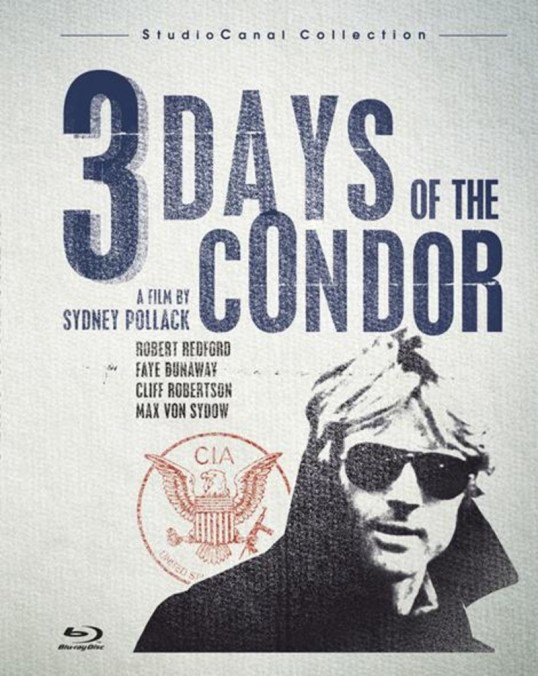
3DaysofTheCondor

When I first decided that I wanted to do the 44 Days of Paranoia, I went on Facebook and I asked my movie-loving friends to name some of their favorite conspiracy-themed films.  As the replies came flooding in, one thing that I quickly noticed was that a lot of them were naming films that had been made in the 1970s.

Usually, when I think about the 70s, I tend to assume that everyone in Texas was smoking weed in a high school parking lot, everyone in New York was snorting cocaine in Studio 54, and everyone in America was dancing nonstop.  And, to be honest, that doesn’t sound too bad to me.  If the 70s were just ten years straight of Dazed and Confused and Saturday Night Fever, then I would be the first one to hook up with anyone who could build a time machine.

However, the 70s were apparently also a very paranoid time.  When one looks over the most acclaimed and best-remembered films of the 70s, one is struck by the feeling that nobody trusted anyone and all official institutions were suspect.

Case in point: 1975’s Three Days of the Condor.

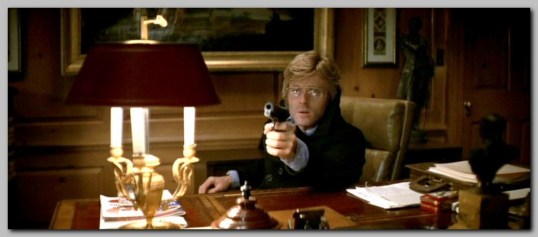
Robert Redford plays Joe Turner, a mild-mannered guy who works for the American Literary Historical Society in New York City.  The Society, however, is a CIA front and Turner’s job is to read cheap spy novels and analyze them to see if any real intelligence leaks might be found between the lines.  As the film opens, Turner arrives late for work.  He jokes with the chain-smoking secretary, shares a few curt words with his superior Martin, and flirts with fellow researcher Janice.  Then, Joe goes to lunch and, while he’s gone, Max Von Sydow shows up with a bunch of killers and guns down everyone else at the safe house.

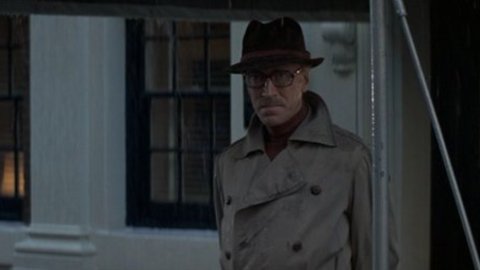
Max Von Sydow's courtly killer

Max Von Sydow’s courtly killer

The scene in which Von Sydow calmly kills all of Joe’s co-workers is one of the most disturbing that I’ve ever seen.  As directed by Sydney Pollack, the film’s violence comes in short, brutal bursts that are all the more nightmarish for lacking any of the flashy choreography that we, as viewers, have been conditioned to expect whenever we’re confronted by violent death on-screen.  Pollack also makes good use of Von Sydow’s kindly eyes and courtly manner, letting us know that, for him, murder is just a job.  Even though we’ve only spent a few minutes with Joe’s co-workers, we’ve still grown to like them and that makes Von Sydow’s matter-of-fact attitude all the more disturbing.

(It’s been a few days since I saw the film and I have to admit that I’m still haunted by the close-up of the burning cigarette still held in the dead secretary’s hand or the way that Martin’s toupee falls off his head after he’s shot.  Small as these details may seem, they stick in the mind and create a sickening feeling of life interrupted.)

When Joe returns from lunch, he finds all of his co-workers dead.  Fleeing the safe house, Joe calls the New York regional director of the CIA, Higgins (Cliff Robertson).  Higgins arranges for Joe to meet up with another agent and to be taken to safety.  However, when Joe arrives for the meeting, the other agent attempts to kill him.

Realizing now that the CIA specifically hit its own safe house and is now looking to kill him, Joe ends up kidnapping Kathy Hale (Faye Dunaway), a neurotic photographer, and forcing her to hide him while he desperately tries to figure out why he’s been targeted.

Thanks largely to Sydney Pollack’s thoughtful direction, Three Days of the Condor is an excellent, exciting, and thought-provoking thriller and, despite having been released close to 40 years ago, it features one major plot that’s probably even more relevant today than when the film was first released.  Redford and Dunaway both give excellent performances but the film really belongs to Max Von Sydow’s menacing and charming assassin.  Most of today’s “action” filmmakers could learn a lot from watching Three Days of the Condor.

end_office

The Oscar Season Begins With The Gotham Nominations!


UpstreamColor_KrisJeffEscalator_3000x1277

Can you guess what my favorite time of year is?

If you guessed November, you’re right!  My birthday is on November 9th, our own Dazzling Erin’s birthday is on November 24th, and then Arleigh’s birthday is on November 27th!  November is a big month here at the Shattered Lens.

My second favorite time of year?  October, of course!  How can you go wrong with so much horror?

And then, of course, my third favorite time of year is December because that’s when I get most of my presents.

Along with being my favorite three months of the year, another thing that all three of those months have in common is that they comprise what is known as Oscar Season.  Oscar Season is the period of time when the majority of the Best Picture contenders are released and all of the critic groups give out their awards in the hope of influencing the Academy’s nominations.  I love movies and I love awards so how can I not love Oscar Season?

Well, I’m happy to say that Oscar Season officially began earlier today when the nominations for the 23rd annual Gotham Independent Film Awards were announced.  The Gotham nominations aren’t exactly the best precursor of what’s going to be nominated in January but, nonetheless, they usually manage to include at least a few legitimate contenders.

This year, for example, Oscar front-runner 12 Years A Slave managed to collect the most Gotham nominations.  Personally, I’m just happy to see that my favorite film of 2013, Upstream Color, collected two nominations.

The Gothams will be awarded on December 2nd.

Here are the nominations:

Best Feature

12 Years a Slave

Steve McQueen, director; Brad Pitt, Dede Gardner, Jeremy Kleiner, Bill Pohlad, Steve McQueen, Arnon Milchan, Anthony Katagas, producers. (Fox Searchlight Pictures)

Ain’t Them Bodies Saints

David Lowery, director; Tony Halbrooks, James M. Johnston, Jay Van Hoy, Lars Knudsen, Amy Kaufman, Cassian Elwes, producers (IFC Films)

Before Midnight

Richard Linklater, director; Richard Linklater, Christos V. Konstantakopoulos, Sara Woodhatch, producers (Sony Pictures Classics)

Inside Llewyn Davis

Joel Coen and Ethan Coen, directors; Scott Rudin, Joel Coen, Ethan Coen, producers (CBS Films)

Upstream Color

Shane Carruth, director; Shane Carruth, Casey Gooden, Ben LeClair, producers. (erbp)


Best Documentary

The Act of Killing

Joshua Oppenheimer, director; Signe Byrge, Joshua Oppenheimer, producers (Drafthouse Films)

The Crash Reel

Lucy Walker, director; Julian Cautherly, Lucy Walker, producers (HBO Documentary Films)

First Cousin Once Removed

Alan Berliner, director and producer (HBO Documentary Films)

Let the Fire Burn

Jason Osder, director and producer (Zeitgeist Films)

Our Nixon

Penny Lane, director; Brian L. Frye, Penny Lane, producers (Cinedigm and CNN Films)


Bingham Ray Breakthrough Director Award

Ryan Coogler for Fruitvale Station (The Weinstein Company)

Adam Leon for Gimme the Loot (Sundance Selects)

Alexandre Moors for Blue Caprice (Sundance Selects)

Stacie Passon for Concussion (RADiUS-TWC)

Amy Seimetz for Sun Don’t Shine (Factory 25)


Best Actor

Chiwetel Ejiofor in 12 Years a Slave (Fox Searchlight Pictures)

Oscar Isaac in Inside Llewyn Davis (CBS Films)

Matthew McConaughey in Dallas Buyers Club (Focus Features)

Robert Redford in All Is Lost (Lionsgate and Roadside Attractions)

Isaiah Washington in Blue Caprice (Sundance Selects)


Best Actress

Cate Blanchett in Blue Jasmine (Sony Pictures Classics)

Scarlett Johansson in Don Jon (Relativity Media)

Brie Larson in Short Term 12 (Cinedigm)

Amy Seimetz in Upstream Color (erbp)

Shailene Woodley in The Spectacular Now (A24)


Breakthrough Actor

Dane DeHaan in Kill Your Darlings (Sony Pictures Classics)

Kathryn Hahn in Afternoon Delight (The Film Arcade and Cinedigm)

Michael B. Jordan in Fruitvale Station (The Weinstein Company)

Lupita Nyong’o in 12 Years a Slave (Fox Searchlight Pictures)

Robin Weigert in Concussion (RADiUS-TWC)

5-17-13-Upstream-Color

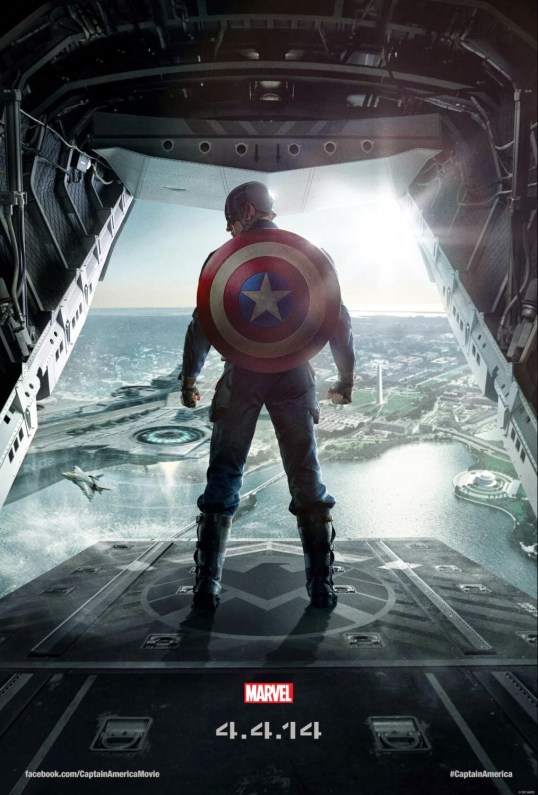
Trailer: Captain America: The Winter Soldier (Official)


captainamerica

We take a brief break from all things horror here at Through the Shattered Lens to bring to you the first official trailer for Marvel Studios second film in their Phase 2 of their Marvel Cinematic Universe.

Captain America: The Winter Soldier sees the return of Steve Rogers aka Captain America (The first Avenger) post-Battle of New York. He’s now an official member of S.H.I.E.L.D. but soon realizes that his 40’s ideals may not mesh well with the all-encompassing and super-secretive intelligence organization. From the look and feel of the trailer it looks like the film’s directors, Anthony and Joe Russo, are going for the conspiracy thriller tone for this new Captain America entry.

This is a good choice considering that the screenplay has been heavily influenced by Ed Brubaker’s run on the Captain America comics which also introduced the Winter Soldier of the film’s title.

Captain America: The Winter Soldier is set for a Spring, April 4, 2014, release date.

Scenes That I Love: The Candidate


(SPOILER WARNING)

It’s election day!  Today is the day that American citizens select the person that they’ll be angry with for the next four years.  Have you voted yet?  I did and, after I turned in my ballot, this guy at the polling place told me that I was the prettiest voter that he had seen all day.  Awwwwww!

Today’s scene that I love is particularly appropriate for Election Day.  In The Candidate (1972), Bill McKay (played by Robert Redford) runs for the U.S. Senate.  Directed in a documentary fashion by Michael Ritchie, The Candidate features excellent supporting performances from Melvyn Douglas and Peter Boyle and it’s one of the best films ever made about the American political system.

The scene below takes place at the end of the film, after the votes have been counted.  And, of course, the entire scene is a spoiler so don’t watch it if you haven’t seen The Candidate.

Scenes I Love: Spy Game (R.I.P. Tony Scott)


[SPOILERS]

The world of cinema lost one of it’s own with the death of British filmmaker Tony Scott (brother of filmmaker Ridley Scott). The circumstances of Tony Scott’s death has now been confirmed and could be found and read easily on most on-line news site.

This post is not to focus on Tony Scott’s death but on the life he lived and how his contribution to the art of filmmaking. Tony Scott has been a major influenc on me and those who grew up during the 80’s and 90’s. His films were huge commercial successes but also unique in that he tried to advance the genre of action filmmaking beyond the bullet point steps on how to make them that other filmmakers could never get beyond.

Tony Scott experimented and innovated with the action genre these last ten or so years to mixed results, but no one could ever say that his visual style was ever boring. Just like his brother Ridley, Tony Scott was a visual director first and foremost, but he also had a way in getting the most out of the cast he was given. It didn’t matter whether they were award-winning veterans like Denzel Washington or up-and-coming stars like Keira Knightley and Chris Pine. His action films weren’t just all about the visual and auditory overload his contemporaries only focused on. Tony Scott used his actors and got from them good to great performances which raised what would’ve been your typical action film to something more.

One of my favorite scenes Tony Scott ever did was also from one of his films I consider one of his best. It’s the last main sequence for his 2001 spy thriller, Spy Game, which starred Robert Redford and Brad Pitt. It was a film that was the passing of the torch from one blue-eyed star of Hollywood’s yesteryear to the current blue-eyed star. This film could’ve been all about action and explosions and techno-spy babble, but it instead became a great exercise in how to create an action-thriller that allowed for dialogue to become the engine that moved the action.

This scene is a favorite because it was the culmination of the machinations and secret plannings of Redford’s aging spymaster, Nathan Muir, to try and save his wayward protege in Brad Pitt’s Tom Bishop. While it would be best for people to watch this scene having watched the rest of the film beforehand, even just watching Redford take control of the room is a clue to how well Tony Scott allowed his actors to work the scene instead of forcing them to do it his way. It’s no wonder that Denzel Washington, considered to be the best actor of his generation, kept working with Tony over and over for the past decade.


Lisa’s Thoughts On 10 Best Picture Nominees That She’s Recently Seen: The Alamo, Becket, Elmer Gantry, Gaslight, Gladiator, Kramer Vs. Kramer,Marty, Of Mice and Men, Out of Africa, and Wilson


Since it’s Oscar weekend, I’ve been watching past and present Best Picture nominees like crazy.  Here are my thoughts on ten of them.

The Alamo (1960, directed by John Wayne, lost to The Apartment) — I’m a Texan which means that I’m legally required to watch both this film and the 2004 remake whenever they show up on television.  Both films are way too long and feature way too many characters speaking speeches as opposed to dialogue but, if I had to choose, I would have to go with the 1960 version of the story.  The original Alamo might be heavy-handed, poorly paced, and awkwardly acted but at least it’s sincere in its convictions.  I always cry when Richard Widmark dies.

Becket (1964, directed by Peter Glenville, lost to My Fair Lady) — This one is a personal favorite of mine.  The film is about the friendship and the eventual rivalry of King Henry II (Peter O’Toole) and Thomas Becket (Richard Burton).  Becket and Henry II start out the film drinking and whoring but eventually, Henry makes Becket Archbishop of Canterbury.  Becket, however, rediscovers his conscience and soon, Henry is famously asking, “Who will rid me of this troublesome priest?”  Becket is an exciting historical drama and Peter O’Toole is at his absolute best as the flamboyantly decadent Henry.

Elmer Gantry (1960, directed by Richard Brooks, lost to The Apartment) — Burt Lancaster plays Elmer Gantry, a traveling salesman and con artist who ends up falling in love with a saintly evangelist (played by Jean Simmons).  Gantry soon starts preaching himself and soon has an army of loyal followers.  However, Gantry’s new career is threatened when an ex-girlfriend-turned-prostitute (Shirley Jones) pops up and starts telling people how Gantry “rammed the fear of God into” her.  With its unapologetically corrupt lead character and its looks at how commerce and religion are often intertwined, Elmer Gantry makes a perfect companion piece to Paul Thomas Anderson’s There Will Be Blood.  Lancaster won an Oscar for his powerful and intense performance in the title role.

Gaslight (1944, directed by George Cukor, lost to Going My Way) — Evil Charles Boyer marries Ingrid Bergman and then attempts to drive her crazy.  Luckily, Inspector Joseph Cotten is on the case.  Gaslight is, in many ways, an old-fashioned melodrama but it’s still a lot of fun to watch.  Boyer is a suave devil and Joseph Cotten (one of my favorite of the old film actors) is a dashing hero.

Gladiator (2ooo, directed by Ridley Scott, won best picture) — One thing that I’ve recently discovered is that men love Gladiator.  Seriously, they obsess over this film and hold Russell Crowe’s surly gladiator up as some sort of mystical ideal and if you dare to say a word against it in their presence, be ready for big and long argument.  So, I won’t criticize Gladiator too much other than to say that the film has always struck me as being kinda overlong, that the CGI is occasionally cartoonish, and that, despite his fearsome reputation, Russell Crowe is a lot more interesting as an actor when he plays a thinker as opposed to a fighter.  Joaquin Phoenix, playing the Emperor Commodus, is a lot of fun to watch.

Kramer Vs. Kramer (1979, directed by Robert Benton, won best picture) — Dustin Hoffman plays a workaholic New York advertising executive who, after his wife Meryl Streep leaves him, ends up as a single father.  Kramer Vs. Kramer won best picture in 1979 but I have to admit that I didn’t care much for it.  Then again, I don’t think that I was the intended audience.  Instead, Kramer vs. Kramer appears to have been made to appeal to men frustrated with women wanting to have a life outside of being a domestic servant.  The film is well-acted though Hoffman’s character becomes insufferably smug once he gets comfortable with being a single father.

Marty (1955, directd by Delbert Mann, won best picture) — Lonely butcher Marty (Ernest Borgnine) romantically pursues a shy school teacher named Clara (Betsy Blair).  However, Marty’s friends and his family don’t like Clara and Marty soon finds himself having to choose between them.  Marty is a bit of an anomaly when it comes to best picture winners.  It’s not an epic, it doesn’t claim to solve any of the world’s problems, and it’s based on a tv show.  However, it’s also a sincerely sweet and heartfelt  film and also features excellent performances from Borgnine and Blair.

Of Mice and Men (1939, directed by Lewis Milestone, lost to Gone With The Wind) — “Tell me about the rabbits, George.”  Yes, it’s that film.  Smart and little George (Burgess Meredith) and big but simple Lenny (Lon Chaney, Jr.) are migrant farm workers who get a job working at ranch where Lenny ends up accidentally killing the rancher’s daughter-in-law.  Despite the fact that we all now tend to naturally smirk when we hear anyone say “Tell me about the rabbits, George,” Of Mice and Men remains an effective tear-jerker and both Meredith and Chaney give strong performances.

Out of Africa (1985, directed by Sydney Pollack, won best picture) — I recently sat down to watch this film because 1) my aunts love this film and get excited whenever they see that it’s going to be on TV and 2) Out of Africa was named the best film of the year I was born.  So, I sat down and watched it and then three or five hours later, I realized that the film was nearly over.  Anyway, the film is about a Danish baroness (Meryl Streep) who moves to a plantation in Africa and ends up having an affair with a British big game hunter.  The hunter is played by Robert Redford, who refuses to even try to sound British. (USA! USA! USA!)  Anyway, the film is pretty in that generic way that most best picture winners are but the film ultimately suffers because its difficult to care about any of the characters.  Streep acts the Hell out of her Danish accent but she and Redford (who seems to be bored with her) have absolutely no chemistry. I saw one review online that dismissed Out of Africa as a “big budget Lifetime movie” but Lifetime movies are a lot more fun.

Wilson (1944, directed by Henry King, lost to Going My Way) — Wilson is a two-and-a-half biopic about Woodrow Wilson and his presidential administration.  Wilson is well-played by Alexander Knox, who later showed up in countless exploitation films.  Wilson shows up on cable occasionally and every time I’ve seen it, I’ve had mixed feelings about it.  The critical part of me tends to be dismissive of this film because it’s way too long, extremely stagey, and it glosses over the fact that Wilson was a virulent racist who idolized the Ku Klux Klan.  However, as a secret history nerd, I can’t help but enjoy seeing a film where Vincent Price plays the Secretary of the Treasury.

Two Post Presidents Day Reviews: Frost/Nixon (dir. by Ron Howard) and All The President’s Men (dir. by Alan J. Pakula)


“Now Watergate doesn’t bother me/does your conscience bother you?” — Lynard Skynard, Sweet Home Alabama

As part of my continuing quest to see and review every film ever nominated for best picture, I want to devote my first post Presidents Day post to two films: 2008’s Frost/Nixon and 1976’s All The President’s Men.

During my sophomore year of college, I had a political science professor who, every day of class, would sit on his desk and ramble on and on and on about his past as a political activist.  He protested Viet Nam, he hung out with revolutionaries, he loved Hugo Chavez, and I assume he probably had a Che Guevara poster hanging in his office.  Whenever he wanted to criticize George W. Bush, he would compare him to Richard Nixon and then pause as if he was waiting for the class to all start hissing in unison.  He always seemed to be so bitterly disappointed that we didn’t.  What he, and a whole lot of other people his age, didn’t seem to understand was that Richard Nixon was his boogeyman.  The rest of us could hardly care less.

That was the same problem that faced the 2008 best picture nominee Frost/Nixon

Directed rather flatly by Ron Howard, Frost/Nixon tells the true story about how a light-weight English journalist named David Frost (played by Michael Sheen) managed to score the first televised interview with former President Richard Nixon (Frank Langella).  Both Frost and Nixon see the interviews as a chance to score their own individual redemptions while Frost’s assistants (played by Oliver Platt and Sam Rockwell) see the interview as a chance to put Richard Nixon on trial for Watergate, the Viet Nam War, and every thing else under the sun.  That may not sound like a very exciting movie but it does sound like a sure Oscar contender, doesn’t it?

I’ve always secretly been a big history nerd so I was really looking forward to seeing Frost/Nixon when it was first released in 2008.  When I first saw it, I was vaguely disappointed but I told myself that maybe I just didn’t know enough about Richard Nixon or Watergate to really “get” the film.  So, when the film later showed up on cable, I gave it another chance.  And then I gave it a chance after that because I really wanted to like this film.  Afterall, it was a best picture nominee.  It was critically acclaimed.  The word appeared to be insisting that this was a great film.  And the more I watched it, the more I realized that the world was wrong.  (If nothing else, my reaction to Frost/Nixon made it easier for me to reject the similarly acclaimed Avatar a year later.)  Frost/Nixon is well-acted and slickly produced but it’s not a great film.  In fact, Frost/Nixon is epitome of the type of best picture nominee that inspires people to be cynical about the Academy Awards.

Before I get into why Frost/Nixon didn’t work for me, I want to acknowledge that this was a very well-acted film.  By that, I mean that the cast (Frank Langella, Michael Sheen, Kevin Bacon, Sam Rockwell, and Oliver Platt) all gave very watchable and entertaining performances.  At the same time, none of them brought much depth to their characters.  Much like the film itself, nobody seems to have much going on underneath the surface.  Frank Langella may be playing a historic figure but, ultimately, his Oscar-nominated performance feels like just a typically grouchy Frank Langella performance.  Michael Sheen actually gives a far more interesting performance as David Frost but, at the same time, the character might as well have just been identified as “the English guy.”  In fact, a better title for this film would have been The Grouchy, the English, and the Superfluous.

For all the time that the film devotes to Rockwell and Platt blathering on about how they’re going to be giving Richard Nixon “the trial he never had,” this film is ultimately less about politics and more about show business.  Ron Howard devotes almost as much time to the rather boring details of how the interviews were set up and sold into syndication as he does to the issues that the interview brings up.  Unfortunately, for a movie about show business to succeed, the audience has to believe that the show is one that they would actually enjoy watching,  This, ultimately, is why Frost/Nixon fails.  While the filmmakers continually tell us that the Frost/Nixon interviews were an important moment in American history, they never show us.  Yes, everyone has hideous hair and wide lapels but, otherwise, the film never recreates the period or the atmosphere of the film’s setting and, as a result, its hard not to feel detached from the action happening on-screen.  For all the self-congratulatory claims made at the end of the film, it never convinces us that the Frost/Nixon interviews were really worth all the trouble.  Much like my old poli sci professor, Frost/Nixon never gives us a reason to care. 

For a far more interesting and entertaining look at the Watergate scandal, I would recommend the 1976 best picture nominee All The President’s Men.  Recreating the story of how two Washington Post reporters (played by Robert Redford and Dustin Hoffman) exposed the Watergate scandal that eventually led to Nixon’s resignation, All The President’s Men is the movie that Frost/Nixon wishes it could be.  Despite being made only two years after Watergate, All The President’s Men doesn’t take the audience’s interest for granted.  Instead, director Pakula earns our interest by crafting his story as an exciting thriller.  Pakula directs the film like an old school film noir, filling the screen with menacing shadows and always keeping the camera slightly off-center.   Like Frost/Nixon, All The President’s Men is a well-acted film with a bunch of wonderful 70s character actors — performers like Ned Beatty, Jason Robards, Jack Warden, Martin Balsam, and Robert Walden, and Jane Alexander — all giving effectively low-key and realistic performances.   The end result is a film that manages to be exciting and fascinating to those of us who really don’t have any reason to care about Richard Nixon or Watergate.

Both of these two films were nominated for best picture.  Frost/Nixon quite rightly lost to Slumdog MillionaireAll The President’s Men, on the other hand, lost to Rocky.