6 Quickies In A Row: American, Buck, Exporting Raymond, The Greatest Movie Ever Sold, Resurrect Dead, and Senna


As part of my continuing effort to get caught up on reviewing all of the movies that I’ve seen so far this year, allow me to offer up 6 very quick reviews of 6 very different documentaries that I’ve recently seen.  Two of these documentaries — Buck and Senna — are still playing in theaters.  The other four — American, Exporting Raymond, The Greatest Movie Ever Sold, Resurrect Dead— are all available On Demand and on DVD and Blu-ray.

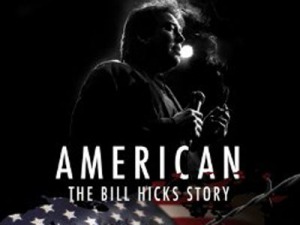
1) American: The Bill Hicks Story(dir. by Matt Harlock and Paul Thomas)

This heartfelt documentary about the life of the late comedian Bill Hick and it shows why his defiantly anarchistic humor is even more relevent today as it was during his heyday.  Here, his story is told through the use of cut-and-paste animation and it’s surprisingly poignant.  I didn’t know a thing about Bill Hicks before I saw this film but I was crying by the end of it.

2) Buck (dir. by Cindy Meehl)

Buck is a portrait of both the real-life horse whisperer Buck Brannaman and the various ranchers and horse owners who come to his various “clinics.”  The documentary covers Brannaman’s own abusive childhood and shows how he managed to turn the worst circumstances into something good.  The film works best when it just allows the charismatic Buck to talk about his life and his beliefs.  It’s less succesful when Hollywood phony Robert Redford pops up to talk about his feelings towards Buck.

3) Exporting Raymond (dir. by Phillip Rosenthal)

This is an interesting documentary in that it manages to be both entertaining and annoying at the same time.  Phillip Rosenthal was the creator of one of the most oddly durable sitcoms of all time, Everybody Loves Raymond.  In this documentary, which was directed by Rosenthal, we watch as he goes to Russia and deals with the resulting culture clash as he tries to adapt Raymond for Russian television. If you’re like me and you’re fascinated by all the behind-the-scenes production aspects of television and film,  then you’ll find a lot to enjoy in this documentary.  Unfortunately, Rosenthal himself is a bit too self-satisfied and, often times, he comes across like an almost stereotypical “ugly American.”  There’s something annoying about watching a wealthy, American television producer going over to a country that’s perpetually on the verge of self-destruction and then bitching about how ugly all the buildings look.

4) The Greatest Movie Ever Sold (dir. by Morgan Spurlock)

In The Greatest Move Ever Sold, Morgan Spurlock sets out to make the “Iron Man of documentaries,” a documentary that is completely and totally funded by product placement.  The documentary itself becomes about Spurlock’s attempts to find the corporate sponsors needed to make his documentary and the results are often hilarious and the film does succeed in getting you to think about how we are constantly bombarded with advertisements.  At the same time, this is also a good example of a “Who cares?” documentary.  Spurlock shows us how advertising works but he never really convinces us that it’s as big a problem as old toadsuckers like Ralph Nader and Noam Chomsky seem to think.  In many ways, Morgan Spurlock is a more likable version of Michael Moore in that he primarily makes documentaries for people who already agree with him. 

5) Resurrect Dead: The Mystery of the Toynbee Tiles (dir by John Foy)

This is a fascinating documentary about the mysterious Toynbee Tiles.  The Toynbee Tiles are, to quote Wikipedia, “messages of mysterious origin found embedded in asphalt of streets in about two dozen major cities in the United States and four South American capitals.”  That message is:

TOYNBEE IDEA
IN Kubrick’s 2001
RESURRECT DEAD
ON PLANET JUPITER.

These tiles first appeared in the 1990s and they’ve remained a perplexing unsolved mystery.  Nobody’s sure what the mysterious message means, who wrote the message, or even how the tiles were embedded into the asphalt.  This documentary is about not only the mysterious tiles but also the men who have, over the years, become obsessed with them and how that obsession has gone on to effect their own perception of reality.  The movie even offers up a plausible theory of who is responsible for the tiles.  Seriously, this is one of the most fascinating documentaries that I’ve ever seen.

6) Senna (dir. by Asif Kapadia)

Senna tells the life story of Ayrton Senna, a Brazilian formula one racer who was the world champion for three years before his own tragic death during a race.  I have to admit that I don’t know much about Formula One racing and, as a result, I had some trouble following Senna.  But Senna, seen in archival footage, is a charismatic and sometimes enigmatic figure and the racing footage is both exciting and, occasionally, frightening.

Lisa Marie Conspires Against The Conspirator (dir. by Robert Redford)


Robert Redford’s new historical drama The Conspirator is the first prestige picture of 2011 and it’s also (arguably) the worst film of the year so far. 

Oh, I hear you out there: “Really?  Worse than even Season of the Witch and Your Highness?”

Yes.  Way worse.  Season of the Witch and Your Highness might have been bad films but they knew they were bad.  They never truly aspired to be anything other than bad.  The problem with The Conspirator is that it’s obviously meant to be a great and important film.  It’s meant to shape public debate.  We’re supposed to feel like better people for having sat through it and the filmmakers are supposed to be better people just for having made it.  There’s a smugness to these type of self-styled “prestige pictures” that elevates their badness beyond anything to be found in Your Highness.  Indeed, if the makers of Your Highness appeared to be getting high off of herb than the people behind The Conspirator are high off of their own good intentions and that makes them for more annoying.

The Conspirator is based on the trial of Mary Surratt, the only woman to be arrested, tried, and subsequently executed as a result of the conspiracy to assassinate Abraham Lincoln.  The execution of Mary Surratt was controversial because 1) she was a civilian tried by a military tribunal, 2) the evidence against her was largely circumstantial (she owned the boarding house where the conspirators — including her son John Surratt — supposedly met), and 3) she was a woman.

Now, I have to confess that I’m secretly kind of a big history nerd and — unlike most of this film’s audience — I was already familiar with the story of Mary Surratt before I sat down in the theater.  The story of the Lincoln Conspiracy and the aftermath of the assassination is a really interesting one that is full of all sorts of weird twists and turns and odd characters all conspiring together and being mysterious.  It has all the makings of a great grindhouse film. 

However, director Robert Redford is too good to make a grindhouse movie.  No, he has something important to say and, as a result, The Conspirator becomes yet another one of those tedious films where every line of dialogue and every image is supposed to make us go, “Hey, they might be talking about post-Civil War America but, by golly, this is relevent to our post-911 lives!  OH MY GOD!”  So, we get Tom Wilkinson showing up randomly to give speeches about why military tribunals are the work of the devil.  Wilkinson is playing a historical figure Reverdy Johnson but they might as well have just renamed him “Prestige Actor Cast As Mouthpiece.”  And then Kevin Kline (as Secretary of War Edwin Stanton, though they should have just called him Dick Cheney) is there to go, “The whole world has changed.”  Meanwhile, the camera lingers over the conspirators being held in their dirty cells with bags over their heads (“OH MY GOD, HONEY!” we’re supposed to shout at our loved ones, “THAT’S JUST LIKE GUANTANAMO BAY!  WOW!”) and then we’re constantly reminded that Mary Surratt was a devout Catholic and that America in 1865 viewed Catholicism in much the same way that America views Islam in 2011. 

And, yeah, we get it and I’m not saying that director Redford is incorrect in his message or his beliefs.  However, a boring, heavy-handed film is just as boring and heavy-handed regardless of where its heart may lie.  The Conspirator is so busy being good for us that it forgets that it needs to entertain as well.  It preaches at us but it never bothers to engage us.

Mary Surratt is played by Robin Wright and she gives a good performance but because of the way the film is structured, Mary is never allowed to become anything more than a convenient symbol.  Instead, most of the film’s screen time is given to James McAvoy who plays the young lawyer who reluctantly defends her at trial.  Now, I love James McAvoy.  I’ve loved him ever since Atonement and that’s why it’s kinda heart breaking to see what a bad performance he gives here.  He’s good for the first ten minutes or so of the film but then he’s assigned to defend Ms. Surratt and I swear to God, he doesn’t stop yelling for the rest of the movie.  It’s not totally McAvoy’s fault.  As written, his character doesn’t really have much to do other than get mad.  As an actor, McAvoy can do anger quite well (again, check out Atonement) but here his anger just seems to spring out of nowhere.  At first, he is unconcerned about Mary Surratt and resentful that he has to defend her.  Then suddenly, he’s going all late style Al Pacino on everyone. 

Justin Long shows up as McAvoy’s best friend and seriously, if you’re making a historical drama, you don’t cast a guy who automatically makes you think, “He’s a PC and I’m a Mac.”  It’s not Long’s fault.  He’s a likable actor and he’s likable here even if his character doesn’t have any reason for being in the movie.  It’s just that typecasting is a bitch.  Alexis Bedel gets the thankless role of “rich snob who loses faith in her boyfriend” while Evan Rachel Wood, playing Mary Surratt’s daughter, is the only member of the cast who actually seems to truly connect with the material.

Regardless of the film’s historical accuracy, everything about The Conspirator feels false.   I don’t know if it was just the copy that I happened to see but the entire movie just looks like crap, a combination of soft-focus blurriness and respectfully muted colors.  This is another one of those films where the interior scenes are lit so that it appears that sunlight is just flooding in through the windows, making any white article of clothing just appear to throb with radiation.  Seriously, I had a headache after watching 30 minutes of this film.

As I said previously, there’s a great grindhouse movie waiting to be made out of this material.  For instance, did you know that Boston Corbett — the man who shot John Wilkes Booth — was also a religious fanatic who years earlier, in order to resist being tempted by a prostitute, castrated himself with scissors?  Also, did you know that Henry Rathbone — the army major who was sitting with Lincoln at the time of the assassination — was years later named Ambassador to Germany and, while in Germany, suffered a sudden nervous breakdown that led to him chopping off his wife’s head?  Also, one of the men who was arrested (though eventually released and never charged) for taking part in the conspiracy was Frances Tumblety who later moved to England where he would later become one of the many men suspected of being Jack the Ripper? 

And that’s just the tip of the iceberg.

However, The Conspirator is too busy being important to bother with being interesting.  While a grindhouse version of the story would have been both interesting and thought-provoking, The Conspirator is just a smug film that is never manages to live up to its own rather high opinion of itself.

10 Unacknowledged Christmas Classics


It’s December and that means that it’s the Christmas season and that can only mean an abundance of Christmas movies both at movie theaters and on television.  This Christmas movie has even become a genre in a way that the Thanksgiving movie or the Bank Holiday movie never has.

I love the Christmas season because 1) it’s one of the few times that there’s half a chance of seeing snow in Texas, 2) it gives me an excuse to bond with family, and 3) I get lots of presents.  And I enjoy Christmas movies so much that I can pretty much quote every line from It’s A Wonderful Life from memory.  I’ve even been known to enjoy the holiday movie marathons that pop up on the Lifetime Movie Network (especially if they feature Jeff Fahey and his bluer than blue eyes).  However, my favorite Christmas movie remains the original Miracle on 34th Street because Natalie Wood was one of my mom’s favorite actresses and Miracle was one of her favorite films.

However, in this post, I want to highlight 10 movies that have either been overlooked in the past or else films that, while properly acknowledged as classics, are rarely mentioned as being Christmas films.

1) In Bruges (2008)  — Two Irish hitman (Colin Farrell and Brendan Gleeson, both wonderful) hide out in Belgium during the Christmas holiday.  I love this film for so many reason but I have to specifically mention the performance of Ralph Fiennes, who plays an English crime boss with a foul mouth, a murderous personality, and a firmly held set of ethics.

2) Brazil (1985) — One reason why I love Terry Gilliam’s dark satire is because I actually have quite a bit in common with it.  We’re both often misunderstood, we’re both pretty to look at, and we were both released in 1985.  While Brazil is now often acknowledged as one of the best and most imaginative films of the last century, it’s often forgotten that all of this film’s action takes place over the Christmas season.  If you’ve never seen Brazil, see it now.  But be aware that you’ll never look at Michael Palin quite the same way again.

3) Three Days of The Condor (1975) — This espionage thriller (which stars a young, pre-Leatherface Robert Redford) skillfully contrasts cold-blooded violence with the bright outer happiness of the Christmas season.

4) Eyes Wide Shut (2000) — Stanley Kubrick’s final film is a tribute to MK-Ultra conspiracy theories and features rich people trying to be kinky during the Christmas season.  Nicole Kidman does redheads proud with her performance here and we get to see Tom Cruise smoke pot.

5) P2 (2007) — Rachel Nichols is trapped in a parking garage on Christmas Eve by a very scary Wes Bentley.  I have to admit that I’ve always had a morbid fear of either dying, getting seriously injured, or disappearing on Christmas Eve and therefore ruining the holiday for my family.  I guess that’s why P2 resonated with me.

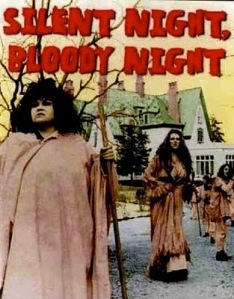
6) Silent Night, Bloody Night (1974) — No, this is not a killer Santa film.  This is the film where a bunch of former Warhol superstars (Ondine and Candy Darling being the most prominent) play a bunch of mental patients who massacre their doctors in a disturbing, sepia-toned sequence.  Years later, on Christmas, another former Warhol superstar — the wonderful Mary Woronov — comes to investigate.  This is actually a fairly good film from director Theodore Gershuny.

7) Christmas Evil (1980) — Now this is a killer Santa film.  Harry is a loser who works in a toy factory but he’s obsessed with Christmas because, when he was a child, he saw mommy humping Santa Claus.  (Isn’t that a song?)  So, one Christmas, Harry dresses up like Santa and goes around killing neglectful parents and others who don’t have the Christmas spirit.  This is an oddly sweet film with an ending that brought very sincere tears to my eyes.

8 ) To All A Good Night (1980) — Okay, this is another killer Santa film and it’s one of those early ’80s slashers where everyone dies because they’re total and complete idiots but two things distinguish this film from other Killer Santa slasher films: 1) it features not one but two psycho Santas and the movie was directed by David Hess, star of Last House On The Left and The House On The Edge of the Park.

9) The Silent Partner (1978) —  However, the greatest of all killer Santas is to be found in this Canadian crime thriller.  Christopher Plummer plays a psycho bank robber who — disguised as Santa — robs a bank.  Elliot Gould plays a lonely bank clerk who uses the robbery as an excuse to steal some cash for himself which leads to Plummer eventually coming after him.  Plummer makes the scariest Saint Nick ever!

10) Kiss Kiss Bang Bang (2005) — This is pure grindhouse brilliance, a dark comedy and a metafictional satire disguised an action movie.  Robert Downey, Jr. is a small-time criminal who accidentally becomes a film star and ends up investigating a murder with a hard-boiled PI (a surprisingly self-aware performance from Val Kilmer).  And it all takes place during the holidays.