Review: Captain America: Civil War (dir. by Anthony & Joe Russo)


Captain America Civil War

Captain America: The Winter Soldier wasn’t just a surprise hit for Marvel Studios and parent company Disney in 2014, it also showed the general public that there was more to Captain America than just a flag-waving symbol of America’s past glory. Captain America was a character that wasn’t the hip, wisecracking Tony Stark. He wasn’t the tortured soul in a monster’s body like Bruce Banner as the Hulk. He didn’t have the Shakespearean gravitas that was always lurking behind Thor and his complicated Asgardian family. No, Captain America was considered too straight-laced, blonde and blue-eyed goody two-shoes.

Captain America: The First Avenger focused on those very qualities. Steve Rogers was just a skinny, asthmatic young man from Brooklyn who wanted to do his part during World War II. It would be thanks to an experimental super-soldier serum that Steve Rogers’ body finally matched the inherent goodness and will to defend the little guy. For some, this initial introduction to Captain America was too hokey, but was entertaining enough. His next appearance in 2012’s game-changing superhero team-up The Avengers saw him be part tactician for a burgeoning superhero team and part comedy relief.

It would be with The Winter Soldier that the rest of the general public finally got to what comic book fans have known for years. This is a badass man, out of his time but always fighting the good fight and staying true to his convictions and principles. What was seen as hokey idealism became something of a beacon of selflessness and the moral center in a modern world that was steeped in shades of grey. It helped that writing team of Stephen McFeely and Christopher Markus (who wrote The First Avenger) finally found a pair of directors in the Russo Brothers (Anthony and Joe) who understood just what made Captain America relevant in this day and age of cynical anti-heroes.

It’s no surprise that the Russo Brothers were tasked with continuing the work they began in the Winter Soldier with McFeely and Markus with the film that would complete the Captain America trilogy in the Marvel Cinematic Universe. It would be quite a task in getting Captain America: Civil War off the ground and moving forward under all the weight of nearly every MCU superhero (minus Thor, Hulk and Nick Fury) in attendance and the introduction of two new ones to the universe.

Did the Anthony and Joe Russo pull off this massive undertaking? Or did they stumble to not just the huge cast and many storyline threads the way Joss Whedon did with the ambitious, but flawed The Avengers: Age of Ultron?

I’m happy to say that the Russo Brothers did better than succeed but may have just made the best film in the Marvel Cinematic Universe and proved that Marvel Studios head honcho Kevin Feige was correct in placing the brothers as the new captain of the massive thing called the Marvel Cinematic Universe as it enters Phase 3.

Captain America: Civil War is set just a year after the events of Age of Ultron where the Avengers barely defeated Tony Stark’s mad A.I. Ultron and it’s decision to wipe humanity from the planet. While the team did save the world from global extinction they also didn’t save everyone. there were still hundreds, if not, thousands of Sokovians who died during the battle. The same could be said for all the battles since the alien invasion over New York. The Avengers, led by Captain America, have saved the world from invading aliens, world-dominating terrorist group and killer A.I robots. Yet, the collateral damage caused by these battles have begun to weigh not just on some of the Avengers, but has made the governments of the world see the team as a sort of super-powered private military group who don’t obey international laws and borders. Yes, they’ve saved humanity many times from destruction, but at what cost.

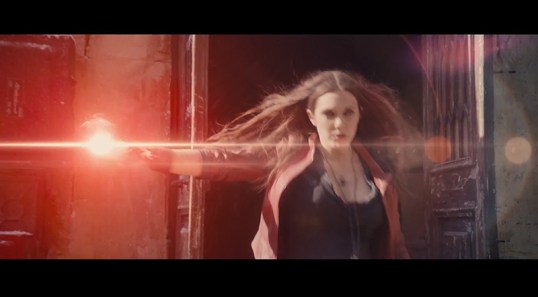
It’s during a battle early in the film as Captain America and his team stop the theft of a biological weapon in the city of Lagos, Nigeria that collateral damage and deaths rear it’s head once more as Wanda Maximoff (aka the Scarlet Witch) accidentally allows a suicide bomb vest explode too close to a nearby high-rise causing the deaths of several aide workers from Wakanda.

It’s from this event that the world finally have reached a tipping point and want to put the team under U.N. control with Tony Stark agreeing to the plan to help assuage his guilt over the deaths caused by him creating Ultron. Some of the team understands that government oversight that the Sokovian Accords puts on the team is the right thing to do. While others, especially Captain America, think it’s best to leave the team to continue to be their own masters instead of beholden to a bureaucracy whose agenda may not be conducive to saving lives.

It’s a subject matter that was explored in some fashion in an earlier superhero mash-up but one that failed to stick the landing. Yet, even this battle of differing ideologies between Captain America and Iron Man only becomes part of the foundation to the true narrative for Civil War. It’s the friendship between Captain America and Bucky aka the Winter Soldier and how the former must try to prove the latter innocent of another terrorist attack the world thinks he’s responsible for. Those Avengers who signed the Accords must now bring in Bucky dead or alive while Captain America with the help of those who didn’t sign try to prove his innocence and find the true architect of the terrorist bombing.

Captain America: Civil War succeeds where the earlier superhero film failed because of the groundwork laid down by the 12 previous films released to make up the current Marvel Cinematic Universe. From Iron Man all the way up to Age of Ultron, these twelve films flesh out the backstory and characters that make up these heroes. We’ve gotten to know what motivates them to risk their lives for the greater good, but we also see glimpses of the inter-personal conflicts that looks to tear the team apart from within.

There’s not enough that could be said about the masterful work done by the Russo Brothers in juggling the personalities of twelve superheroes (two getting their initial introduction to the MCU) and giving them enough to do in the film to make them relevant to the proceedings instead of just becoming glorified cameos. The actors playing these characters have had many films to own the roles and each and everyone hits it out of the park. The stand out from the veterans in the ensemble cast still remains Chris Evans and Robert Downey, Jr as Captain America and Iron Man, respectively. Yet, it would be the arrival of the two new heroes into the mix with Chadwick Boseman as the newly-crowned king of the technologically-advanced nation of Wakanda, T’Challa and Tom Holland as the teenage chatterbox and dumpster diving tech genius Peter Parker aka Spider-Man.

Boseman as the Black Panther adds a certain level of gravitas and regal fury to the proceedings which balances the edge between serious to comedic. His Black Panther has his own agenda in getting involved in this intra-familial squabble. He has his own agenda and if it means siding with Iron Man against Captain and his team then he would do so if it succeeds in helping him finish his mission. It helps that he looks damn cool in what has to be the best superhero costume thought up by the designers in Marvel Studios.

It would be Tom Holland as the young Peter Parker and Spider-Man who steals the show whenever he’s on-screen. This is the Peter Parker and Spider-Man that comic book fans have been waiting for. While Tobey Maguire and Andrew Garfield succeeded in portraying some of the character’s personality, they could never fully capture what made Spider-Man such a favorite amongst comic book readers. This Spider-Man is geeky and not at all hip and cool, but with a sense of right and wrong that comes having great power means shouldering the responsibility to use it for good.

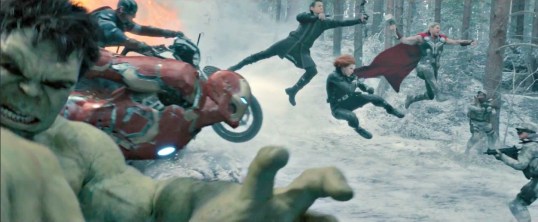
Captain America: Civil War, with its exploration of many profound ideas and themes, is still a superhero film and a tentpole blockbuster at that and audiences still want to see the action up on the big screen. Boy, does this film have action and enough of them to spare. The action scenes range from the grounded hand-to-hand fighting the Russo Brothers used to great effect in The Winter Soldier (this time around with the help from Chad Stahelski and David Leitch, directors of John Wick to provide 2nd Unit Directing help) up to the superhero battle that raises the bar on such things set at an evacuated airport in Leipzig, Germany.

This 6-on-6 tête-à-tête between friends and colleagues takes the climactic battles in both Avengers films and does them better. With each hero using their abilities to great effect in conjunction with their allies and against those they are fighting. There was never a time during this near on 20-minute action scene did it ever get confusing. Many filmmakers doing superhero (or just plain old action films) could learn a thing or two from how the Russo Brothers and 2nd Unit directors Spiros Razatos, Stahelski and Leitch choreographed and filmed all the action sequences in Civil War. It was near-perfect with only wishful thinking that Gareth Evans from The Raid films could’ve been asked to help out to make things perfect.

As huge and bombastic the film gets with this airport fight, it would be the final throw down between Captain America and Iron Man at the end of the film that we get the emotional heft the film needs to keep itself from becoming just another loud and explosive superhero film. This fight becomes personal and shows how fights between close friends become the most brutal and heartbreaking. Neither combatants are wrong about their stances in the fight, but they’re also wrong in not being able to think things through. These two alpha males who have a  friendship full of respect but also combativeness throughout the years of the MCU that finally explodes into all-out war when a tragic secret from both Tony Stark’s and Bucky’s past come to light.

It’s a fight that has no winners and for a superhero film that is a major change from the usual narrative (especially within the MCU storytelling playbook). The film ends with the very team created to save the world from all threats even more unsure of their place in the ever-changing and ever-judging world. It’s a bold move by Marvel Studios to start their Phase 3 that would culminate in the battle to end all battles with the two Avengers: Infinity War films (soon to be retitled) which happen to be under the master-class guiding hands of the Russo Brothers in the directors’ chair and the writing duo Stephen McFeely and Christopher Markus.

In the end, Captain America: Civil War manages to capture not just what made comic books and films adapted from them fun and exhilarating, but also able to tackle some serious ideas and themes both existential and personal. It just goes to show that one doesn’t need to sacrifice one to have the other. One can have serious and dark but also be fun. It’s a balance that’s difficult to do, but when the people involved in creating such a story stick the landing then we a classic in the making. It bodes well for the rest of the films in Phase 3 to have such a great beginning, but also raises the bar for the other filmmakers following in the wake of what Anthony and Joe Russo have concocted. Let’s  hope they are all up to the task.

The Final Captain America: Civil War Swings By


Captain America Civil War

We are just two weeks away from the release of Batman v. Superman: Dawn of Justice and just a week from the premiere of Netflix’s Daredevil Season 2. What better way to remind people that there is another hero vs hero film coming out to start off the summer than with the final full trailer for Captain America: Civil War.

One things which distinguishes this latest and final trailer happens right at the very end. One could almost say that this was the trailer’s post-credit sequence.

Captain America: Civil War swings into action on May 6, 2016.

Captain America: Civil War Super Bowl TV Spot “Rivals”


Captain America - Civil War

It’s that time of the year when the country (to some extent the world) witness a sporting event that’s become almost ritualistic in how it gathers it’s audience. I’m talking about the yearly Super Bowl pitting the NFC champions against the AFC champs. Even if one wasn’t a huge fan of football, the Super Bowl has become such an event day not just for the game, but the half-time show. Then there are the commercials which has become just as anticipated as the game itself.

It’s this day that we get major studios plying their upcoming films for the summer blockbuster season and Disney is not a studio to let this day pass without showing something new regarding one of their biggest films this summer.

The first Captain America: Civil War trailer a couple months ago got everyone anticipating the film. Now we have the Super Bowl TV spot to fan the flame of hype for the film that dared to go up against Batman v. Superman: Dawn of Justice when they both had the same release date: May 6, 2016. The latter film blinked and opted to dominate the film landscape a couple months earlier.

This tv spot emphasizes the fractured nature of Avengers that lends to the film’s title of civil war.

So, which team are you on? Are you on Team Captain America? Or are you more the Team Iron Man?

I guess, we’ll find out this May 6, 2016.

Captain America: Civil War Is Coming


Captain America - Civil War

“A Titan against a Titan!”

Captain America: Civil War is the opening shot of Marvel’s Phase 3 for their cinematic universe. The huge success of Captain America: The Winter Soldier, both in the box-office and among critics, even convinced Marvel Studios and Disney to pit this upcoming sequel against DC’s own Batman v. Superman: Dawn of Justice. One of the two had to blink and move their release date and it ended up being DC.

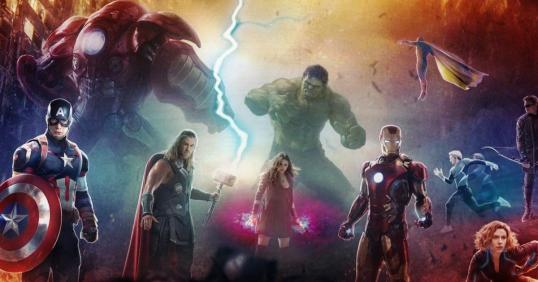
In what many have called Avengers 2.5 due to the amount of Marvel superheroes involved in the story, Captain America: Civil War will look to explore the consequences of the collateral damage incurred by Captain America and his teammates in the Avengers whenever they fight it out in public. The destruction of Midtown Manhattan during the Battle of New York was the start. The wreckage of three advanced SHIELD Helicarriers in the Potomac was another. Yet, it looks like the destruction of the capital city of Sokovia during the team’s fight against Ultron may have been the straw that broke the global governments’ back.

So, will Tony Stark and his team of Pro-Registration win out over the out-gunned Team Captain America who do not want to be beholden to the agendas of any world government?

We shall find out when Captain America: Civil War drops on everyone on May 6, 2016.

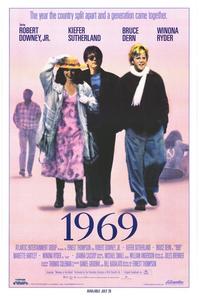
Embracing the Melodrama Part II #81: 1969 (dir by Ernest Thompson)


NineteensixtyninefilmIn 1988, the same year that he was forcing Michael J. Fox to snort cocaine in Bright Lights, Big City, Kiefer Sutherland played a far different role in the film 1969.

As you might guess from the film’s title, 1969 takes place in 1969.  Scott (Kiefer Sutherland) and Ralph (Robert Downey, Jr.) have just graduated from high school and are facing a future that involves either going to college or going to Vietnam.  Scott’s older brother, Alden (Christopher Wynne), has already enlisted in the army and has made their father, Cliff (Bruce Dern), proud in a way that Scott knows he will never be able to match.

So, Scott and Ralph make plans to go to college together and basically stay there until the war ends.  But, needless to say, things don’t work out as perfectly as Scott assumed that they would.  Scott and Ralph spend the summer on a road trip, during which time they meet the usual collection of hippies and fascists who always populate films like this.  They also discover that they have less in common than they thought.  Scott is an idealist who is convinced that he can change the world.  Ralph is far more fatalistic, a cynic who hides his pain behind a constant stream of sarcasm.

When Ralph is kicked out of school (and loses his draft deferment as a result), Alden is killed in Vietnam and Scott sees his father in a potentially compromising position with Ralph’s mother (Joanne Cassidy) (on the night of the moon landing no less!), the disillusioned Scott feels that he has to take action.  With the help of Ralph and Ralph’s sister, Beth (Winona Ryder), Scott breaks into the local draft office and tries to destroy all the records.

Now, if you guessed that the police arrive and that Scott and Beth eventually find themselves in a van, driving for the Canadian border, then you’ve probably seen countless other films that were set in the same year as 1969…

1969 is a rather predictable film but, at the same time, it’s likable in much the same way that a rerun of Everybody Loves Raymond is likable.  It’s not something you really need to watch but, if you do watch it, you won’t necessarily be filled with regret.  I imagine that one reason why 1969 tends to show up on networks like Antenna and This TV so much is precisely because it is such a thoroughly inoffensive little movie.

The film also features some above average performances.  It’s not surprising that Robert Downey, Jr. and Winona Ryder both give good performances because, to a large extent, their characters mirror their own public personas.  But, considering that he’s best known for playing Jack Bauer in 24, it’s still somewhat surprising to see a much younger Kiefer Sutherland playing such an essentially gentle character and being totally convincing in the role.  (He already had that sexy growl of a voice, however.)  And finally, the film’s best performance comes from Bruce Dern.  Eternally befuddled and confused by the changes around him, Cliff is ultimately the film’s most sympathetic character, even if he wasn’t originally meant to be.

And needless to say, considering that the film is called 1969, it’s got a great soundtrack!


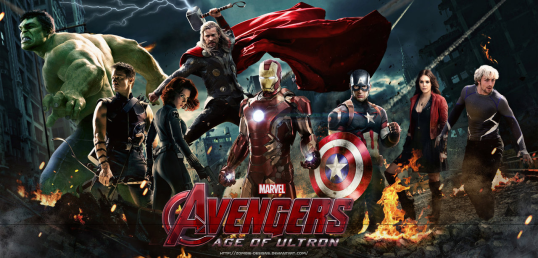
Film Review: The Avengers: Age of Ultron (dir by Joss Whedon)


AGU

In some ways, I think I may be both the worst and the best possible person to review the latest installment of the Marvel Cinematic Universe, largely because I’ve seen all the films but I don’t know much about the comics on which they are based. As a result, I can judge each film solely by what is on screen but, at the same time, I know that there are a lot of references that go straight over my head. For instance, when we saw Avengers: Age of Ultron earlier tonight, I had to get my boyfriend to explain to me why certain members of the audience got so excited when Iron Man mentioned an African country called Wakanda. But what’s important is that I would have still enjoyed Age of Ultron even if I had never known why Wakanda was important. The MCU has, so far, managed to maintain a balance between keeping the Marvel fans happy while also remaining accessible to viewers like me. The MCU has created its own separate reality, one that even someone like me can feel comfortable exploring and reviewing.

However, before I get around to giving you my feelings on Age of Ultron, let’s be honest about something.

There are a lot of critics out there who have been waiting for a chance to attack the latest installment of the Marvel Cinematic Universe. Some of them have disliked the MCU since the very first Iron Man film. They have been lone voices in the wilderness, arguing that the entire franchise is overrated and, in some cases, creatively destructive. Much like the Old Testament prophets, they continue to warn of the future while other filmgoers ignore the pillar of fire forming over the nearest theater. And then there are other critics who have praised previous MCU efforts but have never really been comfortable about it. These are the critics who resent having to write positively about a mere genre film. These are the critics who still haven’t gotten over just how good Guardians of the Galaxy truly was. They have been waiting for an MCU misfire so that they can do their penance for suggesting that Robert Downey, Jr. deserved Oscar consideration for Iron Man 3.

avengers-age-of-ultron-trailer-hulkbuster

These critics are going to watch The Avengers: Age of Ultron and they are going to pounce. They are going to point out that Age of Ultron puts too much emphasis on action over nuance and, as impressive as the CGI may be, it’s impossible to deny that Age of Ultron almost robotically follows the classic action movie formula. They’ll point out that none of The Avengers really develop as characters over the course of the film. Depending on how they’ve felt about the MCU up to this point, some of them will point out that Age of Ultron feels a bit like a step backwards. It doesn’t have the political subtext of Iron Man 3 or Captain America: The Winter Soldier. It lacks the satiric edge of Guardians of the Galaxy. And, ultimately, it’s just not as much fun as the first Avengers film.

And they won’t necessarily be wrong. I mean, let’s be honest. I write this as someone who has enjoyed (and, in some cases, loved) the previous MCU films. Avengers: Age of Ultron is not going to be remembered as one of the best of the MCU films. This is a flawed film that never reaches the heights of the original Avengers. All of the criticisms listed above are perfectly valid.

But, with all that in mind, I still enjoyed Avengers: Age of Ultron and I happily recommend it without a bit of hesitation.

film-review-avengers-age-of-ultron

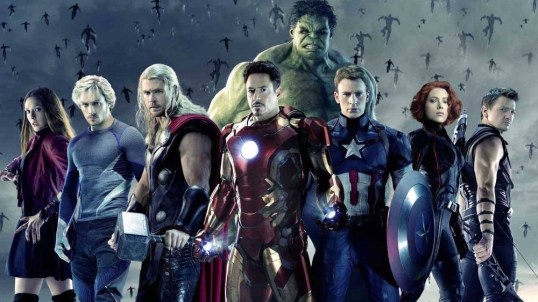
Age of Ultron opens with the Avengers attacking a HYDRA base and we quickly discover that the Avengers are exactly the same as we remembered them. Iron Man (Robert Downey, Jr.) is cocky, self-destructive, and torn by guilt over his past as a weapons manufacturer. Captain America (Chris Evans) is earnest and idealistic. Thor (Chris Hemsworth) is … well, he’s a God. Bruce Banner (Mark Ruffalo) is scared of what he becomes when he transforms into the Hulk. Clint Barton (Jeremy Renner) is still shooting arrows and feeling out-of-place. Natasha (Scarlett Johansson) is still flirty, enigmatic, and apparently in love with Bruce Banner.

ultron

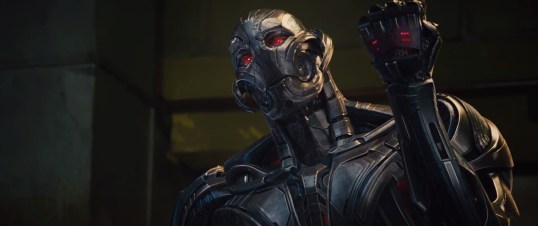
One of the reoccurring themes of the MCU is that whenever Iron Man tries to make the world a better place, he instead ends up nearly destroying it. His latest attempt leads him to create Ultron (voiced quite chillingly by James Spader), a robot who has Tony’s personality and who has decided that the only way to bring about “peace in our time” is to destroy all of humanity. Ultron’s motives are as close as this film gets to any sort of thematic subtext. Ultron stands in for every ideology that would take away a person’s individual freedom in the name of the greater good. Age of Ultron doesn’t explore this subtext as much as I would have liked it to but, at the same time, I appreciated that it was at least there. That’s more than you can say for a film like Man of Steel.

Ultron is not the only new character to show up. Andy Serkis has a small role as a character that will undoubtedly be a villain in a future MCU film. After voicing JARVIS in several films, Paul Bettany finally gets to actually appear onscreen. I can’t talk too much about his character without spoiling the film but Bettany makes good use of his limited screen time.

And then there’s Aaron Taylor-Johnson and Elizabeth Olsen. Previously, they played lovers in Godzilla. In Age of Ultron, they play siblings who just seem like lovers. Taylor-Johnson is Pietro, who can move at super speeds. Elizabeth Olsen is Wanda, whose powers are a bit less defined but mostly seem to consist of being able to do whatever the script needs her to do at the time. (As the film explains it, “He’s fast, she’s strange.”) In the past, I’ve had mixed feeling about Taylor-Johnson. I thought he was brilliant in Nowhere Boy and Anna Karenina but, in other films, I found him to be excessively mannered and a little dull. But, in the role of Pietro, Taylor-Johnson really shines, achieving a good balance of arrogance and vulnerability. As for Elizabeth Olsen, she is perfectly cast as the angry but sensitive Wanda. At the very least, Age of Ultron better serves both of them than they were served by Godzilla.

avengers-ultron-trailer2

(Add to that, Wanda and I share similar tastes in fashion, which will make it easy for me to dress up as her for Halloween.)

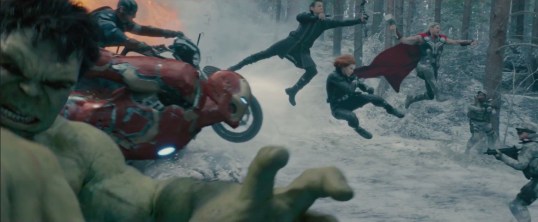
Director Joss Whedon does a good job with the film’s many battle scenes, especially the final one. And, as someone who hated the mindless destruction of Man of Steel, I appreciated that, as characters, the Avengers spent as much time trying to protect innocent bystanders as they did battling Ultron and his henchrobots. At the same time, it was hard not to feel that the film’s emphasis on action did sacrifice some of the character moments that have made other MCU films so memorable. Early on in the film, there’s a great scene where the Avengers simply hang out at a party. They dance, they dink, they laugh, and eventually, they all take turns attempting to pick up Thor’s hammer. It’s a fun scene because it brings these heroes back down to Earth and, for a few minutes, we get to relate to them in the way that we would relate to our best friends. Age of Ultron could have used more scenes like that.

lots-of-new-avengers-age-of-ultron-character-details

That said, the cast of Age of Ultron provides enough old fashioned movie star charisma that they overcome the script’s shallow characterization. In many ways, it’s like one of the old Frank Sinatra rat pack movies, where you forgive a lot because you enjoy hanging out with the cast. They’re just fun to watch. Robert Downey, Jr., Chris Evans, Chris Hemsworth, Scarlett Johansson, Jeremy Renner, and Mark Ruffalo; at this point they are so identified with these characters that the actors and their roles might as well be interchangeable.

(And, at this point, if it were revealed the Robert Downey, Jr. owned a suit of armor, would you really be surprised?)

Ultimately, Age of Ultron feels a lot like one of the less acclaimed James Bond films. It’s flawed, it’s imperfect, but fans of the franchise will find a lot to enjoy. Much as you wouldn’t introduce someone to James Bond by showing him Moonraker, you probably wouldn’t want to introduce someone to the MCU by showing him or her Age of Ultron. If, somehow, you’ve managed to exist without ever seeing any other MCU films, then Age of Ultron will leave you confused and wondering what the big deal is. But, if you’re already a fan of the franchise, you’ll find a lot to enjoy here.

And, flaws and all, you’ll walk out of the theater looking forward to the next installment.

the-avengers-2-age-of-ultron-cast-photos

A Vision of the Avengers: Age of Ultron for the Third Time


AgeofUltron

The third and, hopefully, final trailer for Avengers: Age of Ultron was unlocked today after a Twitter event which had millions of people tweeting the hashtag #AvengersAssemble. One has to give it up to the Marvel marketing machine. They know how to get the public clamoring for more when it comes to their films.

All that could be said has been said about this film. Just sit back and enjoy (or critique) one of the most highly-anticipated films of the year.

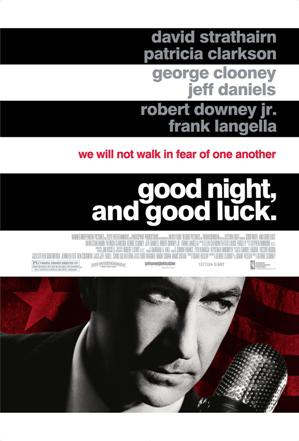
Shattered Politics #76: Good Night, and Good Luck (dir by George Clooney)


Goodnight_posterOne of my favorite episodes of South Park is called Smug Alert!  As you may remember, this is the episode where the citizens of South Park all buy hybrid cars and end up getting so self-satisfied that a dangerous cloud of smug forms over the town.  At the same time, another smug storm is racing across the United States.  This smug storm was created by the speech that George Clooney gave when he won the Oscar for Syriana.  When those two clouds of smug meet, it’s the perfect storm.  It also ends up destroying San Francisco.

The same year that Clooney was named Best Supporting Actor for Syriana, he was also nominated for directing the 2005 best picture nominee, Good Night, and Good Luck.  In his speech, Clooney specifically said that he felt he was winning supporting actor to make up for not winning director and proceeded to give the speech that he would have given if he had won director.

And looking back, I think that we do have to admit that it was a very smug speech.

Fortunately, Good Night, and Good Luck has aged better than Clooney’s speech.

I do have to admit that, when I recently rewatched Good Night and Good Luck, I was a little concerned.  I always manage to forget that the film starts on a really bad note.  The year is 1958 and news anchorman Edward R. Murrow (played by David Strathairn) is receiving an award.  As Murrow stands behind the podium, he proceeds to give a long and self-righteous speech about how television should be used not to entertain but to educate as well.  And, quite frankly, he comes across like such a pompous blowhard that I was dreading the idea of having to spend the next 90 or so minutes with him.

But then, fortunately, the film entered into flashback mode and, until the final few minutes of the film, we didn’t have to listen to anymore of Murrow’s speech.  The majority of Good Night and Good Luck takes place in 1953.  U.S. Sen. Joseph McCarthy (who appears in archival footage throughout the film) has declared that he has the names of communists who hold important positions in both the government and the media.  Murrow and his producer, Fred Friendly (George Clooney) defy the corporate overlords of CBS and bravely investigate and challenge McCarthy’s claims.  McCarthy and his henchmen respond by trying to smear both Murrow and one of his reporters (Robert Downey, Jr.) as a communists.  As always seems to happen in films about McCarthyism, another supporting character reacts to the change of communism by committing suicide.  And, in this particular vision of the fight against Joseph McCarthy, Edward R. Murrow and the media save America.

Of course, if you actually make the effort to learn history, you’ll discover that it wasn’t just Edward R. Murrow who stood up to McCarthy.  In fact, you’ll discover that Murrow stood up to McCarthy after several other prominent people — on both sides of the political divide — had already done so.  If anything, the real-life Murrow seems to have more in common with pompous scold seen at the beginning and end of the film, as opposed to the one that we see standing up to McCarthy.

One can very legitimately debate whether or not Murrow deserves all of the credit that he’s given in this film.  Still, the film does make a larger and very important point.  We, as Americans, have to always be on guard against witch hunts and against demagogues and the forces of fear and paranoia that are always trying to shape our politics.  And, whether or not Murrow was a hero or just a bystander, one cannot deny that the larger message of Goodnight, and Good Luck remains as relevant today as when the film was originally released.

Judging from some of his other films — The Monuments Men and the Ides of March — I don’t particularly feel that George Clooney is that good of a director.  But he does do a good job with Good Night and Good Luck.  (In fact, he does such a good job that you can’t help but feel that it’s the exception to the rule as far as Clooney the director is concerned.)  Filmed in wonderful black-and-white and full of good performances, Good Night, and Good Luck remains surprisingly watchable.

Just avoid any George Clooney Oscar speeches while watching it.  San Francisco has never recovered.

Avengers: Age of Ultron (2nd Trailer)


AVENGERS-ULTRON-POSTER

“Everyone creates the thing they dread.” — Ultron

New Avengers: Age of Ultron trailer has dropped during the inaugural College Football Playoff Championship game between Oregon and Ohio State.

For all the underwhelming reaction that the Ant-Man teaser trailer got after it premiered last week it looks like this latest trailer for Avengers: Age of Ultron just builds on the immense buzz and hype created by the leaked trailer from November 2014.

No need to say more. Just watch the new hotness as we wait for May 1, 2015 when Avengers: Age of Ultron shows us something beautiful.

Trailer: Avengers: Age of Ultron (Extended)


AVENGERS-ULTRON-POSTER

“I know you mean well. You want to protect the world, but you don’t want it to change. There’s only one path to peace…your extinction.” — Ultron

Marvel has released a new extended version of the teaser trailer they released a couple weeks ago. While it’s pretty much similar to the first teaser trailer this extended version has a new intro with Ultron in his initial form confronting the partying Avengers in Avengers Tower. The voice-over by James Spader as Ultron also sounds much different in this trailer than the first. We also get more lingering shots of all the Avengers from Iron Man all the way to Hawkeye rather than the rapid-fire cuts we saw in the first teaser.

May 2015 cannot come soon enough.

Avengers: Age of Ultron is set for a May 1, 2015 release date in North America.