Icarus File No. 11: The Bonfire of the Vanities (dir by Brian De Palma)


In 2021, I finally saw the infamous film, The Bonfire of the Vanities.

I saw it when it premiered on TCM.  Now, I have to say that there were quite a few TCM fans who were not happy about The Bonfire of the Vanities showing up on TCM, feeling that the film had no place on a station that was supposed to be devoted to classic films.  While it’s true that TCM has shown “bad” films before, they were usually films that, at the very least, had a cult reputation.  And it is also true that TCM has frequently shown films that originally failed with audiences or critics or both.  However, those films had almost all been subsequently rediscovered by new audiences and often reevaluated by new critics.  The Bonfire of the Vanities is not a cult film.  It’s not a film about which one can claim that it’s “so bad that it’s good.”  As for the film being reevaluated, I’ll just say that there is no one more willing than me to embrace a film that was rejected by mainstream critics.  But, as I watched The Bonfire of the Vanities, I saw that everything negative that I had previously read about the film was true.

Released in 1990 and based on a novel by Tom Wolfe, Bonfire of the Vanities stars Tom Hanks as Sherman McCoy, a superficial Wall Street trader who has the perfect penthouse and a painfully thin, status-obsessed wife (Kim Cattrall).  Sherman also has a greedy mistress named Maria (Melanie Griffith).  It’s while driving with Maria that Sherman takes a wrong turn and ends up in the South Bronx.  When Sherman gets out of the car to move a tire that’s in the middle of the street, two black teenagers approach him.  Maria panics and, after Sherman jumps back in the car, she runs over one of the teens.  Maria talks Sherman into not calling the police.  The police, however, figure out that Sherman’s car was the one who ran over the teen.  Sherman is arrested and finds himself being prosecuted by a power-hungry district attorney (F. Murray Abraham).  The trial becomes the center of all of New York City’s racial and economic strife, with Sherman becoming “the great white defendant,” upon whom blame for all of New York’s problems can be placed.  Bruce Willis plays an alcoholic journalist who was British in the novel.  Morgan Freeman plays the judge, who was Jewish in the novel.  As well, in the novel, the judge was very much a New York character, profanely keeping order in the court and spitting at a criminal who spit at him first.  In the movie, the judge delivers a speech ordering everyone to “be decent to each other” like their mothers taught them to be.

Having read Wolfe’s very novel before watching the film, I knew that there was no way that the adaptation would be able to remain a 100% faithful to Wolfe’s lacerating satire.  Because the main character of Wolfe’s book was New York City, he was free to make almost all of the human characters as unlikable as possible.  In the book, Peter Fallow is a perpetually soused opportunist who doesn’t worry about who he hurts with his inflammatory articles.  Sherman McCoy is a haughty and out-of-touch WASP who never loses his elitist attitude.   In the film, Bruce Willis smirks in his wiseguy manner and mocks the other reporters for being so eager to destroy Sherman.  Hanks, meanwhile, attempts to play Sherman as an everyman who just happens to live in a luxury penthouse and spend his days on Wall Street.  Hanks is so miscast and so clueless as how to play a character like this that Sherman actually comes across as if he’s suffering from some sort of brain damage.  He feels less like a stockbroker and more like Forrest Gump without the Southern accent.  There’s a scene, written specifically for the film, in which Fallow and Sherman ride the subway together and it literally feels like a parody of one of those sentimental buddy films where a cynic ends up having to take a road trip with someone who has been left innocent and naïve as result of spending the first half of their life locked in basement or a bomb shelter.  It’s one thing to present Sherman as being wealthy and uncomfortable among those who are poor.  It’s another thing to leave us wondering how he’s ever been able to successfully cross a street in New York City without getting run over by an angry cab driver.

Because the film can’t duplicate Wolfe’s unique prose, it instead resorts to mixing cartoonish comedy and overwrought melodrama.  It doesn’t add up too much.  At one point, Sherman ends a dinner party by firing a rifle in his apartment but, after it happens, the incident is never mentioned again.  I mean, surely someone else in the apartment would have called the cops about someone firing a rifle in the building.  Someone in the press would undoubtedly want to write a story about Sherman McCoy, the center of the city’s trial of the century, firing a rifle in his own apartment.  If the novel ended with Sherman resigned to the fact that his legal problems are never going to end, the film ends with Sherman getting revenge on everyone who has persecuted him and he does so with a smirk that does not at all feel earned.  After two hours of being an idiot, Sherman suddenly outthinks everyone else.  Why?  Because the film needed the happy ending that the book refused to offer up.

Of course, the film’s biggest sin is that it’s just boring.  It’s a dull film, full of good actors who don’t really seem to care about the dialogue that they are reciting.  Director Brian De Palma tries to give the film a certain visual flair, resorting to his usual collection of odd camera angles and split screens, none of which feel at all necessary to the story.  In the end, De Palma is not at all the right director for the material.  Perhaps Sidney Lumet could have done something with it, though he would have still had to deal with the less than impressive script.  De Palma’s over-the-top, set piece-obsessed sensibilities just add to the film’s cartoonish feel.

The film flopped at the box office.  De Palma’s career never recovered.  Tom Hanks’s career as a leading man was momentarily derailed.  Bruce Willis would have to wait a few more years to establish himself as a serious actor.  Even the normally magnanimous Morgan Freeman has openly talked about how much he hated being involved with The Bonfire of the Vanities.  That said, the film lives on because  De Palma allowed journalist Julie Salomon to hang out on the set and the book she wrote about the production, The Devil’s Candy, is a classic of Hollywood non-fiction.  (TCM adapted the book into a podcast, which is how The Bonfire of the Vanities came to be featured on the station.)  Thanks to Salomon’s book, The Bonfire of the Vanities has gone to become the epitome of a certain type of flop, the literary adaptation that is fatally compromised by executives who don’t read.

Previous Icarus Files:

  1. Cloud Atlas
  2. Maximum Overdrive
  3. Glass
  4. Captive State
  5. Mother!
  6. The Man Who Killed Don Quixote
  7. Last Days
  8. Plan 9 From Outer Space
  9. The Last Movie
  10. 88

Homicide: The Movie (2001, directed by Jean de Segoznac)


Before The Wire, there was Homicide: Life On The Streets.

Based on a non-fiction book by the Baltimore Sun’s David Simon, Homicide: Life on the Streets aired for seven seasons on NBC, from 1993 to 1999. For five of those seasons, Homicide was the best show on television. Produced and occasionally directed by Barry Levinson, Homicide was filmed on location in Baltimore and it followed a group of Homicide detectives as they went about their job. From the start, the show had a strong and diverse ensemble, made up of actors like Andre Braugher, Ned Beatty, Jon Polito, Melissa Leo, Kyle Secor, Clark Johnson, Richard Belzer, Daniel Baldwin, and Yaphet Kotto. When Polito’s character committed suicide at the start of the third season (in a storyline that few other shows would have had the courage to try), he was replaced in the squad by Reed Diamond.

Homicide was a show that was willing to challenge the assumptions of its audiences. The murders were not always solved. The detectives didn’t always get along.  Some of them, like Clark Johnson’s Meldrick Lewis, had such bad luck at their job that it was cause for alarm whenever they picked up the ringing phone. As played by Andre Braugher, Frank Pembleton may have been the most brilliant detective in Baltimore but his brilliance came with a price and his non-stop intensity even led to him having a stroke while interrogating a prisoner. Kyle Secor played Pembleton’s partner, Tim Bayliss.  Bayliss went from being an idealistic rookie to a mentally unstable veteran murder cop in record time, spending seven seasons obsessing on his first unsolved case. Homicide dealt with big issues and, much like its spiritual successor The Wire, it refused to offer up easy solutions.

Despite the critical acclaim and a much hyped second season appearance by Robin Williams (playing a father who was outraged to hear the detectives joking about the murder of his family), Homicide was never a ratings success. After five seasons of perennially being on the verge of cancellation, the producers of Homicide finally caved into NBC’s demands.  The storylines became more soapy and the cases went form being random and tragic to being what the detectives had previously dismissively called “stone cold whodunits.”   New detectives joined the squad and the focus shifted away from the more complex veterans. Not only did this not improve ratings but also those who had been watching the show from the start were not happy to see Pembleton and Bayliss being pushed to the side for new characters like Paul Falsone (Jon Seda) and Laura Ballard (Callie Thorne). Falsone, in particular, was so disliked that there was even an “I Hate Falsone” website. At the end of the sixth season, Andre Braugher left the show and that was the end. The seventh season limped along, with Bayliss growing increasingly unstable.  The show ended with the implication of Bayliss turning into a vigilante and resigning from the Baltimore PD. It was not a satisfying ending. Richard Belzer’s John Munch moved to New York and became a regular on Law & Order: SVU but the rest of the detectives and their fates were left in limbo.

Fortunately, on February 13th, 2000, NBC gave Homicide another chance to have a proper conclusion with Homicide: The Movie.

Homicide: The Movie opens with a montage of Baltimore at its best and its worst, a reminder that Homicide never abandoned the city that had supported it for seven years.  While other shows recreated New York or Chicago on a soundstage, Homicide was always an authentic product of Baltimore. Lt. Al Giardello (Yaphet Kotto) is now running for mayor on a platform calling for drug legalization. When Giardello is shot at a campaign stop, all of the current and former members of the Homicide Unit come together to investigate the case.   While Giardello fights for his life, Pembleton and Bayliss partner up for one final time.

Homicide: The Movie fixes the main mistake that was made by the final two seasons of the show. Though all of the detectives get their moment in the spotlight (and all true Homicide fans will be happy to see Richard Belzer and Ned Beatty acting opposite each other for one final time), the focus is firmly on Pembleton and Bayliss. It doesn’t take long for these two former detectives, both of whom left the unit for their own different reasons, to start picking up on each other’s rhythms. Soon, they’re talking, arguing, and sometimes joking as if absolutely no time has passed since they were last partnered up together. But, one thing has changed. Bayliss now has a secret and if anyone can figure it out, it will be Frank Pembleton. What will Pembleton, the moral crusader, do when he finds out that Bayliss is now a killer himself?

The movie follows the detectives as they search for clues, interview suspects, and complain about the state of the world.  However, in the best Homicide tradition, the investigation is just a launching point to investigate what it means to be right or wrong in a city as troubled as Baltimore.  In the movie’s final half, it becomes more than just a reunion movie of a show that had a small but fervent group of fans. It becomes an extended debate about guilt, morality, and what it means to take responsibility for one’s actions. The final few scenes even take on the supernatural, allowing Jon Polito and Daniel Baldwin a chance to appear in the reunion despite the previous deaths of their characters.

Despite being one the best shows in the history of television, Homicide: Life on the Streets is not currently streaming anywhere, not even on Peacock.   (Considering how many Homicide people later went on to work on both Oz and The Wire, it would seem like it should be a natural fit for HBOMax.) From what I understand, this is because of the show’s signature use of popular music would make it prohibitively expensive to pay for the streaming rights. Fortunately, every season has been released on home video.   Homicide: The Movie is on YouTube, with the music removed.  The movie’s final montage is actually more effective when viewed in complete silence.

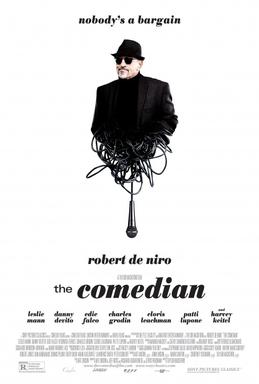
Insomnia File #33: The Comedian (dir by Taylor Hackford)


What’s an Insomnia File? You know how some times you just can’t get any sleep and, at about three in the morning, you’ll find yourself watching whatever you can find on cable? This feature is all about those insomnia-inspired discoveries!

If you were having trouble getting to sleep around two in the morning last night, you could have turned over to Starz and watched the 2016 film, The Comedian.

It probably wouldn’t have helped.  It’s not that The Comedian is a particularly interesting movie or anything like that.  Abysmally paced and full of dull dialogue, The Comedian would be the perfect cure for insomnia if it just wasn’t so damn loud.  Robert De Niro plays an aging comedian named Jackie Burke and, in this movie, being an aging comedian means that you shout out your punch lines with such force that you almost seem to be threatening anyone who doesn’t laugh.  However, the threats aren’t necessary because everyone laughs at everything Jackie says.

Actually, it’s a bit of an understatement to say that everyone laughs.  In The Comedian, Jackie is such a force of pure, unstoppable hilarity that all he has to do is tell someone that they’re fat and literally the entire world will shriek with unbridled joy.  The thing with laughter is that, in the real world, everyone laughs in a different way.  Not everyone reacts to a funny joke with an explosive guffaw.  Some people chuckle.  Some people merely smile.  But, in the world of The Comedian, everyone not only laughs the same way but they also all laugh at the same time.  There’s never anyone who doesn’t immediately get the joke and, by that same token, there’s never anyone who can’t stop laughing once everyone else has fallen silent.  The Comedian takes individuality out of laughter, which is a shame because the ability to laugh is one of the unique things that makes us human.

Anyway, The Comedian is about a formerly famous comedian who is now obscure.  He used to have a hit TV show but now he’s nearly forgotten.  Why he’s forgotten is never made clear because nearly everyone in the movie still seems to think that he’s the funniest guy in the world.  Jackie’s an insult comic and people love it when he tells them that they’re overweight or when he makes fun of their sexual preferences.  This would probably be more believable if Jackie was played by an actor who was a bit less intense than Robert De Niro.  When De Niro starts to make aggressive jokes, you’re natural instinct is not so much to laugh as it is to run before he starts bashing in someone’s head with a lead pipe.

Anyway, the plot of the film is that Jackie gets into a fight with a heckler.  The video of the fight is uploaded to YouTube, which leads to a scene where his manager (Edie Falco) stares at her laptop and announces, “It’s going viral!”  Later on, in the movie, Jackie forces a bunch of old people to sing an obnoxious song with him and he goes viral a second time.  I kept waiting for a shot of a computer screen with “VIRAL” blinking on-and-off but sadly, the movie never provided this much-needed insert.

In between beating up the heckler, ruining his niece’s wedding, and hijacking a retirement home, Jackie finds the time to fall in love with Harmony Schlitz (Leslie Mann), a character whose name alone is enough to The Comedian one of the most annoying films of all time.  Harmony’s father is a retired gangster (Harvey Keitel) and you can’t help but wish that Keitel and De Niro could have switched roles.  It wouldn’t have made the movie any better but at least there would have been a chance of Keitel going batshit insane whenever he took the stage to deliver jokes.

I’m not sure why anyone thought it would be a good idea to cast an actor like Robert De Niro as a successful comedian.  It’s true that De Niro was brilliant playing a comedian in The King of Comedy but Rupert Pupkin was supposed to be awkward, off-putting, and not very funny.  I’m not an expert on insult comics but, from what I’ve seen, it appears that the successful ones largely succeed by suggesting that they’re just having fun with the insults, that no one should take it personally, and that they appreciate any member of the audience who is willing to be a good sport.  Jackie just comes across like a cranky old misogynist.  Watching Jackie is like listening to your bitter uncle play Vegas.  I guess it would help if Jackie actually said something funny every once in a while.  A typical Jackie joke is to refer to his lesbian niece as being a “prince.”  Speaking for myself, when it comes to Robert De Niro being funny, I continue to prefer the scene in Casino where he hosts the Ace Rothstein Show.

Perhaps the funniest thing about The Comedian is that, when it originally released into theaters, it was advertised as being “The Comedian, a Taylor Hackford film,” as if Taylor Hackford is some type of Scorsese-style auteur.  Taylor Hackford has been making films for longer than I’ve been alive and he has yet to actually come up with any sort of signature style beyond point and shoot.  The second funniest thing is that The Comedian was billed as a potential Oscar contender, up until people actually saw the damn thing.

Though it may have failed at the box office, The Comedian seems to show up on Starz quite frequently.  They always seem to air it very late at night, as if they’re hoping people won’t notice.  

Previous Insomnia Files:

  1. Story of Mankind
  2. Stag
  3. Love Is A Gun
  4. Nina Takes A Lover
  5. Black Ice
  6. Frogs For Snakes
  7. Fair Game
  8. From The Hip
  9. Born Killers
  10. Eye For An Eye
  11. Summer Catch
  12. Beyond the Law
  13. Spring Broke
  14. Promise
  15. George Wallace
  16. Kill The Messenger
  17. The Suburbans
  18. Only The Strong
  19. Great Expectations
  20. Casual Sex?
  21. Truth
  22. Insomina
  23. Death Do Us Part
  24. A Star is Born
  25. The Winning Season
  26. Rabbit Run
  27. Remember My Name
  28. The Arrangement
  29. Day of the Animals
  30. Still of The Night
  31. Arsenal
  32. Smooth Talk