Lisa Reviews An Oscar Nominee: On Golden Pond (dir by Mark Rydell)


(With the Oscars scheduled to be awarded on March 4th, I have decided to review at least one Oscar-nominated film a day.  These films could be nominees or they could be winners.  They could be from this year’s Oscars or they could be a previous year’s nominee!  We’ll see how things play out.  Today, I take a look at the 1981 best picture nominee, On Golden Pond!)
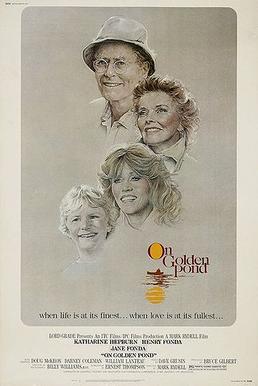
On Golden Pond takes place in a cottage that’s located on a lake called Golden Pond.  Hence, the title.  As far as title’s go, it’s not a bad one.  It’s a film about an elderly couple who spends every summer in that cottage.  They’re in their golden years so I guess it makes sense that they would feel an affinity for Golden Pond.

That said, I think that an even better title for the film would be Everything Annoys Norman.

Norman Thayer, Jr. (Henry Fonda) is a cantankerous old man.  He’s 79 and not particularly looking forward to celebrating his 80th birthday.  He’s a retired college professor.  His wife claims that the last time Norma was really happy was when Franklin Roosevelt was elected president.  Norman likes to fish and still brags about the time he caught a legendary trout named Walter.

What Norman doesn’t like is having to deal with the world.  When he stops to get gas, he loudly complains that, “in his day,” gas only cost eighty-five cents.  When he’s told that there’s another “middle-aged” couple on the lake, he says that, unless he’s going to live to be 150, he’s not middle-aged.  He gets frustrated because his memory isn’t as good as it used to be.  When he goes out for a walk in the woods, he forgets where the path is and he has to return to the house.  Sometimes, he calls people by the wrong name.  At one point, he struggles to use a landline phone.  (I can only imagine how annoyed Norman would be if he was alive today.)  Norman doesn’t like to deal with anyone other than his wife.

Ethel (Katharine Hepburn) is Norman’s wife.  She loves him.  When she hears Norman referred to as being “a son of a bitch,” she replies, “That son of a bitch is my husband.”  Ethel is used to Norman and his ways.  As she puts it, she understands that he’s like a “lion” who has to roar just to remind himself that he still can.  Ethel is … well, basically, she’s Katharine Hepburn.

Ethel has invited their daughter, Chelsea (Jane Fonda), to celebrate Norman’s birthday with them.  Norman and Chelsea have a strained relationship.  It’s implied that Norman was an emotionally distant and overly critical father and that Chelsea has never been able to forgive him.  When she shows up with her new boyfriend, Bill Ray (Dabney Coleman) and his 13 year-old son, Billy Ray (Doug McKeon), Norman barely bothers to acknowledge her.  With Bill and Chelsea planning on vacation in Europe, they ask if Billy can stay at the cottage with Norman and Ethel.  Ethel agrees.  Norman acquiesces.

On Golden Pond is a film that I wanted to like more than I actually did.  After all, the film features two classic actors, Henry Fonda and Katharine Hepburn, appearing in their only film together.  (Both Henry Fonda and Hepburn won Oscars for their work here.)  Henry Fonda gives a good performance as a strong-willed man who is struggling to deal with his own mortality.  As for Hepburn, it’s not a great performance, largely because Ethel is a thinly written role, but she’s Katharine Hepburn so it doesn’t matter.  But almost everything about the film — from the tasteful music to the pretty but not overwhelming cinematography — feels more like something you’d expect to find in a television production instead of a feature film.  On Golden Pond was based on a play and, with almost all of the action set in that cottage, it really doesn’t escape its theatrical origins.  That said, it’s a sweet movie.  The love between Norman and Ethel feels real.  If nothing else, the film gave the great Henry Fonda his only Oscar.

On Golden Pond was nominated for Best Picture but lost to Chariots of Fire.
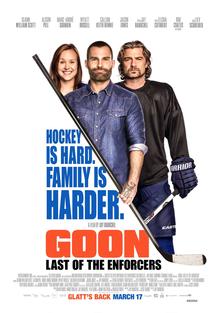
A Winter Game Film Review: Goon: Last of the Enforcers (dir by Jay Baruchel)


Here at the Shattered Lens, Leonard Wilson is our resident hockey expert.  He can tell you all about the in and outs of the game in general and the New York Rangers in specific.

Myself, I know very little about hockey.  Here’s what I do know:

  1. It’s played on the ice and with a puck.
  2. There are a lot of fights.
  3. All of my Canadian friends love it.
  4. It’s a sport that is mentioned many times on Degrassi.
  5. Two hockey players won the 22nd season of The Amazing Race.
  6. Back in 2011, I followed Arleigh’s suggestion and watched a hockey movie called Goon.  Surprisingly, I really, really liked it.

Six years ago, I started my review of Goon by admitting that I didn’t know anything hockey so not much has changed.  However, while I still may not know much about hockey, I am currently obsessed with the Winter Olympics.  And, of course, hockey is a big part of the Winter Games.  Since I’m currently watching movies about winter sports, today seemed like the perfect time to watch 2016’s Goon: The Last of The Enforcers and get caught up on the story of Doug Glatt.

Who is Doug Glatt?  As played by Seann William Scott, Doug Glatt is probably one of the nicest guys that you could ever hope to meet.  He’s not particularly smart.  He’s the type who responds to almost comment with a slightly confused smile.  He tend to take things literally.  But he’s a genuinely sweet guy and it’s impossible not to like him.

Except, of course, when he’s on the ice.  Doug is a semi-pro hockey player, playing for the Halifax Highlanders.  Even his biggest fans will admit that Doug isn’t the best hockey player of all time.  However, no one can throw a punch like he can.  Doug’s an enforcer.  His specialty is beating up the opposing team.  When his coach (Kim Coates) needs to intimidate the other team, he sends Doug out with orders to beat someone up.  Doug has no problem breaking someone’s nose but he usually apologizes afterward.  He’s known as The Thug.

Doug is married to Eva (Allison Pill), who loves hockey but, now that she’s pregnant, she worries about Doug getting seriously injured.  These worries come true when Doug gets into a fight with Anders Cain (Wyatt Russell), a fearsome enforcer on another team.  (Anders just happens to be the son of the owner of the Highlanders.)  Cain not only leaves Doug crumpled up on the ice but he also injures Doug’s right shoulder, making it difficult for Doug to throw a punch with his right hand.  It appears that Doug’s playing days are over.  Doug ends up working in the storage room of an insurance company while the Highlanders continue on without him.  Adding insult to injury, Anders is soon signed by the Highlanders and given Doug’s old position as team captain.

As much as Doug tries to move on, he keeps finding himself drawn back to hockey.  When he runs into a former rival, Ross Rhea (Liev Schreiber), who is now making a living as a glorified gladiator, Doug realizes that he can learn how to fight with his left fist.  But with Eva not wanting him to fight anymore, Doug is forced to decide which team he’s going to play for, the Highlanders or his family?

Especially when compared to the first Goon, Goon: Last of the Enforcers is an extremely busy film.  Beyond Doug trying to adjust to life off the ice, the film also deals with Anders Cain’s relationship with his father, the locker room shenanigans of the Highlanders, Ross Rhea’s attempt to make a comeback, and the antics of obnoxious sports reporter Chad Bailey (T.J. Miller).  That’s a lot for one film to deal with and it’s not surprising that the end result is an uneven mishmash of raunchy comedy and sports-themed melodrama.  Whereas the first Goon worked because it kept things simple and sincere, Goon: Last of the Enforcers is way too complicated for its own good.

That said, as played by Seann William Scott, Doug is just as likable as he was in the first film and Scott and Allison Pill still make for an adorable couple.  In fact, the entire cast does a pretty good job, especially Wyatt Russell and Liev Schreiber.  The film doesn’t really work but, for fans of the first film, it’s still enjoyable enough.  If nothing else, it’s nice to see how things work out for Doug Glatt.

Music Video of the Day: Knights of Cydonia by Muse (2006, dir by Joseph Kahn)


What happens if you mash together every single European grindhouse film ever made and then get Muse to provide the soundtrack?

You end up with the video for Knights of Cydonia.

The fun here, of course, is identifying all of the films that are referenced in this video.  Obviously, there’s a lot of Sergio Leone there.  There’s also some karate action and a Planet of the Apes reference.  Whenever the cowboys shoot their laser guns, I’m reminded of one of Lucio Fulci’s post-apocalyptic films.

Enjoy!

Music Video of the Day: Move by Saint Motel (2016, dir by ????)


For today’s music video of the day, we have another video from one of my favorite groups, Saint Motel!

Ever wondered what goes on behind the scenes on your local newscast?  Chaos, apparently.

The satirical subtext and retro feel of this video will be familiar to anyone who has ever watched the video for Saint Motel’s My Type.

Enjoy!

Book Review: Need To Know by Karen Cleveland


How well do you know the people you love?

That’s the question that’s at the heart of Need to Know, the debut novel of Karen Cleveland.

When we first Vivian Miller, the main character and narrator of Need to Know, she has a life that, on the surface, many would envy.  She has four children, a nice house in the suburbs of D.C., and a handsome and charming husband named Matt.  Of course, there are problems.  Money’s tight.  One of her children has a heart defect, one that will undoubtedly require surgery in the future.  Honestly, Vivian would be happy to stay home and spend all of her time taking care of the children but, as Matt always reminds her, they need the money that her job brings in.

Vivian works for the CIA.  She’s an analyst and, as glamorous as working in intelligence might sound, her job basically involves spending a lot of time in the office, searching through the computers of suspected Russian agents.  For instance, there’s the mysterious Yury.  When Vivian searches through Yury’s files, she comes across a folder that is labeled “Friends.”  Inside the folder are five pictures of five people who might or might not be working for the Russians.

Four of the pictures are of total strangers.

The fifth picture is of Matt.

If nothing else, Need to Know is a book that will keep you guessing.  Is Matt a Russian agent or was his picture placed in the folder just to compromise Vivian’s position with the CIA?  Has Matt spent ten years being a perfect and supportive husband or was he actually a passive aggressive manipulator?  What do the Russians want and how far are they willing to go to get it?  And, even more importantly, how far is Vivian willing to go to protect her children?

Need to Know is a strong debut novel, a perfectly paced thriller that will take consistently take you by surprise.  Karen Cleveland is a former CIA analyst herself and she puts that background to good use in Need to Know, supplying a lot of interesting details that you wouldn’t get from a book written by … well, by someone like me, whose national security expertise is pretty much limited to what I’ve seen in the movies.

(Speaking of movies, apparently Charlize Theron will be producing and starring in the film version of Need to Know.  Personally, the entire time I was reading the novel, I pictured Naomi Watts as Vivian, Jeremy Renner as Matt, and Richard Jenkins as Vivian’s boss, Peter.)

I did have a few issues with the final few chapters of the book.  Though it didn’t effect my overall enjoyment of the novel, I would have liked a stronger ending.  That said, the ending does potentially leave room for a sequel and I will definitely be reading the next book that Karen Cleveland writes!

If you’re in the mood for a good and intelligent spy thriller, Need to Know is definitely one to check out.

Lisa Reviews An Oscar Nominee: Working Girl (dir by Mike Nichols)


(With the Oscars scheduled to be awarded on March 4th, I have decided to review at least one Oscar-nominated film a day.  These films could be nominees or they could be winners.  They could be from this year’s Oscars or they could be a previous year’s nominee!  We’ll see how things play out.  Today, I take a look at the 1988 best picture nominee, Working Girl!)

Welcome to the 80s!

Yes, Working Girl is definitely a film of its time.  It’s a film that’s obsessed with big things: big dreams, big offices, big money, and big hair.  It’s a movie where the heroes talk about hostile takeovers and where everyone’s dream is to eventually to be an executive on Wall Street.  You know all of those people who claim that The Big Short is the greatest movie ever made?  I can guarantee that the majority of them would totally hate every character in Working Girl.  Working Girl is such a film of the past that it even features Alec Baldwin doing something other than bellowing at people.  In fact, Baldwin’s actually sexy in Working Girl.  It was strange to see him in this film and realize that he was the same actor who currently spends all of his time picking fights on twitter and defending James Toback.

Of course, Alec Baldwin has a relatively small role in Working Girl.  He plays Mick Dugan, the type of blue-collar guy who gives his girlfriend lingerie for her birthday (“I just wish you would get me something that I could wear outside,” she says as she tries it on) and who then proceeds to cheat on her while she’s off at work.  From the minute we first meet Tess McGill (Melanie Griffith), we know that she deserves better than Mick.

Tess is a professional administrative assistant.  She’s just turned 30 but she’s not ready to give up her dreams and settle for a life of fighting off coke-snorting executives and coming home to some guy like Mick.  (Speaking of early performances from infamous actors, one of the coke-snorting executives is played by Kevin Spacey.)  Tess has got a bachelor’s degree in Business.  As she puts it, she has a “mind for business and a bod for sin.”

She’s also got a new boss, an up-and-coming executive named Katharine Parker (Sigourney Weaver).  It turns out that Katherine is 29 years old.  (“I’ve never worked for someone younger than me before,” Tess says as Katherine gives her a condescending smile.)  Katharine encourages Tess to think of her as being a mentor.  If Tess has any ideas for investments, she should feel free to bring them to Katharine.  Of course, when Tess does so, Katharine claims that her bosses shot the idea down.  It’s only after Katharine breaks her leg in a skiing accident and is laid up in Europe that Tess discovers that Katharine has actually been stealing her ideas and not giving her any credit for them.

What is Tess to do?  Well, she does what any of us would do.  She passes herself off as an executive and presents her idea to Jack Trainer (Harrison Ford) herself.  Jack is impressed with the idea but he’s even more impressed with Tess.  Of course, complicating things is that Jack was once in a relationship with Katharine and Katharine still thinks that she’s going to eventually marry Jack.  And, of course, there’s the fact that Tess is lying about actually being an executive…

Working Girl is a frequently amusing film, elevated by performances of Melanie Griffith and, in the role of Tess’s best friend, Joan Cusack.  Add to that, Harrison Ford is remarkable non-grouchy as Jack Trainer and Sigourney Weaver appears to be having the time of her life playing a villain.  Even as I laughed at some of the lines, here was a part of me that wished that the film had a bit more bite.  At times, Working Girl tries too hard to have it both ways, both satirizing and celebrating Wall Street culture.  In the end, the film works best as a piece of wish-fulfillment.  It’s a film that says that not only can you win success and Harrison Ford but you can get your bitchy boss fired too.

Despite being a rather slight (if likable) film, Working Girl was nominated for Best Picture of 1988.  However, it lost to Rain Man.

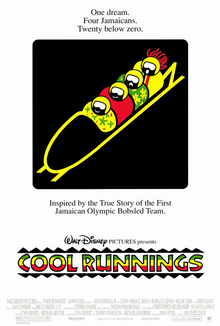
An Olympic Film Review: Cool Runnings (dir by Jon Turtletaub)


Like all good people, I am currently obsessed with the Winter Olympics.  Earlier this week, I asked some of my closest friends if they could recommend some good films about the Winter Games.  Almost everyone who replied recommended that I check out Cool Runnings, a film from 1993.

So, I did.

And I’m glad that I did.

Cool Runnings is one of those sports movies that’s based on a true story, though I imagine it’s probably a very loose adaptation.  Jamaica is a country with a long and proud Olympic history.  Since the 1948 Summer Olympics, Jamaican athletes have won a total of 77 medals, the majority of them in individual and relay sprinting events.  However, Jamaica didn’t compete in the Winter Olympics until 1988, when the Jamaican Bobsled Team made their debut.  According to contemporary news reports, the Jamaicans were folk heroes at the ’88 Winter Games and other teams would frequently help them out by lending them equipment.  Though the Jamaicans were never really a medal contender, they were personally popular and everyone was upset when their bobsled crashed during one of their qualifying runs.

That, of course, isn’t exactly the story that’s told in Cool Runnings.  In Cool Runnings, the Jamaican bobsled team is ridiculed by all of the snobs on the other teams, with the Germans especially going out of their way to be condescending.  Their first run is a disaster but their second run puts them into medal contention and causes people all over the world to spontaneously break into applause.  It’s a sports film, after all.  For a sports film to work, there has to be adversity before there can be victory.  Cool Runnings does stick close enough to the real story that the Jamaicans do end up crashing their sled.  However, in the film version, the team proudly carries their bobsled over the finish line while, again, people all around the world applaud.  Even a woman with a Russian flag claps.  And yes, it’s all pretty hokey but who cares?  It made me cry.

It’s a well-done film, one that is unapologetically sentimental and all the better for it.  Before I watched the film, I didn’t know anything about how the bobsled worked, beyond the fact that it involved four people and that everyone had to jump into the sled after launching it.  But, ultimately, it didn’t matter that I didn’t know much about bobsledding.  From the moment that film started, with scenes of aspiring Olympians running across sunny Jamaica, it had my attention.

When the film starts, Derice Bannock (Leon Robinson) is hoping to compete in the Summer Olympics but, at the qualifying trial, Derice and another runner, Yul Brenner (Malik Yorba), end up tripping over yet another runner, the likable and enthusiastic Junior Bevil (Rawle D. Lewis).  Out of contention for the Summer Olympics, Derice decides to try to find a way to go to the Winter Olympics.  Fortunately, there’s a former Olympic bobsledder, Irv Blitzer (John Candy), living nearby and Derice’s best friend, Sanka (Doug E. Doug) is a champion push cart racer.

The film follows Irv and the four Jamaicans on their unlikely journey to Canada.  It’s a comedy with a dramatic heart.  Yes, Sanka may need help getting his helmet over his hair (“Thanks, coach,” he says whenever Irv pounds down the helmet) but the film also takes the time to explore why it’s so important for these four to compete in the first place.  It might be tempting to make fun of Yul Brenner when he talks about how he wants to live in Buckingham Palace but the film makes clear just how important this improbable dream is for Yul and everyone else.  No one may give the Jamaican bobsled team a chance but Jamaica never stops believing in them.

It’s an incredibly sweet little movie, featuring likable performances and a heart-warming story.  I highly recommend it to anyone looking for a good sports story.