The Best Picture Race In Review: The 1950s


Continuing our look at the Best Picture races of the past, it’s now time to enter the 50s! World War II was over. Eisenhower was President. Everyone was worried about communist spies. And the Hollywood studios still reigned supreme, even while actors like Marlon Brando and James Dean challenged the establishment.

1950

All About Eve

Born Yesterday

Father of the Bride

King Solomon’s Mines

Sunset Boulevard

Won: All About Eve

Should Have Won: The Academy started out the decade by getting it right. While I love Sunset Boulevard and could definitely make a case for why it could have won, All About Eve was the best film nominated and one of the best films ever made.

1951

An American Paris

Decision Before Dawn

A Place In The Sun

Quo Vadis

A Streetcar Named Desire

Won: An American In Paris

Should Have Won: An American In Paris was a bit of an unexpected winner. A Streetcar Named Desire swept almost all of the acting prizes (only Marlon Brando failed to take home an Oscar) but the film itself is a bit too theatrical for me. As much as I Like An American In Paris, my personal vote would have gone to A Place In The Sun.

1952

The Greatest Show on Earth

High Noon

Ivanhoe

Moulin Rouge

The Quiet Man

Won: The Greatest Show on Earth

Should Have Won: Cecil B. DeMille’s The Greatest Show On Earth is often described as being the worst film to ever win best picture. I don’t know if I’d go that far but the Oscar still should have gone to either High Noon or The Quiet Man. With The Greatest Show on Earth, the Academy went for spectacle over …. well, everything else. It was not the first time the Academy did so, nor would it be the last.

1953

From Here To Eternity

Julius Caesar

The Robe

Roman Holiday

Shane

Won: From Here To Eternity

Should Have Won: I love both Julius Caesar and Roman Holiday but, in this case, the Academy picked the right film.

1954

The Caine Mutiny

The Country Girl

On The Waterfront

Seven Brides For Seven Brothers

Three Coins In The Fountain

Won: On the Waterfront

Should Have Won: I want to say Rear Window but it wasn’t even nominated. On The Waterfront is the best made and the best acted of all the nominees but that the film’s support for “naming names” will never sit well with me. Like many of Elia Kazan’s films, it also gets a bit too heavy-handed towards the end. (One always got the feeling that Kazan didn’t trust his audience to figure out things on their own.) I’ll go with The Caine Mutiny, if just for Humphrey Bogart’s amazing performance as Queeg.

1955

Love is Many Splendored Thing

Marty

Mister Roberts

Picnic

The Rose Tattoo

Won: Marty

Should Have Won: This is a difficult one for me. All of the nominated films are fairly weak. The best remember films of 1955 — Rebel Without A Cause, Kiss Me Deadly, East of Eden — weren’t even nominated. Marty‘s likable but it still feels like a made-for-TV movie. I’ll go with Picnic, just for the scene where William Holden and Kim Novak dance on the dock.

1956

Around the World in 80 Days

Friendly Persuasion

Giant

The King and I

The Ten Commandments

Won: Around The World In 80 Days

Should Have Won: In a year in which all of the nominees were epic in scope, Around The World In 80 Days won because it featured a cameo from nearly everyone in Hollywood. It’s a bit of a drag to watch today, despite the charm of David Niven. Personally, of the nominated films, I would have gone with …. mock me if you will …. The Ten Commandments. As flawed as it may be, it’s still incredibly watchable and never dull. If I couldn’t vote for The Ten Commandments, I’d probably vote for Giant, just because it’s a movie about my home state.

1957

The Bridge on the River Kwai

Peyton Place

Sayonara

12 Angry Men

Witness for the Prosecution

Won: The Bridge on the River Kwai

Should Have Won: The Bridge on the River Kwai is a worthy winner but my favorite of the nominees is definitely 12 Angry Men. And I’ll admit that I’ve always enjoyed Peyton Place as well.

1958

Auntie Mame

Cat On A Hot Tin Roof

The Defiant Ones

Gigi

Separate Tables

Won: Gigi

Should Have Won: Gigi’s good but I would have to vote for the overheated but always entertaining melodrama of Cat On A Hot Tin Roof. Of course, the best films of the year — Vertigo and Touch of Evil — were not nominated.

1959

Anatomy of a Murder

Ben-Hur

The Diary of Anne Frank

The Nun’s Story

Room At The Top

Won: Ben-Hur

Should Have Won: I actually like Ben-Hur but I absolutely love Anatomy of a Murder. It’s one of the best courtroom films ever made and it features James Stewart at his absolute best.

Up next, in about an hour — the 60s!
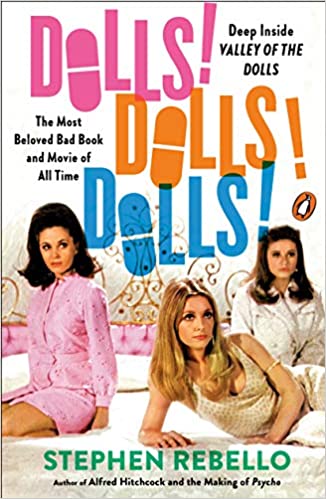
Book Review: Dolls! Dolls! Dolls!: Deep Inside Valley of the Dolls, the Most Beloved Bad Book and Movie of All Time by Stephen Rebello


Do you want to read a very good book about a very bad film?

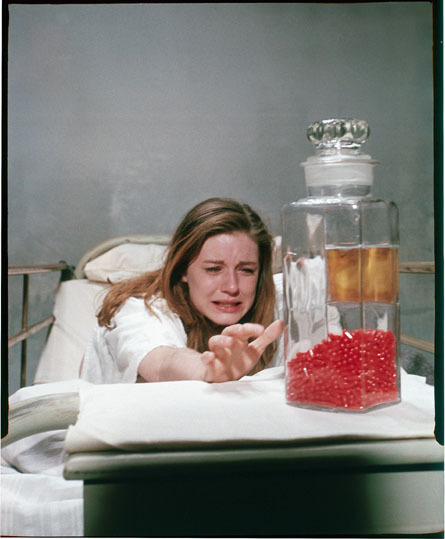
If the answer’s yes, Stephen Rebello’s Dolls! Dolls! Dolls!: Deep Inside Valley of the Dolls, the Most Beloved Bad Book and Movie of All Time tells you just about everything you could possibly want to know about the production of the 1967 cult classic, Valley of the Dolls. Starting with the Jacqueline Susann and her decision to write the book that scandalized America and caught Hollywood’s imagination, Rebello offers up information on every bit of the process that brought Valley of the Dolls to cinematic life. From the search for the right director to the effort to turn Susann’s novel into a filmable script, it’s all here. Everything from casting to recasting to the costumes to the music to the release to the film’s subsequent status as a camp classic, none of it is left out.

Perhaps not surprisingly, to anyone who knows me, my favorite part of the book were the two chapters that dealt with the casting of “the dolls” and “the dopes.” A truly impressive number of performers were considered for the roles that were eventually played by Barbara Parkins, Patty Duke, and Sharon Tate and, as I read about the casting process, I found myself thinking about all of the alternate casts that could have been assembled. Some of the possibilities feel inspired. Others boggle the mind.

Imagine, if you will, the famous fight scene between Patty Duke and Susan Hayward if the roles had been played by Barbra Streisand and Bette Davis. It could have happened! Imagine Raquel Welch as the tragic Jennifer North and Elvis Presley as her talented but simple-minded lover. Again, it could have happened. Among those who make appearances — some extended and some just as cameos — in the casting chapters: Candice Bergen, Ann-Margaret, Debbie Reynolds, Natalie Wood, Lee Remick, Mary Tyler Moore, Marlo Thomas, Shelley Winters, Jane Fonda, Julie Christie, Faye Dunaway, Angela Lansbury, Millie Perkins, Tony Curtis, Christopher Plummer, James Garner, Adam West, James Caan, Martin Sheen, Tom Selleck, James Brolin, Robert Reed, Richard Beymer, Alain Delon, Richard Chamberlain, Anthony Perkins, Kevin McCarthy, and hundreds more. That’s quite an impressive list for a film that no one was apparently expecting to be very good!

The book devotes quite a bit of space to Judy Garland’s casting as Helen Lawson, a character who may have very well been based on her. Garland was infamously fired from Valley of the Dolls and replaced with Susan Hayward. The book explores all of the conflicting accounts about what led to Garland’s firing. On the one hand, if you’re into old Hollywood gossip, you’ll find a lot of it here. At the same time, Rebello shows a good deal of empathy and sensitivity in describing the situation that the phenomenally talented but emotionally insecure Garland found herself in when she was cast as Helen. For all the space that this book focuses on the sometimes unbelievable drama that went on during the shoot, Stephen Rebello is never less than sympathetic to the performers who worked on Valley of the Dolls. Barbara Parkins, Patty Duke, and Sharon Tate are all brought to vibrant life in Rebello’s account. (Rebello is especially to praised for reminding readers that Sharon Tate was more than just the tragic victim of a terrible crime. She was also an actress of great promise and, from everyone’s account, a wonderful human being as well.) In fact, perhaps the only person who really comes across badly in the book’s account of the production is director Mark Robson, who is portrayed as being the type of manipulative showbiz hack that you would expect to find in a sordid, Hollywood roman à clef. Perhaps one like Valley of the Dolls!

Along with telling you everything you could possibly want to know about Valley of the Dolls, the book is also a sometimes humorous and sometimes thought-provoking portrait of Hollywood at the end of the studio system. Trying to keep up with the popularity of television and the permissiveness of European cinema, Hollywood tried to prove that it wasn’t culturally out-of-touch with its version of Valley of the Dolls. Of course, the end result was a film that showed just how out-of-touch Hollywood actually was. That’s one reason why Valley of the Dolls continues to be such a beloved bad film. Stephen Rebello’s informative book tells you everything you could want to know about it. Dolls! Dolls! Dolls! is a must-read for anyone who loves movies or who is interested in the history and development of American trash culture.

Lisa’s Week In Television: 4/18 — 4/24


Jeff and I finally got to go to the lake this week! This was something we had been planning on doing since Valentine’s Day. Our plans were originally put on hold by the big winter storm and then after that, we decided to wait until Spring Break was over so that we could have some peace and quiet.

We went up to the lake on Monday and, though we have a TV up here, we decided to watch it as little as possible. As a result, there’s not a lot listed below but that’s okay. Sometimes you need a break from all of that!

Allo Allo (Sunday Night, PBS)

Bit of a disjointed episode this Sunday but Allo Allo appears to have been a show that was at its best when everyone was scrambling around for various reasons. Herr Flick was looking for the painting. The Resistance stole a lawnmower engine. Rene just tried to keep things calm at the café. It was a funny episode, even if I did find it next to impossible to follow what was actually going on.

Baywatch (Weeknight, H&I)

Because I was on vacation, I only watched Sunday’s episodes of Baywatch this week and I have to admit that I was busy packing at the time so I didn’t really pay much attention. The first episode featured David Hasselhoff being stalked by a psychotic Australian lifeguard. Oddly enough, the first season of Baywatch also featured a self-centered Australian lifeguard, who Hasselhoff was constantly reprimanding. You have to kind of wonder what Baywatch had against Australian lifeguards.

The second episode featured Mitch’s son falling in love with a terminally ill girl. That was sad but, then again, that also seems like something that happened fairly frequently on Baywatch. There was one episode, if I remember correctly, where Mitch’s son fell in love with a homeless girl and then another where he was in love with a babysitter who was being stalked by a gangster or something like that.

The drama never ends on the beach.

The Floor Is Lava (Netflix)

I watched three episodes of this silly Escape Room-style game show on Netflix. Then I realized that the contestants weren’t actually falling in real lava and I lost interest.

Hell’s Kitchen (Fox, Thursday Night)

Even though we had a general no network TV rule in effect for most of the week, Jeff and I did watch the finale of Hell’s Kitchen on Thursday. Unfortunately, the supercool Mary Lou lost to the superbland Kori. I’m guessing Kori won because she’s older and has more experience than Mary Lou but it was still an extremely disappointing way for an otherwise good season to end.

The Old Guys (Sunday Night, PBS)

On Sunday’s episode, the old guys were extremely excited when Sally had to temporarily move in with them while some work was being done at her house. They even bribed the man who had been hired to do the work to drag things out so that Sally would have to stay with them for more than a week. Unfortunately, it didn’t really work out as Sally found the old guys to be too formal and the old guys were upset by Sally’s habit of blurting out the news after reading it online, therefore spoiling the 10 O’clock News. Finally, the old guys tried to finish the work on Sally’s house themselves and things got screwed up even further. As usual, the performances of Jane Asher, Roger Lloyd-Pack, and Clive Swift did a lot to make up for a generally predictable storyline.

Open All Hours (Sunday Night, PBS)

Another episode, another 30 minutes of waiting for Granville to snap and kill Arkwright. This time, Arkwright deliberately misspelled the word “special” to encourage people to come into the shop. Granville looked like he was on the verge of snapping but he stopped himself at the last minute.

The Rookies (Sunday Morning, H&I)

This week’s episodes were a bit boring. The first one dealt with four cops going undercover at a singles complex to catch a serial killer. Unfortunately, the identity of the killer was revealed during the first minute of the show so there wasn’t much suspense. The second episode featured Andy Robinson (he played the Scorpio Killer in Dirty Harry, which came out a year before The Rookies started to air) as a criminal trying to harass the wife of one of the police officers. One of the things that I’ve noticed about The Rookies is that each episode is self-contained. There’s no continuing storylines, like we’ve come to expect from television shows today. Instead, every episode is some new, huge drama that will last an hour and will never be mentioned again. The main characters are continually getting shot at, kidnapped, and threatened but apparently, it has absolutely no effect on their psychological well-being. It’s good to be them, I guess.

Saved By The Bell (Sunday morning, MeTV)

A girl named Christy wanted to join the wrestling team! GASP! Zack helped to get her a spot on the team but then got embarrassed when she beat up two Valley High bullies who were giving him a hard time. Jessie went from supporting Christy to condemning her when she thought Christy was trying to seal away Slater. Fortunately, by the end o the episode, everyone had learned a valuable lesson and had become a better person. Christy was never seen again.

South Park (Sunday Morning, Comedy Central)

The gang went to the rain forest and discovered that it totally sucked! I know people who actually find this episode to be incredibly offensive. Personally, I think it’s hilarious because being trapped in the rain forest probably does suck.

Unsolved Mysteries (Netflix)

On Wednesday, me, Case, and Leonard live tweeted an episode of Netflix’s Unsolved Mysteries. It was about whether or not people in Japan were being haunted by ghosts following the 2011 Tōhoku earthquake and tsunami. It started out a bit depressing but, by the end of it, it was actually rather touching and life-affirming. Personally, though, I don’t believe in ghosts.

Upstart Crow (Sunday Night, PBS)

William Shakespeare was nearly humiliated by his rival, Robert Greene, and Kit Marlowe stole another play. All in all, it was just another day in Elizabethan London.

Yes, Minster (Monday Morning, PBS)

Poor Jim Hacker! On this week’s episode, Jim again tried to cut back on government waste and Sir Humphrey again conspired to keep him from doing that. This time, Sir Humphrey’s scheme was to distract Hacker by telling him about the sorry state of the UK’s nuclear fallout structures. Jim went on another crusade, one that was going well until he accidentally insulted the Prime Minister during a television interview. The thing that makes Yes, Minster such an interesting show is that you’re natural inclination is to be on Jim Hacker’s side (he means well) but, at the same time, there’s something delightfully entertaining about watching Sir Humphrey thwart all of those good intentions.

Lisa Reviews An Oscar Nominee: Three Coins In The Fountain (dir by Jean Negulesco)


The 1954 Best Picture nominee, Three Coins In The Fountain, tells the story of three American women living in Rome. They’re all employed by the same secretarial agency. Maria Williams (Maggie McNamara) is young and hoping that she’ll stay in Rome for at least a year and that she’ll meet her future husband. Anita Hutchins (Jean Peters) is not-so-young and is planning on returning to America so that she can meet her own future husband. Miss Frances (Dorothy McGuire) is middle-aged and has spent the last 15 years working for the man that she wishes could be her future husband.

If you’re getting the feeling that there’s not much to our leads beyond a desire to get married, you’re not wrong. However, Anita swears that it’s impossible to find a husband in Rome because the only Italians who are interested in “secretaries” are too poor to be good husbands which …. well, like I mentioned before, this film is from 1954. Just the fact that the film featured three single women living together in a foreign country was probably considered to be daring back in 1954.

The three women eventually end up at the Trevi Fountain, where Maria and Frances throw in their coins and make their wishes. Anita, however, does not toss in a coin because apparently, she’s not scared of offending God. No sooner have the three women visited the fountain than things begin to happen. Soon, all three of them are in love but each has to deal with a compliction.

Miss Frances may have finally convinced her employer, writer John Frederick Shadwell (Clifton Webb), to marry her but when he discovers that he’s terminally ill, he tries to call off the engagment.

Maria meets Prince Dino di Cessi (Louis Jourdan) but will the Prince still want to be with her after he discovers that she’s been lying about being interested in the same things that he’s interested in?

Anita falls for Giorgio (Rossano Brazzi) but he’s poor! Plus, he also works for the agency and apparently, there’s some sort of weird 1954 rule that forbids the American employees from fraternizing with the Italian employees. Is Anita willing to lose her job just so she can marry someone who doesn’t have any money?

That’s pretty much it. Other than John Shadwell wrestling with his own mortality, there’s really not a whole lot of drama to be found in Three Coins In The Fountain. This is a film about pleasant people doing pleasant things and having pleasant conversations. It’s a rather chaste romance, one of those films where you have no doubt that everyone involved will wait until marriage and that all of the women will quit their jobs and settle down as soon as the right ring gets put on their finger. In other words, this is very much a film of its time and watching it today can be bit of an odd experience. This is ultimately the type of film that works best as a travelogue. Rome looks beautiful. There’s a striking shot of the sunset reflected in the canals of Venice. The Trevi Fountain truly does look like it can grant wishes. (It’s amusing to compare the reverence that the American-made Three Coins In The Fountain shows towards The Trevi Fountain to the way that Rome-native Federico Fellini used the fountain in La Dolce Vita.) One gets the feeling that, even in 1954, people flocked to this film more to see Rome than to really worry about whether or not the Prince would eventually propose.

In fact, one of the main reasons why I watched this film tonight is because I spent one of the greatest summers of my life in Italy. I’ve been to Rome. I’ve thrown coins into the Trevi Fountain and I’ve made wishes. I loved Rome. I loved the people. I loved the culture. I loved the buildings. I loved the feeling of walking through history. I loved looking out at the horizon and feeling as if I was somehow in a living painting. (I actually went into a bit of daze when I was in Florence. Stendhal Syndrome is for real.) If you can’t find romance in Rome then you’re obviously not looking. For me, the main appeal of Three Coins In The Fountain was being able to watch it and say, “I’ve been there!” I imagine for audiences in 1954, the appeal was probably to be able to watch it and say, “I’m going to go there!”

How did this perfectly pleasant but otherwise unmemorable film end up as a best picture nominee? I imagine a lot of it had to do with the fact that the film was a box office success. It’s certainly not because it was a better film than either Rear Window or Sabrina, both of which were not nominated for Best Picture despite being nominated for Best Director. In the end, the 1954 Best Picture Oscar was won by On The Waterfront, a film that appears to be taking place in an entirely different universe than Three Coins In A Fountain.

Lisa Reviews An Oscar Nominee: Judas and the Black Messiah (dir by Shaka King)


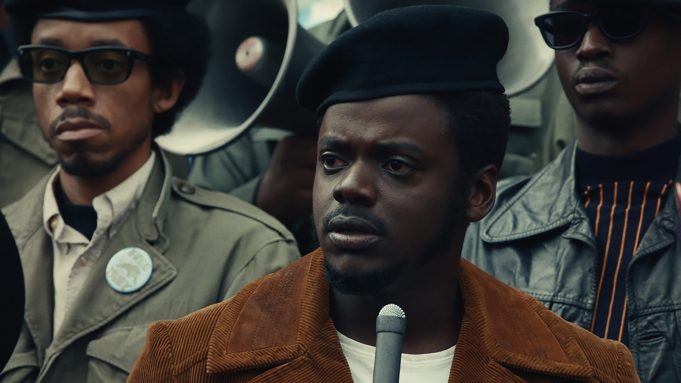
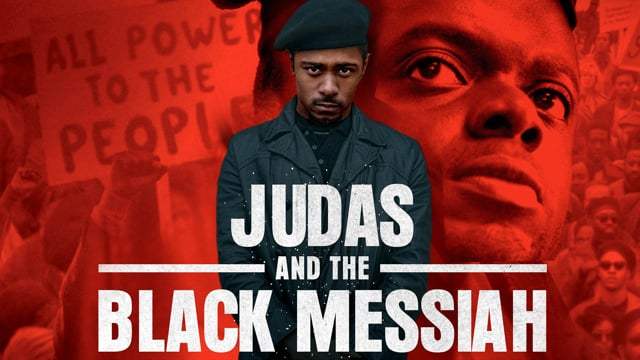
Judas and the Black Messiah is currently an Oscar nominee for Best Picture, Best Original Screenplay, Best Cinematography, Best Original Song, and Best Supporting Actor. (In a move that left quite a few people feeling confused, the Academy nominated both of the film’s leads — LaKeith Stanfield and Daniel Kaluuya — in the supporting category.) In detailing how, in 1969, Black Panther leader Fred Hampton (played by Kaluuya) was assassinated by the FBI and the Chicago police, it tells a true story that should leave any viewer, regardless of political orientation, shaken.

What’s interesting is that, in several Oscar categories, Judas and the Black Messiah will be competing with another fact-based film about 60s activists, Aaron Sorkin’s The Trial of the Chicago 7. In fact, Hampton briefly appears as a character in The Trial of the Chicago 7 and a key scene involves lawyer William Kunstler and Black Panther Bobby Seale discussing Hampton’s murder. Of course, in Sorkin’s film, the Black Panthers don’t get to say much. They appear in the background of the courtroom a few times and it’s hard not to feel that Sorkin is largely using them as props, as a way to let us know that he and the Chicago 7 are all on “the right side of history.” After the scene in which he learns that Hampton’s been murdered, Bobby Seale basically disappears from the film and the rest of The Trial of the Chicago 7 focuses on seven rich white guys debating whether or not it’s better to be serious while protesting or to try to have fun. I point this out not merely to criticize The Trial of the Chicago 7 but also to illustrate that, though they deal with the same time period and the same themes, Judas and the Black Messiah and The Trial of the Chicago 7 are as different as night and day. Judas and the Black Messiah is an angry and unapologetically political film, one that reveals just how anodyne The Trial of the Chicago 7 actually is. If The Trial of the Chicago 7 is carefully calculated to be a crowd pleaser, Judas and the Black Messiah is about leaving the audience outraged. If The Trial of Chicago 7 is about ultimately assuring the audience that the system works even if it is occasionally corrupted, Judas and the Black Messiah is a call to burn the entire system down.

The film opens with Bill O’Neal (LaKeith Stanfield) getting arrested for both auto theft and impersonation of a federal officer in Chicago. He’s approached by FBI agent Roy Mitchell (Jesse Plemons). Mitchell has an offer for Bill. Mitchell is willing to have the charges dropped if Bill will agree to work undercover for the FBI. Bill accepts Roy’s offer and is assigned to infiltrate the Illinois chapter of the Black Panthers. The chapter is currently led by Fred Hampton, a charismatic revolutionary who has been going around to all of the other activist groups and gangs in Chicago and building a multi-racial coalition, one dedicated to social justice and economic equality. Under the direction of J. Edgar Hoover (Martin Sheen, made up to look as grotesque as possible), the FBI is looking to destroy the Black Panthers from within.

Bill agrees to work for the FBI and infiltrate the Black Panther Party. Soon, he not only wins Hampton’s trust but he also works his way up the ranks until he’s promoted to being head of security. He also grows close to Hampton and starts to respond to Hampton’s message of self-determination. However, Mitchell insists that Bill continue to inform on the Panthers, arguing that the Panthers will kill Bill if they ever discover that he’s working with the FBI and also that Hampton himself is a dangerous radical. (Mitchell brags about how he worked to solve the murder of three civil right workers in Mississippi before then comparing Hampton and the Panthers to the KKK.) With Hampton gathering more followers and Hoover demanding that something be done to “neutralize” him, Bill is ordered to betray the man that many have come to view as being the black messiah.

Daniel Kaluuya gives a mesmerizing performance as Fred Hampton. It’s one thing to play a character who everyone insists is a charismatic leader but it’s another thing to give a performance that convinces the audience that the character is a charismatic leader before anyone else has even said a word about him. Kaluuya strides through the film, playing Hampton as a man who knows that he’s destined to change the world. The scenes where he meets with gang leaders and other activist leaders and recruits them into his Rainbow Coalition could have played like simple agitprop (just imagine if Aaron Sorkin had written or directed them!) but Kaluuya is so convincing that you never have any doubt that people actually would abandon their prejudices and their rivalries to follow him. Unlike the quippy activists at the heart of The Trial of the Chicago 7, Kaluuya-as-Hampton actually discusses what his ideology means and also why the system cannot be depended upon to sort itself out. Kaluuya’s Hamtpon challenges not only the film’s villains but also the complacency of the viewers, something that definitely cannot be said of the characters in Aaron Sorkin’s far more comforting film.

LaKeith Stanfield has a difficult role because Bill is a character who most viewers are going to feel ambiguous about but he does a good job of capturing both Bill’s growing consciousness and his growing desperation as he comes to realize that there’s no way to escape the situation in which he’s found himself. Finally, Jesse Plemons is well-cast as Roy Mitchell, who is alternatively threatening and consoling to Bill. A lesser actor would have played Mitchell as just being a straight-up villain but Plemons plays him as someone who truly does believe that he’s one of the good guys, which makes Mitchell’s actions all the more disturbing.

Judas and the Black Messiah is a powerful and angry film. One need not even agree with every bit of Hampton’s ideology to be outraged by the federal government’s efforts to silence his voice and end his life. Judas and the Black Messiah is not expected to win much on Sunday night and, indeed, by nominated both Kaluuya and Stanfield in the same category, the Academy has created a situation in which the two could potentially split the vote and prevent either one from winning. Still, regardless of what it does or doesn’t win this weekend, Judas and the Black Messiah a film that will probably continue to resonate after many of the other nominees have been forgotten.

The Things You Find on Netflix: The Serpent (dir by Tom Shankland and Hans Herbots)


Some shows require a bit of patience on the part of the viewer and that’s certainly the case with The Serpent, an uneven but ultimately rewarding 8-episode British miniseries that can currently be viewed on Netflix.

The Serpent tells the true story of Charles Sobhraj (played by Tahar Rahim), a career criminal who spent the 70s smuggling diamonds and killing hippies. Living in Bangkok, Sobhraj and his two associates — his French-Canadian lover, Marie-Andree LeClerc (Jenna Coleman) and his henchman, Ajay (Amesh Edireweera) — preyed on travelers who had come to Asia in search of adventure and sometimes enlightenment. Using the name Alain, Sobhraj would befriend his victims and then drug them. When they were violently ill, he would nurse them back to health. He would also steal their money, use their passports, and he ultimately killed a huge number of them. Sobhraj was a serial killer but, unlike other serial killers, he didn’t kill for pleasure as much as he just killed because it was a part of his business. Sobhraj was also frequently described as being charming and witty, a sort of real-life Bond villain. When he was captured, he would inevitably find a way to escape. When he had finished serving his sentences, he would go to the media and give self-promoting interviews. Indeed, his need for notoriety would ultimately be his downfall.

It’s an interesting tale but it’s also not an easy one to break down into a collection of easy story beats. Sobhraj committed so many crimes and victimized so many different people in so many different countries that it’s hard to know where to ever start with him. The Serpent focuses on the time Sobhraj spent in Bangkok and the efforts of a Dutch diplomat named Herman (Billy Howle) and his wife, Angela (Ellie Bamber), to prove Sobhraj’s guilt and to bring some justice to his countless victims. Working with Herman and Angela are a cynical Belgian named Paul Seimons (Tim McInnerny) and, ultimately, Sorbhaj’s French neighbors, Nadine (Mathilde Warnier) and Remi (Grégoire Isvarine). Throughout the film, we get to know not only Sobhraj’s gang and the people investigating him but also Sobhraj’s victims, the majority of whom were just happy to see a seemingly helpful and friendly face in an unknown land.

As I said, The Serpent requires some patience. The show makes heavy use of flashbacks, continually going back and forth from Sobhraj first meeting his associates and his victims and Herman and Angela investigating his crimes months later. Especially during the first two episodes, it’s difficult to keep track of what’s happening in the past and what’s happening in the show’s present. As the series progresses it becomes easier to follow the plot and the show’s flashback structure actually starts to pay off. You find yourself watching the same scene a second or a third (or even a fourth time) but this time, you have new information and what once seemed odd or obscure suddenly makes terrifying sense. The show’s third episode — which deals with a French tourist (Fabien Frankel, giving a harrowing performance) who finds himself practically a prisoner of Sobhraj and his associates — is especially powerful and suspenseful. It’s the type of thing that will make you wonder about every time a stranger has ever offered to help you out. At its best, The Serpent is a hell of a paranoia generator.

The show divides it’s attention between Sobhraj and Herman. That Herman becomes obsessed with capturing Sobhraj and understanding his crimes is not surprising. That often happens to amateur sleuths. (Michelle McNamara’s self-destructive obsession with the Golden State Killer comes to mind.) Unfortunately, as played by Billy Howle, Herman comes across as being slightly unhinged before he even starts investigating the murders and, as such, we’re kind of left wondering whether it’s his obsession that’s destroying his career or just his own self-righteous personality. As for Tahar Rahim, it took me a few episodes to really appreciate his performance. At first, Rahim’s performance seemed almost too restrained for a character who was charismatic enough to fool an untold number of victims into trusting him. But, as the series progressed, I came to see that Rahim was essentially playing Sobhraj as being an empty but attractive vessel, someone upon whom his eventual victims could project their desires. For those who wanted a lover, Sobhraj projected charm and sensuality. For those who wanted a friend, Sobhraj projected compassion. But, ultimately, it was all projection because there was nothing going on underneath the surface. Sobhraj knew how to manipulate humans but he didn’t know to actually be one.

For me, the series was pretty much stolen by Jenna Coleman, Ellie Bamber, and Mathilde Warnier. Coleman, especially, does a good job of playing Marie-Andree. It’s easy to just say that Marie-Andree was brainwashed by Sobhraj but Coleman suggests that Marie-Andree knew exactly who and what Sobhraj was but chose to pretend otherwise because the glamorous fantasy of their life was preferable to the drab reality of her life back in Quebec. Mathilde Warnier is the story’s often unacknowledged hero, as she repeatedly puts her life in danger to find and photograph evidence of Sobhraj’s crimes. She’s at the center of the majority of The Serpent‘s most suspenseful moments. Ellie Bamber, meanwhile, brings Angela to likable life despite the fact that the script often seems to be trying to sabotage her by giving her some of the show’s worst lines. (In real life, Angela played as active a role in investigating Sobhraj as her husband. In the show, though, Angela is often just portrayed as being wearily supportive even as she worries about Herman’s growing obsession.)

That said, the heart of the show is with Sobhraj’s victims, all of whom are portrayed with more compassion and respect than one typically expects from a true crime series. All of them, from the American girl looking for one night of fun before becoming a nun to the Danish tourists who make the mistake of trusting Sobhraj and Marie-Andree, are portrayed with compassion. Your heart breaks for them and also for what their deaths represent. All of them are too trusting. All of them are, in the beginning, too naïve. All of them are looking for something more than what they had in the boring safety of their old lives. In the end, their murders represent the death of innocence.

As I said, The Serpent requires some patience but it’s ultimately more than worth watching.

Music Video of the Day: Easy Sleazy by Mick Jagger with Dave Grohl (2021, editing concept by Matt Clifford)


Are you sick of the lockdowns? Are you tired of hearing about the Coronavrius? Do you really want to just get back to living your life and doing what you want without having to worry all the time?

Well, Mick Jagger and Dave Grohl feel the same way! They’ve written a song about it and made a video. Let’s listen and take a look, shall we?

Hell yeah!

Now, there’s some people on twitter (yes, I know) who are convinced that Mick is being serious when he says that the vaccine is going to allow Bill Gates to enter a person’s blood stream. Myself, I think it’s pretty clear that Mick is being sarcastic. I would say that this song speaks for all of us who are equally sick of both the scolds and the conspiracy theorists. Mostly this song is just about wanting to get on with one’s life and for the pandemic to just become a bad memory. Who can’t relate to that?

Enjoy!

Lisa Reviews An Oscar Nominee: The Citadel (dir by King Vidor)


The 1938 Best Picture nominee, The Citadel, is about a doctor who briefly loses his way but — don’t worry! — he eventually finds it again.

The film opens with the following title card:

This motion picture is a story of individual characterizations and is in no way intended as a reflection on the great medical profession which has done so much towards beating back those forces of nature that retard the physical progress of the human race.

Having gotten that out of the way, it goes on to tell the story of Dr. Andrew Manson (Robert Donat), an idealistic British doctor who serves his apprenticeship in rural England and who eventually ends up in Wales, trying to figure out why all of the miners seem to developing a mysterious cough. Along the way, he marries the always supportive Christine (Rosalind Russell, doing a lot with an underwritten role). Unfortunately, Dr. Manson discovers that being a doctor is not always an easy life. He’s frequently underpaid and underappreciated. His patients are often suspicious and argumentative and the medical establishment is hesitant to accept change. When the frustrated Dr. Manson returns to London, he discovers that he can make a fortune by working as a doctor for the type of wealthy people who are always willing to spend a little extra money on the latest fad treatment. With the encouragement of the decadent Dr. Lawford (Rex Harrison), Manson abandons his old ways and he’s finally able to make some money off of patients who will basically do anything that he tells them to do. However, a personal tragedy forces Manson to reexamine his life and consider why he became a doctor in the first place.

The Citadel is a coming-of-age film, one the follows Dr. Manson from the time when he’s a young doctor in need of a mentor until he himself is the one who is doing the mentoring. It gets off to a bit of a slow start. To be honest, I found Manson’s early apprenticeship to be almost as tedious as Dr. Manson found it to be. Things pick up a bit once Manson is on his own, fighting for the rights of miners or trying to find some sort of ethical justification for only treating the rich. If Robert Donat seems oddly hesitant during the first half of the film, he’s undeniably compelling during the second half. Though Dr. Manson has many scenes in which he rails against ignorance and injustice, Donat wisely resists the temptation to go overboard while portraying his indignation and, as a result, The Citadel never slips into melodrama. Donat doesn’t play Manson as being a crusader but instead as just being an often frustrated professional who knows that he’s being prevented from doing his best work. Director King Vidor, who made several films about thwartded visionaries, was never a particularly subtle director but Donat’s performance goes a long way towards making Vidor’s messianic tendencies tolerable.

Donat gets good support from the rest of the cast, especially Ralph Richardson in the role of his sometimes mentor. That said, Donat is still definitely the main reason to watch The Citadel, which is an uneven thought ultimately worthwhile film. The Citadel is very much a film of 1938 and it’s slow pace, earnest seriousness, and dialogue-heavy style will undoubtedly be an issue for some people watching the film in 2021. Watching a film like The Citadel today requires a willingness to adjust to the aesthetics of a past age. This is a film that will definitely be best-appreciated by those who aren’t unfamiliar with spending an entire weekend watching TCM. But you know what? It’s good to watch old movies. You can’t understand the present or prepare for the future if you’re not willing to look at the past.

The Academy nominated The Citadel for Best Picture. It was one of the first British films to be so honored (though not the first, that honor went to The Private Life of Henry VIII). However, it lost to Frank Capra’s You Can’t Take It With You. Though Robert Donat lost the Oscar for Best Actor to Spencer Tracy in Boys Town, he would be rewarded the very next year for his performance in Goodbye Mr. Chips. Among those who Donat defeated was Clark Gable, nominated for playing Rhett Butler in Gone With The Wind, a characters that Margaret Mitchell always said she envisioned as being played by Robert Donat.

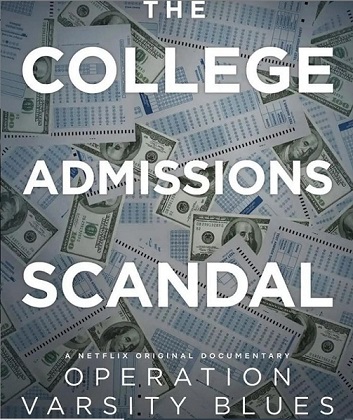
Film Review: Operation Varsity Blues: The College Admissions Scandal (dir by Chris Smith)


In Operation Varsity Blues, Matthew Modine plays Rick Singer, the real-life “college admissions consultant” who was one of the many people involved in the 2019 College Admissions scandal.

Singer was the former basketball coach who helped the rich and famous get their children into the right Ivy League schools. As the film shows (and as you probably already know), he did this by faking test scores, faking athletic activities, and often arranging for money to exchange hands. The film not only features Modine and others actors acting out the actual conversations that Singer was taped as having with his wealthy clients, it also features interviews with a few of Singer’s acquaintances and with the various journalists who covered the scandal. It’s a documentary with dramatic recreations.

And that’s fine. Modine does a good enough job portraying Rick Singer, playing him as essentially being a sleazy salesman who knew exactly what to say to the parents who were desperate to get their child into a prestigious university. (The film reveals that Singer would often lie to his clients, brainwashing them into believing that there was no way their children would be able to get into USC or Harvard without his help.) Unfortunately, with his gray hair and, his nervous smile, Matthew Modine as Rick Singer bares an odd but definite resemblance to the great Eric Roberts and, as I watched Operation Varsity Blues, I found myself thinking about how great it would be to see a film in which Eric Roberts did play Rick Singer. (I mean, seriously, Singer just seems like a perfect Eric Roberts role.) That may sound like a petty complaint but it does get at a bigger issue. Operation Varsity Blues is 100 minutes long but, despite its slightly different narrative format, it still doesn’t tell us anything that we couldn’t have learned from all of the other documentaries and dramatic adaptations based on the college admissions scandal. Even with the reenactments and the chance to hear Singer’s own words, Operation Varsity Blues still doesn’t tell us anything new about the scandal or why it happened. If nothing else, Eric Roberts and his neurotic screen presence would have put a new spin on a now-familiar story,

To be honest, the hybrid, docudrama format actually works against the film. On the one hand, you’ve got the real people telling their story in talking head interviews. But every time you start to get into their stories, the film cuts away to a reenactment and the film goes from being a documentary to being a low-budget Matthew Modine film. The film would have worked better if it had chosen to be either a documentary or a drama. By trying to be both, the end result is a movie that often seems disjointed and leaves you still feeling as if you haven’t actually gotten the entire story.

Finally, Lori Loughlin and her husband are featured in the documentary, though only in news footage. At one point, it’s revealed that after their daughter was accepted to USC, her high school guidance counselor called the college to tell them that Olivia Jade was never on her school’s rowing team, regardless of what her application said. Apparently, Lori and her husband got very angry about the counselor doing this and you know what? They had every right to be pissed off. Why is a guidance counselor trying to keep one of his students from getting into a good college? I mean, how was it really any of his business to begin with? That’s something that I would have liked to have seen explored in a bit more detail. Instead, the film just hurries along to another reenactment of Rick Singer explaining how to cheat on the ACT. (I’m still amazed that people spent that much money to do something as easy as cheat on a standardized test. I mean, it’s not that difficult.)

Unfortunately, the entire film is like that. It raises some interesting points but it ultimately leaves you frustrated by its refusal to do anything more than scratch the surface.