Film Review: Speed (dir by Edwin L. Marin)


1936’s Speed takes place in Detroit, at the home of Emery Motors.

When Joan Mitchell (Wendy Barrie) shows up to start her new job in the PR department, one of the first things she sees is a car being driven around a race track at a high speed until eventually it crashes.  Automotive engineer Frank Lawson (Weldon Heybourn) explains that it’s all a part of making sure the car is safe.  At Emery Motors, they crash cars on a daily basis to make sure that both the car and the driver will survive.

Terry Martin (James Stewart), the driver of the crashed car, proceeds to give Joan a tour of the factory.  There’s an obvious attraction between the two of them but Joan also seems to have feelings for Frank.  Terry and Frank are rivals.  Terry may not have Frank’s education but he has instincts and he has common sense.  He and his friend, Gadget Haggerty (Ted Healy), have an instinctive understanding of cars.  They know how to drive them.  They know how to fix them.  They know how to make them go really fast.

In fact, Terry is working on a new carburetor, one that he says will increase the speed of Emery’s cars.  Frank is skeptical but Terry knows that, if he can enter his car into the Indianapolis 500, he’ll be able to prove that he knows what he’s talking about.  Joan comes to believe in Terry and his carburetor.  And, fortunately, Joan has a secret of her own that will be very helpful to Terry’s ambitions.

Speed was not Jimmy Stewart’s first feature role but it was his first starring role.  28 years old when he starred in Speed, Stewart is tall, a little bit gawky, and unbelievably adorable.  From the minute that Terry climbs out of that wrecked car and introduces himself to Joan, Stewart’s a true movie star.  He and Wendy Barrie have a lot of chemistry and are a truly cute couple but Stewart is the one who dominates the film with his straight-forward charisma.  Terry may not be the best educated engineer at Emery Motors but he is determined to prove himself and Stewart does a great job of portraying that determination.

As for the film itself, it’s low-budget and it’s short.  Automotive enthusiasts might enjoy seeing all of the old cars and getting a chance to see what a car race was about in the days when cars themselves were still a relatively new invention.  The film itself starts out as almost a documentary, with Stewart (as Terry) explaining how each car is manufactured on the assembly line.  He points out all the machinery that goes into making the car in an almost-awed tone of voice.  If the information is a bit dry, it doesn’t matter because it’s impossible not to enjoy listening to Jimmy Stewart speak.  In his pre-WWII films, Stewart was the voice of American optimism and that’s certainly the case with Speed.

Speed was not a huge box office success but, in just two years, Stewart would be working with Frank Capra on You Can’t Take It With You, the first Stewart film to be nominated for (and to win) the Oscar for Best Picture of the year.
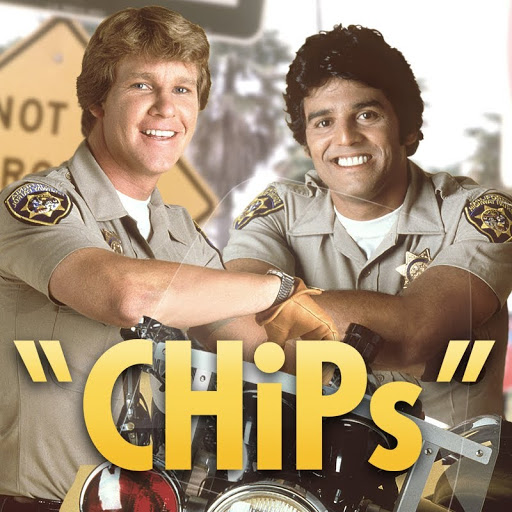

Late Night Retro Television Review: CHiPs 3.21 “The Strippers”


Welcome to Late Night Retro Television Reviews, a feature where we review some of our favorite and least favorite shows of the past!  On Mondays, I will be reviewing CHiPs, which ran on NBC from 1977 to 1983.  The entire show is currently streaming on Prime!

This week, the hills have eyes.

Episode 3.21 “The Strippers”

(Dir by Don Weis, originally aired on February 16th, 1980)

Calm down, boys, we’re not talking those types of strippers!

This episode of CHiPs finds Ponch and Jon searching through the California hill country for two rednecks who are stealing cars and stripping them for the parts.  One of the strippers is a fat guy who likes to sing while he’s working.  The other is a guy played by Evan C. Kim, who later played Clint Eastwood’s partner in The Dead Pool.  Baker’s girlfriend’s car gets stolen so this one is …. wait for it …. PERSONAL!  Of course, this being CHiPs, the episode is still mostly about Ponch even though Baker’s the one with a personal stake in the case.

It turns out that Ponch and Jon aren’t the only ones investigating crimes in the hills of California. The DEA is investigating a drug-running operation and they really don’t want to two motorcycle cops getting in the way.  (Doesn’t the DEA understand that motorcycles are cool?  At least they’re not bike cops like those schmucks on Pacific Blue.)  The head drug smuggler is played by Morgan Woodward, who was a veteran of the western genre.  The old cowboys are smuggling cocaine into Los Angeles.  It’s like an extremely depressing country song.  There’s no more cattle but there’s plenty of the devil’s dandruff to be sold.

If I seem to be rambling, it’s because there’s not really much to say about this episode.  Airing, as it did, late in the season, it’s hard not to feel that show’s writers were probably tired and out-of-ideas when it came to coming up with the plot for this one.  Ponch and Jon catch the car strippers who have information on the drug dealers.  The car strippers turn informant and hope that they’ll get a deal as a result.  Let’s hope so because prison is not a friendly environment to snitches.

This episode did feature one nicely-filmed accident scene, featuring multiple cars flying through the air (in glorious slo mo of doom!) and a bunch of broken glass.  Bonnie and Bear cleaned up the accident site so that Ponch and Baker could get back to searching for the car thieves.  That was nice of them.  It’s all about team work!

Brad’s “mini-review” of LOVE AND BULLETS (1979), starring Charles Bronson! 


Charles Bronson is an Arizona cop who goes to Switzerland to bring back a gangster’s girlfriend (Jill Ireland). The gangster (Rod Steiger) sends a hitman (Henry Silva) to kill her so she can’t tell his crime secrets to the authorities.  

This isn’t one of Bronson’s best films, but it’s still a fun movie to watch on a chilly, rainy day. There are some good action scenes set in various cold & snowy European locations. This is Bronson in “Bond” mode which is kind of fun and different. And what can you say about a stuttering Rod Steiger screaming at his advisors about the meaning of “love.” It’s fun stuff when you like Steiger as much as I do. I do deduct half a star because Steiger gets so mad at one point that he turns over a table with some of the biggest, most scrumptious looking shrimp I’ve ever seen. That was completely uncalled for and wasteful, but not quite as wasteful as Bronson and Henry Silva in the same movie without an epic battle of some sort. The fact that they didn’t fight it out on the Matterhorn itself can only be described as a missed opportunity. 

Retro Television Review: Miami Vice 4.5 “Child’s Play”


Welcome to Retro Television Reviews, a feature where we review some of our favorite and least favorite shows of the past!  On Mondays, I will be reviewing Miami Vice, which ran on NBC from 1984 to 1989.  The entire show can be purchased on Prime!

This week, Sonny is too quick to fire his gun.

Episode 4.5 “Child’s Play”

(Dir by Vern Gillum, originally aired on October 30th, 1987)

This is a dark, dark episode.

While breaking up what appears to be a case of domestic violence between Annette McAllister (Danitra Vance) and Walker Monroe (Ving Rhames), Sonny thinks that he spots someone holding a gun in the next room.  Sonny fires through the wall, hitting a 13 year-old boy who Annette claims is her son, Jeffrey.  While Jeffrey McCallister lies in a coma, a guilt-ridden Sonny starts to think about his ex-wife and their son, Billy.  They live upstate and it’s been a while since Sonny visited.  When Sonny does visit, he learns that his ex-wife’s fiancé wants to adopt Billy after the wedding.

Meanwhile, back in Miami, it turns out that there is no Jeffrey McAllister and that the boy who Sonny shot was actually a child soldier, recruited into a gang at an early age so that he couldn’t be sent to prison if arrested.  It turns out that Walker and Annette are both involved in a gunrunning operation that is headed up by Holliday (Isaac Hayes).  It all leads to one of those patented Miami Vice-style action sequences where Crockett, more or less, allows Walker to fall to his death.  Sonny is definitely not in a good mood for the majority of this episode.

Child’s Play could have just as easily been titled The Don Johnson Emmy Submission Episode.  This episode revolves entirely around Crockett and his feelings of guilt over shooting a child and also his fear of losing his son.  Johnson does a pretty good job in this episode.  Over the course of season 3 and the first few episodes of season 4, it really has sometimes seemed as if Crockett was losing his edge.  This episode presents us with the return of self-destructive, end-of-his-rope Sonny and not even Johnson’s mullet can distract from the drama.

Thematically, this episode is pretty bleak.  We never really learn much about the kid who was shot by Crockett, other than that he has a pretty sizable criminal record for a 13 year-old.  By the end of the episode, he’s woken up from his coma but, assuming that he is capable of leaving the hospital, he’s still wanted on several murder charges.  The kid basically has no future, even if he does make it to adulthood.  Meanwhile, Sonny’s son is growing up without his father and, when Sonny does visit him, there’s really not much of a connection between the two of them.

In other words, everyone’s doomed.  This was not a happy episode but, then again, Miami Vice was rarely a happy show.

Music Video of the Day: In My House by Kendra Morris (2025, dir by ????)


Watching this video reminded me that 1) glasses can be cool and 2) I need to make an appointment with the eye doctor soon and see if my vision has gotten any worse.  I’m pretty sure it has but I’ve been putting off the visit.

Enjoy!

Late Night Retro Television Review: Degrassi High 2.5 “Body Politics”


Welcome to Late Night Retro Television Reviews, a feature where we review some of our favorite and least favorite shows of the past!  On Sunday, I will be reviewing the Canadian series, Degrassi High, which aired on CBC and PBS from 1989 to 1991!  The series can be streamed on YouTube and Tubi

Just when Lucy thinks that she’s out, they pull her back in.

Episode 2.5 “Body Politics”

(Dir by Phillip Earnshaw, originally aired on December 3rd, 1990)

Lucy is depressed because the big dance is coming up and no one has asked her.  She makes another one of her video diaries for L.D., in which she says, “I know I can be kind of mouthy.”  That’s true but being “kind of mouthy” is a Degrassi tradition and screw anyone who can’t handle someone having an opinion!

Anyway, Lucy does get a date with Dale (Cameron Graham), a jock with a cute smile.  But when the Girls Volleyball Team discovers that the Boys Basketball Team has been given all of the best practice slots in the gym (basically, the basketball team gets to practice in the afternoon for as long as they want while the volleyball team only gets a few minutes in the morning), Lucy finds herself starting another protest.  However, when she discovers that Dale is the captain of the basketball team, Lucy starts to wonder if she should back off.  She wants to go to the dance!

The creepy Farrell twins insist that Lucy has to be their leader and their spokesperson.  This episode was the first time that the Farrells were prominently featured in the second season and I had forgotten how annoying they could be with their constant demand that Lucy lead every single protest.  Seriously, I’m kind of sympathizing with Lucy’s desire to avoid getting involved.

Lucy does eventually step up and make her argument about the girls deserving equal time to the Phys Ed. department.  It doesn’t do any good.  It turns out that, when Dale said that no one cares about Girls Volleyball, he was right.  Lucy loses her fight and her date.  But the president of the senior class, the never before-seen Bronco (L. Dean Ifill), is impressed by Lucy’s fighting spirit and asks her to the dance.  So, things work out.

(Lucy, of course, is destined to be crippled and blinded by Wheels in an auto accident but that’s a while off.)

As for the other plots in this week’s episode, Patrick, the Irish guy who was dating Spike at the end of last season, is single again and asks Liz out on a date.  Spike says she’s fine with it but actually she’s jealous. Hey, it happens!  And Alexa and Michelle finally decide to be friends again.  Yay!  Seriously, it’s always nice when friendships are saved.

This episode could have been better.  The main problem was that I didn’t buy a lot of the Lucy story.  I mean, how come there wasn’t a coach or anyone supervising the gym while the basketball players and the volleyball players were having their argument?  How come the athletic teams didn’t already have a set schedule for when they would practice?  Since when are the Farrell twins athletic and why can’t they ever do anything without demanding that Lucy be their spokesperson?  How exactly is L.D.’s father getting away with traveling around the world with his daughter who I imagine is legally required to be in some sort of school?  There were just too many unanswered questions.

The TSL Grindhouse: Mitchell (dir by Andrew V. McLaglen)


I come here to defend Mitchell.

First released in 1975, Mitchell does not have a great reputation.  It’s often described as being one of the worst of the 70s cop films and Joe Don Baker’s performance in the lead role is often held up to ridicule.  A lot of that is due to the fact that Mitchell was featured on an episode of Mystery Science Theatre 3000.  Last year, for my birthday, my friend Pat McCurry actually hosted a showing of the MST 3K version of Mitchell.  I laughed all the way through it.  It was a funny show and most of the jokes uttered by Joel and the Bots landed.  That said, I wish they hadn’t been so hard on Joe Don Baker.  Baker was an outstanding character actor, one whose good ol’ boy persona sometimes kept people from realizing just how fiercely talented he actually was.

Here’s the thing with Mitchell.  Just because a film is snarkable, that doesn’t mean that it’s a bad film.  Just because there are moments in a film that inspire you to talk back to the screen, that doesn’t make it a bad film.  Some of the most enjoyable films that I’ve ever watched were enjoyable specifically because they were made to inspire the audience to talk back to the characters.  Whatever flaws you may want to find in Mitchell, it’s an entertaining film.  The plot may be impossible to follow but who cares?  When you’ve got Joe Don Baker, John Saxon, and Martin Balsam all in the same film, does the plot really matter?

This is a film that you watch for the personalities involved.  Balsam plays a wannabe drug lord who always seems to be somewhat annoyed.  Someone once describes Bernie Sanders as always coming across as if he was about send his meal back to the kitchen because it was too cold and that’s a perfect description of Balsam’s performance in Mitchell.  John Saxon plays a sleazy rich guy who murders a burglar and then tries to cover up his crime.  Saxon is calm, cool, collected, and completely confident that his wealth will get him out of anything.  And then you’ve got Joe Don Baker as Mitchell, wearing an ugly plaid suit, drinking beer the way that I drink Diet Coke, and continually pretending to be dumber than he actually is.  There’s an interesting subtext to these three characters and how they interact.  Saxon and Balsam play criminals who are both rich and who both think they can get away with anything because they’ve got money.  Mitchell is a complete and total slob, a guy with a cheap apartment, a cheap suit, and absolutely no refinement at all.  Mitchell uses his good old boy persona to get the bad guys to continually underestimate him.  He ultimately turns out to be smarter and actually more ruthless than any of them.

Joe Don Baker throws himself into the role of Mitchell and there’ actually a lot of intentional humor to be found in his performance.  Baker doesn’t play Mitchell as being a supercop.  Instead, he plays Mitchell as being a blue collar guy who gets absolutely no respect.  Even when he’s on a stakeout, a random kid starts arguing with him.  (Mitchell loses the argument.)  Mitchell’s a jerk who busts his hooker girlfriend (Linda Evans) for having weed on her but he’s also the only one who could stop Balsam from doing whatever it is that Balsam thinks he’s trying to do.  (Again, don’t spend too much time trying to understand the plot.)  Mitchell’s super power is that he’s a slob who doesn’t give up.  To paraphrase Road House‘s Dalton, he plays dumb until it’s time not to be dumb.

As I said, it’s an entertaining film.  Where else are you going to see a not particularly high-speed chase between two station wagons?  Where else are you going to see John Saxon in a dune buggy or Joe Don Baker in a helicopter or Martin Balsam as the captain of a yacht?  Where else are you going to see a film that features its hero saying, “Yep, that’s grass,” before arresting his lover?  Mitchell is fun and entertaining and I’ll always defend both the movie and its star.

May Noir: The Big Sleep (dir by Michael Winner)


Raymond Chandler’s detective classic, The Big Sleep, has twice been adapted for film.

The first version came out in 1946, just seven years after the book’s publication.  That version starred Humphrey Bogart as detective Philip Marlowe and Lauren Bacall as Vivian, the daughter of a man who has hired Marlowe to discover who is trying to blackmail him.  Directed by Howard Hawks and co-written by William Faulkner, this version of The Big Sleep is considered to be a classic noir, one that was cited as being a major influence on director Akira Kurosawa.

The 1978 version was directed by Michael Winner, takes place in London in the 1970s, and features Robert Mitchum as Marlowe.  Despite a strong ensemble cast and an excellent lead performance from Mitchum, this version of The Big Sleep still features one of the worst performances ever put on film.

Sarah Miles plays the role of Charlotte Sternwood Regan, the eldest daughter of General Sternwood (James Stewart).  Miles is playing the role that Lauren Bacall played in the first film and, despite the fact that they both earlier co-starred to a certain amount of acclaim in Ryan’s Daughter, Miles and Mitchum do not have a hint of chemistry in this film.  Actually, Miles doesn’t have chemistry with anyone in this film.  She seems detached from the action and her frequent half-smiles come across as being not mysterious but instead somewhat flakey, as if she doesn’t quite understand that she’s in a noir.  Sarah Miles is not a bad actress (as anyone who has seen Hope and Glory can tell you) but her performance here is incredibly dull.  That said, she is not the one who gives the worst performance in the film.

Instead, that honor goes to Candy Clark, playing General Sternwood’s youngest daughter, Camilla.  Camilla is meant to be mentally unstable and potentially dangerous.  Clark plays the role like a giggly teenager, constantly fidgeting and literally hissing in more than a few scenes, as if she’s been possessed by a cat.  Clark overacts to such an extent that you’ll be more likely to laugh at than be disturbed by her antics.  It doesn’t help that she shares nearly all of her scenes with Robert Mitchum, a man who was a master when it came to underacting.  If you’re going to give a bad performance, you don’t want to do it opposite someone who will make you look even worse by comparison.

The mystery of who is blackmailing General Sternwood is twisty and full of disreputable people.  At times, the film feels like a a parade of character actors.  Edward Fox, Joan Collins, Richard Boone, Oliver Reed, Harry Andrews, Richard Todd, and John Mills all show up throughout the film and, as a viewer, I was happy to see most of them.  They all brought their own sense of style to the film, especially the menacing Oliver Reed.  That said, director Michael Winner was never known for being a particularly subtle director and the film gets so mired in its own sordidness that it becomes be a bit of a slog to sit through.  As a filmmaker, Winner was a shameless.  That sometimes worked to a film’s advantage, as with the original Death Wish.  That film needed a director who would dive into its Hellish portrayal of New York City without a moment’s hesitation and that’s what it got with Michael Winner.  With Winner’s adaptation of The Big Sleep, however, the film gets so caught up in trying to shock and titillate that it’s hard not to miss the wit that made the first adaptation so special.

That said, The Big Sleep does feature the truly special opportunity to see Robert Mitchum and James Stewart acting opposite each other.  Both give good and heartfelt performances, with Mitchum plays Marlowe as a cynic with a heart and Stewart capturing the pain of knowing that your children don’t deserve all that you do for them.  Stewart and Mitchum bring a lot of emotion and sincerity to their scenes and, for at least a few minutes, The Big Sleep becomes about something more than just bloody murders and revealing photographs.  It becomes about two aging men trying to find their place in a changing world.  The Big Sleep was one of Stewart’s final feature films and he shows that, even late into his career, he was always one of the best.