Mike Kovac (Charles Bronson) is taking pictures at a tenement fire in New York City. After getting his pictures of the fire, he gets a few shots of some of the people hanging around, including Norma Delgado (Angie Dickinson). A group of young men see him taking the pictures, so they take the camera away from him. It seems Norma is the daughter of Marty Delgado (Robert Armstrong), a mobster who’s just finished off a six year stretch in prison. Prior to going to prison, Marty stashed a lot of cash away and the boys are planning on taking it away from him. They’re afraid if anyone knows his daughter is around, they’ll be on their way to take the money for themselves. When the boys show back up at Kovac’s house, take his pictures and smash him on the head, he’s determined to figure out what the hell is going on. The first step is finding Norma. Once he finds her, everything else should become clear.
Aside from Charles Bronson as Mike Kovac, the most interesting thing about this episode is the presence of the lovely Angie Dickinson. At this point in her career she was mostly guesting on TV shows or doing smaller parts in movies. She’s so beautiful, but she really doesn’t have a lot to do here. The next year she would play John Wayne’s love interest in RIO BRAVO (1959) and she’d be on her way to stardom. It’s a treat seeing her and Bronson on screen together.
Bronson does have one decent tough guy exchange with the young thugs:
Kovac – “…a real tough bunch. You’re tough like a coat of cheap paint. First stretch of bad weather comes along and it peels right off!”
Thug – “Maybe you’re the paint remover?!”
Kovac – “You don’t get that boy out the darkroom, we’ll soon find out!”
As soon as Kovac says this he gets knocked out cold, so Bronson’s not always as tough as he seems at this point in his career.
One other thing, I am finding that I like the episodes where Kovac’s “Pop” Anton (Ludwig Stossel) shows up. Pop is also a photographer, and he’s so proud of his son and the way his pictures are always in magazines and in the papers. During the middle part of this episode he just has one slight criticism of his son’s work, “you need more lighting.” When Kovac gets the money shot at the end and Pop sees it in a magazine, he’s so proud… he just thinks there needed to be more lighting! It’s a lighthearted and fun way for the episode to end.
Here at The Shattered Lens, we’re celebrating Clint Eastwood’s birthday on May 31st. I decided to revisit his 1999 film, TRUE CRIME.
Clint Eastwood directs and stars as ace journalist, Steve Everett, who also happens to be a bad friend, a terrible dad, and an even worse husband. Literally the only thing that he’s got going for him is his “nose,” his ability to sniff out a story where no one else can. Even that has begun to fail him, mostly due to his recents bouts with alcoholism, which he seems to somewhat have a handle on at the time of this story. When a young, beautiful colleague tragically passes away in an auto accident, Steve is given her previous assignment to cover the execution of convicted murderer Frank Beechum (Isaiah Washington). Not the kind to write a human interest “puff piece” like the Oakland Tribune is wanting, Everett begins digging into the past and pretty soon that nose of his starts telling him that Beechum is a victim of circumstantial evidence. Despite his editor Bob Findley’s (Denis Leary) objections, he’s able to convince his newspaper boss Alan Mann (James Woods) to let him dig deeper into the story. As he tries to juggle his myriad personal problems with his growing belief in Beechum’s innocence, Everett is also facing a clock that is ticking down to the midnight execution. Will he be able to find the crucial piece of evidence that will set Beechum free?
TRUE CRIME appears to be somewhat of a forgotten Clint Eastwood film. I saw it at the theater when it came out in 1999, but it was not financially successful, only bringing in $16 Million at the box office. Regardless of that, I still love the film. It’s certainly not perfect. It’s probably too long, Beechum is probably too angelic after being “born again,” and the resolution may be a little unrealistic, but I still enjoyed every second of it. One of the coolest things about Clint Eastwood is his willingness to play such flawed men on screen, yet we still love him. He’s great in this film! Anyone who’s read much of my work knows that my love of actor James Woods goes back to being in junior high and renting his movies BEST SELLER and COP. It’s such a treat seeing the legendary pair on screen together even if Woods’ role is sort of a glorified cameo. Woods is hilarious in his limited screen time. My last shout out is to Isaiah Washington as the innocent man who’s about to be put to death. After all these years and appeals, he’s accepted his fate, but the scene where he tells Everett his story and Everett tells him that he believes he’s innocent is so powerful. Add to that Washington’s scenes with his wife and daughter, and I was very much emotionally invested in this film. Washington’s performance was key to the film working, and he’s great!
Overall, TRUE CRIME is a film that takes its sweet time, but it ultimately tells a tense, engrossing story that ratchets up the tension to 10 prior to its last second resolution. I consider it very underrated and highly recommend it. I’ve included the trailer below:
Today’s song of the day comes to us from the soundtrack of the 1983 film, Revenge of the Ninja. Composed by Robert J. Walsh, this soundtrack will definitely leave you prepared to defeat all of your enemies, ninja-style!
(Actually, don’t try to do that without getting some training once. I speak with the experience who sprained her ankle multiple times as a result of trying to duplicated Kate Beckinsale’s Underworld moves.)
Hi, everyone! I have a quick programming note. Because of the holiday and my own need to get caught up with some other TSL projects that I’m currently working on, I will be taking a two week-long break from my Retro Television Reviews. They will return on Monday, June 9th, with reviews of MiamiVice and CHiPs!
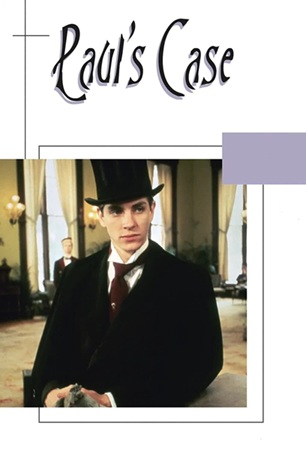
For those of you keeping track, Monday is all about the cops, with Miami Vice and CHiPs. Tuesday will feature FantasyIsland and PacificBlue. Wednesday serves up The Love Boat and Monsters. Thursday gives us Malibu, CA and Highway to Heaven. Friday gives us St. Elsewhere and Friday the 13th. Saturday presents us with The American Short Story and Check It Out! And on Sunday, we’ve got Homicide: Life on the Street and Degrassi High!
Again, Retro Television Reviews will return on June 9th. Thank you for your understanding and patience!
Here at The Shattered Lens, we’re looking forward to celebrating the birthday of Clint Eastwood on May 31st. In anticipation, I decided to revisit COOGAN’S BLUFF (1968).
Clint Eastwood is Coogan, a tough as nails deputy sheriff from Arizona, who’s ordered by his boss, Sheriff McCrea (Tom Tully) to go to New York City and bring back the escaped killer James Ringerman (Don Stroud). When he gets to New York, he’s informed by Lieutenant McElroy (Lee J. Cobb) that Ringerman has overdosed on LSD while in the state’s custody, he’s now in the Bellevue Hospital, and he will not be released to Coogan until the state Supreme Court says so. Stuck in the Big Apple with nothing to do but flirt with probation officer Julie Roth (Susan Clark), Coogan decides to take matters into his own hands and get Ringerman out of the hospital early. He bluffs the attendants at the hospital into turning Ringerman over to him so he can catch the first plane back to Arizona. It seems like a good plan until he’s ambushed by Ringerman’s girlfriend Linny (Tisha Sterling) and his friend Pushie (David Doyle), he gets conked on the head, and he loses both his gun and his prisoner. Now, in trouble with Lieutenant McElroy and Sheriff McCrea, Coogan is ordered back home to Arizona. Determined to get Ringerman at any cost, Coogan stays in the city and leaves a trail of broken hearts and bruised bodies on his way to capturing his man!
Made in 1968 after Eastwood’s string of excellent spaghetti westerns with Sergio Leone, COOGAN’S BLUFF may be set in contemporary times, but Coogan still seems to be a product of the old west. A big part of the fun is watching him interact with the people of New York City, where everyone is trying to take advantage of him, whether it be the cab driver, the hotel clerk, or the hooker down the hall. When he finally gets to the police station, he sees a building that’s completely overrun with criminals and crazies. He soon finds that Lieutenant McElroy follows the law down to the letter, while he treats the law as more of a set of suggestions on his way to getting the bad guys. This leads to endless frustration and almost gets Coogan arrested multiple times throughout the film as he doesn’t want to deal with all the red tape. One thing that doesn’t change whether Coogan is in Arizona or New York is his success with the ladies. They all swoon and he more than willingly obliges. The only problem for his prospect of true love is the fact that getting his guy always comes first, and he’ll use that sex appeal to get whatever information he needs. One of the main action scenes in this film, the bar fight, is set up ironically when the woman he’s “using” turns the tables and instead sets him up to be pummeled.
COOGAN’S BLUFF is Eastwood’s first film with director Don Siegel, with whom he’d make DIRTY HARRY a few years later. You can definitely see the genesis of Harry Callahan in Walt Coogan, a man who does whatever it takes to stop criminals, is quick with a whip, and usually pisses off his superiors along the way. In some ways, you could say that Walt Coogan set the mold for the hero of cop films for the next couple of decades! It also has that sense of humor that would be a mark of Eastwood’s cop films. This one includes a funny thread that runs throughout where every person he meets assumes he’s from Texas because he wears a cowboy hat, and he always corrects them that he’s from Arizona. I get this as I always make sure people know that I’m from Arkansas!
Overall, I really enjoy COOGAN’S BLUFF due mainly to Clint Eastwood’s excellent performance in the lead role. It was a great start to his “post Leone” career and would influence action movie heroes from that point forward.
In preparation for our celebration of Clint Eastwood’s birthday on the 31st, I watched TwoMulesFromSisterSara earlier today.
The 1970 film, which was heavily influenced by Eastwood’s Spaghetti westerns, featured a soundtrack from Ennio Morricone. It only seems appropriate that his excellent work should also provide us with our song of the day.
Welcome to Late Night Retro Television Reviews, a feature where we review some of our favorite and least favorite shows of the past! On Fridays, I will be reviewing Friday the 13th: The Series, a show which ran in syndication from 1987 to 1990. The entire series can be found on YouTube!
This week …. hey, where is everyone?
Episode 3.14 “Repetition”
(Dir by William Fruet, originally aired on February 5th, 1990)
After newspaper columnist Walter Cromwell (David Ferry) accidentally hits and kills a girl with his car, he finds himself consumed with guilt. He also start to hear the girl’s voice in his head, demanding that he bring her back to life. Walter just happens to have a cursed amulet, one that allows the owner to bring someone else back to life as long as he kills someone who is wearing the amulet. Walter’s first victim is his dying mother. But after he kills her, he starts to hear her voice demanding to be brought back to life. So, Walter commits another murder, one after the other, trying to bring back to life every one who he kills.
This was an interesting episode because neither Johnny nor Jack were anywhere to be seen. Instead, it was just Micki and she only appeared at the start and the end of the episode. The entire episode focused on Walter and his descent into madness and, it must be said, that worked just fine. This show’s strength has always been its collection of cursed antiques and this episode allowed us to see how one of them actually works. We saw how the amulet manipulated Walter and how Walter himself became more and more hooked on using the amulet’s power. I’ve always viewed the antiques as being a bit like drugs and their users being addicts and this episode certainly played into that theory.
This was an intense episode, featuring moody visuals and a strong script from David Lynch’s daughter, the future director Jennifer Lynch. After last week’s odd episode, it was nice to see an episode this week that actually got to the heart of what this series was always supposed to be about.
Mike Kovac (Charles Bronson) is working on a pictorial profile of a banker in a small town outside of New York City, when a man named Terry Killeen (Tom Pittman) robs the bank and kills the banker. Killeen sees Kovac’s camera and forces him to come along with them. Killeen wants to be famous so he has Kovac document his one man crime spree as he robs a bank every day for six straight days. Kovac takes pictures at each robbery and sends them to his friend and small town newspaper man, Jenkins (Russell Collins), to publish the stories. Jenkins figures out that Kovac is using the pictures to provide clues to where they are heading, mainly the Lone Pine Lodge. It seems the college girl that Killeen loves, Sara (Mayo Loiseaux) is at the Lodge and Killeen thinks she will reciprocate his feelings now that he’s a famous outlaw. With Killeen planning to kill Kovac once he’s taken a picture with him and Sara, will Jenkins be able to figure out the clues and make it to Lone Pine and save his friend before it’s too late?!
The most unique aspect of “Profile of a Killer” is the performance of Tom Pittman as the bank robber / murderer, Terry Killeen. He’s certainly over the top, but his cackling laugh as he murders, robs, and terrorizes everyone around him is somewhat unsettling. Sadly, Tom Pittman would die on October 31st, 1958, one week after this episode aired, in a car accident. I also liked the performance of Russell Collins as Kovac’s friend and newspaper man, Jenkins. Jenkins’ day job may be as a newspaper editor, but he makes it clear throughout the episode to the local sheriff’s deputy Gilligan (Wayne Heffley) that he’s planning on getting out of the office and saving Kovac by himself if he has to. That’s pretty much exactly what he does. The episode concludes with a rifle wielding Jenkins and Kovac working together to take on Killeen in a night time gunfight. It’s a fun scene, with Kovac’s flashbulbs and Jenkins’ deadeye shooting skills both coming in handy. And of course, there’s the continued excellence of Charles Bronson in the lead as Mike Kovac. In this episode he uses his brain more than his brawn. He didn’t get any real cool lines, and he didn’t get the opportunity to kick any butt. That’s always a missed opportunity with Bronson, but he still dominates the proceedings with his unique charisma and presence.
“Profile of a Killer” doesn’t give Bronson any true badass moments, but it does create some memorable characters for his Mike Kovac to interact with, and I enjoyed that very much!
Welcome to Retro Television Reviews, a feature where we review some of our favorite and least favorite shows of the past! On Fridays, I will be reviewing St. Elsewhere, a medical show which ran on NBC from 1982 to 1988. The show can be found on Hulu and, for purchase, on Prime!
This week, we start season 2!
Episode 2.1 “Ties That Bind”
(Dir by Bruce Paltrow, originally aired on October 26th, 1983)
The second season is here and there are changes to be found in the opening credits.
David Birney and G.W. Bailey are no longer listed in the opening credits. I’m not sorry to see Birney go as Dr. Samuels was never that interesting of a character. I will miss Bailey’s performance as Dr. Beale.
Norman Lloyd is now listed in the credits, appearing right after Ed Flanders. Ellen Bry, Kim Miyori, and Eric Laneuville are also now listed in the opening credits. That’s good. Last season, Shirley Daniels (played by Ellen Bry) was one of the most important characters on the show and it always seemed strange that she was left out of the opening. Mark Harmon, sporting a mustache, appears in the credits, though he didn’t appear in this episode. The final addition to the opening credits is Nancy Stafford, who does appear in this episode.
Stafford plays Joan Halloran, the new city budget advisor who has been assigned to cut St. Eligius’s budget. She tells Westphall and Auschlander that St. Eligius is not popular downtown. “They call you St. Elsewhere,” she says. Joan wants to do away with the animal research lab, which is a part of the hospital that has never been mentioned before. (And with good reason. Boo, animal research, boo!) Westphall finally agrees, on the condition that the city fund Dr. Craig’s attempt to perform a heart transplant on teacher Eve Leighton (Marian Mercer).
Wisely, Dr. Craig gets a lot of screentime in this episode. If the first season seemed to often be unsure of just how abrasive the show should allow Craig to be, the second season premiere would seem to suggest that the show’s writers realized that the more abrasive Craig is, the better. Of course, Dr. Craig has good reason to be in a bad mood. As he confesses to Nurse Rosenthal, he caught his son doing drugs. Craig explains he kicked him out of the house and now, he wants nothing to do with him.
Speaking of drugs, orderly Luther (played by Eric Laneuville) finally manages to capture the thief who has been stealing all the drugs from the hospital. Dr. White is no longer under suspicion! Yay, I guess. I don’t know. Dr. White wasn’t in much of this episode but he still cames across as being a jerk. I have to admit that I groaned a little when I saw he was still on the show. A part of me is hoping he’ll get a redemption arc this season but, from his behavior during rounds, he still seems to be a jackass.
Speaking of jackasses, when Jerry Singleton (Alan Arkin) discovers that his wife, Fran (Piper Laurie), has had a stroke, he responds by crashing his car into the ER and then refusing to leave the doctors along while they try to save his wife’s life. Jerry is convincing that he knows everything and he’s very demanding. Naturally, Fran’s doctor is Jack Morrison because Morrison always gets the really depressing cases. Fran does wake up from her coma but she neither speaks no seems to hear anything anyone says to her. I can’t imagine this is going to end well, mostly because she’s Morrison’s patient and things never seem to go well when Morrison is involved. (What’s really sad is that Morrison, unlike Peter White, is a good doctor! He just has rotten luck.)
Shirley Daniels finds out that Fiscus is cheating on her with Kathy Martin, who spends most of this episode promoting cryogenics. Shirley responds by dumping Fiscus and telling him that he’s a pig. Fiscus tells Kathy that they no longer have to sneak around, just for Kathy to say that the sneaking around was the whole point. She promptly dumps Ficus.
Finally, Dr. Ehrlich meets a woman, Bobbi (Jean Bruce Scott) at the laundromat. They go back to her apartment. She strips down to her underwear. She has Ehrlich tie her to the bed. Ehrlich realizes that he has to get something from his car so he runs outside and …. gets locked out. And then he nearly gets arrested while trying to use his credit card to open the building’s door. However, the next day, Bobbi shows up at the hospital for her “encounter group,” and the two of them are reunited. Again, I have a feeling this is not going to end well, just because it involves Dr. Ehrlich.
Hey, this episode was pretty good! It moved quickly, it reintroduced us to the cast, and all of the stories were actually fairly interesting. It’s obvious that show’s producers paid attention with what didn’t work during season one and they made an effort to improve things with season two. Compared to the majority of this first season’s episodes, the pace was quicker, the humor was sharper, and just about everyone got a moment or two to shine. I’m looking forward to next week!