October True Crime: My Father’s Shadow: The Sam Sheppard Story (dir by Peter Levin)


On July 3rd, 1954, Marilyn Sheppard was murdered in her bedroom.

The wife of a prominent neurosurgeon, Marilyn Sheppard was bludgeoned to death in her own bedroom.  Her husband, Sam Sheppard, claimed that he had fallen asleep on a downstairs couch and was woken up by the sound of his wife screaming.  Sheppard said that, when he ran upstairs to the bedroom, he saw a bushy-haired man in the shadows.  The man hit Sheppard, knocking him out.  When Sheppard came to, he saw the man fleeing the house and chased after him.  The two fought outside and again, Sheppard was knocked out.

The police did not believe Sam Sheppard’s story and, after days of headlines that flat out accused him of being the murderer, he was arrested and charged with murdering his pregnant wife.  The press had a field day with the story and the trial was frequently described as being a circus.  Sheppard’s case was damaged by the revelation that he had cheated on his wife multiple times.  Contemporary accounts of the trial portrayed Sheppard as being cocky and arrogant.  As the jury was not sequestered, they saw every tabloid headline about Sheppard.  After deliberating for four days, the jury found Dr. Sam Sheppard guilty of murdering his wife.  He was sentenced to prison.

Sheppard would stay in prison until 1966.  During that time, his mother committed suicide, his father died of an ulcer, and his former father-in-law also chose to end his own life.  Sheppard’s original attorney died in 1961 and his appeals were taken over by a young lawyer named F. Lee Bailey.  In 1966, Bailey argued before the U.S. Supreme Court that Sheppard was denied due process due to the jury not being sequestered.  The Supreme Court agreed and granted Sheppard a new trial.  This time, with the flamboyant Bailey defending him, Sheppard did not testify and the defense focused on the lack of any real evidence that would suggest Sheppard had lied about the Bushy-haired Man.  Sheppard was acquitted.

Today, if Sam Sheppard is remembered, it’s for inspiring The Fugitive, a show about a doctor wrongly accused of murder.  (The show aired while Sheppard was still in prison.)  The majority of online posts and articles that I’ve read about Sam Sheppard have always focused on the retrial and usually end with Sheppard leaving prison.  It’s rare that Sheppard’s life after prison is discussed,  That’s probably because it’s a very sad story.

Sheppard may have been acquitted but he had also just spent 12 years in prison and he came out a changed man.  Sheppard tried to return to practicing medicine but his surgical skills had deteriorated to the extent that two of his patient died after he nicked an artery.  Facing multiple wrong death suits, he resigned from the only hospital that had been willing to give him a job.  He became a professional wrestler and was known as “Killer” Sam Sheppard at some of his matches.  He was also an alcoholic.  Less than four years after getting out of prison, he was dead at the age of 46.

1998’s My Father’s Shadow: The Sam Sheppard Story features Peter Strauss as Dr. Sheppard and Henry Czerny as his namesake son.  The film alternates between flashbacks to Dr. Sheppard’s life and scenes set in the 90s that focus on his son’s attempts to definitively clear his father’s name.  The film suggests that the murder was actually committed by Richard Eberling (John Colicos), who worked as a handyman and a window washer at the Sheppard home and who, when he was arrested for burglary several years after the murder, was discovered to have some of Marilyn Sheppard’s jewelry in his possession.  In the 80s, Eberling was convicted of murdering another one of his clients.  Eberling himself died in prison, the same year that this movie aired.

It’s a big story and My Father’s Shadow tries to do a lot in just 90 minutes.  Sometimes, it tries to do too much.  The flashbacks are occasionally a bit difficult to keep track of.  Sam Sheppard’s son goes from being a military school brat to a long-haired hippy so suddenly that, from a narrative point of view, it’s a bit distracting.  Overall, though, this is an effective look at an interesting story and it features two excellent performances from Strauss and Czerny.  It may not be the definitive telling of Sam Sheppard’s story but it’s a good place to start.

Horror On The Lens: Little Shop of Horrors (dir by Roger Corman)


Whenever it’s time to share this film for Horrorthon, I have a little story that I like to tell:

Enter singing.

Little Shop.…Little Shop of Horrors.…Little Shop.…Little Shop of Terrors….

When I was 19 years old, I was in a community theater production of the musical Little Shop of Horrors.  Though I think I would have made the perfect Audrey, everybody always snickered whenever I sang so I ended up as a part of “the ensemble.”  Being in the ensemble basically meant that I spent a lot of time dancing and showing off lots of cleavage.  And you know what?  The girl who did play Audrey was screechy, off-key, and annoying and after every show, all the old people in the audience always came back stage and ignored her and went straight over to me.  So there.

Anyway, during rehearsals, our director thought it would be so funny if we all watched the original film.  Now, I’m sorry to say, much like just about everyone else in the cast, this was my first exposure to the original and I even had to be told that the masochistic dentist patient was being played by Jack Nicholson.  However, I’m also very proud to say that — out of that entire cast — I’m the only one who understood that the zero-budget film I was watching was actually better than the big spectacle we were attempting to perform on stage.  Certainly, I understood the film better than that screechy little thing that was playing Audrey.

The first Little Shop of Horrors certainly isn’t scary and there’s nobody singing about somewhere that’s green (I always tear up when I hear that song, by the way).  However, it is a very, very funny film with the just the right amount of a dark streak to make it perfect Halloween viewing.

So, if you have 72 minutes to kill, check out the original and the best Little Shop of Horrors….


October Positivity: Revelation Road 3: The Black Rider (dir by Gabriel Sabloff)


Eric Roberts is not in Revelation Road 3.

I was hoping that he might be, even though his name didn’t appear in the credits.  Quite a few cast members from the first two films return for the third film.  David A.R. White is back as Josh McManus, the former super soldier who now drives his souped-car through the wastelands of America.  Bruce Marchiano is back, credited as the Stranger though we all  know he’s actually Jesus.  (Since Marchiano  appeared in all three films, I can only assume the Revelation Road films all take place in the same cinematic universe as The Encounter films and Sarah’s Choice.)  Brian Bosworth shows up briefly.

But there is no Eric Roberts.  Not even Eliza Roberts appears in this film!  It’s a shame and they are both missed.

However, Kevin Sorbo does show up.

Kevin Sorbo plays Honcho, a bandit leader who lives in the wastelands and who is worshipped by those who follow him.  Honcho occasionally speaks with an Australian accent.  Occasionally, the accent slips or disappears all together.  At first, I thought this was a case of bad editing, bad dubbing, or maybe Sorbo not really being that into the character.  However, there’s actually a rather clever moment in which Honcho tells Josh that he’s not actually from Australia.  He just speaks with the accent because it impresses his followers.  Without the accent, he’s just some guy who used to work at a gas station.  With the accent, he’s a warlord.

It’s a moment that made me laugh, largely because it’s true.  People love and fear accents.  If you’ve got a posh British accent, most Americans will assume that you’re planning a heist of some sort and that Sylvester Stallone or Harrison Ford is somewhere nearby, trying to stop you.  If you’ve got an Australian accent, the assumption amongst Americans is that you can survive harsh conditions, handle your alcohol, and jump out of a plane without a second thought.

However, Sorbo’s fake Australian accent also pays a sort of homage to the Mad Max films.  The Revelation Road trilogy was obviously envisioned as being a faith-based version of the Mad Max films, with David A.R. White cheerfully stepping into the somber shoes of Mel Gibson and Tom Hardy.  Using Mad Max as a model for a faith-based apocalypse film actually isn’t that bad of an idea.  Indeed, Gibson’s style of beatific madness opens up the original Mad Max trilogy to a similar interpretation.  Unfortunately, Revelation Road 3 is at time a bit too faithful to the Mad Max films, to the extent that it struggles to establish an identity outside of the films that inspired it.  That’s one reason why Kevin Sorbo’s character stands out.  He’s a character who genuinely surprises us.

As for the plot of Revelation Road 3, it finds Josh being sent on a mission to find The Shepherd (Robert Gossett), a mysterious figure who is gathering together a religious flock in the desert despite the fact that the new world government has outlawed things like religion and individual freedom.  While Josh’s wounded companion waits in a town ruled over by Mayor Drake (James Denton), Josh searches the desert and occasionally sees a mysterious rider on a horse.  The film mixes action and theology and the results are definitely mixed, with a few well-done chase scenes mixed with a lot of scenes of people talking.  That said, at its best, The Black Rider achieves a sort of desolate grandeur.

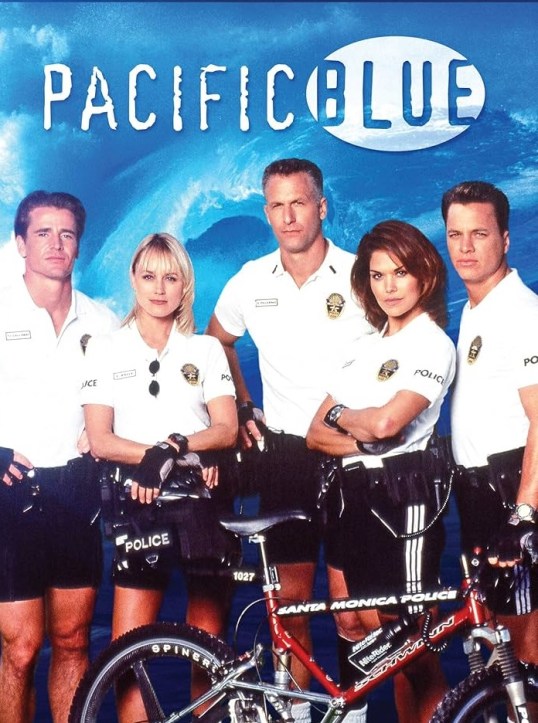
Late Night Retro Television Review: Pacific Blue 3.4 “Blood For Blood”


Welcome to Late Night Retro Television Reviews, a feature where we review some of our favorite and least favorite shows of the past! On Tuesdays, I will be reviewing Pacific Blue, a cop show that aired from 1996 to 2000 on the USA Network!  It’s currently streaming everywhere, though I’m watching it on Tubi.

This week, the bike patrol is busy!

Episode 3.4 “Blood For Blood”

(Dir by Gary Winter, originally aired on August 24th, 1997)

Last week, Pacific Blue attempted to deal with Rave Culture.

This week, it’s Hip Hop Culture!

Rapper Gangster 47 (Ross Leon) is gunned down while leaving a concert.  Gangster 47’s daughter (Meagan Good) is convinced that the hit was ordered by Gangster 47’s rival, Trigger Dog (Ten’l Brunson).  Now, I will just admit right now that I’m having a hard time writing this review because I can’t type out the name Trigger Dog without laughing.  Even though everyone says that Trigger Dog’s feud with Gangster 47 was all for show, Gangster 47’s daughter is determined to shoot Trigger Dog.

Fortunately, noted gangsta rap fan Chris Kelly is on the case.  Seriously, Chris is portrayed as being a fan of Gangster 47.  Over the course of the previous 38 episodes, we have seen absolutely nothing about the very white and the very uptight Chris that would lead us to believe that Chris would be a fan of anything other than military marches but this episode opens with her rolling her eyes when TC says that rap isn’t real music.  Chris tells TC that he needs to realize there’s more to music than the Bee Gees.  Ouch!  You tell him, Chris.  And seriously, take that, Bee Gees!  How Deep Is You Love now, huh!?

Chris and TC have been assigned to protect Gangster 47.  Why exactly the bike patrol is protecting a celebrity who has been getting death threats — as opposed to real cops and real bodyguards — is never really addressed.  Gangster 47’s daughter hates cops.  When Gangster 47 is gunned down in a drive-by, it seems like his daughter has a point. Gangster 47 isn’t killed but he is in the hospital.

The show’s producers obviously figured out that it would be a little bit awkward for the show’s almost entirely white cast to be dealing with a case involving two gangsta rappers so we meet a supercool black detective named — I’m not making this up — Wishbone (Derek Morgan).  Wishbone mainly exists to clasp hands with TC and to back-up Chris, as if the show is saying, “See?  These two aren’t as dorky as they seem.  Wishbone likes them!”  With Wishbone’s help, they come to realize that Gangster 47 was shot by a white man and Trigger Dog is innocent.

The white man is a serial killer named Strob (Todd Cattrell) who is apparently trying to bring about the Biblical apocalypse by murdering celebrities or something.  TC spots him on the beach but, in order to chase after him, he has to get on his bike and this leads to urgent close-up of TC dialing the combination of his bike lock.  Hey, TC, if you had a car, you would have already arrested Streob by now!

While this is going on, Victor’s girlfriend, Linda (Vaitiare Hirshon) has witnessed a murder and, if she testifies, she may have to go into the witness protecting program!  That’s a big deal but, of course, Palermo acts as if it’s nothing because Palermo never seems to get that people actually have lives outside of whatever he needs at any given moment.  Victor doesn’t want to lose Linda.  Conveniently, the murderer pulls a gun on Victor, which gives Victor the perfect excuse to gun him down.  Palermo’s like, “Did he shoot first?” and Victor says, “Sure.”  Victor then asks Linda to marry him.

Personally, I just find it interesting that, with all the crime happening in Santa Wherever This Show Takes Place, it just takes five people on bicycles to catch all the bad guys.  I mean, if that works in Santa Monica, maybe it’ll also work in New York after Mamdani is elected.  Let’s hope so!

Horror on TV: Gargoyles (dir by Bill Norton)


For today’s horror on television, we have a made-for-TV monster movie from 1972, Gargoyles!

What happens when a somewhat condescending anthropologist (Cornel Wilde) and his daughter (Jennifer Salt) head out to the desert?  Well, they stop by a crazy old man’s shack so that they can look at his genuine monster skeleton.  Before Wilde can thoroughly debunk the old man’s claims, the shack is attacked by real monsters!

That’s right!  Gargoyles exist and they apparently live in Arizona!  There’s nothing particularly surprising about the plot but the gargoyles are memorable creations and Bernie Casey gives a good performance as their leader.  The gargoyle makeup was designed by none other than Stan Winston, who won an Emmy for his work here and who went on to win Oscars for his work on Aliens, Terminator 2, and Jurassic Park.

As well, a very young Scott Glenn shows up in the cast.  I like to think that he’s playing the same character in both Gargoyles and Sucker Punch.

Enjoy!

The Hong Kong Film Corner – THE UNTOLD STORY (1993), starring Anthony Wong and Danny Lee! 


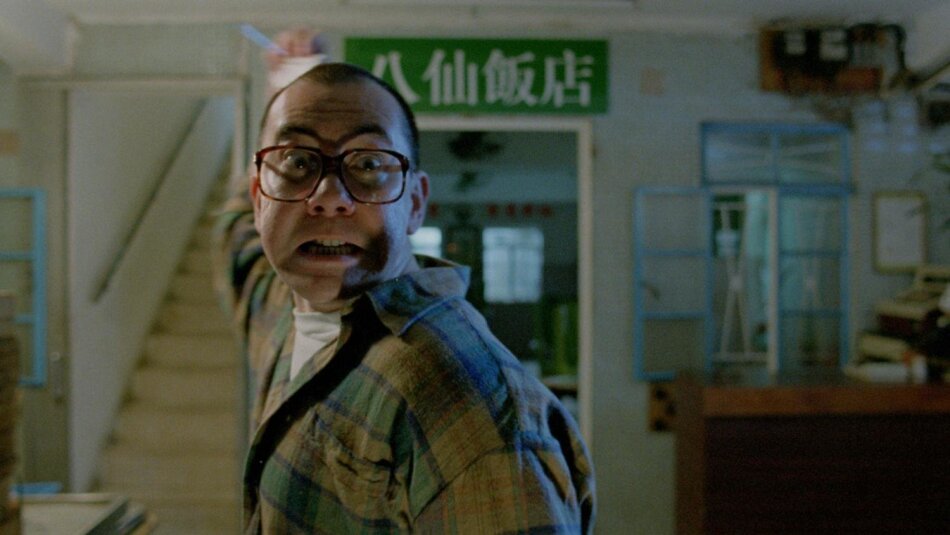
Loosely based on the real-life exploits of a serial killer in Hong Kong in the mid-80’s, THE UNTOLD STORY (1993) unfolds over a couple of different timelines. The film opens with a flashback to Hong Kong circa 1978, where we witness a horrific murder committed by Chan Chi-Leung (Anthony Wong) over a game of mahjong. In order to try to conceal the murder, we see the killer as he destroys his old identification documents and creates a completely new identity. As the opening credits end, we’re “in the present” and join a group of kids playing on the beach when they discover a plastic bag containing severed human body parts. Soon the police are on the scene, led by Inspector Lee (Danny Lee) and a ragtag team of wisecracking detectives. Their investigation leads them to the Eight Immortals Restaurant, a place that is known for its barbecued pork buns, and its seemingly polite but evasive owner, Wong Chi Hang, who just happens to be the same guy we saw committing vicious murder at the opening of the film. Wong claims he bought the place from Cheng Lam (Siu-Ming Lau), who along with his entire family, has mysteriously vanished. As the cops dig deeper, too many things just aren’t adding up, like the restaurant’s high employee turnover rate and Wong’s inability to produce ownership papers. The cops eventually arrest him and attempt to torture a confession out of him. The flashback timeline kicks back in after Wong is arrested and put through hell by his fellow jailbirds and by the police themselves. When he finally cracks, we learn the secrets of “the untold story!”

Right off the bat, I want to make the statement that THE UNTOLD STORY is not a film that’s meant for everyone. Unless you have a strong stomach and can handle extreme gore and vicious cruelty (of both a violent and sexual nature) depicted in graphic detail, you may want to stay away. As I’m definitely a squeamish viewer, I stayed away from this film for many years due to its reputation. My curiosity eventually overcame my good sense, and I gave it a watch a number of years ago. I mean, the film is a Hong Kong “Category III” rated landmark, and Anthony Wong did win the Best Actor Award at the Hong Kong Film Awards for his performance in the movie. It stands to reason that a guy who calls himself a true fan of Hong Kong cinema should give THE UNTOLD STORY a go! Let me just say this, as someone who grew up on Hollywood films, even the goriest films had certain lines that they would not cross. There are no such lines in this film. Director Herman Yau’s 1993 Hong Kong exploitation film is an unflinching punch to the gut in its willingness to go to unacceptable extremes without any apology to the viewer. Just know that going in. 

Now that I’ve properly prepared you for the excessively cruel and gruesome nature of the violence in the film, I now have to try to put into words my actual thoughts on the film itself. One of the things that stood out to me as I watched the movie is the stark contrast between the horrific nature of the violence on screen and the “zany antics” of the police who are working the case. Led by THE KILLER’s Danny Lee as the distracted Inspector Lee, who always has a beautiful prostitute on his arm as he visits crimes scenes and the police station, this group of investigators spends a lot of their time acting like immature teenagers rather than serious cops. Imagine if you and your friends in high school were trying to solve a serial killer case, and we got to watch how you acted on stakeouts and in the police locker room, and you might get an idea of what I mean. My guess is that this is meant to make the violent content a little easier to swallow, as well as poke some fun at the “macho men” who are in charge of solving these kinds of crimes. In some ways it works, but there’s still no protection once Wong goes bonkers. 

And speaking of Anthony Wong, he is absolutely incredible in this film as the unimaginably disturbed killer. We watch him explode with rage, commit the most heinous acts imaginable, and then just clean up his mess like he’s doing his daily household chores. I guess it helps that he’s a good cook! Hell, there’s a point near the end of the film where his performance almost leads you to having sympathy for him as the police and his fellow inmates are torturing him! Almost, because the worst flashbacks are still yet to come. Wong is one of the best actors to have ever worked in Hong Kong cinema, and his masterful acting elevates the film to a level of cinematic respectability not yet afforded to such a grisly exploitation film. This is the first of five Hong Kong Film awards won by Anthony Wong. 

Overall, THE UNTOLD STORY is cinema as an endurance test, delivering an all too real depiction of a vicious killer committing unspeakable violence on screen. The goofy police squad provides some tonal relief, but this movie is not for the faint of stomach. However, for those brave viewers who can handle the graphic violence and who enjoy dramatizations of true crime from incredible actors, you will be rewarded because the filmmakers were able to come up with something special. As I type this, it’s streaming on Tubi for free!

Bonus Horror On The Lens: I Was A Teenage Werewolf (dir by Gene Fowler, Jr.)


1957’s I Was A Teenage Werewolf combines two genres that were very popular in the late 50s.

On the one hand, it’s a film about a teenage rebel.  Tony Rivers (Michael Landon) is a teenager that means well but he keeps losing his temper.  If he can’t learn to control his anger, he could very well be looking at a life behind bars.

On the other hand, it’s also a horror film.  When Tony visits a hypnotist (Whit Bissell), the end result is Tony turning into a werewolf and going on a rampage, all while still wearing his letterman jacket.

All in all, this is a pretty fun little movie.  You can check out my review of it by clicking here.

And you can watch the movie below!

Retro Television Review: Fantasy Island 7.16 “Baby On Demand/The Last Dogfight”


Welcome to Retro Television Reviews, a feature where we review some of our favorite and least favorite shows of the past!  On Tuesdays, I will be reviewing the original Fantasy Island, which ran on ABC from 1977 to 1984.  The show is once again on Tubi!

This week, on Fantasy Island, it’s more of the same old same old.

Episode 7.16 “Baby on Demand/The Last Dogfight”

(Dir by Jerome Courtland, originally aired on March 10th, 1984)

Former “pop singer” Joanna Jones (Tanya Tucker) comes to Fantasy Island.  She is no longer concerned with her musical artistry.  (“If you can call that art,” Lawrence says — Lawrence, you bitch, you!)  Now, she wants to have a baby but she doesn’t want to get married.  Her fantasy is to get pregnant over the weekend and never have to see the guy again.

Okay, then.  I mean, does she really have to go to Fantasy Island to have a one night stand?  She’s a famous and wealthy woman so it just seems odd that apparently, this is something that only Mr. Roarke can make happen.

Mr. Roarke sets her up with Harley Batten (Dean Butler) but Joanna finds herself falling for Harley so she abandons him and instead hooks up with George, who is played by Mark Venturini.  Venturini later played Vic in Friday the 13th Part V.  Remember the guy with the axe who gets tired of Joey bothering him while he’s chopping wood?  That was Mark Venturini!

By the end of the episode, Joanna has decided to take a chance on love and she leaves the Island with Harley.  This fantasy just felt odd, largely because Tanya Tucker was a terrible actress and everyone on the show seemed to be embarrassed for her whenever she had to deliver her lines.  I’m pretty sure that I saw both Dean Butler and Mark Venturini looking for an exit whenever Tucker started speaking.

As for the other story, it’s yet another aviation story.  World War II flying aces Paul Spencer (Leigh McCloskey) and Hunter Richter (Grant Goodeve) are turned back into young men so that they can fly their airplanes over Fantasy Island and simulate a dogfight.  However, Richter is haunted by the death of his wife at Dresden and, after discovering that Spencer’s wife (Leah Ayres) bears a strong resemblance to his late wife, Richter becomes determined to engage in actual combat. In the end, Spencer refuses to fight and Richter’s code of honor prevents him from shooting down a man who will not fire back. Because, of course, World War II-era Germans were famous for their sense of fair play….

The aviation story was, at least, well-acted.  But it still felt very familiar.  It was obvious that the show’s writers had run out of ideas.  All in all, this was another disappointing Season 7 trip to the Island.

Horror Song of The Day: Main Theme From Suspiria by Goblin


Suspiria (1977, dir by Dario Argento, DP: Luciano Tovoli)

You knew this was coming!

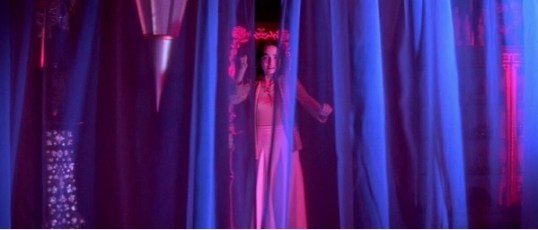
Today’s horror song of the day is the classic main theme to Dario Argento’s Suspiria!  (The Argento version is the only version that matters.)  The iconic soundtrack was composed by Goblin.  I saw an interview with Claudio Simonetti in which he said he wanted the song to be “almost annoying” in its intensity.  While I could never be annoyed this song, I do understand Simonetti’s point.  The score is designed to be as overwhelming as the evil at the center of the film.

All together now: “WITCH!”

October True Crime: Stolen Innocence (dir by Bill L. Norton)


1995’s Stolen Innocence opens with 18 year-old Stacy Sapp (Tracey Gold) trying to sneak back into her house after a long night of drinking and partying.  Unfortunately for her, Stacey isn’t very good at sneaking around and she’s caught by her mother (Bess Armstrong) and her father (Nick Searcy).

“I’m 18!” Stacy argues.

“You’re going to end up pregnant!” her mother yells.

Stacy says that that her mother is just scared that she’s going to end up a loser “like you!”  Well …. yeah, Stacy, that’s kind of the point.  If your mother has experience with the life decisions necessary to become a loser, maybe you should listen to her warnings.

Anyway, Stacy runs away with a friend of her’s.  After her friend decides to go back home, Stacy hitches a ride with a trucker.  When the trucker stops off at a truck stop so he can get his brakes looked at, Stacy meets Richard Brown (Thomas Calabro, wearing a really bad wig).  Richard is long-haired and has got a tough guy beard and a cheesy tattoo of a heart on his scrawny forearm.  Stacy, of course, is totally smitten and she goes off with Richard and his “friend,” Eddie (Matt Letscher).

It doesn’t take long for us to figure out what Richard is bad news.  He carries a gun.  He’s financing his trip through stolen checks.  He might not even own the truck that he’s driving.  He and Eddie have a bizarre relationship in which Richard continually abuses Eddie but Eddie refuses to leave.  Richard is obviously a bad guy and we can all see it.  When Stacy finally calls her parents from the road, they immediately figure out that Stacy is in trouble.  However, it takes Stacy forever to figure it out because Stacy’s kind of an idiot.

I cringed a lot while watching Stolen Innocence, not so much because of the film’s depiction of Richard’s criminal lifestyle but because I used to have a definite weakness for bad boys and I could kind of understand what was going through Stacy’s mind when she first met Richard.  That said, I’m pretty sure that I would have figured things out a lot quicker than Stacy did.  Stacy quickly goes from being a somewhat sympathetic rebellious teenager to being someone who you really start to get annoyed with.  Oh, he’s threatening you with a gun?  Okay, that’s when you leave!  That’s when you start plotting your escape.  You don’t make excuses for him.  He’s financing his trip with stolen checks?  I’m sorry, is that not a red flag?  Add to that, as played by a miscast Thomas Calabro, it’s not like Richard is some boiling cauldron of charisma.  From the first minute we see him, with his long hair and his cowboy hat and his tattoo, the guy seems like a joke.

Eventually, Stacy does figure out the truth but, by that point, Richard and her are holed up in a motel room and Richard is exchanging gunfire with the FBI.  The film ends with a title card, reminding us that this was a true story.  “He’s not a bad person!” Stacy wails to the police.  I guess some people really are that stupid.