Defending the Counselor


The_Counselor_Poster

(Spoilers Below)

The Counselor was one of the most anticipated films of 2013.  After all, it was based on a screenplay by the Pulitzer-prize winning novelist Cormac McCarthy and it was directed by Ridley Scott.  Its cast included such stars as Michael Fassbender, Javier Bardem, and Brad Pitt.  The film’s two trailers promised a return to the thematic territory that the Coen Brothers explored in their Oscar-winning adaptation of McCarthy’s No Country For Old Men.

And yet, when The Counselor was released in October, the reviews were scathing and audience response was reportedly terrible.  Writing for Salon, film “critic” Andrew O’Hehir suggested that The Counselor was not only the worst film of 2013 but the worst film of all time.

And you know what?

For not the first time, Andrew O’Hehir was wrong.  The Counselor is not the worst film of 2013.  Instead, it’s one of the best.  It’s a film that will be studied long after more acclaimed films have been forgotten.

Why is The Counselor so hated?

It’s not an easy film to love.  In fact, the film is rather brave about alienating its audience and refusing to allow for the crowd-pleasing moments that viewers have come to expect from even the most prestigious of films.

In order to truly defend the Counselor, it’s necessary to know the plot of The Counselor.  Needless to say, everything that follows constitutes a huge spoiler so, if you’re one of those types, feel free to stop reading now.
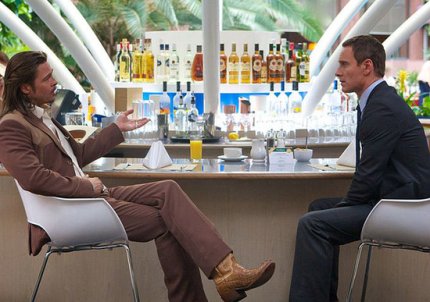
Brad-Pitt-Michael-Fassbender-Counselor

Okay, still here?  Here’s a condensed version of what happens in The Counselor:

The Counselor (Michael Fassbender) is an honest lawyer in El Paso who has never broken the law and is engaged to marry the beautiful and saintly Laura (Penelope Cruz).  For reasons that are never explicitly stated (but, as I’ll explain below, are obvious to anyone who is willing to look for the clues), The Counselor agrees to help his clients Westray (Brad Pitt) and Reiner (Javier Bardem) smuggle a huge shipment of cocaine into the U.S. from Mexico.  However, Reiner’s girlfriend Malkina (Cameron Diaz) steals the drugs and frames the Counselor for the theft.  As a result, Reiner ends up getting executed by the Mexican cartel, Westray is beheaded on the streets of London, and the Counselor ends up hiding out in Juarez, Mexico, sobbing as he looks at a DVD copy of a cartel-produced snuff film that features Laura being murdered.  The end.

Yeah, it’s not exactly a happy film.  And yet, it’s a film that sticks with you, a portrait of a shadowy underworld that is fueled solely by greed, paranoia, and masculine posturing.  Ridley Scott makes good use of the South Texas landscape and the talented cast creates a memorable gallery of rouges.

And yet, The Counselor is getting some of the worst reviews of the year.  What’s especially interesting is that the things that so many critic cite as flaws are actually the film’s greatest strengths.
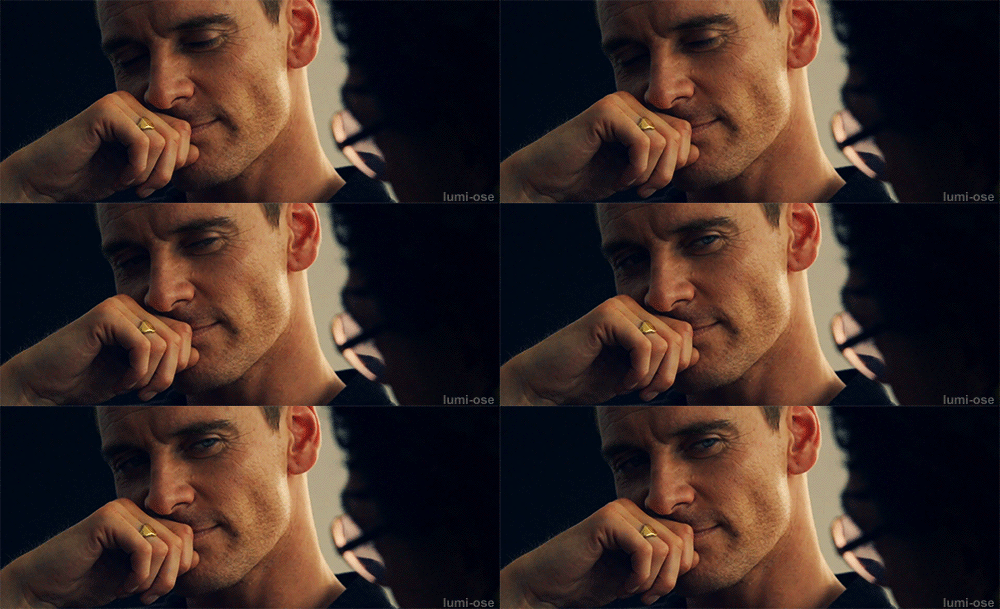
The Counselor

Consider the following common criticisms:

1) The film features some of the most overly articulate drug deals of all time.

This is the most frequent complaint that I’ve come across concerning The Counselor and there is some validity to it.  The Counselor is a very talky film.  The film’s first hour is pretty much made up of The Counselor having three conversations, all about the same thing and all reaching the same conclusion.  Cormac McCarthy’s dialogue is, perhaps not surprisingly, rather portentous and florid.  The Counselor does ask the audience to accept a world where even the head of Mexico’s most powerful cartel is given to going off on long philosophical digressions.  The Counselor is one of those films where nearly every line seems to have a double meaning.

That said, I think that those who attacking the film’s dialogue are missing the point.  This is not meant to be a naturalistic film.  Instead, it’s a heavily stylized B-film that uses its sordid story as a metaphor for dealing with deeper issues of greed, masculinity, and the changing mores of American culture.  Much as every line of dialogue has a deeper meaning, so does every pulpy plot twist.  It takes a while to adjust to McCarthy’s dialogue but, ultimately, that dialogue serves to remind us that the film has a lot more on its mind than just telling the story about a drug deal gone bad.  The combination of overly articulate dialogue with primitive violence and desires encourages us to look under the film’s surface.

2) The film’s plot is predictable.

This may be true but I think that’s actually McCarthy’s point.  From the start of the film, the Counselor is continually warned that things could potentially go very wrong.  Despite these warnings, the Counselor still gets involved in Reiner’s drug and, through a combination of hubris and fate, he loses everything that he loved.

The Counselor’s downfall is not meant to be a surprise.  Instead, McCarthy’s point is that the consequences of our actions are usually obvious but we, as human beings, chose to live in denial about just how little control we actually have over our own fate.

TheCounselor-Diaz-Cheetah-Tat

3) Ridley Scott’s direction is stylish but ultimately empty.

This argument goes that, while Scott manages to capture some gorgeous images of the Texas/Mexico border, those images ultimately don’t add up to much.  The idea goes back to a charge that is frequently leveled against Ridley Scott as a director, that he’s all style and technique with little substance.  (Interestingly enough, this is the same charge that is often made against the Coen Brothers.)

In the past, I’ve been critical of Ridley Scott.  (For proof, check out my reviews of Robin Hood and Gladiator.)  However, that being said, I think that, with The Counselor, Scott does a good job of visually interpreting the concepts at the heart of McCarthy’s script.  My mom was from South Texas and I’ve spent enough time down there to understand just how perfectly Ridley Scott manages to capture the combination of beauty and harshness that one finds along the border between Texas and Mexico.  In Scott’s hands, the emptiness of the Texas landscape serves as a perfect parallel for the emptiness of the lives of the majority of the film’s characters.

Speaking of which…

4) The motivations of the Counselor remain a mystery.

Why does the Counselor get involved in the drug deal in the first place?  Many of the film’s critics have complained that the Counselor’s motivations remains a mystery and therefore make it impossible for audiences to sympathize with the character.

Nothing could be further from the truth.

What these critics are failing to realize is that the Counselor’s motives are obvious every time that he appears on-screen.  The audience has to be willing to look for them.  The audience has to be willing to think and that, of course, is asking quite a bit of some viewers.
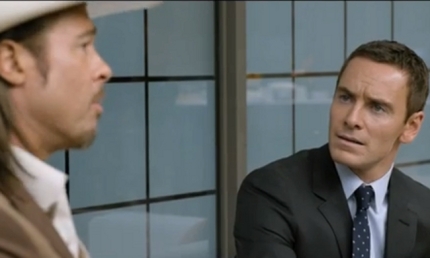
The-Counselor

While the Counselor hints that his reason for getting involved with the drug deal is so that he can make enough money to provide a good life for Laura, his actual motivations are far more selfish.  One need only see the Counselor in his perfectly pressed suits or in his sleek but sterile home to understand exactly who the Counselor is.  He is a character who has made his living by defending those who break the law but who has never had the courage to actually flaunt the rules himself.   He is a man who lives in a self-constructed prison of ennui and associating with Reiner and Westray gives him a chance to escape from his conventional existence.   He is a character who spends his day profiting from the crimes of others but, because he can go home to his beautiful home and his beautiful fiancee, assumes that he’s somehow detached from the consequences of the actions of his associates.

The Counselor starts the film as an unemotional, blank-faced cipher, a man whose entire identity is based on his job title.  (Indeed, we never learn once learn or hear the character’s actual name.)  The only time that he shows even a hint of human depth or emotion is when he’s with Laura.  He’s a man who, in many ways, is dead on the inside.  It’s only after he gets involved with Reiner and Westray that the Counselor starts to show any signs of life until, by the end of the film, he literally cannot control his emotions.   The Counselor frees himself from his stifling and conventional existence at the cost of everything and everybody that he loves.  In his pursuit of freedom, he simply moves from one self-imposed prison to another.

5) Particularly in its portrayal of Malkina, there is a strong streak of misogyny running through the film.

This is a point that I’ve seen made by several critics and it’s one that bothers me as both a feminist and as a female who happens to love genre films.  Just because a film features a misogynistic character does that therefore make the film itself misogynistic?

The majority of those who claim that The Counselor is anti-female often point to the character of Malkina.  As played by Cameron Diaz, Malkina is a hyper sexual sociopath who manipulates and destroys everyone else in the film.  Even though he’s obsessed with her, Reiner also claims to fear her and he has several conversations with the Counselor in which he cites her as proof that women cannot be trusted.

However, just because Reiner says this, that doesn’t necessarily mean that the film agrees.  In fact, as should be obvious to anyone who is actually willing to pay attention to the film, Reiner is portrayed as being a fool who, ultimately, is just as delusional as the Counselor.  Reiner, Wainstray, and the Counselor all exist in a hyper masculine environment.  For all of their posturing and macho talk, it’s also obvious that none of them are capable of truly dealing with women.  Wainstray can only bring himself to acknowledge them as potential sexual partners while the Counselor both idealizes Laura and uses her happiness as an excuse to pursue his own criminal enterprises.  Reiner, meanwhile, is both attracted to and terrified of Malkina.

the-counselor-ferrari-diaz

In perhaps the film’s most infamous scene, Malkina removes her panties and then grinds against the windshield of a Ferrari while Reiner watches from inside the car.  Some have argued that, with this scene, the filmmakers are equating Malkina’s sexuality with evil.  I, however, would argue that this scene shows that Malkina — alone of all the film’s major characters — understands the fact that all of the men in her life are essentially boys who are either incapable of or unwilling to grow up.  Malkina uses her sexuality not because she’s evil but because she’s intelligent enough to use every weapon at her disposal to make sure that she will be one of the few characters to survive to the movie’s conclusion.  By the end of the film, it’s obvious that Malkina is both the strongest and the most intelligent character in the film.

There’s an interesting scene towards the end of the film in which the Counselor, who is hiding out in Juarez, stumbles across a group of protesters who are holding pictures of young women who have either been killed on or vanished from the streets of Juarez.  Since 1993, over 4000 women have been murdered in Juarez.  The majority of those murders are still unsolved, with many blaming the Spanish tradition of machismo.  The feeling of many is that “good” girls stay home while “bad” girls get jobs in the city and are often  murdered as a result.  And, since the victims shouldn’t have been pursuing a life outside of domestic servitude in the first place, why waste the time trying to win them any sort of justice?  For the past decade, brave activists have put themselves in danger by daring to demand justice for the dead of Juarez.  When the Counselor stumbles across their rally, it’s a brief moment in which the real world and the cinematic landscape come together.

It’s also a scene that serves to remind us that the film’s characters are living in a hyper masculine world, one that embraces the concept of machismo without understanding or caring about the consequences of that destructive  culture.  The Counselor’s horrified reaction to the rally is the reaction of a man who has finally been forced to confront the evil of which he is now a permanent part.

6) The film’s ending is depressing.

Complaining about Cormac McCarthy writing a depressing ending is a bit like getting upset at a cat for purring.  It’s what McCarthy does and anyone with any knowledge of his work has no right to be shocked that the film ends on a note of hopelessness.  Much as with No Country For Old Men, The Counselor ends the only way that it can.  It may not be a happy ending but it is, at least, an honest ending.

The Counselor may not be an easy film to like but it’s definitely a film that deserves better than to be dismissed as the worst of 2013.
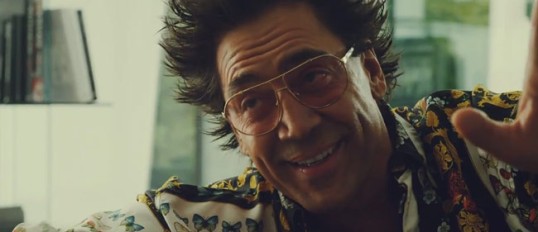
Counselor-Bardem2

Film Review: Gangster Squad (dir by Ruben Fleischer)


Gangster Squad

Do you remember Gangster Squad?

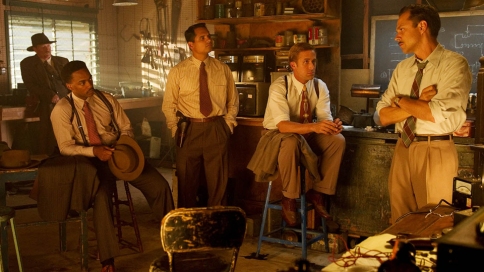
This film, which tells the story of hard-boiled cops and psychotic gangsters in 1940s Los Angeles, was originally meant to be released in September of 2012 but the release date was moved back because the film originally featured a gun battle in a movie theater.  After the real-life movie theater shooting in Aurora, Colorado, that scene was reshot and the release of Gangster Squad was delayed until January of this year.  The critics absolutely hated it, audiences stayed away, and Gangster Squad was the first high-profile flop of 2013.

I was among those who ignored the film when it was first playing at theaters.  After all, it was January and I was more interested in following the Oscar race than going to see a film that, by all accounts, was somewhat terrible.  However, now that Gangster Squad is showing up on a nearly nightly basis on Cinemax, I recently got a chance to see the movie and you know what?

The critics were wrong.

Gangster Squad tells a familiar story.  In fact, the film features not a single character or plot twist that hasn’t shown up in another movie.  The setting is Los Angeles in the 1940s.  Ruthless gangster Mickey Cohen (a totally over-the-top Sean Penn) is the king of the city’s underworld.  How crazy is Mickey Cohen?  He’s so crazy that, when we first see him, he’s watching as another gangster is literally ripped in half.  He’s so crazy that, in the middle of a gun battle, he yells, “Here comes Santy Claus!” as he fires his machine gun.  That’s how crazy Mickey Cohen is.

Sean Penn in Gangster Squad

Seriously crazy.

Fortunately, righteous police chief William H. Parker (Nick Nolte) refuses to allow a little thing like due process to keep him from pursuing Mickey.  Parker calls Sgt. John O’Mara (Josh Brolin) to his office and, after delivering a long and flowery monologue that verges on incoherence, he finally explains that O’Mara’s mission is to put together an elite squad of cops and to take Mickey out by any means necessary!  (Usually, I try to exercise some restraint when it comes to punctuation but Gangster Squad is one of those films that demands exclamation points.)

This is followed by a series of properly colorful scenes in which O’Mara recruits his gangster squad.

Jerry Wooters (Ryan Gosling) is a cynical World War II veteran who is, at first, skeptical of O’Mara and his squad.  Wooters, however, changes his mind after a saintly shoeshine boy is gunned down in front of him.  Wooters is also having an affair with Grace Faraday (Emma Stone), who happens to also be Cohen’s girlfriend.

Coleman Harris (Anthony Mackie) is a black cop who is good with a knife and who lost his cousin to the heroin distributed by Cohen’s mob.  Watching the friendly and playful interaction between Harris and all of the film’s white characters provides us with one of our first clues that Gangster Squad is not necessarily aiming to be a historically accurate portrait of America in the 1940s.

Conway Keeler (Giovanni Ribisi) is a wiretapper and a family man.  Keeler’s fate is pretty much sealed the minute that he tells O’Mara that he’s willing to risk death just to make the world a better place for his son.

Max Kennard (Robert Patrick) is a former old west gunslinger who now spends his time killing gangsters.  Max, we’re told, may be old but he’s also personally shot over a 100 gangsters.  Max also has a younger partner, an honest cop named Navidad Ramirez (Michael Pena).

GANGSTER SQUAD

The Gangster Squad

As you can probably guess at this point, there’s not a single cliché that is not employed by Gangster Squad.  However, and this is what I think several critics missed, the film deliberately takes its clichés to such an extreme that they go from being flaws to being strengths.  By so enthusiastically going overboard in its embrace of the conventions of the gangster film genre and, at the same time, acknowledging the fact that the audience is also familiar with those clichés, Gangster Squad creates its own vibrant and compulsively watchable fantasy world.  The world of Gangster Squad has little to do with any sort of historical reality.  Instead, it’s a  world constructed solely out of other gangster movies.

Taking all of this (and the fact that the film is directed by Ruben Fleischer of Zomieland and 30 Minutes or Less fame) into consideration, it’s pretty obvious that Gangster Squad is not a film that’s meant to be taken seriously.  And yet, that’s what so many critics did when the film was first released in January.  Instead of appreciating the film for paying over-the-top homage to the gangster films of the past, critics attacked it for being an example of style over substance.

And, to give the critics their due, they were exactly right.  There is no substance to Gangster Squad.  Instead, the film is a total celebration of style.

And what style!  In Fleischer’s hands, 1940s Los Angeles is a colorful wonderland of pure excess, a vibrant landscape of dark alleys and swanky nightclubs that literally glow on-screen and are populated by tough men and sultry women in clothing that might not have been found hanging in every closet in the 40s but should have been.  (Seriously, when Emma Stone first appears on-screen, she’s wearing a red gown that is simply to die for.)

This Christmas, I want both Ryan Gosling and the dress.

This Christmas, I want both Ryan Gosling and the dress.

For the viewer who is willing to give themselves over to the film’s over-the-top aesthetic and are willing to appreciate it for what it is (as opposed to condemning it for what it isn’t), Gangster Squad is a watchable, entertaining, and fun movie.  And what’s so bad about that?

I’m glad that I finally got a chance to see Gangster Squad.  Is it one of the great gangster films?  No.  The great gangster films have both style and substance but, quite frankly, if I can only have one than I would prefer something stylish and fun like Gangster Squad to something like Killing Them Softly.

(Then again, I would prefer just about anything to sitting through Killing Them Softly for a second time.)

So, enjoy Gangster Squad.  Watch it for the style.  Have fun.  And most importantly, remember that critics are as often wrong as they are right.

Emma Stone in Gangster Squad

Celebrate Lisa’s Birthday With The Passion of Joan Of Arc


Passionarc

As some of you may know, I celebrated my birthday on Saturday.  I’m still getting used to the idea of being 28.  (I can still remember when I thought that 21 was so old!)  And, I have to admit, that I think I always figured that I would have all the questions of existence answered by the time I turned 28.

Don’t get me wrong, I’m hardly a lost soul.  They say that 30 is the new 20 and, by that logic, I’m only 18 years old, which means that not only am I barely legal but I’m actually doing amazingly well for someone my age.

Still, as I start the 28th year of my often quirky life, it’s hard for me not to think about one of my personal heroines.  St. Jeanne D’Arc never lived to be 28.  She was burned at the stake for heresy when she was 19 years old.  But, in her short life, she inspired and led a nation.  When I was 17, I was busy dating and shoplifting.  When she was 17, Jeanne was defeating the English at the Siege of Orleans.

So, you can see why, despite whatever else I may have accomplished so far in my life, it’s still difficult for me to feel that I haven’t quite lived up to Jeanne’s example.

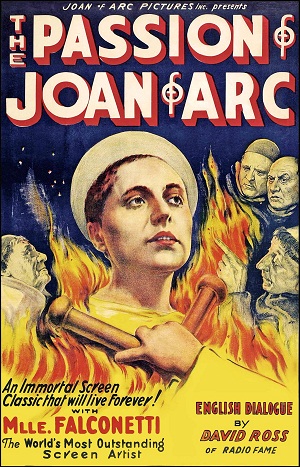
With all this in mind, what better time, than my birthday, to share with you my favorite silent film, the 1928 masterpiece The Passion of Joan of Arc?

Directed by Carl Theodor Dreyer, the film tells the story of the capture, torture, and eventual execution of Jeanne D’Arc.  Dreyer adapted the film directly from the original transcripts of Jeanne’s trial and he brings a truly surprising amount of intimacy to a story that is so famous that it often runs the risk of also feeling remote and detached from modern reality.  As opposed to many silent films in which camera movement seems to be almost an afterthought, Dreyer skillfully used jarring angles and sweeping movement as a way to put us directly into Jeanne’s head.  As we watch the film, we feel both her courage as she refuses to surrender to her tormentors and her fear as her story reaches its inevitable conclusion.  This film  transforms an iconic saint into a vulnerable but strong human being and, as a result, 85 years after it was first released, The Passion of Joan of Arc remains one of the most powerful films of all time.

Before one watches The Passion of Joan of Arc, there are three things worth noting:

1) One of Jeanne’s tormentors is played by the playwright Antonin Artaud.  Artaud would later found the Theater of Cruelty, a theatrical movement that would later be cited as an influence by Italian director Lucio Fulci.

2) Dreyer specifically barred his cast from wearing makeup, which serves to emphasize both the natural beauty and the vulnerability of Jeanne.  It also serves to emphasize the ugliness of those persecuting her.  As a result, even as the film serves to transform Jeanne into an individual, it also establishes her as a symbol for all oppressed people while her memorably ugly persecutors perfectly symbolize the excess and corrupting influence of absolute power.

3) It has been said by that, in the title role, Maria Falconetti gives one of the best performances in the history of film.  I certainly don’t disagree.  Facing her persecutors with a mixture of fear and defiance, Falconetti gives an intensely emotional performance.  You look at Falconetti’s Jeanne and you believe that yes, at the age of 19, she could have led a nation to victory.  (Though, it should be noted, that Falconetti was actually 35 years old when she played Jeanne).  Making Falconetti’s performance all the more poignant is the fact that she only made one other film and she would eventually end up committing suicide in 1948.

Without further ado, here is Carl Theodor Dreyer’s The Passion of Joan Of Arc.

Horror On TV: Twilight Zone — “To Serve Man”


As Halloween comes to a close, so does both horror month here at the Shattered Lens and our series of televised horrors.  What better way to finish out this feature than with one of the best known and most popular episodes of The Twilight Zone?

There’s a lot I could say about To Serve Man but really, all that needs to be acknowledged is that it’s a classic and features one of the best endings ever.

To Serve Man was written by Rod Serling and directed by Richard L. Bare.  It originally aired on March 2nd, 1962.

Bon appetit!


Horror On TV: Twilight Zone 5.30 “Stopover In A Quiet Town”


After having too much to drink at a party, Bob and Millie (played by Barry Nelson and Nancy Malone) wake up in a strange bed with no memory of how they got there.  Hey, who hasn’t had that happen once or twice, right?  However, Bob and Millie soon discover that not only is the house deserted, but so is the strange town outside.

This episode of the Twilight Zone was written by Earl Hamner, Jr. and directed by Ron Winston.  It was originally broadcast on  April 24th, 1964.

Horror On The Lens: The Little Shop of Horrors (dir by Roger Corman)


little_shop_of_horrors_2

So, guess what?

Originally, we were going to feature an Italian film called Dawn of the Mummy today.  It’s the world’s only zombie/mummy hybrid and you guys would have loved it!  Or maybe not.  I have to admit that I don’t really love it.  It’s actually a pretty bad movie but, at the same time, how many times do you get to see a movie that features both a mummy and zombies?

However, last night, the YouTube account that was hosting Dawn of the Mummy was deleted.

AGCK!

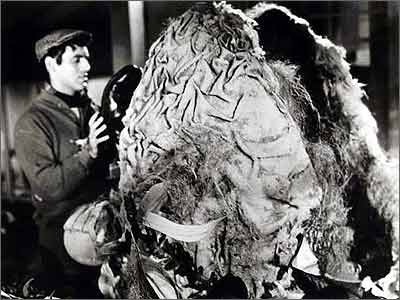
So, instead of showing you Dawn of the Mummy, we’re going to show you the original Little Shop of Horrors.  It’s true that we featured Little Shop last Halloween but, oh well.  It’s a fun little movie, especially when you consider that Roger Corman filmed it in 3 days.  Jack Nicholson gets all the attention for playing a masochistic dental patient but I think the best performance is given by flower-eating Dick Miller.

From 1960, enjoy the original (non-musical) Little Shop of Horrors!

(However, speaking of the musical, I was in a community theater production of Little Shop of Horrors when I was 19.  I so should have been cast as Audrey but instead, I was just a member of the “ensemble.”  Bleh!  Anyway, our director showed us the original Little Shop of Horrors and I was the only member of the cast to understand that Corman’s film was superior to the musical version.  That said, I still tear up whenever I hear “Somewhere that’s green.”)

Horror On TV: Twilight Zone Ep. 1 — “Where is Everybody?”


With Halloween only two days away, what better time to watch the pilot episode of the original Twilight Zone.

“Where Is Everybody?” was written by Rod Serling and directed by Robert Stevens.  It was first aired on October 2nd, 1959.

Horror On The Lens: House on Haunted Hill (dir by William Castle)


House on Haunted Hill

With only two days left to go until we reach Halloween, now seems like the perfect time to watch a classic Vincent Price haunted house film.  I’m talking, of course, about the original House On Haunted Hill.

Released in 1959, House On Haunted Hill tells the story of how an eccentric millionaire (played by Vincent Price, of course) rented out a “haunted” mansion for a party. invited over five guests, and offered each of them $10,000 on the condition that they manage to spend the entire night in the house.  Along for the ride is Price’s unhappy wife (Carol Ohmart) and the house’s wonderfully neurotic caretaker (played by Elisha Cook, Jr, who played a lot of neurotic caretakers over the course of his long career).

House on Haunted Hill remains one of the classic B-movies.  This is largely because of Price’s wonderfully over-the-top lead performance and William Castle’s equally over-the-top direction.

Back in 1959, theaters were equipped so that a plastic skeleton would appear to fly over the heads of the audience during some of the film’s more shocking moments.  So, grab yourself a skeleton, take a seat, and enjoy House on Haunted Hill!

Horror Review: The Walking Dead S4E03 “Isolation”


TheWalkingDeadS4

“You step outside. You risk your life.” — Hershel Greene

The first two episode of The Walking Dead for season 4 has been all about upending the sense of normalcy and serenity that Rick and his group of survivors have fought and worked to create within the safety of the prison. We saw a timeskip of many months from the time Rick brought the survivors of Woodbury back to the prison to show them that they weren’t the monsters the Governor had made them up to be and from there started up this community that the audience was dropped into in season 4.

As we saw with last week’s episode, “Infected”, that sense of civilization and safety was nothing but an illusion. The zombies got into the prison and attacked a major chunk of the survivors and now a new threat has reared it’s viral head to make the lives of Rick and the gang that much more difficult, if not, hopeless. Zombies, even herds of them, and other people this group could handle as Glenn commented to his father-in-law, but the disease which struck Patrick and looks to be burning through those who were in the compromised Cell Block D was one thing they couldn’t fight.

“Isolation” marks another forward step for a show that has had a difficult time trying to stay on course when it comes to it’s overarching story arcs for the season. New showrunner Scott M. Gimple promised a season that was going to avoid standing pat, but reintroduce a sense of mystery and unknown dangers to a group that’s as battle-hardened as any military unit after three seasons of constant fighting. Now we know that one of these new dangers is a disease (maybe a particularly strong strain of the flu or maybe even the plague itself) which has used the cramped living spaces of the prison and a shortage in proper medicines to incubate and spread itself amongst the survivors.

The entire episode works almost like an isolation ward for the main characters and some of the newer ones. They’ve come such a long way to survive this hellish new world and partly due to isolating themselves from the problems inherent in a zombie apocalyptic world, but also in a community that’s one step removed from the disease-ridden refugee camps we see televised on TV on a daily basis. This was a group that had fooled itself into thinking that isolating their little piece of “heaven” from the outside would keep them safe. It has to a certain degree but it also made them complacent. Yes, they’ve become more compassionate (though smarter) about letting new people into the community, but they’ve stopped trying to venture farther out into the wilderness to find other communities who could share resources and help rebuild the very civilization Rick and the council has been working so hard to accomplish.

Now, their isolation will need to end as they must find new sources of medicines to help combat the disease that’s burning through the prison. Their mission has become much more dire in that it’s not just the new additions to the group who have now become infected but one of their in Glenn has succumbed to it as well. And for all the hardcore survival instincts and skills Daryl, Michonne and the rest have honed to a deadly degree the world outside still remains one that could kill them all without hesitation no matter their skills. The pan of the camera to show the oncoming herd (much bigger than past shown herds) on the group of Daryl, Michonne, Tyreese and Bob was something we rarely see in zombie flicks and tv (though World War Z did it through use of CG). This sequence just shows how easily people who’ve isolated themselves from this never-ending danger could easily lose hope as Tyreese looked to have at first glance.

This latest episode of The Walking Dead really didn’t have any of the action we saw in the first two episode of the new season, but it’s been one that avoided the past season mistakes of not moving the story forward. Yes, they’re still stuck in the prison, but the narrative has continued to propel forward. We find out who killed Karen and David (the burnt bodies that ended episode 2) instead of the writers stretching it out over several episodes. The answer to this mystery brings up new questions as to why this long-standing character decided to act unilaterally even if it was for the greater good of the community. The fact that their actions ultimately failed to keep the disease in check still doesn’t change the fact that even the meekest of the group has grown and change to adapt to a world where even something as simple as a common cold or the flu could kill just as quickly as the zombies gathering at the prison fences.

“Isolation” was written by comic book creator Robert Kirkman who has grown to become better in translating ideas he has written for the series’ comic book counterpart and ideas discarded along the way into something that helps the tv show distinguish itself from the original source material. The show has almost become a way for Kirkman to recreate the early days of the comic book source with new themes and characters. With the comic book itself already years ahead of the show it’s going to be interesting to see whether the tv show will skip some of the smaller story arcs that occur after the prison and move the group closer to the timeline comic book readers are currently at.

While short on action, “Isolation” brings to the fore new problems for the group both immediate and moral. Will the admission of one of their own to the culpability of Karen and David’s murder be told to the rest of the council or will Rick keep this secret to himself? Is the brief radio signal caught in the car radio as Daryl and his scavenging group drive down the road lead to the Governor or a truly safe haven?

One thing that’s been consistent with this new season so far has been that the writers have learned to not stand pat with the show’s narrative. Previous showrunner Glen Mazzara preached forward momentum with season 3 but ultimately failed as the season limped to it’s finale. Only time will tell whether new showrunner Scott M. Gimple will do the same or actually finish this season strong and actually stay around for a following season.

Notes

  • “Infected” was written by source material creator Robert Kirkman and veteran tv director Dan Sackheim.
  • The fight between Rick and Tyreese was one of several fandom moments which mirrors similar scenes in the comic book, but with the show arriving to the scene in a much different manner. In the comic book, this fight occurred after Tyreese found out about her daughter’s death as part of a suicide pact with her boyfriend and Tyreese murdering the boyfriend and then shooting her daughter after she turned.
  • The other moment being Tyreese’s hammer rampage on the zombies that surrounded their car on the way to the veterinary college. In the comic book, this scene happened in the prison indoor gym.
  • We learn more about just how virulent the disease that took Patrick really is as survivors of Cell Block D and some of those who fought to save it succumb less than a day from Patrick dying from it.
  • I know it’s become a joke when it comes to Carl and his trusty gun, but it’s good that the writers saw fit to not prolong this particular storyline. Rick, more than anyone else, understands that Carl is one of the better fighters in the community and he’s come to regret trying to hamper the boy and in return make the group less effective.
  • Carl actually listening to Hershel about not having to kill every zombie they come across was a surprise. We’ve seen how leaving a zombie still standing and operating led to disastrous results for season 2. Will Carl practicing restraint come to bite the group again or does it mean Carl has edged back away from becoming a sociopath and into something more like his father and less like Shane. With each passing episode Carl looks to be emulating Daryl more and more and that could be a good thing in the long run seeing how Rick is not what one would call mentally stable.
  • Nice to see the writers actually giving one of the new characters, Larry Gilliard, Jr’s Bob Stookey, some character growth moments where in the past such new faces were relegated to becoming either zombie chow or cannon fodder. His reaction to finding out that they will be taking Zack’s car (Beth short-lived boyfriend from the season premiere) to their scavenge run to the local veterinary college 40 miles away shows how much guilt he feels at having caused the young man’s death.
  • One of the best reveals of the season so far has been that massive herd that looks to be in the thousands bearing down the highway and Daryl, Michonne, Tyreese and Bob stuck in their car. A question that rises up from this sequence is to whether this herd is heading towards the prison or will it just bypass their haven altogether.
  • Carol, Carol, Carol has become the new lightning rod for this season. Some have enjoyed the characters growth into a bonafide survivor in more than one sense. Some don’t like the fact that she’s become too cold and calculating even if it’s for the greater good of the group. Some just can’t get behind the fact that a woman on the show has actually become one of it’s more level-headed characters. I, for one, hope she sticks around past this season. This Carol has become the show’s comic book version of Andrea and that should be celebrated instead of denigrated.
  • Talking Dead Guests: Series executive producer Gale Anne Hurd, Jack Osborne and Marilyn Manson. Manson definitely made for a unique guest on the post-episode show. To say that he made show host Chris Hardwick more than just a tad uncomfortable would be an understatement.

Season 4

Horror On TV: Door Into Darkness Episode 1 “The Neighbor”


did-1

For some of our readers, this will probably be the most challenging episode of television that I’m going to post this Halloween season.

But first, what is Door Into Darkness?

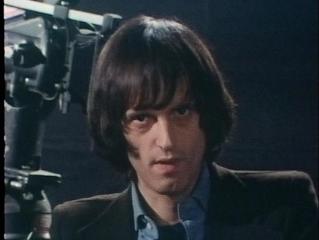
In 1973, after he had directed his highly successful Three Animals Trilogy, Dario Argento produced a television series called Door Into Darkness.  Each episode of Door Into Darkness told a different story of horror and suspense.  Argento would appear at the beginning of each episode and introduce the story.

Of the four episodes of Door Into Darkness that were produced, most critics agree that the first one was the best.  Titled Neighbors, it was also the directorial debut of Argento’s long-time assistant, Luigi Cozzi.

Neighbors tells the story of a newlywed couple who, along with their newborn baby, move into a seaside villa.  (Along the way, they also manage to run their car into a ditch, effectively leaving them stranded at their new home.)  When they arrive at the villa, they discover that the power hasn’t been turned on yet so they decide to hang out in the apartment upstairs.  Once up there, they come across the dead body of their neighbor’s wife.  When the neighbor arrives back home, the couple have to try to survive in the darkness while he looks for a place to hide the body of his dead wife.

Neighbors is an effectively suspenseful story that makes good use of both our inherent fear of the dark and the fact that we can never be quite sure of what our neighbors are doing.

I’m happy to say that a user in Italy has downloaded all four episodes of Door Into Darkness to YouTube and, hence, we can now share Neighbors on this site.

However, that’s where the challenge comes in.

The episode below is in Italian.

It has not been poorly dubbed into English and there are no subtitles.  Personally, that’s not an issue for me.  The plot of Neighbors is effectively simple and easy to follow and Italian suspense has always been a visual genre.  Add to that, I love Italy.  I’m a fourth Italian.  I could listen to people speak Italian for days without understanding a word with it.  I just love the sound of the language.

With all that in mind, here is Door Into Darkness…