As I explained in March, I’m going to be doing a monthly series of posts in which I’m going to attempt to predict which 2014 films will be Oscar-nominated.
Obviously, at this point of the year, the nominations listed below are less like predictions and more like random guesses. However, if nothing else, these early predictions will be good for a laugh or two once the actual Oscar race becomes a bit more clear.
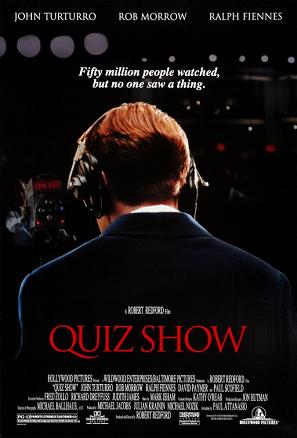
For today’s entry in the 44 Days of Paranoia, I want to take a look at a film that I recently caught on cable — 1994’s Quiz Show.
Directed by Robert Redford and based on a true story, Quiz Show was nominated for the Academy Award for best picture but lost to Forrest Gump. Among those of us who obsess over Oscar history, Quiz Show is often overshadowed by not only Forrest Gump but two of the other nominees as well, Pulp Fiction and The Shawshank Redemption. When compared to Pulp Fiction, Quiz Show certainly feels old-fashioned. At the same time, it’s not quite as much of a sentimental crowd-pleaser as Gump or Shawshank. Perhaps for those reasons, Quiz Show never gets quite as much attention as some other films that have been nominated for best picture. However, taking all of that into consideration, Quiz Show is still one of the best films of the 90s.
Quiz Show takes us back to the 1950s. The most popular show on television is 21, a game show in which two contestants answer questions, win money, and try to be the first to score 21 points. The American public believes that all of the questions asked on 21 are locked away in a bank vault until it’s time for the show. What they don’t know is that the show’s producers have instead been rigging the show, giving the answers to contestants who they feel will be good for ratings.
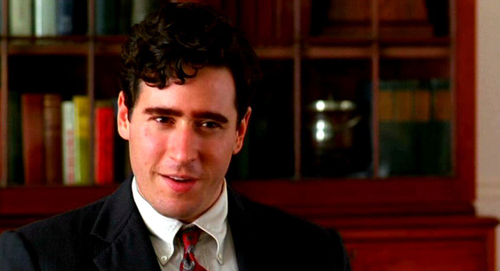
When Quiz Show begins, nerdy Herbie Stempel (John Turturro) has been the champion for several weeks. However, both the show’s producers and sponsors feel that the untelegenic Herbie has peaked. Hence, the handsome and charismatic Charles Van Doren (Ralph Fiennes) is brought on the show and Herbie is ordered to lose to him. Reluctantly, Herbie does so.
Charles is initially reluctant to cheat but, as he continues to win, he finds himself becoming addicted to the fame. Charles is the son of the prominent academic Mark Van Doren (Paul Scofield) and his success on television finally gives him a chance to escape from his father’s shadow. Indeed, the film’s subtle and nuanced portrait of Charles and Mark’s loving but competetive relationship is one of the film’s greatest strengths.
Herbie, however, is bitter over having to lose and has subsequently gambled away all of his winnings. When 21′s producer (David Paymer) refuses to help Herbie get on another TV show, Herbie reacts by going to the New York County district attorney and publicly charging 21 as being fixed. Though the grand jury dismisses Herbie as being obviously mentally unbalanced, his charges come to the attention of a congressional investigator, Richard Goodwin (Rob Morrow).
Goodwin launches his own investigation into 21 and discovers that the show is fixed. (As the ambitious Goodwin puts it, he wants to “put television on trial.”) Along the way, he also meets and befriends Charles Van Doren and finds himself torn between his desire to expose the show and to protect Charles from the bad publicity. Again, the film is to be applauded for the subtle way that it uses Goodwin’s investigation of both Charles and Herbie as a way to explore issues of both class resentment and class envy. Goodwin may have come from the same ethnic background of Herbie but it quickly becomes obvious that Goodwin has more sympathy for the genteel (and very WASPy) world that produced Charles Van Doren. When Goodwin tries to justify protecting Charles, his wife (played by Mira Sorvino) responds by calling him “the Uncle Tom of the Jews” and it’s hard not to feel that she has a point.
While I greatly enjoyed Quiz Show, I do have to say that, on one major point, the film fails. Try as he might, director Redford never convinces us that a rigged game show is really as big of a crime as he seems to be believe it to be. Perhaps in the 1950s, people were still innocent enough to be shocked at the idea of television reality being fake but for cynical contemporary viewers, it’s hard not to feel that the “scandal” was more about Richard Goodwin’s ambition and less about any sort of ethical or legal issue. Towards the end of the film, one character suggests that television will never be truly honest unless the government steps in to regulate it. “What?” I yelled back at the TV.
Seriously, it seemed like a bit of an overreaction.
As I watched Quiz Show, I found it hard not to think about the reality shows that I love. For instance, I know that The Bachelor and The Bachelorette are largely staged. I know that the previous season of Big Brother was largely set up so that Amanda could win. (And, believe me, if Amanda hadn’t sabotaged her chances by turning out to be a mentally unstable racist bully, she would have won and she would probably would have been invited back for the next all-stars season.) I know that shows like Storage Wars and Dance Moms are “unscripted” in name only. I know that reality shows aren’t real but my attitude can basically be summed up in two words: “who cares?” Perhaps I would be more outraged if I lived in the 50s which, to judge from both Quiz Show and a host of other movies, was apparently a much more innocent time.
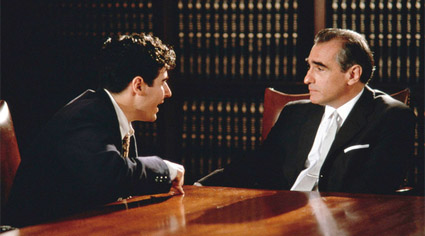
That said, I really enjoyed Quiz Show. A lot of that is because I’m a history nerd and, therefore, I have a weakness for obsessively detailed period pieces. But even beyond that, Quiz Show is a well-made, entertaining film that features three excellent lead performances and several strong supporting turns. If you love to watch great actors playing great roles then Quiz Show is the film for you. Rob Morrow lays his Boston accent on a bit thick but otherwise, he does a good job of suggesting both Goodwin’s ambition and the insecurities that lead him to desire Charles’s friendship even as he tries to expose him as a fraud. John Turturro brings an odd — if manic — dignity to Herbie Stempel while Johann Carlo is well-cast as his wife. Best of all, Ralph Fiennes makes Charles Van Doren into a sad, frustrating, and ultimately sympathetic character while Paul Scofield is the epitome of both paternal disappointment and love as his father. The film is full of great supporting turns as well, with David Paymer and Hank Azaria perfectly cast as the show’s producers and Christopher McDonald playing the show’s host with the same smarmy charm that he brought to a similar role in the far different Requiem For A Dream. Perhaps best of all, Martin Scorsese shows up as the owner of Geritol and gets to bark, “Queens is not New York!”
Even if Robert Redford doesn’t quite convince us that the quiz show scandal was as big a deal as he obviously believes it to be, Quiz Show is still an uncommonly intelligent film and one that deserves to rediscovered.
For almost a month, starting in mid-October and almost two weeks into November, we here at Through the Shattered Lens have watched and shared our reviews and thoughts on the 25 James Bond films (22 official EON productions with 3 non-official ones) which preceded this week’s release of the latest James Bond entry with Skyfall. We’ve shared which were our personal favorites of the series. Some preferred the Connery-era of the Bond franchise while some were in the Moore-era. What we here have all come to realize is just how timeless this franchise has become despite it having celebrated it’s 50th anniversary just last month.
The James Bond film franchise has gone beyond what Ian Fleming had imagined when he first came up with a literary character that would become a global pop icon and remain one of cinemas most successful franchises in history. There have been low points in the franchise (usually when the actor whohas been performing the role has outlived their stay) but then there have been some great highs. In the end, there’s always been one constant and that’s the character of James Bond — British secret agent 007 with a license to kill.
A franchise which began with on Sean Connery in the title role has now seen a return to prominence with the role now in the care of British actor Daniel Craig. The Craig-era began with the critically-acclaimed Casino Royalewhich also became popular with the mass audience. The sequel to this reboot would set the franchise back a step or two, but still became the second highest grossing Bond film in the franchise. We now come to the third Bond film in the Craig-era with 2012’s Skyfall and the question of whether the James Bond franchise can still remain relevant in this age of hyper-kinetic and ultra-violent action films remain to be answered.
Skyfall begins with Bond already in the middle of a mission to recover a computer hard-drive which stores the names of hundreds of NATO agents deep undercover within the many terrorist organizations around the world. Things are not going well for Bond and his fellow MI6 agents. He finds many of them already dead or dying and it’s up to him and another agent named Eve (played by Naomie Harris) to chase after the mercenary who has taken off with the hard-drive.
One thing we’ve come to expect with the more recent James Bond films (especially the Daniel Craig ones) are the action sequences which make up the opening section of the film. Even before we get to the recognizable Bond opening credit sequence this opening of the film using a very thrilling and elaborate action sequence tend to set the tone for the rest of the film. Skyfall was no different as Bond chases the mercenary Patrice through the rooftops of Istanbul’s Grand Bazaar right up to a one-on-one fight on top of a moving train. Through an unfortunate stroke of luck and a command decision by “M” back in MI6 headquarters in London we segue ito the always popular opening credits sequence with Bond having been shot by accident and left for dead.
The plot of Skyfall was somewhat similar to Goldeneye which saw Pierce Brosnan introduced as the new James Bond. James Bond finds himself racing against time and a former MI6 agent who feels betrayed not just by the country and organization he loyally served but by “M” herself. Raoul Silva (played with a sociopathic flair and panache by Javier Bardem) knows the in’s and out’s of MI6 and this allows him to penetrate both their physical and cyber defenses which puts the entire national security of Great Britain and the Commonwealth in extreme peril. It also puts “M” on the proverbial political hot seat as civilian oversight committees look to find a scapegoat for dead MI6 agents and Silva’s continuing assault on Britain’s intelligence apparatus.
To say anymore about the plot of Skyfall would ruin the biggest joy about this film. Mendes would’ve been one of the last people I saw being picked to direct a James Bond film, but he proves himself more than just capable, but also brings his own character-driven narrative sensibilities to raise the bar for future James Bond film. His handling of the quieter moments during the film shows that particular skill of his that has made him an Academy Award-winning filmmaker. It was on the action scenes that Mendes’ skill as a filmmaker would remain in doubt, but with the help of second unit director Alexander Witt, Skyfall manages to create action scenes that weren’t created for the sake of putting action on the screen but to move the story forward.
In the past, James Bond films rarely moved into introspection on it’s main character’s personal and professional motivations. This began to change when Daniel Craig was picked to help reboot the franchise. The first two films with Craig as Bond showed a much grittier and emotionally complex 007 than in years past. We also got a Bond who was still new to the role of being a 00-agent so we saw the character grow into the role. With Casino Royale and Quantum of Solace we got a Bond who moved from newly minted secret agent then to an agent going off the reservation and following his emotions to finish a mission (both official and personal). The one thing those two films didn’t do was give us a Bond that was fully capable and confident in his abilities to get the job done through the biggest odds. But before we finally get that Bond in Skyfall we see him go through personal doubts about whether he still has the skill to be 007 in a world that sees him and his kind of espionage a relic of the Cold War. By the time the film finishes to a close we find ourselves seeing this new modern, complex Bond finally meeting the old-school traditional Bond who delighted our parents and grandparents in the past.
There’s so much more to be said about this film which brings to the table the best of 50 years this franchise has been on the silver screen. The film pays homage to it’s cinematic history, but not so much that the film becomes a “Can you spot a past Bond reference” exercise. Each and every reference seemed to flow naturally into every scene it showed up in and some even got a nice ovation and reaction (classic Aston Martin DB for example). We even got to see the film poke a bit of cheeky fun at some of the franchises more over-the-top plot devices and all of it in good fun.
Then even with a strong story, great performances from the film’s principal cast members there’s still the question that always get asked whenever a new Bond film hits the screen. That question being how were the latest new Bond Girls.
While Naomie Harris’ Eve was a nice partner to Craig’s Bond their chemistry just didn’t flare up like most of the classic pairings in the franchise. That honor goes to Bond’s short, brief time with the character Severine (played by the ridiculously beautiful Bérénice Lim Marlohe). The scenes the two share in the Macau gambling house was one of the highlights of the film with Marlohe conveying both the femme fatale and damsel in distress in the same scene with the most subtle of acting touches. There’s a good chance that whenever “best of…” lists about Bond girls get made each and every year Marlohe as Severine would be on the top of most lists.
It took two films and six years of exploring, deconstructing and analyzing the character of James Bond through the performance of Daniel Craig. Through that time we’ve gotten to see a new side to James Bond without dismissing and forgetting about the character’s suave and deadly efficiency of past Bond films. While I still lean towards Sean Connery as the gold standard of all James Bond performances after seeing Craig as Bond for the third time in Skyfall the gap has shrunk considerably and I wouldn’t argue if some have Craig matching and/or surpassing Connery in the role. It’s a title that would be well-earned and with how the film ends a chance to see how Craig moves forward as Bond not just in the updated modern sense but the traditional that has made the character one of the most iconic figures in cinema history.
A last note, we get a return to old-school James Bond songs with Adele performing the film’s song which actually has the film’s title in it. The song also harkens back to the days of Shirley Bassey and If I had a choice in the matter I would just let Adele sing all future Bond songs for as long as she wants to.
Thus end Through the Shattered Lens’ retrospective on the James Bond franchise both past and present. It’s been a great ride and all thanks to the drive and organization of co-founder Lisa Marie Bowman who styles herself as the site’s resident Bond Girl.
We finally get the return of Britain’s deadliest and world-renowend “Double-O” agent with Sam Mendes’ Skyfall.
It’s been quite a long time since Marc Foster’s underwhelming Quantum of Solace with MGM’s subsequent bankruptcy being one of the major causes for the delay of this film being made. With the MGM bit now out of the way James Bond finally returns to the big screen with Daniel Craig once again donning the Walther and the tuxedo to play the debonair and ruthless killer agent that Ian Fleming made famous through his spy novels.
This teaser doesn’t show much other than some bits of action (one of which looks like it might’ve been lifted out of a level of Modern Warfare 3) and Bond being coldly ominous about people coming to get him and “M”. I’ve always been a huge fan of the Bond films and even when they don’t go over so well I still enjoy myself. They also tend to have a different director with each and every film which gives each film a different take on the character of Bond. This time around we have Sam Mendes in the director’s chair and it’ll be interesting to see how well he handles the thriller genre and action.
Skyfallis set for an October 26, 2012 release date.
2010’s Clash of the Titans remake wasn’t what fantasy fans were expecting. Yes, it had spectacle and taking advantage of 3D (rage of the time due to the success of Avatar), but how the film ended up quality-wise left much to be desired. For an epic summer blockbuster film (as hyped by it’s ads and marketing push) the film felt very underwhelming. It showed in the box-office as it failed to generate Olympian-level cash though it still generated a little under $500million worldwide. I’m guessing it’s this number which greenlit a sequel to a remake of a film that never had one.
Wrath of the Titans forgoes having just two titans battle it out with Perseus (Sam Worthington) stuck in the middle. This time around the sequel will deal with the weakening of the Olympian Gods as human worship wanes while at the same time the powers of the imprisoned Titans rise. So, from the trailer alone this looks to have action that’s even more amped up than it’s predecessor. Previous director Louis Leterrier has stepped aside as director and in his place for the sequel is Jonathan Liebesman (Battle: Los Angeles…which I thought was actually quite good despite what my partner-in-writing Lisa Marie says about the film).
Sam Worthington, Liam Neeson and Ralph Fiennes return to their roles from the previous film. Replacing Alexa Davalos in the role of Princess Andromeda from the first film is Rosamund Pike who now takes the role as Queen Andromeda. Bill Nighy and Danny Huston join the cast as Hephaestus and Poseidon respectively.
Wrath of the Titans is set for a March 30, 2012 release which just reinforces my point that the summer blockbuster season seem to be encroaching into Spring with each passing year.
Well, we all knew it would have to end someday and now, it’s over. The Harry Potter film series, which began way back in 2001, is concluding right now in a theater near you. On Friday night, me, Jeff, my sister Erin, and our friend Evelyn went down to the AMC Valley View and we saw Harry Potter and the Deathly Hallows, Part 2.
The cinematic story of Harry Potter is over and yes, I did cry as I watched it end. I didn’t just cry because of the movie, though the movie itself is one of the best of the year and it has one of those wonderful endings that just makes it impossible to remain dry-eyed. No, I cried because — with this film — an era of my life is truly over.
When the first Harry Potter film came out, I was only 16 and still trying to deal with the fact that I had been diagnosed as being bipolar just a few weeks earlier. I felt alone and broken and destined to spend the rest of my life on the outside looking in. The three hours that I spent watching Harry Potter and the Sorcerer’s Stone were three hours when I didn’t have to worry about suddenly bursting into tears and having everyone around me worrying about whether or not I was actually taking my hated medication. For three hours, I could escape to another world where those who were different were celebrated precisely because they were different. For three hours, I could imagine that just maybe I had a special purpose for existing too and maybe I had benevolent wizards and witches looking out for me too. And I’m sorry if all that sounds trite in retrospect but, when you’re 16 and you think you’re too damaged to love, anything that gives you hope and pleasure in the present is a precious treasure.
Over the years, I eventually came to realize that being bipolar was hardly a curse and, as I matured and grew up and discovered new things, there was always a Harry Potter film either playing or about to come out. Whether I was escaping high school, graduating college, or dealing with just every good or bad thing that makes up life, Harry Potter — this character who I first met (in book form) when I was 13 — was always there. So, at the risk of sounding overdramatic, the end of Harry Potter is the end of a chapter of my life.
One final personal note: As I watched Harry Potter and the Deathly Hallows, Part Two, I had three dolls (or action figures, as boys insist on calling them) in my purse. These dolls — Harry, Hermione, and Ron — came out around the same time as the second Harry Potter film and my mom (who collected dolls) ordered them off of Ebay three years ago, shortly before she entered the hospital for the final time. Now, my mom was not a huge fan of the Harry Potter series but she knew that I loved it and that’s why she made those dolls her final gift to me.
And those are some of the reasons why I found myself crying as I watched the finale of Harry Potter. However, there’s another reason why I cried and that’s that this is just a great film and the perfect conclusion to the series.
Essentially, Harry Potter and the Deathly Hallows, Part Two starts up immediately after the conclusion of Part One. Dobby is dead, Lord Voldemort (a wonderfully neurotic Ralph Fiennes) and the Death Eaters are intent on destroying everything, and Severus Snape (Alan Rickman, wonderful as always) is in charge of Hogwarts. After spending the first part of Deathly Hallows as fugitives, Harry Potter, Ron Weasley, and Hermione Granger (Daniel Radcliffe, Rupert Grint, and Emma Watson) return to Hogwarts to take a final stand against Voldemort. Things end in a surprisingly bloody battle (this film is not for children) that leaves several characters dead and ultimately reveals that one wizard wasn’t the saint we always assumed he was while another is revealed to be the secret hero of the entire series.
Let’s get one question out of the way right now: will non-Harry Potter fans be able to follow this film? Uhmmm…no. Sorry. Then again, why would a non-Harry Potter fan be at a film called Harry Potter and The Deathly Hallows Part Two anyway? I mean, seriously, if you’re just going to film because everyone else is doing it than who are you to bitch anyway? This is what you non-Harry Potter fans need to do. Stop reading this review. Go watch the previous Harry Potter films. Watch them in order. Take your time because Deathly Hallows is going to be in theaters for a while. And then, once you’ve become immersed in the story, go see how it all concludes. And then come back here and read rest of this review.
Okay, so is everybody up to date?
Cool.
One of the more interesting features of the Harry Potter series is that so many different directors (each with his own definite, individual style) have been involved in bringing these films to the screen. Among Harry Potter fans, hours can literally be spent debating the merits (and weaknesses) of Chris Columbus, Alfonso Cuaron, Mike Newell, and David Yates. My own theory is that each director was perfectly suited for each film he directed. The audience-friendly vision of Chris Columbus was what the first two films needed, just as Prisoner of Azkaban needed Cuaron’s far darker vision and Mike Newell’s attention to character made Goblet of Fire one of the best of the Harry Potter films. And while David Yates may not be as well-known (or critically acclaimed) as Newell or Cuaron, he brings exactly the right tone to Harry Potter and the Deathly Hallows, a perfect combination of spectacle and humanity. It is to Yates’ credit that the scenes in which the characters simply talk to each other are just as compelling as the dramatic sequences where Voldemort and the Death Eaters attack Hogwarts. Yates understands that this material could easily come across as silly or childish and to his credit, he never allows the audience to simply dismiss this film as a lot of blathering about wands and CGI magic. As opposed to other directors who have given us summer blockbusters, Yates takes his film seriously.
And, fortunately, so does his cast.
One of the great pleasures of the Harry Potter series is that it’s given American audiences the chance to discover (and rediscover) some of the great British character actors and a lot of them show up (some for only a matter of minutes) here in the finale. Maggie Smith, Jim Broadbent, Julie Walters, Robbie Coltrane, Gary Oldman, John Hurt, David Thewlis, Emma Thompson, and Jason Isaacs all put in appearances. Kelly MacDonald has a great scene playing a ghost, Helena Bonham Carter is perfect as the evil Bellatrix Lestrange, and Alan Rickman is brilliantly ambiguous as Severus Snape. (And yes, Snape’s actions are explained in this film and yes, I did cry.)
Ralph Fiennes plays so many villains that I now find myself expecting him to show up killing people in every movie I see. He’s like a British Christopher Walken. Still, it’s easy to take an actor like Fiennes for granted. For the entire Harry Potter series to work, Lord Voldemort can’t just be an ordinary villain. He’s got to be the sum total of all things evil and deadly. You’ve got to believe that people would be scared to speak his name. Great heroes need a great villain and Fiennes’ Voldermort is a great villain.
Ultimately, however, the true credit for the success of the Harry Potter series belongs to three actors who have literally grown up on the movie screen — Daniel Radcliffe, Rupert Grint, and Emma Watson. The producers are fortunate indeed that the cute kids that they cast over a decade ago have all grown up to be talented, attractive, and likable actors. If the first part of Harry Potter and the Deathly Hallows seemed to showcase both Grint and Watson (almost to Radcliffe’s expense), part 2 is most definitely centered on Harry Potter. That doesn’t mean that Watson and Grint aren’t good in this film. They are and they get to share one of the best movie kisses of 2011. (As well, for those who keep count, Grint says “Bloody Hell,” three times in the film.) But, for obvious reasons, this film is all about Harry and Radcliffe’s performance as Harry. It’s a challenge for Radcliffe and it’s a challenge that he more than succeeds at conquering. As the film ended, I realized that I was sad to know that the adventures of Harry Potter were done but I was excited to see what the future will hold for Radcliffe, Grint, and Watson.
Incidentally, Harry Potter and the Deathly Hallows Part 2 has been released in both 3-D and 2-D. We saw the 3-D version and if you have any knowledge of how I feel about 3-D (and how motion sick I tend to get while watching 3-D films) then that should show you just much I love the Harry Potter series. I loved it so much that I was even willing to overlook my hatred of 3-D. The 3-D here (which was added after the film has already been filmed) doesn’t really add much to the movie. There were a few cool moments where I was all like, “Look, I can reach out and grab a piece of Voldemort,” but otherwise, the 3-D was a negligible factor as far as the overall film was concerned.
Still, there was one interesting thing about the 3-D. The theater we saw the movie in was half-way empty. At the same time, the neighboring theater — in which the 2-D version was playing — had a line of people waiting to get in. They were not only waiting to see the 2-D version, they were waiting to see a showing that wouldn’t even begin until a full 90 minutes after the 3-D version started. I mention this because, in the wake of Avatar, so many people have taken it for granted that 3-D is the future of movies and soon, as long as a film is in 3-D, we won’t have to worry about the difficult stuff like an interesting plot or compelling characters. However, 3-D has become an overexposed gimmick. For every film like Cave of Dreams that uses 3-D to craft an actual artistic statement, there’s a 1,000 films like Priest which use 3-D just because it’s an easy way to trick sucks into spending an extra dollars to see a crappy film.
What so many filmmakers seem to forget is that the majority of film goers are not looking for 3-D. We’re just looking for a good film. And sometimes — like with Harry Potter and the Deathly Hallows — we get lucky and we find a great film.
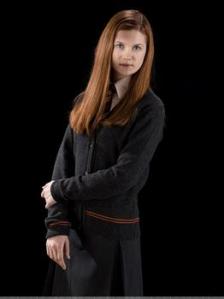
(Oh, and one last thing: I know everyone always expects me to claim to be just like Hermione but actually, I’ve always related more to Ginny Weasley. Like her, I’m the youngest of four siblings, I’ve got red hair, and I always get my man, in the end.)
It’s December and that means that it’s the Christmas season and that can only mean an abundance of Christmas movies both at movie theaters and on television. This Christmas movie has even become a genre in a way that the Thanksgiving movie or the Bank Holiday movie never has.
I love the Christmas season because 1) it’s one of the few times that there’s half a chance of seeing snow in Texas, 2) it gives me an excuse to bond with family, and 3) I get lots of presents. And I enjoy Christmas movies so much that I can pretty much quote every line from It’s A Wonderful Life from memory. I’ve even been known to enjoy the holiday movie marathons that pop up on the Lifetime Movie Network (especially if they feature Jeff Fahey and his bluer than blue eyes). However, my favorite Christmas movie remains the original Miracle on 34th Street because Natalie Wood was one of my mom’s favorite actresses and Miracle was one of her favorite films.
However, in this post, I want to highlight 10 movies that have either been overlooked in the past or else films that, while properly acknowledged as classics, are rarely mentioned as being Christmas films.
1) In Bruges (2008) — Two Irish hitman (Colin Farrell and Brendan Gleeson, both wonderful) hide out in Belgium during the Christmas holiday. I love this film for so many reason but I have to specifically mention the performance of Ralph Fiennes, who plays an English crime boss with a foul mouth, a murderous personality, and a firmly held set of ethics.
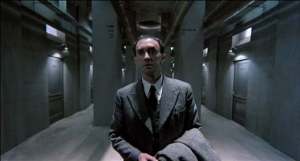
2) Brazil (1985) — One reason why I love Terry Gilliam’s dark satire is because I actually have quite a bit in common with it. We’re both often misunderstood, we’re both pretty to look at, and we were both released in 1985. While Brazil is now often acknowledged as one of the best and most imaginative films of the last century, it’s often forgotten that all of this film’s action takes place over the Christmas season. If you’ve never seen Brazil, see it now. But be aware that you’ll never look at Michael Palin quite the same way again.
3) Three Days of The Condor (1975) — This espionage thriller (which stars a young, pre-Leatherface Robert Redford) skillfully contrasts cold-blooded violence with the bright outer happiness of the Christmas season.
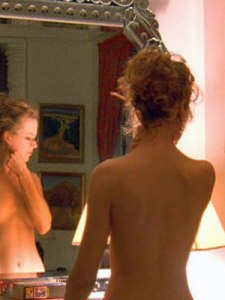
4) Eyes Wide Shut (2000) — Stanley Kubrick’s final film is a tribute to MK-Ultra conspiracy theories and features rich people trying to be kinky during the Christmas season. Nicole Kidman does redheads proud with her performance here and we get to see Tom Cruise smoke pot.
5) P2(2007) — Rachel Nichols is trapped in a parking garage on Christmas Eve by a very scary Wes Bentley. I have to admit that I’ve always had a morbid fear of either dying, getting seriously injured, or disappearing on Christmas Eve and therefore ruining the holiday for my family. I guess that’s why P2 resonated with me.
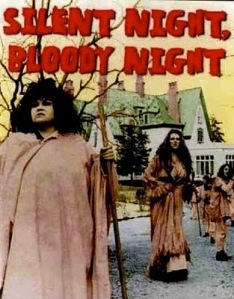
6) Silent Night, Bloody Night (1974) — No, this is not a killer Santa film. This is the film where a bunch of former Warhol superstars (Ondine and Candy Darling being the most prominent) play a bunch of mental patients who massacre their doctors in a disturbing, sepia-toned sequence. Years later, on Christmas, another former Warhol superstar — the wonderful Mary Woronov — comes to investigate. This is actually a fairly good film from director Theodore Gershuny.
7) Christmas Evil (1980) — Now this is a killer Santa film. Harry is a loser who works in a toy factory but he’s obsessed with Christmas because, when he was a child, he saw mommy humping Santa Claus. (Isn’t that a song?) So, one Christmas, Harry dresses up like Santa and goes around killing neglectful parents and others who don’t have the Christmas spirit. This is an oddly sweet film with an ending that brought very sincere tears to my eyes.
8 ) To All A Good Night (1980) — Okay, this is another killer Santa film and it’s one of those early ’80s slashers where everyone dies because they’re total and complete idiots but two things distinguish this film from other Killer Santa slasher films: 1) it features not one but two psycho Santas and the movie was directed by David Hess, star of Last House On The Left and The House On The Edge of the Park.
9) The Silent Partner (1978) — However, the greatest of all killer Santas is to be found in this Canadian crime thriller. Christopher Plummer plays a psycho bank robber who — disguised as Santa — robs a bank. Elliot Gould plays a lonely bank clerk who uses the robbery as an excuse to steal some cash for himself which leads to Plummer eventually coming after him. Plummer makes the scariest Saint Nick ever!
10) Kiss Kiss Bang Bang (2005) — This is pure grindhouse brilliance, a dark comedy and a metafictional satire disguised an action movie. Robert Downey, Jr. is a small-time criminal who accidentally becomes a film star and ends up investigating a murder with a hard-boiled PI (a surprisingly self-aware performance from Val Kilmer). And it all takes place during the holidays.














 Through the Shattered Lens