Retro Television Review: Miami Vice 5.4 “Bad Timing”


Welcome to Retro Television Reviews, a feature where we review some of our favorite and least favorite shows of the past!  On Mondays, I will be reviewing Miami Vice, which ran on NBC from 1984 to 1989.  The entire show can be purchased on Prime!

This week, Crockett tries to find himself.

Episode 5.4 “Bad Timing”

(Dir by Virgil W. Vogel, originally aired on December 2nd, 1988)

With the case against him still unresolved, Crockett goes on vacation.  He doesn’t tell anyone where he’s going, which is a bit unfortunate as he ends up being taken hostage in the Bayous by a group of cartoonishly evil escaped convicts.  (Pruitt Taylor Vince plays one of the hostage-takers but is fairly forgettable.  A young Melissa Leo appears as a fellow hostage and shows none of the grit that made her so memorable as Sgt. Kay Howard on Homicide.)  Somehow, Tubbs still shows up at the last moment and, looking resplendent in a white suit, he shoots the final convict before the latter shoots Crockett.  Crockett doesn’t even ask Tubbs how he knew where Crockett was.  (If Tubbs had been following Crockett the entire time, why would he have allowed Crockett to have been taken hostage to begin with?)  This episode might as well have been called Dues Ex Tubbs.

Watching this episode, it occurred to me that, as a character, Crockett really doesn’t have anywhere left to go.  By having him turn into Burnett and become one of Miami’s most powerful drug dealers, the show pretty much pushed the character as far as possible.  It’s impossible for Crockett to come back from that and it’s equally impossible to watch an episode like this one and not wonder why Crockett wasn’t in prison.  He’s suspected of committing four murders.  He was witnessed shooting a cop.  He attempted to kill his own partner, twice.  The episode begins with several high-ranking cops saying that they don’t buy Crockett’s excuse that he had amnesia.  And yet, Crockett is allowed to leave Miami while the department tries to figure out what to do with him.

Really, the whole idea that Crockett — a minor celebrity due to his college football career — could maintain his Burnett cover for five seasons was already pretty hard to believe.  Crockett and Tubbs’s cover got blown in nearly every episode during the first three seasons.  Having Sonny “Burnett” marry a world-famous singer without anyone noting that Burnett looked just like Crockett was probably this show’s true shark jumping moment.  Once that happened, it became increasingly difficult to take Miami Vice seriously.  The whole arc of Sonny thinking he was Burnett was fun to watch and Don Johnson gave a good performance as a conflicted bad guy but it’s also left the show with nowhere to go.  With this episode, Crockett has been reduced to being taken hostage by a group of backwoods yokels and waiting for Tubbs to materialize from out of nowhere.

In short, it’s time for Sonny to move on.  And seeing as how this is the final season …. well, we’ll see what happens!

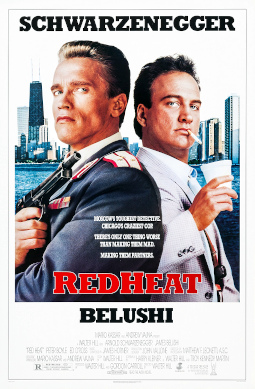
Red Heat (1988, directed by Walter Hill)


Ivan Danko (Arnold Schwarzenegger) is a Russian who lives in Moscow.  Art Ridzik (James Belushi) is an American who lives in Chicago.  They have two things in common.  They’re both cops and they both recently lost their partners while pursuing Russian drug lord Viktor Rostavali (Ed O’Ross).  When Danko comes to Chicago to bring the recently arrested Rostavali back to Moscow, Ridzik is assigned to be his handler.  When Rostavali escapes from custody, Ridzik and Danko team up to take him down.

Directed by Walter Hill, Red Heat may not be as well-remembered as some of Arnold Schwarzenegger’s other action films from the 80s but it’s still a good example of Schwarzenegger doing what Schwarzenegger did best.  Danko may not have been the quip machine that Schwarzenegger usually played but the movie gets a lot of comedic mileage out of his straight-to-the-point dialogue and the culture clash that Danko, a proud Soviet, experiences in Chicago.  It’s also an exciting action film, featuring a classic bus chase that perfectly complements Schwarzenegger’s bigger-than-life persona.

It gets a lot of mileage from the comedic chemistry of Arnold Schwarzenegger and James Belushi.  The always-talking Belushi provides a good comic foil to the steely Schwarzenegger.  Made in the waning years of the Cold War, Red Heat featured Belushi learning that the Russian cops didn’t worry about Miranda warnings and Schwarzenegger learning about “decadent” capitalism.  Belushi does a good job defending the honor of America.  Schwarzenegger, an anti-communist in real life, does an equally good job defending the Soviet Union.  Ultimately, they put aside their differences and show that even people on opposite sides can work together.

(We all know who won ultimately won the Cold War, though.)

Walter Hill specialized in buddy action movies.  Red Heat isn’t up to the level of 48 Hrs but it’s still an entertaining East-meets-West action film that packs a punch.

Lisa Marie Reviews An Oscar Nominee: Mississippi Burning (dir by Alan Parker)


1988’s Mississippi Burning opens on a lonely Mississippi backroad in 1964.  A car is pulled over by the police.  Inside the car are three young men, one black and two white.  Judging from their nervous expressions and the sound of the people who stopped them and the fact that they’re in Mississippi during the 60s, we can guess what is about to happen to the people in the car.

With the three men, who were civil rights activists who were involved in voter registration efforts, officially considered to be missing, the FBI sends down two agents to find out what happened.  The two agents are Alan Ward (Willem DaFoe) and Rupert Anderson (Gene Hackman).  Ward is a Northerner who does things by the book and who resents having to deal with lax Southern law enforcement.  He is serious-minded and, just in case we need a reminder of how serious he is, he wears bar-rimmed glasses that make him look like the world’s most fearsome IRS agent.  Anderson is from Mississippi.  He’s a talkative good ol’ boy who was a sheriff before he joined the FBI.  “You know what has four eyes but can’t see?” Anderson asks, “Mississippi.”  It’s a tense partnership, as Ward sometimes disapproves of Anderson’s methods and Anderson thinks that Ward doesn’t understand how things work in Mississippi.

From the first minute we meet local law enforcement, we know that they’re the killers.  Just the fact that one of them are played by Brad Dourif is evidence enough.  However, no one in town is willing to say a word against the police or their cronies.  The white citizens are either too intimidated or they agree with what happened to the three civil rights workers.  (The three men are often referred to as being “outside agitators.”)  The black townspeople live in fear of the Klan and have no reason to trust the word of white FBI agents like Ward and Anderson.

Ward and Anderson investigate the case, hoping that they can find some bit of evidence that will prove the guilt of Sheriff Stuckey (Gailard Sartain), Deputy Pell (Brad Dourif), KKK leader Clayton Townley (Stephen Tobolowsky), and maybe even the town’s mayor (R. Lee Ermey).  One advantage that the FBI has is that the murderers are incredibly stupid.  Another is that Deputy Pell’s abused wife (Frances McDormand, giving the film’s best performance) might be persuaded to testify against her husband.

Mississippi Burning is an example of both powerful filmmaking and problematic history.  Like Ridley Scott, director Alan Parker got his start making commercials and he brought the same sensibility to his movies.  He knew what audiences wanted to see and he made sure to give it to them.  Mississippi Burning looks fantastic and is full of memorable performances.  (Both McDormand and Hackman received Oscar nominations).  The action moves quickly and the villains are so hateful that watching them end up getting humiliated really does bring about a sort of emotional release.

At the same time, this is a film about the Civil Rights era that presents the FBI as being the heroes.  And while it’s true that the FBI did investigate the real-life murders that inspired this film, Mississippi Burning leaves out the fact that the FBI was just a rigorous in harassing and wire tapping Martin Luther King as they were in keeping an eye on the leaders of the Klan.  It’s a film about racism in which the heroes are as white as the villains.  Gene Hackman gives a good performance as Rupert Anderson but the film never really delves all that deeply into Anderson’s feelings about racism in the South.  We’re told that he was a sheriff in Mississippi but we never learn much about what type of sheriff Anderson was.  He’s opposed to the Klan but, historically, the same can be said of many segregationists in the 60s, many of whom felt the Klan’s activities brought unwanted federal attention to what was happening in their home states.  By not delving into Anderson’s own history as a member of Mississippi law enforcement or the FBI’s own more problematic history when it comes to the civil rights movement, the film provides viewers with the escape of viewing the bad guys as being aberrations as opposed to being the norm in 1964.  In the end, Mississippi Burning is an effective thriller with strong heroes and hateful villains.  Just don’t watch it for historical accuracy.

Mississippi Burning was nominated for Best Picture but it lost to Rain Man.

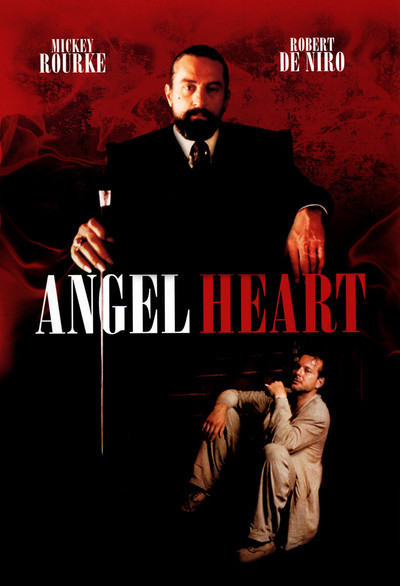
Horror Film Review: Angel Heart (dir by Alan Parker)


First released in 1987 and set in 1955, Angel Heart tells the story of Harry Angel (Mickey Rourke).

With a name like Harry Angel, it’s perhaps not surprising that Harry is a private investigator.  Harry operates out of New York.  He’s got a shabby apartment.  He wears wrinkled clothes.  He rarely shaves.  He smokes almost constantly.  (In a rare moment of comedy, the camera catches Harry blithely emptying a full ashtray in the middle of the street.)  Harry looks like he reeks of tobacco, beer, sweat, and lost dreams.  And yet, it’s difficult not to like Harry.  He’s got a charming smile, even if his face is often bruised from his latest beating.  He speaks in a low whisper and it’s hard not to get the feeling that Harry is actually kind of shy.  He’s incredibly sleazy but there’s something about him that just makes the viewer want to take care of him.

Harry is hired by a mysterious man named Louis Cyphere (Robert De Niro, cheerfully overacting).  Louis wants Harry to track down a singer named Johnny Favor.  As Cyphere explains it, he did a favor for Johnny and Johnny has yet to pay Cyphere what he owes.  Johnny has been suffering from PTSD ever since he served in World War II.  When last seen, Johnny was receiving electroshock treatment in an upstate hospital.

Harry’s search for Johnny leads him into an increasingly complex and disturbing conspiracy.  He meets a doctor who is addicted to morphine and, when the doctor turns up dead, Harry coolly uses the dead man’s shoe to light his match.  Eventually, Harry’s investigation leads him to New Orleans, where he meets both Johnny’s wife (Charlotte Rampling) and Johnny’s unacknowledged daughter, Epiphany (Lisa Bonet).  As Harry searches for Johnny, he deals with strange visions of his own mysterious past.  He sees himself wandering around Times Square shortly after the attack on Pearl Harbor.  Harry also finds himself having to deal with the fact that almost everyone that he talks to ends up being brutally murdered.  Every time that Harry tries to quit the case, Cyphere offers him more money.  (Cyphere tends to show up whenever Harry finds himself on the verge of abandoning his search.)

Angel Heart moves at its own deliberate pace.  In fact, the first hour can feel a bit slow but that first hour definitely pays off during the second half of the film.  By the time that Harry starts to truly uncover what has happened to Johnny, the audience actually cares about Harry and is actually worried about what’s going to happen to him when he reaches the end of the case.  Mickey Rourke was (and is) an eccentric actor but he’s at his most effective in Angel Heart.  A lesser actor would have just played Harry as being a typical hardboiled detective.  Rourke plays Harry as being a lost soul, a vulnerable man who is often as confused and scared as the people that he’s looking for.  By the end of the film, Harry realizes that the answer to the mystery was right in front of them and his look of despair is surprisingly powerful.  If De Niro gives a good performance that is almost totally on the surface, Rourke gives the type of performance that allows the audience to explore what’s going on beneath the surface of a character who many would initially view as being a cliché.  Mickey Rourke’s Harry Angel is right up there with Bogart’s Sam Spade and Jack Nicholson’s Jake Gittes.  He’s a familiar character who also seems to be a human being.

Full of sex, violence, and increasingly disturbing imagery, Angel Heart is not for everyone.  Alan Parker’s direction emphasizes the darkness of Harry’s world and the bleakness of his situation.  The film ends with a twist that may not be totally unexpected but which is still undeniably disturbing.  The more you think about it, the most disturbing it gets.  Angel Heart is an atmospheric and intelligent chiller.  It’s existential horror at its most nightmarish.

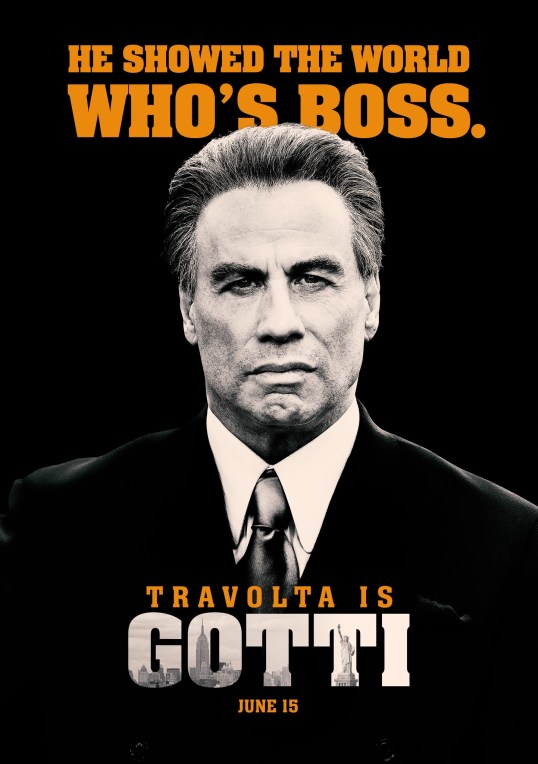
An Offer You Can’t Refuse #23: Gotti (dir by Kevin Connolly)


Few recent films have been as misunderstood as Gotti.

When this film was first released in 2018, it was slammed by critics and it flopped at the box office.  On Rotten Tomatoes, it managed a score of 0% from the critics.  At the same time, the opening day audience score was 80%.  (Over subsequent days, the audience score would drop to 46%.)  This disparity was blamed on studio employees inflating the audience score, though I think it’s more likely that, after months of negative press about the film’s troubled productions, critics were already looking forward to slamming the film before they even had a chance to see it.  At the same time, the buzz on Gotti was so bad that the opening day audience was made up of a combination of John Travolta die-hards (whoever they may be) and people who were expecting such a trainwreck that all Gotti had to do to surpass their expectations was to occasionally be in focus.

Then again, it could be that some members of the audience understood what I instinctively understood when I first watched GottiGotti is not really a film about John Gotti, the flamboyant New York mob boss who ruled the streets with an iron fist and who eventually ended up dying of cancer in prison.  Instead, whether it was the filmmaker’s actual intention or not, Gotti is a film about the audience’s fascination with not only gangsters but also the movies that have been made about them.

It’s true that John Travolta may be playing someone namned John Gotti but the film goes out of its way to remind you that he’s not the real John Gotti.  The film is full of archival news footage of the real John Gotti, either laughing it up with reporters or smirking while sitting in a courtroom.  Every time that we’re shown footage of the real John Gotti, we’re reminded of the fact that, at not point during the film, does Travolta look anything like John Gotti.  Add to that, the real Gotti is always smirking whereas Travolta always looks somewhat grim.  At the time this film came out, many claimed that this was evidence of lazy filmmaking but I viewed it as being a Brechtian distancing device.  Whenever the real Gotti makes an appearance, we’re reminded that we’re just watching a movie and then we’re encouraged to ask ourselves why we would want to watch a movie about such a disreputable figure.

The movie opens with John Travolta standing next to the Brooklyn Bridge and speaking directly to the camera.  Though Travolta is meant to be speaking to us as John Gotti, the sight of him standing near a bridge in New York will automatically remind some viewers of a previous Travolta film, Saturday Night Fever.  The character that Travolta played in Saturday Night Fever, Tony Manero, has come to epitomize New York in the 70s.  The film suggests that, in much the same way, Gotti epitomized New York in the 80s and 90s.  Gotti, the film is saying, is as much of an icon of the popular imagination as Tony Manero dancing in a white suit.

Why is Gotti speaking directly to us in that scene?  It may seem like a framing device until, a few minutes later, we see a bald and sickly Gotti in a prison meeting room, telling his life story to his son, John, Jr. (Spencer LoFranco).  Gotti talking in prison is then established as the narrative’s other framing device.  So, why was Gotti speaking to us on the bridge and why did he look so healthy and have a full of head of hair when the film has made it clear that the newly bald Gotti is going to die in prison?  When I first saw the film, my initial thought was that the Gotti who speaks directly to the audience was meant to be a ghost.  But then it occurred to me that he’s actually not meant to be John Gotti at all.  Instead, the Gotti who talks to us on the bridge is meant to be our popular conception of what gangsters like John Gotti as like.  He’s what we imagine gangsters to be — i.e., tough-talking, well-dressed, and played by an iconic actor.  As such, the film’s narration is not being provided by John Gotti.  Instead, it’s being provided by the person that we imagine someone like Gotti to have been.

Is the imprisoned Gotti meant to be the real Gotti?  Perhaps.  However, it’s hard not to notice that, over the course of the film, Gotti’s son never ages.  Though several decades pass, Gotti’s son always looks like he’s in his mid-twenties.  When he visits his father in prison and talks about having teenage children of his own, it feels odd because he barely looks old enough to be out of high school.  That may seem like lazy filmmaking but again, I would argue that this is a distancing device.  It’s a reminder that we’re not watching reality.  Instead, we’re choosing to watch actors pretending to be gangsters.

Once you accept that Gotti is a film not about John Gotti but instead about those of us in the audience who are watching, the film makes a lot more sense.  The film’s cliches about life in the Mafia are revealed to be not so much the result of an uninspired script as they’re an homage to American folklore.  Of course, there’s going to be a scene where Gotti tells his children never to rat on their friends.  Of course, there’s going to be random shootings and burly men demanding respect.  This is a gangster movie, after all.  By populating the cast with people who you normally wouldn’t expect to see playing members of the Mafia — Stacy Keach, Chris Mulkey, Pruitt Taylor Vince — Gotti continually reminds you that you’re watching a movie.  The real mafia isn’t like this, Gotti is saying, but the mafia of the popular imagination is.  Why are we horrified by real-life crime and yet we flock to movies that claim to recreate it for our entertainment?  This is the issue at the heart of Gotti.

Gotti’s flaws are there to remind us that we’re just watching a movie.  They’re also there to make us wonder why we’re watching that particular movie.  Gotti asks us why audience idolize killers like John Gotti.  Why do we turn them into folk heroes?  Is it because we imagine them to be characters in films as opposed to actual human beings?  Whether or not one feels that the film succeeded in its goal, this is an offer that you cannot refuse.

Previous Offers You Can’t (or Can) Refuse:

  1. The Public Enemy
  2. Scarface (1932)
  3. The Purple Gang
  4. The Gang That Could’t Shoot Straight
  5. The Happening
  6. King of the Roaring Twenties: The Story of Arnold Rothstein 
  7. The Roaring Twenties
  8. Force of Evil
  9. Rob the Mob
  10. Gambling House
  11. Race Street
  12. Racket Girls
  13. Hoffa
  14. Contraband
  15. Bugsy Malone
  16. Love Me or Leave Me
  17. Murder, Inc.
  18. The St. Valentine’s Day Massacre
  19. Scarface (1983)
  20. The Untouchables
  21. Carlito’s Way
  22. Carlito’s Way: Rise To Power

Horror Film Review: Jacob’s Ladder (dir by Adrian Lyne)


The 1990 film Jacob’s Ladder asks the question, “Who is Jacob Singer?”

Is Jacob (played by Tim Robbins), a soldier serving in Vietnam who has just been severely wounded in an enemy attack and who is now barely clinging to life in a helicopter?

Is Jacob a withdrawn postal worker who lives in 1970s New York with his girlfriend, Jezzie (Elizabeth Pena), and who is haunted by horrifying visions of faceless, vibrating figures and viscous demons?  This Jacob is haunted by ill-defined past incidents.  Whenever he gets depressed, Jezzie is quick to demand that he snap out of it and that he stop thinking about anything other than the present day.  This Jacob can only watch as all of his old friends either sink into paranoia or die.  He hears rumors that they all may have been part of some sort of experiment involving LSD.  He’s sure that he served in the army but when he attempts to hire an attorney, he’s informed that the army has no record of him ever having served in combat and that they say he was discharged for psychological reasons.

Or is Jacob the husband of Sarah (Patricia Kalember) and the father of Gabe (Macaulay Culkin — yes, that Culkin)?  This is the Jacob who occasionally wakes up in bed with his wife and tells her that he’s been having the weirdest dream, one where he was living with “that crazy woman” from the post office, Jezebel?

Which one of these three realities is the truth for Jacob?  At times, Jacob himself doesn’t even seem to be sure.  Perhaps the one thing that you can be sure about in this movie is that whenever Jacob closes his eyes, he’s going to reopen them and discover that he’s in a different time and place.  Jacob spends almost the entire film trying to work out what’s happening in the present, what’s happening in the past, and what’s just happening in his head.

And, to be honest, it all gets a bit pretentious at times.  The film’s script has a lot on its mind.  In fact, it might have a little bit too much going on.  No sooner have you soaked in what the film has to say about denial and acceptance than you’re suddenly getting a crash course in MK-ULTRA and other mind-control conspiracy theories.  Whenever Jacob isn’t seeing demons and faceless apparitions, he’s being kidnapped by government agents.  There’s so much going on that this film can get a bit exhausting.

Fortunately, the film itself is such a triumph of style that it doesn’t matter that the script is a bit of a mess.  Director Adrian Lyne does a great job bringing Jacob’s nightmarish world to life.  Jacob seems to live in a world where the skies are permanently overcast and the streets are always wet after a recent storm.  When Jacob makes the mistake of walking down a subway tunnel, Lyne frames it as if Jacob is literally following a tunnel into Hell.  When a subway train rushes by Jacob, we catch disturbing glimpses of featureless faces facing the windows.  When Jacob sees a demon at a party, Lynne films the moment so that, just like Jacob, it takes us a few minutes to realize what we’re seeing.  And when Jacob is kidnapped and taken to a Hellish hospital, the scene is nightmarish in its intensity.

Tim Robbins gives a great performance as the emotionally withdrawn and haunted Jacob.  (In fact, he’s so good that it makes it all the more sad that he really hasn’t had a decent role since he won an Oscar for 2003’s Mystic River.)  He’s matched by Elizabeth Pena, who constantly keeps you wondering if Jezzie truly cares about Jacob or if she’s just another part of the conspiracy that seems to have taken over his life.

Jacob’s Ladder is an intensely effective, if somewhat messy, horror film.  Apparently, like almost every other horror film released in the 20th century, it’s currently being remade, with the remake due to released on February 9th.  Just in time for Valentine’s Day!

Playing Catch-Up: Crisscross, The Dust Factory, Gambit, In The Arms of a Killer, Overboard, Shy People


So, this year I am making a sincere effort to review every film that I see.  I know I say that every year but this time, I really mean it.

So, in an effort to catch up, here are four quick reviews of some of the movies that I watched over the past few weeks!

  • Crisscross
  • Released: 1992
  • Directed by Chris Menges
  • Starring David Arnott, Goldie Hawn, Arliss Howard, Keith Carradine, James Gammon, Steve Buscemi

An annoying kid named Chris Cross (David Arnott) tells us the story of his life.

In the year 1969, Chris and his mother, Tracy (Goldie Hawn), are living in Key West.  While the rest of the country is excitedly watching the first moon landing, Chris and Tracy are just trying to figure out how to survive day-to-day.  Tracy tries to keep her son from learning that she’s working as a stripper but, not surprisingly, he eventually finds out.  Chris comes across some drugs that are being smuggled into Florida and, wanting to help his mother, he decides to steal them and sell them himself.  Complicating matters is the fact that the members of the drug ring (one of whom is played by Steve Buscemi) don’t want the competition.  As well, Tracy is now dating Joe (Arliss Howard), who just happens to be an undercover cop.  And, finally, making things even more difficult is the fact that Chris just isn’t that smart.

There are actually a lot of good things to be said about Crisscross.  The film was directed by the renowned cinematographer, Chris Menges, so it looks great.  Both Arliss Howard and Goldie Hawn give sympathetic performances and Keith Carradine has a great cameo as Chris’s spaced out dad.  (Traumatized by his experiences in Vietnam, Chris’s Dad left his family and joined a commune.)  But, as a character, Chris is almost too stupid to be believed and his overwrought narration doesn’t do the story any good.  Directed and written with perhaps a less heavy hand, Crisscross could have been a really good movie but, as it is, it’s merely an interesting misfire.

  • The Dust Factory 
  • Released: 2004
  • Directed by Eric Small
  • Starring Armin Mueller-Stahl, Hayden Panettiere, Ryan Kelly, Kim Myers, George de la Pena, Michael Angarano, Peter Horton

Ryan (Ryan Kelly) is a teen who stopped speaking after his father died.  One day, Ryan falls off a bridge and promptly drowns.  However, he’s not quite dead yet!  Instead, he’s in The Dust Factory, which is apparently where you go when you’re on the verge of death.  It’s a very nice place to hang out while deciding whether you want to leap into the world of the dead or return to the land of the living.  Giving Ryan a tour of the Dust Factory is his grandfather (Armin Mueller-Stahl).  Suggesting that maybe Ryan should just stay in the Dust Factory forever is a girl named Melanie (Hayden Panettiere).  Showing up randomly and acting like a jerk is a character known as The Ringmaster (George De La Pena).  Will Ryan choose death or will he return with a new zest for living life?  And, even more importantly, will the fact that Ryan’s an unlikely hockey fan somehow play into the film’s climax?

The Dust Factory is the type of unabashedly sentimental and theologically confused film that just drives me crazy.  This is one of those films that so indulges every possible cliché that I was shocked to discover that it wasn’t based on some obscure YA tome.  I’m sure there’s some people who cry while watching this film but ultimately, it’s about as deep as Facebook meme.

  • Gambit
  • Released: 2012
  • Directed by Michael Hoffman
  • Starring Colin Firth, Cameron Diaz, Alan Rickman, Tom Courtenay, Stanley Tucci, Cloris Leachman, Togo Igawa

Harry Deane (Colin Firth) is beleaguered art collector who, for the sake of petty revenge (which, as we all know, is the best type of revenge), tries to trick the snobbish Lord Shabandar (Alan Rickman) into spending a lot of money on a fake Monet.  To do this, he will have to team up with both an eccentric art forger (Tom Courtenay) and a Texas rodeo star named PJ Puznowksi (Cameron Diaz).  The plan is to claim that PJ inherited the fake Monet from her grandfather who received the painting from Hermann Goering at the end of the World War II and…

Well, listen, let’s stop talking about the plot.  This is one of those elaborate heist films where everyone has a silly name and an elaborate back story.  It’s also one of those films where everything is overly complicated but not particularly clever.  The script was written by the Coen Brothers and, if they had directed it, they would have at least brought some visual flair to the proceedings.  Instead, the film was directed by Michael Hoffman and, for the most part, it falls flat.  The film is watchable because of the cast but ultimately, it’s not surprising that Gambit never received a theatrical release in the States.

On a personal note, I saw Gambit while Jeff & I were in London last month.  So, I’ll always have good memories of watching the movie.  So I guess the best way to watch Gambit is when you’re on vacation.

  • In The Arms of a Killer
  • Released: 1992
  • Directed by Robert L. Collins
  • Starring Jaclyn Smith, John Spencer, Nina Foch, Gerald S. O’Loughlin, Sandahl Bergman, Linda Dona, Kristoffer Tabori, Michael Nouri

This is the story of two homicide detectives.  Detective Vincent Cusack (John Spencer) is tough and cynical and world-weary.  Detective Maria Quinn (Jaclyn Smith) is dedicated and still naive about how messy a murder investigation can be when it involves a bunch of Manhattan socialites.  A reputed drug dealer is found dead during a party.  Apparently, someone intentionally gave him an overdose of heroin.  Detective Cusack thinks that the culprit was Dr. Brian Venible (Michael Nouri).  Detective Quinn thinks that there has to be some other solution.  Complicating things is that Quinn and Venible are … you guessed it … lovers!  Is Quinn truly allowing herself to be held in the arms of a killer or is the murderer someone else?

This sound like it should have been a fun movie but instead, it’s all a bit dull.  Nouri and Smith have next to no chemistry so you never really care whether the doctor is the killer or not.  John Spencer was one of those actors who was pretty much born to play world-weary detectives but, other than his performance, this is pretty forgettable movie.

  • Overboard
  • Released: 1987
  • Directed by Garry Marshall
  • Starring Goldie Hawn, Kurt Russell, Edward Herrmann, Katherine Helmond, Roddy McDowall, Michael G. Hagerty, Brian Price, Jared Rushton, Hector Elizondo

When a spoiled heiress named Joanne Slayton (Goldie Hawn) falls off of her luxury yacht, no one seems to care.  Even when her husband, Grant (Edward Herrmann), discovers that Joanne was rescued by a garbage boat and that she now has amnesia, he denies knowing who she is.  Instead, he takes off with the boat and proceeds to have a good time.  The servants (led by Roddy McDowall) who Joanne spent years terrorizing are happy to be away from her.  In fact, the only person who does care about Joanne is Dean Proffitt (Kurt Russell).  When Dean sees a news report about a woman suffering from amnesia, he heads over to the hospital and declares that Joanne is his wife, Annie.

Convinced that she is Annie, Joanne returns with Dean to his messy house and his four, unruly sons.  At first, Dean says that his plan is merely to have Joanne work off some money that she owes him.  (Before getting amnesia, Joanne refused to pay Dean for some work he did on her boat.)  But soon, Joanne bonds with Dean’s children and she and Dean start to fall in love.  However, as both Grant and Dean are about to learn, neither parties nor deception can go on forever…

This is one of those films that’s pretty much saved by movie star charisma.  The plot itself is extremely problematic and just about everything that Kurt Russell does in this movie would land him in prison in real life.  However, Russell and Goldie Hawn are such a likable couple that the film come close to overcoming its rather creepy premise.  Both Russell and Hawn radiate so much charm in this movie that they can make even the stalest of jokes tolerable and it’s always enjoyable to watch Roddy McDowall get snarky.  File this one under “Kurt Russell Can Get Away With Almost Anything.”

A remake of Overboard, with the genders swapped, is set to be released in early May.

  • Shy People
  • Released: 1987
  • Directed by Andrei Konchalovsky
  • Starring Jill Clayburgh, Barbara Hershey, Martha Plimpton, Merritt Butrick, John Philbin, Don Swayze, Pruitt Taylor Vince, Mare Winningham

Diana Sullivan (Jill Clayburgh) is a writer for Cosmopolitan and she’s got a problem!  It turns out that her teenager daughter, Grace (Martha Plimpton), is skipping school and snorting cocaine!  OH MY GOD!  (And, to think, I thought I was a rebel just because I used to skip Algebra so I could go down to Target and shoplift eyeliner!)  Diana knows that she has to do something but what!?

Diana’s solution is to get Grace out of New York.  It turns out that Diana has got some distant relatives living in Louisiana bayou.  After Cosmo commissions her to write a story about them, Diana grabs Grace and the head down south!

(Because if there’s anything that the readers of Cosmo are going to be interested in, it’s white trash bayou dwellers…)

The only problem is that Ruth (Barbara Hershey) doesn’t want to be interviewed and she’s not particularly happy when Diana and Grace show up.  Ruth and her four sons live in the bayous.  Three of the sons do whatever Ruth tells them to do.  The fourth son is often disobedient so he’s been locked up in a barn.  Diana, of course, cannot understand why her relatives aren’t impressed whenever she mentions that she writes for Cosmo.  Meanwhile, Grace introduces her cousins to cocaine, which causes them to go crazy.  “She’s got some strange white powder!” one of them declares.

So, this is a weird film.  On the one hand, you have an immensely talented actress like Jill Clayburgh giving one of the worst performances in cinematic history.  (In Clayburgh’s defense, Diana is such a poorly written character that I doubt any actress could have made her in any way believable.)  On the other hand, you have Barbara Hershey giving one of the best.  As played by Hershey, Ruth is a character who viewers will both fear and admire.  Ruth has both the inner strength to survive in the bayou and the type of unsentimental personality that lets you know that you don’t want to cross her.  I think we’re supposed to feel that both Diana and Ruth have much to learn from each other but Diana is such an annoying character that you spend most of the movie wishing she would just go away and leave Ruth alone.  In the thankless role of Grace, Martha Plimpton brings more depth to the role than was probably present in the script and Don Swayze has a few memorable moments as one of Ruth’s sons.  Shy People is full of flaws and never really works as a drama but I’d still recommend watching it for Hershey and Plimpton.

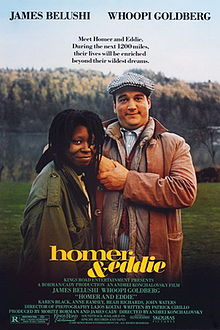
Lisa Cleans Out Her DVR: Homer and Eddie (dir by Andrei Konchalovsky)


(Lisa is currently in the process of cleaning out her DVR.  It’s taking her such a long time that she’s running out of cutesy ways to talk about how long it’s taking.  She recorded this 1989 comedy off of Starz on May 10th.)

This is another strange one.

Homer and Eddie opens with Homer (James Belushi) standing on the corner of an isolated stretch of desert road.  He is hitchhiking.  When a car finally stops to pick him up, Homer is so excited!  He gets in the back seat, gives the two men in the front seat a really wide smile, and innocently asks them how they’re doing.

One of the men (played by director John Waters) holds up a gun and demands all of Homer’s money.  After Homer hands the money over, he is kicked out of the car.  As the car drives away, Homer pulls a few dollars out of his sock and loudly yells that he fooled them and that they didn’t get all of his money.

The car abruptly stops and, going in reverse, pulls back up to Homer.  Homer gives up his money and the car speeds off.

In short, Homer probably shouldn’t be hitchhiking on his own.  Homer, you see, was hit in the head by a baseball when he was younger.  He has the mind and the innocent outlook of a child.  He is cheerful, he is religious, and he is totally unprepared to deal with real world.

Fortunately, Homer won’t be alone for too long.  Homer comes across an apparently deserted car and, without money or a place to stay, he decides to use the car as shelter.  However, it turns out that the car isn’t as abandoned as it looks!  No, the car is being used by Eddie (Whoopi Goldberg).  Eddie stole the car when she escaped from a mental institution.  Why was Eddie in the mental institution?  She’s a paranoid schizophrenic and she occasionally kills people.  Eddie and Homer are soon taking a very strange road trip, heading up north so that Homer can see his dying father.

It’s a very disjointed film, one that switches tone from scene to scene.  The two stars seem to be acting in totally different movies.  Belushi gives a very broad performance, one that often crosses the line into pure goofiness.  Eddie, meanwhile, is continually and constantly full of rage.  You never know when she’s going to snap and kill someone.  I spent a good deal of the movie waiting for her to kill Homer.  Maybe that was the point but it’s still hard to laugh at scenes of Homer and Eddie waving at a school bus full of cheerleaders when you’re also waiting for Whoopi Goldberg to beat and dismember Jim Belushi.

Homer and Eddie can  summed up by one lengthy sequence.  Eddie takes Homer to a brothel so that he can lose his virginity.  While Homer is dancing around in his underwear, Eddie is at a convenience store, shooting the clerk (played by Pruitt Taylor Vince).  The clerk, who was perfectly nice to Eddie before getting shot, looks at his wound and feebly says, “Why did you do that?” before dying.

It’s a weird little movie.  Usually, I love weird moves but this one is too much of a mess for even me.  As I watched it, I couldn’t help but think of how much more interesting the movie would be if it was the child-like Homer killing people and schizophrenic Eddie trying to keep him calm.  On a positive note, this was decades before Whoopi Goldberg gave up her edginess to co-host The View and she gives shockingly good performance.  When Eddie loses control, she’s actually frightening.  But, unfortunately, the film itself just doesn’t work.

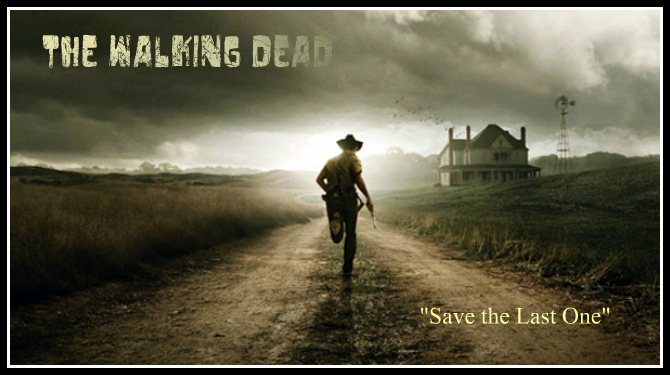
Review: The Walking Dead S2E3 “Save the Last One”


“Got bit. Fever hit. World turned to shit. Might as well quit.” — note from unnamed hanged man turned zombie

[some spoilers within]

The first two episodes of the newest season of The Walking Dead sees Rick and his group of survivors on the move after the events at the CDC which ended season 1. Their convoy to reach what they think as the safe haven of the US Army base at Fort Benning doesn’t get them very far as they come across traffic snarl of abandoned vehicles and wrecks on the main highway. Its during these first two episodes that the group begins to show signs of cracks in the group dynamic which could lead to a permanent splintering of factions. It doesn’t help that two young kids in the group have either gone missing or gets accidentally shot by a deer hunter’s bullet.

We also meet a new group of survivors in the form of the Greene family led by it’s country vet doctor in Hershel Greene, his eldest daughter Maggie, their ranch hand Otis and a few others. Its from the Greene farm that the previous spent most of it’s time though it did show some choice scenes back at the RV and the group searching for Sophia in the forest. We see another cliffhanger end the second episode with Shane and his new partner in Otis as they make their way to the local high school where a FEMA camp had been set up as a refugee center before it became overrun. While they got the necessary supplies needed to save Carl they soon find themselves besieged by a horde of zombies with just a security gate and a lose bolt keeping them at bay.

“Save the Last One” marks the third episode of this 13-episode season 2. Except for a brief pre-credits scene of Shane shaving his head and looking intensely at his reflection off of a steamed up bathroom mirror, the episode takes up right after the cliffhanger ending of the previous episode. Shane and Otis are running through the hallways of the high school they’ve gone into for safety only to have the zombies outside chasing in after them. This part of the episode is just one of four parallel subplots which includes Daryl and Andrea continuing into the night in their search for Sophia in the woods, Dale and Carol back in the RV and the rest of the group over at the Greene farm waiting to see if Carl will get the necessary he needs to survive.

The decision to cover all four threads in this episode was an interesting decision which doesn’t pay off for all. It would be the Shane and Otis section which would get the most action during the episode, but it would be at the Greene farm that we get some soul searching from the Grimes about whether its the best if Carl was just to die if just to save him the horror of having to try and survive in a world where something is always around the corner to tear into him. Andrea and Daryl has a conversation during their search that sounds just as similar though not as depressing and downbeat as Rick and Lori with theirs. We get more personal musings about faith, God and the need to live instead of just surviving.

Some of these dialogue-heavy scenes work like the ones between Andrea and Daryl. With each passing episode Reedus continues to make Daryl Dixon a well-rounded character beyond the racist redneck his initial introduction made him out to be. His Daryl shows much more than just being a badass in the show but also one who is more observant about those around him than he lets on. He sees how much Andrea is still hurting from Amy’s death from season 1 and understands the feeling of just ending it all though he doesn’t see it as the best option. The same goes with how Rick still remains optimistic about the world as it stands now and gives a wonderful speech to Lori about why Carl should have the chance to live instead of letting him die. Both Rick and Daryl seem to have much more in common than we realize though they each go about their optimistic viewpoint in their own particular way.

“Save the Last One” weaves too many concurrent subplots that at times they break some of the stronger scenes between Andrea and Daryl and those between Rick and Lori. Then there’s Shane and Otis in their attempt to escape the horde of zombies after them as they try to make it back to the Greene farm with their medical supplies. the episode tonight could easily have saved some of the scenes with Carol and Dale for the next episode since it looks like Sophia will remain missing. But all in all, tonight’s episode still moved the series forward despite the series still remaining static in terms of location for the group. While it didn’t hit on every note the show did bring up some of the more interesting themes from the comic book.

Despite the episode tonight having been uneven due to the juggling of several subplots to the main story it was fully redeemed by the ending which did a major deviate from the comic book source material and do so in a truly shocking way. I understand why the character in question made the decision that he made, but it still was one that sends this particular character past through the looking glass, shattering it and coming out changed on the other side and most likely not for the better. Plus, it was quite ballsy of Kirkman and the rest of the show’s writer to take out a character sooner than expected if one followed the book. If any episode really hammered in the point that the show will be going very far off the beaten path created by the comic book source material then it would be this one. “Save the Last One” is definitely one of the episodes in this show’s brief span, so far, that will be talked about for months to come.

Notes

  • It’s interesting to note that both Andrea and Dale has so far been written quite differently for the show than in the comic book. Will the writers continue to make them different from their comic book counterparts or will they gradually work them into finally becoming the characters fans ended up loving.
  • So far, the rules as to who can and who doesn’t become a zombie has remained vague outside of the survivors thinking it’s a virus transmitted by bites and injuries caused directly by the zombies. The comic book followed the Romero rules that any sort of death will result in the body returning to life as zombie as long as the brain is intact.
  • The episode being set mostly at night really made some of the scenes at the high school and at the RV look very dark that at times it was hard difficult to figure out what was going on.
  • Glenn got a bit more screen time in this episode and his interaction with Maggie Greene was good to see as these two would become quite integral in the group moving forward.
  • Lauren Cohan also got a bit more time during the episode to help flesh out her character as someone who seemed more well-adjusted to the new world than either Lori, Andrea or Carol. Though after finding out what had happened to one of her and her family’s oldest friends showed that deep down she’s as damaged by the zombie apocalypse as the other ladies.
  • I’m all for Sophia being found alive and all, but this season has put too much energy on this particular part of the storyline for far too long. They need to figure out a way to end this part of the show’s second season soon and do so in a way that makes sense or it would’ve been a wasted exercise in storytelling that took up almost a third of the season if not more.
  • Even with the episode set at night with minimal lighting the zombie make-up effects by co-executive producer Greg Nicotero and his band of make-up wizards at KNB EFX remain one of the highlight’s of the show. Example in point: legless zombie in the high school gym.
  • It’s been awhile since we’ve seen someone shown getting torn apart by zombies on this series, but tonight did a great job at showing how savage and brutal a death at the hands of a horde of zombies could be especially if the person in question being torn apart was still alive to experience it.
  • Some may think the season has been slow-going so far, but I like how it’s not all action. If there was ever one thing which always made zombie apocalypse stories very fun to read and watch is how they don’t just show gore and death, but also explore some heavy themes and ideas about faith, living versus survival and whether allowing the most helpless to remain surviving in such a terrifying world is such a good idea to begin with.
  • The episode’s title definitely played on the idea of saving the last bullet. Whether the episode means saving it for oneself as the final option out or to use it for a darker purpose to continue surviving would be up to the each individual to decide.

Review: The Walking Dead S2E2 “Bloodletting”


“It’s nature correcting itself…restoring some balance.” – Hershel Greene

[slight spoilers]

The new season of AMC’s The Walking Dead arrived with a major bang. The season 2 premiere episode, “What Lies Ahead”, was seen by over 7.3 million viewers which more than eclipsed the show’s own high-ratings pilot premiere from 2010. It’s no surprise that the episode would do so well with the network having pushed the new season through most of the summer. With fans of the showing growing with every passing month (DVD and Blu-Ray sales of the first season also helping keep the show in the public’s consciousness) there was really no doubt on whether the new season would come back firing.

“What Lies Ahead” saw Rick and his group fight through their very first experience of a zombie “herd” and how this event led to the two kids in the group in extreme danger as Sophia goes missing after the herd encounter on the highway and Carl getting himself accidentally shot to end the episode. While I would think that the writers would begin episode 2, “Bloodletting”, soon after the events of the premiere episode we instead get a flashback moment. A moment in time before the zombie apocalypse arrived and Lori waiting for Carl outside his school and confiding to a friend about her and Rick’s relationship. The emotional impact of this scene is not that Lori and Rick were having marital problems, but its from the arrival of Shane to inform her that Rick has been shot (seen in the pilot episode “Days Gone Bye”) and now she has to tell Carl. We see in this sequence the look of anguish on Shane and, most likely, the seed of his love not just for Lori but Carl as well.

This flashback will segue into Rick running desperately with an unconscious and bleeding Carl in his arms with Shane and Carl’s shooter, Otis, right behind them. For those who have read the comic book shouldn’t be surprised how this scene plays out, but I know that many who have not and only been following the show will be hoping for the worst for the youngest of the Grimes. Soon enough Otis (Pruitt Taylor Vance) leads them to the farm, the Greene family farm, where it’s patriarch might be able to help Carl survive the gunshot. We get to meet Hershel Greene (Scott Wilson) and his family, from the eldest daughter Maggie (Lauren Cohan) to the youngest Beth (Emily Kinney) and, for the moment, we only see how this family will be able to help Rick and Carl. For fans of the book this family will prove to be integral to the continued survival of Rick and the original group.

“Bloodletting” continues the theme established with the premiere episode in that this new world is going to be about slim chances even if logic says there’s none to be had. There’s only the slimmest chance that a country veterinarian doctor will be able to save Carl. It’s the slimmest of chances that T-Dog may survive the wound he suffered from the previous episode. Only the slimmest of chance that they will ever find Sophia. Finally, the episode ends in another cliffhanger which gives Shane and Otis the slimmest of chances to survive their trip to an overrun FEMA station for much needed medical supplies and equipment.

This episode’s title also makes for a proper description for Rick and what he’s been going through since he woke up from his coma in the hospital. It’s not just the literal bloodletting he must endure to help save Carl’s life, but just every waking moment since the pilot episode. Rick has been trying to remain the bedrock of optimism and provide the sort of calm leadership his group of survivors need in this new world. Yet, we see how much every moment has cost him even before leading up to Carl’s incident with a wayward bullet. he’s being bled not just literally in this episode but figuratively. It helps that Andrew Lincoln’s performance during the first two episode of this new season has been great, so far. We get to see some genuine emotion as Rick must watch someone else try to save his son. The look of utter grief and impotence in Lincoln’s face as he tries to do anything and everything to save Carl continues to make Lincoln’s work in this show one of the reason to continue watching it.

The Walking Dead wouldn’t be the fan-favorite it has become if it skimped on any sort of zombie action. While it doesn’t have the high gore quotient that the previous episode had it still had enough zombies to sate the show’s fans until next week’s episode. Most of the zombies appear close at the end of the episode at the FEMA camp and it’s also in this sequence where we get the show’s heart-thumping moments as Shane and Otis must figure out a way to get out of their predicament which ends the episode on another cliffhanger.

“Bloodletting” doesn’t do much in terms of finding Sophia or even whether Carl gets to live. It does make a good job of introducing a new set of characters without making them feel extraneous. While we only got to know a few of these new additions there’s a sense that they will (at least some of them) become important ones during this first half of the season. Finally, those who have been fans of the comic books should accept the reality now and admit to themselves that this show has become it’s own growing tale. While still remaining on the basic path Kirkman set for them through the comic book the show has taken on a life of it’s own and it’s unpredicatability and changes in that path should make things interesting moving forward.

Notes

  • Once again Norman Reedus continues to make Daryl Dixon a badass. He also has done a great job in making what happened been a stereotypical redneck role into a character with hidden complexities and layers. I was reticent on this character being added specifically for the show, but each new episode has made me a believer and thankful to the writers for doing it.
  • Liked how Daryl nonchalantly tells the zombie that had been attacking Andrea in the woods to “shut up” before sending a crossbow bolt through the side of it’s head.
  • One final great moment with Daryl is his surprise to the rest of the group concerning the hidden stash of “meds” that was Merle’s stash. He may be a Southern good ol’ boy, but Daryl continues to prove just how much more of a survivor and team player he has been to this group despite first appearances.
  • One of the changes made from book to show has been the physical casting of veteran genre actor Pruitt Taylor Vance as the Greene ranch hand Otis. It’s an interesting choice, ut having Vance as part of the cast overrides any fanboy reaction to having a much larger actor portray the slimmer Otis from the book.
  • Lori continues to become a stronger character this season and Sarah Wayne Callies does some very good work in this episode by becoming the steel to talk some sense to a grief-stricken Rick.
  • I think the show’s didn’t need the brief, fever-induced paranoid rant from T-Dog about how he being the only black person in a group of Southern good ol’ boys. While part of me hopes all that talk from T-Dog was due to the fever from his injury I have a feeling he won’t be with the show for long. The way he’s talking makes him this season’s “Dead Man Walking” role.
  • There was a positive, albeit very disturbing, moment involving T-Dog in this episode and that was when he noticed the baby seat in the back of the car he was looting for supplies. His growing expression of horror at seeing the bloody baby seat with bits of flesh on it was one of this episode’s best moments. I’m sure I wasn’t the only viewer who wondered what happened to the baby in that seat.
  • It was a nice bit of detail work on the writers of this episode to populate the FEMA camp with zombies from the soldiers, FEMA workers and refugees who were overrun prior to Shane and Otis arriving. Rarely do we see such detail in zombie films and stories. What else but the very people who were suppose to be in the camp would become zombies once they’ve been overrun.
  • Can’t end this without mentioning Glenn’s look at seeing Maggie come riding in like Arwen from The Fellowship of the Ring. I do believe the boy’s been struck by cupid.