I’m currently in the process of watching the 36 films that I’ve recorded on my DVR since March. Last night, I was extremely excited as I looked up the 7th film on the DVR and I discovered that I was about to watch the 1977 revenge classic, Rolling Thunder!

Among those of us who love old grindhouse and exploitation film, Rolling Thunder has achieved legendary status. Based on a script by Paul Schrader (though I should point out that Schrader’s script was rewritten by Heywood Gould and Schrader himself has been very critical of the actual film) and directed by John Flynn, Rolling Thunder is quite literally one of the best revenge films ever made. It’s also a great Texas film, taking place and filmed in San Antonio. Quentin Tarantino has frequently cited Rolling Thunder as being one of his favorite films and he even used the name for his short-lived distribution company, Rolling Thunder Pictures.
Rolling Thunder also has one of the greatest trailers of all time. In fact, if not for the trailer, I probably would never have set the DVR to record it off of Retroplex on March 25th. The Rolling Thunder trailer is included in one of the 42nd Street Forever compilation DVDs and, from the minute I first watched it, I knew that Rolling Thunder was a film that I had to see.
Watch the trailer below:
Everything about that trailer — from the somewhat portentous narration at the beginning to the way that Tommy Lee Jones calmly says, “I’ll get my gear,” at the end, is pure genius.
But what about the film itself? Well, having finally seen the film, I can say that Rolling Thunder is indeed a classic. It’s also one of the most brutal films that I’ve ever seen, containing scenes of truly shocking and jarring violence. In fact, the violence is so shocking that it’s also, at times, rather overwhelming. This is one of those films that you will probably remember as being far more violent than it actually is. Because, while Rolling Thunder features its share of shoot-outs and garbage disposal limb manglings, it’s actually a very deliberately paced character study.
When we first meet Maj. Charles Rane (William Devane), he’s sitting on a plane and looking down on San Antonio. He’s in full military dress uniform. Setting across from him, also in uniform, is John Vohden (Tommy Lee Jones). The year is 1973 and Rane and Vohden have both just spent the past seven years as prisoners in a Vietnamese camp. While they were prisoners, they were tortured every day. Now, they’re returning home and neither one of them is quite sure what’s going to be waiting for them.

Over the imdb, you can find a few complaints from people who feel that Rolling Thunder gets off to a slow start. And it’s true that it takes over 30 minutes to get to the pivotal scene where Maj. Rane loses both his hand and his family. But that deliberate pace is what makes Rolling Thunder more than just a revenge flick with a kickass name. That first half-hour may seem to meander but what it’s actually doing is setting both Rane and Vohden up as strangers in their own country.
The film gets a lot of mileage out of comparing Rane to Vohden. Rane is good with words. When he gets off the plane, he gives a perfect (and perfectly empty) speech about how the whole war experience has made a better American out of him. Rane knows how to fool people but it quickly becomes apparent that, on the inside, Rane feels empty.
Vohden, meanwhile, is not an articulate man. He’s not invited to give a speech when the plane lands. Vohden cannot fake the emotions that he does not feel. At first, Rane and Vohden seem to be complete opposites (and the film wisely contrasts Jones’s trademark taciturn style of acting with Devane’s more expressive technique) but eventually, we learn that they’re actually two sides of the same coin. Both of them have been left empty as a result of their wartime experiences and, in the end, Vohden is the only one who can truly understand what’s going on in Rane’s head while Rane is the only one who can understand Vohden. When Rane needs help getting revenge, Vohden is the one that he turns to. It’s not just because Vohden knows how to kill. It’s also because John Vodhen is literally the only man to whom Charles Rane can relate.
Why does Rane need revenge? After the local bank awards him with 2,000 silver dollars (“One silver dollar for every day you spent in the Hell of Hanoi!,” he is told at the presentation), Rane returns home to discover that a group of men have broken into his house. One of them, known as the Texan (an absolutely chilling performance from James Best), demands that Rane tell them where the silver dollars are hidden. When Rane responds by giving only his name, rank, and serial number, Slim (Luke Askew) reacts by forcing Rane’s arm into the kitchen sink and then turning on the garbage disposal. (A scene was apparently shot that literally showed Rane’s hand getting ripped off by the garbage disposal but it was judged to be too graphic even for this grim little movie.) Even as the disposal mangles Rane’s arm, Rane refuses to tell them where the money is. Instead, he just flashes back to being tortured at the camp and we realize that Rane’s experiences have left him immune to pain.
Of course, the Texan doesn’t realize this. Instead, he glares at Rane and mocks him by declaring him to be “one macho motherfucker.”
When Rane’s wife and son walk in on the men, Slim and the Texan murder them and leave Rane for dead. However, Charles Rane isn’t dead. He survives but he claims that he can’t remember anything about the men who attacked him. It’s only after Rane is released from the hospital and starts to practice firing a shotgun with the hook that has replaced his hand that we realize that Rane does remember. Recruiting a local waitress who also happens to be an amateur beauty queen (Linda Haynes, giving the type of great performance that makes me wonder why I’ve never seen her in any move other than Rolling Thunder) to help, Rane sets out to track down “the men who killed my boy.”

Linda Hayes in Rolling Thunder, giving a great performance in a somewhat underdeveloped role
It’s very telling that Rane continually says that he’s after the men who “killed my boy” but he never mentions his wife. When Rane first arrived home, he had one conversation with his wife. He complained that she had changed her hair and that she wasn’t wearing a bra. “Nobody wears them anymore,” She replied before telling him that, during his seven year absence, she had fallen in love with another man, Cliff (Lawrason Driscoll). And, up until she’s murdered by the Texan, that’s the last conversation that we see Rane have with his wife. Rane still lives in the house and he still tries to talk to his son (even though his son seems more comfortable around Cliff than around Rane) but Rane becomes a stranger to his family. While his wife sleeps in the house, Rane insists on staying out in the garage and continuing to go through the daily routine of calisthenics that he used to maintain his sanity while he was a prisoner.
(When Cliff asks Rane what it was like to be tortured, Rane literally forces Cliff to pull back on his arms in the same way that his Vietnamese captors had to. As I watched these scenes, I was reminded that 2008 presidential candidate John McCain cannot lift his arms above his shoulders as a result of the torture he suffered while a POW.)
When Rane goes to El Paso to recruit Vohden for his mission of revenge, we notice that Vohden also appears to be incapable of speaking to his wife. When Vohden leaves, he says goodbye to his father but not his wife. It’s probably not a coincidence that, when Vohden and Rane find Slim and the Texan, they’re at a brothel, a place where men are in charge, women are subservient, and primal needs are satisfied without the risk of emotional attachment. (It’s also probably not a coincidence that Slim is also identified as having recently returned from Vietnam. He complains that, unlike Rane and Vohden, he was never captured by the enemy and, as a result, he didn’t get a parade when he came back home.) Rolling Thunder is a film about emotionally stunted men who are incapable of interacting in any way other than violence. By the end of the film, you’re left wondering whether Rane’s mission was about revenge or about his own need to destroy.

And what an ending! When I say that the violence in Rolling Thunder is overwhelming, I’m talking about two scenes in particular. There’s the scene where Rane loses his hand and watches as The Texan casually executes his wife and son. And then there’s the ending. The final shootout was quick but it was also so brutal that I was literally shaking by the end of it.
(The scenes leading up the final shootout also featured one of the few humorous moments to be found in this otherwise grim film. When Vohden — who is inside the brothel with a prostitute — starts to put his rifle together, the prostitute asks him what he’s doing. “Oh,” Vohden says, in that perfectly weary way that only Tommy Lee Jones can do, “just going to kill a bunch of folks.”)
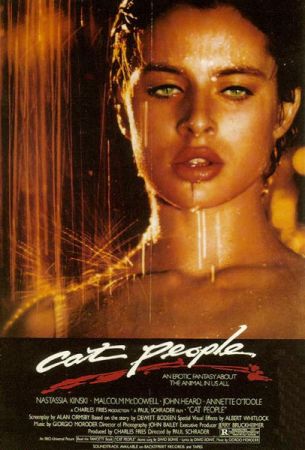
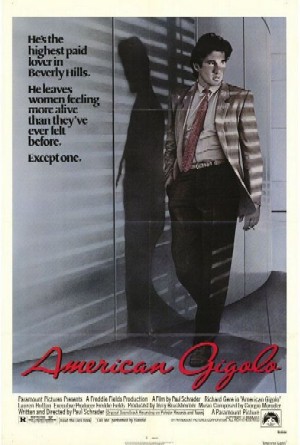
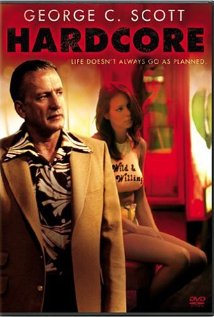
I mentioned earlier that Paul Schrader is reportedly not a fan of Rolling Thunder. Apparently, in his original script, Charles Rane was portrayed as being a poorly educated racist, a bit of a prototype for the character that Robert De Niro played in Taxi Driver. Ranes’s final rampage was meant to be an example of the war in Vietnam coming home and it was made much clearer that Rane’s violence was as much fueled by his own racism as by a desire for revenge. Schrader has said that his anti-fascist script was turned into a fascist movie.

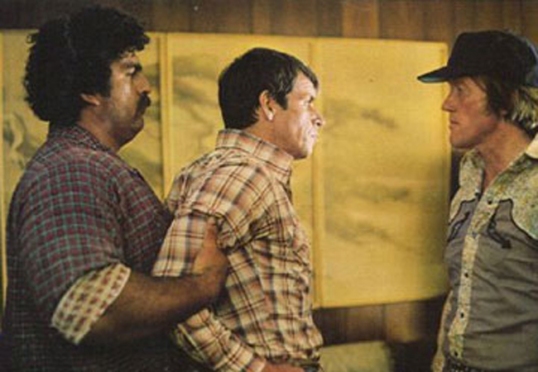
A scene from Paul Schrader’s original script
With all due respect to Mr. Schrader (who I think is a very underrated filmmaker), Rolling Thunder is anything but a fascist movie. Instead, it’s a brutal and somewhat disturbing character study of a man who will never truly escape the war in which he fought. The fact that Rane is played by super smooth William Devane (as opposed to the redneck that Schrader apparently envisioned) only serves to make the film’s critique of hyper masculinity all the more disturbing. It’s interesting to note that, on their own, Rane and Vohden are never presented as being particularly likable or heroic. Instead, we root for them because the people who have hurt them are even worse.

This was how Schrader envisioned Johnny and Rane.
Though it may be far different from what Paul Schrader originally envisioned, John Flynn’s Rolling Thunder is a film that works on every level. It is both a visceral revenge film and a character study of a disturbed man. It’s a powerful film that will leave you shaken and it’s one that I will probably never erase from my DVR.
There are some movies that you just don’t dare delete.
Rolling Thunder is one of those movies.